

P0043 on 2013-2016 Jaguar XJ: HO2S Heater Circuit Low Causes and Fixes
P0043 on a Jaguar XJ indicates a problem with the heater circuit for the rearmost oxygen sensor on the passenger side (Bank 1, Sensor 3). The most common fix is replacing the sensor itself, but wiring damage and a potential software glitch on 2013-2014 V6 models are also possibilities. For these specific models, a dealer software update is often required along with the sensor replacement.
- P0043 points to a heater circuit fault in the rearmost oxygen sensor on the passenger side exhaust.
- The most likely cause is a failed oxygen sensor, but always inspect the wiring for damage before replacing parts.
- If you have a 2013-2015 XJ with the 3.0L V6 or 5.0L V8, be aware that a software update from a dealer may be required to fix this code, per Jaguar TSB JTB00392NAS1.
What's Unique About the 2013-2016 Jaguar XJ
For the 2013-2014 Jaguar XJ with the 3.0L V6 engine, this code doesn't always mean a bad sensor. Jaguar issued a Technical Service Bulletin (JTB00392NAS1) indicating that a software error in the Engine Control Module (ECM) can incorrectly trigger P0043 and other related oxygen sensor codes. In these specific cases, a simple sensor replacement won't fix the problem; the ECM requires a software update from a Jaguar dealer. The TSB explicitly states the cause may be a "post-catalyst heated oxygen sensor (HO2S) software error" and instructs technicians to replace the affected sensor and then reconfigure the PCM.
Diagnostic Flowchart
Tap your situation to follow the diagnostic path that matches what you're seeing on this vehicle.
Symptoms You May Notice
- Check Engine Light is on.
- Failure to pass an emissions test.
- In rare cases, a slight decrease in fuel economy or rough running.
- Replacing the oxygen sensor multiple times on a 2013-2015 3.0L V6 without performing the required ECM software update.
- Replacing the oxygen sensor when the actual fault is a damaged or shorted wire in the harness that was not thoroughly inspected.
Most Likely Causes
- Failed Oxygen Sensor (Bank 1, Sensor 3) 🔴 High Probability The internal heater element within the oxygen sensor is a common failure point over time due to constant heat cycles. Jaguar/Land Rover TSBs also cite failures from "thermal shock when water contacts the heated sensing element" as a known issue on these platforms.
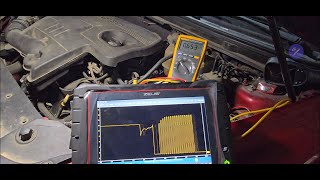
How to confirm: Unplug the sensor and measure the resistance across the two heater circuit pins (often the two same-colored wires) using a multimeter. 🎬 Watch: A quick guide on testing oxygen sensor heater circuits. A common specification for a good heater circuit is around 8 Ohms. If the resistance is infinite (open circuit) or near zero (short circuit), the sensor has failed. A healthy range for many sensors is between 3 and 25 Ohms.
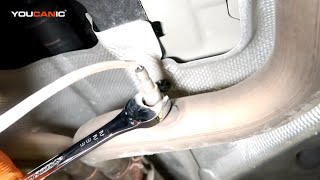
Typical fix: Replace the Bank 1, Sensor 3 heated oxygen sensor. A special 22mm (or 7/8") slotted socket is recommended for removal. 🎬 See this walkthrough for replacing a Jaguar oxygen sensor.
Est. part cost: $70-$280 - Damaged Wiring or Connector 🟡 Medium Probability The sensor's wiring is routed under the car near the hot exhaust, making it susceptible to melting, corrosion from road salt, or physical damage from debris. A short to ground from melted insulation is a frequent trigger for a 'low circuit' code.
How to confirm: Visually inspect the wiring harness leading from the sensor up toward the main harness. Look for any signs of melting, chafing, exposed wires, or corrosion on the connector pins. A 'wiggle test' on the harness while monitoring sensor data can sometimes reveal an intermittent short.
Typical fix: Repair the damaged section of the wiring harness and secure it away from the exhaust. If the connector is damaged, it may need to be replaced.
Est. part cost: $10-$50 - Engine Control Module (ECM) Software Error 🟡 Medium Probability Specifically affects 2013-2015 models with the 3.0L V6 and 5.0L V8 engines, as documented in Jaguar TSB JTB00392NAS1 and its revisions.
How to confirm: If the sensor and wiring test good on an affected model, the issue is likely the software. This must be confirmed by a Jaguar dealer with access to their diagnostic system (SDD) to check for software updates related to the TSB.
Typical fix: A Jaguar dealer or qualified independent shop must update the ECM software using their proprietary diagnostic tool. The TSB recommends replacing the sensor at the same time as the software update. The labor time for reprogramming is typically 0.3-0.5 hours, but dealer pricing can vary significantly.
Est. part cost: $0 (software only, but dealer labor charges apply) - Blown Fuse ⚪ Low Probability
How to confirm: Locate the fuse for the oxygen sensor heater circuits in the vehicle's fuse box (consult the owner's manual or wiring diagram) and check if it is blown.
Typical fix: Replace the blown fuse. If the fuse blows again, it indicates a persistent short circuit in the wiring or within the sensor itself that must be found and repaired.
Est. part cost: $1-$5
Rare But Worth Checking
- Faulty Engine Control Module (ECM): While uncommon, the internal driver circuit in the ECM that powers the sensor heater can fail. This should only be considered after all other possibilities, including the software update, have been exhausted. A repair service may be able to fix the module for a lower cost than a full replacement.
Diagnosis Steps
- Read the code with an OBD-II scanner to confirm P0043 is present and note any other codes.
- Visually inspect the Bank 1 Sensor 3 (passenger side, post-catalyst) oxygen sensor, its connector, and wiring. Trace the harness as far back as possible, looking for signs of melting, fraying, or corrosion.
- Check the fuse for the O2 sensor heater circuit in the vehicle's fuse box.
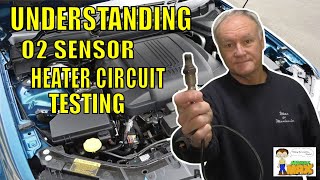
- Disconnect the sensor's electrical connector. With the ignition on (engine off), use a multimeter to verify that one of the pins on the vehicle-side harness has 12-volt battery power. 🎬 Learn more about understanding and testing O2 sensor heater circuits.
- With the sensor still disconnected, use a multimeter set to Ohms to measure the resistance between the two heater circuit pins on the sensor itself. A reading between 5-15 Ohms is typical; a reading of infinite resistance (open) or near-zero resistance (short) indicates a failed sensor.
- If the wiring, fuse, and sensor resistance all check out, especially on a 2013-2015 3.0L V6 or 5.0L V8 model, consult a dealer about TSB JTB00392NAS1 (and its later revisions) regarding a necessary ECM software update.
Parts You'll Likely Need
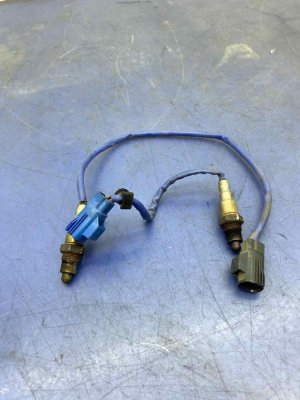
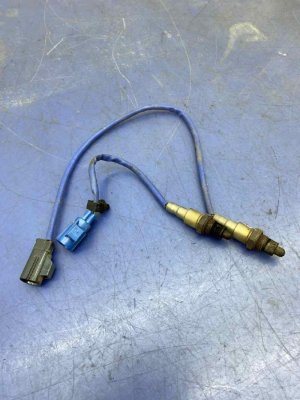
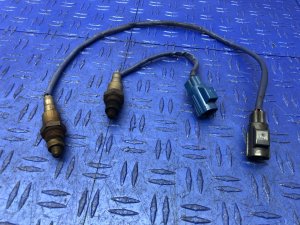
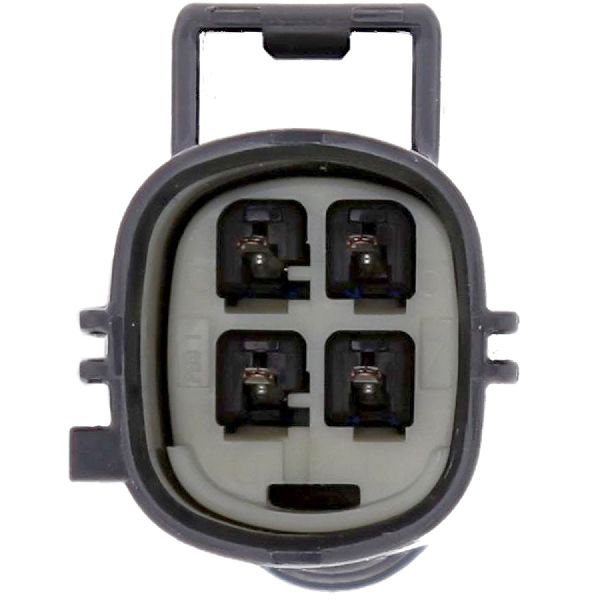
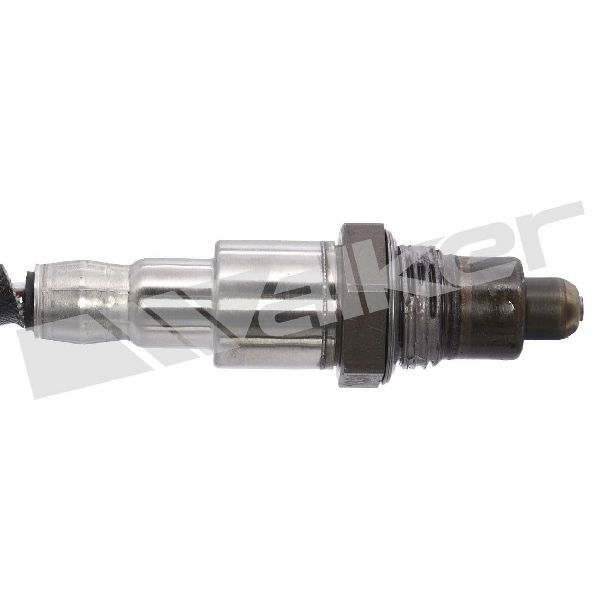
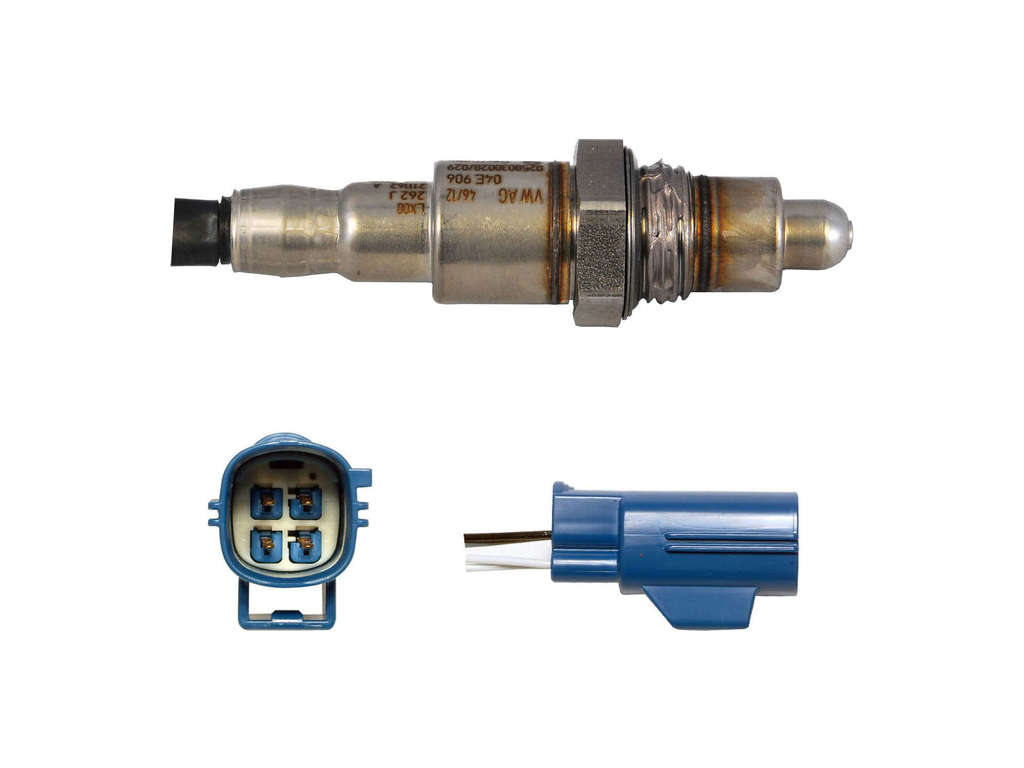
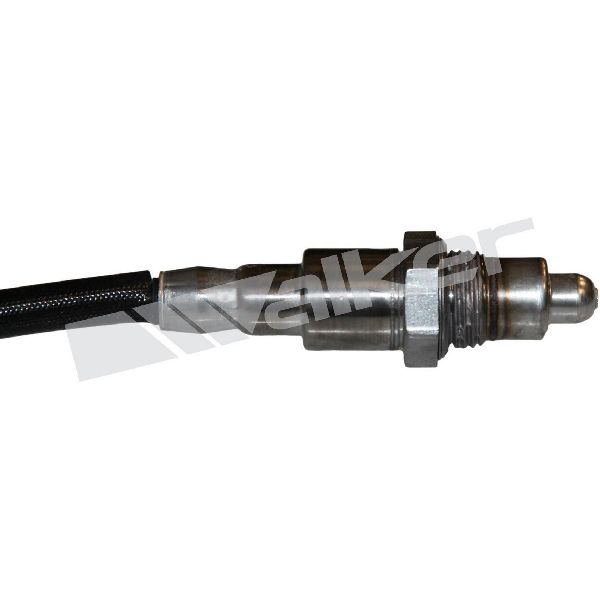
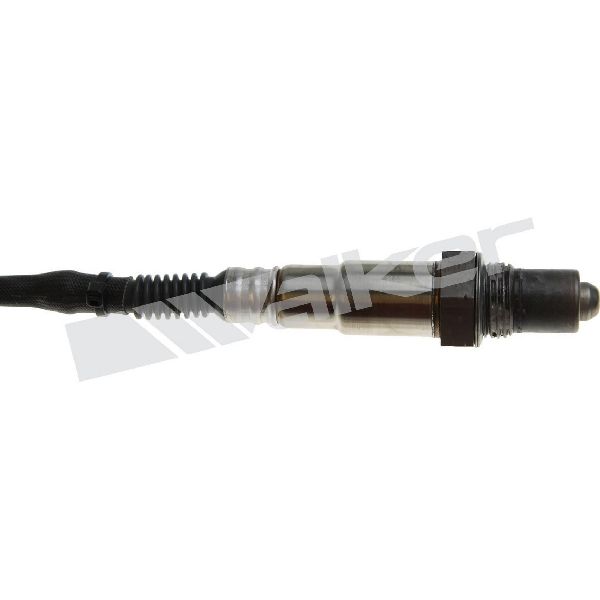
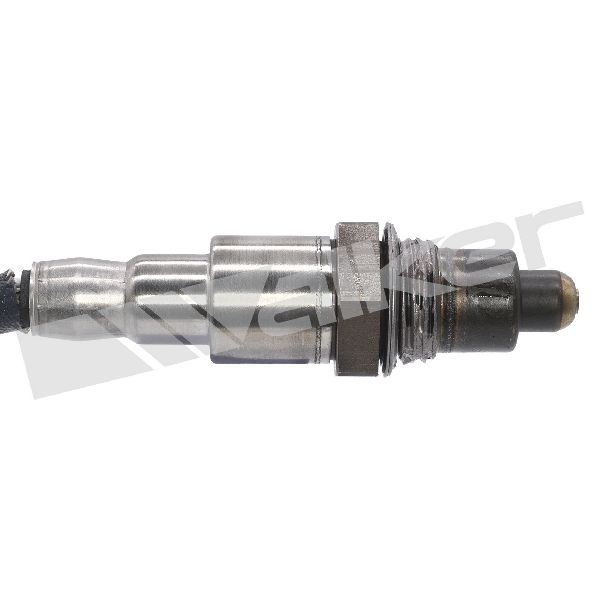
- Heated Oxygen Sensor (Bank 1, Sensor 3)
(OEM #C2D23702)— This is the most frequent cause of the P0043 code, as the internal heater element fails over time or from thermal shock.
Trusted brands: Jaguar (OEM), Bosch (often the OEM supplier), Denso, NTK / NGK
OEM price range: $240-$280
Aftermarket price range: $70-$150
Related Codes That Often Appear With This One
- P0042 — This code is for 'HO2S Heater Control Circuit (Bank 1, Sensor 3)' and can appear alongside P0043 as they relate to the same sensor circuit.
- P0044 — This code is for 'HO2S Heater Control Circuit High (Bank 1, Sensor 3)'. While P0043 indicates a low voltage condition (like a short), P0044 indicates a high voltage condition. Seeing them together could point to an erratic wiring problem.
- P0142 — This code is for 'O2 Sensor Circuit (Bank 1, Sensor 3)'. It's a more general circuit fault code for the same sensor and is often listed in the same TSBs as P0043.
Technical Service Bulletins (TSBs) & Recalls
- JTB00392NAS1 / JTB-00392-NAS-3: Addresses a software error in the ECM on 2013-2015 3.0L V6 and 5.0L V8 models that can cause various HO2S codes, including P0043. The fix involves replacing the sensor and updating the ECM software.
- SSM72477: A general service message that groups P0043 with a wide range of other codes related to heated oxygen sensor faults, indicating a common diagnostic path. [NHTSA]
- LTB00671NAS3 (Land Rover): While for a sister brand, this TSB for the same engines also lists P0043 and attributes the cause to 'thermal shock when water contacts the heated sensing element', corroborating the sensor's sensitivity.
Platform-Specific Known Issues
- A known software glitch in the ECM of 2013-2015 Jaguar XJ models with the 3.0L V6 and 5.0L V8 engines can cause P0043 to be stored. Jaguar issued Technical Service Bulletin JTB00392NAS1 to address this, which requires a dealer to replace the sensor and update the ECM software.
- A forum member with a 2018 Jaguar XF Sportbrake (3.0L SC V6) reported a recurring P0043 code even after two sensor replacements by the dealer, highlighting that the root cause can sometimes be a persistent wiring or module issue that is difficult to diagnose.
Mechanic-Grade Diagnostic Values
- O2 Sensor Heater Element Resistance — expected: Typically between 0.5 Ω and 2.5 Ω for some similar sensors, with a broader acceptable range up to 25 Ω. A reading of 2.8 Ω has been observed on a functional sensor for a similar vehicle.. Failure: Infinite resistance (OL) indicates an open circuit (bad sensor), while near-zero resistance indicates a short circuit (bad sensor).
- Heater Circuit Voltage Supply — expected: 12V (Battery Voltage) at the supply pin on the harness-side connector with the key on, engine off.. Failure: Significantly less than 12V or no voltage indicates a problem with the fuse, relay, or wiring harness, not the sensor itself.
Scan Tool Commands That Help
- Jaguar SDD (Symptom Driven Diagnostics): Configure existing ECM / Configure new module - Powertrain Control Module — This function is required after replacing the oxygen sensor on vehicles affected by TSB JTB00392NAS1/3. The TSB instructs the technician to replace the sensor *then* run the software update, which reconfigures the module to prevent the code from recurring due to the software error.
Wiring & Ground Locations
- O2 Sensor Heater Fuse/Relay — Typically located in the under-hood fuse box. The specific fuse/relay can be identified by the diagram on the fuse box cover or in the owner's manual.. The heater circuit is powered by a dedicated fuse and sometimes a relay. A blown fuse will cut power to the heater, causing a P0043 (low circuit) or related code. If a new fuse blows immediately, it confirms a short to ground in the circuit.
- ECM Controlled Ground — The ground for the heater circuit is typically controlled by a driver within the Engine Control Module (ECM/PCM), rather than a direct chassis ground.. This means a fault could be in the wiring between the sensor and the ECM, or within the ECM's driver circuit itself. Testing involves checking for continuity on the ground wire back to the ECM connector pin.
Real Owner Repair Stories
- JaguarForums.com user 'madgrey' (2018 Jaguar XF Sportbrake 3.0L SC V6 (at <500 miles)) — Check Engine Light with code P0043. Car ran fine.
❌ Tried (didn't work) Dealer replaced the Bank 1 Sensor 3 oxygen sensor. The code returned the next day., Dealer replaced the new sensor a second time, claiming the replacement part was also bad. The code returned again.
✅ What actually fixed it The user reported the dealer was working directly with Jaguar Land Rover to resolve the issue, suggesting a more complex problem than a simple sensor failure, likely in the wiring harness or control module. The final resolution was not posted, but the story highlights that multiple new sensors failing to fix the code points away from the sensor itself as the root cause.
OEM Part Supersession History
C2D23702→C2D54166, which was then superseded by T2H48050.— Standard part evolution for improved reliability or manufacturing changes.
Heads up: While multiple part numbers may be listed by aftermarket suppliers, it is critical to use the latest OEM superseded part number (T2H48050) or a direct, high-quality aftermarket equivalent (e.g., from Bosch or Denso) to ensure compatibility with the vehicle's software, especially if a TSB-related update is being performed.
Model Year Variations Within This Range
- 2013-2015: These model years are specifically called out in TSB JTB00392NAS1 and its revisions for a potential software error in the ECM that can falsely trigger P0043 and other HO2S codes. The official fix requires both a sensor replacement and an ECM software update via the dealer's SDD tool.
Helpful Videos
Used OEM Parts in Stock
New Aftermarket Parts Available

The information in this article is provided for general reference and educational purposes only. Vehicle specifications, procedures, and part compatibility can vary by production date, trim level, and region. Always consult your vehicle's factory service manual and verify part numbers before purchasing or performing repairs. Safety-critical components such as airbags, seat belts, and braking systems should be installed by a qualified professional.
- Jaguar XJ:
- 🎬 Helpful Videos
- 🛍️ Shop This Part
- What's Unique About the 2013-2016 Jaguar XJ
- Diagnostic Flowchart
- Symptoms You May Notice
- Most Likely Causes
- Rare But Worth Checking
- Diagnosis Steps
- Parts You'll Likely Need
- Related Codes That Often Appear With This One
- Technical Service Bulletins (TSBs) & Recalls
- Platform-Specific Known Issues
- Mechanic-Grade Diagnostic Values
- Scan Tool Commands That Help
- Wiring & Ground Locations
- Real Owner Repair Stories
- OEM Part Supersession History
- Model Year Variations Within This Range
- 🎟️ Get 5% Off