

OBD-II Code P0043: Heated Oxygen Sensor Heater Control Circuit Low (Bank 1, Sensor 3)
The Ultimate 2026 Guide to Diagnosing and Fixing P0043
- Code P0043 indicates the internal heater for the Bank 1, Sensor 3 oxygen sensor is receiving less than 0.3 volts, preventing it from reaching its 600°F operating temperature.
- A burnt-out oxygen sensor heater element causes 80% of P0043 codes, but always verify the 15-amp heater fuse isn't blown before buying parts.
- Driving with P0043 forces the engine to run rich during cold starts, which destroys a $1,500 catalytic converter if left unfixed for more than 3 months.
- Never replace the oxygen sensor without first testing the wiring harness connector for a full 12 volts with the key in the 'On' position.
What Does P0043 Mean?
The Powertrain Control Module (PCM) detected low voltage in the heater circuit for oxygen sensor Bank 1, Sensor 3. This sensor uses an internal heater to reach its 600°F operating temperature quickly. Code P0043 triggers when the heater circuit voltage drops below the manufacturer's threshold (typically 0.3 volts), indicating an open circuit, blown fuse, or high resistance.
Technical definition: The official SAE/ISO definition for P0043 is "HO2S Heater Control Circuit Low (Bank 1 Sensor 3) 🎬 Watch: A quick overview of fixing the P0043 code". This indicates the Powertrain Control Module (PCM) detected voltage in the heater control circuit for the Bank 1, Sensor 3 heated oxygen sensor below the specified range. This sensor sits downstream of the catalytic converter to monitor catalyst efficiency by measuring exhaust oxygen content.
Can I Drive With P0043?
Yes, But With Caution. Driving with a P0043 code is safe for short distances, as it rarely causes immediate drivability issues. However, the unheated sensor provides inaccurate data to the engine computer, forcing a rich fuel mixture. Over weeks or months, this excess fuel overheats and destroys the catalytic converter—a repair costing $800 to $2,500. Fix the issue within 200 miles to pass emissions and prevent permanent exhaust damage.
Common Causes
- Faulty Heated Oxygen Sensor (HO2S) (Very Common) — The internal heater element within the oxygen sensor is the most frequent failure point. The resistive coil burns out or breaks over time, creating an open circuit that prevents current flow. This accounts for 80% of P0043 cases.
- Blown Heater Circuit Fuse or Relay (Common) — A dedicated 10-15 amp fuse protects the oxygen sensor heater circuit. A short in the wiring or the sensor itself blows this fuse, instantly cutting power to the heater and triggering the code.
- Damaged or Corroded Wiring/Connectors (Common) — The wiring harness is exposed to extreme exhaust heat, moisture, and road debris. Melted wires, chafed insulation, or corroded connector pins create high resistance or a complete loss of connection.
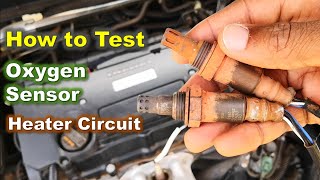
- Poor Ground Connection (Less Common) — The heater circuit requires a solid ground to complete its path. A loose, corroded, or broken ground strap on the engine block or chassis creates high resistance, starving the sensor's heater of voltage. 🎬 See how to test oxygen sensor heater circuits step-by-step
- Aftermarket Part Incompatibility (Rare) — Cheap universal oxygen sensors often have heater element resistance values that do not match OEM specifications. The PCM reads this incorrect resistance as a low voltage fault. Always use OEM or premium brands like Denso, NTK, or Bosch.
- Powertrain Control Module (PCM) Fault or Software Issue (Very Rare) — The internal PCM driver that controls the oxygen sensor heater fails in extremely rare cases. Alternatively, some vehicles require a dealership software update (TSB) to fix overly sensitive monitoring parameters.
Symptoms
- Check Engine Light is On — The light illuminates immediately after the PCM runs its cold-start self-test and detects the heater circuit fault.
- Noticeable Fuel Smell on Startup — The engine runs a richer fuel mixture during the extended warm-up period, pushing unburned fuel into the exhaust and creating a strong gasoline or 'rotten egg' smell.
- Decreased Fuel Economy — Extended 'open loop' operation on cold starts forces the engine to burn more fuel than necessary, dropping gas mileage by 1-5%.
- Rough Idle or Hesitation (Rare) — Vehicles relying heavily on downstream sensors for fuel trim adjustments experience slight hesitation or a rough idle until exhaust gases naturally heat the sensor.
- Failed Emissions Test (also visible on scanner) — The inactive heater delays the O2 sensor from reaching operating temperature, preventing the PCM from running the catalyst efficiency monitor. This results in an automatic emissions failure.
Diagnostic Flowchart
Tap your situation to follow the diagnostic path that matches what you're seeing on this code.
Common Fixes & Costs
- Replace Blown Fuse or Relay — Parts: $1-$25, Labor: $0-$50, ~0.2 hr book time (DIY)
- Replace Heated Oxygen Sensor (Bank 1, Sensor 3) — Parts: $50-$200, Labor: $100-$200, ~0.8 hr book time (DIY)
- Repair Damaged Wiring or Connectors — Parts: $10-$50, Labor: $80-$200, ~1.5 hr book time (Intermediate)
- Repair Faulty Ground Connection — Parts: $5-$20, Labor: $50-$100, ~0.8 hr book time (Intermediate)
- Replace Powertrain Control Module (PCM) — Parts: $600-$900, Labor: $200-$300, ~1.5 hr book time (Professional)
Used vs. New Parts: Buying Guide
When a used part is worth it: Never buy a used oxygen sensor. They are wear-and-tear items with a finite lifespan. The low cost of a new aftermarket sensor makes buying used an unnecessary risk.
Donor-vehicle mileage cap: roughly under 20000 miles for the part to have meaningful remaining life.
Donor quality checklist:
- If forced to use one for temporary testing, pull it from a low-mileage vehicle not scrapped for engine issues.
- Avoid sensors showing heavy carbon fouling, white deposits, or damaged wiring.
Decision logic:
- If The part is an oxygen sensor → Buy a new OEM or premium aftermarket part (Denso, NTK, Bosch). The labor to replace a faulty used sensor outweighs any savings.
- If Vehicle is sensitive to sensor brand (Toyota, Honda, Subaru) → Buy the specific OEM brand (e.g., Denso) to prevent persistent compatibility codes.
Warranty tradeoff: Used sensors from salvage yards offer 30-day warranties at best. New aftermarket sensors carry 1-year minimum warranties.
Worst-case if a used part fails: $150-300 if the used sensor fails, factoring in repeat labor and the cost of the new sensor you should have bought initially.
What Happens If You Wait — Timeline
- 0-2 weeks: Code P0043 stores and the Check Engine Light illuminates. The O2 sensor warms up slowly during cold starts, slightly delaying closed-loop fuel control. No drivability symptoms occur. (MPG impact: 0-2%% · Added cost: $0)
- 2 weeks - 4 months: The vehicle fails OBD-II emissions tests. The engine runs rich longer during cold starts, increasing carbon deposits on spark plugs and inside the catalytic converter. (MPG impact: 2-5%% · Added cost: $20-$80 in wasted fuel.)
- 4-12 months: Prolonged rich conditions overheat the catalytic converter. The internal ceramic substrate cracks or coats with soot, triggering a P0420 (Catalyst System Efficiency Below Threshold) code. (MPG impact: 5-10%% · Added cost: $500-$1,500 (risk of early-stage catalytic converter damage).)
- 12+ months: Catastrophic catalytic converter failure. The internal substrate melts from excessive heat, creating an exhaust blockage that causes severe power loss and potential engine damage. (MPG impact: 10-25%% · Added cost: $1,500-$3,000+ (full catalytic converter replacement is required).)
Cost of Not Fixing It
- 0-3 months: Automatic emissions test failure and a 1-5% decrease in fuel economy due to extended open-loop operation on cold starts. (Added cost: $0-$50 in extra fuel costs.)
- 3-12 months: Prolonged rich running fouls spark plugs and degrades catalytic converter efficiency by forcing it to operate at excessively high temperatures. (Added cost: $100-$300 for spark plug replacement, plus ongoing fuel costs.)
- 12+ months: Catastrophic catalytic converter failure. The prolonged rich condition melts the internal ceramic substrate, causing a complete exhaust blockage. (Added cost: $1,200-$2,800+ for catalytic converter replacement.)
Diagnosis Steps
- Verify the Code and Review Freeze Frame Data
Connect an OBD-II scanner. Confirm P0043 is present. Analyze the freeze frame data to view engine operating conditions (temperature, RPM) at the exact moment the fault triggered, helping identify if the issue only occurs when cold.
Tools: OBD-II Scanner (Beginner) - Check the Heater Circuit Fuse and Relay
Consult the owner's manual to locate the 10A or 15A fuse for the O2 sensor heater circuit. Visually inspect and replace it if blown. Swap the heater relay with an identical non-critical relay (like the horn) to test for relay failure.
Tools: Owner's Manual, Fuse Puller (Beginner) - Visually Inspect Wiring and Sensor
Locate Bank 1, Sensor 3 (post-catalytic converter on the cylinder #1 side). Inspect the sensor, connector, and visible wiring harness for melted insulation, chafing, or green/white corrosion inside the connector pins.
Tools: Flashlight, Safety Glasses, Inspection Mirror (Beginner) - Test Heater Element Resistance at the Sensor
Disconnect the oxygen sensor. Set a multimeter to Ohms (Ω) and measure resistance between the two heater circuit pins on the sensor (usually two wires of the same color). A healthy heater reads 2 to 30 Ohms. An 'OL' (infinite resistance) reading confirms a broken internal heater, requiring sensor replacement.
Tools: Multimeter, Vehicle-Specific Wiring Diagram (Intermediate) - Check for Voltage and Ground at the Harness Connector
With the sensor disconnected and the key 'On' (engine off), test the vehicle-side harness connector. Check the power feed wire for 12V relative to chassis ground. A reading below 9V indicates a broken wire or blown fuse upstream.
Tools: Multimeter, Vehicle-Specific Wiring Diagram (Intermediate) - [ADVANCED] Check Ground Circuit Continuity and Voltage Drop
Test the ground wire on the harness connector for continuity to the chassis ground (should be < 1 Ohm). Perform a voltage drop test by connecting the positive lead to the ground pin and the negative lead to the battery negative. With the circuit active, readings above 0.1V indicate excessive ground resistance.
Tools: Multimeter with Millivolt Scale (Advanced) - [ADVANCED] Check Heater Circuit Current with an Amp Clamp
Clamp a low-current amp meter around the heater power wire. During a cold start, current draw should read 0.8 to 2.0 amps. Zero amps confirms an open circuit. Readings above 2.5A indicate a short circuit.
Tools: Low-Current Amp Clamp, Multimeter (Advanced) - [ADVANCED] Monitor Live Data PIDs
Use an advanced scan tool to monitor 'O2 Heater B1S3' status (On/Off) and 'O2 Heater Current B1S3'. Compare actual current to the specified range to verify the PCM is actively commanding the heater on.
Tools: Advanced OBD-II Scan Tool (Advanced) - Test the PCM Driver (Last Resort)
If the sensor, wiring, fuse, and power/ground test perfectly, the PCM driver circuit failed. Back-probe the specific pin at the PCM connector to verify it provides the ground signal when commanded. Stop DIY and tow the vehicle to a diagnostic specialist if the PCM requires replacement.
Tools: Advanced Scan Tool, Multimeter, Service Manual, Back-Probe Kit (Professional)
When This Code Triggers (Freeze-Frame Conditions)
- Engine Coolant Temp: Below 122°F (50°C) (The PCM tests the heater circuit immediately during a cold start.)
- Time Since Engine Start: 20-60 seconds (The O2 heater monitor runs within the first minute of startup to heat the sensor rapidly.)
- System Voltage: 11-14.5V (The fault logs when the PCM detects heater control circuit voltage below the 9V threshold while commanded active.)
- Engine Load: Low (Idling) (The test runs while the engine idles shortly after a cold start, before driving begins.)
Related Codes
- P0044 — Indicates 'Heater Control Circuit High'. P0043 suggests an open circuit (a break), while P0044 suggests a short to power.
- P0042 — Indicates 'HO2S Heater Control Circuit Range/Performance'. A general fault for the same circuit. Diagnostic steps are identical to P0043.
- P0141 — Indicates 'O2 Sensor Heater Circuit Malfunction (Bank 1, Sensor 2)'. Points to the exact same fault type, but on a different sensor.
- P0136 — Indicates a 'Circuit Malfunction' for the signal circuit. Having both P0043 and P0136 simultaneously confirms the sensor failed internally.
Climate & Environmental Factors
- Cold Climates / Road Salt: Road salt and brine seep into wiring harness connectors, causing corrosion that leads to open circuits. This is the primary cause of the Ford F-150 recall.
- High Humidity: Humid environments accelerate corrosion on exposed connector pins and ground points, causing intermittent electrical faults.
- Cold Starts: P0043 triggers most often during cold starts because the PCM runs its primary heater circuit test when the engine and exhaust are cold.
How to Talk to a Mechanic About This Code
Say this: "I have a P0043 code for the Bank 1 Sensor 3 heater circuit. I'd like to book a diagnostic appointment to confirm the cause. Please test the sensor's heater resistance, and check for power and ground at the harness connector before recommending a new sensor."
This directs the technician to perform a proper electrical diagnosis rather than just replacing the most likely part, saving you money if the sensor isn't the problem.
Avoid saying:
- 'My check engine light is on, can you just fix it?' (Invites a shop to run up the bill).
- 'I'm pretty sure it's the oxygen sensor, just replace it.' (Makes you responsible if the new sensor doesn't fix the problem).
- 'Just do whatever you think is best.' (Gives up all control over the cost and repair process).
Questions to ask before authorizing the repair:
- What was the result of the diagnostic test? Was it a bad sensor, a wiring issue, or a blown fuse?
- Can you show me the failed part or the multimeter reading?
- Is the estimate in writing, and does it include all parts, labor, and taxes?
- What is the warranty on the parts and the labor for this specific repair?
Where to Take It: Dealer vs Independent vs Chain
- Dealer:
Best for: Vehicles still under a powertrain or emissions warranty., Known manufacturer-specific issues covered by a recall or TSB., Complex software-related issues requiring proprietary tools.
Downsides: Significantly higher labor and diagnostic rates., More inclined to replace an entire assembly rather than repair a specific wire. (Typical cost: +40% vs. baseline) - Independent Shop:
Best fit for most situations. A competent independent shop accurately diagnoses and repairs a P0043 circuit fault without the dealership price tag.
Best for: Out-of-warranty vehicles where cost is a factor., Standard electrical diagnostics like P0043., Building a long-term relationship with a mechanic.
Downsides: Quality and expertise vary widely; check for ASE certifications., May lack specialized tools for very new models. (Typical cost: +0% vs. baseline) - Chain Shop:
AVOID for initial diagnosis. They may not correctly identify a wiring or fuse issue, leading to repeat repairs. Acceptable only if you have already diagnosed a faulty sensor.
Best for: Simple, routine maintenance like oil changes.
Downsides: Technician skill varies dramatically., Business model creates pressure for upselling unnecessary services., Lacks in-depth diagnostic equipment for electrical faults. (Typical cost: -10% vs. baseline)
When to Walk Away From the Repair
Sell or trade the vehicle if the estimated repair cost exceeds 50% of its private-party value.
- Car worth $4000, fix is $450: Fix it. This is a standard repair cost and is well below the 50% threshold.
- Car worth $4000, fix is $2100: Walk away. The repair cost is over 50% of the car's value.
- Car worth $12000, fix is $2500: Borderline, but likely fix it. This assumes the high cost is due to catalytic converter damage. If the rest of the car is in good shape, the repair is worth it.
What Scan Tool You Need for This Code
Minimum: A basic OBD-II code reader that can read and clear codes. However, a multimeter is the most crucial tool for testing the circuit.
A $20 code reader only confirms the P0043 code exists; it cannot determine if the cause is the sensor, wiring, or fuse. Live data is required for proper diagnosis.
Budget: BlueDriver Pro (~$99) — Connects to a smartphone to provide freeze-frame data and live data graphing for the O2 sensor circuit, allowing DIYers to see what the computer sees.
Mid-range: Foxwell NT510 Elite (~$180) — Offers manufacturer-specific diagnostics to view the PCM's commanded state for the heater circuit (On/Off), which is critical for diagnosing control-side issues.
Professional: Autel MaxiCOM MK808S (~$450) — Provides bidirectional control to manually command the O2 sensor heater circuit on and off, allowing real-time circuit testing with a multimeter or amp clamp.
Rent vs buy: AutoZone offers a free Fix Finder service to borrow a basic scanner. However, properly diagnosing P0043 requires live data, making a budget-friendly scanner a worthwhile investment.
How to Clear the Code After You Fix It
- Use an OBD-II scan tool to clear the diagnostic trouble codes. Disconnecting the battery does not reliably clear module memory.
- Perform a drive cycle to allow the onboard diagnostic system to run its self-tests.
- Re-scan the vehicle to confirm no pending codes return.
Drive cycle (~20 minutes): Start the engine cold (below 122°F), idle for 3 minutes, drive in mixed city traffic up to 45 mph, and finish with 10 minutes of sustained highway driving at 55-60 mph.
Readiness monitors affected: Oxygen (O2) Sensor monitor, O2 Sensor Heater monitor, Catalyst (CAT) monitor
Before emissions retest: drive at least 100 miles to fully set monitors.
Watch out for:
- Clearing the code without performing a drive cycle leaves monitors 'Not Ready', causing an instant emissions test failure.
- If the underlying electrical fault remains, the code returns immediately on the next cold start.
Will This Fail Emissions / State Inspection?
Yes — this code typically fails an OBD-II emissions inspection.
- California: An illuminated Check Engine Light causes an automatic smog check failure. All readiness monitors must read 'Ready'; drive 50-100 miles after repair before re-testing.
- New York: The NYVIP inspection includes an OBD-II scan. An active P0043 code causes an automatic failure.
- Texas: In emissions-testing counties, P0043 causes an automatic failure. After clearing the code, only one monitor can read 'Not Ready' to pass.
Most Commonly Affected Vehicles
- Ford F-150 (2004-2024) — 2018-2022 models were recalled for wiring harness corrosion in the O2 sensor circuit. Always inspect the harness for water intrusion before replacing the sensor.
- Chevrolet Silverado, Equinox, Cruze (2010-2022) — Silverado sensor locations make them prone to damage from road debris and moisture.
- Toyota Camry (2007-2024) — Some 2020 models experienced intermittent codes due to relay degradation, addressed by a software update.
- Honda Accord, Civic (2003-2024) — A blown fuse in the under-hood fuse box is a common and simple fix on Civics that is often overlooked.
- Subaru Legacy, Outback, Forester (2005-2024) — Wiring for the rearmost sensor routes near suspension components, making it highly susceptible to chafing.
- Hyundai Elantra, Sonata, Santa Fe (2011-2020) — Internal heater element failure is the primary cause, especially in regions with heavy road salt usage.
- Kia Optima, Sorento, Soul (2011-2021) — The sensor connector is a frequent point of corrosion; inspect it carefully before replacing parts.
- Volkswagen / Audi Jetta, Golf, Passat, A4, Q5 (2007-2016) — Checking the wiring harness for heat damage near the turbocharger or exhaust manifold is a critical diagnostic step.
Manufacturer-Specific Notes
- Ford: Water leaks into the O2 sensor wiring harness connector on 2018-2022 F-150s, causing corrosion. This led to recall 20S32. Always check for a corroded connector before replacing the sensor.
- Subaru: Uses Air/Fuel Ratio (A/F) sensors upstream and traditional O2 sensors downstream. Ensure you test and replace the correct sensor type.
- Toyota: Intermittent P0043 codes during cold starts on Camrys trace back to faulty heater circuit relays or require a PCM software update (TSB).
- General Motors (Chevrolet/GMC): The issue is frequently a broken wire in the harness where it flexes near the transmission crossmember, rather than a failed sensor.
Real Owner Stories
2018 Ford F-150 with intermittent P0043
Check Engine Light appeared during wet weather. No drivability symptoms.
What they tried:
- Cleared the code, but it returned on damp mornings.
- Replaced the Bank 1, Sensor 3 oxygen sensor, but the code returned in a week.
Outcome: The owner discovered Ford recall 20S32. Water leaked into the sensor's wiring harness connector, causing corrosion. Replacing the connector and packing it with dielectric grease permanently fixed the issue.
Lesson: Always check for Technical Service Bulletins (TSBs) and recalls first. Intermittent codes in wet weather almost always point to connector corrosion, not a failed sensor.
2012 Honda Civic at 110K miles
P0043 code appeared suddenly with no other symptoms.
What they tried:
- Prepared to order a $100 replacement oxygen sensor.
- Checked the under-hood fuse box based on a forum recommendation.
Outcome: Found a blown 15A fuse labeled for the O2 sensor heater circuit. Replaced the $2 fuse, cleared the code, and the problem was solved.
Lesson: Check the easiest and cheapest potential failures first. A blown fuse takes two minutes to inspect and saves hundreds of dollars in unnecessary parts.
2015 Chevrolet Cruze with recurring P0043
Check Engine Light on, slight decrease in MPG.
What they tried:
- A shop replaced the O2 sensor, but the light returned two days later.
- The shop suggested replacing the PCM for $800.
Outcome: A second mechanic specializing in electrical diagnostics found a broken wire inside the harness insulation six inches from the sensor connector. Soldering and heat-shrinking the wire fixed the code permanently.
Lesson: If a new sensor doesn't fix a circuit code, the problem is in the wiring. Never replace a PCM until the entire harness is tested for continuity and voltage drop.
How to Prevent This Code From Triggering
- Use Top Tier gasoline (Every fill-up) — Detergent additives prevent carbon buildup, reducing exhaust contaminants that foul the O2 sensor and overload the catalytic converter.
- Fix engine misfires immediately (As needed) — Misfires dump raw fuel into the exhaust, superheating and melting the catalytic converter while chemically poisoning the O2 sensor.
- Replace air filters and spark plugs on schedule (Per vehicle's service interval) — Clogged filters and worn plugs cause inefficient combustion, increasing soot that shortens the life of O2 sensors.
- Repair oil and coolant leaks (As needed) — Burning oil or antifreeze creates ash and silicone contaminants that permanently poison the oxygen sensor's delicate sensing element.
- Use a PEA-based fuel system cleaner (Every 10,000 miles) — Polyetheramine (PEA) removes deposits from the fuel system, promoting a cleaner burn and reducing emissions component fouling.
Frequently Asked Questions
Can I clean the oxygen sensor to fix P0043?
No. P0043 relates to an internal electrical fault in the heater circuit, not a dirty sensor tip. Cleaning the sensor will not resolve the code.
What is the most common mistake when diagnosing P0043?
Immediately replacing the oxygen sensor without performing basic electrical checks. The fault is frequently a blown fuse or corroded connector. Skipping diagnostics leads to the code returning after installing an expensive sensor.
Why did P0043 come back after replacing the sensor?
The root cause was not the sensor. The culprits are an intermittent open in the wiring harness, a corroded connector, a bad ground, or an overlooked blown fuse.
What is Bank 1, Sensor 3?
Bank 1 is the engine side containing cylinder #1. Sensor 3 is the third sensor in the exhaust stream on that side, always located downstream of the catalytic converter to monitor its efficiency.
How much does it cost to fix P0043?
A DIY sensor replacement costs $50 to $200 for the part. A professional shop charges $150 to $400 total. Wiring repairs cost $10-$50 in parts but carry $80-$200 in labor.
Will P0043 go away by itself?
No. It indicates a hard electrical fault in the heater circuit that requires physical repair. The Check Engine Light remains on until the fault is fixed and codes are cleared.
What's the difference between P0043 and P0141?
Both indicate heater circuit faults, but on different sensors. P0043 targets Bank 1, Sensor 3, while P0141 targets Bank 1, Sensor 2. Diagnose them using the exact same electrical testing methods.
Key Takeaways
- Code P0043 indicates the internal heater for the Bank 1, Sensor 3 oxygen sensor is receiving less than 0.3 volts, preventing it from reaching its 600°F operating temperature.
- A burnt-out oxygen sensor heater element causes 80% of P0043 codes, but always verify the 15-amp heater fuse isn't blown before buying parts.
- Driving with P0043 forces the engine to run rich during cold starts, which destroys a $1,500 catalytic converter if left unfixed for more than 3 months.
- Never replace the oxygen sensor without first testing the wiring harness connector for a full 12 volts with the key in the 'On' position.
Helpful Videos

The information in this article is provided for general reference and educational purposes only. Vehicle specifications, procedures, and part compatibility can vary by production date, trim level, and region. Always consult your vehicle's factory service manual and verify part numbers before purchasing or performing repairs. Safety-critical components such as airbags, seat belts, and braking systems should be installed by a qualified professional.
- 🎬 Helpful Videos
- What Does P0043 Mean?
- Can I Drive With P0043?
- Common Causes
- Symptoms
- Diagnostic Flowchart
- Common Fixes & Costs
- Used vs. New Parts: Buying Guide
- What Happens If You Wait — Timeline
- Cost of Not Fixing It
- Diagnosis Steps
- When This Code Triggers (Freeze-Frame Conditions)
- Related Codes
- Climate & Environmental Factors
- How to Talk to a Mechanic About This Code
- Where to Take It: Dealer vs Independent vs Chain
- When to Walk Away From the Repair
- What Scan Tool You Need for This Code
- How to Clear the Code After You Fix It
- Will This Fail Emissions / State Inspection?
- Most Commonly Affected Vehicles
- Manufacturer-Specific Notes
- Real Owner Stories
- 2018 Ford F-150 with intermittent P0043
- 2012 Honda Civic at 110K miles
- 2015 Chevrolet Cruze with recurring P0043
- How to Prevent This Code From Triggering
- Frequently Asked Questions
- Can I clean the oxygen sensor to fix P0043?
- What is the most common mistake when diagnosing P0043?
- Why did P0043 come back after replacing the sensor?
- What is Bank 1, Sensor 3?
- How much does it cost to fix P0043?
- Will P0043 go away by itself?
- What's the difference between P0043 and P0141?
- Key Takeaways
- 🎟️ Get 5% Off