

P0042 on 2013-2016 Land Rover Range Rover: HO2S Heater Circuit Causes and Fixes
This code indicates a fault in the heater circuit for the Bank 1, Sensor 3 oxygen sensor. On this Range Rover, the most common cause is the failure of the sensor itself, often due to a known manufacturing defect or, on V6 models, a software issue. Replacing the sensor, and potentially updating the ECM software, is the typical fix.
- P0042 on a 2013-2016 Range Rover points directly to the heater circuit in the passenger-side, rearmost oxygen sensor.
- Due to manufacturer-acknowledged supplier faults, thermal shock, and potential software errors, the sensor itself is the most likely component to have failed.
- Diagnosis involves checking the fuse, inspecting wiring for damage (especially near the driveshaft), and testing the sensor's internal resistance before replacement.
- For 3.0L V6 models, a dealer-level software update for the ECM may be required after sensor replacement to fully resolve the issue.
- While you can drive the vehicle, you should get it repaired to restore proper fuel economy and to be able to pass an emissions test.
What's Unique About the 2013-2016 Land Rover RANGE ROVER

For the 2013-2016 (L405) Range Rover, the P0042 code is frequently linked to known issues acknowledged by Land Rover. Multiple Technical Service Bulletins (TSBs) point to a "manufacturing fault at the supplier" causing premature failure. [Pass 1] Additionally, for models with the 3.0L V6 engine, TSBs also identify a software error and susceptibility to thermal shock from water contact as root causes, which may require a PCM update in addition to sensor replacement. This history makes a faulty sensor a much higher probability than on other vehicles where wiring or fuse issues might be more common.
Diagnostic Flowchart

Tap your situation to follow the diagnostic path that matches what you're seeing on this vehicle.
Symptoms You May Notice
- Check Engine Light is on
- Vehicle may fail an emissions test
- Potentially reduced fuel economy
- Replacing the wrong oxygen sensor. It is critical to correctly identify Bank 1 (passenger side for LHD) and Sensor 3 (the rearmost sensor on that bank) before replacement.
- Forgetting to perform the required ECM software update on 3.0L V6 models after sensor replacement, which can cause the code to return.
Most Likely Causes

- Faulty Bank 1, Sensor 3 Oxygen Sensor 🔴 High Probability Multiple TSBs (SSM63157, LTB00671NAS3) point to a "manufacturing fault at the supplier." [Pass 1] For 3.0L V6 models, TSB LTB00703NAS2 also identifies "thermal shock when water contacts the heated sensing element" and software errors as specific causes. Land Rover has also issued extended warranties for O2 sensors on some models due to these persistent issues.
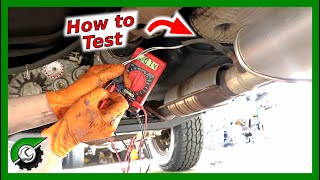
How to confirm: Test the resistance of the heater circuit between the two heater pins on the sensor itself using a multimeter. 🎬 See how to test an O2 sensor before buying parts. An open circuit (infinite resistance/OL) or a reading outside of the manufacturer's specification (typically 2-14 Ohms) confirms the internal heater element has failed.
Typical fix: Replace the Bank 1, Sensor 3 oxygen sensor. On 3.0L V6 models, a corresponding ECM software update may also be required.
Est. part cost: $80-$200 - Damaged Wiring or Connector 🟡 Medium Probability The sensor is located under the vehicle, exposed to road debris, moisture, and extreme heat from the exhaust. The wiring harness can be chafed or damaged by contact with the exhaust or nearby rotating components like the front driveshaft if retaining clips are broken or missing.
How to confirm: Visually inspect the wiring harness and connector for the Bank 1, Sensor 3 for any signs of fraying, melting, corrosion, or loose pins. Test for 12V power and a good ground at the connector with the key on, engine off.
Typical fix: Repair the damaged section of the wiring harness or clean/replace the connector.
Est. part cost: $10-$50 - Blown Fuse ⚪ Low Probability
How to confirm: Locate the fuse box and identify the fuse for the oxygen sensor heater circuits. On this platform, power is often supplied via Fuse 2 in the engine compartment fuse box. Visually inspect the fuse or test it for continuity with a multimeter.
Typical fix: Replace the blown fuse. If the fuse blows again immediately, it indicates a short circuit in the wiring or the sensor itself that must be diagnosed.
Est. part cost: $1-$5
Rare But Worth Checking
- Faulty Engine Control Module (ECM): This is very rare. The ECM's internal driver for the heater circuit can fail, but all other possibilities, especially the sensor and wiring, should be exhaustively ruled out before considering ECM replacement. Sometimes a software glitch can be resolved by reprogramming the ECM with the latest calibration file from the manufacturer.
Diagnosis Steps
- Verify the code P0042 is present using an OBD-II scanner.
- Visually inspect the wiring harness and connector for the Bank 1, Sensor 3 oxygen sensor. It is located on the passenger side, rear of the catalytic converter, near the transfer case. Look for any signs of damage, melting, corrosion, or contact with the driveshaft.
- Check Fuse 2 in the engine compartment fuse box, which supplies power to the HO2S heaters.
- If the wiring and fuse are okay, disconnect the sensor. Use a multimeter set to Ohms to test the resistance between the two heater circuit pins on the sensor itself. A reading between 2-14 Ohms is expected. An open circuit (infinite resistance or 'OL') indicates a failed heater element.
- With the key on and engine off, use a multimeter set to DC Volts to check for battery voltage (approx. 12V) and a ground signal at the vehicle-side connector that plugs into the sensor. The ECM provides a pulse-width modulated ground, so a simple voltage test may not be conclusive; a test light may flicker.
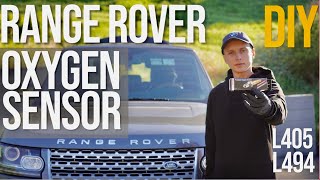
- If power is present and the sensor's heater circuit has failed its resistance test, replace the Bank 1, Sensor 3 oxygen sensor using a 22mm or 7/8" O2 sensor so 🎬 Watch this complete guide to replacing all six O2 sensors.cket.
- After replacement, clear the trouble codes with the scanner. 🎬 Watch a quick 2-minute DIY fix for the P0042 code.
- For 3.0L V6 models, it is highly recommended to check if a PCM software update is available, as specified in TSB LTB00703NAS2. This may require a dealer or a specialist with JLR's SDD/Pathfinder software to perform the 'Configure existing module – Powertrain control module' task.
- Perform a drive cycle to ensure the code does not return.
Parts You'll Likely Need
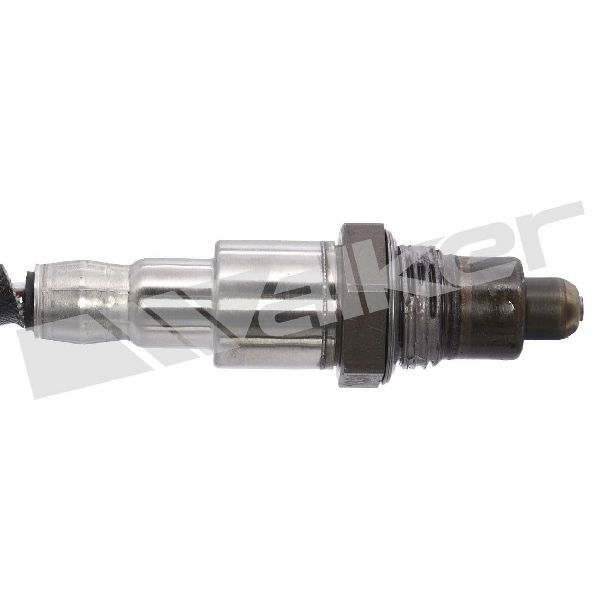
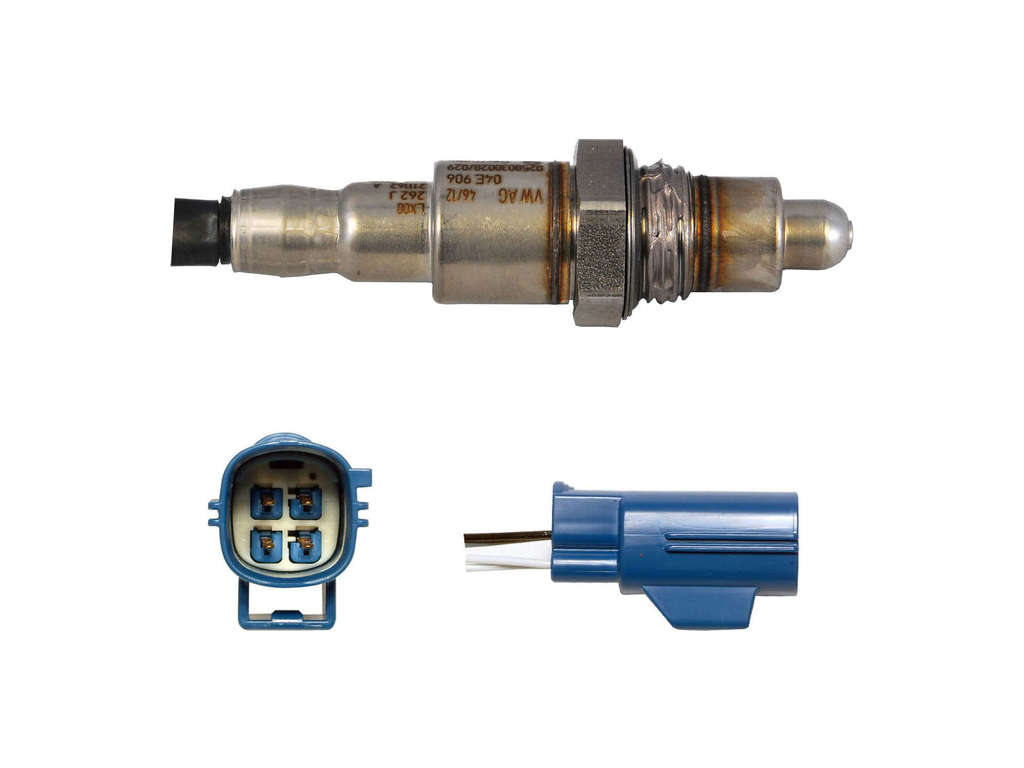
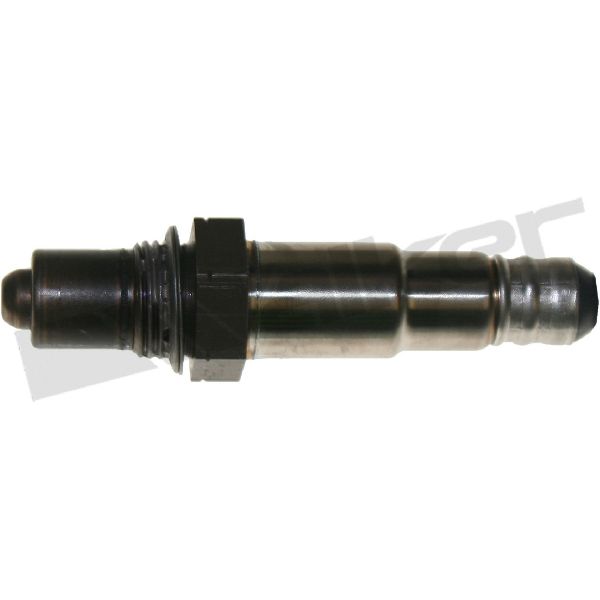
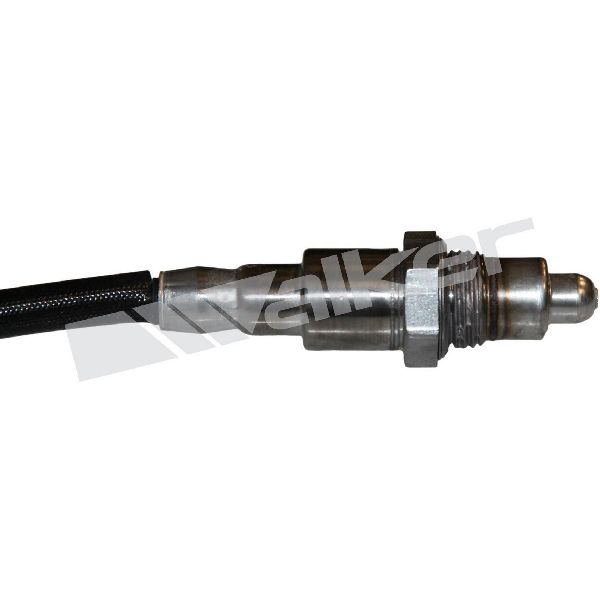
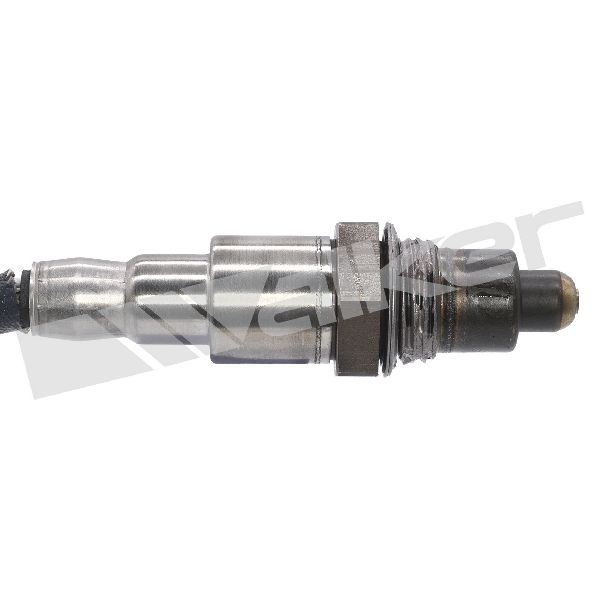
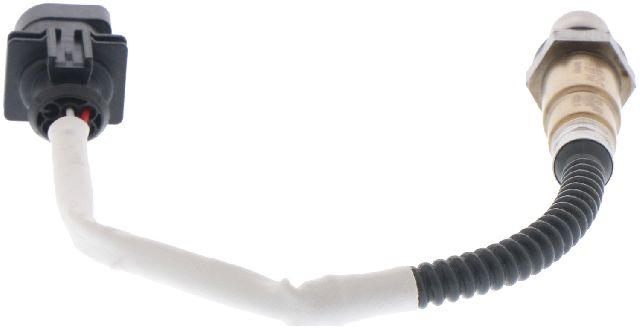
- Oxygen Sensor (Bank 1, Sensor 3)
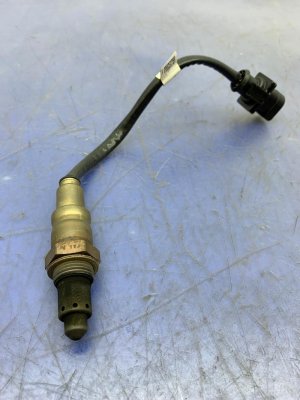
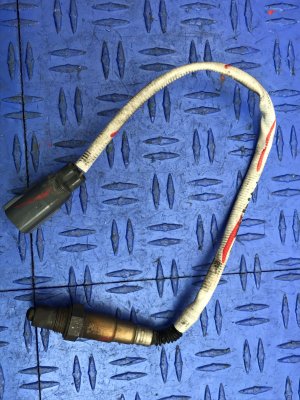
(OEM #LR035748 (for 3.0L V6 Petrol, per TSB LTB00703NAS2). Note: LR035751 is often listed by parts suppliers but appears to be for diesel models.)— This is the most common failure point for code P0042 on this vehicle, as documented by multiple manufacturer TSBs for manufacturing faults, thermal shock, and software issues.
Trusted brands: Bosch, Denso, NTK, Genuine Land Rover
OEM price range: $350-$450
Aftermarket price range: $80-$200
Related Codes That Often Appear With This One
- P0062 — This is the identical heater circuit fault but for Bank 2, Sensor 3. The TSBs indicate both can fail for the same manufacturing reason.
- P0142 — This is a general circuit fault code for the same sensor (Bank 1, Sensor 3). It often appears alongside heater circuit codes.
- P0162 — This is a general circuit fault for the sensor on the opposite bank (Bank 2, Sensor 3). It is also mentioned in the same TSBs.
Technical Service Bulletins (TSBs) & Recalls

- SSM72556: Lists P0042-00 as HO2S HEATER CONTROL CIRCUIT (BANK 1, SENSOR 3).
- LTB00671NAS3: Identifies P0042 as a DTC relevant to post-catalyst heated oxygen sensors.
- SSM63157: Cites a manufacturing fault within the sensor as a direct cause for code P0042.
- LTB00703NAS2: Cites software errors and thermal shock on 3.0L V6 models, requiring sensor replacement and a PCM update.
Platform-Specific Known Issues
- TSB #SSM63157 explicitly states the cause for this code can be a "Manufacturing fault at the supplier - misalignment with in the sensor."
- TSB #LTB00671NAS3 and #SSM72556 also group P0042 with a host of other post-catalyst oxygen sensor codes, indicating a widespread issue with these specific sensors on this platform.
- TSB #LTB00703NAS2 (for 2014 MY 3.0L V6) identifies a 'post-catalyst heated oxygen sensor software error' or 'thermal shock when water contacts the heated sensing element' as potential causes, requiring sensor replacement and a PCM software update.
Mechanic-Grade Diagnostic Values
- Oxygen Sensor Heater Element Resistance — expected: 2-14 Ohms when tested at the sensor's pins. Some sources cite a more general range of 4-19 Ohms.. Failure: A reading of infinite resistance (OL) indicates an open circuit/failed heater. A reading significantly outside the expected range also indicates a fault.
- Heater Circuit Voltage Supply (at harness connector) — expected: Approximately battery voltage (~12V) with the key on, engine off.. Failure: Voltage below 9V or no voltage suggests a problem with the power supply from the fuse box.
- Heater Circuit Ground (at harness connector) — expected: The ECM provides a pulse-width modulated (PWM) ground. Using a test light connected to battery positive, you should see the light pulse or flicker when the engine is running and the ECM is commanding the heater on.. Failure: No pulse or a steady light indicates a problem with the ECM driver or the wiring to the ECM.
Hidden / Shadow Codes Worth Checking
- P0042-00: The '-00' suffix is a subtype identifier used by JLR. In the provided TSB (SSM72556), it is listed with the description 'NO SUB TYPE INFORMATION', which means it's the generic fault for this circuit without pointing to a more specific failure mode like 'short to ground' or 'short to positive'. (see via JLR-specific diagnostic tools like SDD or Pathfinder.)
Scan Tool Commands That Help
- JLR SDD / Pathfinder: Configure existing module - Powertrain control module — This function is required on some 3.0L V6 models after replacing the sensor, as per TSB LTB00703NAS2, to update the ECM software and prevent the code from returning due to software errors or thermal shock misinterpretation.
- Advanced OBD-II Scanner (e.g., iCarsoft for JLR, Autel): O2 Sensor Test / On-Board Monitoring / Mode $06 — Can be used to view the raw test results from the ECM's self-diagnostics. For the O2 heater, it may show a test ID (TID) and component ID (CID) that has failed its test parameters, confirming the ECM has flagged the heater circuit specifically.
Wiring & Ground Locations
- Fuse F2 (Engine Compartment Fuse Box) — Located in the main fuse box in the engine bay.. According to wiring information for similar JLR platforms, this fuse often provides the 12V power supply to the heater elements for all four (or six) oxygen sensors. A blown fuse here will disable all heaters.
- ECM Connector C0635 (V8 Models, example) — This is one of the main connectors on the Engine Control Module.. On related platforms, the ground for the downstream LH (Bank 2) sensor heater is Pin 7, and for the RH (Bank 1) sensor heater is Pin 1. Verifying continuity from the sensor connector back to the correct pin on the ECM connector can rule out a wiring break.
- Chassis Ground Points — Multiple ground points exist on the frame rail, inner fender, and near the transmission crossmember.. While the sensor heater is typically grounded through the ECM, the ECM itself relies on clean, solid chassis grounds. Widespread electrical issues on Land Rovers are sometimes traced back to corroded main ground points, which can cause erratic behavior in various modules, including the ECM's sensor drivers.
Real Owner Repair Stories
- Reddit user Legitimate_Task_2761 (2016 Land Rover Discovery (platform mate)) — Check Engine Light with only code P0042 present.
❌ Tried (didn't work) Replacing the Bank 1, Sensor 3 oxygen sensor.
✅ What actually fixed it The user reported the code did not go away after sensor replacement, indicating the fault was likely in the wiring harness or the ECM itself. The final resolution was not posted, but this serves as a critical counter-example to the sensor being the only cause. - landroverforums.com user 'justingreene' (2005 LR3 V8 (L319)) — No error codes, but observing high counter values for O2 sensors in Mode 6 data after a cold start.
✅ What actually fixed it The user was using Mode 6 data proactively to monitor sensor health. While not a P0042-specific story, it highlights that advanced scan tools can show deteriorating sensor performance before a code is set, with Mode 6 counters approaching their maximum threshold.
When the Usual Fixes Don't Work
- While a faulty sensor is the most common cause, there are documented cases where replacing the sensor for P0042 does not resolve the issue. A Reddit user with a 2016 Discovery reported the code persisted after sensor replacement. This strongly suggests that a thorough diagnosis of the wiring for opens/shorts and checking the ECM's driver circuit functionality is necessary if a new sensor doesn't fix the problem.
OEM Part Supersession History
LR035748→LR098290, which was then superseded by LR136928— Standard part updates for improved reliability or supplier changes. The frequent supersessions align with the known manufacturing and thermal shock issues cited in TSBs.
Heads up: LR098290 and LR136928 are listed as direct replacements for LR035748. Always verify fitment with VIN, but these parts should be interchangeable for this application.
Helpful Videos

![How to Fix P0042 Engine Code in 2 Minutes [1 DIY Method / Only $19.45]](https://img.youtube.com/vi/YGSteufgX9E/mqdefault.jpg)
Used OEM Parts in Stock




New Aftermarket Parts Available

The information in this article is provided for general reference and educational purposes only. Vehicle specifications, procedures, and part compatibility can vary by production date, trim level, and region. Always consult your vehicle's factory service manual and verify part numbers before purchasing or performing repairs. Safety-critical components such as airbags, seat belts, and braking systems should be installed by a qualified professional.
- Land Rover RANGE ROVER:
- 🎬 Helpful Videos
- 🛍️ Shop This Part
- What's Unique About the 2013-2016 Land Rover RANGE ROVER
- Diagnostic Flowchart
- Symptoms You May Notice
- Most Likely Causes
- Rare But Worth Checking
- Diagnosis Steps
- Parts You'll Likely Need
- Related Codes That Often Appear With This One
- Technical Service Bulletins (TSBs) & Recalls
- Platform-Specific Known Issues
- Mechanic-Grade Diagnostic Values
- Hidden / Shadow Codes Worth Checking
- Scan Tool Commands That Help
- Wiring & Ground Locations
- Real Owner Repair Stories
- When the Usual Fixes Don't Work
- OEM Part Supersession History
- 🎟️ Get 5% Off