

P0038 on 2021 Chrysler Pacifica: O2 Sensor Heater Circuit High Causes & Fixes
On a 2021 Chrysler Pacifica, code P0038 almost always indicates a failed downstream oxygen sensor (Bank 1, Sensor 2). The most common fix is to replace this sensor, which is located on the rear cylinder bank (firewall side), after the catalytic converter. Expect to pay around $50-$90 for a quality aftermarket part (NTK/Denso) or $120-$180 for an OEM Mopar sensor. This is a DIY-friendly repair for those with some experience, though the sensor can be difficult to access.
- P0038 on your Pacifica points directly to a problem with the heater in the downstream oxygen sensor on the rear cylinder bank (Bank 1).
- The most probable cause is a failed oxygen sensor, which is a common wear-and-tear item. The correct Mopar part is 5149180AB.
- Before replacing the sensor, always perform a quick visual inspection of the wiring underneath the vehicle for any obvious signs of melting or damage.
- If you have a Pacifica Hybrid, check with a dealer about TSB #18-050-22REVA, as a simple software update might fix the problem without replacing parts.
- When replacing the sensor, use an OEM Mopar part or a high-quality aftermarket brand like NTK (the OEM supplier) or Denso, as Chrysler vehicles can be sensitive to other brands.
- This is a straightforward repair, but accessing the sensor on the rear bank can be challenging due to tight space.
What's Unique About the 2021-2021 Chrysler PACIFICA
For Chrysler vehicles, including the Pacifica, this code is part of a family of O2 sensor heater circuit faults that the manufacturer has acknowledged. Technical Service Bulletin (TSB) #18-050-22REVA specifically lists P0038 and other related codes for the 2021 Pacifica Hybrid, indicating a known pattern that may be resolved with a PCM software update. This suggests that the issue is not just a random hardware failure but a recognized potential fault in the emissions control system for this platform that could be software-related.
Diagnostic Flowchart
Tap your situation to follow the diagnostic path that matches what you're seeing on this vehicle.
Symptoms You May Notice
- Check Engine Light is on
- Failure to pass an emissions inspection
- Slightly reduced fuel economy
- In some rare cases on other platforms, a rough idle or stalling has been noted, though this is not typical for a downstream sensor fault.
- Replacing the wrong oxygen sensor (e.g., replacing the upstream Sensor 1 or the sensor on Bank 2). On the Pacifica's 3.6L V6, Bank 1 is the cylinder bank closer to the firewall, and Sensor 2 is the downstream sensor after the catalytic converter.
Most Likely Causes
- Failed Oxygen Sensor (Bank 1, Sensor 2) 🔴 High Probability The internal heater element of the O2 sensor is a common failure point due to constant thermal cycling. The existence of a TSB covering this code suggests a higher-than-average failure rate for this component or its control circuit on Chrysler vehicles.
How to confirm: Disconnect the sensor and test the resistance between the two heater circuit pins (typically the two same-colored wires) with a multimeter. A good sensor usually has a resistance between 4-40 ohms, but check specifications for your specific part. An open circuit (infinite resistance) or a short (near zero ohms) confirms a failed heater element.
Typical fix: Replace the Bank 1, Sensor 2 oxygen sensor. The Mopar OEM part number is 5149180AB, which supersedes 5149180AA. NTK is the OEM supplier, so an NTK-branded sensor is a reliable alternative.
Est. part cost: $50-$180 - Damaged Wiring or Connector 🟡 Medium Probability The downstream O2 sensor's wiring is routed underneath the vehicle, making it susceptible to damage from road debris, heat from the exhaust, and corrosion. A short to a voltage source in the harness can cause the 'high circuit' code.
How to confirm: Visually inspect the entire wiring harness leading to the sensor for any signs of melting, chafing, breaks, or corrosion in the connector pins. With the key on, engine off, check for battery voltage at the harness-side connector on the power supply wire for the heater. Check for a short to voltage on the control circuit wire.
Typical fix: Repair the damaged section of wire or clean/replace the connector. Use heat-shrink connectors for durability, especially near the exhaust.
Est. part cost: $5-$50 - Blown Fuse for Heater Circuit ⚪ Low Probability A short circuit in the wiring or the sensor itself can cause the protective fuse to blow. While P0038 is a 'high' circuit code, the underlying short could still lead to a blown fuse.
How to confirm: Locate the fuse for the O2 sensor heaters in the Power Distribution Center (PDC) / Totally Integrated Power Module (TIPM) in the engine bay and check for continuity. For the 2021 Pacifica, O2 sensor power is often shared with other components, so a blown fuse might present other symptoms. A blown fuse requires finding the underlying short circuit before replacement.
Typical fix: Replace the blown fuse after diagnosing and fixing the short circuit that caused it to blow.
Est. part cost: $1-$5 - PCM Software Issue ⚪ Low Probability TSB #18-050-22REVA for the 2021 Pacifica Hybrid specifically calls for a PCM software update to address a list of DTCs including P0038. This suggests that in some cases, the fault logic within the PCM may be too sensitive or contain an error.
How to confirm: This must be confirmed by a dealer or a shop with access to Chrysler's service information. They can check if the vehicle's VIN is applicable to the TSB and if the PCM has the latest software calibration installed.
Typical fix: Reprogram the Powertrain Control Module (PCM) with the latest software. This is typically performed by a dealership.
Est. part cost: $0 (if under warranty) - $200
Rare But Worth Checking
- Powertrain Control Module (PCM) Fault: This is extremely rare. A hardware failure within the PCM's driver circuit for the O2 sensor heater can cause this code. The PCM should only be considered as the cause after all other possibilities, including the sensor, wiring, fuses, and software updates, have been thoroughly tested and ruled out.
Diagnosis Steps
- Verify the code P0038 is present using an OBD-II scanner.
- Turn off the vehicle and locate the Bank 1, Sensor 2 oxygen sensor. On the Pacifica's transverse 3.6L engine, Bank 1 is the rear bank (near the firewall), and Sensor 2 is located after the catalytic converter. Access is typically from underneath the vehicle. 🎬 See this walkthrough for replacing the sensor on a 3.6L Pentastar.
- Visually inspect the sensor's wiring harness and connector for any signs of melting, chafing, corrosion, or physical damage. Pay close attention to where the harness might contact the exhaust or chassis.
- If wiring appears intact, disconnect the sensor. Test the resistance of the heater circuit on the sensor side using a multimeter. The pins for the heater are usually the two wires of the same color. A reading between 4-40 ohms is typical for a good sensor, while infinite resistance (open) or near-zero resistance (short) indicates a failed sensor.
- With the sensor still disconnected and the ignition in the 'On' position (engine off), carefully test the harness-side connector for power. You should find battery voltage (approx. 12V) on one of the heater circuit pins. Check the other heater pin for a good ground provided by the PCM.
- Check the fuse for the O2 sensor heaters in the engine bay fuse box (Power Distribution Center / TIPM). A blown fuse indicates a short circuit that must be located and repaired.
- If the vehicle is a Pacifica Hybrid, check with a dealer if TSB #18-050-22REVA applies, as a PCM software update may be the required fix.
- If the sensor tests good, the wiring is intact, the fuse is good, and no TSBs apply, the problem may be intermittent or, in very rare cases, a fault within the PCM.
Parts You'll Likely Need
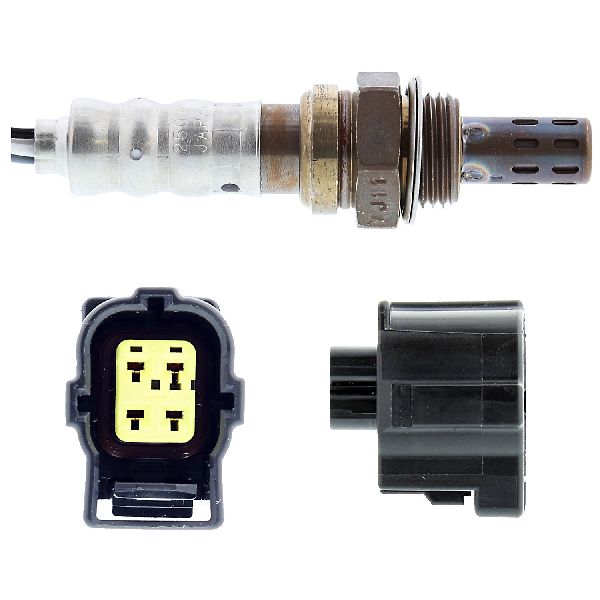
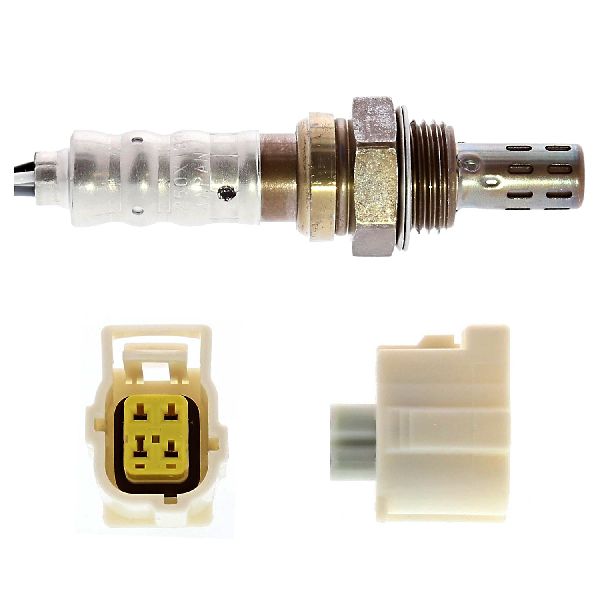
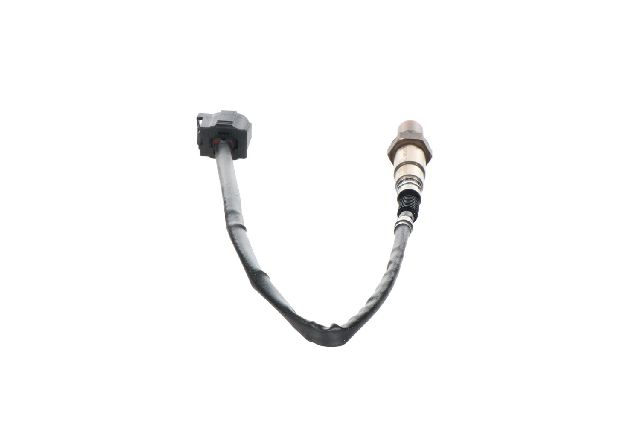
- Oxygen Sensor (Bank 1, Sensor 2)
(OEM #5149180AB)— This is the most common cause of a P0038 code, as the internal heater element fails over time. 🎬 Watch: A quick 2-minute guide to fixing the P0038 code. This specific part is the downstream sensor for the rear bank.
Trusted brands: Mopar (OEM), NTK (OEM supplier), Denso, Bosch
OEM price range: $120-$180
Aftermarket price range: $50-$90
Related Codes That Often Appear With This One
- P0037 — This is the 'Heater Circuit Low' code for the same sensor. Seeing both may indicate an intermittent wiring issue or a failing sensor heater that is fluctuating between an open and shorted state.
- P0058 — This is the 'Heater Circuit High' code for the Bank 2, Sensor 2 (front bank, downstream). Seeing both P0038 and P0058 could point to a common power or ground issue affecting both downstream sensors, or a PCM software issue as noted in TSBs.
- P0136, P0137, P0138, P0140, P0141 — These are other diagnostic trouble codes related to the performance and circuit of the Bank 1, Sensor 2 oxygen sensor. Seeing them alongside P0038 reinforces that the issue is with this specific sensor or its circuit.
Technical Service Bulletins (TSBs) & Recalls
- Bulletin #18-050-22REVA - Flash: Powertrain Control Module (PCM) Updates. For 2021 Pacifica Hybrid models, lists P0038 as a potential DTC that can be resolved by updating the PCM software.
Platform-Specific Known Issues
- Chrysler has issued Technical Service Bulletin #18-050-22REVA for the 2021 Pacifica Hybrid, which includes P0038 among a list of O2 sensor heater circuit codes. The prescribed fix is to update the PCM software, suggesting the fault can be triggered by software logic rather than a hardware failure.
- Owners of vehicles with the 3.6L Pentastar engine across multiple platforms report that the Bank 1 (rear bank) sensors are significantly harder to access than the Bank 2 (front bank) sensors due to tight clearance near the firewall.
Mechanic-Grade Diagnostic Values
- O2 Sensor Heater Element Resistance — expected: 4 to 10 ohms is a common range for a good sensor.. Failure: Near 0 ohms indicates a shorted element; infinite resistance (OL) indicates an open/broken element.
- Heater Circuit Voltage Threshold (PCM Trigger) — expected: Normal operation is below 14.5V.. Failure: The PCM may log P0038 if it detects heater circuit voltage exceeding 14.5V for more than 5 seconds.
- O2 Sensor Signal Voltage (Disconnected) — expected: Approximately 5.0 Volts on the signal wire with the sensor disconnected and key on.. Failure: Significantly lower or no voltage may indicate a wiring issue back to the PCM.
- O2 Sensor Signal Voltage (Jumpered) — expected: Voltage should drop from 5.0V to 2.5V when jumpering the signal and return circuits on the harness connector.. Failure: No change in voltage suggests an open or high resistance in the signal or return circuit.
Hidden / Shadow Codes Worth Checking
- Mode $06, TID $81: This refers to the onboard diagnostic monitor for the Bank 1, Sensor 2 oxygen sensor. A technician can use a scan tool that supports Mode $06 to view the raw test results from the PCM's last self-test of this component, even if a code hasn't been set. (see via An advanced OBD-II scan tool with Mode $06 functionality.)
Scan Tool Commands That Help
- wiTECH or equivalent advanced scan tool: O2 Sensor Heater Actuation Test — This bidirectional control allows a technician to command the O2 sensor heater on and off manually. It's used to verify the integrity of the wiring, PCM driver, and power/ground supply. When actuating the heater, you can check for voltage at the sensor connector with a multimeter or test light to confirm the circuit is functioning.
Wiring & Ground Locations
- B1S2 Heater Circuit — Wiring runs from the PCM to the Bank 1 downstream O2 sensor connector.. On some 3.6L engine harnesses, the O2 1/2 Heater Control wire is Brown/White (BR/WT) and the O2 1/2 Return wire is Brown/Dark Green (BR/DG). The shared ground for the sensors is often a Black (BK) wire on circuit Z903, terminating at ground point G903. Knowing these specific circuits is critical for pinpoint testing.
OEM Part Supersession History
5149180AA→5149180AB— Standard part revision by the manufacturer.
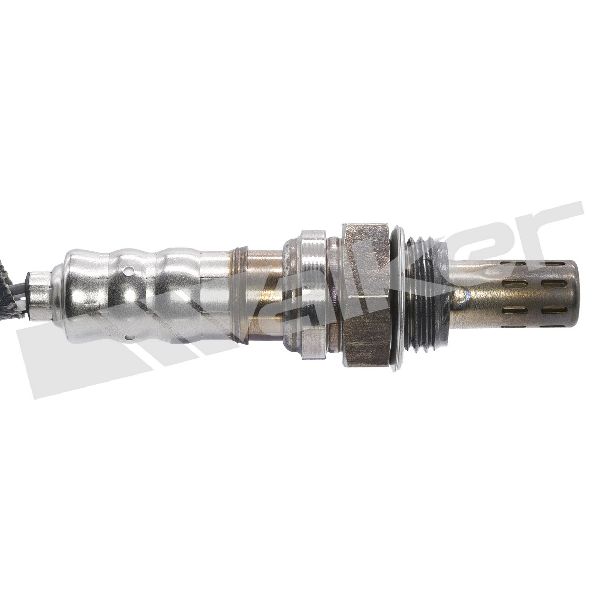
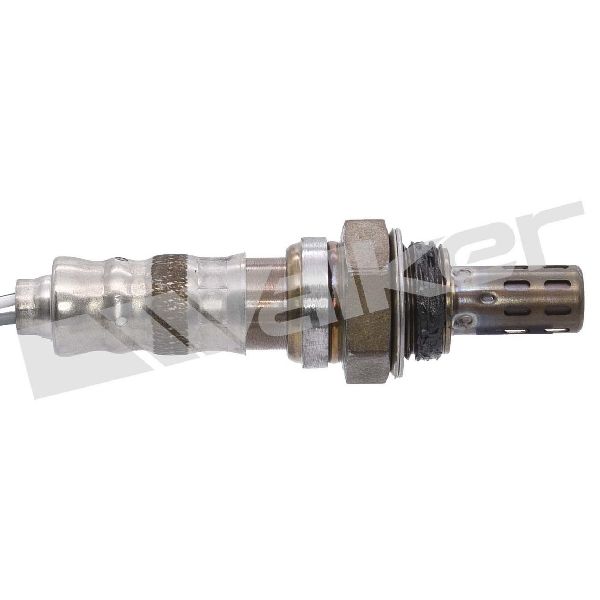
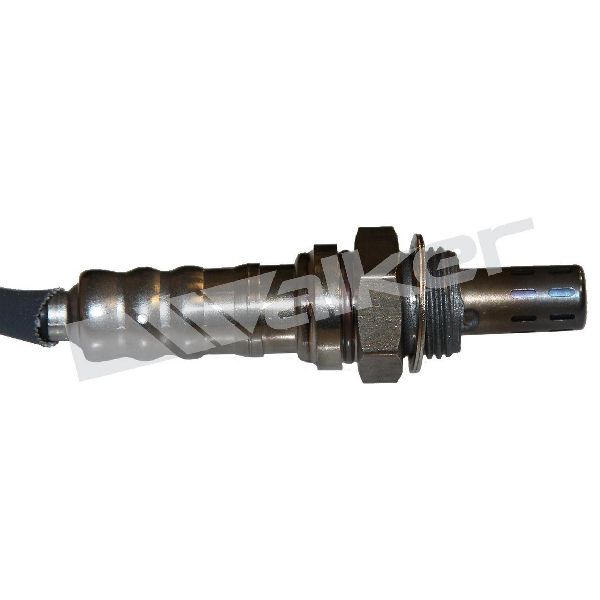
Heads up: 5149180AB is the correct and current part. Aftermarket equivalents include DENSO 234-4545 and NTK 23162.
Helpful Videos
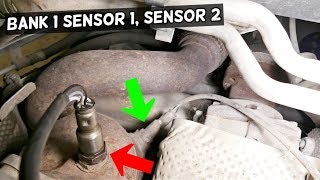
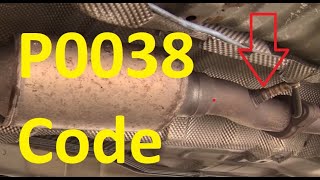
![How to Fix P0038 Engine Code in 2 Minutes [1 DIY Method / Only $19.71]](https://img.youtube.com/vi/ayWifSrxNuc/mqdefault.jpg)
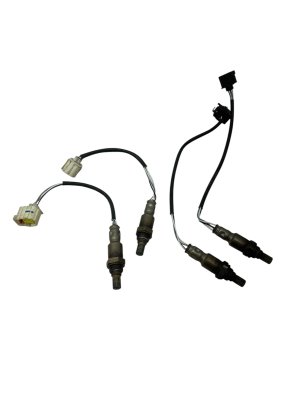
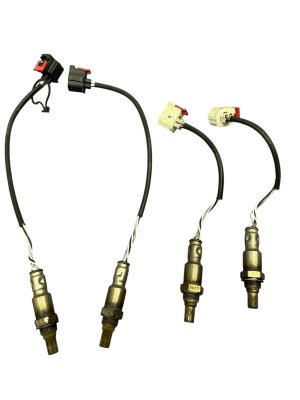
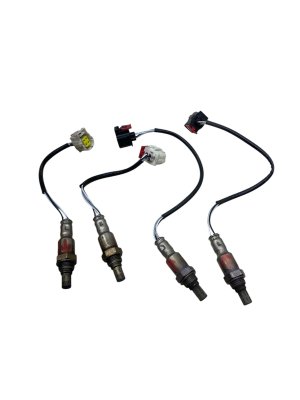
Used OEM Parts in Stock
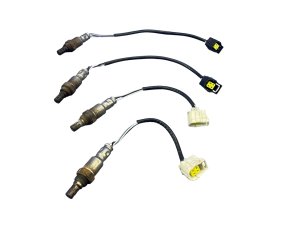
New Aftermarket Parts Available

The information in this article is provided for general reference and educational purposes only. Vehicle specifications, procedures, and part compatibility can vary by production date, trim level, and region. Always consult your vehicle's factory service manual and verify part numbers before purchasing or performing repairs. Safety-critical components such as airbags, seat belts, and braking systems should be installed by a qualified professional.
- Chrysler PACIFICA:
- 🎬 Helpful Videos
- 🛍️ Shop This Part
- What's Unique About the 2021-2021 Chrysler PACIFICA
- Diagnostic Flowchart
- Symptoms You May Notice
- Most Likely Causes
- Rare But Worth Checking
- Diagnosis Steps
- Parts You'll Likely Need
- Related Codes That Often Appear With This One
- Technical Service Bulletins (TSBs) & Recalls
- Platform-Specific Known Issues
- Mechanic-Grade Diagnostic Values
- Hidden / Shadow Codes Worth Checking
- Scan Tool Commands That Help
- Wiring & Ground Locations
- OEM Part Supersession History
- 🎟️ Get 5% Off