

P0036 on 2016-2018 Ford Edge: Causes and Fixes for the O2 Sensor Heater Circuit
On a 2016-2018 Ford Edge with the 2.0L EcoBoost engine, code P0036 is most often caused by a faulty downstream oxygen sensor (Bank 1, Sensor 2) or by out-of-date PCM software. Ford issued technical service bulletins for this exact issue, recommending a PCM software update as the first step. A dealer reflash costs between $110-$190. If the sensor itself needs replacement, expect to pay $70-$120 for an aftermarket part or $150+ for an OEM Motorcraft sensor.
- For a 2016-2018 Edge 2.0L, your first step for P0036 should be checking if TSB 18-2212 applies and has been performed. A simple software update may fix the issue.
- If a part is needed, the problem is almost always the downstream oxygen sensor (Bank 1, Sensor 2), located after the catalytic converter.
- This is a DIY-friendly repair with a difficulty of 2/5. The main challenge is accessing the sensor on the exhaust underneath the vehicle.
- Ignoring this code will cause an automatic failure on an emissions test but is unlikely to cause further damage or affect how the car drives.
What's Unique About the 2016-2018 Ford EDGE

The 2016-2018 Ford Edge with the 2.0L EcoBoost engine is particularly known for this code, to the point that Ford issued two Technical Service Bulletins (TSBs). These bulletins (TSB 18-2097 and its successor, TSB 18-2212) acknowledge that vehicles built before March 12, 2018, may trigger this code. Interestingly, the primary fix recommended by Ford is not to replace the sensor, but to reprogram the PCM if P0036 is the only code present. This suggests the original fault logic was too sensitive, making a software update a critical first diagnostic step before replacing any parts.
Diagnostic Flowchart

Tap your situation to follow the diagnostic path that matches what you're seeing on this vehicle.
Symptoms You May Notice
- Check Engine Light is on
- Failure to pass an emissions inspection
- Slight decrease in fuel economy over an extended period
- Rough idle or hesitation on a cold start
- Replacing the oxygen sensor without first checking for applicable TSBs. On this specific vehicle, a simple PCM reflash might solve the problem without needing new parts, saving time and money.
Most Likely Causes

- Faulty Powertrain Control Module (PCM) Software 🔴 High Probability Ford released TSBs #tsb18-2212 and #TSB18-2097 specifically for this issue on 2016-2018 2.0L EcoBoost models, indicating a known software calibration problem.
How to confirm: A Ford dealership or a qualified shop with access to Ford's diagnostic tools (IDS) can check if the PCM software is outdated and if TSB 18-2212 applies to your VIN.
Typical fix: Reprogram the PCM to the latest software version. According to the TSB, this is the prescribed fix if P0036 is the only code present. A Ford dealer may charge between $110 and $190 for this service.
Est. part cost: $0 - Failed Oxygen Sensor (Bank 1, Sensor 2) 🔴 High Probability The internal heater element within the O2 sensor is a common failure point due to heat cycles and exposure to exhaust gases. Even if the TSB applies, the sensor itself can still fail independently.
How to confirm: After confirming the PCM software is up to date, a mechanic can test the sensor's heater circuit resistance with a multimeter. A good sensor will typically have a resistance between 1.5 and 6 ohms, with one source specifying 3.3-4.1 ohms at room temperature. An open circuit (infinite resistance) or a reading far outside this range confirms a bad sensor.
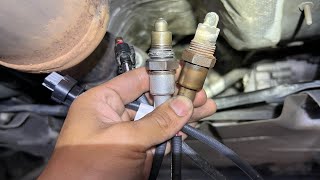
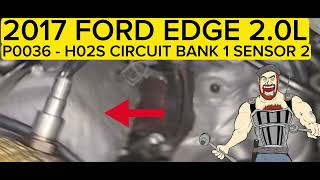
Typical fix: Replace the Bank 1, Sensor 2 oxygen sensor. This is the sensor located after the catalytic converter. 🎬 Watch: Step-by-step 2.0L EcoBoost downstream O2 sensor replacement guide.
Est. part cost: $70-$180 - Damaged Wiring or Connectors 🟡 Medium Probability The O2 sensor wiring runs close to the hot exhaust system. The plastic clips holding the harness can become brittle and break, allowing the wires to touch the exhaust and melt.
How to confirm: Visually inspect the entire wiring harness from the O2 sensor to its connection point at the back of the engine. Look for melted sections, frayed wires, or corrosion in the connector pins.
Typical fix: Repair or replace the damaged section of the wiring harness. Use heat-resistant tape or new clips to secure the harness away from the exhaust.
Est. part cost: $10-$50 - Blown Fuse ⚪ Low Probability
How to confirm: Check the vehicle's fuse boxes for the fuse related to the O2 sensor heater circuit. A wiring diagram for your specific vehicle is essential for positive identification.
Typical fix: Replace the blown fuse. If the fuse blows again, it indicates a short circuit in the wiring or the sensor itself that must be found and repaired.
Est. part cost: $1-$5
Rare But Worth Checking
- Major Engine Failure (Coolant Leak): In one NHTSA complaint (ODI #11539934), code P0036 appeared alongside codes for overheating and misfires (P0217, P0301, P0316) on a 2016 Edge. This was due to a severe coolant leak into the combustion chamber requiring a head gasket replacement. While not a direct cause, it shows that P0036 can be a secondary symptom of a much larger problem fouling the exhaust and sensors.
- Faulty PCM Driver Circuit: In rare cases where the sensor and wiring are confirmed to be good, the internal driver circuit within the Powertrain Control Module (PCM) that powers the heater can fail. This is an internal PCM fault requiring module repair or replacement.
Diagnosis Steps
- Scan the PCM for trouble codes. Confirm if P0036 is the only code present.
- Check for TSBs. For a 2016-2018 Edge with the 2.0L engine, check if TSB 18-2212 has been performed. If not, and P0036 is the only code, have the PCM reprogrammed by a dealer or qualified shop.
- Clear the code and test drive the vehicle. If the code does not return, the reflash was successful.
- If the code returns, perform a visual inspection of the Bank 1, Sensor 2 (downstream) oxygen sensor and its wiring harness. Look for any signs of melting, chafing, or corrosion.
- If the wiring appears intact, disconnect the sensor and test the resistance of the heater circuit using a multimeter. 🎬 Vea este video para un diagnóstico detallado paso a paso. The two heater wires are often the same color. A reading between 1.5-6 ohms is typical, but an open circuit (OL) or a direct short (0 ohms) confirms a failed sensor.
- If the sensor's resistance is good, check for 12V power and a good ground at the sensor's electrical connector (harness side) with the key on. A reading below 9V suggests a power supply issue. Resistance on the ground wire to the chassis should be less than 0.1 Ω.
- If all tests pass but the code persists, the issue could be an intermittent wiring fault or, in very rare cases, a faulty PCM driver circuit.
Parts You'll Likely Need
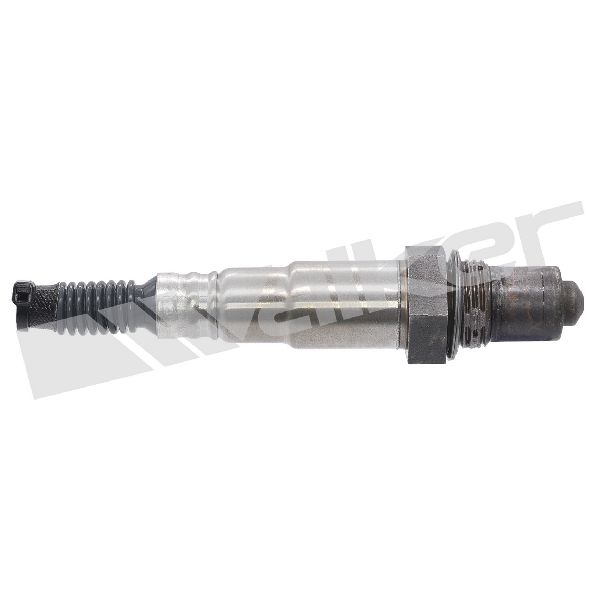
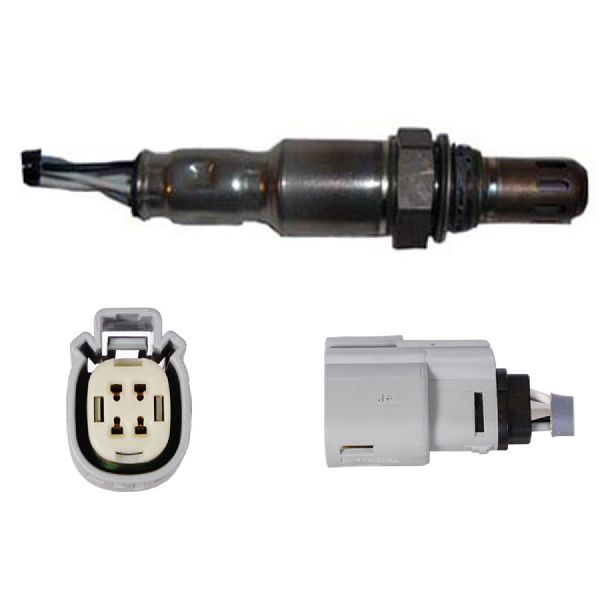
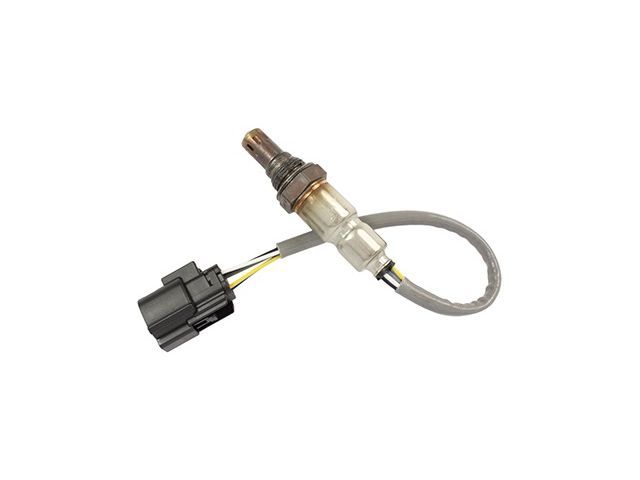
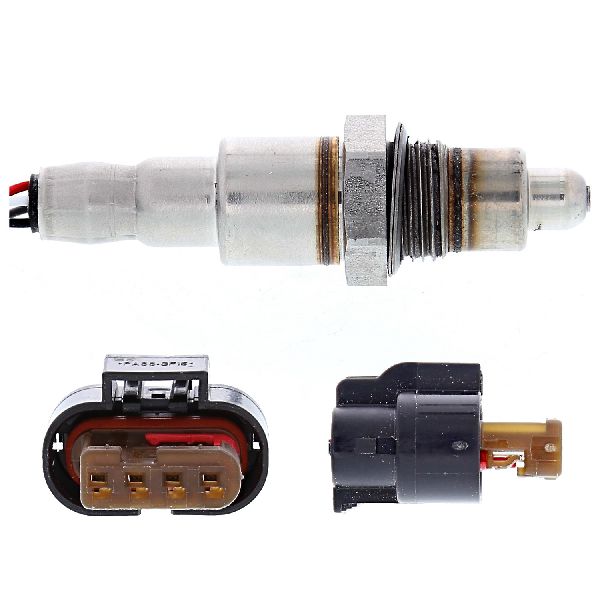
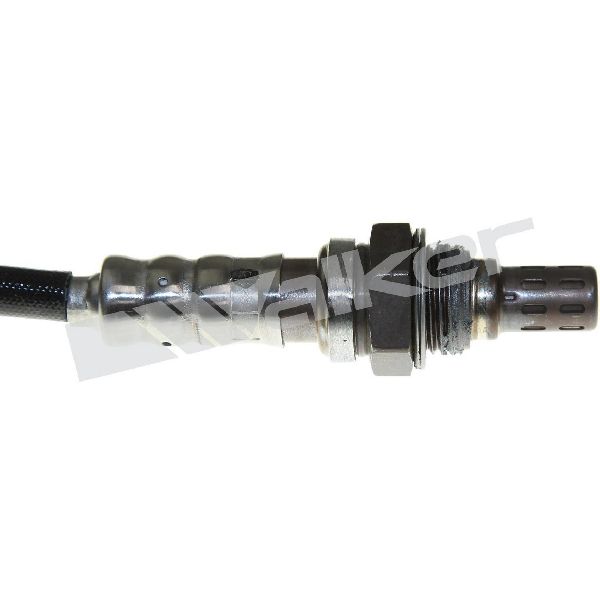
- Downstream Oxygen Sensor (Bank 1, Sensor 2)
(OEM #HS7Z-9G444-B)— This is the most commonly replaced part for code P0036 when a software update doesn't fix it. The internal heater element fails, triggering the code. This part number supersedes the older HS7Z-9G444-A and DY-1361.
Trusted brands: Motorcraft (OEM), Bosch, Denso, NTK
OEM price range: $118-$180
Aftermarket price range: $70-$120
Related Codes That Often Appear With This One
- P0141 - This code is for 'O2 Sensor Heater Circuit Malfunction (Bank 1, Sensor 2)' and is functionally identical to P0036. Some scanners may report one or the other for the same fault. 🎬 Watch: A quick breakdown of P0036 causes and fixes.
Technical Service Bulletins (TSBs) & Recalls

- tsb18-2212: Supersedes a previous TSB, applies to 2016-2018 Edge 2.0L EcoBoost models built on or before 12-Mar-2018. The service procedure is to reprogram the PCM to the latest calibration if DTC P0036 is the only code present.
- TSB18-2097: The original TSB for 2016-2017 Edge 2.0L EcoBoost models with DTC P0036, later superseded by tsb18-2212.
Platform-Specific Known Issues
- Ford TSB 18-2212 specifically addresses P0036 on 2016-2018 Edge models with the 2.0L EcoBoost engine, recommending a PCM reprogram as the primary fix if it's the only code stored.
- Some 2015-2018 Edge models with the 2.0L EcoBoost were also subject to TSBs for a cracked flexplate. While unrelated to P0036, it's a known issue for this engine and year range.
Mechanic-Grade Diagnostic Values
- O2 Sensor Heater Element Resistance — expected: 3.3 - 4.1 Ω at 20°C (68°F). Other sources cite ranges from 1.5-2.5 Ω or generally around 6 Ω, indicating some variance between sensor manufacturers.. Failure: An open circuit (infinite resistance/OL) or a direct short (near 0 Ω).
- O2 Sensor Heater Circuit Current Draw — expected: 0.5 A to 1.1 A when active.. Failure: No current draw indicates an open circuit in the sensor or wiring; excessive current indicates a short.
- Heater Circuit Power Supply Voltage — expected: Approximately 12V (battery voltage) with key on, engine off.. Failure: A reading below 9V suggests a power supply issue, such as a blown fuse or wiring fault.
- Heater Circuit Ground Resistance — expected: Less than 0.1 Ω between the ground wire at the sensor connector and a known-good chassis ground.. Failure: Values above 0.1 Ω indicate a poor ground connection, which can cause intermittent faults.
Scan Tool Commands That Help
- Ford IDS (or equivalent professional scanner like FORScan): Module Programming > PCM — This is the primary fix specified by TSB 18-2212 for vehicles built before March 12, 2018, when P0036 is the only code present.
- Professional Scanner (e.g., iCarsoft, Autel): Bi-Directional Control > O2 Sensor Heater Activation — To manually command the heater circuit on while monitoring live data for current draw (0.5-1.5A). This directly tests the PCM driver, wiring, and sensor heater element in a single step.
- Ford IDS / Professional Scanner: Advise customer of Adaptive Transmission Shift Strategy relearn — After reprogramming the PCM per TSB 18-2212, the transmission's learned shift points are reset. The technician should inform the customer that they may experience firmer shifts for several days as the system relearns.
Wiring & Ground Locations
- C175B — This is the main connector for the Powertrain Control Module (PCM).. The wires for the O2 sensor heater control circuit originate from the PCM at this connector. Advanced diagnosis, such as checking for voltage output directly from the PCM or performing a continuity test, requires identifying the correct pins on this connector.
Real Owner Repair Stories
- Ford Edge Forum user 'pmbb68' (2016 Ford Edge SEL 2.0L EcoBoost, 38,000 miles) — Check engine light came on twice with code P0036.
✅ What actually fixed it The repair was performed by a Ford dealer and was covered under the 80,000-mile federal emissions warranty.
When the Usual Fixes Don't Work
- While Ford TSB 18-2212 strongly indicates a PCM software update is the primary fix, this does not apply to all situations. If other codes are present, or if the vehicle was built after March 12, 2018, the TSB does not apply and diagnosis should focus on the sensor, wiring, or fuses. Furthermore, even on eligible vehicles, the sensor or wiring can fail independently of the software issue. Replacing the sensor or repairing wiring may still be the necessary fix even if the TSB has been performed.
OEM Part Supersession History
HS7Z-9G444-A→HS7Z-9G444-B— Standard part revision by the manufacturer.DY-1361→HS7Z-9G444-B— DY-1361 was a Motorcraft engineering number that is now replaced by the standard Ford part number.
Model Year Variations Within This Range
- 2016-2018 (built on or before 12-Mar-2018): Vehicles within this build date range are subject to TSB 18-2212, which states that if P0036 is the only DTC, the primary fix is to reprogram the PCM, not replace the sensor. This implies the original software calibration was overly sensitive.
Helpful Videos
We Have This Part in Stock

The information in this article is provided for general reference and educational purposes only. Vehicle specifications, procedures, and part compatibility can vary by production date, trim level, and region. Always consult your vehicle's factory service manual and verify part numbers before purchasing or performing repairs. Safety-critical components such as airbags, seat belts, and braking systems should be installed by a qualified professional.
- Ford EDGE:
- 🎬 Helpful Videos
- 🛍️ Shop This Part
- What's Unique About the 2016-2018 Ford EDGE
- Diagnostic Flowchart
- Symptoms You May Notice
- Most Likely Causes
- Rare But Worth Checking
- Diagnosis Steps
- Parts You'll Likely Need
- Related Codes That Often Appear With This One
- Technical Service Bulletins (TSBs) & Recalls
- Platform-Specific Known Issues
- Mechanic-Grade Diagnostic Values
- Scan Tool Commands That Help
- Wiring & Ground Locations
- Real Owner Repair Stories
- When the Usual Fixes Don't Work
- OEM Part Supersession History
- Model Year Variations Within This Range
- 🎟️ Get 5% Off