

P0031 on 1996-2002 Toyota 4Runner 3.4L V6: Heater Circuit Causes and Fixes
This code almost always means the front passenger-side Air/Fuel Ratio (Oxygen) Sensor has failed. The internal heater shorts out or goes open, triggering the Check Engine Light. Replacing the sensor, typically a Denso part, is the usual fix. The correct Denso part number depends on your transmission type. Expect to pay $100-$180 for an OEM-quality sensor.
- P0031 on a 3rd Gen 4Runner points directly to a problem with the heater in the front passenger-side A/F (O2) sensor.
- The most likely fix is to replace the sensor. Usi
What's Unique About the 1996-2002 Toyota 4Runner
On the 3rd Generation 4Runner with the 5VZ-FE engine, this code is a very common and straightforward issue, almost always pointing to the original Denso A/F sensor failing after many years of service. The main vehicle-specific challenge is the repair itself. On models with a manual transmission, the sensor's electrical connector is notoriously difficult to reach, located on top of the transmission. The established method requires removing the interior center console and shifter boots to access the connector from inside the cabin. Automatic transmission models have a much easier-to-reach connector on the side of the transmission pan.
Symptoms You May Notice
- Check Engine Light is on
- Reduced fuel economy
- Rough or unstable idle immediately after a cold start
- Failing an emissions/smog test
- In some cases, the VSC/TRAC lights may also illuminate along with the Check Engine Light
- Replacing the wrong oxygen sensor (e.g., the downstream Sensor 2 or the driver's side Bank 2 sensor). P0031 is specific to the upstream, passenger-side sensor.
- Using a cheap, universal oxygen sensor that requires splicing wires. These often have incorrect resistance values and lead to recurring codes.
Most Likely Causes
- Failed Air/Fuel Ratio Sensor (Bank 1, Sensor 1) 🔴 High Probability The internal heater element within the sensor is a common failure point due to age and countless heat cycles. Denso is the original equipment manufacturer, and these sensors have a finite lifespan, often failing after 100,000+ miles.
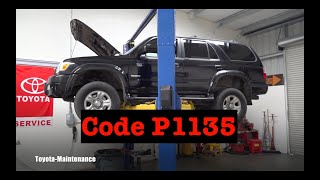
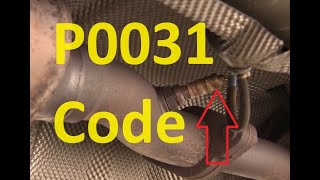
How to confirm: Disconnect the sensor and measure the resistance between the two black wires of the sensor's connector using a multimeter. A healthy heater circuit will have a low resistance, specified by Toyota as 0.8-1.4 ohms at 68°F (20°C). A reading of OL (Open Loop) or infinite resistance confirms the heater element is broken. 🎬 Watch: How to test A/F sensors and recognize heater codes. A reading significantly outside the spec also indicates failure.
Typical fix: Replace the Bank 1, Sensor 1 Air/Fuel Ratio sensor. It is critical to purchase the correct part number for your vehicle's transmission type (manual vs. automatic), as the wire harness length is different. Using universal, splice-in sensors is not recommended as they can cause persistent issues.
Est. part cost: $100-$180 - Damaged Wiring or Connector 🟡 Medium Probability The wiring harness runs close to the hot exhaust and transmission, making it susceptible to melting, chafing, or corrosion over time. The connector itself can also become brittle and break, especially during removal.
How to confirm: Visually inspect the wiring leading to the sensor for any signs of melting, fraying, or breaks. With the key on (engine off), use a multimeter to check for 12V battery voltage at the vehicle-side harness connector between the power wire (+B) and a known good ground. Then check for continuity to ground on the ground wire.
Typical fix: Repair or replace the damaged section of the wiring harness. Ensure the repaired wires are properly insulated and secured away from heat sources using high-temp wire loom and zip ties.
Est. part cost: $5-$50 - Blown Fuse or Faulty Relay ⚪ Low Probability
How to confirm: Check the fuses related to the engine control and emissions systems. On this 4Runner, this is typically the 'EFI' fuse and the 'A/F Heater' relay, both located in the fuse/relay box in the engine bay. A visual inspection or a continuity test with a multimeter will confirm if the fuse is blown. The relay can be tested by checking resistance or swapping with a known good relay.
Typical fix: Replace the blown fuse or faulty relay. If the fuse blows again immediately, it indicates a short circuit in the wiring or the sensor itself that must be diagnosed.
Est. part cost: $1-$25
Rare But Worth Checking
- Faulty Engine Control Module (ECM): This is extremely rare. The ECM should only be considered after all other possibilities (sensor, wiring, fuses, relay) have been definitively ruled out.
Diagnosis Steps
- Read the code with an OBD-II scanner to confirm P0031 is the primary code present. 🎬 Watch: A mechanic's guide to fixing the P0031 code.
- Locate the Bank 1, Sensor 1 A/F sensor. It is on the passenger side of the vehicle, in the exhaust manifold before the catalytic converter.
- Inspect the sensor's wiring harness and connector for any visible damage, such as melting, chafing, or corrosion.
- Check the 'EFI' fuse (typically 15A or 20A) and 'A/F Heater' relay in the under-hood fuse box. If a fuse is blown, replace it and see if the code returns.
- If fuses/relays are good, disconnect the sensor's electrical connector. Be aware this may be difficult to access, especially on manual transmission models, potentially requiring interior console removal.
- Use a multimeter set to Ohms (Ω) to test the resistance of the heater element on the SENSOR side of the connector. Probe the two wires that are the same color (black). A good sensor will show resistance between 0.8 and 1.4 Ohms at room temperature. An open circuit (infinite resistance) or a dead short (near zero) means the heater is broken and the sensor must be replaced.
- With the key in the 'ON' position (engine off), test the VEHICLE side of the connector for power. You should have 12V (battery voltage) between the heater power wire and a known good ground.
- If power and ground are present at the connector and the sensor's heater circuit resistance is out of spec, the sensor is faulty and needs replacement.
- Before installing the new sensor, clean the mounting surface on the exhaust manifold. Torque the two new nuts to 13 ft-lbs.
Parts You'll Likely Need
- Air/Fuel Ratio Sensor (Bank 1, Sensor 1)
(OEM #89467-35040 (Manual Trans) / 89467-35060 (Auto Trans) - Always verify by VIN)— This is the component that contains the heater element that fails and triggers the P0031 code. It is the most common point of failure. The wire harness length differs between transmission types.
Trusted brands: Denso (OEM)
OEM price range: $140-$180
Aftermarket price range: $100-$150
Platform-Specific Known Issues
- The electrical connector for the Bank 1 Sensor 1 on manual transmission models is located on top of the transmission, making it very difficult to access from underneath. The common procedure involves removing the interior center console and shifter boots to access the connector from inside the cabin.
- On automatic transmission models, the connector is much easier to access, located on the side of the transmission pan near the sensor itself.
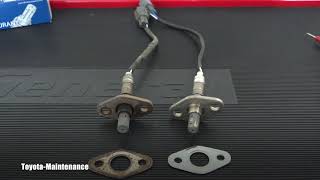
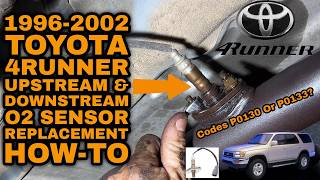
- The two 12mm nuts holding the sensor to the manifold are often severely rusted. Soaking them with a high-quality penetrating oil (like PB Blaster or Kroil) multiple times before attempting removal is highly recommended. In severe cases, the studs may break and require extraction. 🎬 See this walkthrough for replacing upstream and downstream sensors.
- While P0031 specifically targets the Bank 1 Sensor 1 (RH) exhaust manifold, manufacturer records such as NHTSA ODI #10573840 for similar Toyota platforms emphasize that the code may only trigger for one sensor rather than both A/F sensors simultaneously.
Mechanic-Grade Diagnostic Values
- A/F Sensor Heater Circuit Current — expected: Greater than 0.8 A. Failure: Current less than 0.8 A will trigger DTC P0031.
- EFI Relay Primary Coil Resistance — expected: Approx. 90 Ohms (for original Toyota relay). Failure: Significantly different readings, such as 110 Ohms found on some aftermarket replacements, may cause the circuit to malfunction even if the relay is new.
Scan Tool Commands That Help
- Toyota Techstream: Active Test: A/F Control — After confirming basic wiring and sensor integrity, this test can be used to command changes in the fuel injection volume (e.g., -12.5% or +25%) and observe the response of the A/F sensor voltage. This helps determine if the sensor is responding correctly to mixture changes, isolating a lazy or dead sensor from other system faults.
Wiring & Ground Locations
- EFI Relay — In the main fuse/relay box in the engine compartment, on the passenger's side fender well.. The EFI relay supplies power to the A/F sensor heater circuit. A faulty relay can cut power and trigger P0031.
- A/F Heater Fuse — In the engine compartment fuse/relay box. The specific fuse is often labeled 'A/F HEATER' or is tied to the 'EFI' circuit fuse (typically 20A for 2001+ models).. This fuse provides overcurrent protection for the heater circuit. If it blows, the heater will not receive power.
- G100 — On the front of the left (driver's side) front fender.. This is a major engine bay ground point. While not the direct ground for the sensor, poor grounding here can cause a host of electrical issues, including problems with the ECM which controls the sensor heater.
- G200 — Behind the driver's side kick panel.. This is a primary ground point for the dash harness and components connected to the ECM. A poor connection here could potentially affect ECM operation.
Real Owner Repair Stories
- YouTube user 'redonkilaus' (1997 Toyota 4Runner) — Sudden stalling, hesitation, and stuttering while driving.
❌ Tried (didn't work) Replacing the original EFI relay with a new aftermarket Denso relay (part number 567-0001). The new relay had a different primary coil resistance (110 ohms vs 90 ohms on OEM) and did not work.
✅ What actually fixed it The EFI relay had failed. Swapping it with the identical tail light relay temporarily fixed the issue. The final fix was replacing the faulty relay with a new, genuine OEM Toyota relay (gray color), not the aftermarket Denso which failed to resolve the issue. - Persistent Light Issues — An owner reported in NHTSA ODI #10901973 that their check engine light would not go out despite replacing the O2 sensor 7 to 10 times for a P0031 error, highlighting that resetting the light may not resolve underlying circuit issues.
- VSC/TRAC Interaction — NHTSA ODI #10531943 describes a scenario where the VSC and TRAC OFF lights illuminated alongside the service engine light due to a P0031 A/F sensor B1S1 failure, which required sensor replacement to clear the stability control warnings.
Model Year Variations Within This Range
- 1999-2002: Vehicles produced for sale in California (and other states adopting CARB standards) used wide-band Air/Fuel Ratio sensors, while vehicles with Federal emissions standards may have used conventional (narrow-band) oxygen sensors in the upstream position in earlier years of this generation. For P0031, which is Bank 1 Sensor 1, a 1999-2002 4Runner will almost certainly have an A/F sensor. It is crucial to verify with a VIN or by checking the existing part, as the sensors are not interchangeable.
- 2001-2002: Wiring diagrams for 2001 and later models show the EFI fuse rated at 20A, which powers the A/F Heater circuit. Earlier models may have a 15A fuse. This reflects minor changes in the electrical system architecture toward the end of the generation.
Diagnostic Flowchart
Other Known Issues on This Vehicle
Issues unrelated to this code that are worth knowing about as an owner of this generation:
- Lower Ball Joint Failure 🔴 High — Common across all 1996-2002 model years, especially over 100k miles. Failure can be sudden and catastrophic. (Ref: NHTSA 05V225000 / Toyota SSC 50J (Recall for 2001-2002 models, but the same design affects all years).)
- Automatic Transmission 'Pink Milkshake' 🔴 High — A known risk for automatic transmission models, typically occurring at higher mileage (150k+ miles) when the internal radiator wall between the coolant and transmission fluid cooler fails.
- Rear Axle Seal Leak 🟠 Medium — Common issue where the rear axle seals fail, causing differential fluid to leak onto the rear brake components and wheel. Often caused by a clogged differential breather.
- Cracked Radiator Top Tank 🟠 Medium — The original plastic top tank of the radiator can become brittle and crack with age and heat cycles, leading to coolant leaks. Often noticeable by the plastic turning a brownish color.
- Leaking Valve Cover Gaskets 🟡 Low — Very common oil leak source as the vehicle ages. Oil drips onto the hot exhaust manifold, causing a burning smell.
Used vs. New Parts: Buying Guide for This Vehicle
When a used part is the smart pick: For this repair, a used part is almost never a good choice for the sensor itself. However, sourcing a used wiring harness pigtail from a junkyard is a smart move if your original connector is broken or the wires are melted close to the connector. A used EFI relay from a running vehicle can also be used for diagnosis (by swapping) but should be replaced with a new OEM part for the final repair.
Donor-vehicle mileage cap: roughly under 150000 miles for the part to have meaningful remaining life.
What to inspect on the donor part:
- For a wiring pigtail, ensure the plastic is not brittle and the locking tab is intact.
- Check that the wires have not been previously repaired and have sufficient length for splicing.
- Avoid any parts from a vehicle that shows signs of fire or major fluid leaks in the engine bay.
OEM-only on this vehicle (don't cheap out):
- EFI Relay - Aftermarket relays have been documented to have incorrect coil resistance, causing them not to function in this circuit. Stick to the genuine Toyota part.
Aftermarket brands forum-validated for this vehicle:
- Denso (for the Air/Fuel Ratio Sensor itself). Denso is the Original Equipment Manufacturer, and their direct-fit sensors (e.g., 234-9002, 234-9003) are the trusted replacement.
Brands owners have reported issues with on this vehicle:
- Universal or 'splice-in' oxygen sensors.
- Unbranded or generic sensors from online marketplaces, as their heater resistance values are often incorrect.
Real Owner Stories
Aggregated from forums and TSBs cited above. Mileages and costs reflect what owners reported in those sources.
1996-2002 Toyota 4Runner 3.4L 5VZ-FE — ~100000 miles
Symptoms: Check Engine Light on with code P0031; internal heater element failed due to age and heat cycles.
What fixed it: Replacement of the Bank 1, Sensor 1 Air/Fuel Ratio sensor with a Denso unit.
Cost: $100-$180
Source hint: common_causes section regarding Denso OEM sensor lifespan
1996-2002 Toyota 4Runner 5VZ-FE Manual Transmission
Symptoms: P0031 code present; difficulty accessing the sensor connector from underneath the vehicle.
What fixed it: Accessed and replaced the sensor by removing the interior center console and shifter boots to reach the connector on top of the transmission.
Source hint: YotaTech - P0031 & O2 Sensor Replacement Guide
1996-2002 Toyota 4Runner 5VZ-FE
Symptoms: P0031 code; visual inspection showed the wiring harness was damaged due to proximity to the hot exhaust and transmission.
What fixed it: Repaired the damaged section of the wiring harness and secured it away from heat sources using high-temp wire loom.
Cost: $5-$50
Source hint: common_causes - Damaged Wiring or Connector
Related OBD-II Codes
Frequently Asked Questions
Why is the Bank 1, Sensor 1 connector so hard to find on my manual transmission 4Runner?
Can I use a universal splice-in sensor to fix P0031 on my 5VZ-FE?
Is there a specific resistance I should look for when testing the A/F sensor heater circuit?
Does the transmission type affect which replacement part I should buy?
Which fuse and relay should I check for a P0031 code on my 4Runner?
My VSC/TRAC lights came on at the same time as the Check Engine Light for P0031. Is this normal?
Helpful Videos

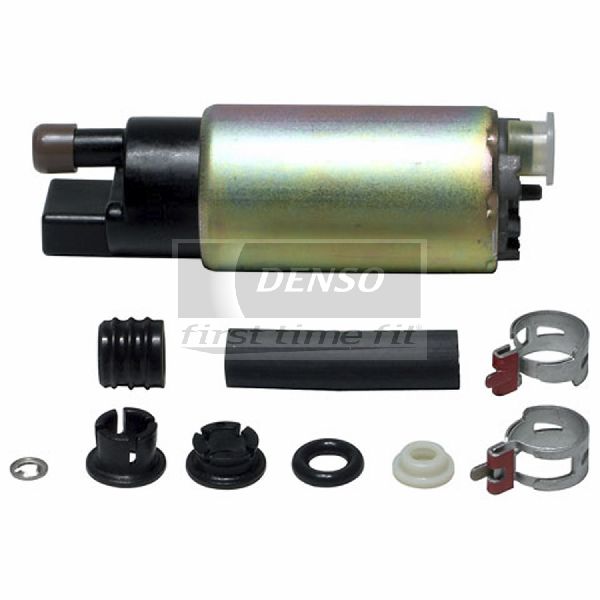
We Have This Part in Stock


The information in this article is provided for general reference and educational purposes only. Vehicle specifications, procedures, and part compatibility can vary by production date, trim level, and region. Always consult your vehicle's factory service manual and verify part numbers before purchasing or performing repairs. Safety-critical components such as airbags, seat belts, and braking systems should be installed by a qualified professional.
- Toyota 4Runner:
- 🎬 Helpful Videos
- 🛍️ Shop This Part
- What's Unique About the 1996-2002 Toyota 4Runner
- Symptoms You May Notice
- Most Likely Causes
- Rare But Worth Checking
- Diagnosis Steps
- Parts You'll Likely Need
- Platform-Specific Known Issues
- Mechanic-Grade Diagnostic Values
- Scan Tool Commands That Help
- Wiring & Ground Locations
- Real Owner Repair Stories
- Model Year Variations Within This Range
- Diagnostic Flowchart
- Other Known Issues on This Vehicle
- Used vs. New Parts: Buying Guide for This Vehicle
- Real Owner Stories
- 1996-2002 Toyota 4Runner 3.4L 5VZ-FE — ~100000 miles
- 1996-2002 Toyota 4Runner 5VZ-FE Manual Transmission
- 1996-2002 Toyota 4Runner 5VZ-FE
- Related OBD-II Codes
- Frequently Asked Questions
- 🎟️ Get 5% Off