

P0031 on 2014-2021 Jeep Cherokee: O2 Sensor Heater Circuit Causes and Fixes
P0031 on a Jeep Cherokee indicates a problem with the heater circuit for the upstream oxygen sensor on Bank 1. The most common fix is replacing the Bank 1, Sensor 1 oxygen sensor itself. This is a straightforward DIY repair, with aftermarket parts costing between $40 and $100. Before replacing, it's wise to check the related fuse and inspect the wiring for visible damage, as these can also trigger the code.
- P0031 on a 2014-2021 Jeep Cherokee almost always points to the heater element inside the upstream oxygen sensor (Bank 1, Sensor 1).
- Replacing the correct sensor is the most likely fix. This is a manageable DIY job with an O2 sensor socket.
- Before buying parts, perform a quick visual check of the sensor's wiring for any obvious melting or damage, and check the related fuses.
- On the 3.2L V6, remember that Bank 1 is the cylinder bank near the firewall, not the front of the car.
- If you have a 2.4L engine and the sensor fails repeatedly, investigate potential oil consumption issues.
What's Unique About the 2014-2021 Jeep CHEROKEE

For the 2014-2021 Jeep Cherokee (KL generation), the P0031 code is a common and well-documented issue. The 2.4L "Tigershark" engine, in particular, has been noted for potential oil consumption issues that can contaminate and prematurely fail oxygen sensors. Additionally, manufacturer Technical Service Bulletins (TSBs) show that this code can appear alongside other seemingly unrelated codes, sometimes pointing towards a needed software update for the Powertrain Control Module (PCM). For example, TSB #18-004-16 REV. A links P0031 with a "Cold Engine Startup Flare" condition on 2014 models. TSB #18-078-22 also notes that P0031 can be set along with code U0418 on 2021 models due to a low battery voltage condition, which can be fixed with a PCM software update.
Diagnostic Flowchart

Tap your situation to follow the diagnostic path that matches what you're seeing on this vehicle.
Symptoms You May Notice
- Check Engine Light is on.
- Decreased fuel economy.
- Rough idle, especially when the engine is cold.
- Vehicle may hesitate or have reduced power during warm-up.
- A "Cold Engine Startup Flare" or idle surge as noted in manufacturer TSBs.
- Failure to pass an emissions test.
- Replacing the wrong oxygen sensor. P0031 specifically refers to Bank 1, Sensor 1 (upstream, before the catalytic converter). On the 3.2L V6, Bank 1 is the bank of cylinders near the firewall, not the front of the vehicle. Always confirm the correct sensor location before replacement.
- Replacing the sensor without testing first. The problem could be a simple wiring issue or a blown fuse, which is much cheaper to fix. A user on a Reddit forum replaced their sensor only to find the code returned, indicating a wiring or fuse problem. 🎬 Watch: Why replacing the sensor doesn't always fix the code
Most Likely Causes

- Failed Upstream Oxygen Sensor (Bank 1, Sensor 1) 🔴 High Probability The internal heater element is a common failure point that burns out over time, similar to a light bulb. On 2.4L engines, oil contamination can also lead to premature sensor failure.
How to confirm: Disconnect the sensor and test the resistance of the heater circuit pins with a multimeter. A healthy sensor at room temperature should have a resistance between 2 and 30 ohms; many Chrysler/Jeep sensors are in the 4-7 ohm range. An open circuit (infinite resistance) indicates a failed heater.
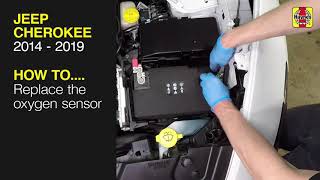
Typical fix: Replace the Bank 1, Sensor 1 oxygen sensor. On the 2.4L 4-cylinder, this is the sensor on the exhaust manifold, easily visible from the top of the engine bay. 🎬 See this step-by-step guide for replacing the oxygen sensor On the 3.2L V6, Bank 1 is the cylinder bank closer to the firewall, making access more challenging.
Est. part cost: $40-$150 - Damaged Wiring or Connector 🟡 Medium Probability The sensor wiring is close to hot exhaust components and can become melted, frayed, or brittle over time. Connectors can also fill with debris or corrode, causing a poor connection.
How to confirm: Visually inspect the wiring harness and connector for the Bank 1 Sensor 1 O2 sensor. Look for any signs of melting, chafing, or corrosion on the pins. A short to ground in the heater control wire can also cause this code, which can be diagnosed by checking for continuity to ground on the control wire with the sensor and PCM disconnected.
Typical fix: Repair the damaged section of the wiring harness or replace the connector pigtail. In cases of a short, isolate the damaged wire and repair it with solder and heat shrink or electrical tape.
Est. part cost: $15-$50 - Blown Fuse ⚪ Low Probability A short in the heater circuit or the sensor itself can cause the corresponding fuse to blow as a protective measure.
How to confirm: Locate the fuse box in the engine bay and check the fuses related to the O2 sensors or ASD (Auto Shutdown) relay. A visual inspection or a continuity test with a multimeter will confirm if a fuse is blown. 🎬 Watch: How to find and check your O2 sensor fuses A test light can confirm if power is absent at the fuse.
Typical fix: Replace the blown fuse. If the fuse blows again immediately, it indicates a persistent short circuit in the wiring or the sensor that must be diagnosed before replacing the fuse again.
Est. part cost: $1-$5
Rare But Worth Checking
- Faulty Powertrain Control Module (PCM): While rare, the PCM's internal driver for the O2 sensor heater can fail. TSBs also mention the need for PCM software updates to correct erroneous codes. This should only be considered after all other possibilities (sensor, wiring, fuse) have been exhaustively tested and ruled out.
Diagnosis Steps

- Scan for any other stored trouble codes to check for related issues.
- Visually inspect the Bank 1, Sensor 1 O2 sensor wiring and connector for any signs of damage, melting, or corrosion.
- Check the fuses for the O2 sensor heater circuit in the engine bay fuse box.
- If fuses are good, disconnect the O2 sensor. Use a multimeter set to Ohms to test the resistance across the two heater circuit pins on the sensor side (often the two same-colored wires). A reading between 2-30 Ohms is typically good; an open loop (OL) or infinite resistance means the heater is bad.
- With the key on and engine off, test the vehicle-side connector for power. Use a multimeter to check for battery voltage (around 12 volts) between the heater power wire and a known good ground. Lack of power points to a wiring issue or a blown fuse/relay.
- Check the ground control side of the circuit. The PCM typically controls the ground side with a pulse-width modulated signal. A short to ground on this wire can cause the P0031 code.
- If the sensor tests bad, replace it. If the sensor and wiring test good, the issue may be with the PCM software (check for TSBs) or, rarely, a failed PCM driver.
Parts You'll Likely Need
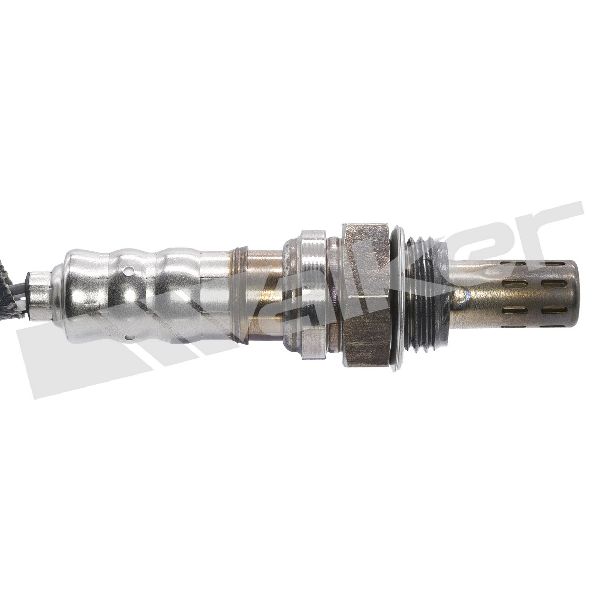
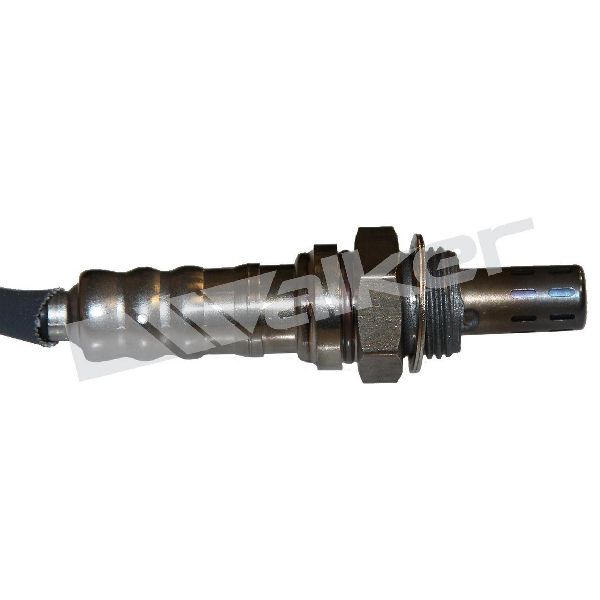
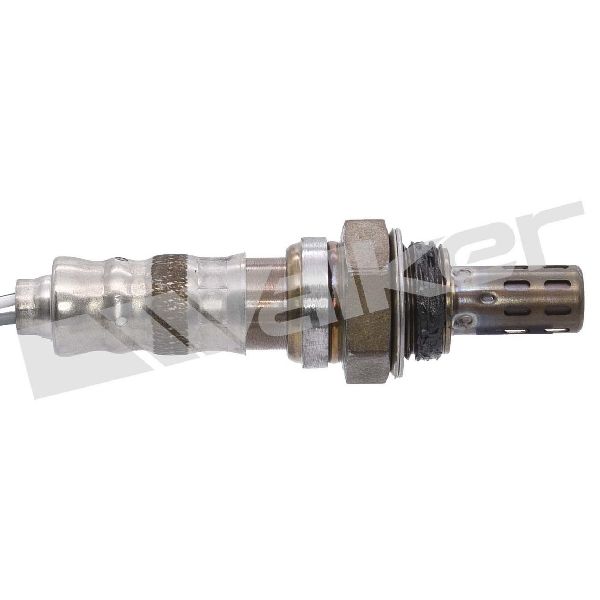
- Upstream Oxygen Sensor (Bank 1, Sensor 1)
(OEM #68196243AA (For 2.4L), 05149180AB (For 3.2L))— The internal heater element within the sensor is the most frequent point of failure for this code. Part numbers differ between the 2.4L and 3.2L engines.
Trusted brands: Mopar, NTK, Bosch, Denso
OEM price range: $160-$210
Aftermarket price range: $40-$100
Related Codes That Often Appear With This One
- P0032 — This code is for "O2 Sensor Heater Circuit High" and can appear if there's an intermittent short or wiring issue affecting the same circuit.
- P2251 — TSB #18-004-16 REV. A and #18-005-15 REV. F list this code, "O2 Sensor 1/1 Negative Current Control Circuit Open," appearing with P0031, suggesting a related electrical fault or the need for a PCM update.
- U0418 — TSB #18-078-22 notes that this code, "Implausible Data Received From Brake System Control Module," can be set erroneously along with P0031 due to a low battery voltage condition, which may require a PCM reflash to fix.
- P0135 — This is a more generic code for "O2 Sensor Heater Circuit Malfunction (Bank 1 Sensor 1)" and points to the same set of potential failures.
Technical Service Bulletins (TSBs) & Recalls
- 18-078-22: Links P0031 with U0418 on 2021 2.4L models due to low battery voltage conditions, recommending a PCM software update.
- 18-004-16 REV. A: Associates P0031 with cold start flares and other codes (like P2251) on 2014-2015 2.4L models, addressed by a PCM update.
- 18-005-15 REV. F: Similar to the above, links P0031 with other codes and drivability issues on 2015 models, fixed by a PCM update.
Platform-Specific Known Issues
- TSB #18-078-22, #18-004-16 REV. A, and #18-005-15 REV. F all mention P0031. They link the code to other DTCs and conditions like "Cold Engine Startup Flare," sometimes indicating a PCM software update is required.
- On 2.4L engines, excessive oil consumption can lead to contamination and repeated failure of the oxygen sensors.
- Recall U90 for some 2014-2016 2.4L models involved replacing the catalytic converter and both oxygen sensors to address catalyst efficiency.
- On the 3.2L V6, Bank 1 is the rear bank (closer to the firewall), which can be confusing and makes accessing the sensor more difficult than on the 2.4L engine.
Mechanic-Grade Diagnostic Values
- O2 Sensor Heater Element Resistance — expected: Between 4 and 10 Ohms at ambient temperature. Specific examples show good sensors measuring 4.6 Ohms, 5.5 Ohms, and 6.7 Ohms.. Failure: An open circuit (infinite resistance or 'OL' on a multimeter) or a dead short (zero ohms) indicates a failed heater element.
- Heater Circuit Power Supply Voltage — expected: Approximately 12 Volts (battery voltage) at the power supply pin on the vehicle-side connector with the key on, engine off.. Failure: Zero or very low voltage indicates a problem upstream, such as a blown fuse, a faulty ASD relay, or a break in the power wire.
- Heater Circuit Ground Control Signal — expected: A pulsing ground signal controlled by the PCM. When viewed with a test light, it should flash or pulse after an initial solid illumination on a cold start. On an oscilloscope, this appears as a square wave (pulse-width modulation).. Failure: No ground (test light never illuminates) or a constant, non-pulsing ground (test light stays on solid) indicates a fault in the PCM driver or a short-to-ground in the control wire.
Hidden / Shadow Codes Worth Checking
- Mode $06, TID:$81, CID:$11 (example): Mode $06 data provides non-continuous monitor test results before a full-blown DTC is set. Technicians can analyze the raw data for the O2 sensor heater monitor to see if it is passing, failing, or running close to the test limits. The specific Test ID (TID) and Component ID (CID) can vary by year and engine, but they allow for early detection of a degrading heater circuit. (see via A professional-grade OBD-II scan tool that supports Mode $06 data display.)
Scan Tool Commands That Help
- wiTECH (or equivalent professional scanner): O2 Heater Test / Live Data Monitoring — This function allows a technician to observe the PCM's commanded state and duty cycle for the O2 sensor heater. It is used to verify if the PCM is attempting to control the circuit. If the PCM is commanding the heater on but there is no voltage or ground activity on the circuit, it confirms the problem lies in the wiring, fuse, or sensor. Conversely, if the circuit is active but the PCM is not commanding it, it points to a short or a faulty PCM driver.
Wiring & Ground Locations
- Engine Bay Fuse Box (Power Distribution Center) — Located on the driver's side of the engine bay.. This box contains the fuses that supply power to the O2 sensor heater circuits. For the 2014-2023 Cherokee, relevant fuses to check include F07, F08, F10, F16, F21, F30, F59, and F83. A blown fuse is a common cause for the circuit losing power.
- Auto Shutdown (ASD) Relay — Located within the engine bay fuse box.. The ASD relay provides the 12V power feed to the O2 sensor heater circuit fuse. A faulty relay can prevent power from reaching the heater, causing a P0031 code even if the fuse and sensor are good. Intermittent relay failure can cause the code to appear sporadically.
- Engine Ground Points (e.g., G101, G104) — Typically bolted to the engine block, often near the ignition coil bracket or at the rear of the engine.. While the O2 sensor heater is ground-controlled by the PCM, the PCM itself and other related components rely on clean engine ground connections. A corroded or loose main engine ground can cause a variety of electrical issues, including erratic sensor behavior and control module problems.
Real Owner Repair Stories
- Robinson's Automotive Specialist YouTube Channel (2004 Jeep Grand Cherokee (demonstrating a universally applicable diagnostic principle)) — Persistent P0031 code after another shop had already replaced the oxygen sensor.
❌ Tried (didn't work) Replacing the Bank 1, Sensor 1 oxygen sensor.
✅ What actually fixed it The heater control wire (Brown with Orange tracer in this case) was shorted to ground in the harness. The mechanic located the short, repaired the wire, and verified the fix by observing the PCM's ground signal began pulsing correctly with a test light, whereas before it was constantly grounded.
"I Checked Everything" — The Actual Cause
- In the context of P0031, the equivalent scenario is when the sensor's resistance and the fuse both test good. A common, but often missed, cause in this situation is a short-to-ground in the heater control wire within the harness. This causes the circuit to be low (constantly grounded) regardless of the PCM's command. A technician can confirm this by unplugging the PCM and the O2 sensor and checking for continuity between the control wire pin and ground. If continuity exists, the wire is shorted somewhere in the harness.
OEM Part Supersession History
5149180AA→05149180AB— Standard part revision by the manufacturer for improvement or supplier change.
Heads up: The new part number 05149180AB is the correct replacement for the 3.2L V6 engine. Using the old part number if found is not recommended.
Model Year Variations Within This Range
- 2014-2021: While the physical components and wiring layout for the O2 sensor circuit are largely consistent, the PCM software is not. Different model years have specific TSBs (e.g., #18-078-22 for 2021, #18-004-16 for 2014-2015) that address erroneous P0031 codes triggered by software glitches, often in combination with other DTCs. This means a software update may be the correct fix for one model year but not another, even with identical symptoms.
Helpful Videos

Used OEM Parts in Stock
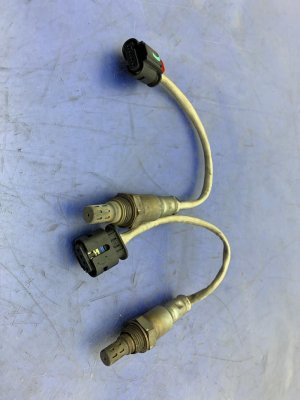

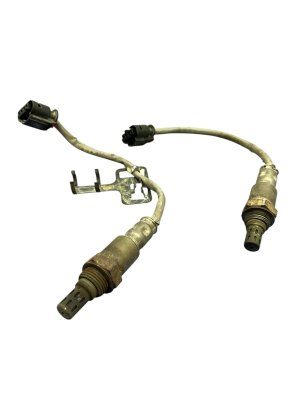
New Aftermarket Parts Available
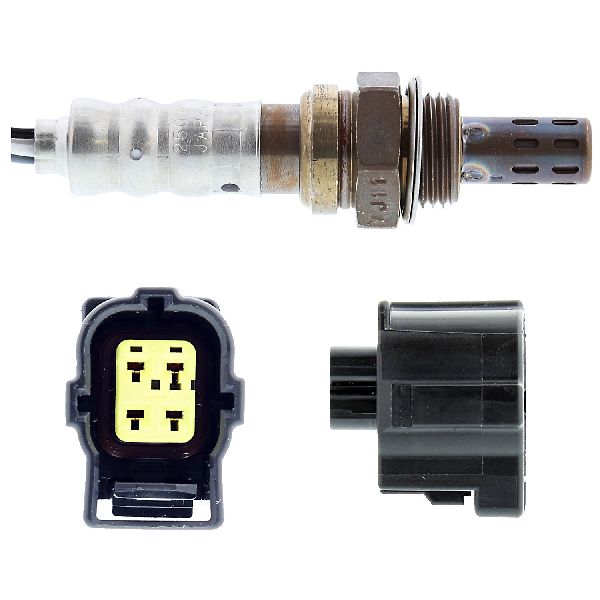
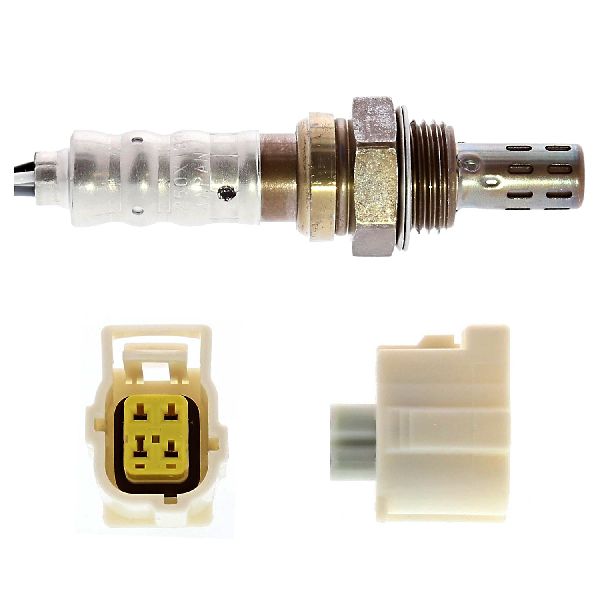


The information in this article is provided for general reference and educational purposes only. Vehicle specifications, procedures, and part compatibility can vary by production date, trim level, and region. Always consult your vehicle's factory service manual and verify part numbers before purchasing or performing repairs. Safety-critical components such as airbags, seat belts, and braking systems should be installed by a qualified professional.
- Jeep CHEROKEE:
- 🎬 Helpful Videos
- 🛍️ Shop This Part
- What's Unique About the 2014-2021 Jeep CHEROKEE
- Diagnostic Flowchart
- Symptoms You May Notice
- Most Likely Causes
- Rare But Worth Checking
- Diagnosis Steps
- Parts You'll Likely Need
- Related Codes That Often Appear With This One
- Technical Service Bulletins (TSBs) & Recalls
- Platform-Specific Known Issues
- Mechanic-Grade Diagnostic Values
- Hidden / Shadow Codes Worth Checking
- Scan Tool Commands That Help
- Wiring & Ground Locations
- Real Owner Repair Stories
- "I Checked Everything" — The Actual Cause
- OEM Part Supersession History
- Model Year Variations Within This Range
- 🎟️ Get 5% Off