

P0030 on 2007-2013 Mitsubishi Outlander 3.0L V6: Heater Circuit Fault Causes and Fixes
This code means the heater inside the upstream oxygen sensor for the rear cylinder bank (Bank 1) has failed. The most common fix is to replace the Bank 1, Sensor 1 oxygen sensor. Expect to pay $70-$150 for an aftermarket sensor or $200+ for an OEM part. It's a DIY-friendly job for those with basic tools, though access to the rear sensor is tight.
- P0030 almost always means you need a new upstream oxygen sensor for the rear cylinder bank (Bank 1).
- Bank 1 is against the firewall, making this sensor harder to access than the front one (Bank 2).
- Always check the 15A fuse (#17) in the engine bay fuse box before buying parts. It's a quick check that can save you money.
- Use a quality aftermarket brand like Denso (p/n 234-5056) or NGK/NTK for a reliable repair.
- You will need a special slotted oxygen sensor socket (which can often be rented from auto parts stores) to perform this replacement.
What's Unique About the 2007-2013 Mitsubishi Outlander
On the Outlander's transversely mounted 6B31 V6 engine, 'Bank 1' refers to the cylinder bank located against the firewall, making its upstream oxygen sensor (Sensor 1) harder to see and reach than the Bank 2 sensor, which is at the front of the engine bay near the radiator. The failure itself is a common issue for most vehicles and not unique to Mitsubishi, but knowing the correct sensor location is the key to fixing it right the first time.
Symptoms You May Notice
- Check Engine Light is on.
- Slightly reduced fuel economy.
- Vehicle may take longer to enter 'closed-loop' mode, where it runs most efficiently.
- Failure to pass an emissions test.
- Possible rough idle on cold starts.
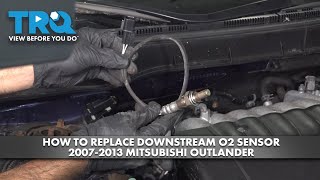
- Replacing the wrong oxygen sensor (e.g., Bank 2 Sensor 1 at the front, or the downstream Sensor 2 after the catalytic converter). 🎬 Watch: How to replace the downstream sensor on this Outlander
- Replacing the oxygen sensor without first checking for a blown fuse.
Most Likely Causes
- Failed Oxygen Sensor Heater Element 🔴 High Probability The internal heating element is a resistor that operates under extreme heat cycles. Like a light bulb filament, it has a finite lifespan and eventually burns out or develops high resistance.
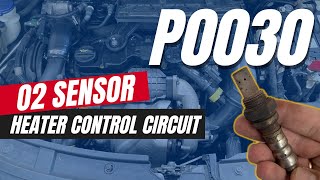
How to confirm: Disconnect the sensor and use a multimeter to measure the resistance between the two heater circuit pins on the sensor side (usually the two same-colored wires). A reading of 'OL' (Over Limit/Open Loop) or infinite resistance means the element is broken. A healthy heater circuit should have a low resistance, typically between 2 and 20 ohms. 🎬 Watch: How to test and fix the P0030 heater circuit
Typical fix: Replace the Bank 1, Sensor 1 oxygen sensor.
Est. part cost: $70-$250 - Blown Fuse for Heater Circuit 🟡 Medium Probability A short circuit in the sensor's heater element or its wiring can cause the corresponding fuse to blow as a protective measure.
How to confirm: Check the fuse box in the engine compartment. According to diagrams for this generation, the relevant fuse is often a 15A fuse in position #17, sometimes labeled 'O2 SENSOR HEATER'. Visually inspect the fuse or use a multimeter to test for continuity.
Typical fix: Replace the blown fuse. If the new fuse blows immediately, it confirms a short circuit, most likely in the oxygen sensor itself or the wiring harness.
Est. part cost: $1-$5 - Damaged Wiring or Connector ⚪ Low Probability The sensor wiring is close to the hot exhaust manifold, which can cause wires to become brittle, melt, or chafe over time. The connector pins can also corrode from moisture and road salt.
How to confirm: Visually inspect the wiring harness leading to the Bank 1, Sensor 1 O2 sensor. Look for any signs of melting, fraying, or corrosion on the connector pins. With the key on and engine off, carefully check for 12-volt power at the heater circuit pin on the harness-side connector.
Typical fix: Repair the damaged section of wire or replace the connector pigtail. Secure the harness away from direct contact with the exhaust.
Est. part cost: $15-$50
Rare But Worth Checking
- Failed Engine Control Module (ECM): This is extremely unlikely. The internal driver circuit within the ECM that controls the O2 sensor heater can fail, but this is rare. Before condemning the ECM, all other possibilities (sensor, fuse, wiring) must be exhaustively ruled out by a professional.
Diagnosis Steps
- Confirm the code: Use an OBD-II scanner to verify that P0030 is the active code.
- Locate Bank 1, Sensor 1: This is the upstream oxygen sensor (before the catalytic converter) on the cylinder bank closer to the firewall. Access will be from the top of the engine, reaching down behind the intake manifold.
- Visual Inspection: Carefully inspect the sensor's wiring harness and connector for any signs of melting, chafing, or corrosion. Ensure the connector is securely plugged in.
- Check the Fuse: Locate the fuse box in the engine bay. Inspect fuse #17 (15A), which is designated for the O2 sensor heater. Replace if blown.
- Test the Heater Circuit Power: Disconnect the sensor. Turn the ignition to 'ON' (engine off). Use a multimeter to check for 12V power on the appropriate pin of the vehicle-side harness connector.
- Test the Sensor's Heater Element: With the sensor still disconnected, switch your multimeter to measure resistance (Ohms). Probe the two heater circuit pins on the sensor itself (typically the two wires of the same color). A reading of infinite resistance (OL) or very high resistance confirms the internal heater has failed. A good sensor will show low resistance, generally between 2-20 Ohms.
- Replace the Sensor: If the sensor's heater element is open (infinite resistance), replace the Bank 1, Sensor 1 oxygen sensor.
- Clear the Code: After replacement, use an OBD-II scanner to clear the trouble code 🎬 See a breakdown of P0030 causes and common fixes and turn off the Check Engine Light.
Parts You'll Likely Need
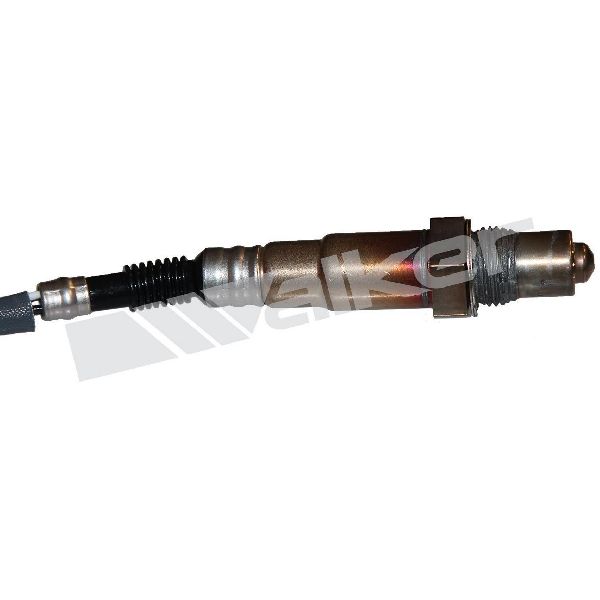
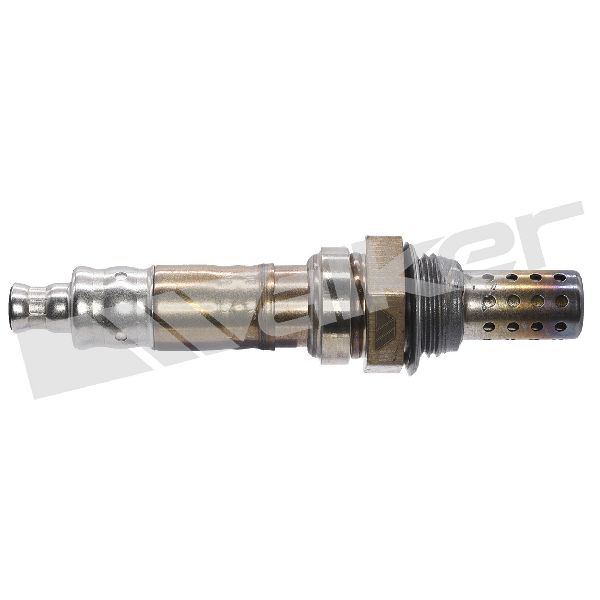
- Oxygen Sensor (Bank 1, Sensor 1)
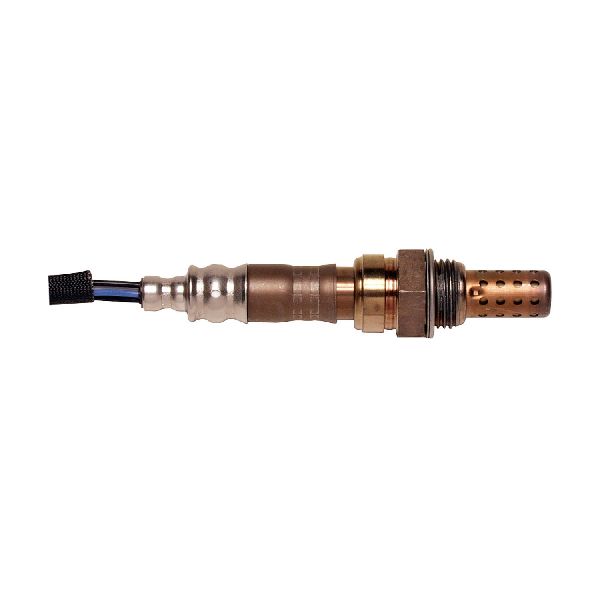
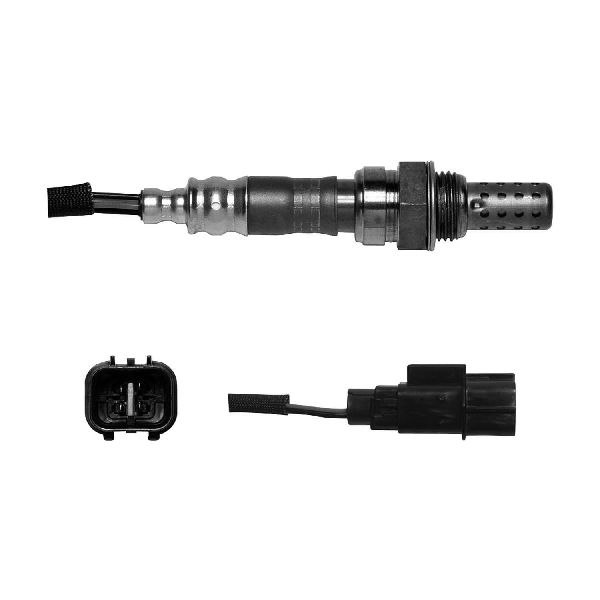
(OEM #1588A165)— This is the upstream sensor for the rear cylinder bank. The internal heater element is the most common point of failure for code P0030.
Trusted brands: Denso (OEM Supplier), NGK/NTK
OEM price range: $200-$280
Aftermarket price range: $70-$150
Related Codes That Often Appear With This One
- P0135 - O2 Sensor Heater Circuit Malfunction (Bank 1, Sensor 1) - This is an identical code and points to the same issue.
- P0031 - HO2S Heater Control Circuit Low (Bank 1 Sensor 1) - Indicates a short to ground.
- P0032 - HO2S Heater Control Circuit High (Bank 1 Sensor 1) - Indicates a short to power or an open circuit.
Platform-Specific Known Issues
- Access to the Bank 1 (rear) sensor is significantly more difficult than the Bank 2 (front) sensor. It requires reaching down behind the engine's intake manifold. While possible for a DIYer, it is a tight space.
- The fuse for the O2 sensor heater is located in the engine compartment fuse box, not the interior one. It is typically a 15A fuse in slot #17.
Mechanic-Grade Diagnostic Values
- O2 Sensor Heater Element Resistance — expected: 2-14 ohms is a general specification, with some sources citing a tighter range of 2-5 ohms as ideal. A real-world test on a good sensor showed 2.8 ohms.. Failure: A reading of 'OL' (Over Limit) or infinite resistance indicates an open/broken heater element.
- Heater Circuit Power Supply Voltage — expected: Approximately 12V (battery voltage) with the ignition ON and engine OFF.. Failure: Zero volts indicates a problem upstream of the sensor, such as a blown fuse, faulty relay, or a break in the power wire.
- O2 Sensor Installation Torque — expected: General specification for many O2 sensors is 26 to 33 ft-lbs (35-45 Nm). Always verify the spec for the specific replacement part.. Failure: Over-tightening can damage the sensor threads or body; under-tightening can cause an exhaust leak.
Wiring & Ground Locations
- Heater Circuit Wires at Sensor Connector — On the 4-wire oxygen sensor connector itself.. When testing the sensor's internal heater resistance, you must probe the correct two pins. On most 4-wire sensors, the two wires of the same color (e.g., two black wires or two white wires) are for the heater circuit. The other two mismatched-color wires are for the sensor signal and ground.
Model Year Variations Within This Range
- 2010-2013: For the 2010 model year, Mitsubishi increased the 6B31 engine's compression ratio from 9.5:1 to 10.5:1, which boosted horsepower from 220 to 230. However, this change did not affect the oxygen sensors or the diagnostic procedure for code P0030; the same part number (1588A165) is used for the entire 2007-2013 V6 range.
Diagnostic Flowchart
Other Known Issues on This Vehicle
Issues unrelated to this code that are worth knowing about as an owner of this generation:
- Timing Belt Maintenance 🔴 High — The 6B31 is an interference engine with a timing belt that has a recommended replacement interval of around 60,000-90,000 miles. Failure to replace it can lead to catastrophic engine damage. Oil leaks onto the belt can shorten its life significantly.
- ETACS Module Failure 🟠 Medium — The Electronic Time and Alarm Control System (ETACS), which acts as the body control module, can fail, causing erratic electrical issues like non-functional wipers, door locks, or even no-start conditions. Replacement often requires dealer programming. (Ref: TSB-19-54-008 addresses updated diagnostics for ETACS communication DTCs like U0141, but not direct failure.)
- Premature Paint Peeling/Flaking 🟡 Low — Many owners report issues with thin paint that is prone to chipping, flaking, and peeling, particularly on the hood, roof, and rocker panels, sometimes at low mileage. Mitsubishi has been known to deny warranty claims, attributing it to road debris. (Ref: TSB-14-51-002 was released for the related Outlander Sport model for paint peeling near the spoiler, but not a widespread recall for the Outlander itself.)
- Oil Pump Performance Drop 🔴 High — On higher mileage engines (approaching 75,000 miles / 120,000 km), there are reports of oil pump performance degradation. This can lead to oil starvation, causing knocking from hydraulic lifters and potentially seizing the engine if not addressed.
Used vs. New Parts: Buying Guide for This Vehicle
When a used part is the smart pick: Never. Oxygen sensors are a wear-and-tear component with a finite lifespan determined by heat cycles. The internal heater element is the most common failure point. A used sensor from a junkyard has an unknown amount of remaining life and is very likely to fail prematurely, making it a poor value. The labor to access the rear sensor makes doing the job twice a significant waste of time and money.
OEM-only on this vehicle (don't cheap out):
- While not strictly 'OEM-only', it is highly recommended to use either the genuine Mitsubishi part or a direct-fit sensor from an OEM supplier.
Aftermarket brands forum-validated for this vehicle:
- Denso
- NGK/NTK
Brands owners have reported issues with on this vehicle:
- Universal-fit sensors that require splicing wires. These can have incorrect resistance values and are a common source of installation error.
- Some forum users across various Japanese vehicle makes report mixed results or premature failures with Bosch sensors compared to Denso or NTK, often recommending sticking to the Japanese OEM supplier brands.
Real Owner Stories
Aggregated from forums and TSBs cited above. Mileages and costs reflect what owners reported in those sources.
2007 Mitsubishi Outlander XLS 6B31 3.0L V6 — 260000 miles
Symptoms: Owner reported having a faulty O2 sensor and catalytic converter as one of the only issues over the life of the vehicle.
What fixed it: Replacement of the faulty O2 sensor.
Source hint: Reddit r/mitsubishi - 'Any thought on this 2020 GT outlander & the reliability of the V6'
Related OBD-II Codes
Frequently Asked Questions
Where is the fuse for the O2 sensor heater located on my 2007-2013 Outlander?
How difficult is it to access the Bank 1, Sensor 1 oxygen sensor on the 6B31 V6 engine?
Which aftermarket brands are recommended for replacing the O2 sensor on this Mitsubishi?
Does TSB-19-54-008 relate to my P0030 code?
Can I use a used oxygen sensor from a salvage yard to save money?
Helpful Videos

We Have This Part in Stock



The information in this article is provided for general reference and educational purposes only. Vehicle specifications, procedures, and part compatibility can vary by production date, trim level, and region. Always consult your vehicle's factory service manual and verify part numbers before purchasing or performing repairs. Safety-critical components such as airbags, seat belts, and braking systems should be installed by a qualified professional.
- Mitsubishi Outlander:
- 🎬 Helpful Videos
- 🛍️ Shop This Part
- What's Unique About the 2007-2013 Mitsubishi Outlander
- Symptoms You May Notice
- Most Likely Causes
- Rare But Worth Checking
- Diagnosis Steps
- Parts You'll Likely Need
- Related Codes That Often Appear With This One
- Platform-Specific Known Issues
- Mechanic-Grade Diagnostic Values
- Wiring & Ground Locations
- Model Year Variations Within This Range
- Diagnostic Flowchart
- Other Known Issues on This Vehicle
- Used vs. New Parts: Buying Guide for This Vehicle
- Real Owner Stories
- 2007 Mitsubishi Outlander XLS 6B31 3.0L V6 — 260000 miles
- Related OBD-II Codes
- Frequently Asked Questions
- 🎟️ Get 5% Off