

P0030 on 2015-2017 Ford F-150 2.7L EcoBoost: O2 Sensor Heater Circuit Causes and Fixes
This code points to a fault in the heater circuit of the passenger-side upstream oxygen sensor. The most common fix is replacing the Bank 1, Sensor 1 O2 sensor itself. Before replacing, check fuse #95 (25A) in the under-hood fuse box, as a blown fuse is a known and simple cause. Be aware that this platform can be sensitive to aftermarket sensors; using an OEM Motorcraft part is highly recommended.
- P0030 on your 2.7L F-150 almost always points to a problem with the heater inside the upstream oxygen sensor on the passenger side.
- The most likely fix is replacing the sensor itself (Motorcraft DY1306), which is a manageable DIY job for most people with basic tools and an O2 sensor socket.
- Before buying any parts, take five minutes to check fuse #95 (25A) in the under-hood fuse box; it could save you time and money.
- Ensure you buy the correct sensor; the upstream (Sensor 1) and downstream (Sensor 2) sensors are different, as are the left (Bank 2) and right (Bank 1) side sensors.
What's Unique About the 2015-2017 Ford F-150
For the 2015-2017 F-150, this is a straightforward and common code. The most platform-specific issue to be aware of is the fuse location. A blown fuse for the O2 heaters can trigger this code, and on this truck, it is typically fuse #95 (a 25A fuse) in the under-hood fuse box. While wiring issues can be a cause, the sensor itself is the most frequent failure point due to age and the intense heat cycles typical of a turbocharged engine. The sensor is located on the passenger side exhaust manifold, just downstream of the turbocharger. The PCM on this platform is known to be sensitive to the O2 sensor's heater resistance value, and using non-OEM sensors can sometimes fail to resolve the code. Manufacturer service bulletins for other Ford models, such as TSB Bulletin #TSB-14-0129 and TSB Bulletin #TSB 16-0143, confirm that P0030 is a recognized fault across the Ford lineup that frequently triggers the Malfunction Indicator Lamp (MIL) and requires specific PCM diagnostic steps.
Symptoms You May Notice
- Check Engine Light is on
- Reduced fuel economy
- Failing a state emissions/smog test
- Rough idle (less common)
- Replacing the wrong O2 sensor (e.g., the downstream sensor or the sensor on the driver's side). Always confirm you are working on Bank 1 (passenger side) and Sensor 1 (upstream, before the catalytic converter).
- Replacing the O2 sensor when the actual fault is a blown fuse #95.
- Using an aftermarket O2 sensor whose heater resistance is outside the specific range expected by the Ford PCM, causing the code to return even with a new part.
Most Likely Causes
- Failed Bank 1, Sensor 1 Oxygen Sensor 🔴 High Probability The internal heater element is a common failure point on all vehicles due to constant heat cycles. It's considered a wear item. The high exhaust temperatures of the EcoBoost engine can accelerate this wear.
How to confirm: Disconnect the sensor and use a multimeter to check the resistance between the two heater circuit pins (usually the two wires of the same color, often white or black). A healthy OEM sensor typically has a resistance between 3.0 and 5.0 ohms. An open circuit (infinite resistance or 'OL') or a short (near 0 ohms) confirms a bad heater element. Be aware that some aftermarket sensors may have resistance outside the PCM's expected range (e.g., 7+ ohms) and can still cause the code.
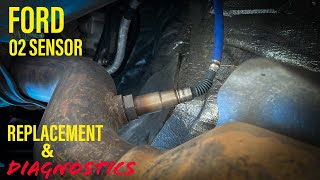
Typical fix: Replace the Bank 1, Sensor 1 (upstream, passenger side) oxygen sensor. The OEM part number is typically Motorcraft DY1306. 🎬 Watch: Step-by-step O2 sensor replacement on the EcoBoost engine
Est. part cost: $50-$180 - Blown O2 Sensor Heater Fuse 🟡 Medium Probability A short in the sensor's heating element or its wiring harness can cause the fuse to blow as a protective measure.
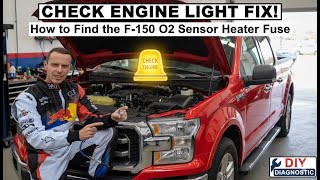
How to confirm: Locate and visually inspect fuse #95 (a 25A fuse) in the under-hood fuse box (also known as the Battery Junction Box). 🎬 Watch: How to find and check the O2 sensor fuse Test with a multimeter for continuity if visual inspection is inconclusive. If the fuse is blown, it's a strong indicator of the problem area.
Typical fix: Replace the blown fuse. If the new fuse blows immediately, there is a short circuit in the wiring or the sensor that must be found and repaired before proceeding.
Est. part cost: $1-$5 - Damaged Wiring or Connector ⚪ Low Probability The wiring harness is routed near hot exhaust components, including the turbocharger and exhaust manifold, making it susceptible to melting, chafing, or corrosion over time. Vibration can also cause wires to rub through their insulation.
How to confirm: Visually inspect the wiring harness and connector leading to the Bank 1, Sensor 1 O2 sensor for any signs of melting, breaks, chafing, or corroded pins. Trace the harness as far back as possible, paying attention to shared connectors like C139 at the front of the engine. Test for 12V power and a good ground at the connector with the key on, engine off.
Typical fix: Repair the damaged section of wiring or replace the connector pigtail. Secure the harness away from any heat sources or sharp edges using high-temperature wire loom and zip ties.
Est. part cost: $10-$30
Rare But Worth Checking
- Faulty Powertrain Control Module (PCM): This is very rare. The PCM contains a driver circuit that controls the ground for the O2 heater. This driver can fail, but all other possibilities (sensor, fuse, wiring) should be exhaustively ruled out before condemning the PCM.
Diagnosis Steps
- Read the codes with an OBD-II scanner to confirm P0030 is the primary code.
- Check for a blown fuse. On this truck, inspect fuse #95 (25A) in the fuse box under the hood. If it's blown, replace it and clear the codes. If the code returns and the fuse blows again, you have a short circuit to find.
- If the fuse is good, perform a visual inspection. Locate the upstream O2 sensor on the passenger side exhaust manifold, just after the turbo. Inspect its wiring harness and connector for any obvious damage like melting, chafing, or corrosion.
- Test the sensor's heater circuit. Disconnect the sensor. Using a multimeter set to ohms, measure the resistance between the two heater pins on the sensor side of the connector (they are usually the two wires of the same color). A typical OEM reading is between 3.0 and 5.0 ohms. An infinite reading ('OL') means the heater is broken (open circuit) and the sensor must be replaced. A reading outside the narrow OEM spec may also cause issues.
- Test the vehicle-side harness. With the key on and engine off, use a voltmeter to check for ~12-volt power on one pin of the harness connector and a good ground on another. The ground is a pulse-width modulated signal from the PCM, so the key test is confirming 12V power is reaching the connector.
- If the sensor's heater circuit tests bad (open or out of spec), replace the Bank 1, Sensor 1 oxygen sensor. An O2 sensor socket is highly recommended for this job. Using an OEM Motorcraft sensor is strongly advised.
- If the sensor, fuse, and wiring all test good, the problem may be a rare fault within the PCM's driver circuit.
Parts You'll Likely Need
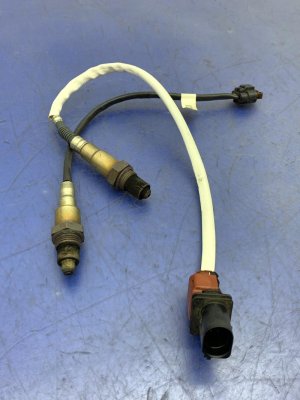
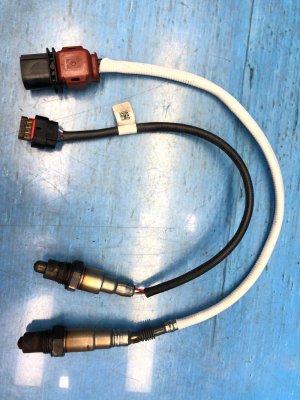
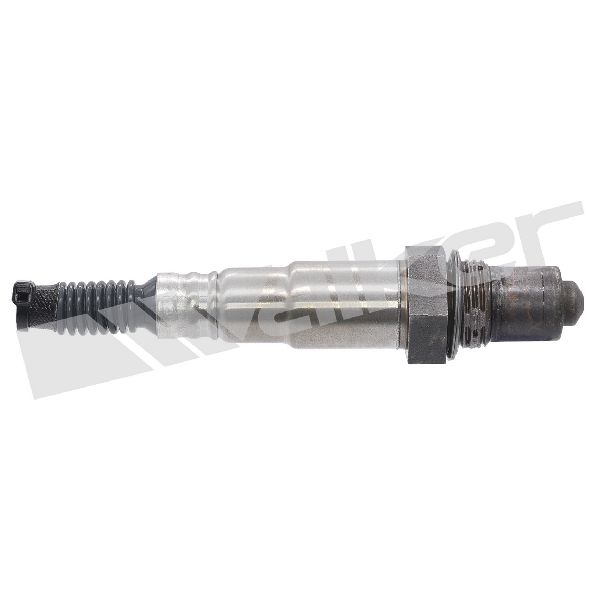
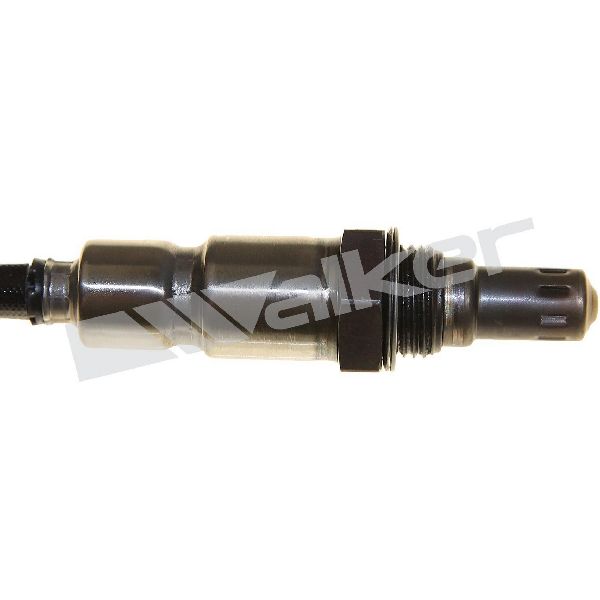
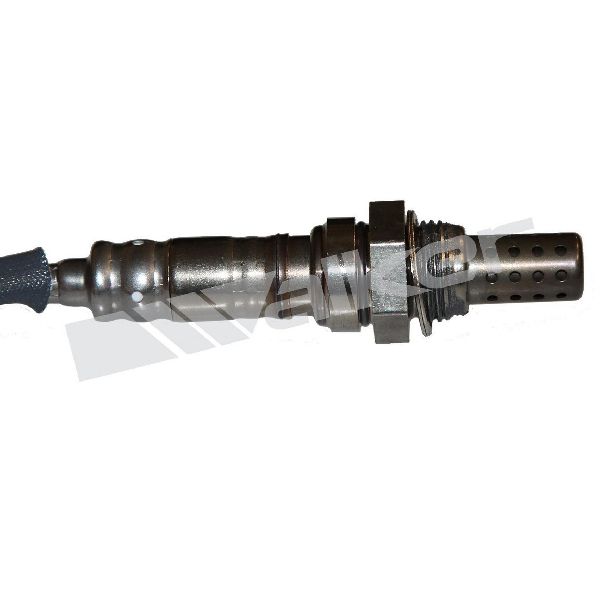
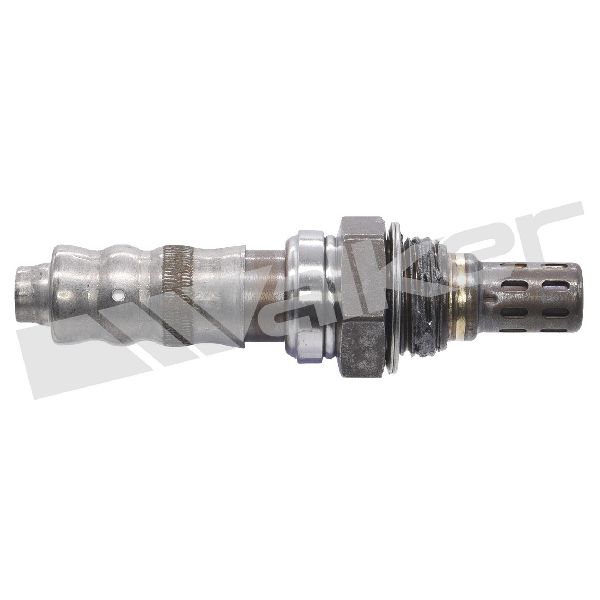
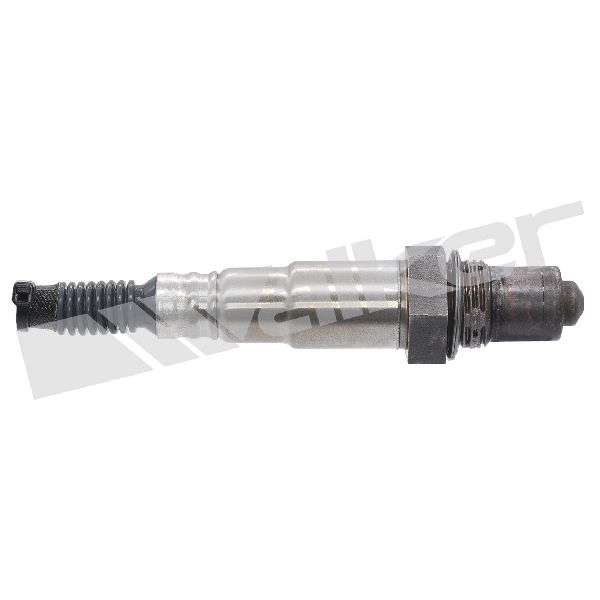
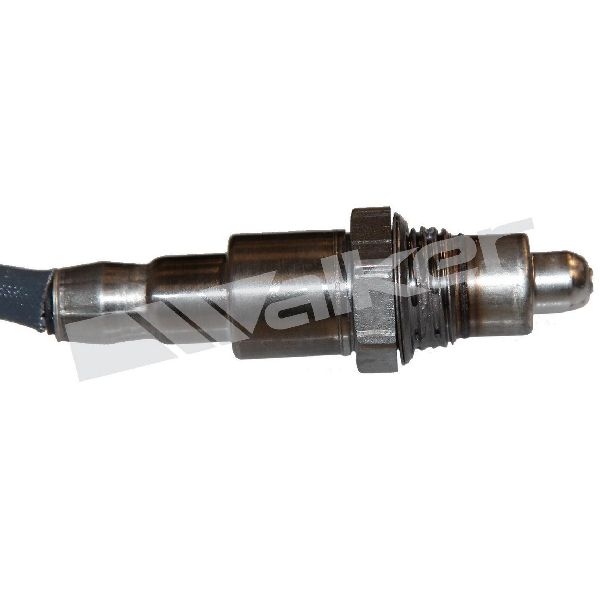
- Upstream Oxygen Sensor (Bank 1, Passenger Side)
(OEM #DY1306)— This is the most common cause of a P0030 code, as the internal heating element fails over time from extreme heat cycles.
Trusted brands: Motorcraft, Bosch, Denso, NTK
OEM price range: $100-$180
Aftermarket price range: $50-$100
Related Codes That Often Appear With This One
- P0050 — This is the equivalent heater circuit code for Bank 2, Sensor 1 (driver's side). Seeing both codes at once would strongly suggest a common problem like a blown fuse #95 or a wiring issue shared by both sensors, as they often share a power source.
- P0135 — This is a generic code for "O2 Sensor Heater Circuit Malfunction (Bank 1 Sensor 1)". It is functionally identical to P0030 and may appear alongside it or instead of it depending on the scanner used. Some Ford vehicles have been known to store this code for the same fault.
Mechanic-Grade Diagnostic Values
- O2 Sensor Heater Element Resistance (OEM Sensor) — expected: 3.0 - 5.0 Ohms at ambient temperature.. Failure: A reading of infinity/OL (Open Loop), near 0 Ohms (short circuit), or a value outside the narrow OEM spec indicates a failed or incompatible heater element.
- O2 Sensor Heater Element Resistance (Aftermarket) — expected: Can vary. Some brands like Bosch may read 7.0+ Ohms.. Failure: While technically 'good' per the aftermarket manufacturer, this resistance may be too high for the Ford PCM and can still trigger a P0030 code.
- Heater Circuit Power Supply Voltage (KOEO) — expected: 11V - 12V+ (Battery Voltage) at the power supply pin on the harness-side connector.. Failure: No voltage or significantly low voltage indicates a problem with fuse #95 or the power feed wiring.
- Heater Circuit Current Draw (via Bi-Directional Scan Tool) — expected: 0.5 - 1.5 Amps when the heater is commanded on.. Failure: 0 Amps indicates an open circuit in the heater element or wiring. Significantly higher amperage indicates a short.
- Heater Control Circuit (PCM Ground) — expected: The PCM supplies a pulse-width modulated (PWM) ground to control the heater. Voltage will fluctuate rapidly when active.. Failure: A constant ground or no ground when commanded on by a scan tool can indicate a wiring fault or a failed PCM driver.
Hidden / Shadow Codes Worth Checking
- Mode $06, Test ID $81: On many Ford systems, this test ID relates to the Oxygen Sensor Heater Monitor. It provides raw test data from the PCM's self-test of the heater circuit. A 'Fail' status can appear on the first trip of a two-trip fault, indicating a problem before the Check Engine Light is illuminated. (see via Requires a scan tool capable of displaying Mode $06 (non-continuous monitor test results), such as FORScan or professional-grade scanners.)
Scan Tool Commands That Help
- Ford IDS, FORScan, or equivalent professional scanner: HO2S Heater PID Monitoring — Use live data to monitor the Parameter ID (PID) for the O2 heater duty cycle or status (On/Off). This verifies if the PCM is attempting to command the heater on. If the PCM commands it 'On' but the circuit shows no activity, it points to an open circuit or failed sensor.
- Professional Bi-Directional Scan Tool: O2 Sensor Heater Activation — This command allows a technician to manually turn the O2 sensor heater on and off. It is used to verify the integrity of the control circuit and to monitor current draw in real-time to confirm the heater element is working without having to wait for the PCM to command it on during a drive cycle.
Wiring & Ground Locations
- Fuse #95 — In the under-hood fuse box, also called the Battery Junction Box (BJB). It is a 25A fuse.. This fuse provides the 12V power for the heater elements in the oxygen sensors. If it blows, the heater circuit will be open, triggering P0030 and likely P0050 as well.
- C139 — A major engine wiring harness connector located at the front of the engine.. The wiring for both upstream and downstream oxygen sensors passes through this connector. Corrosion or a loose pin in this single location can cause heater circuit faults for multiple sensors simultaneously.
- G103 — A primary engine compartment ground point, often located on the chassis at the left front corner of the engine compartment.. While the O2 heater ground is controlled by the PCM, the PCM itself relies on a solid chassis ground. A poor main ground at a location like G103 can cause a variety of strange electrical issues and sensor faults, including O2 sensor codes.
Real Owner Repair Stories
- AutoZone.com user review by 'John M.' (2015 Ford F-150 2.7L EcoBoost) — Persistent heater circuit codes after installing new sensors.
❌ Tried (didn't work) Replacing the O2 sensors with three different Bosch brand sensors.
✅ What actually fixed it A Ford rep informed the owner that the Bosch sensors' heater resistance (7.2-7.4 ohms) was too high for the Ford PCM, which expects 3.0-3.5 ohms. Replacing the sensors with OEM Motorcraft parts finally resolved the codes. - YouTube video by 'Miller Auto' (2016 Ford F-150 (diagnosing P0056, the equivalent code for Bank 2)) — Check Engine Light for heater circuit fault.
❌ Tried (didn't work) A simple cold resistance check of the O2 sensor heater showed a good reading (4.2 ohms), which would normally lead a technician to suspect the wiring or PCM.
✅ What actually fixed it The technician back-probed the sensor and monitored resistance while starting the truck. The moment the PCM commanded the heater on, the resistance went to 'OL' (open circuit). The heater element was failing only when it began to heat up. Replacing the O2 sensor was the correct fix. This demonstrates that a cold resistance check can be misleading. - F150forum.com user 'tjoost' (2019 Ford F-150 3.5L (with recurring P0056, a similar heater code)) — Check Engine Light returned within months, and eventually on the drive home from the dealer.
❌ Tried (didn't work) The dealership replaced the O2 sensor three separate times., The dealership re-pinned the sensor connector.
✅ What actually fixed it The issue was unresolved in the thread, but the user's experience strongly implies the root cause was not the sensor itself but an intermittent open or short in the wiring harness between the connector and the PCM, which was causing the new sensors to fail or report faults. This serves as a cautionary tale against repeatedly replacing the sensor without thoroughly testing the entire circuit. - NHTSA ODI #11404251 — An owner reported a no-start condition where a diagnostic scan revealed numerous codes including P0030, P0300, and P0141. The report noted that the owner checked for loose wires, fuses, and plugs during the troubleshooting process.
Diagnostic Flowchart
Other Known Issues on This Vehicle
Issues unrelated to this code that are worth knowing about as an owner of this generation:
- Leaking Composite Oil Pan 🔴 High — Common on 2015-2017 models. The original RTV sealant between the plastic pan and the engine block fails over time due to heat cycles. (Ref: Ford has issued TSBs for later model years (e.g., TSB 19-2189 for 2018-2019) with an updated pan design, but the issue is well-documented for 2015-2017 models as well. A separate TSB (23-2338) addresses this for other 2.7L vehicles like the Edge.)
- Intake Valve Carbon Buildup 🟠 Medium — Common on first-generation (2015-2017) 2.7L EcoBoost engines due to their direct-injection-only fuel system. Symptoms like rough idle and loss of power can appear after 50,000-70,000 miles. Later generations added port injection to mitigate this. (Ref: No specific TSB, but it is a widely acknowledged characteristic of direct-injection engines. Professional walnut blasting is the recommended cleaning method.)
- Excessive Oil Consumption / Valve Guide Issues 🔴 High — Primarily affects engines built from April 2016 to January 2017. A defect in the cylinder head valve guides could allow oil to leak into the combustion chamber. Ford issued TSB 17-2077 (superseding 17-0007) for this issue, which could lead to cylinder head replacement. (Ref: TSB 17-2077)
- Harsh/Delayed Shifting (10R80 Transmission) 🟠 Medium — Some 2017 models equipped with the 10-speed (10R80) automatic transmission may experience harsh or delayed shifts. This can sometimes be resolved with a PCM re-flash or may require valve body service. (Ref: TSB 21-2315 addresses this for 2017-2020 F-150s, often involving a software update or main control valve body overhaul.)
Used vs. New Parts: Buying Guide for This Vehicle
When a used part is the smart pick: For this repair, a used part is only a smart choice for a wiring harness connector pigtail if yours is physically damaged. A complete used wiring harness could be an option for widespread damage, but is a labor-intensive fix. Never buy a used oxygen sensor.
Donor-vehicle mileage cap: roughly under 100000 miles for the part to have meaningful remaining life.
What to inspect on the donor part:
- For a connector pigtail, ensure the plastic isn't brittle or cracked.
- Check for any signs of corrosion (green or white powder) on the pins.
- Ensure the locking tab is intact and functional.
- Verify the donor vehicle is from a dry, non-salt-belt region if possible to minimize corrosion risk.
OEM-only on this vehicle (don't cheap out):
- Oxygen Sensor: Due to the PCM's sensitivity to heater circuit resistance, it is strongly recommended to use an OEM Motorcraft (DY1306) sensor to avoid repeat repairs.
Aftermarket brands forum-validated for this vehicle:
- NTK
- Denso (These are often the original equipment manufacturers for Motorcraft and are generally considered safe alternatives if the specific OEM-equivalent part number is used.)
Brands owners have reported issues with on this vehicle:
- Generic/unbranded sensors.
- Bosch (Some owners have specifically reported issues with Bosch sensors on this platform having incorrect heater resistance, leading to persistent codes).
Real Owner Stories
Aggregated from forums and TSBs cited above. Mileages and costs reflect what owners reported in those sources.
2015-2017 Ford F-150 2.7L EcoBoost — ~60000 miles
Symptoms: Rough idle and loss of power observed after 50,000-70,000 miles.
What fixed it: Professional walnut blasting to clean intake valve carbon buildup.
Source hint: vehicle_specific_issues: Intake Valve Carbon Buildup
2016-2017 Ford F-150 2.7L EcoBoost
Symptoms: Excessive oil consumption and potential smoke from the exhaust.
What fixed it: Cylinder head replacement as specified in TSB 17-2077.
Source hint: TSB 17-2077
2017 Ford F-150 2.7L EcoBoost
Symptoms: Harsh or delayed shifting with the 10-speed (10R80) automatic transmission.
What fixed it: PCM re-flash or software update per TSB 21-2315.
Source hint: TSB 21-2315
Related OBD-II Codes
Frequently Asked Questions
Which fuse should I check for a P0030 code on my 2015-2017 F-150 2.7L?
What is the specific Motorcraft part number for the Bank 1 Sensor 1 O2 sensor on the 2.7L EcoBoost?
Where is the Bank 1, Sensor 1 O2 sensor located on this truck?
Does my 2017 F-150 2.7L have the same carbon buildup issues as the 2015-2016 models?
Could my P0030 code be related to the TSB for excessive oil consumption?
What resistance reading should I see on a healthy O2 sensor for this vehicle?
Helpful Videos


Used OEM Parts in Stock
New Aftermarket Parts Available

The information in this article is provided for general reference and educational purposes only. Vehicle specifications, procedures, and part compatibility can vary by production date, trim level, and region. Always consult your vehicle's factory service manual and verify part numbers before purchasing or performing repairs. Safety-critical components such as airbags, seat belts, and braking systems should be installed by a qualified professional.
- Ford F-150:
- 🎬 Helpful Videos
- 🛍️ Shop This Part
- What's Unique About the 2015-2017 Ford F-150
- Symptoms You May Notice
- Most Likely Causes
- Rare But Worth Checking
- Diagnosis Steps
- Parts You'll Likely Need
- Related Codes That Often Appear With This One
- Mechanic-Grade Diagnostic Values
- Hidden / Shadow Codes Worth Checking
- Scan Tool Commands That Help
- Wiring & Ground Locations
- Real Owner Repair Stories
- Diagnostic Flowchart
- Other Known Issues on This Vehicle
- Used vs. New Parts: Buying Guide for This Vehicle
- Real Owner Stories
- 2015-2017 Ford F-150 2.7L EcoBoost — ~60000 miles
- 2016-2017 Ford F-150 2.7L EcoBoost
- 2017 Ford F-150 2.7L EcoBoost
- Related OBD-II Codes
- Frequently Asked Questions
- 🎟️ Get 5% Off