

P0025 on 2007-2016 GMC Acadia 3.6L: Exhaust Cam Timing Over-Retarded (Bank 2) Causes and Fixes
On the GMC Acadia with the 3.6L V6, code P0025 is most often caused by low/dirty engine oil or a failed Bank 2 exhaust camshaft actuator solenoid. An oil change is the first step. If that doesn't work, a new solenoid costs about $35-$75 for an OEM part. However, this code can also signify a stretched timing chain, a known issue with this engine that GM acknowledged with warranty extensions.
- Always check your engine oil level and condition first when you see a P0025 code; it's the easiest and most common fix.
- The Bank 2 exhaust camshaft actuator solenoid is the next most likely culprit. It's located on the front of the engine and is relatively easy to replace.
- Be aware that this code on a 3.6L GM V6 can be a symptom of a stretched timing chain, which is a serious and expensive repair.
- If you hear a rattling noise from the engine, especially on startup, it's a strong indicator of a timing chain problem that requires immediate professional attention.
What's Unique About the 2007-2016 GMC Acadia
The GM 3.6L V6 engine family (LY7 from 2007-2008 and LLT from 2009-2016) used in the Acadia is known for premature timing chain wear. This issue was so prevalent that GM issued Special Coverage Adjustment #11340C, extending the warranty to 10 years/120,000 miles for many of these vehicles. The problem was often linked to extended oil change intervals recommended by the original Oil Life Monitor (OLM) system, leading to oil degradation. As part of the special coverage, dealers would also reprogram the ECM to recommend more frequent oil changes. While a faulty solenoid is a common and simple fix, the high probability of a stretched timing chain makes P0025 a more serious and potentially expensive code on this specific platform.
Symptoms You May Notice
- Check Engine Light is on
- Rough or unstable engine idle
- Engine may hesitate or stumble on acceleration
- Reduced engine power
- Sluggish or poor acceleration
- Engine may be hard to start
- Rattling, scraping, or 'chain-slap' noise from the engine, particularly on cold startup, which strongly indicates a timing chain problem.
- Replacing the camshaft position sensor. While the sensor reports the problem, it is rarely the cause of a P0025 code. The issue is almost always with the oil, the solenoid, or the mechanical timing components (chains/phaser). If the sensor itself were bad, you would likely see other codes related to sensor circuit failure (e.g., P0349).
Most Likely Causes
- Low, Dirty, or Incorrect Viscosity Engine Oil 🔴 High Probability The VVT system is hydraulic and extremely sensitive to oil quality and pressure. The 3.6L engine's history with sludge buildup, partly due to the original long oil change intervals, makes this a primary suspect. GM's own TSBs acknowledge the link between oil life and timing chain wear.
How to confirm: Check the oil level on the dipstick and inspect its color and consistency. If the level is low or the oil is dark, gritty, or sludgy, it needs to be changed immediately.
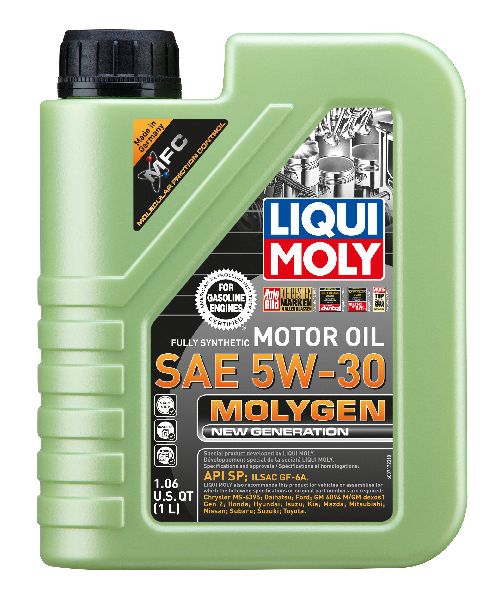
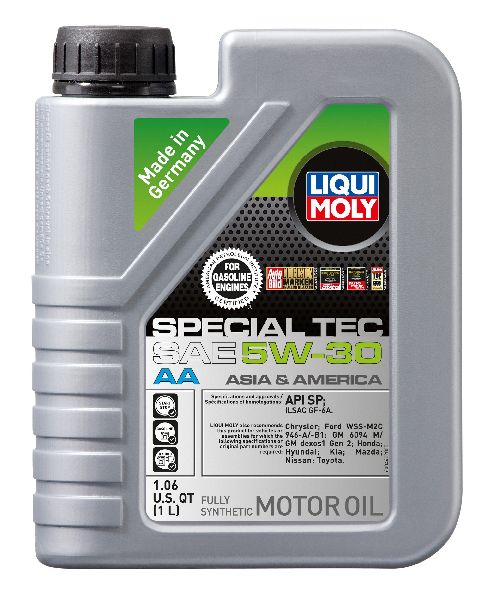
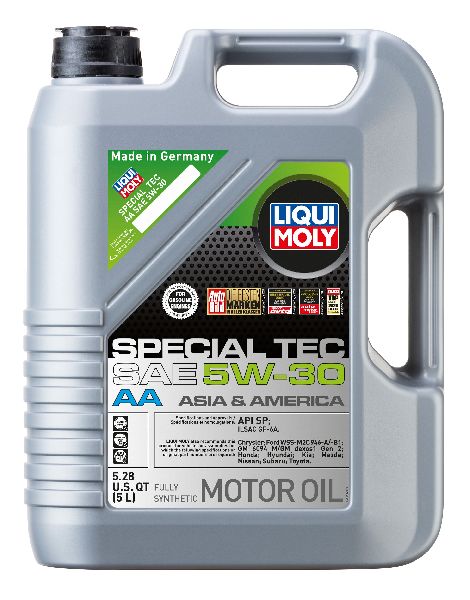
Typical fix: Perform an engine oil and filter change using a high-quality full synthetic 5W-30 oil that meets GM's dexos1 specification. Clear the code and see if it returns.
Est. part cost: $40-$80 - Failed Bank 2 Exhaust Camshaft Position Actuator Solenoid 🔴 High Probability These solenoids can become clogged with debris from degraded oil or can fail electrically over time. They are a very common failure point on high-mileage vehicles.
How to confirm: After an oil change, if the code persists, swap the Bank 2 exhaust solenoid with the Bank 2 intake solenoid (they are typically the same part number and located next to each other on the front of the engine). Clear the codes and drive the vehicle. If the code changes to P0021 ('A' Camshaft Position - Timing Over-Advanced, Bank 2), the solenoid is confirmed bad.
Typical fix: Replace the faulty solenoid. It is located on the front (radiator side) of the engine on the valve cover and is held in by a single 10mm bolt.
Est. part cost: $30-$75 - Stretched Timing Chain(s) 🟡 Medium Probability This is a well-documented weakness of the 3.6L V6 engine in this chassis, acknowledged by GM via TSBs like #12-06-01-009F and Special Coverage #11340C. Premature chain stretching causes the camshaft timing to deviate from the crankshaft timing, triggering this code.
How to confirm: A mechanic can use a professional scan tool to monitor the camshaft position deviation data in real-time. A variance of more than 4-5 degrees from the desired position at idle is a strong indicator of a stretched chain. A physical inspection, which requires significant engine disassembly, is the definitive but labor-intensive way to confirm.
Typical fix: Replace all timing chains (3), tensioners, and guides using an updated kit. This is a major repair often requiring engine removal.
Est. part cost: $300-$600 for a full kit
Rare But Worth Checking
- Damaged Camshaft Phaser: The phaser is the gear at the end of the camshaft that the solenoid acts upon. It can get stuck or damaged by debris, but this is less common than a solenoid or chain failure.
- Wiring or Connector Issue: The wiring harness or connector for the VVT solenoid could be damaged, loose, or corroded, preventing the solenoid from receiving the correct signal from the ECM. This can be checked with a multimeter.
Diagnosis Steps
- Check Engine Oil: Verify the oil level is correct and the oil is clean. If in doubt, perform an oil and filter change with the correct 5W-30 dexos-spec synthetic oil. This is the cheapest and easiest first step.
- Scan for Codes: Use an OBD-II scanner to confirm P0025 and check for any other related codes (e.g., P0015, P0017, P0008), which would increase the suspicion of a timing chain issue.
- Inspect Solenoid Connector: Check the wiring and connector for the Bank 2 (front) exhaust VVT solenoid for any visible damage, corrosion, or loose pins.
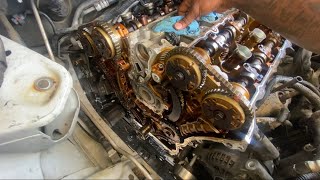
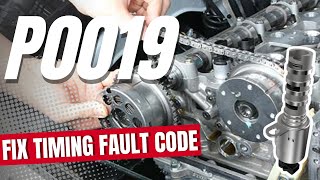
- Test the Solenoid: The easiest field test is to swap the exhaust solenoid with the intake solenoid on the same bank (Bank 2, front). They are located next to each other and are usually identical. Clear the codes. 🎬 See how to test and fix camshaft correlation issues on Bank 2. If the code returns as P0021, the solenoid is faulty and needs replacement.
- Check Camshaft Deviation with Scan Tool: If you have access to an advanced scan tool, monitor the camshaft position deviation PIDs. If the actual cam position for Bank 2 Exhaust is consistently off by several degrees from the desired position, a stretched timing chain is highly likely.
- Professional Diagnosis: If the steps above do not resolve the code, or if the scan tool confirms significant timing deviation, the issue is almost certainly mechanical. The vehicle should be taken to a professional to confirm and repair a stretched timing chain or faulty camshaft phaser.
Parts You'll Likely Need
- Camshaft Position Actuator Solenoid (VVT Solenoid)
(OEM #12636175 (may be superseded by 12681275 or other numbers))— This solenoid controls oil flow to the cam phaser and is a very common failure point, either by getting clogged with sludge or failing electrically. The intake and exhaust solenoids are often the same part.
Trusted brands: ACDelco (OEM), Dorman, Standard Motor Products (SMP), NGK
OEM price range: $35-$75
Aftermarket price range: $20-$50 - Timing Chain Kit — Required if the root cause is a stretched timing chain, a known issue on the 3.6L V6. A complete kit should be used, including all three chains, guides, and tensioners.
Trusted brands: ACDelco (OEM), Cloyes, Melling
OEM price range: $400-$600
Aftermarket price range: $200-$400 - Engine Oil and Filter — Clean oil of the correct viscosity is critical for VVT system operation and is the first step in troubleshooting.
Trusted brands: ACDelco, Mobil 1, Pennzoil, Valvoline
OEM price range: $40-$80
Aftermarket price range: $40-$80
Related Codes That Often Appear With This One
- P0015 — This is the same 'over-retarded' fault but for Bank 1 (rear bank). If both P0015 and P0025 are present, it strongly suggests a systemic issue like very low/dirty oil or a stretched timing chain affecting both banks.
- P0017 — This code indicates a correlation issue between the crankshaft and the Bank 1 exhaust camshaft. Seeing it with P0025 points strongly toward a stretched timing chain, as the chain's incorrect length is affecting the timing relationship on multiple camshafts.
- P0008 — This is a more general engine timing code for Bank 1. When seen with P0025, it reinforces the likelihood of a significant mechanical timing problem, almost certainly a stretched timing chain.
Technical Service Bulletins (TSBs) & Recalls
- Special Coverage #11340C (Timing chain wear, 10yr/120k mile coverage, ECM reflash)
- Special Coverage #14492 (Related to timing chain wear)
- TSB #12-06-01-009F (Announces availability of updated timing chain kits for repair)
- TSB #PIP3423P (Diagnostic procedure advising technicians to check for loose chains)
Platform-Specific Known Issues
- GM issued Special Coverage Adjustment #11340C for premature timing chain wear on 2007-2009 3.6L V6 engines. This extended the repair warranty to 10 years or 120,000 miles. The service also included an ECM reprogram to shorten the oil life monitor calculation, acknowledging the link between long oil change intervals and chain failure.
Mechanic-Grade Diagnostic Values
- Camshaft Position Actuator Solenoid Resistance — expected: 6.9 to 7.9 Ohms at 68°F (20°C). Some sources state a broader range of 6-13 Ohms.. Failure: A reading of 0 ohms (short), infinite/OL (open), or a value significantly outside the expected range indicates a failed solenoid coil.
- Scan Tool Camshaft Angle Variance (Cam/Crank Correlation) — expected: Less than +/- 4 degrees of deviation from the desired position at idle.. Failure: A consistent deviation greater than 4-5 degrees at idle is a strong indicator of a stretched timing chain, even if no chain noise is present.
- Engine Oil Pressure (Warm Idle) — expected: Minimum 20-25 PSI.. Failure: Pressure consistently below 20 PSI at a hot idle can starve the VVT system, preventing phasers from moving correctly and setting timing codes.
Scan Tool Commands That Help
- GDS2 / Tech2 (or equivalent professional scan tool): Camshaft Position Actuator Control — This bidirectional control allows a technician to command the Bank 2 exhaust solenoid on and off (or to a specific percentage) while monitoring engine RPM and live cam angle data. If the engine sound or RPM changes and the cam angle PID moves when commanded, the solenoid and wiring are likely functional, pointing towards a mechanical issue (clogged passage, bad phaser, stretched chain). If there is no change, it points to a failed solenoid, connector, or wiring.
Wiring & Ground Locations
- G103 — On the left (driver's) side of the engine compartment, on the inner fender panel. For some years, it may be on the cowl above the brake booster.. This is a major ground point for the Body Control Module (BCM) and Instrument Panel Cluster (IPC). While not a direct ground for the ECM, poor grounding here can cause a variety of unpredictable electronic issues and data communication errors on the vehicle.
- G112 / G113 / G114 — Various points on the rear and left side of the engine block and cylinder head. For example, G112 is often at the rear of the cylinder head.. These are critical engine block grounds. The Engine Control Module (ECM) and its sensors rely on clean ground paths. A loose or corroded engine ground can introduce noise into sensor signals, including the camshaft and crankshaft position sensors, potentially leading to erroneous timing codes.
- VVT Solenoid Connector — On the front (radiator side) valve cover. The exhaust solenoid is typically the lower of the two solenoids on that bank.. This is the direct connection point for testing. You can check for 12V power with the key on and test the solenoid's resistance directly at its pins. The connector pigtail can become brittle from heat and break, causing an intermittent connection.
Real Owner Repair Stories
- acadiaforum.net user (2010 Buick Enclave (same platform/engine) with 140,xxx miles) — P0017 & P0008 codes, noise from timing cover.
❌ Tried (didn't work) The user, a mechanic, noted that cleaning the VVT solenoids is part of the process but would not fix the underlying chain issue.
✅ What actually fixed it A complete timing job was required. The user replaced all three chains, guides, tensioners, both idler gears, the crank gear, and all four VVT actuators (cam phasers) using OEM parts. This confirms that once chain stretch codes appear, a full mechanical replacement is the definitive fix.
OEM Part Supersession History
12588943, 12615613, 12626012→12636175— Standard part evolution for improved reliability and material changes.
Heads up: The listed part numbers are generally interchangeable for this application. However, GM issued TSB PIP5096C for some platforms, warning that certain batches of solenoids could be faulty and should be replaced with the latest updated part, not just swapped with another used one for diagnosis.
Model Year Variations Within This Range
- 2007-2008 (LY7) vs. 2009-2016 (LLT): The 2009 model year introduced the direct-injected LLT engine, which replaced the port-injected LY7. While both are 3.6L V6s and suffer from timing chain issues, the LLT has a higher-pressure fuel system and different engine management software. The timing chain design itself was also revised around the 2012 model year to be more durable, making earlier LLT engines (2009-2011) more susceptible to premature stretching than later ones (2012-2016).
Diagnostic Flowchart
Other Known Issues on This Vehicle
Issues unrelated to this code that are worth knowing about as an owner of this generation:
- 6T70/6T75 Transmission 3-5-R Wave Plate Failure 🔴 High — Common on 2007-2009 models, typically occurring between 50,000 and 100,000 miles. Results in a sudden loss of 3rd, 5th, and Reverse gears. (Ref: Special Coverage Adjustment #14404B / TSB 09-07-30-012F extended warranty coverage to 10 years/120,000 miles.)
- Power Steering System Leaks / Loss of Assist 🟠 Medium — Multiple failure points exist. A worn pump can cause intermittent loss of assist, especially at low speeds. Hoses and the steering gear are also common leak points. Some issues are exacerbated by extreme cold. (Ref: Special Coverage #14329 covered pump wear for 10 years/150,000 miles. TSB 13-02-32-001D recommends different fluid (Pentosin CHF202) for cold climates. TSB PIP5516A addresses leaks dripping onto the O2 sensor.)
- Premature Engine Water Pump Failure 🟠 Medium — The main engine water pump is a common failure item that can lead to coolant leaks and overheating. It is a moderately difficult DIY repair due to tight access.
Used vs. New Parts: Buying Guide for This Vehicle
When a used part is the smart pick: A used VVT solenoid from a low-mileage donor vehicle can be a cost-effective diagnostic step (to swap and see if the code follows) or a temporary fix. However, given the low cost of a new aftermarket part, it's often not worth the labor to install a used one.
Donor-vehicle mileage cap: roughly under 60000 miles for the part to have meaningful remaining life.
What to inspect on the donor part:
- Check for sludge or debris on the solenoid screens; clean screens are a good sign.
- Verify the donor vehicle had regular oil changes if records are available.
- Test the resistance with a multimeter before purchase; it should be within the 7-12 ohm range.
OEM-only on this vehicle (don't cheap out):
- Timing Chain Kit: This is a high-labor, critical repair. While some aftermarket brands are reputable, forum users and mechanics strongly recommend using the latest-design OEM (ACDelco) kit to ensure longevity and avoid a repeat failure. Some aftermarket chains have been reported to be of lower quality.
Aftermarket brands forum-validated for this vehicle:
- Timing Chain Kits: Cloyes and Melling are well-known aftermarket brands, but there are mixed reviews and reports of varying quality depending on the manufacturing source (USA vs. China). Many professionals lean towards Melling if not using OEM.
- VVT Solenoids: Dorman, Standard Motor Products (SMP), and NGK/NTK are generally considered reliable alternatives to OEM ACDelco parts.
Brands owners have reported issues with on this vehicle:
- Unbranded 'economy' timing chain kits from online marketplaces are a significant gamble due to the critical nature of the part and the high labor cost to replace them if they fail prematurely.
Real Owner Stories
Aggregated from forums and TSBs cited above. Mileages and costs reflect what owners reported in those sources.
2008 GMC Acadia 3.6L V6 — ~135000 miles
Symptoms: Check Engine Light came on with codes P0014 and P0017. Was advised that the codes likely meant a timing chain replacement was needed and that poor maintenance or sludge buildup can accelerate the problem.
What fixed it: A full timing chain replacement, which required the engine to be pulled from the vehicle.
Cost: $3000-$3000
Source hint: gmtnation.com - Thread 'Acadia p0014 & p0017 engine codes'
2009 GMC Acadia 3.6L V6 — ~110000 miles
Symptoms: Check Engine Light on and a rattling 'chain-slap' noise from the engine, especially noticeable on cold startups.
What fixed it: The timing chains were replaced under warranty and the ECM was reprogrammed to shorten the oil life monitor interval.
Source hint: Special Coverage #11340C
Related OBD-II Codes
Frequently Asked Questions
My 2008 GMC Acadia has code P0025. Is there a warranty extension or recall for the timing chain?
What is the first thing I should do if my Acadia shows a P0025 code?
How can I test the VVT solenoid on my Acadia myself?
I hear a rattling or scraping noise from the engine when I start my Acadia cold. Is this related to P0025?
How can a mechanic tell if the timing chain is stretched without taking the engine apart?
If the timing chain needs to be replaced, what parts are included in the repair?
Are other GM SUVs besides the Acadia known for this P0025 timing chain issue?
Helpful Videos
Used OEM Parts in Stock
New Aftermarket Parts Available



The information in this article is provided for general reference and educational purposes only. Vehicle specifications, procedures, and part compatibility can vary by production date, trim level, and region. Always consult your vehicle's factory service manual and verify part numbers before purchasing or performing repairs. Safety-critical components such as airbags, seat belts, and braking systems should be installed by a qualified professional.
- GMC Acadia:
- 🎬 Helpful Videos
- 🛍️ Shop This Part
- What's Unique About the 2007-2016 GMC Acadia
- Symptoms You May Notice
- Most Likely Causes
- Rare But Worth Checking
- Diagnosis Steps
- Parts You'll Likely Need
- Related Codes That Often Appear With This One
- Technical Service Bulletins (TSBs) & Recalls
- Platform-Specific Known Issues
- Mechanic-Grade Diagnostic Values
- Scan Tool Commands That Help
- Wiring & Ground Locations
- Real Owner Repair Stories
- OEM Part Supersession History
- Model Year Variations Within This Range
- Diagnostic Flowchart
- Other Known Issues on This Vehicle
- Used vs. New Parts: Buying Guide for This Vehicle
- Real Owner Stories
- 2008 GMC Acadia 3.6L V6 — ~135000 miles
- 2009 GMC Acadia 3.6L V6 — ~110000 miles
- Related OBD-II Codes
- Frequently Asked Questions
- 🎟️ Get 5% Off