

P0024 on 2017-2019 Cadillac XT5: Causes, Fixes, and TSB Details
On a 2017-2019 Cadillac XT5, P0024 is often caused by a known software issue requiring an ECM reprogram at a dealership, as outlined in TSB N192266190. This is especially true if the code appears with others like P0011, P0014, or P0021 after an auto-stop/start event. If the software is up to date, the next most likely cause is a faulty exhaust camshaft position actuator solenoid on Bank 2 (front bank, by radiator), which costs about $50-$80 for the part.
- Before buying any parts for a P0024 code on this XT5, check with a GM dealer if your vehicle needs a critical ECM software update per TSB N192266190.
- The most common hardware failure for this code is the Bank 2 exhaust VVT solenoid, which is located on the front of the engine and is relatively easy to replace.
- Always check your engine oil level and condition first, as low or dirty oil is a frequent cause of all VVT-related trouble codes.
- P0024 is often seen with other camshaft codes (P0011, P0014, P0021); if they appear together, it strongly points to the software issue mentioned in the TSBs.
What's Unique About the 2017-2019 Cadillac XT5

For the 2017-2019 Cadillac XT5 with the 3.6L LGX engine, this code has a very specific and well-documented history tied to the vehicle's software. Multiple Technical Service Bulletins (TSBs) were issued by GM because P0024, often appearing with P0011, P0014, and P0021, could be triggered by a glitch in the Engine Control Module (ECM) programming, sometimes related to auto stop/start events. Before assuming a mechanical fault like a bad solenoid, it's crucial to check if the vehicle has had the ECM reprogrammed per TSB N192266190, as this is a common and definitive fix for this specific platform and its platform-mates like the GMC Acadia and Chevy Traverse.
Diagnostic Flowchart

Tap your situation to follow the diagnostic path that matches what you're seeing on this vehicle.
Symptoms You May Notice
- Check Engine Light is on
- Engine runs rough, especially at idle or when stopped
- Reduced engine power or 'limp mode'
- Engine may hesitate or stall, particularly after an auto-stop event
- Decreased fuel economy
- Difficulty starting the engine
- Engine ticking noise
- Replacing the camshaft position *sensor* instead of the camshaft position actuator *solenoid*. The sensor reads the position, while the solenoid controls it. P0024 is most often a control issue (solenoid) or software issue, not a sensor reading issue. A user in a forum comment noted they made this mistake first.
- Immediately replacing the VVT solenoid without checking for the ECM software update TSB. Many owners may replace hardware when the root cause is software, leading to the code returning.
- Replacing only one VVT solenoid when the oil is very dirty. The new solenoid can quickly become clogged by the same contaminated oil, causing the problem to reappear.
Most Likely Causes

- Engine Control Module (ECM) Software Update Needed 🔴 High Probability As documented in GM TSBs #N192266190 and #PIP5568E, a software issue can cause P0024 to set, often with other cam timing codes (P0011, P0014, P0021), leading to drivability problems like rough idle or stalling after an auto-stop. This is a known issue specific to this platform.
How to confirm: A GM dealership or a qualified shop with access to GM's service information system (TIS2Web) can check the vehicle's VIN for service history and the current ECM software version to see if the update has been performed.
Typical fix: Reprogramming the Engine Control Module (ECM) with the updated software. This must be done by a dealer or a properly equipped independent shop. The TSB explicitly states this is the fix for the condition.
Est. part cost: $0 - Faulty Exhaust Camshaft Position Actuator Solenoid (Bank 2) 🟡 Medium Probability These solenoids (also called VVT solenoids or oil control valves) control oil flow to the cam phasers. They are a common failure point on many modern engines, becoming clogged with debris from dirty oil or failing electronically.
How to confirm: After confirming the oil is clean and full, you can test the solenoid. A common DIY method is to swap the Bank 2 exhaust solenoid with the Bank 2 intake solenoid (they are the same part). Clear the codes and drive. If the code changes to P0021 (Intake Camshaft Position), the solenoid is confirmed bad. 🎬 See how to diagnose and swap these solenoids yourself. Bank 2 is the front bank, by the radiator.
Typical fix: Replace the Bank 2 exhaust camshaft position actuator solenoid. Many owners and technicians recommend replacing both solenoids on the bank at the same time as preventative maintenance.
Est. part cost: $50-$80 - Low or Dirty Engine Oil 🟡 Medium Probability The Variable Valve Timing (VVT) system is entirely dependent on clean engine oil at the correct pressure to adjust the camshafts. If the oil level is low or the oil is dirty and sludgy from missed oil changes, the solenoids and phasers cannot operate correctly, leading to timing codes.
How to confirm: Check the engine oil level on the dipstick and inspect its condition. If the oil is below the 'add' line or appears dark, thick, or gritty, this is a likely contributor. This should always be the first check.
Typical fix: Perform an oil and filter change using the manufacturer-specified oil (typically full synthetic SAE 5W-30 for the LGX engine) and a quality filter. Clear the codes and see if the issue returns.
Est. part cost: $50-$100
Rare But Worth Checking
- Stretched Timing Chain: While less common on the updated LGX engine compared to its predecessor (the LFX), a stretched timing chain can cause the mechanical timing to be off, triggering this code. This is a more serious issue, usually accompanied by rattling noises from the engine, especially on startup. Codes like P0008 or P0009 are strong indicators of a timing chain issue when seen with P0024.
- Faulty Camshaft Phaser (Actuator): The mechanical gear (phaser) on the end of the camshaft can fail, getting stuck in an advanced position or having clogged oil passages. This is a more involved and expensive repair than replacing the control solenoid and often requires significant engine disassembly.
Diagnosis Steps

- Check for TSBs: This is the most critical first step for this specific vehicle. Contact a GM dealer with your VIN to see if TSB #N192266190 applies and if the ECM reprogram has been performed. If not, this is the most likely solution.
- Check Engine Oil: Verify the engine oil is at the correct level and is clean. If low or dirty, perform an oil and filter change with 5W-30 full synthetic oil, clear the code, and drive to see if it returns.
- Inspect VVT Solenoid: Locate the exhaust VVT solenoid on Bank 2 (the front cylinder bank, closer to the radiator). Check the wiring and connector for damage, corrosion, or loose connections.
- Test the Solenoid (Swap Method): The most definitive DIY test is to swap the Bank 2 exhaust solenoid with the Bank 2 intake solenoid (they are the same part number). Clear codes and drive the vehicle. If the code changes to P0021, the solenoid you moved is faulty and must be replaced.
- Test the Solenoid (Electrical Method): Unplug the solenoid and measure its resistance with a multimeter; it should typically be between 6-12 ohms. You can also briefly apply a 12V source to the solenoid's pins to listen for an audible 'click', which indicates the internal plunger is moving.
- Seek Professional Help: If the software is updated, the oil is clean, and the solenoid tests good (or was replaced without fixing the issue), the problem may be more complex, such as a faulty camshaft phaser or a timing chain issue, which requires professional diagnosis.
Parts You'll Likely Need
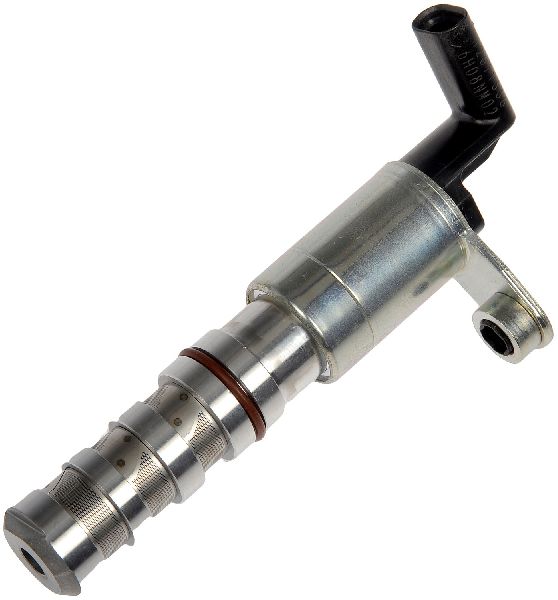
- Engine Variable Valve Timing (VVT) Solenoid
(OEM #12687226 (May be superseded by 12716091))— This solenoid is the most common hardware failure for this code if the problem is not software-related. It gets stuck or clogged, failing to properly regulate oil flow to the cam phaser. For the LGX engine, the intake and exhaust solenoids are the same part, making swapping for diagnosis easy. 🎬 Watch this video to locate and replace the LGX solenoids.
Trusted brands: ACDelco (OEM), TRQ, Dorman
OEM price range: $60-$90
Aftermarket price range: $40-$70
Related Codes That Often Appear With This One
- P0014 — This is the same over-advanced timing code but for the exhaust camshaft on Bank 1 (rear bank). TSB N192266190 specifically mentions these codes appearing in pairs or all together due to the software glitch.
- P0011 — This is for an over-advanced *intake* camshaft on Bank 1. The TSBs note that groups of these codes often set together due to the software issue.
- P0021 — This is for an over-advanced *intake* camshaft on Bank 2. Seeing P0021 and P0024 together points to a problem affecting the entire Bank 2 timing system, such as oil flow to that head or the TSB software issue.
Technical Service Bulletins (TSBs) & Recalls
- N192266190 / N192266190 02: ECM reprogram to fix multiple camshaft position DTCs causing drivability issues.
- PIP5568E / PIP5568B: Preliminary information regarding an investigation into P0011, P0014, P0021, and P0024 setting together.
- PIE0369: Engineering Information bulletin to gather data on these DTCs for root cause analysis.
Platform-Specific Known Issues
- Bulletin #N192266190 / N192266190 02: States that DTCs P0011, P0014, P0021, and P0024 may set, causing rough running, reduced power, or stalling, sometimes after an auto-stop event. The official fix is to reprogram the Engine Control Module (ECM).
- Bulletin #PIP5568E: Notes an ongoing investigation into these same four codes setting together or in pairs, along with drivability concerns. It advises dealers to check for the latest software calibrations.
- Bulletin #PIE0369: An early engineering information bulletin from 2016 asking technicians to gather data on these codes for the then-new LGX engine, showing GM was aware of this issue from the start of the platform's life.
Mechanic-Grade Diagnostic Values
- Camshaft Position Actuator Solenoid Resistance — expected: 6.9 to 7.9 Ohms at 68°F (20°C). Failure: A reading outside this range, or an open/short circuit (OL/0 ohms), indicates a faulty solenoid.
- VVT Solenoid Connector Voltage (Ignition On, Engine Off) — expected: Battery voltage on the power supply pin. Failure: No voltage suggests a wiring issue, a blown fuse, or a problem with the power supply relay.
- Scan Tool Camshaft Position Variance (Desired vs. Actual) — expected: Near 0 degrees at idle. Should change predictably when the VVT system is commanded by the scan tool.. Failure: A large variance at idle, or a value that does not change when commanded, points to a mechanical (phaser) or hydraulic (solenoid, oil pressure) issue.
- Camshaft Position Sensor Voltage — expected: Typically varies between 0.5V and 4.5V as the engine runs.. Failure: A flatline voltage or a signal that doesn't change with engine RPM can indicate a failed sensor.
Hidden / Shadow Codes Worth Checking
- Mode 6, Test ID $A2-$A7: While not specific to P0024, this data can be useful if drivability issues are present. These Test IDs correspond to misfire counts for each cylinder (1-6). A high count on cylinders 2, 4, or 6 (Bank 2) could be a symptom of the timing being off, even before a specific P0302, P0304, or P0306 misfire code is set. (see via An advanced OBD-II scan tool with Mode 6 data capability is required.)
Scan Tool Commands That Help
- GDS2 (GM Dealer/Professional Scan Tool): Camshaft Position Actuator Control — This bidirectional command allows a technician to manually command the VVT solenoid on and off, or to a specific duty cycle. While observing live data for camshaft position, the technician can verify if the solenoid is responding and if the camshaft phaser is moving as commanded. This helps differentiate between an electrical control issue and a mechanical phaser or oil flow problem.
- GDS2 (GM Dealer/Professional Scan Tool): Cam Solenoid Circuit Short/Ground Test Status — This data PID can be monitored while commanding the solenoid on/off to see if the ECM is detecting a short to ground or an open in the control circuit, which can help pinpoint electrical faults without extensive manual probing.
Wiring & Ground Locations
- G101 / G106 — G101 is typically located on the lower front of the engine block. It is often jumpered to G106, which is on the front center of the frame cross rail, under the crank pulley.. G101 is a primary ground for the Engine Control Module (ECM) and Transmission Control Module (TCM). A poor connection at this point can cause erratic behavior from the ECM, including incorrect sensor readings and faulty command signals to actuators like the VVT solenoids.
- G103 — Located at the left rear of the engine compartment on the cowl, often above the brake booster.. This is a major body and data ground, grounding the Body Control Module (BCM), Instrument Panel Cluster (IPC), and the Data Link Connector (DLC). While not a direct engine ground, a poor connection here can cause communication issues between modules, which can sometimes manifest as unusual or incorrect DTCs.
Real Owner Repair Stories
- Reddit user in r/MechanicAdvice (2012 GMC Acadia (platform-mate with a 3.6L V6, pre-LGX but similar VVT system)) — Initially had P0011, cleared it, then P0011 and P0014 appeared together. After an oil change, those codes cleared but P0024 appeared two weeks later.
❌ Tried (didn't work) Clearing the codes initially., An oil change provided a temporary fix (two weeks) but the timing codes returned, shifting from Bank 1 to Bank 2.
✅ What actually fixed it The user was advised by mechanics in the forum that after an oil change failed to provide a permanent solution, the next logical steps were to inspect/clean the VVT solenoids for debris, and if that failed, the likely culprit would be a failing timing chain or phaser, which is a common issue on that engine family. The temporary fix from the oil change strongly suggests an oil flow/pressure-related problem, typical of clogged solenoids or failing tensioners.
OEM Part Supersession History
12687226→12716091— This is a common supersession for GM parts. Often, a new part number indicates a minor revision to the design, materials, or manufacturing process to improve reliability or address a known issue. The core function and fitment remain the same.
Helpful Videos
Used OEM Parts in Stock

New Aftermarket Parts Available


The information in this article is provided for general reference and educational purposes only. Vehicle specifications, procedures, and part compatibility can vary by production date, trim level, and region. Always consult your vehicle's factory service manual and verify part numbers before purchasing or performing repairs. Safety-critical components such as airbags, seat belts, and braking systems should be installed by a qualified professional.
- Cadillac XT5:
- 🎬 Helpful Videos
- 🛍️ Shop This Part
- What's Unique About the 2017-2019 Cadillac XT5
- Diagnostic Flowchart
- Symptoms You May Notice
- Most Likely Causes
- Rare But Worth Checking
- Diagnosis Steps
- Parts You'll Likely Need
- Related Codes That Often Appear With This One
- Technical Service Bulletins (TSBs) & Recalls
- Platform-Specific Known Issues
- Mechanic-Grade Diagnostic Values
- Hidden / Shadow Codes Worth Checking
- Scan Tool Commands That Help
- Wiring & Ground Locations
- Real Owner Repair Stories
- OEM Part Supersession History
- 🎟️ Get 5% Off