

P0022 on 2015-2019 Lincoln MKC: The Wrong Code for Your Engine? Explaining the P0012 Equivalent
The P0022 code for 'Bank 2' is technically not applicable to the inline-4 engine in your Lincoln MKC, which only has one bank. The actual code for this issue on your vehicle is P0012 ('Bank 1'). The problem is most often a faulty intake VCT solenoid sticking due to debris or old oil. An oil change and/or a new solenoid is the likely fix. The solenoid is an accessible part on top of the engine, making for a straightforward DIY repair.
- P0022 refers to Bank 2, which your Lincoln MKC's 4-cylinder engine does not have. The correct code for this problem on your car is P0012.
- The most likely cause is a sticking intake VCT solenoid on Bank 1. This is a known issue.
- Before replacing any parts, check your engine oil. Low, old, or incorrect oil is a primary cause of VCT system faults.
- Replacing the VCT solenoid is a relatively easy and inexpensive DIY job that often solves the problem.
- If you hear a rattling noise from the engine on startup, the issue may be a more serious timing chain problem that requires professional attention.
What's Unique About the 2015-2019 Lincoln MKC
You may see P0022 associated with your Lincoln MKC in official Technical Service Bulletins (TSBs) or from generic code readers. This is because Ford and Lincoln often issue TSBs that cover a wide range of vehicles, including those with V6 and V8 engines that do have a Bank 2. For the EcoBoost I4 engine in your MKC, the core issue described in these TSBs—a sticking Variable Camshaft Timing (VCT) solenoid—is still highly relevant, but it will manifest as a Bank 1 code like P0012.
🎬 Watch: Expert tips for diagnosing P0012 on the 2.0L EcoBoost.Diagnostic Flowchart
Tap your situation to follow the diagnostic path that matches what you're seeing on this vehicle.
Symptoms You May Notice
- Check Engine Light is illuminated
- Rough or unstable engine idle
- Engine may hesitate or stall, especially under load or when stopping
- Noticeable loss of power and poor acceleration
- Reduced fuel economy
- Rattling or knocking sounds from the engine, particularly on a cold start.
- Replacing the camshaft position sensor when the actual fault is with the VCT solenoid or oil quality.
- Replacing expensive cam phasers and timing chains when the issue could be resolved with a simple VCT solenoid replacement or an oil change.
Most Likely Causes
- Dirty, Low, or Incorrect Viscosity Engine Oil 🔴 High Probability The VCT system is hydraulic and highly sensitive to oil pressure and cleanliness. The official TSBs for this vehicle platform point to 'small debris' as a primary cause of VCT issues. EcoBoost engines can be hard on oil, and using the correct 5W-30 synthetic oil and filter is critical.
How to confirm: Check the oil level on the dipstick and inspect its color and consistency. If it's low, dark, sludgy, or past its recommended change interval, it needs to be changed.
Typical fix: Perform an engine oil and filter change using the OEM-specified grade of full synthetic oil (e.g., 5W-30 for EcoBoost engines) and a quality filter. Clear codes and re-test.
Est. part cost: $50-$100 - Faulty Intake VCT Solenoid (Oil Control Valve) 🔴 High Probability As stated in TSBs SSM 50067 and SSM 47170, these solenoids are known to stick due to small debris in the oil, preventing proper camshaft adjustment. In some cases, debris from a failing mechanical vacuum pump can also clog the solenoid screens.
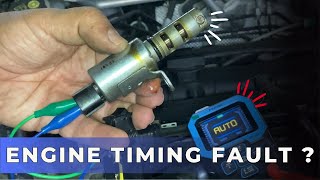
How to confirm: Use a scan tool to command the solenoid on/off and listen for a click. You can also 🎬 See how to bench test a VVT solenoid for proper operation. swap the intake and exhaust solenoids (they are the same part number) and see if the trouble code changes to an exhaust code (e.g., P0014). A visual inspection may reveal clogged filter screens on the solenoid.
Typical fix: Replace the Bank 1 intake VCT solenoid. It is located on the top of the valve cover and held in by a single 8mm bolt, making it accessible for DIY replacement.
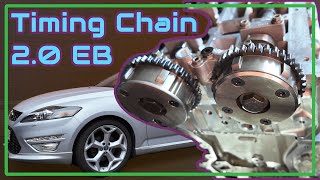
Est. part cost: $30-$80 - Worn Timing Chain and/or Tensioner 🟡 Medium Probability On higher-mileage EcoBoost engines (typically over 80,000-100,000 miles), the timing chain can stretch, or the hydraulic tensioner can weaken. This causes timing slack, which is most noticeable as a brief rattle on cold startups before oil pressure builds.
How to confirm: A distinct rattling noise from the front of the engine on a cold start that lasts for 2-5 seconds is a strong indicator. A mechanic can confirm by checking timing data with a scan tool, but a definitive diagnosis requires physical inspection, which is labor-intensive.
Typical fix: Replace the timing chain, guides, and tensioner as a kit. This is a significant repair, often costing over $1000.
Est. part cost: $200-$400 - Failed Intake Camshaft Phaser ⚪ Low Probability The phaser is the mechanical gear that actually adjusts the camshaft. It can fail or get stuck, but this is less common than solenoid or oil issues. Phaser failure is often accompanied by a persistent rattling or knocking noise, not just on startup.
How to confirm: This is typically diagnosed after all other causes have been ruled out. It requires significant labor to access and replace.
Typical fix: Replace the intake camshaft phaser. This is usually done at the same time as a timing chain replacement.
Est. part cost: $100-$250
Rare But Worth Checking
- Faulty Camshaft Position Sensor: This is possible, but it would typically set a specific sensor circuit code (e.g., P0340) in addition to the timing code. It's less common for the sensor to fail in a way that only produces a timing performance code.
- Clogged Oil Passages: In engines with a history of poor maintenance, sludge can build up and restrict oil flow to the VCT solenoids and phasers, causing timing issues.
- Failing Mechanical Vacuum Pump: A known issue on some 2.0L EcoBoost engines involves the mechanical vacuum pump, driven by the camshaft, disintegrating internally. Plastic debris from the pump's impeller can travel through the oil and clog the VCT solenoid screens, leading to timing codes like P0012.
Diagnosis Steps
- Verify the engine oil level and condition. If low, dirty, or overdue for a change, replace the oil and filter with the manufacturer-specified type (Full Synthetic 5W-30). Clear the code and test drive. This simple step fixes the issue in many cases.
- If the code returns, use a scan tool to observe the desired vs. actual camshaft position for Bank 1 Intake. If the actual position is lagging or not responding, suspect a control issue.
- Listen for a distinct rattling noise from the engine during a cold start. A prominent rattle lasting 2-5 seconds points towards a stretched timing chain or failing tensioner.
- Locate the intake and exhaust VCT solenoids on the top of the valve cover. They are held in by one 8mm bolt each and have a 2-pin electrical connector.
- Swap the intake VCT solenoid with the exhaust VCT solenoid (they are the same part). Clear the codes and drive the vehicle. If the code changes to P0014 (exhaust cam timing), the solenoid you moved is faulty and needs replacement.
- If the code does not change, remove the intake solenoid again and inspect its small mesh screens for metallic or plastic debris. Clogged screens indicate a contaminated oil system, possibly from a failing vacuum pump.
- If solenoids and wiring are good and there's no debris, the problem is likely mechanical within the timing system (phaser, chain, tensioner), which requires professional diagnosis and repair.
Parts You'll Likely Need
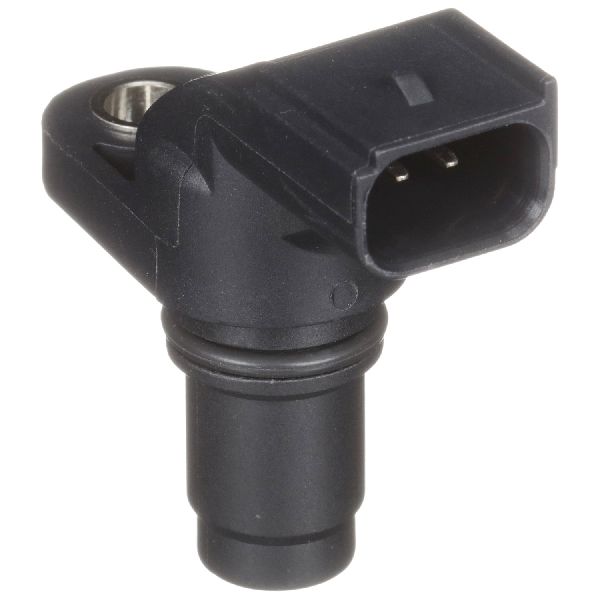
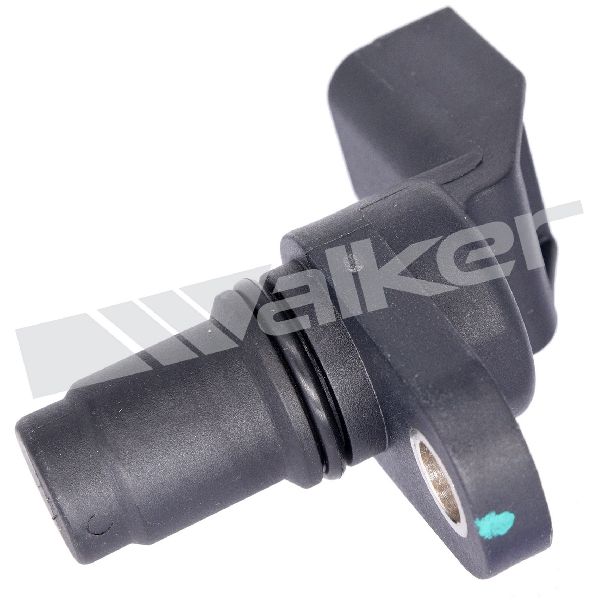
- Variable Camshaft Timing (VCT) Solenoid
(OEM #CJ5Z-6M280-A)— This is the most common failure point for this code on Ford/Lincoln EcoBoost engines, often due to internal sticking from debris as noted in TSBs. The intake and exhaust solenoids are identical, making diagnosis by swapping them easy.
Trusted brands: Motorcraft, Dorman, NTK
OEM price range: $50-$80
Aftermarket price range: $30-$60
Related Codes That Often Appear With This One
- P0012 — This is the correct code for this exact problem on the Lincoln MKC's inline-4 engine.
- P0011 — An over-advanced condition on the same camshaft. This can occur if the VCT solenoid is sticking intermittently in both directions.
- P0014 — An over-retarded or advanced code for the exhaust camshaft. Can appear if both VCT solenoids are clogged or failing.
- P0300, P0301, P0302, etc. — Misfire codes can be triggered because incorrect camshaft timing disrupts the combustion process in one or more cylinders.
Technical Service Bulletins (TSBs) & Recalls
- SSM 50067: Notes that VCT codes can be caused by debris causing the VCT solenoid to stick. Recommends attempting to cycle the solenoid with a scan tool to clear it before replacement.
- SSM 47170: An earlier bulletin with the same information regarding sticking VCT solenoids due to debris.
Platform-Specific Known Issues
- Per Lincoln Technical Service Bulletin #SSM 50067, vehicles may exhibit VCT-related codes due to 'small debris causing the VCT solenoid to stick.' It advises diagnosis before component replacement, but highlights the solenoid as a key area of concern. The TSB suggests using a scan tool to cycle the solenoid 10 times to attempt to clear the debris before replacement.
- TSB #SSM 47170 reiterates the same issue, indicating a known pattern of VCT solenoid contamination across multiple model years.
- A less common but documented issue on the 2.0L EcoBoost is the internal failure of the mechanical vacuum pump, which can send plastic debris into the oil, clogging the VCT solenoid screens and causing timing codes.
Mechanic-Grade Diagnostic Values
- VCT Solenoid Internal Resistance — expected: 7 to 14 Ohms. Some sources give a tighter range of 6.9-7.9 Ohms.. Failure: A reading of OL (Open Loop) or significantly outside the expected range indicates a faulty solenoid coil.
- VCT Solenoid Voltage Supply — expected: Battery Voltage (~12V) on the power supply pin with the key on, engine off.. Failure: No voltage indicates a problem with the wiring or the supply fuse (e.g., Fuse F32 in the under-hood fuse box on related platforms).
- Scan Tool PID: VCT_ADV_ERR (VCT Advance Error) — expected: Should be close to 0° at idle and during steady-state driving.. Failure: A consistent deviation greater than +/- 5 degrees indicates the PCM cannot control the camshaft to its desired position. A dealership invoice for a similar vehicle noted a reading of -6 degrees as a fault indicator.
Hidden / Shadow Codes Worth Checking
- Mode 6, TID $53: This is not a trouble code, but a non-continuous monitor test result for cylinder-specific misfire rates. Since incorrect cam timing often causes misfires, a technician will check this data to see if the timing fault is causing a particular cylinder to misfire, even if a P030x code has not yet been set. (see via Requires a professional scan tool or an advanced OBD-II app (like Torque Pro) that can display Mode $06 test results. The Component ID (CID) corresponds to the cylinder number (e.g., CID $01 is cylinder 1).)
Scan Tool Commands That Help
- Ford IDS (or equivalent professional scanner): VCT Solenoid On-Demand Test / Output State Control — This command allows the technician to manually cycle the VCT solenoid on and off while the engine is running to see if it affects engine performance or to attempt to clear minor debris. TSB SSM 50067 specifically advises cycling the solenoid 10 times to try and dislodge debris before replacement.
- Ford IDS (or equivalent professional scanner): Reset KAM (Keep Alive Memory) — After replacing timing components like solenoids, phasers, or the timing chain, a technician may perform a KAM reset for the Powertrain Control Module (PCM). This clears all learned adaptive values, forcing the module to relearn timing strategies with the new parts. This is found under Toolbox > Powertrain > PCM/TCM in IDS.
Wiring & Ground Locations
- VCT Solenoid Connector — A 2-pin connector plugging directly into the top of each VCT solenoid on the valve cover.. The connector or its pigtail wiring can become brittle from heat and vibration, causing an intermittent open or short in the control circuit. Pigtail kits (e.g., Standard Motor Products S2860) are available for repair.
- PCM Connector C175B — This is one of the main connectors at the Powertrain Control Module (PCM), located on the left side of the engine compartment on the Ford Escape, the MKC's sister platform.. The ground-side control wires for the VCT solenoids run from the solenoid connectors to specific pins in this PCM connector. A fault here, such as a corroded or backed-out pin, would cause a loss of control over the solenoid.
- Main Engine/Chassis Ground — A primary ground strap typically runs from the engine block to the chassis, often near a motor mount or the starter. On similar Ford platforms, key grounds are designated G104 (near battery/fuse box) and G105 (near starter).. A poor main engine ground can cause a host of electrical issues, including erratic sensor readings and improper solenoid operation. The PCM and its components rely on a stable ground reference. Verifying this ground is clean and tight is a fundamental step in diagnosing any electrical fault.
Real Owner Repair Stories
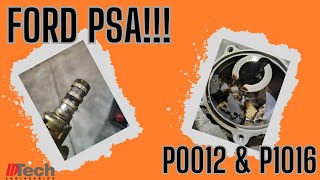
- YouTube channel 'Ford Tech Makuloco' (Ford Escape with 2.0L EcoBoost engine (mechanically identical to Lincoln MKC)) — Hesitation on acceleration after a brake booster failure. Trouble codes P0012 and P1016 were present.
❌ Tried (didn't work) The initial repair was replacing the vacuum pump to fix the brake booster, which worked, but the hesitation and timing codes appeared immediately after.
✅ What actually fixed it The original vacuum pump had disintegrated internally, sending plastic debris into the engine oil. This debris clogged the screens on the intake VCT solenoid. The final fix was to replace the valve cover (which had a clogged breather port), perform a full oil change with a Motorcraft filter, and thoroughly clean the VCT solenoid screens. The video implies replacing the solenoids is the safer bet if they are heavily contaminated.
OEM Part Supersession History
CJ5Z-6M280-A→Potentially CM5Z-6M280-C or other revisions.— Ford often updates parts to improve reliability or change suppliers. Suffix changes (e.g., -A to -B to -C) typically denote revisions.
Heads up: The base part for intake and exhaust on the 2.0L/2.3L EcoBoost is physically identical and can be swapped for diagnosis. However, different part numbers with different color connectors may exist for specific applications or as updated versions. Always verify the part number with the vehicle's VIN.
Helpful Videos


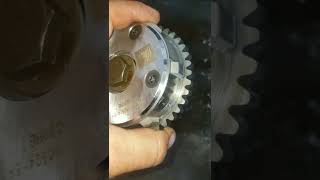
We Have This Part in Stock

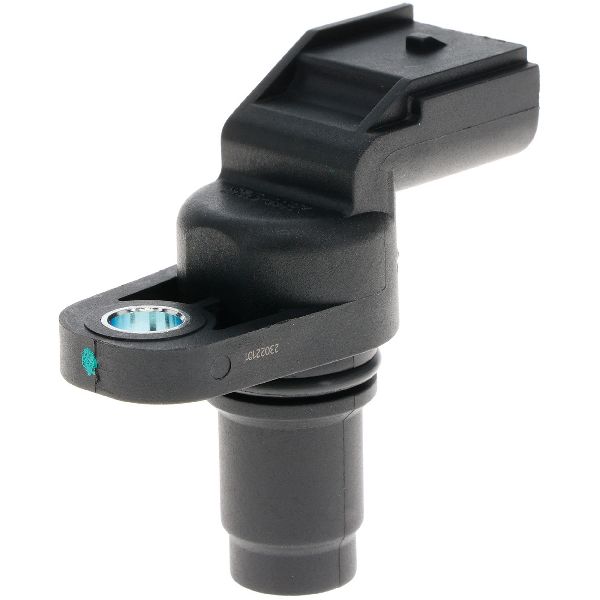
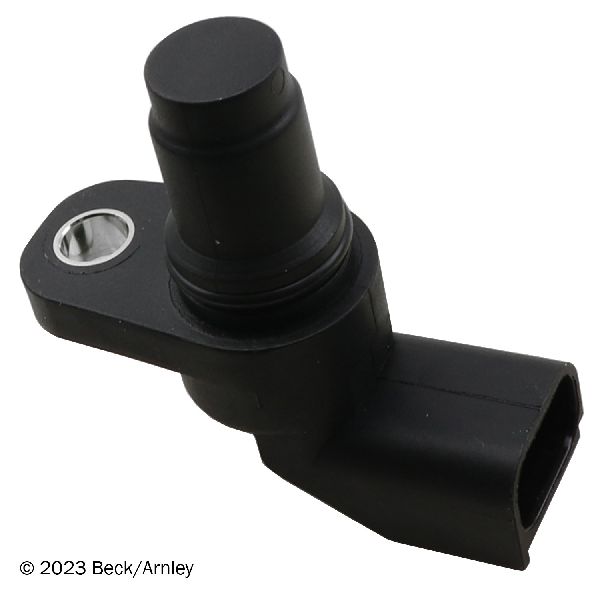
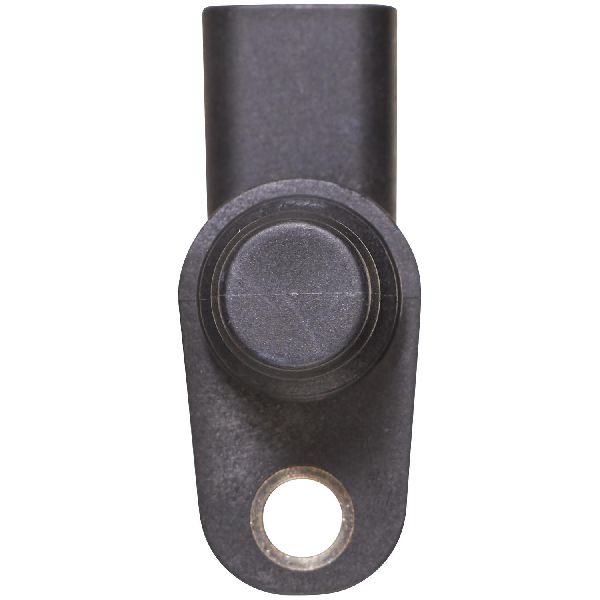

The information in this article is provided for general reference and educational purposes only. Vehicle specifications, procedures, and part compatibility can vary by production date, trim level, and region. Always consult your vehicle's factory service manual and verify part numbers before purchasing or performing repairs. Safety-critical components such as airbags, seat belts, and braking systems should be installed by a qualified professional.
- Lincoln MKC:
- 🎬 Helpful Videos
- 🛍️ Shop This Part
- What's Unique About the 2015-2019 Lincoln MKC
- Diagnostic Flowchart
- Symptoms You May Notice
- Most Likely Causes
- Rare But Worth Checking
- Diagnosis Steps
- Parts You'll Likely Need
- Related Codes That Often Appear With This One
- Technical Service Bulletins (TSBs) & Recalls
- Platform-Specific Known Issues
- Mechanic-Grade Diagnostic Values
- Hidden / Shadow Codes Worth Checking
- Scan Tool Commands That Help
- Wiring & Ground Locations
- Real Owner Repair Stories
- OEM Part Supersession History
- 🎟️ Get 5% Off