

P0022 Ford Mustang 2015-2021: Causes of Over-Retarded Camshaft Timing (Bank 2)
On 2015-2021 Ford Mustangs, P0022 is most often caused by a faulty Variable Camshaft Timing (VCT) solenoid on Bank 2 (driver's side) or low/dirty engine oil. Replacing the VCT solenoid is a common fix, costing around $30-$80 for the part. The OEM Motorcraft part number is often BR3Z-6M280-E or a newer revision.
- Always check your engine oil level and condition first. Low or dirty oil is a simple fix that causes this code.
- The most likely failed part is the Bank 2 (driver's side) intake VCT solenoid. It's relatively inexpensive and accessible for a DIY repair.
- Ford has issued multiple TSBs indicating the VCT solenoids are prone to sticking from small debris, reinforcing the need for regular, high-quality oil changes.
- Before buying parts, inspect the solenoid's wiring connector for damage or oil contamination, as this can also cause the code.
- Do not immediately replace the camshaft position sensor; it is almost always reporting the timing issue correctly.
What's Unique About the 2015-2021 Ford MUSTANG
The Ti-VCT system in the S550 Mustang's 5.0L Coyote V8 and 2.3L EcoBoost engines is highly dependent on clean oil and correct oil pressure to function. As highlighted in multiple Ford Technical Service Bulletins (TSBs), these systems can be sensitive to small debris, which may cause the VCT solenoids to stick. This makes regular, high-quality oil changes particularly critical for preventing this code. Owner experiences confirm that VCT solenoid failure is a frequent cause of P0022, sometimes even more so than on other platforms. A video breaking down VCT failure on the 5.0L engine explains that the solenoid's internal pintle can get stuck, causing the timing error the PCM detects.
Diagnostic Flowchart
Tap your situation to follow the diagnostic path that matches what you're seeing on this vehicle.
Symptoms You May Notice
- Check Engine Light is on
- Rough or unstable idle, sometimes fluctuating up and down.
- Engine stalling, especially at low speeds or when coming to a stop.
- Poor acceleration or loss of power, feeling sluggish.
- Reduced fuel economy.
- Rattling, ticking, or knocking noises from the engine, especially at idle or on a cold start.
- Hard starting, requiring more cranking than usual.
- Replacing the camshaft position sensor. The sensor is usually just reporting the problem, not causing it. The code indicates a mechanical timing issue, not a sensor failure.
- Replacing the crankshaft position sensor. This sensor is related to engine timing but is not the direct cause of a single-bank camshaft timing code.
- Confusing normal engine noises with a fault. The 2018+ 5.0L engine has a characteristic 'typewriter tick' from the direct injection high-pressure fuel pump, which is normal. TSB 19-2144 also describes a light knocking noise at idle that is considered a normal operating characteristic and requires no repair.
Most Likely Causes
- Dirty or Low Engine Oil 🔴 High Probability The VCT system is hydraulically operated by engine oil. Low levels or contaminated oil can't provide the pressure needed for the phasers to adjust cam timing correctly. Sludge can clog the tiny passages in the VCT solenoids and phasers.
How to confirm: Check the oil dipstick for level and inspect the oil's color and consistency. If it's low, dark, or sludgy, it needs to be changed. This should always be the first step.
Typical fix: Perform an oil and filter change using the correct viscosity oil specified by Ford (e.g., 5W-20 for the 5.0L V8) and a quality Motorcraft filter.
Est. part cost: $40-$100 - Faulty VCT Solenoid 🔴 High Probability Ford TSBs SSM 50067 and SSM 47170 specifically state that debris can cause the VCT solenoid to stick. This is a very common failure point on these engines, with many owners reporting it as the fix. The solenoid pintle gets stuck, preventing correct oil flow.
How to confirm: After checking oil, this is the next logical step. You can test the solenoid's resistance with a multimeter (should be 5-15 Ohms). The most effective method is to swap the Bank 2 intake solenoid with the Bank 1 intake solenoid. If the code changes to P0012 (Bank 1 over-retarded), the solenoid is confirmed faulty.
Typical fix: Replace the Bank 2 (driver's side) intake VCT solenoid. The OEM part is recommended.
Est. part cost: $30-$80 - Wiring Harness Issue 🟡 Medium Probability Forum discussions on Mustang6G.com mention that the wiring harness leading to the VCT solenoids, particularly on the driver's side, can be under tension. Heat and engine movement, especially after spirited driving or track use, can cause the wires to fail at the connector terminal. The harness itself is a critical component for ensuring the VCT solenoids receive the correct signals.
How to confirm: Visually inspect the wiring and connector for the Bank 2 VCT solenoid for any signs of damage, melting, corrosion, or oil contamination. Wiggle the connector while the engine is idling to see if it causes a stumble. Check for continuity with a multimeter.
Typical fix: Repair the damaged section of the harness or replace the connector pigtail. Some owners recommend splicing in extra length to relieve the tension.
Est. part cost: $15-$50 - Failing Camshaft Phaser ⚪ Low Probability While less common than a solenoid failure, the phaser itself (the mechanical gear that actually adjusts the cam) can fail, get clogged with sludge, or have its internal locking pin wear out. This is a known issue on the 5.0L Coyote engine family.
How to confirm: This is a more advanced diagnosis. A key symptom is a loud startup rattle that lasts for a few seconds until oil pressure builds. If new oil and a new solenoid don't fix the code, the phaser is the next likely culprit. Diagnosis requires significant engine disassembly.
Typical fix: Replace the camshaft phaser and timing components as needed. This is a labor-intensive job.
Est. part cost: $150-$400
Rare But Worth Checking
- Stretched Timing Chain or Worn Guides: On higher mileage vehicles (over 100k miles), wear in the timing chain system can cause enough slack to affect cam timing and trigger this code.
- Faulty Powertrain Control Module (PCM): This is extremely rare. The PCM should only be considered after all other mechanical and electrical possibilities have been exhaustively ruled out. An ECU update was noted as a dealer fix in one case, but this is uncommon.
Diagnosis Steps
- Verify the code with an OBD-II scanner.
- Check the engine oil level and condition. If low or dirty, perform an oil and filter change with the manufacturer-specified oil and a quality filter (e.g., Motorcraft). Clear the code and see if it returns.
- Inspect the electrical connector and wiring for the Bank 2 (driver's side) intake VCT solenoid. Look for oil saturation, corrosion, or loose pins. A forum user on Mustang6G.com noted that heat and tension can cause wire failure at the terminal.
- Using a scan tool with live data, monitor the PIDs for Bank 2 Camshaft Timing. Specifically, watch
VCT_ADV_ERR2(Variable Camshaft Timing Advance Error for Bank 2). A value that is consistently high, low, or erratic indicates a problem. A healthy system should show the error value hovering close to zero degrees, within a range of +/- 5 degrees. - Swap the Bank 2 intake VCT solenoid with the Bank 1 intake solenoid. They are identical parts. Clear the codes and drive the vehicle. If the code changes to P0012 (Bank 1 over-retarded), the solenoid is faulty and needs replacement.
- If the code does not change after swapping, test the original solenoid's resistance with a multimeter. It should be between 5 and 15 Ohms. Some sources cite a more specific range of 6.9 to 7.9 Ohms.
- For advanced diagnosis, a technician may command the solenoid with a scan tool to verify its operation or check oil pressure at the cylinder head to rule out a larger lubrication issue.
Parts You'll Likely Need
- Engine Variable Valve Timing (VVT) Solenoid
(OEM #BR3Z-6M280-E (or newer revisions like -F))— This is the most frequent cause of P0022 on this platform, as noted in TSBs and owner forums. It's an electronically controlled valve that gets stuck due to debris or wear. Both intake and exhaust solenoids are often the same part number.
Trusted brands: Motorcraft (OEM), Dorman, Standard Motor Products (SMP)
OEM price range: $50-$90
Aftermarket price range: $30-$60 - Engine Oil and Filter
(OEM #Motorcraft FL-500S (for 5.0L V8))— Correct oil level and cleanliness are essential for the VCT system to work. This should always be the first step and is a required part of the solution if maintenance has been neglected.
Trusted brands: Motorcraft, Mobil 1, Pennzoil
OEM price range: $50-$100
Aftermarket price range: $40-$80
Related Codes That Often Appear With This One
- P0021 — 'A' Camshaft Position Timing - Over-Advanced (Bank 2). This can appear with P0022 if the VCT solenoid is sticking or acting erratically, causing it to over-correct.
- P0302, P0300 — Misfire codes (P0302 for cylinder 2, P0300 for random misfires). Incorrect cam timing disrupts the air/fuel mixture and combustion process, leading to misfires on the affected bank.
- P0012 — 'A' Camshaft Position Timing - Over-Retarded (Bank 1). If this code appears after swapping VCT solenoids between banks for diagnosis, it confirms the solenoid is the faulty component.
Technical Service Bulletins (TSBs) & Recalls
- SSM 54366: Points to specific diagnostic tests for a range of VCT codes including P0022.
- SSM 50067: Suggests P0022 may be due to small debris causing the VCT solenoid to stick.
- SSM 47170: An earlier bulletin with nearly identical advice to SSM 50067, indicating a known issue over several years.
- TSB 19-2144: Describes a normal engine knock on 2018-2019 5.0L engines that should not be mistaken for a mechanical fault.
Platform-Specific Known Issues
- TSB #SSM 50067 and #SSM 47170: Ford acknowledges that various VCT codes, including P0022, may be caused by small debris causing the VCT solenoid to stick. The bulletins advise against immediate component replacement before checking for this.
- TSB #SSM 54366: This bulletin also lists P0022 among a group of VCT-related DTCs and directs technicians to specific diagnostic procedures in the workshop manual.
Mechanic-Grade Diagnostic Values
- VCT Solenoid Resistance — expected: 5-15 Ohms, with some sources specifying a tighter range of 6.9-7.9 Ohms or 8-12 Ohms at 68°F (20°C).. Failure: A reading of 0 Ohms (short circuit) or infinite/OL (open circuit).
- VCT Solenoid Harness Voltage — expected: Battery voltage (approx. 12.6V) on the power supply pin with key on, engine off.. Failure: Low or no voltage, indicating a wiring issue or blown fuse.
- Scan Tool PID: VCT_ADV_ERR2 — expected: Should hover around 0 degrees, with an acceptable deviation of no more than +/- 5 degrees during closed-loop operation.. Failure: A consistent large positive or negative value, or erratic readings that do not return to near zero.
- Engine Oil Pressure at Idle (Hot) — expected: Minimum of 15 PSI at normal operating temperature.. Failure: Pressure below 15 PSI at idle can cause the camshafts to oscillate and trigger timing faults.
Scan Tool Commands That Help
- Ford IDS (Integrated Diagnostic System): Pinpoint Test HK12: Cycle VCT Solenoid — As per TSB SSM 50067, this bidirectional command should be used before replacing a VCT solenoid. It cycles the solenoid 10 times to attempt to dislodge small debris that may be causing it to stick.
- Ford IDS (Integrated Diagnostic System): Output State Control for VCT Solenoid — This allows a technician to manually command the solenoid on and off while the engine is running. A functional solenoid will cause the engine to run rough or stall when activated at idle, confirming the solenoid's mechanical and hydraulic response.
Wiring & Ground Locations
- Main Engine Ground (Driver Side) — On the driver's side motor mount studs. The main negative battery cable harness has grounds that attach here.. A poor engine ground can cause erratic behavior in all engine sensors and actuators, including the VCT solenoids and Camshaft Position sensors, leading to incorrect readings and fault codes.
- Main Engine Ground (Passenger Side) — A ground strap connects from the passenger side motor mount to the starter.. Ensures the entire engine block has a solid ground path, which is critical for the proper function of components mounted on that side.
- Cylinder Head Ground — A ground strap is located at the back of the driver's side cylinder head.. Provides a direct ground path for the cylinder head and its mounted components, which includes the VCT solenoids. A loose or corroded connection here can directly impact VCT system operation.
Real Owner Repair Stories
- Mustang6G.com forum user (2019 Mustang GT) — Car would jerk and sometimes shut off when coming to a hard stop or decelerating. At a dead stop, the car would sometimes shutter, jerk, and shut off when applying gas. Threw code P0012 (Bank 1 equivalent of P0022).
❌ Tried (didn't work) Initial diagnosis pointed to the VVT/VCT system.
✅ What actually fixed it The user replaced the VCT solenoids on the affected bank (Bank 1 in this case). The user noted that on the Gen 3 Coyote (2018+), the solenoids are in different locations than on the Gen 2 (2015-2017), with one at the front and one moved further back on the valve cover. Replacing the solenoids resolved the stalling and jerking symptoms.
OEM Part Supersession History
BR3Z-6M280-A→BR3Z-6M280-D, BR3Z-6M280-E, and finally BR3Z-6M280-F— Progressive design improvements by Ford to enhance durability and resistance to sticking from oil contaminants.
Heads up: The latest revision, BR3Z-6M280-F, is the recommended replacement for all prior versions and is backward compatible for 2011-2017 5.0L engines.
Model Year Variations Within This Range
- 2018-2021 (5.0L Coyote Gen 3): The 2018 model year refresh introduced the 3rd generation Coyote V8, which featured significant changes to the valvetrain and VCT system. Unlike the 2015-2017 'Gen 2' Coyote which had four identical VCT solenoids located at the front of the valve covers, the 'Gen 3' engine uses two different types of VCT actuators. One traditional solenoid is at the front, while the other was moved to a different position on the valve cover. This means part numbers and replacement procedures differ between the 2015-2017 and 2018-2021 5.0L models.
Helpful Videos
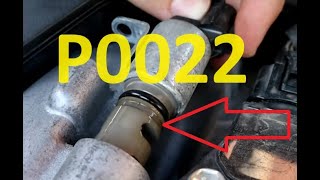
![How to Fix P0022 Engine Code in 4 Minutes [2 DIY Methods / Only $6.53]](https://img.youtube.com/vi/BO7HzbeFxqo/mqdefault.jpg)
Used OEM Parts in Stock
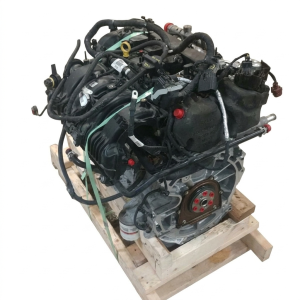
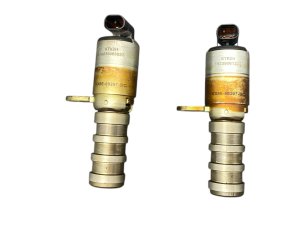
New Aftermarket Parts Available


The information in this article is provided for general reference and educational purposes only. Vehicle specifications, procedures, and part compatibility can vary by production date, trim level, and region. Always consult your vehicle's factory service manual and verify part numbers before purchasing or performing repairs. Safety-critical components such as airbags, seat belts, and braking systems should be installed by a qualified professional.
- Ford MUSTANG:
- 🎬 Helpful Videos
- 🛍️ Shop This Part
- What's Unique About the 2015-2021 Ford MUSTANG
- Diagnostic Flowchart
- Symptoms You May Notice
- Most Likely Causes
- Rare But Worth Checking
- Diagnosis Steps
- Parts You'll Likely Need
- Related Codes That Often Appear With This One
- Technical Service Bulletins (TSBs) & Recalls
- Platform-Specific Known Issues
- Mechanic-Grade Diagnostic Values
- Scan Tool Commands That Help
- Wiring & Ground Locations
- Real Owner Repair Stories
- OEM Part Supersession History
- Model Year Variations Within This Range
- 🎟️ Get 5% Off