

P0021 on 2015-2021 Ford Transit Connect: Camshaft Timing Over-Advanced Causes and Fixes
On a 2015-2021 Ford Transit Connect, code P0021 is most often caused by a sticking Variable Camshaft Timing (VCT) solenoid due to dirty, low, or incorrect viscosity engine oil. Before replacing parts, check your oil level and quality; an oil change with the correct 5W-20 oil may resolve the issue. If not, the next step is to inspect, clean, or replace the VCT solenoid.
- P0021 on your Transit Connect points to an over-advanced camshaft, but the root cause is very often simple.
- Always check your engine oil level and condition first. A simple oil change is the cheapest and most common fix.
- The most likely failed part is the VCT solenoid, which gets stuck from oil debris. It is relatively inexpensive and accessible for DIY replacement.
- Do not immediately assume a major timing job is needed. The issue is more likely hydraulic/electrical than a major mechanical failure like a jumped chain.
What's Unique About the 2015-2021 Ford TRANSIT CONNECT
Ford's Variable Camshaft Timing (VCT) systems from this era are well-documented as being sensitive to oil quality and debris. Multiple Technical Service Bulletins (TSBs) issued by Ford for a wide range of vehicles, including the Transit Connect, point to 'small debris causing the VCT solenoid to stick' as a primary cause for this family of codes. This means that unlike some other vehicles where this code might immediately suggest a failed sensor or phaser, on the Transit Connect, the problem is very frequently related to the hydraulic function of the system being impeded by oil condition. TSB SSM 47170 specifically advises technicians to cycle the VCT solenoid with a scan tool 10 times to clear debris before replacing any parts.
Diagnostic Flowchart
Tap your situation to follow the diagnostic path that matches what you're seeing on this vehicle.
Symptoms You May Notice
- Check Engine Light is on
- Rough or unstable idle
- Engine hesitates or stumbles during acceleration
- Engine may stall when coming to a stop
- Reduced fuel economy
- Rattling or ticking noise from the engine bay, especially at idle or on startup
- Replacing the camshaft position sensor. While related, this sensor is usually not the cause of an over-advanced timing code; it is simply reporting the position. If the sensor itself were faulty, you would likely see a different code (e.g., P0345, P0349, P0365, etc.).
Most Likely Causes
- Low, Dirty, or Incorrect Viscosity Engine Oil 🔴 High Probability The VCT system is entirely dependent on hydraulic pressure. Ford TSBs repeatedly cite oil debris as a cause for sticking VCT components. Using oil thicker than the specified 5W-20 can also restrict flow in the narrow passages, causing timing errors.
How to confirm: Check the engine oil level on the dipstick and inspect its color and consistency. If the oil is low, black, or sludgy, or if it's been a long time since the last oil change, this is the most likely cause.
Typical fix: Perform an engine oil and filter change using the manufacturer-specified full synthetic 5W-20 oil. Clear the codes and perform a drive cycle.
Est. part cost: $40-$80 - Failing Variable Camshaft Timing (VCT) Solenoid 🔴 High Probability This is the component that physically sticks due to oil debris, as noted in Ford TSBs. It's an electromechanical valve with fine passages that controls oil flow to the cam phaser. It is highly susceptible to contamination.
How to confirm: After verifying oil is good, you can test the solenoid. Unplug it and apply 12V power; you should hear a distinct click. You can also remove it for inspection and cleaning. The screens on the solenoid may be visibly clogged with sludge or debris.
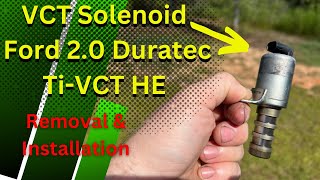
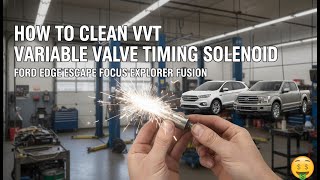
Typical fix: Replace the VCT solenoid for the corresponding camshaft. Cleaning with brake cleaner or MAF cleaner while cycling it with a 12V source 🎬 Watch: How to clean and test your VCT solenoid can be a temporary fix, but replacement is recommended for reliability.
Est. part cost: $30-$100 - Failing Camshaft Phaser 🟡 Medium Probability The phaser is the mechanical gear on the end of the camshaft that actually adjusts the timing. It can become clogged with sludge or the internal locking pin can fail, causing it to get stuck in an advanced position.
How to confirm: This is more difficult to diagnose. It usually requires an advanced scan tool to command VCT angles and observe the response via PIDs like VCTADV2 and VCTADVERR2. If the solenoid is working but the timing doesn't change as commanded, the phaser is suspect.
Typical fix: Replace the camshaft phaser. This is a more involved job that requires removing the valve cover and timing components.
Est. part cost: $100-$250 - Stretched Timing Chain or Worn Guides ⚪ Low Probability While less common than oil-related issues, timing chains on any engine can stretch over high mileage, causing a persistent timing deviation that the PCM flags as a fault.
How to confirm: This is a major diagnostic step. It involves checking for excessive slack in the timing chain, which requires significant engine disassembly (removing the valve cover and potentially the timing cover).
Typical fix: Replace the timing chain, tensioners, and guides.
Est. part cost: $200-$500
Rare But Worth Checking
- Wiring Harness Damage: The wiring or connector to the VCT solenoid can become damaged, corroded, or oil-soaked, causing an intermittent signal. Always visually inspect the connector and wiring loom when accessing the solenoid.
- PCM Fault: It is extremely rare for the Powertrain Control Module itself to be the cause of this code. All other possibilities, including mechanical and wiring issues, should be exhausted before considering PCM replacement.
Diagnosis Steps
- Check Engine Oil: Verify the engine oil level is correct and the oil is clean. If low, dirty, or overdue for a change, perform an oil and filter change with full synthetic 5W-20 oil. Clear the codes and drive to see if the code returns.
- Inspect VCT Solenoid: Locate the VCT solenoid for 'Bank 2' (on the 2.5L, both are on the front of the valve cover). Inspect the wiring and connector for damage, corrosion, or oil contamination.
- Test the VCT Solenoid: With the engine off, disconnect the solenoid and apply 12 volts to its pins using a power probe or jumper wires. A healthy solenoid will make an audible click. You can also measure its internal resistance with a multimeter; a reading between 5 and 14 ohms is expected.
- Clean or Replace Solenoid: Remove the single bolt holding the solenoid and pull it out. You can attempt 🎬 See this walkthrough for removing and installing the solenoid to clean the solenoid's screens and internal passages with brake cleaner while cycling it with 12V power. However, replacement with a new Motorcraft part is the more permanent solution.
- Advanced Diagnostics (Scan Tool): Use a scan tool to monitor VCT PIDs. Ford's diagnostic procedure points to monitoring VCTADV2 (actual angle) and VCTADVERR2 (error angle). TSB SSM 47170 suggests using the scan tool's active command function to cycle the solenoid 10 times to dislodge debris.
- Inspect Timing Components: If a new solenoid and clean oil do not resolve the code, and scan tool data points to a mechanical issue (e.g., timing angle does not change when commanded), the next step is to inspect the timing chain, guides, and phaser for wear or damage. This is a labor-intensive process.
Parts You'll Likely Need
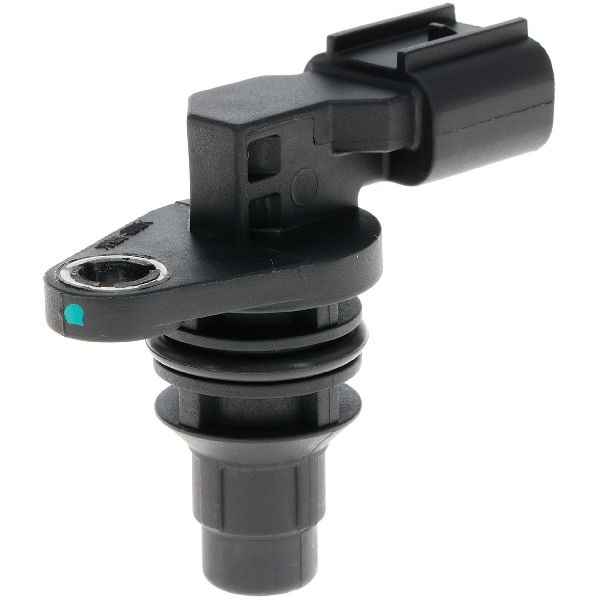
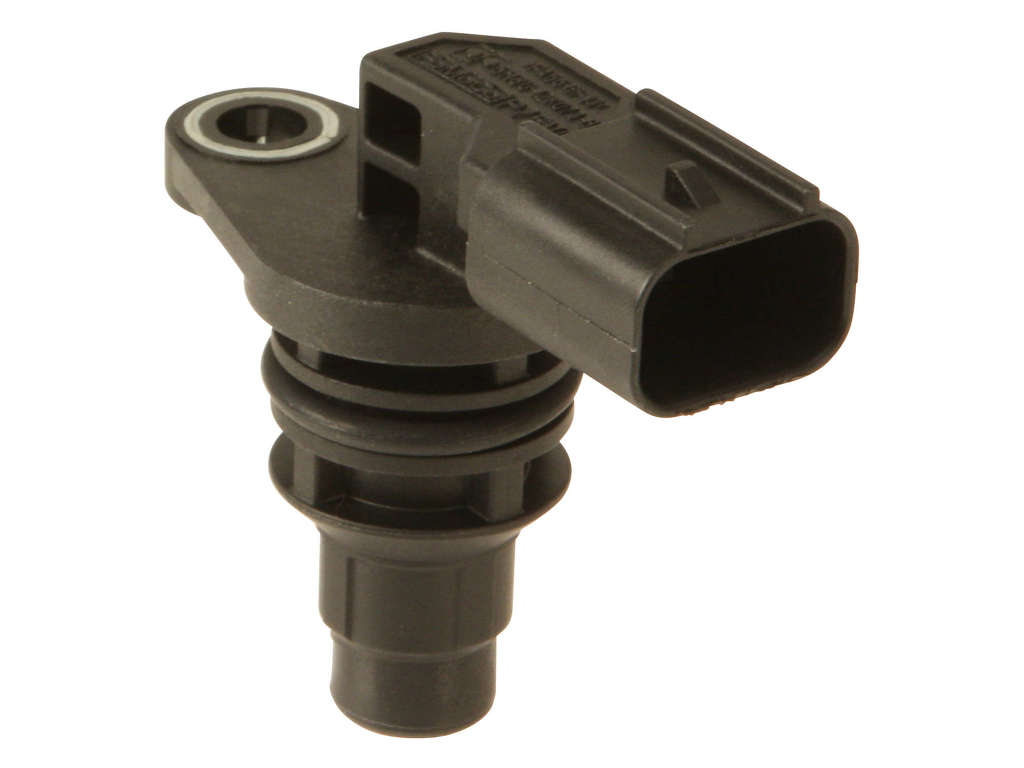
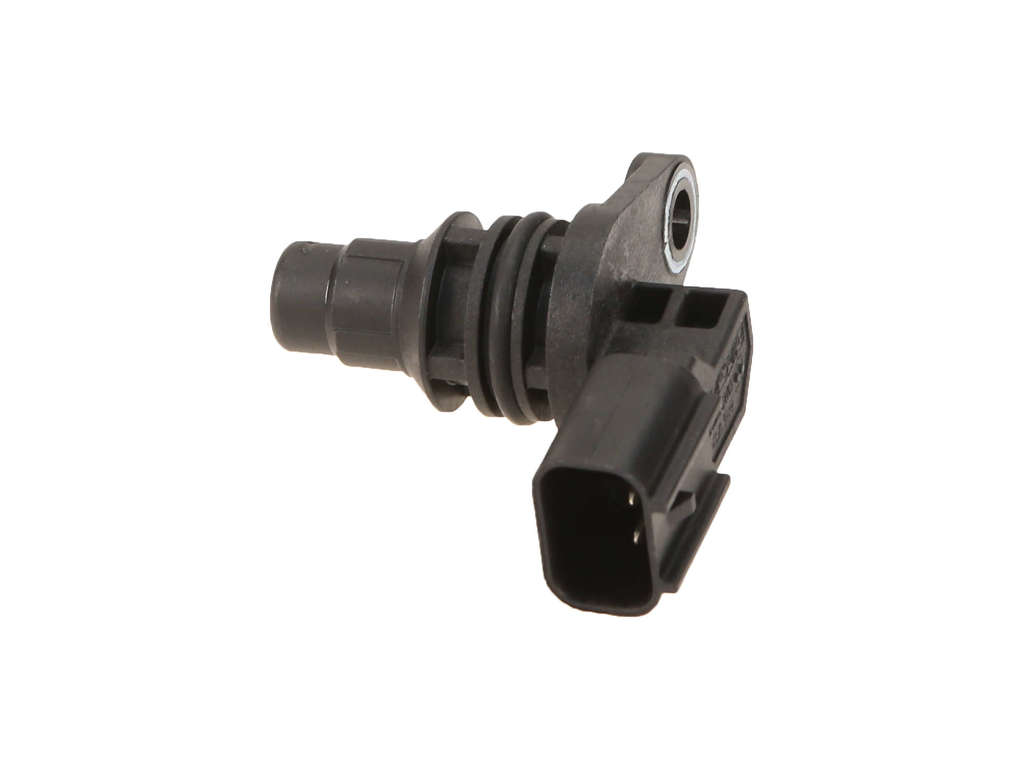
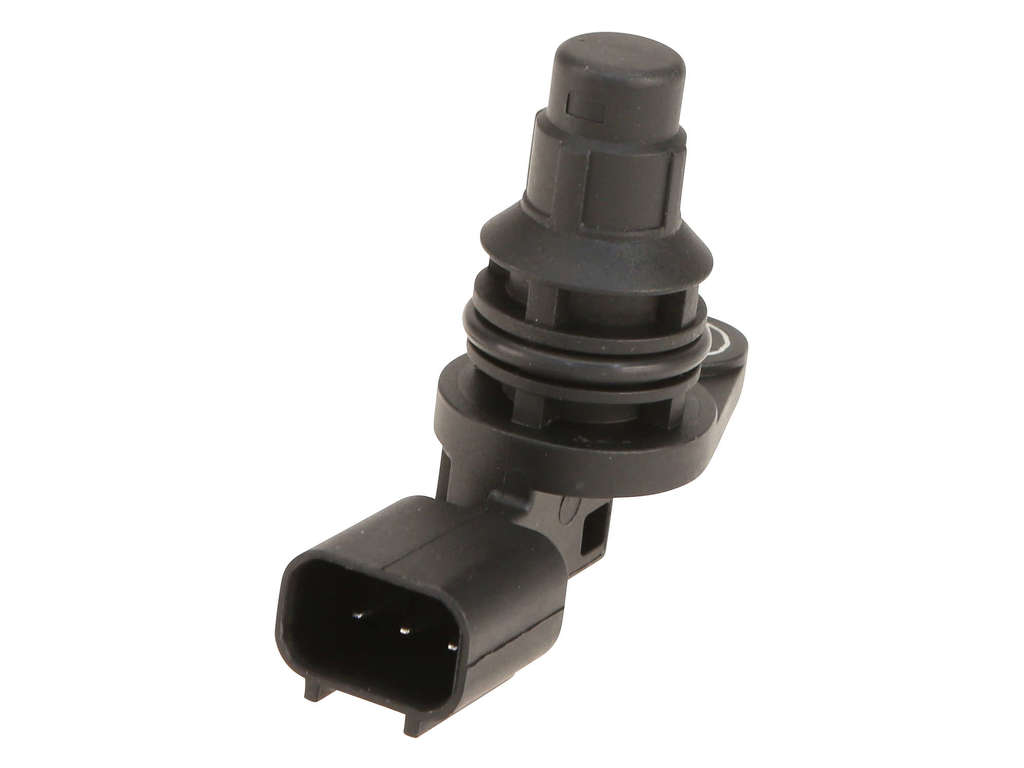
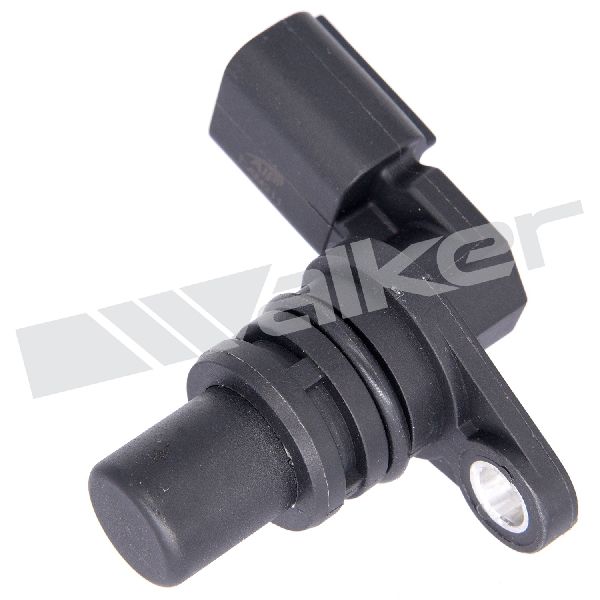
- Variable Camshaft Timing (VCT) Solenoid
(OEM #CJ5E-6B297-AA (Superseded by CJ5Z-6M280-A))— This is the most common failure point, as it gets stuck from oil debris, preventing proper camshaft timing adjustment. The part number CJ5E-6B297-AA is often listed, which has been superseded by the updated Ford part CJ5Z-6M280-A.
Trusted brands: Motorcraft, Dorman, Standard Motor Products (SMP)
OEM price range: $60-$120
Aftermarket price range: $30-$80
Related Codes That Often Appear With This One
- P0011 — This is the equivalent code for Bank 1 ('A' Camshaft). If widespread oil sludge or low pressure is the issue, it can affect both VCT systems simultaneously, triggering codes for both.
- P0022 — This is for an over-retarded condition on Bank 2. It can appear if the VCT solenoid is sticking intermittently, causing timing to be incorrect in both directions at different times.
- P0014 — This is for the 'B' Camshaft (Exhaust) on Bank 1. Seeing this with P0021 could point to a systemic oil pressure or quality problem affecting multiple VCT components.
Technical Service Bulletins (TSBs) & Recalls
- SSM 54366: General TSB for multiple VCT codes (P0011-P0025) on Ford/Lincoln vehicles, directing technicians to standard diagnostic procedures.
- SSM 47170: Notes that P0021 and other VCT codes may be due to small debris causing the VCT solenoid to stick. Crucially, it recommends cycling the solenoid with a scan tool to attempt to clear it before replacement.
- SSM 50067: A later TSB that reiterates the information from SSM 47170 about debris causing VCT solenoid issues.
Platform-Specific Known Issues
- Ford has issued multiple service bulletins (SSM 47170, SSM 50067, SSM 54366) that apply to a wide range of their vehicles, indicating that P0021 and other related VCT codes may be caused by small debris making the VCT solenoid stick. The bulletins advise against immediate component replacement before checking for this condition.
- Owner experiences on forums for the Transit Connect and its platform mates (like the Ford Escape and Fusion with the same engines) frequently confirm that an oil change or a VCT solenoid replacement resolves the P0021 code. A rattling noise that accompanies the code is often traced to a loose flex plate, which is a separate issue but can be misdiagnosed as part of the timing problem.
Mechanic-Grade Diagnostic Values
- VCT Solenoid Resistance — expected: 5 - 14 Ohms. Failure: A reading outside this range indicates a faulty solenoid coil.
- VCT Solenoid Voltage (Power Supply Pin) — expected: > 10.5 Volts (Key On, Engine Off). Failure: Low or no voltage indicates an open circuit in the VPWR (Vehicle Power) feed to the solenoid.
- Scan Tool PID: VCTADVERR2 (VCT Advance Error Bank 2) — expected: Should hover around 0° at idle and during steady-state driving.. Failure: A consistent, significant deviation from 0° (e.g., more than +/- 5 degrees) for an extended time indicates the camshaft is not at its commanded position. For P0021, this value will be a positive number, showing it's over-advanced.
Hidden / Shadow Codes Worth Checking
- Mode $06, TID $81, CID $12: This refers to the onboard diagnostic test results for the Bank 2 VCT system. A failing value in Mode $06 can indicate an emerging problem with the VCT system's performance before a continuous memory DTC like P0021 is permanently set. (see via An advanced scan tool capable of reading Mode $06 data. The specific Test ID (TID) and Component ID (CID) can vary slightly by year and software calibration, but are generally in this range for VCT monitors.)
Scan Tool Commands That Help
- Ford IDS (Integrated Diagnostic System): VCT Solenoid Active Command / Output State Control — This bidirectional control allows a technician to command the VCT solenoid on and off or to a specific duty cycle while the engine is running. This is used to verify if the solenoid is mechanically responding to electrical commands and to see if it can overcome a potential hydraulic blockage, as suggested in TSB SSM 47170.
- Ford IDS (Integrated Diagnostic System): Power Balance Test — While not a direct VCT test, running a power balance test while actuating the VCT solenoid can help identify if the cam phaser is moving. Activating the solenoid should cause a noticeable change in engine smoothness or may even cause it to stall, confirming the phaser is reacting to the change in oil flow.
Wiring & Ground Locations
- G101 / G104 — Located on the lower left rear of the engine block or near the battery tray/left side of the engine compartment.. These are primary engine and PCM ground points. A loose or corroded ground at these locations can cause erratic voltage and signal issues for various engine sensors and actuators, including the VCT solenoids and Camshaft Position Sensors, potentially leading to incorrect readings and fault codes.
- VCT Solenoid Connector (C168/C169 for 2.5L) — On the front of the valve cover, connected to the VCT solenoids.. This is the direct connection point for testing. Pin 1 is typically the power supply (VPWR) and Pin 2 is the control signal wire from the PCM. Testing for voltage at Pin 1 and continuity/short-to-ground on Pin 2 are key diagnostic steps.
Real Owner Repair Stories
- Ford Transit USA Forum user (2016 Ford Transit Connect 2.5L with ~100,000 miles) — Check engine light with codes P0011 and P0021.
❌ Tried (didn't work) Replacing both VCT solenoids.
✅ What actually fixed it The ultimate fix was a full timing job: replacing the stretched timing chain, guides, and tensioners. The chain stretch was significant enough to cause a constant timing deviation that the VCT system could not compensate for, triggering the over-advanced codes. - ClubLexus forum user (on a vehicle with a similar cartridge oil filter design) (2006 IS250) — P0021 code appeared immediately after a DIY oil change.
❌ Tried (didn't work) Checking for loose hoses.
✅ What actually fixed it The user had accidentally discarded the inner support cage for the cartridge-style oil filter along with the old filter. Installing a new filter without this cage caused it to collapse under pressure, restricting oil flow and triggering the VCT code. Replacing the entire oil filter housing (which included the cage) and a new filter resolved the issue.
When the Usual Fixes Don't Work
- While oil and VCT solenoids are the most common causes, a notable number of owners, particularly those with over 100,000 miles, have found that these fixes do not resolve the code. In these cases, the root cause was often a stretched timing chain. This indicates that for higher-mileage vehicles, assuming the issue is only a solenoid can lead to a misdiagnosis, and checking for timing chain stretch should be considered if solenoid replacement fails.
OEM Part Supersession History
CJ5E-6B297-AA→CJ5Z-6M280-A— The updated part CJ5Z-6M280-A features design improvements for durability and performance, including potentially more robust internal components and improved screen material to better resist debris and prevent sticking.
Heads up: The parts are interchangeable, with the newer CJ5Z-6M280-A being the preferred replacement part.
Model Year Variations Within This Range
- 2019-2021: For the 2019 model year refresh, a new standard 2.0L GDI I-4 engine paired with an 8-speed automatic transmission was introduced, replacing the 1.6L EcoBoost option. The 2.5L I4 remained available, primarily for fleet orders with the CNG/LPG prep package. While the P0021 code applies to both the 2.0L and 2.5L engines, the physical part numbers for the VCT solenoids and phasers are different between the two engine families. The diagnostic principles, however, remain identical.
Helpful Videos
![How to Fix P0021 Engine Code in 4 Minutes [2 DIY Methods / Only $6.43]](https://img.youtube.com/vi/T8aepJyvnbg/mqdefault.jpg)
We Have This Part in Stock


The information in this article is provided for general reference and educational purposes only. Vehicle specifications, procedures, and part compatibility can vary by production date, trim level, and region. Always consult your vehicle's factory service manual and verify part numbers before purchasing or performing repairs. Safety-critical components such as airbags, seat belts, and braking systems should be installed by a qualified professional.
- Ford TRANSIT CONNECT:
- 🎬 Helpful Videos
- 🛍️ Shop This Part
- What's Unique About the 2015-2021 Ford TRANSIT CONNECT
- Diagnostic Flowchart
- Symptoms You May Notice
- Most Likely Causes
- Rare But Worth Checking
- Diagnosis Steps
- Parts You'll Likely Need
- Related Codes That Often Appear With This One
- Technical Service Bulletins (TSBs) & Recalls
- Platform-Specific Known Issues
- Mechanic-Grade Diagnostic Values
- Hidden / Shadow Codes Worth Checking
- Scan Tool Commands That Help
- Wiring & Ground Locations
- Real Owner Repair Stories
- When the Usual Fixes Don't Work
- OEM Part Supersession History
- Model Year Variations Within This Range
- 🎟️ Get 5% Off