

P0021 on 2015-2018 Ford Focus: A Guide for a Confusing Code
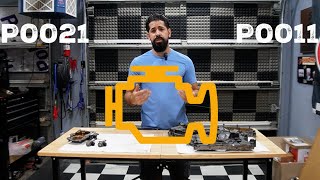
This code is for Bank 2, but your Ford Focus only has Bank 1. You likely have a similar code, P0011. The problem is almost always related to low/dirty engine oil or a faulty Variable Camshaft Timing (VCT) solenoid, a ~$50 part that's easy to replace.
- **Re-check Your Code:** P0021 should not appear on a Ford Focus. The actual code is almost certainly P0011. Confirm this before buying any parts.
- **Start with Oil:** The most common cause for this family of codes is low, dirty, or incorrect viscosity engine oil. An oil and filter change is the cheapest and easiest first step.
- **Suspect the Solenoid:** The VCT solenoid is the most likely part to fail. It's relatively inexpensive and accessible for DIY replacement. Swapping the intake and exhaust solenoids is a definitive way to diagnose the problem.
- **Use the Right Part:** The correct OEM VCT solenoid part number for the common 2.0L GDI engine is CM5Z-6M280-C (or its predecessor CM5Z-6M280-A), not the V8 part number sometimes listed generically.
What's Unique About the 2015-2018 Ford FOCUS
The confusion arises because Ford issues Technical Service Bulletins (TSBs) that cover many vehicles at once, including V6 and V8 models that do have a Bank 2. The TSBs provided (SSM 54366, SSM 47170, SSM 50067) list P0021 alongside its Bank 1 counterparts (P0011, P0012). For a Focus, only the Bank 1 codes are relevant. The underlying issue described in the TSBs—debris in the oil causing VCT solenoids to stick—is, however, very common on the Focus and its platform mates. On the popular 2.0L GDI engine, the VCT solenoids are located under the valve cover, making their replacement more involved than on engines where they are externally accessible.
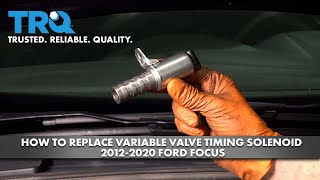
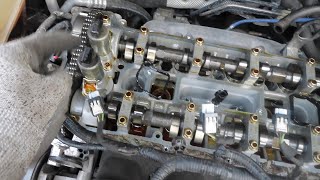
🎬 Watch: Step-by-step guide to replacing VVT solenoids on this engine.Diagnostic Flowchart
Tap your situation to follow the diagnostic path that matches what you're seeing on this vehicle.
Symptoms You May Notice
- Check Engine Light is on
- Rough engine idle
- Engine hesitates or stumbles on acceleration
- Poor fuel economy
- Engine may stall at low speeds or when stopping
- Rattling noise from the engine bay, especially on startup or at idle when hot.
- Replacing the camshaft position sensor. The sensor is usually not the problem; it is accurately reporting the timing error caused by a mechanical or hydraulic issue (like the solenoid or phaser). A bad sensor would typically throw a different code (e.g., P0340).
Most Likely Causes
- Low, Dirty, or Incorrect Viscosity Engine Oil 🔴 High Probability The VCT system is hydraulic and uses engine oil pressure to function. Ford TSBs SSM 47170 and SSM 50067 specifically state that small debris can cause the VCT solenoid to stick. Using an oil viscosity thicker than the manufacturer-specified 5W-20 can also restrict flow and trigger this code, especially after an oil change.
How to confirm: Check the oil level on the dipstick. Examine the oil's color and consistency. If it's dark black, gritty, or below the minimum mark, this is your likely starting point. This is the first and most important diagnostic step.
Typical fix: Change the engine oil and filter using the correct viscosity oil (e.g., Ford-specified 5W-20 for the 2.0L GDI). This is the cheapest and easiest first step and often resolves the issue.
Est. part cost: $30-$70 - Faulty Variable Camshaft Timing (VCT) Solenoid 🔴 High Probability As noted in Ford TSBs, these solenoids are susceptible to clogging from oil debris, causing them to stick in the advanced position. This is the most common failed component after ruling out oil issues.
How to confirm: After checking the oil, this is the next step. A common diagnostic trick is to swap the intake and exhaust solenoids (they are identical on the 2.0L GDI) and see if the trouble code changes to P0014 (exhaust camshaft). If it does, the solenoid is confirmed bad. You can also test the solenoid with a multimeter; resistance should be between 6 and 12 ohms. Ford's diagnostic procedure, Pinpoint Test HK11, involves using a scan tool to cycle the solenoid 10 times to try and dislodge debris.
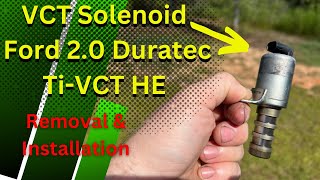
Typical fix: Replace the Bank 1 intake VCT solenoid. It is a simple repair, typically held in by one 8mm or 10mm bolt on the valve cover.
Est. part cost: $30-$80 - Failing Camshaft Phaser 🟡 Medium Probability The phaser is the mechanical gear that the VCT solenoid controls. It can fail internally from wear or damage from prolonged use with dirty oil, getting stuck or breaking, especially on higher-mileage vehicles.
How to confirm: This is harder to confirm without ruling out the solenoid and oil issues first. A distinct rattling or knocking sound from the top of the engine at hot idle is a strong indicator of a bad phaser. A mechanic might use an advanced scan tool to monitor desired vs. actual cam angle, where a large, unresponsive deviation points to the phaser.
Typical fix: Replace the camshaft phaser, which is a more involved job that includes removing the valve cover and potentially the timing components.
Est. part cost: $100-$250
Rare But Worth Checking
- Stretched Timing Chain or Failed Tensioner: While less common, a loose timing chain can cause the camshafts to be out of sync with the crankshaft, triggering timing codes. This is usually accompanied by a persistent rattling noise from the side of the engine, especially on startup.
- Damaged Wiring to VCT Solenoid: Check the connector and wires leading to the solenoid for any signs of fraying, corrosion, or oil contamination. A poor electrical connection can trigger codes.
- Clogged Oil Passages: In cases of severe engine sludge, the small oil passages leading to the VCT solenoids and cam phasers can become blocked, starving the system of the oil pressure it needs to operate.
Diagnosis Steps
- Confirm the code. Use a different scanner if possible to ensure it is not P0011.
- Check the engine oil level and condition. Top off or perform an oil and filter change if necessary. Use the manufacturer-specified oil viscosity (5W-20 for 2.0L GDI).
- Inspect the wiring harness and connector for the Bank 1 intake VCT solenoid for damage or corrosion.
- Swap the intake and exhaust VCT solenoids (if they are identical parts). Clear the codes and drive the vehicle. If the code changes to P0014, the original intake solenoid is faulty. This is a very common and effective diagnostic step on Focus forums.
- If the code does not change, test the original solenoid's resistance with a multimeter. It should read between 6-12 ohms. You can also apply a 12V source to see if it makes an audible click.
- If using an advanced scan tool (like FORScan), run the Pinpoint Test HK11 to cycle the solenoid multiple times, which may clear debris and resolve the code.
- If the oil is clean and the solenoid is confirmed to be working, the issue may be a clogged oil passage or a failing camshaft phaser, which may require professional diagnosis.
Parts You'll Likely Need
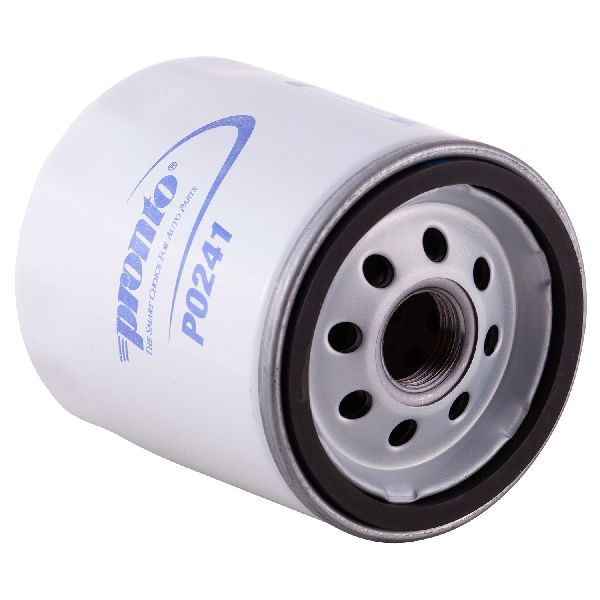
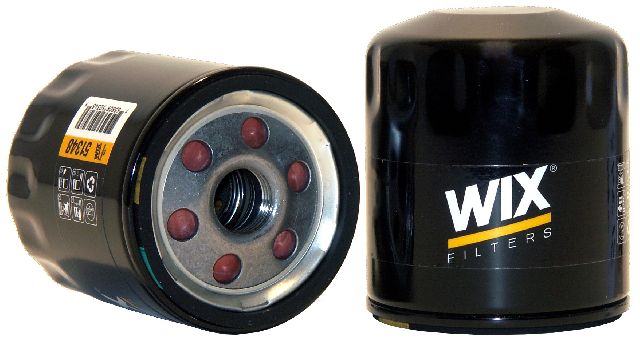
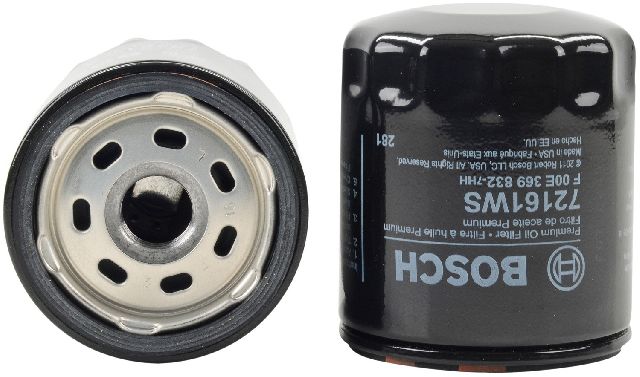
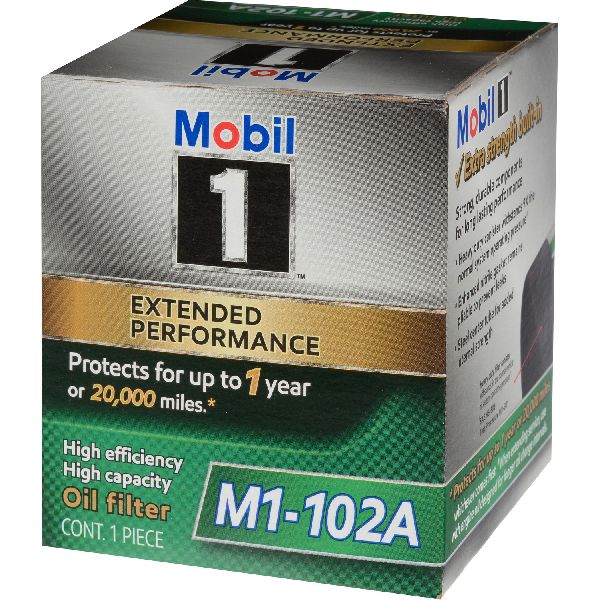
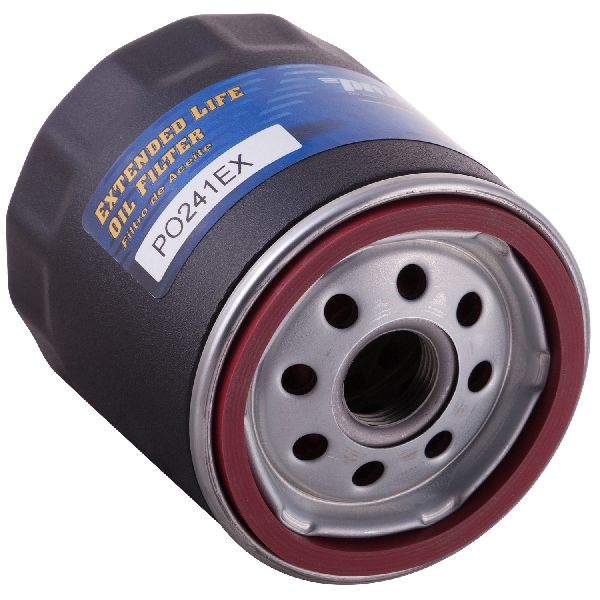
- Engine Oil Filter
(OEM #Motorcraft FL-910S (for 2.0L GDI))— Always replace when changing dirty oil, which is a primary cause.
Trusted brands: Motorcraft, Bosch, Wix
OEM price range: $8-$15
Aftermarket price range: $5-$12 - Variable Camshaft Timing (VCT) Solenoid
(OEM #CM5Z-6M280-C (replaces CM5Z-6M280-A, for 2.0L GDI))— This is the most common part to fail, typically by getting stuck due to oil debris, as cited in Ford TSBs. The intake and exhaust solenoids are the same part for the 2.0L GDI engine.
Trusted brands: Motorcraft, Dorman (918-053), Walker (590-1005)
OEM price range: $30-$50
Aftermarket price range: $25-$60
Related Codes That Often Appear With This One
- P0011 — This is the equivalent code for Bank 1, which is the code you most likely have instead of P0021.
- P0012 — This is for 'Timing Over-Retarded' on Bank 1, indicating the opposite problem but related to the same VCT system. Seeing both P0011 and P0012 can point to a very erratic solenoid or severe oiling issue.
- P0014 — This code relates to the 'B' (exhaust) camshaft on Bank 1. It's common to see if you swap a faulty intake solenoid to the exhaust position for diagnosis.
- P0016 — This code for Crankshaft/Camshaft Correlation can appear alongside P0011 if the timing is significantly off, pointing to a possible timing chain issue.
Technical Service Bulletins (TSBs) & Recalls
- SSM 54366: Mentions P0021 in a list of VCT-related DTCs for Ford/Lincoln vehicles, directing technicians to diagnostic procedures in the workshop manual.
- SSM 47170: States that P0021 and other VCT codes may be due to small debris causing the VCT solenoid to stick. Recommends running pinpoint test HK11 to cycle the solenoid before replacement.
- SSM 50067: Repeats the guidance from SSM 47170, indicating this is a persistent and well-documented issue across many Ford models.
Platform-Specific Known Issues
- Ford Technical Service Bulletins SSM 47170 and SSM 50067 explicitly mention that codes like P0021 may be caused by "small debris causing the VCT solenoid to stick."
- Before any component replacement, Ford recommends performing an oil and filter change and then running the engine to see if the code clears, highlighting the sensitivity of this system to oil quality.
- A more advanced diagnostic step recommended by Ford in TSB SSM 47170 is to use a scan tool to run pinpoint test HK11, which cycles the affected VCT solenoid 10 times to attempt to clear the debris without replacement.
Mechanic-Grade Diagnostic Values
- VCT Solenoid Internal Resistance — expected: 6.9 to 7.9 ohms at 68°F (20°C). A general range of 6-12 ohms is also acceptable.. Failure: A reading of 0 ohms (short circuit) or infinite/OL (open circuit) indicates a failed solenoid.
- VCT Solenoid Connector Voltage — expected: Battery voltage (~12V) on Pin 1 (power supply wire) with key on, engine off.. Failure: No voltage indicates a wiring or fuse issue upstream of the solenoid.
- Scan Tool Live Data: VCT Advance Error (PID: VCTADVERR or VCT_INT_DIF) — expected: Close to 0° at hot idle.. Failure: A consistent deviation greater than +/- 5 degrees indicates the PCM cannot control the camshaft position, pointing to a stuck solenoid or phaser.
- Engine Oil Pressure at Hot Idle — expected: Minimum of 15-20 PSI.. Failure: Pressure below this threshold will starve the hydraulic VCT system, causing timing codes even if all VCT components are good.
Hidden / Shadow Codes Worth Checking
- Mode $06, TID $53: This is not a hidden code, but a report from a non-continuous monitor. TID $53 shows cylinder-specific misfire rates. While not a direct VCT test, a high misfire count on one or more cylinders can be a symptom of the timing issue caused by P0011 before the code fully sets. (see via A generic OBD-II scanner with Mode $06 capability. The data is presented as raw hexadecimal values that may need conversion.)
Scan Tool Commands That Help
- Ford IDS / FORScan: Pinpoint Test HK11: VCT Solenoid Cycle Test — As recommended by Ford TSBs SSM 47170 and 48423, this command should be used after an oil change but before replacing parts. It rapidly cycles the VCT solenoid 10 times in an attempt to dislodge small debris causing it to stick. If the code is resolved after running this test, it confirms the issue was a temporarily stuck solenoid.
- FORScan: Monitor PIDs: RCAM (Desired Cam Angle) vs. RCAM_ACT (Actual Cam Angle) — During diagnosis, graphing these two PIDs together shows how well the phaser is responding to PCM commands. A lagging or unresponsive RCAM_ACT value while RCAM changes indicates a hydraulic or mechanical VCT issue (solenoid or phaser).
Wiring & Ground Locations
- VCT Solenoid Connector (C139 Intake, C140 Exhaust on 2.0L) — On top of the VCT solenoids, under the valve cover for the 2.0L GDI engine.. The connector has two pins. Pin 1 receives power (typically a Blue-Green wire) from a fuse in the battery junction box, while Pin 2 is the control circuit, which is pulsed to ground by the PCM. Verifying power at Pin 1 is a key electrical diagnostic step.
- Main Engine/Chassis Grounds (e.g., G103/G104) — Under the airbox, bolted directly to the painted chassis surface in front of the battery. There are typically two ground wires in this location.. The PCM and its sensors/actuators rely on clean ground connections. The factory grounds often make poor contact due to being bolted over paint. Cleaning the paint from under these ground points to create a bare-metal connection can resolve intermittent and unexplained electrical issues with the engine management system.
Real Owner Repair Stories
- Ford F150 Forum user (2018 Ford F-150 5.0L (Similar VCT system)) — Rough idle, stalling at stops, and harsh shifting only when the engine is very hot (after 2+ hours of driving). Code P0022 (Bank 2 over-retarded) was present.
❌ Tried (didn't work) Initial diagnosis was unclear.
✅ What actually fixed it Forum members advised monitoring VCT error PIDs in FORScan, which showed significant deviation on the affected bank. The final advice was to replace both VCT solenoids on that bank with genuine Ford/Motorcraft parts, as members noted that aftermarket solenoids often fail to solve the problem. - CorvetteForum user (2009 Chevrolet Corvette (Illustrates a common VCT system issue)) — P0011 code and rough running.
❌ Tried (didn't work) Performing an oil change, replacing the camshaft position *sensor*.
✅ What actually fixed it Replacing the correct part, the camshaft position actuator *solenoid* (VVT solenoid), resolved the issue, highlighting the common misdiagnosis between the sensor and the solenoid.
"I Checked Everything" — The Actual Cause
- A smoke test is not used for diagnosing P0011 as it is a hydraulic/mechanical/electrical fault, not a vacuum leak. However, a common pattern is for all electrical tests on the VCT solenoid and sensor to pass, yet the code persists. In one documented case on a similar engine type, the root cause was a faulty oil pressure sending unit that was leaking oil into its own electrical connector, causing erratic readings and behavior. In another, the flange on the oil pickup tube was slightly bent during a previous repair, preventing a proper seal and causing oil pressure loss that was not immediately obvious.
When the Usual Fixes Don't Work
- While the most common fixes are an oil change or VCT solenoid replacement, there are documented cases where these steps do not resolve the code. In one instance involving a similar VCT system, a user replaced the solenoid, but the problem persisted. A mechanical oil pressure test revealed the oil pump was failing and unable to provide adequate pressure when hot, which was the true root cause. This underscores the importance of verifying base engine oil pressure if the initial, more common fixes do not work.
OEM Part Supersession History
CM5Z-6M280-A→CM5Z-6M280-C— Part revision for improved reliability or manufacturing process.
Model Year Variations Within This Range
- 2015-2018: The VCT solenoid part number differs between the 2.0L GDI engine (CM5Z-6M280-C) and the 1.0L EcoBoost engine (CM5Z-6M280-G). Ensure you have the correct part for your specific engine.
- 2015-2018: On the 2.0L GDI engine, both VCT solenoids are located under the valve cover, requiring removal of the cover for access. This makes the job more labor-intensive than on other engines where the solenoids are externally accessible.
Helpful Videos
We Have This Part in Stock


The information in this article is provided for general reference and educational purposes only. Vehicle specifications, procedures, and part compatibility can vary by production date, trim level, and region. Always consult your vehicle's factory service manual and verify part numbers before purchasing or performing repairs. Safety-critical components such as airbags, seat belts, and braking systems should be installed by a qualified professional.
- Ford FOCUS:
- 🎬 Helpful Videos
- 🛍️ Shop This Part
- What's Unique About the 2015-2018 Ford FOCUS
- Diagnostic Flowchart
- Symptoms You May Notice
- Most Likely Causes
- Rare But Worth Checking
- Diagnosis Steps
- Parts You'll Likely Need
- Related Codes That Often Appear With This One
- Technical Service Bulletins (TSBs) & Recalls
- Platform-Specific Known Issues
- Mechanic-Grade Diagnostic Values
- Hidden / Shadow Codes Worth Checking
- Scan Tool Commands That Help
- Wiring & Ground Locations
- Real Owner Repair Stories
- "I Checked Everything" — The Actual Cause
- When the Usual Fixes Don't Work
- OEM Part Supersession History
- Model Year Variations Within This Range
- 🎟️ Get 5% Off