

P0021 on 2015-2019 Ford Flex: 'A' Camshaft Position Timing Over-Advanced (Bank 2) Causes and Fixes
On a 2015-2019 Ford Flex, code P0021 is most often caused by a sticking Variable Camshaft Timing (VCT) solenoid on Bank 2, frequently due to dirty or low engine oil. Replacing the Bank 2 intake VCT solenoid and performing an oil change is the most common fix. Bank 2 is the cylinder bank closer to the radiator.
- Always start your diagnosis by checking the engine oil level and condition. A simple oil change can sometimes fix this code.
- The most common faulty part is the Bank 2 (front/radiator side) intake VCT solenoid. It is relatively inexpensive and accessible for a DIY repair.
- A smart diagnostic step is to swap the front (Bank 2) and rear (Bank 1) intake VCT solenoids to see if the code follows the part.
- This is a well-documented issue by Ford. Do not immediately assume a catastrophic timing failure; follow the diagnostic steps methodically.
What's Unique About the 2015-2019 Ford FLEX
The 3.5L V6 engine family in the Ford Flex is well-known for VCT-related issues. Ford has released multiple Technical Service Bulletins (TSBs) acknowledging that codes like P0021 are often caused by small debris in the engine oil, which can cause the VCT solenoids to stick. This is a documented pattern for this specific powertrain, making oil condition and solenoid function the primary focus for diagnosis before suspecting more complex mechanical failures like cam phasers.
Diagnostic Flowchart
Tap your situation to follow the diagnostic path that matches what you're seeing on this vehicle.
Symptoms You May Notice
- Check Engine Light is on
- Rough or unstable idle
- Engine hesitation or stalling, especially at low RPM or when coming to a stop
- Reduced engine power and poor acceleration
- Decreased fuel economy
- Rattling or knocking noise from the engine, particularly on startup or at idle.
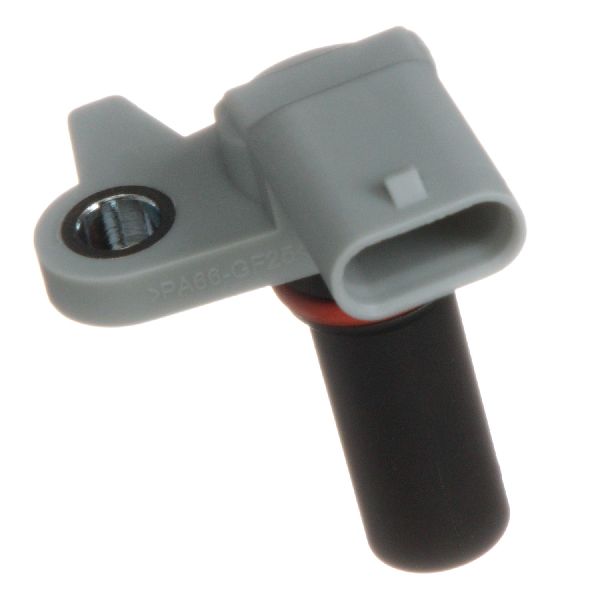
- Replacing the camshaft position sensor. The sensor is usually functioning correctly by reporting the timing discrepancy; it is not the cause of the over-advanced timing.
Most Likely Causes
- Low or Dirty Engine Oil 🔴 High Probability The VCT system is hydraulic and highly sensitive to oil pressure and cleanliness. The manufacturer TSBs for this code repeatedly mention debris in oil as a primary factor. Extended oil change intervals can exacerbate this issue.
How to confirm: Check the engine oil level on the dipstick and inspect its condition. If the oil is low, dark, or sludgy, it needs to be changed. This should always be the first step.
Typical fix: Perform an engine oil and filter change using a high-quality, full-synthetic oil of the correct viscosity specified in the owner's manual (typically 5W-20 or 5W-30).
Est. part cost: $40-$80 - Failed VCT Solenoid (Oil Control Valve) 🔴 High Probability Ford TSBs #SSM 47170 and #SSM 50067 directly state that this code may be due to small debris causing the VCT solenoid to stick. The solenoid is a common failure point and a relatively straightforward replacement.
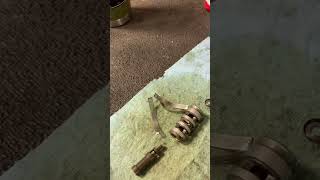
How to confirm: A common diagnostic technique is to swap the Bank 2 intake VCT solenoid with the Bank 1 intake VCT solenoid (on the firewall side). If the trouble code changes to P0011 (the Bank 1 equivalent), the solenoid is confirmed to be faulty. TSB #SSM 47170 also suggests using a scan tool to cycle the solenoid 10 times to try and clear debris 🎬 See how debris causes these VCT solenoids to fail. before replacement.
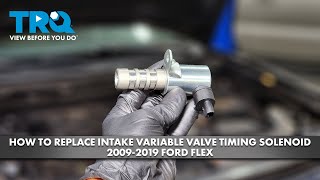
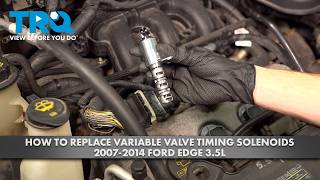
Typical fix: Replace the Bank 2 intake VCT solenoid. 🎬 Watch: Step-by-step guide to replacing the intake VCT solenoid. Since the valve cover must be removed, it's wise to replace the valve cover gasket and spark plug tube seals at the same time.
Est. part cost: $30-$90 - Failing Camshaft Phaser 🟡 Medium Probability The phasers are mechanical components that can fail internally, getting stuck in the advanced position. This is a known, albeit more expensive, issue on the 3.5L engine family, often accompanied by a startup rattle.
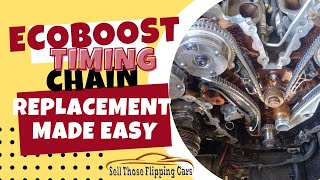
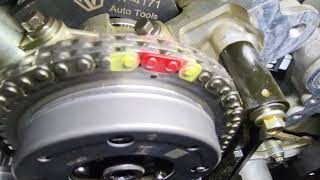
How to confirm: If an oil change and a new VCT solenoid do not resolve the code, the issue is likely the phaser itself. This requires a more in-depth timing job to inspect and confirm. 🎬 Watch: A detailed walkthrough of the 3.5L timing chain replacement.
Typical fix: Replace the Bank 2 intake camshaft phaser. This is a labor-intensive job that also involves replacing the timing chain, tensioners, and guides. It is highly recommended to replace all timing components as a kit.
Est. part cost: $500-$1200 for a full timing kit.
Rare But Worth Checking
- Stretched Timing Chain: While possible at very high mileage, a stretched chain usually affects both banks and may throw other codes like P0016 or P0018. If replacing the phasers, the chain should always be replaced as well.
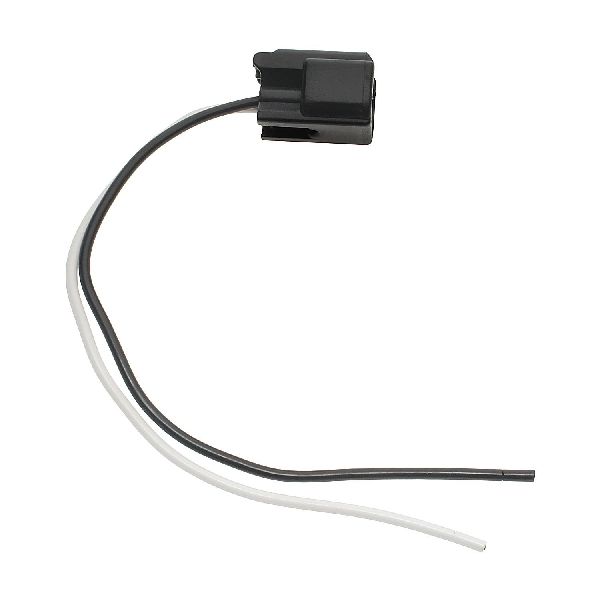
- Wiring or Connector Issue: Damage to the wiring harness or a corroded connector for the Bank 2 VCT solenoid can cause it to malfunction. A visual inspection and continuity test with a multimeter can rule this out.
- PCM Fault: This is extremely rare. The Powertrain Control Module should only be considered after all other mechanical and electrical possibilities have been exhaustively ruled out.
Diagnosis Steps
- Verify the engine oil level and condition. If low or dirty, perform an oil and filter change with the correct oil type, clear the code, and see if it returns.
- Using an OBD-II scanner with live data, monitor the desired vs. actual camshaft angle for Bank 2 (CAMADV2) and the VCT solenoid duty cycle (VCTDC2). A significant discrepancy between desired and actual angle confirms the fault.
- Locate the intake VCT solenoids on both Bank 1 (firewall side) and Bank 2 (radiator side).
- Disconnect the battery. Remove the engine air intake and other components to access the valve covers.
- Swap the Bank 2 (front) intake VCT solenoid with the Bank 1 (rear) intake VCT solenoid. This is the most effective diagnostic step.
- Reassemble the vehicle, clear the codes, and perform a drive cycle. If the code returns as P0011 ('A' Camshaft Position Timing Over-Advanced Bank 1), the solenoid you moved to Bank 1 is faulty and must be replaced.
- If the P0021 code returns after the swap, inspect the wiring and connector to the Bank 2 solenoid for damage or corrosion. Test for battery voltage at the connector with the key on.
- If the wiring is intact and the solenoid is known to be good, the next most likely cause is the camshaft phaser itself, which requires a timing chain service.
Parts You'll Likely Need
- Variable Camshaft Timing (VCT) Solenoid
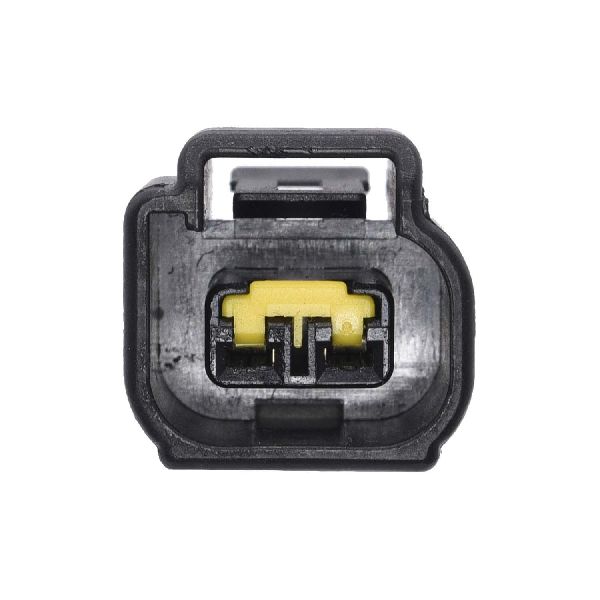
(OEM #AT4Z-6M280-A (also seen as 7T4Z-6M280-C, which is an older number). Always verify with VIN.)— This is the most common point of failure, often getting stuck due to oil debris, as noted in Ford's TSBs.
Trusted brands: Motorcraft, Dorman, TRQ
OEM price range: $50-$100
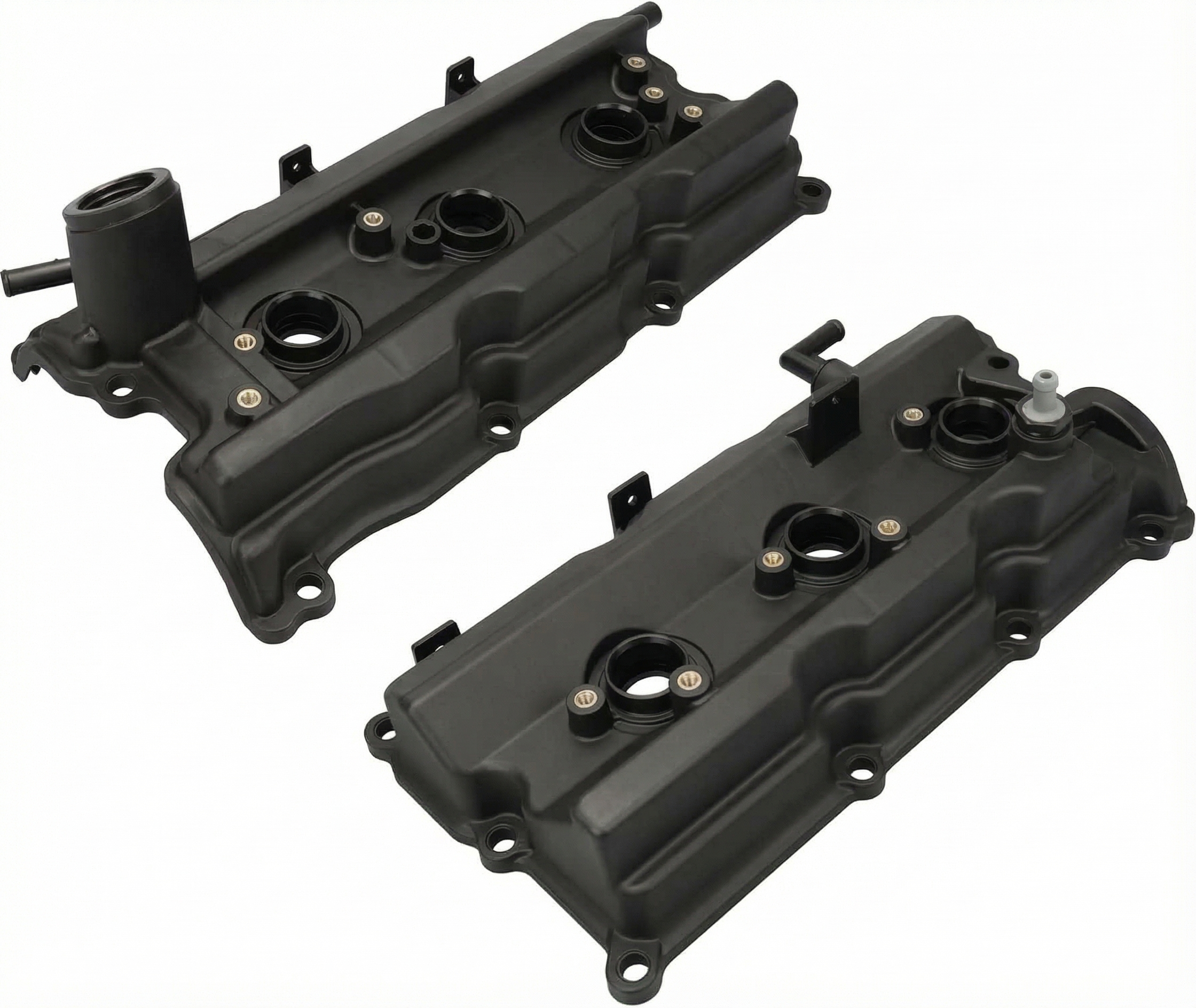
Aftermarket price range: $30-$70 - Valve Cover Gasket Kit — The valve cover must be removed to access the VCT solenoid, and the gasket is a single-use item that should be replaced to prevent oil leaks. The kit usually includes spark plug tube seals.
Trusted brands: Motorcraft, Fel-Pro
OEM price range: $40-$80
Aftermarket price range: $25-$50 - Camshaft Phaser and Timing Chain Kit
(OEM #HL3Z-6C525-A (Exhaust Phaser), ML3Z-6256-A (Intake Phaser) - Note: These are updated F-150 parts, verify for Flex. A complete kit is best.)— If the solenoid is not the cause, the mechanical phaser is the next likely culprit. A complete kit including chains, guides, and tensioners is recommended for this extensive repair to prevent near-future failures.
Trusted brands: Motorcraft, Cloyes
OEM price range: $600-$1200
Aftermarket price range: $400-$800
Related Codes That Often Appear With This One
- P0011 — This is the equivalent code for Bank 1. If you swap a faulty Bank 2 solenoid to Bank 1 for diagnosis, this code will appear, confirming the solenoid is the problem.
- P0022 — This is for an over-retarded condition on Bank 2. Seeing both codes could indicate a more severe issue with the phaser, oil pressure, or a sticking solenoid that is not returning to its base position.
- P0345 — This code relates to the Bank 2 camshaft position sensor circuit. A problem with the sensor or its wiring could potentially be seen alongside P0021.
- P0018 — Crankshaft Position - Camshaft Position Correlation Bank 2. This code indicates a more significant timing misalignment, often pointing towards a stretched timing chain or a failed phaser rather than just a sticky solenoid.
Technical Service Bulletins (TSBs) & Recalls
- SSM 54366: Notes P0021 among a list of VCT-related codes and refers to specific diagnostic tests.
- SSM 47170: States that P0021 may be due to small debris causing the VCT solenoid to stick. Advises cycling the solenoid to attempt to clear debris before replacement.
- TSB-16-0093: Mentions P0021 as a possible DTC stored in the PCM memory.
- SSM 50067: Repeats the guidance from SSM 47170, indicating a persistent pattern of VCT solenoid issues caused by debris across many Ford/Lincoln models.
Platform-Specific Known Issues
- Ford Technical Service Bulletin #SSM 47170 and #SSM 50067 specifically mention that DTCs including P0021 may be caused by small debris causing the VCT solenoid to stick. It advises against component replacement before performing an oil system flush or other diagnostics, such as cycling the solenoid with a scan tool.
- TSB-16-0093 also lists P0021 as a potential code that may illuminate the Malfunction Indicator Lamp (MIL) on affected vehicles.
- While some TSBs like 21B10 for the F-150 address cam phaser rattle with a PCM reprogram, this is less commonly the primary fix for a persistent over-advanced code like P0021, which usually indicates a mechanical or hydraulic fault.
Mechanic-Grade Diagnostic Values
- VCT Solenoid Internal Resistance — expected: 8 to 12 Ohms. OEM solenoids are typically 10-12 Ohms.. Failure: A reading outside this range, or an open circuit (infinite resistance), indicates a failed solenoid coil.
- VCT Solenoid Connector Voltage (Key On, Engine Off) — expected: One pin should show battery voltage (approx. 12V).. Failure: No voltage suggests a problem with the power supply wire or the PCM power relay.
- Scan Tool Live Data: VCT_INT_DIF2 (VCT Intake Difference Bank 2) — expected: Should be close to 0 degrees at idle and during steady-state driving.. Failure: A value consistently greater than a few degrees indicates a discrepancy between the commanded and actual cam position, confirming the fault.
Hidden / Shadow Codes Worth Checking
- Mode $06, Test ID $81: On CAN-bus Fords, Test IDs in the $8x range relate to VCT system monitoring. A failure in Test ID $81 can indicate a developing VCT response time issue on Bank 2 before a full DTC like P0021 is set. (see via A scan tool capable of reading Mode $06 data is required. The results are raw data and may need to be interpreted using a service manual.)
Scan Tool Commands That Help
- FORScan / Ford IDS: VCT Solenoid Duty Cycle Command (e.g., VCTDC2) — This bidirectional control allows a technician to manually command the Bank 2 intake solenoid to a specific duty cycle (e.g., 20%) while monitoring the actual cam angle PID (VCT_INT_ACT2). If the angle doesn't change as commanded, it points to a stuck solenoid, clogged oil passage, or failed phaser.
- Ford IDS: On-Demand Self Test — Running this test will cycle all solenoids and actuators, including the VCTs. It can help confirm if the PCM can control the circuit. If you disconnect the solenoid and run the test, it should generate a circuit code (like P0020), confirming the PCM driver and wiring are likely intact.
Wiring & Ground Locations
- G101 / G104 — Typically located on the left front of the engine compartment or near the battery tray area.. These are primary ground points for the Powertrain Control Module (PCM). A corroded or loose ground at this location can cause erratic behavior from the PCM, including incorrect VCT solenoid operation and false codes.
- VCT Solenoid Connector C1655 (Bank 2 Intake) — On the valve cover for the cylinder bank closer to the radiator.. This is the direct connection point for testing. Pin 1 (typically VT-RD wire) is the 12V power supply from the PCM Power Relay. Pin 2 (wire color varies) is the control signal (ground) from the PCM. Testing voltage and continuity at these pins is a critical diagnostic step.
Real Owner Repair Stories
- Ford F150 Forum (2018 Ford F-150 3.5L EcoBoost) — Check engine light with codes P0018 and P0021.
❌ Tried (didn't work) The dealer had already replaced the cam phasers under warranty, but the codes returned.
✅ What actually fixed it The owner reported that the final fix was a complete timing job, including replacing the timing chains, tensioners, and guides, as the chain had likely stretched, causing the correlation issues. - Ford Truck Enthusiasts Forum (2016 Ford F-150 5.0L (similar VCT system)) — Stumbling and dying at idle, initially with a P0012 code.
❌ Tried (didn't work) Replacing only the Bank 1 VCT solenoids did not fix the stalling issue, even though the code did not return.
✅ What actually fixed it The owner planned to replace the Bank 2 VCT solenoids next, acknowledging that VCT issues on these engines can exist and cause symptoms without setting a specific code for that bank. This highlights that a problem on one bank can sometimes be a precursor to issues on the other.
When the Usual Fixes Don't Work
- While replacing the VCT solenoid is the most common fix, there are numerous documented cases where the P0021 code (often accompanied by P0018) persisted. In these instances, the root cause was not the solenoid but rather a stretched timing chain or failed mechanical cam phaser. This was confirmed by owners who first replaced the solenoids with no success, and only resolved the issue after a complete timing service.
OEM Part Supersession History
7T4Z-6M280-C→AT4Z-6M280-A— The part was updated for improved durability and resistance to sticking from oil contaminants.
Heads up: Both parts are generally interchangeable and will physically fit. However, it is strongly recommended to use the latest revision (AT4Z-6M280-A) for better longevity. Some aftermarket versions may have inconsistent quality.
Helpful Videos
Used OEM Parts in Stock
New Aftermarket Parts Available


The information in this article is provided for general reference and educational purposes only. Vehicle specifications, procedures, and part compatibility can vary by production date, trim level, and region. Always consult your vehicle's factory service manual and verify part numbers before purchasing or performing repairs. Safety-critical components such as airbags, seat belts, and braking systems should be installed by a qualified professional.
- Ford FLEX:
- 🎬 Helpful Videos
- 🛍️ Shop This Part
- What's Unique About the 2015-2019 Ford FLEX
- Diagnostic Flowchart
- Symptoms You May Notice
- Most Likely Causes
- Rare But Worth Checking
- Diagnosis Steps
- Parts You'll Likely Need
- Related Codes That Often Appear With This One
- Technical Service Bulletins (TSBs) & Recalls
- Platform-Specific Known Issues
- Mechanic-Grade Diagnostic Values
- Hidden / Shadow Codes Worth Checking
- Scan Tool Commands That Help
- Wiring & Ground Locations
- Real Owner Repair Stories
- When the Usual Fixes Don't Work
- OEM Part Supersession History
- 🎟️ Get 5% Off