

P0021 on 2015-2019 Ford Fiesta: A Guide to a Bank 2 Code on a Bank 1 Engine
P0021 technically refers to Bank 2, which your Fiesta's inline engine does not have. You likely have a similar code for Bank 1, such as P0011. The problem is almost always a sticking Variable Camshaft Timing (VCT) solenoid, often due to old or low engine oil. An oil change and replacing the VCT solenoid (a $40-$90 part) is the most common fix.
- Your Fiesta cannot set a P0021 code; you almost certainly have a P0011 code. Double-check the scanner.
- The most likely cause is a sticking Variable Camshaft Timing (VCT) solenoid, often caused by dirty or low engine oil.
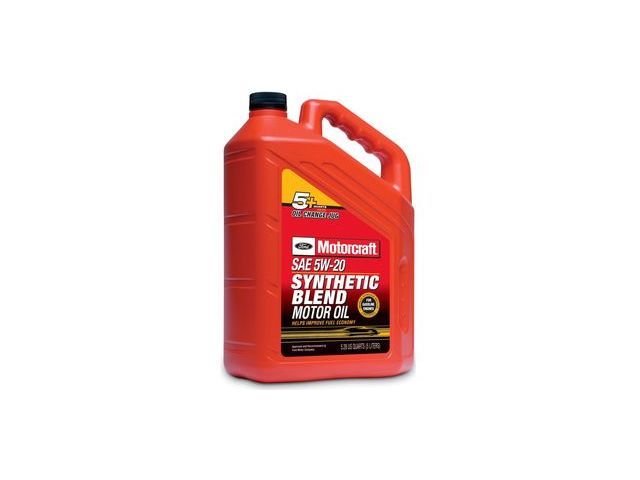
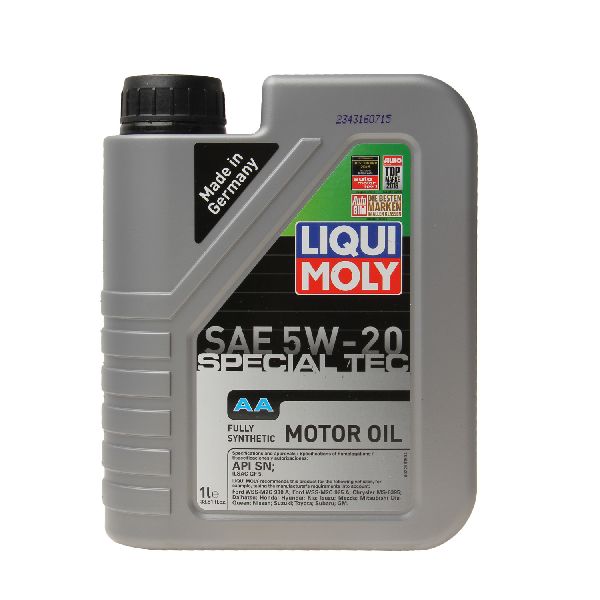
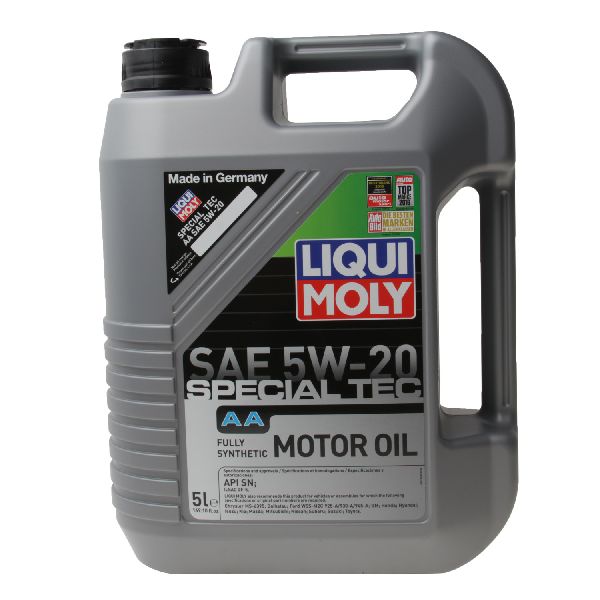
- Start your diagnosis with the cheapest and easiest fix: an oil and filter change using the correct 5W-20 oil.
- If an oil change doesn't work, replacing the intake VCT solenoid is the next logical step and is a manageable DIY job.
- Adhering to Ford's recommended oil change intervals is the best way to prevent this issue from recurring.
What's Unique About the 2015-2019 Ford FIESTA
The key confusion with this code on a Fiesta is its very existence. While the code P0021 for Bank 2 isn't applicable, Ford has issued broad Technical Service Bulletins (TSBs) for many of its vehicles, including the Fiesta, that address a list of VCT-related codes (P0011 through P0025). These bulletins point to a common issue across Ford's lineup: VCT solenoids sticking due to small debris in the engine oil. This guide will therefore focus on solving that underlying problem as it applies to your Fiesta's Bank 1.
Diagnostic Flowchart
Tap your situation to follow the diagnostic path that matches what you're seeing on this vehicle.
Symptoms You May Notice
- Check Engine Light is on
- Rough engine idle, sometimes leading to stalling at stops.
- Engine hesitation or stumbling on acceleration.
- Engine stalling, particularly at idle.
- Reduced fuel economy.
- Rattling or ticking noise from the top of the engine, especially on startup or when oil is low.
- Difficulty starting the engine.
- Replacing the camshaft position sensor. While possible, a bad sensor usually triggers its own specific circuit codes (like P0340 or P0366) and is less common than oil-related issues or a bad solenoid for this specific fault.
Most Likely Causes
- Low, Old, or Incorrect Viscosity Engine Oil 🔴 High Probability The VCT system is hydraulic and highly sensitive to oil pressure and cleanliness. Ford's TSBs point to debris in oil as a primary cause of VCT issues. Low or dirty oil is the most common trigger for VCT-related codes like P0011.
How to confirm: Check the engine oil level on the dipstick and inspect its color and consistency. If it's low, dark, or thick, it needs changing. Many owners report the issue appears when an oil change is overdue.
Typical fix: Perform a complete engine oil and filter change using the manufacturer-specified grade (e.g., 5W-20 for the 1.6L Ti-VCT). Clear the codes and drive to see if they return.
Est. part cost: $30-$60 - Sticking or Failed VCT Solenoid (Oil Control Valve) 🔴 High Probability Ford TSBs #SSM 50067 and #SSM 47170 directly state that sticking VCT solenoids are a known issue that can cause this family of codes. The solenoids have fine mesh screens that can become clogged with oil sludge, preventing proper operation.
How to confirm: A diagnostic scan tool can command the solenoid to activate. You can also swap the intake and exhaust solenoids (if they are identical parts) and see if the trouble code changes to the exhaust camshaft code (e.g., P0014). A simple bench test involves removing the solenoid and applying 12V power to see if the internal plunger clicks open and closed.
Typical fix: Replace the faulty VCT solenoid. Per TSBs, a technician may first try to cycle the solenoid with a scan tool to dislodge debris. Some owners have success cleaning the solenoids with MAF cleaner or brake cleaner, but replacement is often the permanent fix.
Est. part cost: $40-$90 - Failing Camshaft Phaser 🟡 Medium Probability The phaser is the mechanical gear that the VCT solenoid controls. It can fail mechanically, getting stuck in an advanced position, often due to the same oil contamination issues that affect the solenoid.
How to confirm: This is a more advanced diagnosis. If a new solenoid and fresh oil do not fix the issue, the timing cover may need to be removed to inspect the phaser and timing components for play or damage.
Typical fix: Replace the camshaft phaser, which often involves replacing the timing belt or chain at the same time.
Est. part cost: $100-$250 - Stretched Timing Belt / Incorrect Timing ⚪ Low Probability The 1.6L Ti-VCT engine uses a timing belt that requires replacement at regular intervals (typically around 100,000 miles). If it stretches or jumps a tooth, it will cause timing codes.
How to confirm: Physical inspection of the timing marks on the camshafts and crankshaft, which requires partial engine disassembly. This is usually suspected only after other, more common causes are ruled out.
Typical fix: Replace the timing belt, tensioner, and associated pulleys.
Est. part cost: $150-$300
Diagnosis Steps
- Confirm the exact trouble code with an OBD-II scanner. Verify if it is P0021 or, more likely, P0011.
- Check the engine oil level and condition. This is the number one cause. If low, dirty, or overdue for a change, replace the oil and filter with the correct grade for your engine (Motorcraft 5W-20 for the 1.6L Ti-VCT). Clear the code and drive to see if it returns.
- If the code returns, listen for any rattling or ticking noises from the top of the engine, which could indicate a VCT solenoid or phaser issue.
- Using a capable scan tool, monitor the desired vs. actual camshaft position angles for Bank 1. A large discrepancy points to a mechanical issue.
- Locate the intake VCT solenoid on Bank 1. On the 1.6L engine, they are on the front of the valve cover, held by a single 8mm bolt. Inspect the wiring and connector for damage or corrosion.
- As recommended by Ford TSB #SSM 50067, use the scan tool's bidirectional controls to command the VCT solenoid on and off (cycle it) 10 times to attempt to clear any internal debris.
- If cycling doesn't work, remove the solenoid for inspection and cleaning. You can use MAF cleaner and a 9V or 12V battery to manually cycle the solenoid and flush out debris. If it's visibly sludged up or fails to actuate, replacement is necessary.
- If cleaning doesn't work, replace the VCT solenoid. It's a relatively simple DIY job.
- If a new solenoid does not resolve the code, the issue may be with the camshaft phaser or the base engine timing (stretched timing belt), which requires more in-depth mechanical diagnosis.
Parts You'll Likely Need
- Engine Oil and Filter
(OEM #Motorcraft FL-910S (Filter for 1.6L))— The VCT system is operated by oil pressure. Clean oil of the correct viscosity is the first and most critical step in fixing and preventing this code.
Trusted brands: Motorcraft, Castrol, Mobil 1
OEM price range: $40-$70
Aftermarket price range: $30-$60 - Variable Camshaft Timing (VCT) Solenoid / Oil Control Valve
(OEM #CN1Z-6M280-F (For 1.6L Engine, both Intake and Exhaust))— This is the most common part to fail or stick, as identified in Ford's own service bulletins. It directly controls oil flow to the cam phaser.
Trusted brands: Motorcraft (CN1Z-6M280-F), Dorman (916-723 Intake, 916-722 Exhaust), Standard Motor Products (VVT265 Intake, VVT266 Exhaust)
OEM price range: $65-$100
Aftermarket price range: $25-$70
Related Codes That Often Appear With This One
- P0011 — This is the identical code but for Bank 1, which is the code your Fiesta would actually set for this problem.
- P0012 — This is for 'Camshaft Position Timing Over-Retarded' on Bank 1. It can appear if the VCT solenoid is sticking intermittently or if oil flow is erratic.
- P0014 / P0015 — These are the equivalent 'Over-Advanced' and 'Over-Retarded' codes for the 'B' (exhaust) camshaft on Bank 1. Problems with oil can affect both intake and exhaust VCT systems.
- P0016 — Crankshaft Position - Camshaft Position Correlation (Bank 1 Sensor A). This code can appear alongside P0011 if the timing deviation is severe enough to cause a conflict between the crank and cam sensor readings.
Technical Service Bulletins (TSBs) & Recalls
- SSM 50067: Illuminated MIL with various VCT DTCs due to sticking VCT solenoid.
- SSM 47170: Earlier version of the bulletin regarding sticking VCT solenoids.
- SSM 54366: Mentions VCT codes and refers to pinpoint tests in the service manual.
Platform-Specific Known Issues
- Ford Technical Service Bulletin #SSM 50067 notes that for various 2015-2021 Ford vehicles, codes like P0011, P0021, etc., may be set because 'small debris causing the VCT solenoid to stick.' It advises attempting to clear the debris by cycling the solenoid with a scan tool before replacement.
- TSB #SSM 47170 is an earlier version of the same bulletin for 2018 and other model year vehicles, indicating this has been a known condition for some time.
- The 1.6L Ti-VCT engine's VCT solenoids are identical for intake and exhaust, allowing for easy diagnostic swapping. They are located on the front of the valve cover and are easily accessible, held in by a single 8mm bolt each.
Mechanic-Grade Diagnostic Values
- VCT Solenoid Internal Resistance — expected: 7 to 14 Ohms. Failure: A reading outside this range (e.g., open circuit or shorted) indicates a faulty solenoid coil.
- VCT Solenoid Connector Voltage (Key On, Engine Off) — expected: Battery voltage (~12.0V) at Pin 1 (blue-green wire). Failure: No voltage indicates a wiring issue, a blown fuse F16 in the battery junction box, or a problem with the PCM power relay.
Scan Tool Commands That Help
- Ford IDS, Forscan, or equivalent professional scan tool: VCT Solenoid On/Off Cycle (Bidirectional Control) — As recommended by Ford TSBs, this command is used to rapidly cycle the solenoid plunger. This can dislodge small debris causing it to stick, potentially fixing the issue without replacing the part. It is a primary diagnostic step before component replacement.
Wiring & Ground Locations
- VCT Solenoid Connector (C108 for Intake on 1.6L Ti-VCT) — On the front of the valve cover, connected to the VCT solenoid.. Provides power and control to the solenoid. Pin 1 (Blue-Green wire) is the 12V+ power supply from fuse F16. Pin 2 is the ground signal, which is pulsed by the Powertrain Control Module (PCM) to actuate the solenoid. A fault in this wiring will cause the solenoid to malfunction.
- G203 — Located in the left kick panel area, near the base of the A-pillar.. This is a major interior chassis ground. While not directly for the VCT solenoid, a poor connection at this ground point can cause various electrical issues with modules located inside the cabin, including the PCM, which could indirectly affect sensor readings or actuator control.
OEM Part Supersession History
CN1Z-6M280-A, CN1Z-6M280-C, CN1Z-6M280-H→CN1Z-6M280-F— Part has been revised by the manufacturer over time to improve reliability or for manufacturing changes.
Heads up: The newest part number, CN1Z-6M280-F, is the correct service replacement for all previous versions and is used for both intake and exhaust camshafts on the 1.6L engine.
Helpful Videos

We Have This Part in Stock




The information in this article is provided for general reference and educational purposes only. Vehicle specifications, procedures, and part compatibility can vary by production date, trim level, and region. Always consult your vehicle's factory service manual and verify part numbers before purchasing or performing repairs. Safety-critical components such as airbags, seat belts, and braking systems should be installed by a qualified professional.
- Ford FIESTA:
- 🎬 Helpful Videos
- 🛍️ Shop This Part
- What's Unique About the 2015-2019 Ford FIESTA
- Diagnostic Flowchart
- Symptoms You May Notice
- Most Likely Causes
- Diagnosis Steps
- Parts You'll Likely Need
- Related Codes That Often Appear With This One
- Technical Service Bulletins (TSBs) & Recalls
- Platform-Specific Known Issues
- Mechanic-Grade Diagnostic Values
- Scan Tool Commands That Help
- Wiring & Ground Locations
- OEM Part Supersession History
- 🎟️ Get 5% Off