

P0021 on 2015-2021 Ford F-150: VCT Solenoid Causes and Fixes
P0021 on a 2015-2021 Ford F-150 most often means the Bank 2 intake Variable Camshaft Timing (VCT) solenoid is failing or clogged. This is a common issue, often resolved by replacing the solenoid for about $40-$100 in parts. Always check your oil level and condition first, as low or dirty oil is a primary cause of VCT system faults.
- P0021 on a 2015-2021 F-150 means the driver's side intake camshaft timing is too far advanced.
- The first and easiest step is to check your engine oil. Low or dirty oil is a very common cause.
- The most likely failed part is the Bank 2 (driver's side) intake VCT solenoid, which is relatively inexpensive and accessible to a DIYer.
- A rattling noise on startup is a major red flag for a more serious cam phaser problem, which is a known issue on these trucks and a much more expensive repair.
- Do not replace the camshaft position sensor; it is almost never the cause of this code.
What's Unique About the 2015-2021 Ford F-150

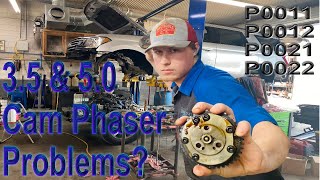
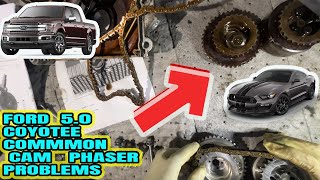
Ford's VCT (Variable Camshaft Timing) system, particularly in the 5.0L and 3.5L EcoBoost engines, is notoriously sensitive to oil quality and maintenance. Multiple Technical Service Bulletins (TSBs), like SSM 50067 and SSM 49583, have been issued for these engines related to VCT solenoids sticking due to small debris in the oil. Furthermore, these trucks are known for cam phaser issues, which can cause a distinct startup rattle and eventually lead to timing codes like P0021. While the code often points to a simple solenoid, it can sometimes be a symptom of this deeper, more expensive mechanical problem, 🎬 See a mechanic explain how VCT and phaser issues develop. a fact corroborated by numerous owner complaints.
Diagnostic Flowchart

Tap your situation to follow the diagnostic path that matches what you're seeing on this vehicle.
Generation note: This range covers the end of the 13th generation (2015-2020) and the beginning of the 14th generation (2021). Both generations use engines with VCT systems (like the 5.0L, 3.5L EcoBoost, and 2.7L EcoBoost) that are prone to this issue. TSBs specifically mention 2019-2020 5.0L engines (SSM 49583) and 2016 3.5L GTDI engines (TSB 16-0093), while SSM 50067 covers a broad range of 2015-2021 Ford vehicles, indicating the problem is persistent across these years.
Symptoms You May Notice
- Check Engine Light is on
- Rough, unstable, or stumbling idle
- Poor acceleration and loss of power
- Engine hesitates or stalls, especially when coming to a stop
- Rattling, knocking, or ticking noise from the engine, particularly on cold startup
- Decreased fuel mileage
- Hard starting, may click multiple times before turning over
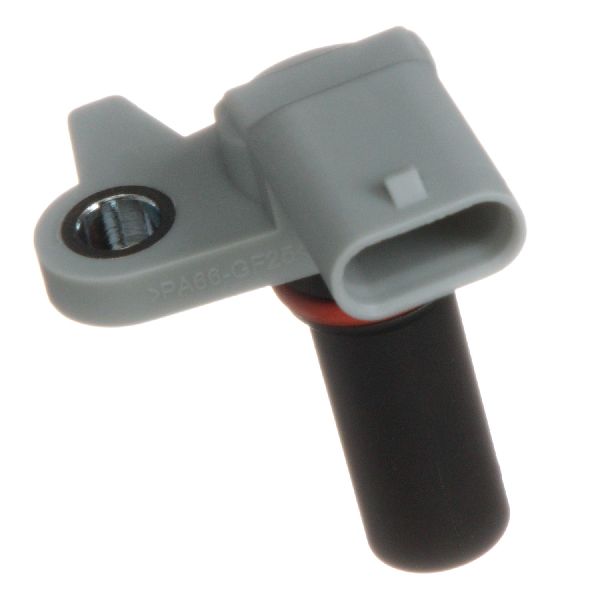
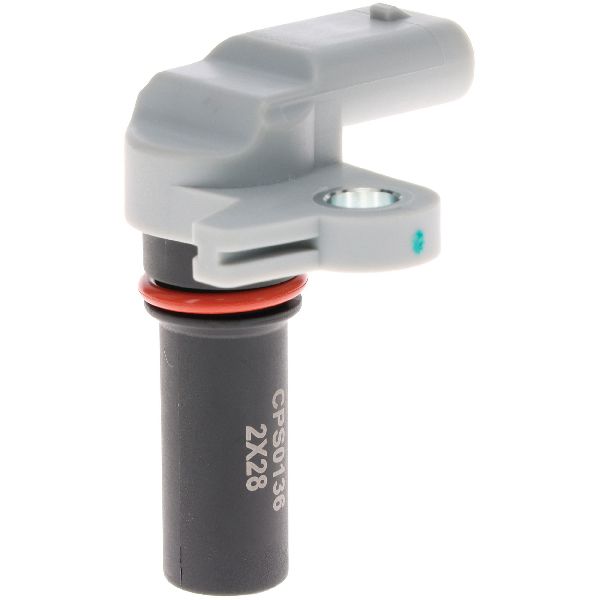
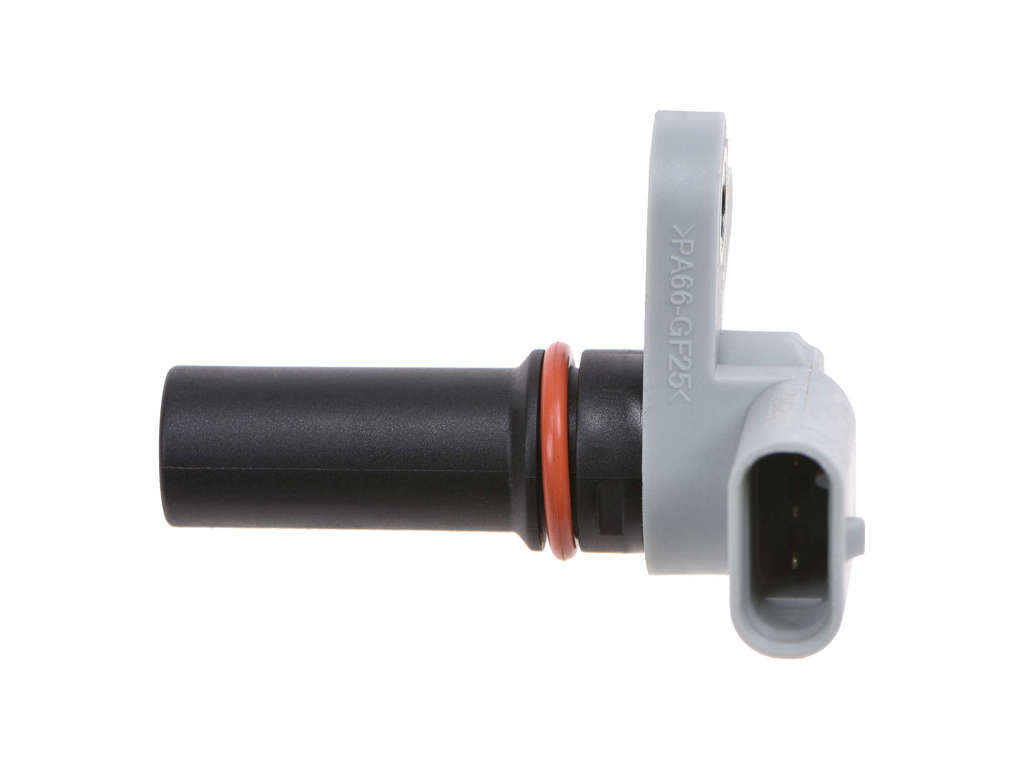
- Replacing the Camshaft Position Sensor (CMP). The sensor is usually doing its job correctly by reporting the over-advanced timing. The problem is mechanical/hydraulic, not the sensor itself. Forum users often replace this part with no success.
- Mistaking cam phaser rattle for turbo wastegate rattle on 3.5L EcoBoost engines. A loose wastegate linkage can cause a similar metallic rattle on startup but is a much simpler and cheaper fix.
Most Likely Causes

- Low, Dirty, or Incorrect Viscosity Engine Oil 🔴 High Probability The VCT system is hydraulic and extremely sensitive to oil pressure and cleanliness. Ford TSBs frequently cite debris in oil as a cause for sticking VCT solenoids. Mechanics widely agree that poor oil maintenance is the leading cause of VCT and phaser problems.
How to confirm: Check the oil level on the dipstick and examine its color and consistency. If it's low, black, or sludgy, it needs to be changed. Check the oil life monitor in the instrument cluster.
Typical fix: Perform an engine oil and filter change using the correct OEM-specified viscosity oil (e.g., 5W-20 for 5.0L, 5W-30 for EcoBoost). Use a quality filter like Motorcraft. Clear the codes and see if P0021 returns.
Est. part cost: $50-$100 - Failing VCT Solenoid (Bank 2 Intake) 🔴 High Probability This is the most common point of failure. The solenoids get clogged with debris or fail electrically, causing them to stick. Multiple TSBs, including SSM 49583 for the 5.0L and TSB 16-0093 for the 3.5L, point directly to replacing the solenoid as the primary fix.
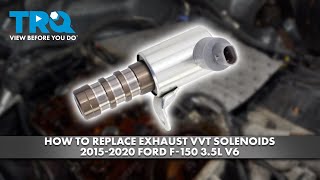
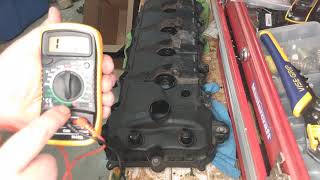
How to confirm: Swap the Bank 2 intake solenoid with the Bank 2 exhaust solenoid (if they are identical) or the Bank 1 intake solenoid. If the code changes to P0024 or P0011, the solenoid is faulty. You can also test the solenoid's resistance with a multimeter; a reading between 7-15 ohms is generally considered acceptable.
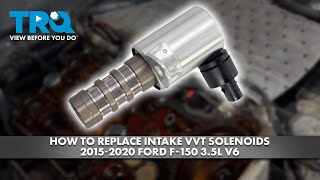
Typical fix: Replace the Bank 2 intake VCT solenoid. It's located on the front of the driver's side valve cover. This is a DIY-friendly job.
Est. part cost: $40-$120 - Worn or Failing Cam Phaser 🟡 Medium Probability The 3.5L EcoBoost and 5.0L engines in this generation are known for cam phaser failures, which cause a 'startup rattle'. A phaser that is stuck, not responding correctly, or has a broken locking pin will trigger this code. An owner complaint directly links P0021 to this known issue.
How to confirm: Listen for a loud rattling noise for 2-5 seconds on a cold start. If VCT solenoids have been replaced and the code returns (especially with correlation codes like P0018), the phaser is the next likely culprit. This is a complex diagnosis best left to a professional.
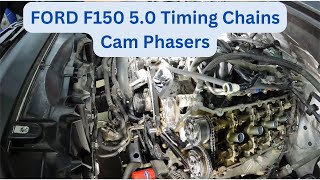
Typical fix: Replace the cam phasers, timing chain, and tensioners. This is a very labor-intensive and expensive job. 🎬 Watch: Detailed walkthrough of a 5.0L timing chain and phaser repair.
Est. part cost: $500-$1500
Rare But Worth Checking
- Wiring Harness or Connector Damage: The wiring to the VCT solenoid can become frayed or the connector can get corroded, causing an intermittent signal. A forum user reported fixing P0021 and P0025 by discovering they had reversed the VCT solenoid connectors after a phaser job. Always inspect the wiring when replacing the solenoid.
- Stretched Timing Chain or Worn Guides: While less common than a phaser or solenoid failure, a stretched timing chain can cause enough slack to throw off the camshaft position relative to the crankshaft, triggering correlation codes like P0018 along with P0021.
- Powertrain Control Module (PCM) Fault: This is extremely rare. The PCM should only be considered after all other possibilities, including mechanical timing, have been exhaustively ruled out. Some TSBs involve reprogramming the PCM to adjust shift strategies, but a hardware fault is unlikely.
Diagnosis Steps

- Check Engine Oil: Verify the oil level is full and the oil is clean. If low or dirty, perform an oil and filter change with the correct viscosity oil (e.g., Motorcraft 5W-30 for EcoBoost, 5W-20 for 5.0L), clear the code, and re-test.
- Scan Tool Analysis: Use an OBD-II scanner to monitor the desired vs. actual camshaft angle PIDs for the Bank 2 intake cam (e.g., VCT_INT_ACT2). A large discrepancy or a value that is stuck confirms the problem.
- Inspect VCT Solenoid Connector: Check the electrical connector and wiring for the Bank 2 intake VCT solenoid for any damage, corrosion, or loose connections. Ensure the Bank 2 intake and exhaust connectors are not swapped.
- Test the VCT Solenoid: Swap the suspect solenoid with an identical one from another position (e.g., Bank 1 intake). Clear the codes and drive the vehicle. If the code 'follows' the solenoid (e.g., P0011 now appears), the solenoid is bad and must be replaced. This is the most common DIY diagnostic step mentioned in forums.
- Command Solenoid On/Off: Some advanced scan tools can command the VCT solenoid to cycle on and off. TSB #SSM 50067 suggests cycling the affected VCT solenoid 10 times to attempt to clear debris. If the engine tone changes or it runs rough when commanded, the solenoid is likely functioning mechanically.
- Check for Mechanical Issues: If a new solenoid does not fix the issue, the problem is likely mechanical. Listen for a cold start rattle, which strongly points towards a failing cam phaser, stretched timing chain, or worn tensioners/guides. This level of diagnosis and repair typically requires professional service.
Parts You'll Likely Need
- Variable Camshaft Timing (VCT) Solenoid
(OEM #AT4Z-6M280-B (Left Side Intake for 3.5L))— This is the most frequent failure point. It gets stuck or clogged, preventing proper camshaft adjustment. TSB 16-0093 for the 3.5L GTDI specifically calls for its replacement when P0021 is paired with P0018.
Trusted brands: Motorcraft, Dorman
OEM price range: $70-$120
Aftermarket price range: $35-$80 - Cam Phaser Kit (with Timing Chain, Guides, Tensioners)
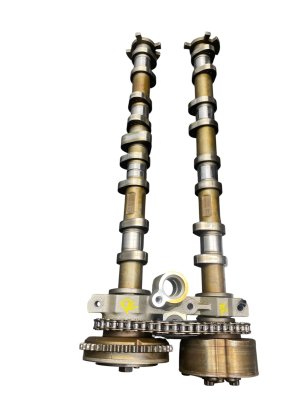
(OEM #HL3Z-6C525-CD (3.5L Phaser Example))— If the VCT solenoid replacement doesn't solve the issue, or if there is a prominent startup rattle, the cam phasers are the next likely cause. This is a well-documented weak point on these engines.
Trusted brands: Motorcraft, Cloyes
OEM price range: $800-$1500
Aftermarket price range: $500-$900 - Valve Cover Gasket
(OEM #BL3Z-6584-A (Left Side for 3.5L))— This should be replaced whenever the valve cover is removed to access the VCT solenoids or cam phasers to prevent oil leaks.
Trusted brands: Motorcraft, Fel-Pro
OEM price range: $30-$60
Aftermarket price range: $20-$40
Related Codes That Often Appear With This One
- P0011 — This is the same 'over-advanced' fault but for Bank 1. Seeing both together can point to a systemic issue like low oil pressure or widespread sludge.
- P0012 — This is an 'over-retarded' code for Bank 1. It's common to see multiple VCT codes together, indicating a general problem with the timing system, as noted by a user on Ford Truck Enthusiasts forum who had both P0021 and P0022.
- P0022 — This is the 'over-retarded' counterpart to P0021 for Bank 2. If the VCT solenoid is sticking erratically, it can cause both over-advanced and over-retarded conditions.
- P0018 — This is a crankshaft-camshaft correlation error for Bank 2. It often appears with P0021 when the timing is significantly off, as noted in an owner complaint and a TSB. A forum user with a 2018 3.5L EcoBoost reported both codes appearing together, leading to significant power loss.
Technical Service Bulletins (TSBs) & Recalls
- SSM 50067: Notes that various VCT codes, including P0021, may be caused by small debris making the solenoid stick.
- SSM 49583: Pertains to 2019-2020 F-150 5.0L engines with P0021/P0022 and noise from intake VCT phasers.
- SSM 54366: General bulletin pointing to diagnostic procedures for VCT codes like P0021.
- TSB 16-0038: For 2016 F-150 3.5L GTDI, advises replacing the Bank 2 intake VCT solenoid if P0018 and P0021 are found together.
- SSM 48894: For 2019-2020 F-150 5.0L, recommends replacing the associated VCT solenoid to resolve P0021.
Platform-Specific Known Issues
- This engine is the most notorious for the 'cold start rattle' associated with failing cam phasers. The issue became so common that Ford issued customer satisfaction programs (like 21N03) to address it. P0021 can be an early indicator of the phasers beginning to fail, even before the rattle is prominent. It can also be caused by a loose turbo wastegate linkage, which can be misdiagnosed as a phaser issue.
- On the 5.0L, P0021 is very frequently tied directly to the VCT solenoids themselves, as highlighted in TSB SSM 49583. Owners often report a stumbling or rough idle that can lead to stalling. While phaser failure can occur, it is often preceded by solenoid issues. Some owners have reported getting both P0021 (over-advanced) and P0022 (over-retarded) codes simultaneously, pointing to a very erratic solenoid or low oil pressure.
- While generally considered more reliable than its larger counterparts, the 2.7L is not immune to VCT issues. The causes are the same: oil contamination leading to sticky solenoids. However, widespread, systemic cam phaser failure is less commonly reported on this engine compared to the 3.5L and 5.0L.
Mechanic-Grade Diagnostic Values
- VCT Solenoid Resistance — expected: 5-15 Ohms. Failure: A reading of 0 Ohms (short) or OL/infinity (open circuit).
- VCT Solenoid Connector Voltage (Key On, Engine Off) — expected: Approximately 12V (Battery Voltage). Failure: Significantly lower or no voltage indicates a wiring or PCM power supply issue.
- Scan Tool PID: VCT_INT_DIF2 (ANGL) — expected: Near 0 degrees at idle and during steady-state driving. Will fluctuate during acceleration/deceleration.. Failure: A large, persistent non-zero value, or a value that swings wildly and overcorrects, indicates a problem with cam timing control on Bank 2.
- Scan Tool PID: VCT_INT_ACT2 (ANGL) — expected: This value should closely track the desired camshaft angle PID (VCT_INT_DES2).. Failure: A significant and prolonged deviation from the desired angle confirms a performance issue.
Scan Tool Commands That Help
- Ford IDS / FORScan / High-End Scan Tool: VCT Solenoid On/Off Test or Cycle Command — As referenced in TSB SSM 50067, this function cycles the solenoid rapidly (e.g., 10 times) to dislodge small debris that may be causing it to stick. If the code clears and performance improves afterward, it points to contamination rather than a hard electrical failure.
- Ford IDS / High-End Scan Tool: Actuator Test: Command VCT Solenoid % — When the engine is idling, commanding the solenoid to activate should cause a noticeable change in engine idle quality (stumble or roughness). If the engine's behavior does not change, it suggests the solenoid is not actuating, the oil passages are blocked, or the phaser is stuck.
Wiring & Ground Locations
- Body-to-Frame Ground Strap — Commonly found on the passenger side of the vehicle, going from the body down to the frame. There are multiple factory ground points on the frame.. A corroded or loose main body ground can cause a host of intermittent electrical issues, including erratic sensor readings and module communication errors. While not a direct cause, poor grounding can lead to unpredictable behavior in the PCM and its control over the VCT system. A 2020 F-150 with only 7,000 miles was shown to have significant corrosion at this point.
- Passenger Kick Panel Ground — Behind the passenger side kick panel, there is a common grounding point for multiple vehicle modules.. On 2001-2011 models, corrosion at this ground point is a known cause of no-start conditions and instrument cluster failure. While the specific vehicle range is slightly older, the principle of checking interior grounds that serve the BCM/PCM is relevant, as a poor ground here can affect the entire control system.
- VCT Solenoid Connector (C1590 as an example) — On the front of the valve covers, connecting to the VCT solenoids.. The connector itself or the wiring leading to it can be a point of failure. A user on a forum was specifically looking for the pinout for connector C1590 after experiencing multiple issues, highlighting the need to verify pin integrity and check for water intrusion that can travel down the harness.
Real Owner Repair Stories
- Ford Truck Enthusiasts Forums (2018 Ford F-150 5.0L with 114,500 miles) — Codes P0021 and P0022, truck runs good but struggles to idle sometimes.
❌ Tried (didn't work) Adding Lucas Oil Stabilizer.
✅ What actually fixed it The user was advised by others that the most likely cause was the VCT solenoids, based on the symptoms and codes. The final resolution was not posted in the thread, but the initial diagnosis from the community pointed directly to replacing the Bank 2 VCT solenoids as the first logical step after an oil change.
OEM Part Supersession History
BR3Z-6M280-D (Example)→BR3Z-6M280-E— Improved design to address sticking issues common in 2018-2020 5.0L engines.
Heads up: The newer part number is generally backward compatible and the recommended replacement. Ford Performance also offers a high-strength version, M-6297-M50A, which is a kit of 4 intake solenoids with a more robust mounting design for 2013-2017 and 2018-2020 5.0L F-150s.
Model Year Variations Within This Range
- 2015-2017 (Gen 2 Coyote 5.0L): These engines feature port fuel injection only and an 11.0:1 compression ratio. The VCT system uses Charge Motion Control Valves (CMCV) in the intake manifold to improve low-RPM airflow.
- 2018-2021 (Gen 3 Coyote 5.0L): The Gen 3 engine introduced a dual-fuel system (port and direct injection), a higher 12.0:1 compression ratio, and plasma wire arc cylinder liners instead of traditional sleeves. The VCT system was revised with larger valves, increased camshaft lift, and the exhaust phaser integrated the oil control valve into the cylinder head for better control. These changes make the Gen 3 more powerful but also introduce new components (like a high-pressure fuel system) that are not present on earlier models.
Helpful Videos
Used OEM Parts in Stock
New Aftermarket Parts Available


The information in this article is provided for general reference and educational purposes only. Vehicle specifications, procedures, and part compatibility can vary by production date, trim level, and region. Always consult your vehicle's factory service manual and verify part numbers before purchasing or performing repairs. Safety-critical components such as airbags, seat belts, and braking systems should be installed by a qualified professional.
- Ford F-150:
- 🎬 Helpful Videos
- 🛍️ Shop This Part
- What's Unique About the 2015-2021 Ford F-150
- Diagnostic Flowchart
- Symptoms You May Notice
- Most Likely Causes
- Rare But Worth Checking
- Diagnosis Steps
- Parts You'll Likely Need
- Related Codes That Often Appear With This One
- Technical Service Bulletins (TSBs) & Recalls
- Platform-Specific Known Issues
- Mechanic-Grade Diagnostic Values
- Scan Tool Commands That Help
- Wiring & Ground Locations
- Real Owner Repair Stories
- OEM Part Supersession History
- Model Year Variations Within This Range
- 🎟️ Get 5% Off