

P0019 on 2007-2014 GMC Acadia: Crank/Cam Correlation and Timing Chain Fixes
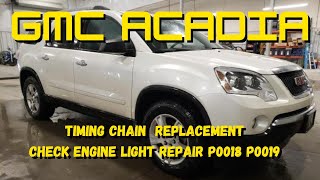
P0019 on a 2007-2014 GMC Acadia almost always indicates a stretched timing chain, a known issue with the 3.6L V6 engine. This is a serious, labor-intensive repair costing between $2,700 and $3,700 at a shop. GM acknowledged this widespread problem with Special Coverage Adjustment #11340C, which extended the warranty to 10 years/120,000 miles, though most vehicles are now past this period.
- P0019 on a 2007-2014 Acadia is a strong indicator of a stretched timing chain, a very common and well-documented problem.
- The first diagnostic step should always be to check the engine oil level and condition. Poor oil maintenance is a major cause of this failure.
- Do not waste money replacing camshaft or crankshaft sensors before confirming the mechanical timing is correct. The problem is almost always the chains.
- This is a severe issue. Driving with this code can lead to the chain breaking and causing catastrophic engine failure.
- Repair is expensive and complex, requiring a professional mechanic. Expect costs to be in the $2,700-$3,700 range.
What's Unique About the 2007-2014 Gmc ACADIA
The first-generation GMC Acadia, along with its platform mates (Buick Enclave, Chevrolet Traverse, Saturn Outlook), uses a 3.6L V6 engine that is notorious for premature timing chain stretching. This was such a common failure that GM issued multiple Technical Service Bulletins (TSBs) and a Special Coverage Adjustment (#11340C) extending the warranty to 10 years or 120,000 miles for this specific issue. The primary cause for early models (2007-2009) was often linked to an overly optimistic Oil Life Monitor (OLM) calibration, which allowed for excessively long oil change intervals. Degraded oil quality fails to provide adequate pressure and lubrication for the hydraulic timing chain tensioners, accelerating chain wear.
Diagnostic Flowchart
Tap your situation to follow the diagnostic path that matches what you're seeing on this vehicle.
Symptoms You May Notice
- Check Engine Light is on
- Reduced engine power and hesitation during acceleration
- Rough or unstable idle
- Rattling or slapping noise from the engine, especially on startup, that may last for a few seconds
- Increased fuel consumption
- In severe cases, the engine may be hard to start or may not start at all
- Replacing only the camshaft or crankshaft position sensors. While these sensors can fail, on the 3.6L V6, P0019 is overwhelmingly caused by the underlying mechanical timing chain system. Replacing sensors alone rarely fixes the problem.
- Replacing only the VVT solenoids. While easier and cheaper, this is also a low-probability fix compared to the timing chains themselves. It's a reasonable diagnostic step but not the ultimate solution in most cases.
Most Likely Causes
- Stretched Timing Chains 🔴 High Probability The 3.6L V6 in this platform has a documented history of premature timing chain wear and stretching. GM has released TSBs #PIP3423P and #12-06-01-009F directly linking P0019 to this issue. GM also initiated Special Coverage Adjustment #11340C due to the high failure rate.
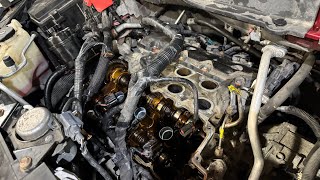
How to confirm: A mechanic can use a scan tool to observe cam/crank deviation data. A significant, steady deviation points to a mechanical timing issue. Physical confirmation requires removing the timing cover for inspection, where a visibly loose or sloppy chain will be evident.
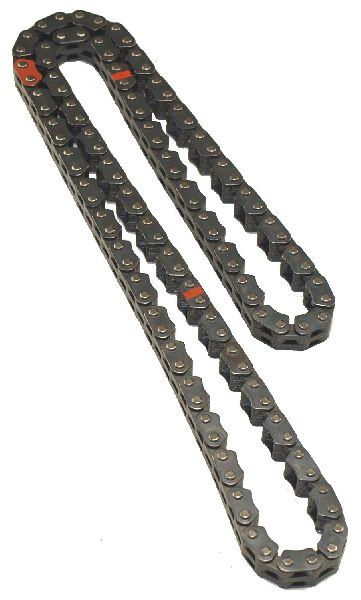
Typical fix: Replace all three timing chains, all tensioners, and all guides. This is typically done as a complete kit. It is also recommended to replace the water pump, which is driven by the timing chain, at the same time.
Est. part cost: $250-$500 - Failed Timing Chain Tensioners or Guides 🔴 High Probability The tensioners are hydraulic and can fail or become weak due to dirty oil or wear, allowing the chain to become loose. The plastic guides can also wear out or break apart, with pieces potentially falling into the oil pan. This is addressed in TSB #PIP3423P.
How to confirm: A rattling noise is a strong indicator. Visual inspection after removing the valve cover or timing cover is the definitive method. A maxed-out tensioner plunger is a clear sign of a stretched chain or failed tensioner.
Typical fix: Replace tensioners and guides as part of a complete timing chain kit replacement. They should never be replaced in isolation.
Est. part cost: $250-$500 (as part of kit) - Low or Dirty Engine Oil 🟡 Medium Probability The camshaft phasers (actuators) and tensioners are operated by oil pressure. Low or degraded oil can't operate them correctly, leading to correlation faults. This is the leading contributor to premature timing chain failure on this engine, especially on 2007-2009 models with incorrect Oil Life Monitor (OLM) settings.
How to confirm: Check the oil level on the dipstick and inspect its condition. If it's low, black, or sludgy, this is a likely contributor. Many owners who followed the OLM ended up with this issue.
Typical fix: Perform an oil and filter change with the correct viscosity oil (5W-30). If the code returns, the mechanical damage (stretched chain) is likely already done and an oil change alone will not fix it.
Est. part cost: $40-$80 - Faulty Camshaft Position Actuator Solenoid (VVT Solenoid) ⚪ Low Probability These solenoids control oil flow to the cam phasers. They can get clogged with sludge or fail electrically, causing them to stick. While less common than chain failure, it's a possible and much easier repair to attempt first. 🎬 See how to remove the VVT solenoids on this engine.
How to confirm: Can be tested by swapping with a known good solenoid from another position (e.g., intake to exhaust) and seeing if the code follows (e.g., changes to P0018). Resistance can also be checked with a multimeter, typically reading between 6-12 ohms.
Typical fix: Replace the Bank 2 exhaust camshaft actuator solenoid. The OEM part number is 12679100 (replaces 12655421).
Est. part cost: $30-$70 - Faulty Camshaft Position Sensor ⚪ Low Probability While possible, sensor failure is much less common than the mechanical timing chain issues on this engine. It is often replaced unnecessarily.
How to confirm: Use a scan tool to monitor the sensor's live data for dropouts. Can also be tested by checking for a signal with a multimeter or oscilloscope.
Typical fix: Replace the Bank 2 exhaust camshaft position sensor.
Est. part cost: $25-$60
Rare But Worth Checking
- Damaged Camshaft Phaser (Actuator): The gear on the end of the camshaft that adjusts timing can fail internally, but this is less common than chain stretch. A Reddit user with a 2010 Traverse reported that even after a full timing kit replacement, the P0019 code remained until they replaced the exhaust VVT cam phaser 🎬 Watch what happens when P0019 remains after a chain replacement. itself with an OEM part. It is typically recommended to replace these during a full timing chain service.
- Damaged Reluctor Wheel/Tone Ring: The ring on the camshaft or crankshaft that the sensor reads can slip or break, but this is a very rare failure. A video for a Chevy Traverse with the same engine shows how a slipped crank reluctor ring can cause these codes.
- Wiring or ECM Issues: A damaged wire or a fault in the Engine Control Module (ECM) is possible but should only be considered after all mechanical causes and sensors have been ruled out. GM's Special Coverage #11340C included an ECM reprogram to adjust the sensitivity of the timing chain diagnostics.
Diagnosis Steps
- Check Engine Oil Level and Condition: Ensure the oil is full and clean. If low or very dirty, perform an oil change with a quality 5W-30 synthetic oil and filter, clear the code, and see if it returns. This is a critical first step due to the hydraulic nature of the timing system.
- Scan for All Codes: Use an OBD-II scanner to check for any other related codes (like P0008, P0016-P0018). Multiple timing codes strongly suggest a systemic timing chain issue.
- Analyze Sensor Data: Use an advanced scan tool to view live data for camshaft and crankshaft position. Look for cam angle deviation data. A consistent error that does not change with RPM points towards a mechanical fault (stretched chain).
- Test Actuator Solenoids: Command the Bank 2 exhaust VVT solenoid with a scan tool. If there is no change in engine performance or data, the solenoid may be faulty. Swap it with the intake solenoid on the same bank to see if the code changes to P0018. This is a cost-effective diagnostic step.
- Inspect Timing Components: If the steps above do not resolve the issue, the next step is a physical inspection. This is labor-intensive and involves removing the engine's front timing cover to check for loose chains, broken guides, or bad tensioners. This step is best left to a professional.
- Verify Mechanical Timing: During the physical inspe
Parts You'll Likely Need
- Engine Timing Chain Kit
(OEM #12650230 (For 2007-2008 models))— This is the most common fix. A complete kit ensures all worn components (chains, guides, tensioners) are replaced at once to prevent a repeat failure. TSB 12-06-01-009F specifies using a complete kit.
Trusted brands: ACDelco (OEM), Cloyes, Melling
OEM price range: $400-$600
Aftermarket price range: $250-$450 - Camshaft Position Actuator Solenoid
(OEM #12679100 (Exhaust))— A much less common but possible cause. Often replaced as a diagnostic step due to its low cost and easy accessibility compared to the timing chains.
Trusted brands: ACDelco (OEM), Dorman, NTK
OEM price range: $50-$80
Aftermarket price range: $30-$60
Related Codes That Often Appear With This One
- P0008 — Engine Positions System Performance Bank 1. This is a general timing correlation code often set alongside more specific ones like P0019, strongly indicating a stretched primary timing chain.
- P0016 — Crank/Cam Position Correlation (Bank 1, Sensor A - Intake). Indicates a timing issue on the other cylinder bank's intake cam.
- P0017 — Crank/Cam Position Correlation (Bank 1, Sensor B - Exhaust). Indicates a timing issue on the other cylinder bank's exhaust cam.
- P0018 — Crank/Cam Position Correlation (Bank 2, Sensor A - Intake). Indicates a timing issue on the same bank, but with the intake camshaft. Seeing P0018 and P0019 together points to a problem with the Bank 2 chain.
Technical Service Bulletins (TSBs) & Recalls
- Provides information on the comprehensive timing chain service kits released by GM to repair stretched timing chains causing codes P0008, P0009, P0016, P0017, P0018, and/or P0019. It lists all affected vehicles and specifies the correct kit part numbers.
- This is not a standard TSB, but a Special Coverage Adjustment that extended the warranty on the timing chains to 10 years or 120,000 miles due to premature wear. It acknowledges the issue on 2007-2009 models and also included an ECM reprogram to change the sensitivity of the check engine light for this condition.
- A preliminary information bulletin directing technicians to inspect for loose timing chains or tensioners when codes P0016, P0017, P0018, P0019, P0008 or P0009 are set.
Platform-Specific Known Issues
- Oil Life Monitor (OLM) Calibration Issue: On 2007-2009 models, the factory OLM calibration allowed for oil change intervals that were too long. This led to rapid oil degradation, sludge formation, and loss of hydraulic pressure for the timing chain tensioners, which is considered the root cause of the widespread premature chain failures. GM's Special Coverage #11340C included an ECM reprogram to shorten these intervals.
- Engine Removal for Repair: Unlike many vehicles where the timing cover is accessible from the side, the transverse mounting of the 3.6L V6 in the Acadia requires either lifting the engine or, more commonly, dropping the entire front subframe/cradle to gain enough clearance to remove the timing cover and service the chains. This is the primary reason for the high labor cost.
Mechanic-Grade Diagnostic Values
- Camshaft Position Actuator Solenoid (VVT Solenoid) Resistance — expected: 7-12 Ohms. Failure: A reading outside this range, or infinite resistance (open circuit), indicates a failed solenoid.
- Crankshaft Reluctor Wheel Position — expected: 25 to 26 mm. Failure: A measurement different from this indicates the reluctor wheel has slipped on the crankshaft, requiring crankshaft replacement.
- Crankshaft End Play — expected: .004 to .015 inches. Failure: Significantly excessive end play (e.g., .050 inches) points to a worn thrust bearing, which can cause cam/crank correlation codes.
- Camshaft Position Sensor (CMP) Signal Voltage — expected: Fluctuating between 0.5V and 4.5V. Failure: No voltage or a steady, non-fluctuating voltage indicates a problem with the sensor or its circuit.
Scan Tool Commands That Help
- GDS2 / Tech2 (or equivalent professional scanner): Camshaft Position Actuator Solenoid Control — This bidirectional test is used to verify the function of the VVT solenoid. When the Bank 2 exhaust solenoid is commanded ON at idle, the engine should noticeably hesitate or run rough. If there is no change in engine operation, it indicates the solenoid is stuck, clogged, or has failed electrically.
Wiring & Ground Locations
- Bank 2 Exhaust Camshaft Position (CMP) Actuator Solenoid — On the Bank 2 (front, radiator side) cylinder head. It is a cylindrical solenoid held in by a single 10mm bolt.. This is the specific solenoid that controls exhaust valve timing for Bank 2. P0019 is directly related to its operation and the timing correlation it is supposed to manage.
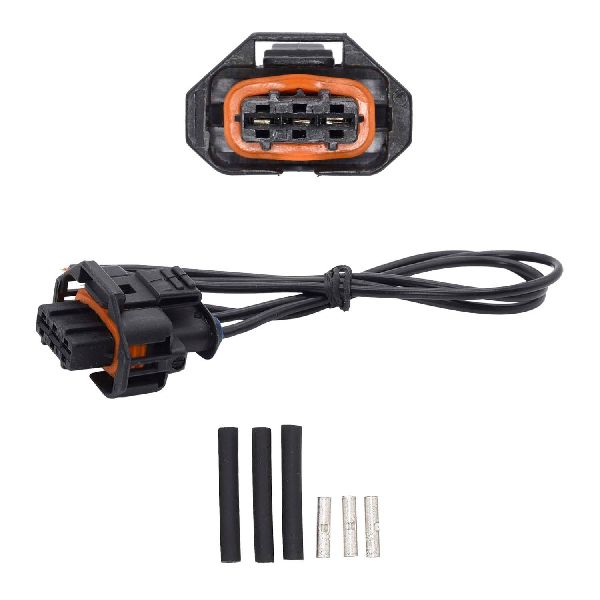
- Bank 2 Exhaust Camshaft Position (CMP) Sensor — Located on the Bank 2 (front, radiator side) cylinder head, near the actuator solenoid.. This sensor reads the position of the exhaust camshaft and sends the signal to the ECM. A fault in its wiring (3-wire connector) can cause P0019.
- Engine Control Module (ECM) — Located in the engine compartment, on the right side (passenger side) near the firewall.. All sensor signals and actuator commands route to and from the ECM. A poor connection at the ECM harness could mimic a component failure.
Real Owner Repair Stories
- 2CarPros Forum Mechanic 'ASEMASTER6371' (2007 GMC Acadia 3.6L V6) — P0019 code present.
❌ Tried (didn't work) Clearing the code without addressing the root cause.
✅ What actually fixed it The mechanic advised that before assuming a mechanical failure, to address potential oil sludge. The recommendation was to add a product like Sea Foam to the engine oil, let the engine idle for an hour to clean passages, and then perform an oil and filter change. This is suggested because sludge can clog the VVT actuators and cause them to stick, triggering the code. If this doesn't work, mechanical repair is necessary.
When the Usual Fixes Don't Work
- While a stretched timing chain is the cause for P0019 in over 95% of cases on this vehicle, there is a notable counter-narrative documented by GM itself. In TSB #PIP3423P, GM outlines a scenario where a technician replaces the timing chains, but the code returns. The bulletin directs the technician to then inspect the crankshaft reluctor wheel, which is pressed onto the crankshaft. This wheel can slip or move from its original position, causing the crankshaft position sensor to report an incorrect value to the ECM. This creates a cam/crank correlation fault even with a perfectly new timing system. The fix in this rare case is not another timing job, but a complete replacement of the crankshaft. This represents a significant diagnostic trap where the most common fix does not resolve the issue.
OEM Part Supersession History
Various older timing chain kits→P/N 12650230 (for 2007 models), and other updated kits for later years.— GM released updated, more durable timing chain kits starting in April 2012 to combat the high rate of premature chain stretching.
Heads up: TSB #12-06-01-009F specifically advises *against* replacing idler sprockets, camshaft actuator gears, or the crankshaft gear when only repairing a stretched chain, as these components are typically not worn and are replaced unnecessarily.
Model Year Variations Within This Range
- 2007-2008 vs 2009-2014: The engine was updated in 2009 from the port-injected 3.6L LY7 to the direct-injected 3.6L LLT. This involved changes to pistons (higher compression on LLT), cylinder heads, and the fuel system. While both engines are known for timing chain issues, parts like pistons are not interchangeable.
- 2012-2014: By the 2012 model year, GM had implemented several factory updates to the timing chain components to improve durability. While not completely immune, these later models are generally considered less susceptible to premature timing chain failure than the 2007-2011 models.
- 2007-2008 vs 2011+: TSB #12-06-01-009F details different procedures for servicing the PCV system depending on the model year, indicating design changes to the camshaft covers and crankcase ventilation system over the production run.
Helpful Videos
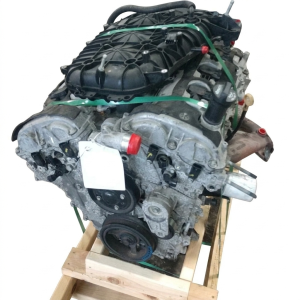
Used OEM Parts in Stock
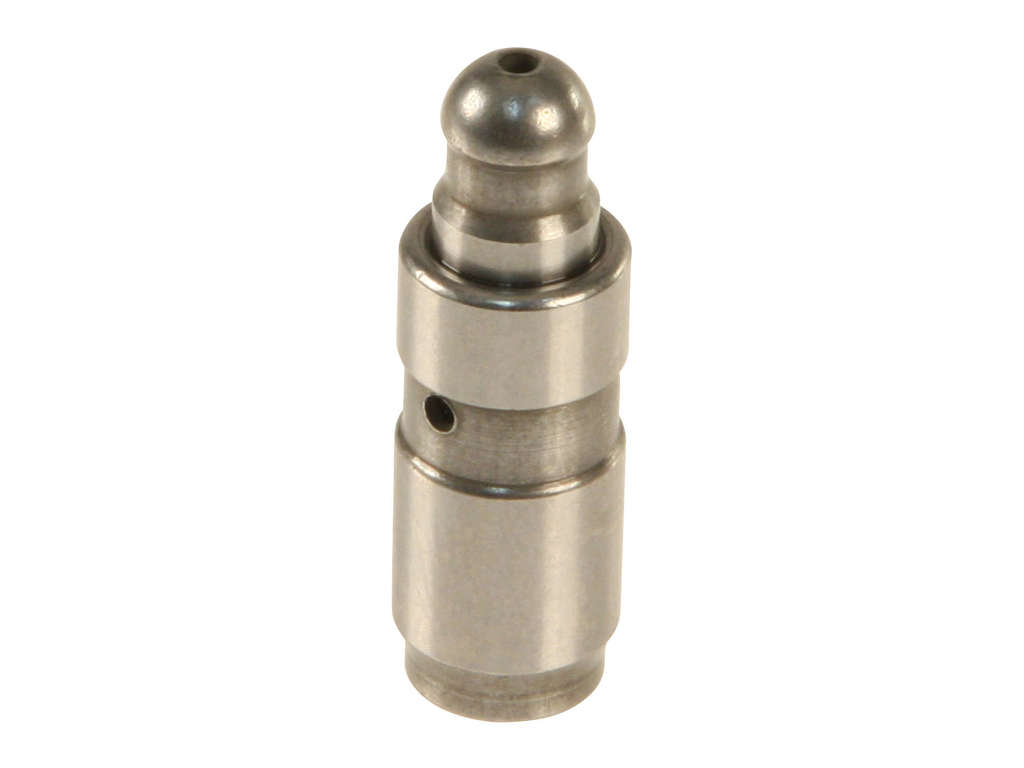
New Aftermarket Parts Available


The information in this article is provided for general reference and educational purposes only. Vehicle specifications, procedures, and part compatibility can vary by production date, trim level, and region. Always consult your vehicle's factory service manual and verify part numbers before purchasing or performing repairs. Safety-critical components such as airbags, seat belts, and braking systems should be installed by a qualified professional.
- Gmc ACADIA:
- 🎬 Helpful Videos
- 🛍️ Shop This Part
- What's Unique About the 2007-2014 Gmc ACADIA
- Diagnostic Flowchart
- Symptoms You May Notice
- Most Likely Causes
- Rare But Worth Checking
- Diagnosis Steps
- Parts You'll Likely Need
- Related Codes That Often Appear With This One
- Technical Service Bulletins (TSBs) & Recalls
- Platform-Specific Known Issues
- Mechanic-Grade Diagnostic Values
- Scan Tool Commands That Help
- Wiring & Ground Locations
- Real Owner Repair Stories
- When the Usual Fixes Don't Work
- OEM Part Supersession History
- Model Year Variations Within This Range
- 🎟️ Get 5% Off