

P0019 on 2015-2019 Ford Police Interceptor Sedan: Causes and Fixes
P0019 on a Ford Police Interceptor Sedan most often means the Bank 2 exhaust VCT solenoid is stuck, usually due to dirty or low engine oil. An oil change and replacing the VCT solenoid (around $40-$80 for the part) is the most likely fix. Ford TSB SSM 49821 addresses this. However, this code can also be a serious warning of a failing internal water pump contaminating the oil, leading to timing chain stretch and a much more expensive repair.
- Always check your engine oil first. Low, old, or milky oil is a primary cause for P0019.
- The most likely failed part is the Bank 2 (radiator side) exhaust VCT solenoid. Ford recommends trying to cycle it with a scan tool before replacement.
- This code can be a serious warning sign for a failing internal water pump on the 3.5L/3.7L engines. If the oil looks like a milkshake, the repair is urgent and extensive.
- Do not just replace the camshaft sensor; it is almost always just reporting the timing error, not causing it.
- If a timing chain replacement is necessary, the water pump must be replaced at the same time to prevent a repeat failure.
What's Unique About the 2015-2019 Ford POLICE INTERCEPTOR SEDAN
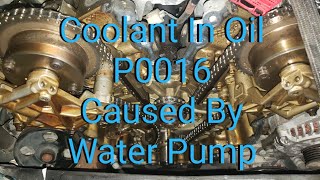
On the Ford 3.5L and 3.7L V6 engines (Duratec/Cyclone family), this code requires special attention. While often caused by a simple sticking VCT solenoid due to oil debris, as noted in Ford's technical service bulletin SSM 49821, it can also be an early symptom of a much more severe issue. These engines feature an internal, timing-chain-driven water pump. If the pump's internal seal fails, it can leak coolant directly into the engine oil, causing widespread damage to timing components and triggering correlation codes like P0019. A secondary weep hole is designed to show external leakage near the alternator, but if it clogs or the primary gasket fails, the coolant goes straight into the oil pan.
Diagnostic Flowchart
Tap your situation to follow the diagnostic path that matches what you're seeing on this vehicle.
Symptoms You May Notice
- Check Engine Light is on
- Rough or fluctuating idle
- Hesitation or stumbling during acceleration
- Reduced engine power
- Decreased fuel economy
- Engine may stall at low speeds
- Rattling noise from engine on cold startup, indicating timing chain or phaser issues
- Replacing the camshaft position sensor without first checking the oil and VCT solenoid.
- Replacing the crankshaft position sensor, which is unlikely to cause a single-bank correlation code.
- Replacing only the VCT solenoid when the root cause is a stretched timing chain or coolant-contaminated oil. The code will return.
- Ignoring a startup rattle as 'normal', when it is a key indicator of impending timing chain/phaser failure.
Most Likely Causes
- Low or Dirty Engine Oil 🔴 High Probability The Variable Camshaft Timing (VCT) system is hydraulically operated and highly dependent on clean oil of the correct viscosity to function. Debris or sludge can easily cause moving parts like the VCT solenoids to stick.
How to confirm: Check the oil level on the dipstick and examine its condition. Oil that is very dark, sludgy, or has a milky/frothy 'milkshake' appearance (indicating coolant contamination) is a red flag.
Typical fix: Perform an engine oil and filter change using the correct OEM-specified oil (Motorcraft 5W-20 or 5W-30, check your owner's manual) and a quality filter.
Est. part cost: $40-$80 - Sticking or Failed VCT Solenoid (Bank 2 Exhaust) 🔴 High Probability Ford has issued a Technical Service Bulletin (SSM 49821) stating that small debris in the oil can cause these solenoids to stick, leading to various timing codes including P0019. This is a very common failure point.
How to confirm: Use a bidirectional scan tool (like Ford's IDS) to command the Bank 2 exhaust VCT solenoid on and off, as recommended by TSB SSM 49821. The procedure involves cycling the solenoid 10 times to attempt to clear debris. If the timing doesn't change or the code returns quickly, the solenoid is likely faulty. You can also test its resistance with a multimeter (typically 5-15 ohms).
Typical fix: Replace the Bank 2 exhaust VCT solenoid. It is located on the valve cover for the cylinder bank near the radiator. The OEM part number is often AT4Z-6M280-A or a similar variant.
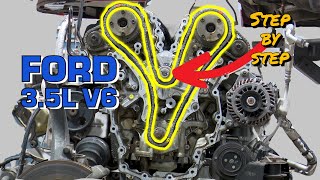
Est. part cost: $40-$120 - Stretched Timing Chain 🟡 Medium Probability Over time, and especially if oil changes are neglected or the oil is contaminated by a failing water pump, the timing chain can stretch. This causes a permanent timing correlation error that a new solenoid cannot fix. This is a well-documented issue on the 3.5L EcoBoost in particular.
How to confirm: This is a complex diagnosis. A key symptom is a startup rattle that lasts for a few seconds. A mechanic can use a scan tool to monitor camshaft deviation PIDs like VCT_ADV_ERR. Physical confirmation requires removing the timing cover to inspect the chain for slack and verify timing marks, a job for a professional.
Typical fix: Replace the timing chain, tensioners, guides, and phasers. This is a labor-intensive job often costing over $2,000.
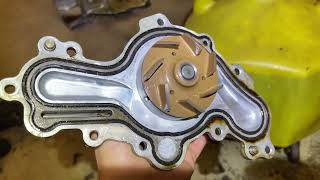
Est. part cost: $400-$800 - Failing Internal Water Pump ⚪ Low Probability The 3.5L/3.7L V6 engines have a water pump that is located inside the engine and driven by the timing chain. A seal failure will leak coolant directly into the oil, destroying the oil's lubricating properties and quickly damaging all timing components.
How to confirm: Inspect the engine oil for a milky, frothy, or 'milkshake' consistency. Also check for unexplained coolant loss from the reservoir. Look for coolant drips from the weep hole, which is located just below the alternator on the passenger side 🎬 See how to identify a leaking internal water pump. of the engine. However, a lack of external leak does not rule out an internal failure.
Typical fix: This requires a full timing chain service, plus replacement of the water pump. It is critical to replace the water pump whenever the timing chain is serviced on these engines to prevent future failure. This is a very expensive repair, often exceeding $2,500-$3,500.
Est. part cost: $150-$300 (for the pump, in addition to timing components)
Rare But Worth Checking
- Failed Camshaft Position Sensor (Bank 2 Exhaust): While possible, the sensor is usually just accurately reporting the timing problem. It's less likely to be the root cause compared to oil-related or mechanical issues. If other codes for the sensor circuit are present (like P0390), it becomes more likely.
- Wiring or Connector Issue: Check the wiring harness and connector for the Bank 2 exhaust VCT solenoid and camshaft sensor for any visible damage, corrosion, or loose pins before replacing parts.
- Failed Cam Phaser: The cam phaser itself can fail or get stuck. This is common on the EcoBoost variants and often produces a startup rattle. Replacement is typically done during a full timing chain job.
Diagnosis Steps
- Verify Oil Level and Condition: Pull the dipstick. If the oil is low, top it off, clear the code, and see if it returns. If the oil is dark, sludgy, or looks milky, perform an oil and filter change immediately. This is the cheapest and easiest first step.
- Scan for Codes: Use an OBD-II scanner to confirm P0019 is the primary code. Note any other codes present, especially misfire or other timing codes.
- Cycle the VCT Solenoid: Following Ford's TSB SSM 49821, use a bidirectional scan tool to command the Bank 2 exhaust VCT solenoid on and off 10 times to attempt to clear any debris. Clear the code and road test. If the code does not return, 🎬 Watch: A full diagnostic walkthrough for the P0019 code. the issue was likely temporary debris.
- Test the Solenoid Circuit: If the code returns, inspect the wiring and connector for the solenoid. If the wiring is good, test the solenoid's resistance with a multimeter (should be around 5-15 ohms).
- Replace the VCT Solenoid: If the test fails or is inconclusive, replace the Bank 2 exhaust VCT solenoid. This is the most common part-related fix and is relatively inexpensive and accessible on the front (radiator side) valve cover.
- Inspect for Mechanical Failure: If the code persists after a new solenoid and clean oil, a deeper mechanical diagnosis is needed. Listen for startup rattle. Check for coolant loss and inspect the weep hole below the alternator for signs of a water pump leak. A crucial step before a major teardown is to cut open the old oil filter and inspect the pleats for excessive metal debris, which indicates catastrophic internal engine wear. At this point, the issue is likely a stretched timing chain, failed phaser, or failing water pump, and professional diagnosis is recommended.
Parts You'll Likely Need
- Engine Variable Valve Timing (VVT) Solenoid
(OEM #AT4Z-6M280-A (or AT4Z-6M280-B, check specific application))— This is the most common point of failure, as identified by Ford's own service bulletins. It gets stuck due to debris in the engine oil.
Trusted brands: Motorcraft, Dorman, SKP
OEM price range: $60-$100
Aftermarket price range: $30-$70 - Timing Chain Kit
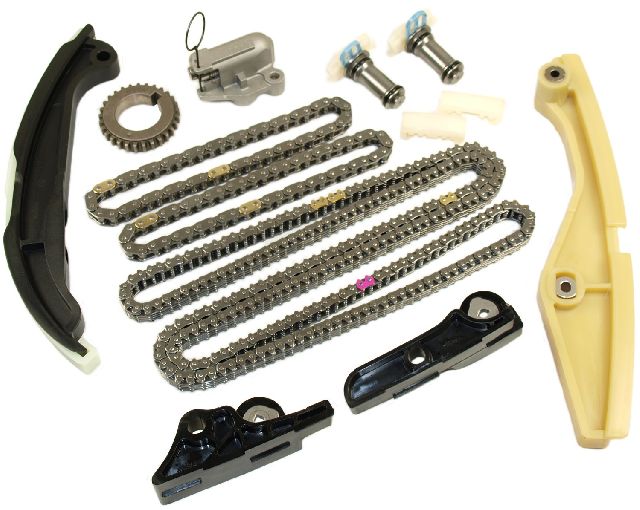
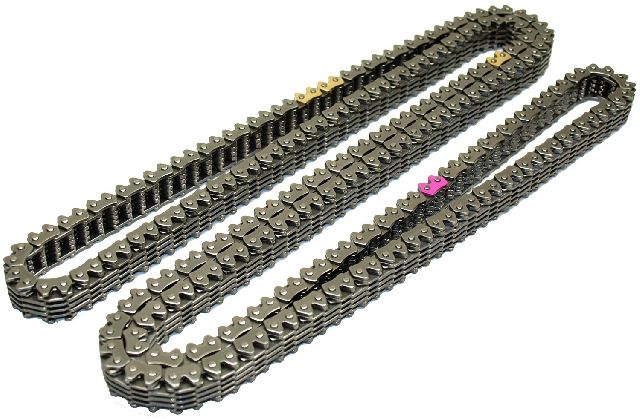
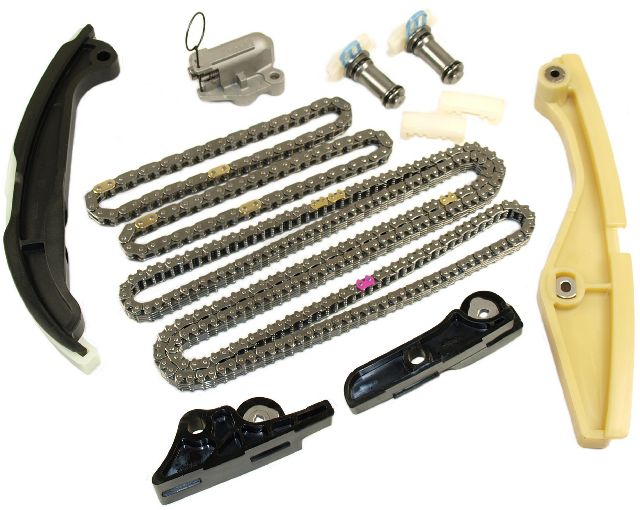
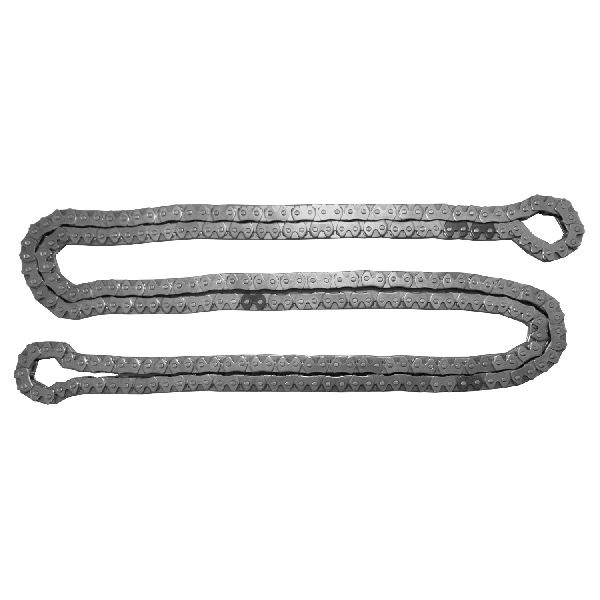
(OEM #AT4Z-6268-A or 7T4Z-6268-A (verify by VIN, multiple revisions exist))— If the chain has stretched due to wear or oil contamination, it must be replaced to restore correct engine timing. A kit is used to replace chain, guides, and tensioners together.
Trusted brands: Motorcraft, Cloyes
OEM price range: $400-$600
Aftermarket price range: $200-$400
Related Codes That Often Appear With This One
- P0018 — This is the correlation code for the intake camshaft on the same bank (Bank 2). If both appear, it strengthens the possibility of a base timing issue like a stretched chain or a failed cam phaser affecting the entire bank.
- P0017 — This is the same exhaust camshaft correlation error, but for Bank 1. Seeing codes for both banks points strongly towards a common cause like the crankshaft sensor, a severely stretched timing chain, or severe oil contamination/pressure issues.
- P0304, P0305, P0306 — These are misfire codes for the cylinders in Bank 2. Incorrect camshaft timing can easily lead to misfires on the affected bank.
Technical Service Bulletins (TSBs) & Recalls
- SSM 49821: Addresses VCT timing codes (including P0019) caused by debris sticking in the VCT solenoid. Recommends a diagnostic procedure to cycle the solenoid before replacement.
Platform-Specific Known Issues
- A known issue with the internal water pump on the 3.5L and 3.7L V6 engines can cause coolant to leak into the engine oil, leading to catastrophic failure. P0019 can be an early warning sign of this oil contamination affecting the VCT system.
- The 3.5L EcoBoost variant is particularly known for timing chain stretch and cam phaser rattle, which can also trigger P0019. Owners report a distinct 'marbles in a can' sound on cold startups.
Mechanic-Grade Diagnostic Values
- VCT Solenoid Internal Resistance — expected: 5 to 15 Ohms. More specifically, 6.9 - 7.9 Ohms is often cited.. Failure: A reading of 0 (short), infinity (open circuit), or significantly outside the expected range.
- Camshaft Position Sensor Signal Voltage (3-wire sensor, Key On) — expected: Approximately 5V on the power/reference wire and 4-5V on the signal wire.. Failure: When a metallic object passes the sensor tip, the signal voltage should drop to 0V. If it doesn't change, the sensor is likely bad.
- Scan Tool Live Data PID: VCT_ADV_ERR (VCT Advance Error) — expected: Close to 0 degrees at hot idle.. Failure: A consistent, significant deviation from 0 degrees (e.g., more than +/- 5 degrees) while at idle indicates the camshaft is not at its commanded position, pointing to a mechanical or hydraulic fault.
Hidden / Shadow Codes Worth Checking
- Mode 6, Test ID $81: This is not a standard DTC but a specific onboard test monitor for the VCT system. It tracks how often and by how much the camshaft angle has deviated from its target position. (see via A professional scan tool capable of displaying Mode 6 data. High counts or values outside the manufacturer's limits on this test can confirm a VCT system problem even before a persistent DTC is set.)
Scan Tool Commands That Help
- Ford IDS, FORScan, or equivalent bidirectional scanner: VCT Solenoid On/Off Test or Output State Control — This is a primary diagnostic step recommended by Ford TSBs (SSM 49821/50067). It should be used after checking oil but before replacing the solenoid. The command cycles the solenoid valve, which can dislodge small debris and temporarily (or sometimes permanently) fix a sticking issue. If cycling the solenoid causes the engine to stumble or changes the timing PIDs, it proves the wiring and PCM driver are working.
Real Owner Repair Stories
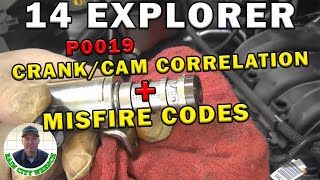
- Rain City Wrench YouTube Channel (2014 Ford Explorer 3.5L (same engine family)) — P0019, running horribly.
❌ Tried (didn't work) Initially, using the Ford IDS scan tool to cycle the VCT solenoid made the engine run fine, but the problem returned.
✅ What actually fixed it The technician suspected a deeper issue after the code returned. Before tearing down the engine, he cut open the oil filter and found it was completely full of metal shavings. This immediately confirmed a catastrophic internal engine failure (likely from the water pump failure contaminating the oil), saving hours of pointless diagnostic labor. The final fix was a complete engine replacement.
"I Checked Everything" — The Actual Cause
- A common pattern for P0019 is replacing the VCT solenoid, having the code return, and then discovering the true cause. In one documented case, after a new solenoid failed to fix the issue, the technician cut open the oil filter and found it saturated with metal particles. This proved the root cause was not the solenoid, but catastrophic internal engine wear that required a full engine replacement, a diagnosis that standard electrical or component tests would have missed.
When the Usual Fixes Don't Work
- While a sticking VCT solenoid is the most common fix, it is critical not to assume this is the answer. In a documented case involving a Ford 3.5L, a technician used a scan tool to cycle the solenoid, which temporarily cleared the P0019 code and made the engine run smoothly. However, the code and symptoms quickly returned. Instead of simply replacing the solenoid again, the technician cut open the oil filter and discovered it was full of metal shavings. This pointed to a catastrophic internal engine failure, likely caused by the known water pump issue contaminating the oil system. This demonstrates that even if the symptoms point directly to a solenoid, a deeper, more severe underlying problem may be the true cause, and inspecting the oil filter for metal can be a crucial, time-saving diagnostic step.
OEM Part Supersession History
Varies by position→Varies by position— Ford uses different VCT solenoid part numbers for different camshaft positions (intake/exhaust) and banks. Using the wrong part can lead to issues.
Heads up: For the 3.5L/3.7L engines, AT4Z-6M280-A is often for the Left Side Exhaust or Right Side Intake, AT4Z-6M280-B for the Left Side Intake, and AT4Z-6M280-C for the Right Side Exhaust. Always verify the correct part number for the specific position (Bank 2 Exhaust for P0019) with the vehicle's VIN.
Model Year Variations Within This Range
- 2016: Ford issued TSB 16-0093 for some 2016 models with the 3.5L engine that exhibit P0019 and other VCT codes at very low mileage (under 2000 miles). The bulletin directs technicians to immediately replace the affected VCT solenoid, suggesting a potential batch of faulty solenoids from the factory for that model year.
Helpful Videos
We Have This Part in Stock



The information in this article is provided for general reference and educational purposes only. Vehicle specifications, procedures, and part compatibility can vary by production date, trim level, and region. Always consult your vehicle's factory service manual and verify part numbers before purchasing or performing repairs. Safety-critical components such as airbags, seat belts, and braking systems should be installed by a qualified professional.
- Ford POLICE INTERCEPTOR SEDAN:
- 🎬 Helpful Videos
- 🛍️ Shop This Part
- What's Unique About the 2015-2019 Ford POLICE INTERCEPTOR SEDAN
- Diagnostic Flowchart
- Symptoms You May Notice
- Most Likely Causes
- Rare But Worth Checking
- Diagnosis Steps
- Parts You'll Likely Need
- Related Codes That Often Appear With This One
- Technical Service Bulletins (TSBs) & Recalls
- Platform-Specific Known Issues
- Mechanic-Grade Diagnostic Values
- Hidden / Shadow Codes Worth Checking
- Scan Tool Commands That Help
- Real Owner Repair Stories
- "I Checked Everything" — The Actual Cause
- When the Usual Fixes Don't Work
- OEM Part Supersession History
- Model Year Variations Within This Range
- 🎟️ Get 5% Off