

P0019 on 2015-2018 Ford Focus: An Impossible Code? What It Really Means
A Ford Focus cannot have a true P0019 code because its inline engine lacks a 'Bank 2'. If your scanner shows P0019, it's likely a tool error or a mis-flagged code for a Bank 1 issue like P0016 or P0017. The most probable cause is a sticking Variable Camshaft Timing (VCT) solenoid due to dirty or low oil, an inexpensive part to replace.
- A 2015-2018 Ford Focus cannot have a P0019 code; it's an error. The engine has no 'Bank 2'.
- The actual problem is almost certainly on Bank 1, likely indicated by codes P0017 or P0016.
- The most probable cause is a sticking VCT solenoid on the exhaust camshaft, often due to dirty or low oil.
- Before attempting major repairs, perform an oil change and consider replacing the inexpensive VCT solenoid.
- Always double-check unexpected codes with a second, high-quality scanner to rule out a tool error.
What's Unique About the 2015-2018 Ford FOCUS
You may see P0019 listed in Ford Technical Service Bulletins (TSBs) for this year range, but those bulletins cover a wide array of Ford and Lincoln vehicles, including V6 and V8 models that do have a Bank 2. For the Focus, the underlying issue described in these TSBs—a VCT solenoid sticking due to debris—is a known problem. However, on a Focus, this fault would trigger a Bank 1 code, such as P0016 or P0017, not P0019.
Diagnostic Flowchart
Tap your situation to follow the diagnostic path that matches what you're seeing on this vehicle.
Symptoms You May Notice
- Check Engine Light (MIL) illuminated
- Rough or unstable idle
- Hesitation or stumbling on acceleration
- Reduced engine power
- Decreased fuel economy
- Engine may be difficult to start
- Rattling noise from the engine
- Searching for Bank 2 sensors or solenoids on the engine. They do not exist on a Ford Focus.
- Replacing the crankshaft position sensor. While possible, it is far less likely to be the cause than VCT system components.
- Assuming the timing chain has failed without first diagnosing the much more common and cheaper VCT solenoids and oil issues.
Most Likely Causes
- Sticking or Failed Variable Camshaft Timing (VCT) Solenoid 🔴 High Probability Multiple Ford TSBs (SSM 48423, SSM 50067, SSM 47170) state that small debris in the oil can cause VCT solenoids to stick. This is the most common failure point for timing correlation codes on this platform.
How to confirm: Use a scan tool to command the solenoid on and off while monitoring engine performance. TSB SSM 48423 specifically advises cycling the affected solenoid 10 times to attempt to clear debris before replacement. A lack of change suggests a stuck solenoid. You can also remove and test the solenoid using a 12V power source to see if it actuates.
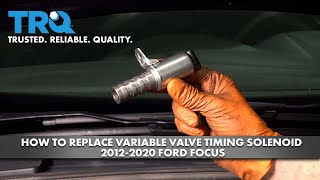
Typical fix: Replace the faulty VCT solenoid for the exhaust camshaft (Bank 1). An oil change at the same time is highly recommended. The process involves removing the valve cover for access.
Est. part cost: $25-$75 - Low or Dirty Engine Oil 🟡 Medium Probability The VCT system is hydraulically operated by engine oil pressure. Low levels or contaminated oil can prevent the phasers from adjusting timing correctly, which is a common cause of VCT-related codes.
How to confirm: Check the oil level on the dipstick and inspect the oil's condition. If it is dark, gritty, or below the minimum level, this could be the cause.
Typical fix: Perform an oil and filter change using the correct viscosity oil (Ford-spec 5W-20 for the 2.0L GDI). Clear the codes and see if the problem returns.
Est. part cost: $40-$80 - Failed Camshaft Position Sensor ⚪ Low Probability
How to confirm: Monitor the sensor's output with a capable scan tool or oscilloscope for a clean square wave. An erratic or non-existent signal points to a failed sensor. You can also test the sensor's resistance with a multimeter, though waveform analysis is more definitive.
Typical fix: Replace the corresponding camshaft position sensor (in this case, the exhaust cam sensor on Bank 1).
Est. part cost: $30-$90 - Stretched Timing Chain or Failed Tensioner ⚪ Low Probability While less common than VCT issues, timing chain stretch can occur at higher mileage (typically over 100,000 miles), causing correlation codes.
How to confirm: This is an involved diagnosis. It may involve listening for chain rattle on startup or removing the valve cover to physically inspect for chain slack. This is best left to a professional.
Typical fix: Replace the timing chain, guides, and tensioners. This is a significant repair.
Est. part cost: $200-$500
Rare But Worth Checking
- Faulty Powertrain Control Module (PCM) or Scan Tool Error: Since a P0019 is not logically possible on this engine, the code itself may be the result of a faulty PCM incorrectly flagging a Bank 1 issue as Bank 2, or a generic scan tool misinterpreting the data. Always try re-scanning with a different, high-quality tool to confirm the code is not actually P0017.
Diagnosis Steps
- Verify the code with a high-quality OBD-II scanner. Confirm if any other codes, especially Bank 1 codes like P0016 or P0017, are present. Acknowledge that P0019 is an anomaly and proceed by diagnosing P0017.
- Check the engine oil level and condition. If low, dirty, or overdue for a change, address this first using Ford-spec 5W-20 oil. Clear the codes and see if the problem returns.
- Inspect the wiring and connectors for the camshaft position sensors and VCT solenoids on Bank 1 for any visible damage, corrosion, or loose connections. Pay special attention to the harness area near the throttle body where it may chafe on the intake manifold, per TSB 18-2062.
- Using a scan tool with live data capability, monitor the desired vs. actual camshaft position angles for the exhaust camshaft on Bank 1 (PID: VCT_EXH_ACT). A significant, lagging discrepancy or large error value (PID: VCT_EXH_ERR) points to a mechanical or hydraulic issue.
- Test the Bank 1 exhaust VCT solenoid. Per TSB SSM 48423, use the scan tool to command the solenoid to cycle 10 times to clear potential debris. If there is no change in engine idle, the solenoid is likely stuck or has failed.
- A common DIY test is to swap the identical intake and exhaust VCT solenoids. If the code changes to P0016, the solenoid is confirmed to be faulty.
- If the solenoid and wiring are good, the issue may be a failing camshaft position sensor. Test its signal with an oscilloscope or replace it.
- If all else fails, the problem may be a mechanical timing issue, such as a stretched timing chain or worn phaser. This requires more advanced diagnostics and likely professional service.
Parts You'll Likely Need
- Variable Camshaft Timing (VCT) Solenoid (Bank 1 Exhaust)
(OEM #CM5Z-6M280-C (For 2.0L GDI, verify fitment))— This is the most common cause of timing correlation issues on this platform, as documented by multiple Ford TSBs. The intake and exhaust solenoids are identical and interchangeable.
Trusted brands: Motorcraft, Delphi, Dorman
OEM price range: $50-$100
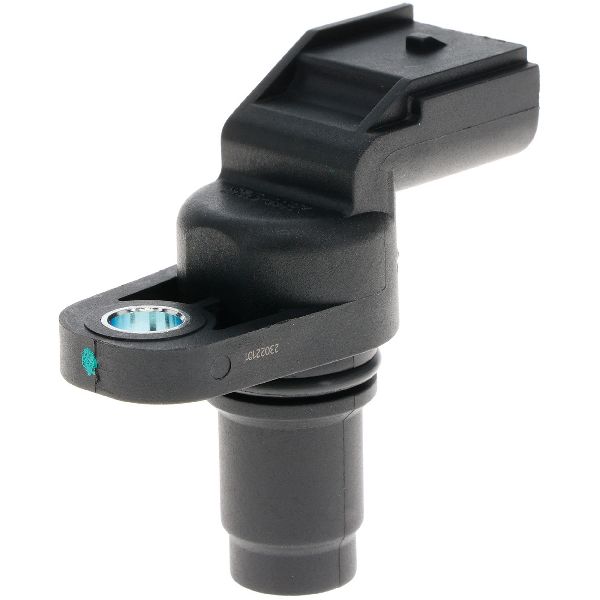
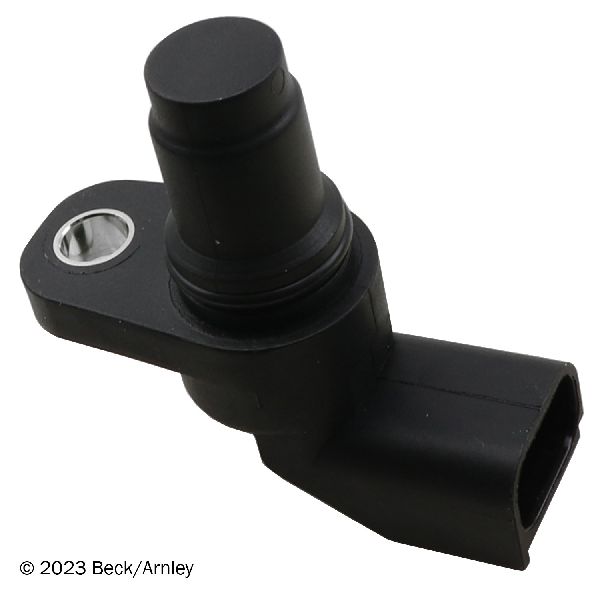
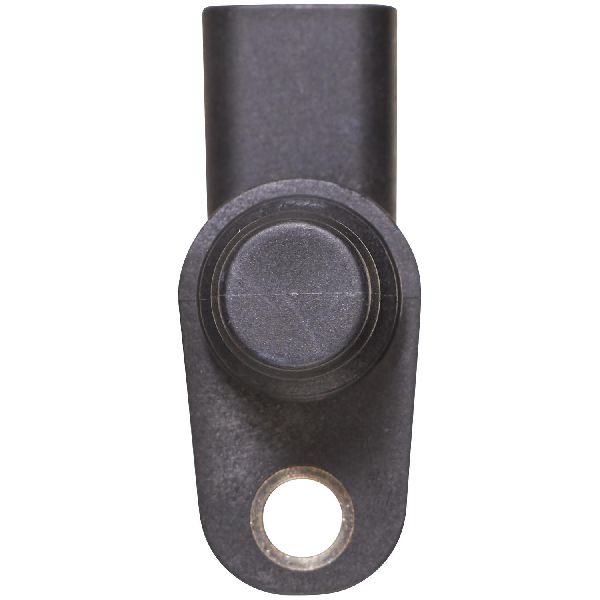
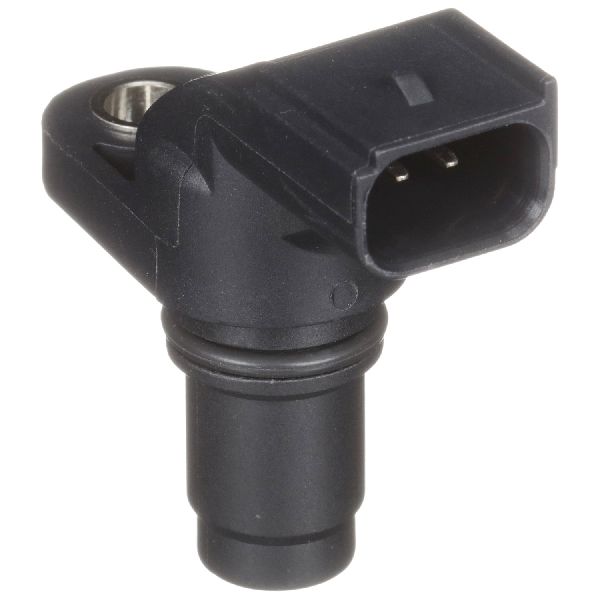
Aftermarket price range: $25-$75 - Camshaft Position Sensor (Bank 1 Exhaust) — If the VCT solenoid is working correctly, a faulty sensor providing bad data to the PCM is the next logical cause.
Trusted brands: Motorcraft, Bosch, NGK/NTK
OEM price range: $60-$120
Aftermarket price range: $30-$90
Related Codes That Often Appear With This One
- P0017 — This is the correct code for 'Crankshaft Position - Camshaft Position Correlation' for the exhaust camshaft ('B') on Bank 1. A P0019 is likely a misinterpretation of this code.
- P0016 — This is the correlation code for the intake camshaft ('A') on Bank 1. VCT issues can sometimes affect both camshafts, or a diagnostic swap of the identical solenoids may cause this code to appear.
- P0014/P0015 — These codes indicate timing is over-advanced (P0014) or over-retarded (P0015) on the exhaust camshaft, pointing directly to a VCT system fault.
Technical Service Bulletins (TSBs) & Recalls
- SSM 54366: Mentions that various 2015-2021 Ford vehicles may exhibit an illuminated MIL with a host of VCT codes, including P0019.
- SSM 48423: States that on 2015-2020 Ford vehicles, codes including P0019 may be due to small debris causing the VCT solenoid to stick. Recommends cycling the solenoid to clear debris before replacement.
- SSM 50067: Similar to the others, notes that 2015-2021 vehicles can throw codes like P0019 due to a sticking VCT solenoid from debris.
- SSM 47170: An earlier TSB for some vehicles that also points to sticking VCT solenoids as the cause for codes including P0019.
Platform-Specific Known Issues
- Ford has issued several Technical Service Bulletins (TSBs) regarding VCT-related trouble codes. The common theme is that small debris from infrequent oil changes can clog the VCT solenoid passages, causing them to stick.
- TSB SSM 48423 specifically recommends a diagnostic step where the technician uses a scan tool to cycle the VCT solenoid 10 times to attempt to clear debris before ordering a replacement part.
Mechanic-Grade Diagnostic Values
- VCT Solenoid Internal Resistance — expected: 5 to 14 Ohms. Some sources specify a tighter range of 6.9-7.9 Ohms.. Failure: A reading of OL (Open Loop/infinite) indicates a broken internal coil. A reading significantly outside the expected range indicates a faulty solenoid.
- VCT Solenoid Connector Voltage (KOEO) — expected: ~12V (Battery Voltage) on the power supply pin.. Failure: No voltage or significantly low voltage points to a problem in the wiring harness, fuse, or PCM power relay, not the solenoid itself.
- Engine Oil Pressure at Idle (for VCT diagnosis) — expected: Minimum 15 PSI at normal operating temperature.. Failure: Pressure below 15 PSI at idle can cause the VCT system to malfunction, leading to timing correlation codes.
Scan Tool Commands That Help
- Ford IDS, FORScan, or other professional scan tool: VCT Solenoid On/Off Bidirectional Control — As per TSB SSM 48423, cycle the suspect solenoid 10 times to dislodge small debris that may be causing it to stick. Monitor engine RPM for changes; a lack of change indicates a stuck or failed solenoid.
- Ford IDS, FORScan, or other professional scan tool: Live Data PID Monitoring: VCT_EXH_ERR / VCT_INT_DIF — Monitor the VCT error PID for the affected camshaft. A large, persistent error value confirms the PCM cannot achieve the commanded timing angle. This helps differentiate between a sensor glitch and a mechanical/hydraulic fault.
- Ford IDS: Misfire Monitor Neutral Profile Correction — After major PCM reprogramming or if false misfires (P0300) accompany timing codes, this procedure may be needed to relearn the crankshaft position sensor profile.
Wiring & Ground Locations
- Harness Chafe Point — On the 2.0L GDI, the engine wiring harness may chafe against the intake manifold, near the throttle body.. A chafe can damage the wiring for the VCT solenoids or camshaft position sensors, causing intermittent or persistent timing codes that won't be fixed by replacing parts. TSBs 15-0036 and 18-2062 specifically address this issue.
- G103 — Engine ground point mentioned in TSB 18-2062. The engine harness must be lifted to access it.. A poor ground connection at this point can affect multiple engine sensors and actuators, leading to a variety of DTCs, including timing correlation faults.
- G107 — Right side of the engine compartment.. This is another key ground point for engine components. Verifying it is clean and tight is a fundamental step in diagnosing any electrical fault.
- VCT Solenoid Connector — On top of the valve cover, connecting to the VCT solenoids.. This is the primary connection point to test for voltage and resistance of the solenoid. The connector or its terminals can become corroded or damaged, mimicking a failed solenoid.
Real Owner Repair Stories
- Ford F150 Forum thread (Ford F-150 with 3.5L EcoBoost (Demonstrates same VCT diagnostic principle)) — Engine misfire/shudder and rough idle after 2+ hours of highway driving, accompanied by code P0022 (Bank 2 intake over-retarded).
❌ Tried (didn't work) Initial diagnosis was uncertain between a bad phaser or a bad VCT solenoid.
✅ What actually fixed it The user captured live data with FORScan showing the VCT difference PID (VCT_INT_DIF2) was slow to react to commanded changes and would overshoot the target, causing instability. Another user confirmed this data pattern was identical to their experience with a bad VCT solenoid, strongly indicating the solenoid was the cause, not the more expensive phaser.
OEM Part Supersession History
CM5Z-6M280-A→CM5Z-6M280-C— Part revision by manufacturer. The -C version is the current replacement.
Heads up: The parts are interchangeable, with the newer part being the recommended replacement.
Helpful Videos


![How to Fix P0017 Engine Code in 6 Minutes [4 DIY Methods / Only $6.81]](https://img.youtube.com/vi/Vcj-f_J2hyo/mqdefault.jpg)


We Have This Part in Stock


The information in this article is provided for general reference and educational purposes only. Vehicle specifications, procedures, and part compatibility can vary by production date, trim level, and region. Always consult your vehicle's factory service manual and verify part numbers before purchasing or performing repairs. Safety-critical components such as airbags, seat belts, and braking systems should be installed by a qualified professional.
- Ford FOCUS:
- 🎬 Helpful Videos
- 🛍️ Shop This Part
- What's Unique About the 2015-2018 Ford FOCUS
- Diagnostic Flowchart
- Symptoms You May Notice
- Most Likely Causes
- Rare But Worth Checking
- Diagnosis Steps
- Parts You'll Likely Need
- Related Codes That Often Appear With This One
- Technical Service Bulletins (TSBs) & Recalls
- Platform-Specific Known Issues
- Mechanic-Grade Diagnostic Values
- Scan Tool Commands That Help
- Wiring & Ground Locations
- Real Owner Repair Stories
- OEM Part Supersession History
- 🎟️ Get 5% Off