

P0019 on 2015-2019 Ford Explorer Police Intercept: Crank-Cam Correlation Causes and Fixes
P0019 on a Ford Explorer Police Intercept most often indicates a stuck Bank 2 exhaust VCT solenoid due to dirty oil, or a more serious timing chain issue. A solenoid replacement may cost $300-$500, while a full timing chain job, which should include the internal water pump, can exceed $2,500. This code can be an early warning of a failing water pump and should be addressed immediately.
- P0019 on this vehicle points to a timing issue with the exhaust camshaft on the radiator-side of the engine.
- Always check your oil first. Low or dirty oil is the most common trigger for this code.
- The most likely failed part is the Bank 2 exhaust VCT solenoid, which gets stuck from oil debris.
- This code can be a serious warning of a failing internal water pump leaking coolant into your oil. Check for milky oil immediately.
- If a timing chain replacement is needed, the water pump must also be replaced to prevent a repeat failure.
What's Unique About the 2015-2019 Ford EXPLORER POLICE INTERCEPT

The 3.5L and 3.7L V6 engines used in this generation of Explorer have a critical design flaw: the water pump is located inside the engine and is driven by the primary timing chain. When this internal pump's seals fail, it can leak coolant directly into the engine oil, contaminating it. This contaminated, 'milky' oil loses its lubricating properties and quickly damages sensitive timing components like the VCT phasers, hydraulic tensioners, and the chain itself, often leading to timing correlation codes like P0019. Therefore, this code can be an early warning sign of a failing water pump that requires immediate and serious attention to avoid catastrophic engine failure.
Diagnostic Flowchart

Tap your situation to follow the diagnostic path that matches what you're seeing on this vehicle.
Symptoms You May Notice
- Illuminated Check Engine Light
- Rough, uneven, or fluctuating idle.
- Hesitation or stumbling during acceleration.
- Noticeable loss of engine power.
- Reduced fuel economy.
- Engine may run rough, especially above idle.
- Misfires felt and potentially logged for Bank 2 cylinders (P0304, P0305, P0306).
- Rattling noise from the engine, especially on cold startup, indicating a loose timing chain.
- Replacing the camshaft position sensor without first checking the oil and VCT solenoid.
- Replacing the crankshaft position sensor, which rarely fails for this specific code.
- Performing a full timing chain replacement without also replacing the internal water pump, leading to a repeat failure from coolant contamination shortly after.
- Replacing only the VCT solenoid when the root cause is a stretched chain or low oil pressure, resulting in the code returning.
Most Likely Causes

- Low, Dirty, or Incorrect Viscosity Engine Oil 🔴 High Probability The Variable Camshaft Timing (VCT) system is hydraulic and highly sensitive to oil pressure and cleanliness. Sludge or debris can easily clog the small passages and screens in the VCT solenoids, causing them to stick.
How to confirm: Check the oil level on the dipstick and inspect its condition. If it's low, dark, sludgy, or has a milky/frothy appearance (indicating coolant), this is a likely contributor.
Typical fix: Perform an oil and filter change using the manufacturer-specified grade of oil (e.g., Motorcraft Synthetic Blend 5W-20 or 5W-30 depending on engine). Clear codes and see if the issue returns.
Est. part cost: $40-$80 - Sticking or Failed VCT Solenoid (Bank 2 Exhaust) 🔴 High Probability Ford has issued Technical Service Bulletin SSM 50067 noting that small debris in the oil can cause VCT solenoids to stick, leading to this code. This is the most common initial point of failure.
How to confirm: A mechanic can use a professional scan tool to command the solenoid on and off while monitoring camshaft position data to see if it responds correctly. TSB SSM 50067 specifically recommends cycling the solenoid 10 times with a scan tool to try and clear debris before replacement. A DIY method is to swap the Bank 2 exhaust and intake solenoids to see if the code changes to P0018.
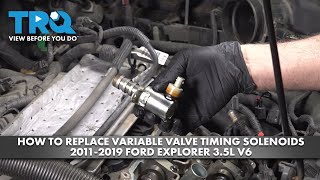
Typical fix: Replace the Bank 2 exhaust VCT solenoid. This requires removing the front valve cover (radiator side) to access the part. 🎬 Watch: How to replace the VVT solenoids yourself.
Est. part cost: $30-$90 - Stretched Timing Chain or Failed Timing Components 🟡 Medium Probability At higher mileage (often over 100,000 miles), the primary timing chain can stretch beyond the tensioner's ability to compensate. This is often accelerated by the failure of the internal water pump, which contaminates the oil and ruins the plastic guides and hydraulic tensioner.
How to confirm: A distinct rattling noise on cold startups is a strong indicator. A mechanic can use a scan tool to monitor cam/crank deviation PIDs, but definitive diagnosis requires significant engine disassembly to physically inspect the chain for slack and check timing marks.
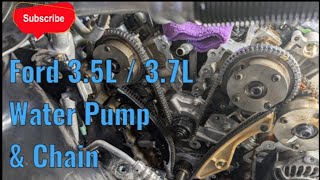
Typical fix: Replace the primary and secondary timing chains, all guides, tensioners, and camshaft phasers. The internal water pump MUST be replaced at the same time. This is a very labor-intensive job.
Est. part cost: $400-$900 for a full kit - Failing Internal Water Pump 🟡 Medium Probability The transverse 3.5L/3.7L engines have a timing-chain-driven water pump inside the timing cover. When its internal bearing or seals fail, coolant can either leak externally from a dedicated weep hole or, more catastrophically, leak internally directly into the oil pan, destroying the oil's lubricating properties and causing rapid wear on all timing components.
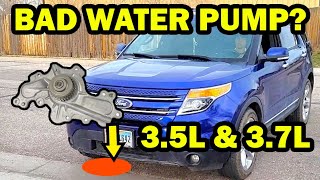
How to confirm: Check for milky, frothy oil on the dipstick or oil cap. With a mirror and flashlight, inspect the weep hole on the passenger side of the engine block, located just behind/below the alternator, for signs of dried coolant crust or an active drip. 🎬 See how to check for water pump leaks in the RF corner.
Typical fix: This requires a full timing chain job to access and replace the water pump. All timing components should be replaced at the same time due to likely damage from oil contamination.
Est. part cost: $500-$1000 (includes timing kit and pump)
Rare But Worth Checking
- Damaged or Slipped Camshaft Reluctor Ring: In rare cases, the toothed ring on the end of the camshaft that the sensor reads can physically move or become damaged. This will cause a persistent correlation code even if all sensors, solenoids, and timing components are new.
- Failed Camshaft Position Sensor: While possible, the sensor itself is less likely to fail than the VCT solenoid for a correlation code. A failing sensor will typically throw other circuit-related codes (e.g., P0345, P0349) as well.
- Misaligned Cam Phaser During Timing Job: As documented in a forum post, the dowel pin on the camshaft phaser and the alignment hole in the camshaft can be the same size, making it possible to install the phaser incorrectly during a timing chain replacement, which will immediately set a P0019 code.
Diagnosis Steps
- Check Engine Oil: Verify the oil level is correct and the oil is clean. If low, dirty, or milky, perform an oil and filter change and clear the codes to see if the problem returns. A milky appearance indicates coolant contamination and points to a failing water pump.
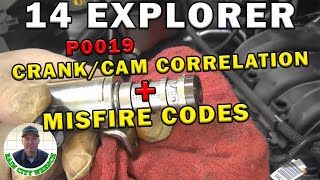
- Scan Tool Analysis: Connect a professional scan tool to read the code and view live data. Monitor the desired vs. actual positions for the Bank 2 exhaust camshaft (PIDs: VCT_EXH_CMD2 and VCT_EXH_ACT2) and the error PID (VCT_EXH_ERR2). A large, persistent error at idle indicates a problem. 🎬 Watch: A professional walkthrough of P0019 diagnosis and repair.
- Test the VCT Solenoid: Per TSB SSM 50067, use the scan tool's bidirectional controls to command the Bank 2 exhaust VCT solenoid on and off 10 times. Listen for a clicking sound and watch the live data to see if the camshaft angle changes and returns to zero. A non-responsive or slow-to-respond solenoid is faulty.
- Inspect for Coolant Contamination: Carefully inspect the oil on the dipstick and under the oil cap for a milky, 'milkshake' appearance. Use a mirror to inspect the weep hole on the engine block behind the alternator for signs of a coolant leak, which confirms a failing internal water pump.
- Inspect Wiring: Check the wiring harness and connector for the Bank 2 exhaust VCT solenoid and camshaft position sensor for any damage, corrosion, or loose connections.
- Mechanical Timing Inspection: If all else fails, this indicates a probable mechanical timing issue. The engine's front cover must be removed to inspect the timing chain for slack, check the alignment of timing marks, and inspect the guides and tensioners for wear. This is a job for a professional.
Parts You'll Likely Need
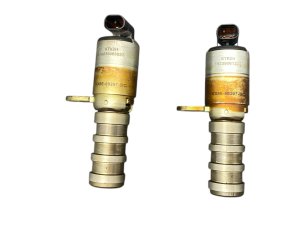
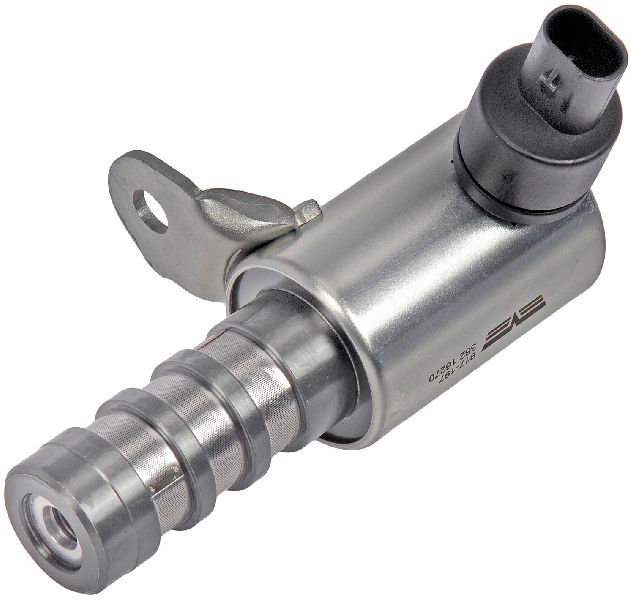
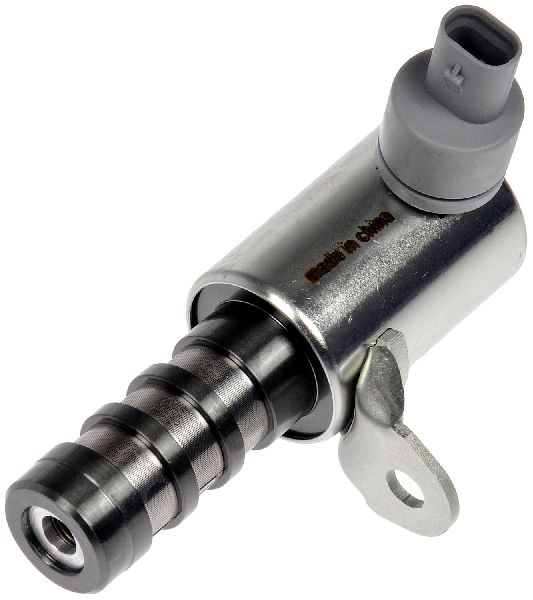
- Engine VVT Solenoid (Bank 2 Exhaust)
(OEM #AT4Z-6M280-C or AT4Z-6M280-B)— This is the most common part to fail for P0019, often getting stuck due to oil debris.
Related Codes That Often Appear With This One
- P0018 — This is the correlation code for the intake camshaft on the same bank (Bank 2). If both P0018 and P0019 are present, it strongly suggests a base timing issue affecting the entire bank, like a stretched chain or jumped timing.
- P0025 — This code indicates the Bank 2 exhaust camshaft is over-retarded. It is closely related to P0019 and often points directly to a stuck VCT solenoid or failing phaser.
- P0300, P0304, P0305, P0306 — These are random or specific misfire codes for the cylinders on Bank 2. Incorrect exhaust cam timing disrupts engine breathing and can easily cause misfires on the affected bank.
Technical Service Bulletins (TSBs) & Recalls

- SSM 50067: Notes that P0019 (and other VCT codes) on 2015-2021 Ford/Lincoln vehicles may be due to small debris causing the VCT solenoid to stick. It advises technicians to use a scan tool to cycle the affected solenoid 10 times to attempt to clear the debris before replacing the part.
- TSB 16-0093: Specifically mentions that various 2016 Ford models, including the Explorer with the 3.5L engine, can exhibit codes like P0019 at very low mileage (under 2000 miles), suggesting an immediate replacement of the affected VCT solenoid.
Platform-Specific Known Issues
- Internal Water Pump Failure: The most significant known issue for the transverse Ford 3.5L/3.7L engines. The water pump is located inside the timing cover and driven by the timing chain. When its seal fails, it can leak coolant into the oil pan, destroying the oil's lubricating properties and causing rapid wear of the timing chains, guides, and phasers, which directly leads to codes like P0019. Any timing job on this engine must include a water pump replacement as a preventative measure.
Mechanic-Grade Diagnostic Values
- VCT Solenoid Internal Resistance — expected: 6.9 to 7.9 Ohms at 68°F (20°C). Failure: A reading of 0 ohms (short) or infinite/OL (open circuit).
- VCT Solenoid Connector Voltage (KOEO) — expected: Approximately 12.6V (Battery Voltage). Failure: Low or no voltage points to a wiring, fuse, or PCM relay issue, not the solenoid itself.
- Live Data PID: VCT_EXH_ERR2 (or VCT_EXH_ERR_B2) — expected: Close to 0° at idle, with an acceptable tolerance of +/- 5°.. Failure: A sustained, large value (e.g., -50° as seen in one case) indicates a significant timing correlation error.
- Camshaft Position Sensor Signal Voltage — expected: Typically fluctuates between 0.5V and 4.5V.. Failure: Values outside this range may indicate a faulty sensor or wiring issue.
Hidden / Shadow Codes Worth Checking
- Mode $06, VCT Data: Ford's diagnostic system includes VCT statistical data within Mode $06. This provides more in-depth information on timing performance and anomalies than a standard trouble code. (see via Ford IDS (Integrated Diagnostic System) or an advanced scan tool capable of reading manufacturer-specific Mode $06 data.)
- PID: VCT_EXH_ERR_B2: This is a manufacturer-specific Parameter ID (PID), not a DTC. It shows the real-time difference in degrees between the PCM's commanded exhaust cam angle and the actual measured angle for Bank 2. It is the most direct way to measure the fault that triggers P0019. (see via Ford IDS or a high-end scan tool with Ford-specific live data capabilities.)
Scan Tool Commands That Help
- Ford IDS (or equivalent): VCT Solenoid On/Off Command (Actuator Test) — As recommended by Ford TSBs, this command manually cycles the solenoid. It can help dislodge small debris (potentially fixing the issue) and confirms if the solenoid is mechanically and electrically functional. Activating it at idle should cause the engine to stumble or stall; no change indicates a stuck solenoid or oil flow blockage.
- Ford IDS (or equivalent): Data Logger with Histogram Mode — To diagnose intermittent timing issues. A technician can record the VCT error PIDs over a drive cycle. The histogram provides a visual summary of how often and how severe the timing error is, helping to differentiate a minor stick from a persistent mechanical fault.
- Ford IDS (or equivalent): Power Balance Test — If the timing issue is causing misfires, the power balance graph can help confirm which cylinders are affected, verifying the problem is isolated to Bank 2 as indicated by the P0019 code.
Wiring & Ground Locations

- Camshaft Position Sensors (x4) — On the 3.7L V6 in the Police Interceptor Utility, all four cam position sensors are located on the driver's side of the engine, at the rear of the cylinder heads, underneath the air intake hose.. This is a specific, non-intuitive location. Bank 2 (front/radiator side) sensors are on the driver's side, along with Bank 1 sensors. From left to right (facing the engine from the front), the layout is reportedly: Bank 2 Exhaust (Sensor B), Bank 2 Intake (Sensor A), Bank 1 Intake (Sensor A), Bank 1 Exhaust (Sensor B).
- C1581 — This is the connector for the Bank 2 VCT solenoid, located on the front-facing valve cover (radiator side).. This is the primary electrical connection to inspect for corrosion or damage when diagnosing a faulty VCT solenoid for code P0019.
- PCM Connectors C175B / C175E — These are the main Powertrain Control Module connectors, typically located in the engine bay near the firewall.. If a solenoid and its local wiring test good, pin-out testing at these connectors is the next step to find a break or short in the harness between the PCM and the component.
Real Owner Repair Stories
- Ford Truck Enthusiasts Forum (2012 Ford F-150 3.5L EcoBoost (shares timing design with Explorer engines)) — P0019 code, delayed acceleration, and overheating immediately after a DIY timing chain replacement.
❌ Tried (didn't work) Replacing the Bank 2 exhaust Camshaft Position Sensor (CPS)., Replacing the Bank 2 exhaust VCT solenoid (the old one failed a bench test, but the new one didn't fix the code)., Tearing down and re-doing the entire timing job a second time.
✅ What actually fixed it The user gave up and took it to a professional shop. The shop found the cam phaser was installed incorrectly on the camshaft. The user noted that the dowel pin hole and oil passages on the phaser are the same size, making misalignment easy. The final fix was correct installation of new cam phasers and tensioners. - Ford Truck Enthusiasts Forum (2011 Ford F-350 6.2L V8 (different engine, but demonstrates a rare VCT failure mode)) — Persistent P0019 code with misfires on Bank 2 (P0305, P0306, P0307, P0308) and rough idle.
❌ Tried (didn't work) Initial diagnosis pointed towards replacing parts.
✅ What actually fixed it The owner removed the driver's side valve cover and the VCT phaser (sprocket assembly) without removing the timing cover. He disassembled the phaser, cleaned it thoroughly (suspecting small burrs were causing it to jam internally), cleaned the screen in the camshaft, and reassembled everything. This 'free fix' resolved the code without any new parts.
OEM Part Supersession History
Varies (e.g., AT4Z-6M280-B)→AT4Z-6M280-C or AT4Z-6M280-A— Part revision and consolidation.
Heads up: EXTREME CAUTION: There is significant conflicting information from OEM and aftermarket parts suppliers regarding which part number fits which camshaft position. For P0019 (Bank 2 Exhaust), sources variously claim the correct part is AT4Z-6M280-C, AT4Z-6M280-A, or that -C is for Bank 1. The solenoids are not interchangeable. Verifying the correct part number by VIN with a Ford dealer is critical to avoid incorrect repairs.
Model Year Variations Within This Range
- 2017-2019 (EcoBoost): For the related 3.5L EcoBoost engine, a significant redesign occurred for the 2017 model year, introducing a second-generation engine with new turbochargers, a dual-injection fuel system, and the 10-speed automatic transmission. While the core VCT system concept is similar, PCM software and diagnostic strategies may differ from the 2015-2016 models.
Helpful Videos
Used OEM Parts in Stock
New Aftermarket Parts Available


The information in this article is provided for general reference and educational purposes only. Vehicle specifications, procedures, and part compatibility can vary by production date, trim level, and region. Always consult your vehicle's factory service manual and verify part numbers before purchasing or performing repairs. Safety-critical components such as airbags, seat belts, and braking systems should be installed by a qualified professional.
- Ford EXPLORER POLICE INTERCEPT:
- 🎬 Helpful Videos
- 🛍️ Shop This Part
- What's Unique About the 2015-2019 Ford EXPLORER POLICE INTERCEPT
- Diagnostic Flowchart
- Symptoms You May Notice
- Most Likely Causes
- Rare But Worth Checking
- Diagnosis Steps
- Parts You'll Likely Need
- Related Codes That Often Appear With This One
- Technical Service Bulletins (TSBs) & Recalls
- Platform-Specific Known Issues
- Mechanic-Grade Diagnostic Values
- Hidden / Shadow Codes Worth Checking
- Scan Tool Commands That Help
- Wiring & Ground Locations
- Real Owner Repair Stories
- OEM Part Supersession History
- Model Year Variations Within This Range
- 🎟️ Get 5% Off