

P0019 on 2015-2020 Ford Explorer: Crank-Cam Correlation Fixes
P0019 on a 2015-2020 Ford Explorer, especially with the 3.5L V6, most often points to a failing VCT solenoid or a stretched timing chain. A VCT solenoid is a relatively inexpensive part, but a full timing chain replacement is a major repair costing over $2,000. On the 3.5L, this code can be an early warning of a failing internal water pump, which can cause catastrophic engine damage if not addressed.
- P0019 means the exhaust camshaft on Bank 2 (radiator side on a 3.5L V6) is out of sync with the crankshaft.
- Always check your oil level and condition first; low or dirty oil is a common cause of VCT system problems.
- The two most likely parts to fail are the Bank 2 exhaust VCT solenoid (a cheaper fix) or the timing chain itself (an expensive fix).
- On 3.5L V6 engines, this code can be a symptom of a failing internal water pump leaking coolant into the oil. This is a severe issue that requires immediate attention.
- Due to the complexity of diagnosing and repairing timing components, this code almost always requires professional diagnosis and repair.
What's Unique About the 2015-2020 Ford EXPLORER

The 2015-2019 fifth-generation Explorer with the 3.5L V6 (both standard and EcoBoost) has a well-documented history of timing chain issues. A critical design element is the internal water pump, which is driven by the timing chain. When the pump's seal fails, it can leak coolant directly into the engine oil, compromising lubrication and rapidly destroying timing components like chains, guides, and tensioners. This makes P0019 a particularly serious code on this platform, as it can be an early indicator of a failing water pump leading to catastrophic engine damage. Owners on forums frequently discuss this specific failure mode.
Diagnostic Flowchart
Tap your situation to follow the diagnostic path that matches what you're seeing on this vehicle.
Generation note: This range covers the end of the 5th generation (2015-2019) and the first year of the 6th generation (2020). The 3.5L V6 engines, which are most prone to this issue due to the internal water pump design, were only available in the 2015-2019 models. The 2020 Explorer uses different engines (2.3L I4, 3.0L V6, 3.3L V6), but the underlying cause of a VCT system fault can still trigger this code.
Symptoms You May Notice

- Check Engine Light is on
- Rough or erratic idle, sometimes described as 'jumping'
- Engine hesitates or stumbles on acceleration
- Reduced engine power
- Worse than normal fuel economy
- Rattling noise from the front of the engine, especially on a cold start, which may indicate a stretched timing chain
- Engine may stall when coming to a stop
- Replacing only the camshaft position sensor without checking the VCT solenoid or mechanical timing. The sensor is often just reporting the problem, not the cause.
- Replacing the crankshaft position sensor. While possible, it's far less likely to be the cause of a bank-specific correlation code.
- Replacing VCT solenoids when the root cause is a stretched timing chain or failing water pump contaminating the oil.
Most Likely Causes

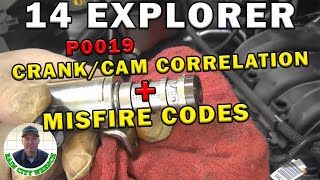
- Stretched Timing Chain or Worn Timing Components 🔴 High Probability The 3.5L V6 is known for timing chain stretch over 100,000 miles. The issue is often accelerated by the failure of the internal, timing-chain-driven water pump, which contaminates the oil with coolant. Forum users report dealers confirming stretched chains via diagnostics after a P0019 code appears. 🎬 Watch: A complete P0019 diagnosis and repair walkthrough.
How to confirm: A mechanic can check for excessive slack in the timing chain, often requiring removal of the valve cover or front engine cover. A scan tool may also show a persistent large deviation in cam/crank correlation PIDs (e.g., VCT_EXH_ERR_B2).
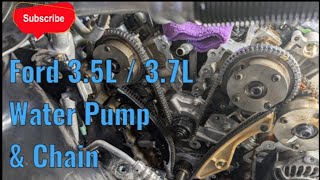
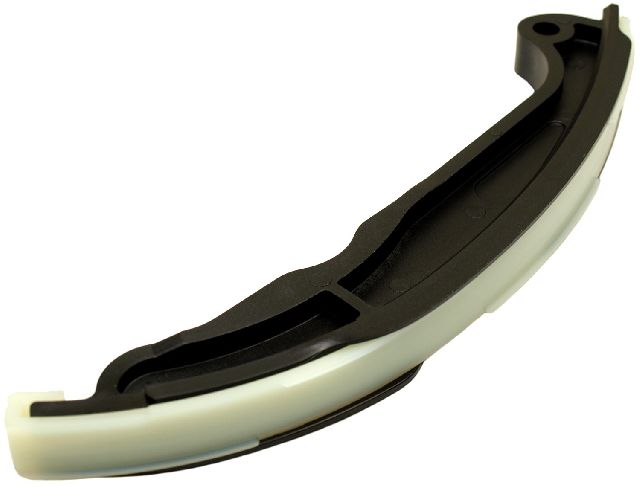
Typical fix: Replace the timing chains, tensioners, guides, and phasers. The water pump should always be replaced at the same time. 🎬 Watch: Step-by-step internal water pump and timing chain replacement. This is a significant repair, often costing $2,000-$3,500 at a shop.
Est. part cost: $350-$700 for a complete kit. - Faulty Variable Camshaft Timing (VCT) Solenoid 🔴 High Probability As highlighted in multiple Ford Technical Service Bulletins (TSBs), these solenoids can get stuck due to small debris in the engine oil. This prevents proper oil flow to the cam phaser, causing the timing to be incorrect.
How to confirm: A technician can command the solenoid on and off with a diagnostic scan tool to see if it responds and if the cam angle changes. TSB SSM 50067 suggests cycling the solenoid 10 times with a scan tool to try and clear debris before replacement. It can also be removed and tested for resistance (spec is 6.9-7.9 Ohms at 68°F/20°C) or blockages.
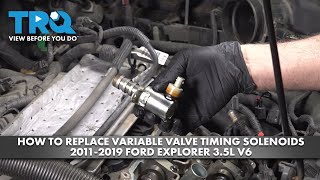
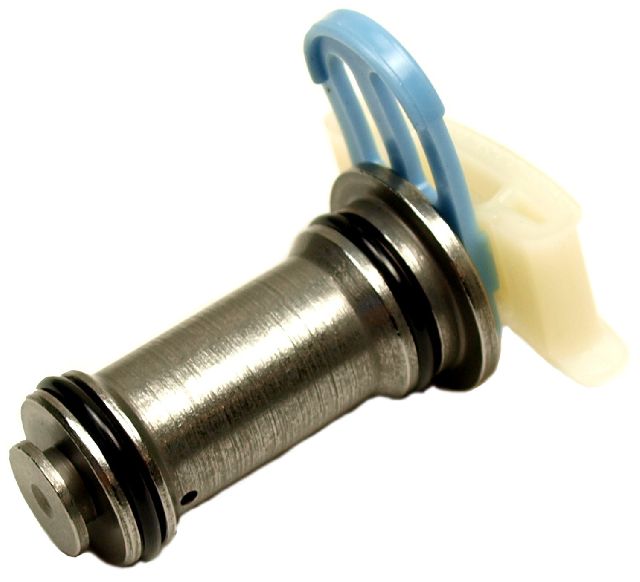
Typical fix: Replace the Bank 2 exhaust VCT solenoid. On the Explorer, this requires removing the valve cover for access. 🎬 See how to replace the VCT solenoids yourself.
Est. part cost: $40-$100 - Low or Dirty Engine Oil 🟡 Medium Probability The entire VCT system relies on clean oil at the correct pressure to function. Sludge or low oil levels can starve the VCT solenoids and cam phasers, preventing them from adjusting cam timing correctly. Using the wrong oil viscosity can also cause issues.
How to confirm: Check the oil level on the dipstick and inspect its condition. If it's low, black, or sludgy, this is a likely contributor. An oil change is the first and cheapest diagnostic step.
Typical fix: Perform an oil and filter change using the manufacturer-specified grade of oil (e.g., Motorcraft 5W-20 Synthetic Blend).
Est. part cost: $50-$100 - Failing Camshaft Phaser ⚪ Low Probability The phaser is the gear that actually rotates the camshaft. It can fail internally, getting stuck in one position, even if the VCT solenoid is working correctly. This can happen due to oil contamination or simple mechanical failure.
How to confirm: This is usually diagnosed after confirming the VCT solenoid and timing chain are good. A scan tool might show the cam angle stuck at a high value (e.g., 50 degrees) at idle, even when the solenoid is not being commanded.
Typical fix: Replace the Bank 2 exhaust camshaft phaser. This is typically done during a full timing chain job, as the labor is nearly identical.
Est. part cost: $100-$250 - Faulty Camshaft Position Sensor ⚪ Low Probability
How to confirm: Test the sensor's output with a multimeter or oscilloscope; typical voltage is between 0.5-4.5V. Usually, a bad sensor will trigger a specific sensor circuit code (like P0390 or P0391) in addition to a correlation code. It's more common for the sensor to be correctly reporting a mechanical timing issue.
Typical fix: Replace the Bank 2 exhaust camshaft position sensor.
Est. part cost: $30-$80
Rare But Worth Checking
- Slipped or Damaged Tone Ring: The tone ring on the camshaft or crankshaft, which the sensors read, can sometimes break or slip, causing incorrect readings even if all other components are functional.
- Clogged Oil Passages: Severe engine sludge can block the small oil passages leading to the VCT solenoids and phasers, preventing them from working even if the parts themselves are good. An engine flush may help but is sometimes insufficient and can carry risks.
Diagnosis Steps
- Check engine oil level and condition. Top off or change if necessary. This is the first and most crucial step, as the VCT system is dependent on oil pressure and cleanliness.
- Use an OBD-II scanner to check for any other pending or stored trouble codes. Codes like P0018, P0025, or misfire codes can provide valuable diagnostic clues.
- Using a scan tool with live data, monitor the desired vs. actual camshaft position for Bank 2 exhaust (PIDs: VCT_EXH_CMD_B2, VCT_EXH_ACT_B2) and the error (PID: VCT_EXH_ERR_B2). A large, persistent difference indicates a problem. The error PID should be close to 0°, with a tolerance of +/- 5°.
- Inspect the wiring and connector for the Bank 2 exhaust camshaft position sensor and VCT solenoid for any damage or corrosion.
- As per TSB SSM 50067, use the scan tool's bidirectional controls to command the Bank 2 exhaust VCT solenoid on and off (or cycle it 10 times). Listen for a clicking sound from the solenoid and watch the live data to see if the cam angle changes. If there is no click, the solenoid is likely faulty or the circuit is open.
- If the solenoid clicks but the timing doesn't change (or is stuck), the issue could be a clogged solenoid, a bad phaser, or low oil pressure to the phaser. A stuck phaser may show an actual angle of 50° at idle.
- Remove the VCT solenoid (requires valve cover removal) and inspect its screens for sludge or debris. You can also bench test it by applying 12V to check for actuation and measure its resistance, which should be 6.9-7.9 Ohms at 68°F (20°C).
- If solenoids and sensors test good, the next step is mechanical inspection. This involves removing the valve cover to inspect the camshaft phaser and front engine cover to inspect the timing chain for slack and guide/tensioner wear.
Parts You'll Likely Need
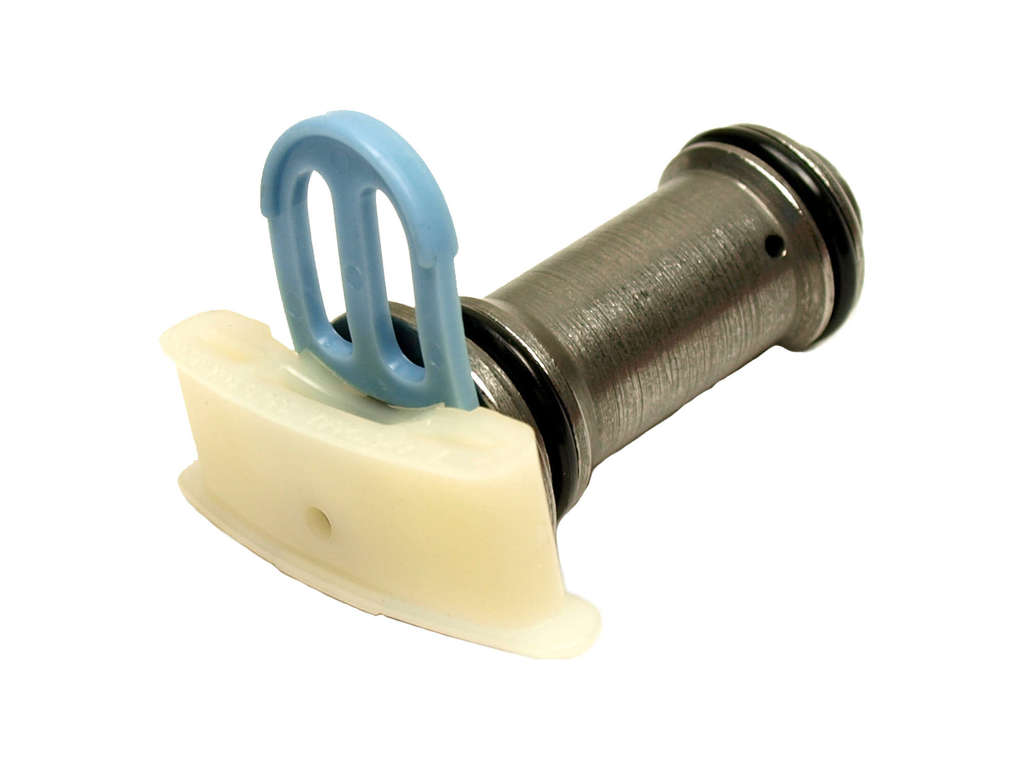
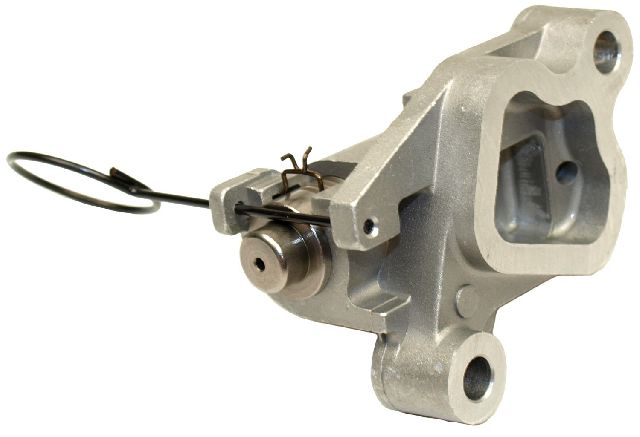
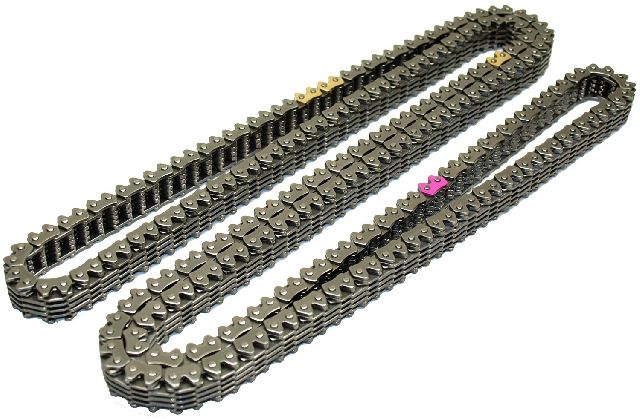
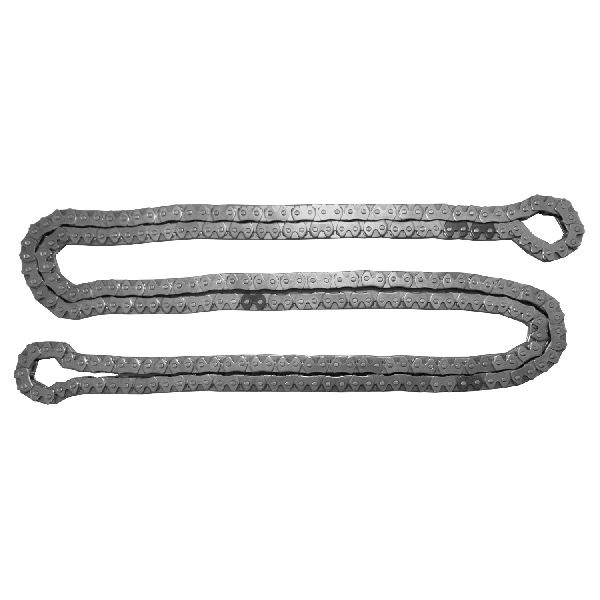
- Timing Chain Kit
(OEM #BL3Z-6268-A (Kit often paired with water pump))— This is the definitive fix for a stretched chain, worn guides, or bad tensioners, which are common root causes on the 3.5L V6. A complete kit should always be used. It is highly recommended to replace the internal water pump at the same time.
Trusted brands: Motorcraft, Cloyes
OEM price range: $500-$800
Related Codes That Often Appear With This One
- P0018 — This code is for the Bank 2 intake camshaft ('A' sensor). If both P0018 and P0019 are present, it strongly suggests a base timing issue affecting the entire bank, like a stretched chain or jumped timing.
- P0025 — This code indicates the Bank 2 exhaust camshaft is over-retarded. It's closely related to P0019 and often points directly to a stuck VCT solenoid or failing phaser.
- P0300, P0304, P0305, P0306 — These are random or specific misfire codes for cylinders on Bank 2 (cylinders 4, 5, and 6). Incorrect cam timing disrupts the air/fuel mixture and can cause misfires on the affected bank.
Technical Service Bulletins (TSBs) & Recalls
- SSM 50067: Notes that various VCT codes including P0019 can be caused by small debris causing the VCT solenoid to stick. It advises using a scan tool to cycle the affected solenoid 10 times to attempt to clear the debris before replacing any parts.
- TSB 16-0093: Mentions that some 2016 Explorer models (among others) with the 3.5L engine may exhibit P0019 and other VCT codes.
- General VCT TSBs (SSM 48423, SSM 47170): Similar to SSM 50067, these earlier bulletins also point to debris in the oil as a common cause for stuck VCT solenoids across many Ford/Lincoln models and years. [NHTSA]
Platform-Specific Known Issues
- Internal Water Pump Failure (2015-2019 3.5L V6): The most significant issue for this platform. The water pump is located inside the engine and is driven by the primary timing chain. When its internal seal fails, it leaks coolant into the oil pan. This contamination destroys the oil's lubricating properties, leading to rapid wear of the timing chains, guides, and phasers, causing codes like P0019. Any timing chain job on this engine must include a water pump replacement.
- Sticking VCT Solenoids: Ford has issued numerous Technical Service Bulletins (TSBs) regarding VCT solenoids sticking due to small debris in the oil. This is a very common cause for a range of VCT-related codes, including P0019. (Bulletins #SSM 50067, #SSM 48423, #SSM 47170)
Mechanic-Grade Diagnostic Values
- VCT Solenoid Resistance — expected: 6.9 - 7.9 Ohms at 68°F (20°C). Failure: A reading of zero, infinity (OL), or significantly outside the specified range indicates a faulty solenoid coil.
- Live Data PID: VCT_EXH_ERR_B2 (VCT Advance Error Bank 2) — expected: Should hover around 0° at idle.. Failure: A consistent reading greater than +/- 5° for an excessive amount of time indicates a correlation problem. A reading of -50° was observed in one case with a stuck phaser.
- Live Data PID: VCT_EXH_ACT_B2 (VCT Exhaust Actual Angle Bank 2) — expected: Should be near 0° at idle.. Failure: Being stuck at a high value, such as 50°, at idle strongly suggests a stuck cam phaser or a completely failed VCT solenoid.
- Camshaft Position Sensor Voltage — expected: Typically 0.5V - 4.5V. Failure: Voltage outside of this range can indicate a sensor or wiring issue.
Hidden / Shadow Codes Worth Checking
- Mode 6 Data: Mode 6 provides statistical data and test results for non-continuously monitored systems, including the VCT system. It can show test values and limits for cam/crank correlation that can help confirm a borderline failure before a DTC is set permanently. (see via Accessible through advanced scan tools, including the Ford Integrated Diagnostic System (IDS).)
Scan Tool Commands That Help
- Ford IDS (or equivalent advanced scan tool): VCT Solenoid Bidirectional Control / Output State Control — This command allows a technician to manually cycle the VCT solenoid while the engine is running. Watching the
VCT_EXH_ACT_B2PID while pulsing the solenoid can confirm if the solenoid is physically working and if the cam phaser is responding to oil pressure changes. In one documented case, pulsing a stuck solenoid caused it to release, temporarily fixing the issue and confirming the solenoid as the fault. - N/A - Manual Test: Disconnect VCT Solenoids — If an engine noise or drivability issue is suspected to be VCT-related, disconnecting the solenoids electrically will default the cam phasers to their locked, base-timing position. If a road test shows the symptom is gone, it strongly points to a problem within the VCT system (solenoid, phaser, or oil flow).
Wiring & Ground Locations
- G100 / G105 — Located on the top rear/right side of the engine.. A poor engine ground can introduce electrical noise or incorrect reference voltage for critical sensors like the camshaft and crankshaft position sensors, potentially leading to false correlation codes.
- G101 / G103 / G104 — Located on the left and right sides of the engine compartment, often on the fender aprons or bulkhead.. These are primary chassis grounds. Corrosion or looseness at these points can affect the Powertrain Control Module (PCM) and its sensor readings.
- PCM Connectors (e.g., C175B, C1551E) — The PCM is typically located in the engine compartment, often near the firewall or battery. The specific connectors for the 3.5L engine are C175B and C175E.. When diagnosing a persistent P0019 after replacing parts, a technician may need to perform pin-out testing at these connectors to check for continuity and voltage from the cam sensor and to the VCT solenoid.
Real Owner Repair Stories
- Ford Truck Enthusiasts Forum user 'Michael D Oliver' (2012 Ford F-150 3.5L EcoBoost (engine has similar timing design)) — P0019 error code, delayed acceleration, and overheating after a DIY timing chain replacement.
❌ Tried (didn't work) Replacing the Bank 2 exhaust Camshaft Position Sensor (CPS)., Replacing the Bank 2 exhaust VCT solenoid (the old one failed a bench test but replacement didn't fix the code)., Tearing down and re-doing the entire timing job a second time, believing the phaser was aligned correctly.
✅ What actually fixed it A professional shop had to perform the repair. The root cause was identified as the cam phaser being installed incorrectly on the camshaft. The user noted that the dowel pin hole and the oil passages on the phaser are the same size, making it easy to misalign during reassembly. The final fix was replacing the cam phasers and tensioners correctly.
OEM Part Supersession History
Varies→AT4Z-6M280-C— This is the current OEM part number for the Bank 2 (front bank) exhaust VCT solenoid.
Heads up: Bank 2 exhaust uses the -C variant. The intake solenoid and the solenoids for Bank 1 are different part numbers (e.g., AT4Z-6M280-A, AT4Z-6M280-B). Using the wrong solenoid will result in failure.Varies→BL3Z-6D256-C— This is a comprehensive timing chain and phaser service kit part number often used by Ford technicians for the 3.5L EcoBoost engine family, which shares architecture with the naturally aspirated version.
Heads up: Always confirm kit contents and applicability for your specific engine (NA vs. EcoBoost) and model year by VIN before ordering.
Model Year Variations Within This Range
- 2015-2016 vs 2017-2019 (EcoBoost): The 3.5L EcoBoost engine was significantly updated for the 2017 model year (Gen2). A key change was replacing the single long primary timing chain, which was prone to stretching, with a more robust dual-chain system. While the naturally aspirated 3.5L may not have received identical updates, it's crucial to be aware that timing components may differ between early (Gen1-based) and late (Gen2-based) versions of this engine family within the 2015-2019 range.
- 2015-2019: Throughout the production of the 3.5L/3.7L Cyclone engine family, Ford used multiple variations of the timing system. Differences can include roller-style vs. inverted-tooth primary chains and variations in the VVT phasers. It is critical to use the correct parts for the specific vehicle VIN.
Helpful Videos

We Have This Part in Stock

The information in this article is provided for general reference and educational purposes only. Vehicle specifications, procedures, and part compatibility can vary by production date, trim level, and region. Always consult your vehicle's factory service manual and verify part numbers before purchasing or performing repairs. Safety-critical components such as airbags, seat belts, and braking systems should be installed by a qualified professional.
- Ford EXPLORER:
- 🎬 Helpful Videos
- 🛍️ Shop This Part
- What's Unique About the 2015-2020 Ford EXPLORER
- Diagnostic Flowchart
- Symptoms You May Notice
- Most Likely Causes
- Rare But Worth Checking
- Diagnosis Steps
- Parts You'll Likely Need
- Related Codes That Often Appear With This One
- Technical Service Bulletins (TSBs) & Recalls
- Platform-Specific Known Issues
- Mechanic-Grade Diagnostic Values
- Hidden / Shadow Codes Worth Checking
- Scan Tool Commands That Help
- Wiring & Ground Locations
- Real Owner Repair Stories
- OEM Part Supersession History
- Model Year Variations Within This Range
- 🎟️ Get 5% Off