

P0019 on 2008-2012 Chevrolet Malibu: Crankshaft-Camshaft Correlation Causes and Fixes
On a 2008-2012 Malibu with the 3.6L V6 engine, P0019 almost always indicates stretched timing chains, a common and well-documented issue. This is a serious mechanical problem requiring professional repair, with costs often exceeding $1,500 due to the high labor involved. The root cause is often linked to extended oil change intervals recommended by the original Oil Life Monitor (OLM) calibration, leading to premature chain wear.
- P0019 on a 2008-2012 Malibu V6 is a serious code that points directly to a stretched timing chain.
- Do not continue to drive the vehicle, as you risk catastrophic engine failure.
- The first, simplest check is the engine oil level and condition, but do not expect this to be the final fix.
- Do not waste money replacing camshaft or crankshaft sensors; they are almost never the cause.
- This is an expensive, labor-intensive repair that should be performed by a qualified professional using updated parts.
What's Unique About the 2008-2012 Chevrolet MALIBU
The 3.6L V6 engine (RPO code LY7) used in this generation of Malibu is notorious for premature timing chain wear. The primary cause is attributed to inadequate lubrication from extended oil change intervals, a problem exacerbated by GM's own Oil Life Monitor (OLM) system which allowed for excessive mileage between changes. This led to oil breakdown, sludge, and increased wear on the original timing chains. GM acknowledged this widespread issue through multiple Technical Service Bulletins (TSBs) and even a special coverage program that extended the warranty on timing chains for certain vehicles to 10 years/120,000 miles and included an ECM reprogram to shorten oil change intervals. Therefore, P0019 on this specific platform is rarely a simple sensor fault and almost always points to a significant mechanical failure of the timing system.
Diagnostic Flowchart
Tap your situation to follow the diagnostic path that matches what you're seeing on this vehicle.
Symptoms You May Notice
- Check Engine Light is on
- Engine running rough or idling poorly
- Hesitation or lack of power during acceleration.
- Rattling or whining noise from the engine, especially on cold startup.
- Reduced fuel economy.
- Engine may be hard to start or may stall.
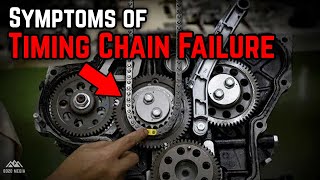
- Engine misfires 🎬 Watch: Common signs and symptoms of timing chain failure
- Replacing only the camshaft or crankshaft position sensors. While these sensors report the problem, they are very rarely the cause. The issue is almost always the mechanical relationship between the parts they are monitoring.
- Replacing only the VVT solenoids without addressing the underlying oil quality or timing chain wear. A clogged solenoid is a symptom, not the root cause.
Most Likely Causes
- Stretched Timing Chains 🔴 High Probability As documented in GM TSBs, the original timing chains on the 3.6L V6 were susceptible to premature wear. This was largely due to long oil change intervals promoted by the factory Oil Life Monitor, leading to oil degradation and insufficient lubrication for the three complex chains in the engine.
How to confirm: A technician will use a scan tool to observe camshaft deviation data; a deviation of more than 4-5 degrees at idle is a strong indicator. Physical confirmation requires removing the engine front cover to measure chain slack, which will be visibly loose.
Typical fix: Replace all three timing chains, all tensioners, and all guides with an updated kit. It is critical to use the newer, improved parts. This is a labor-intensive job often requiring 10+ hours.
Est. part cost: $250-$500 for a complete kit - Worn or Failed Timing Chain Tensioners 🔴 High Probability The tensioners are hydraulically operated and rely on clean oil at the correct pressure. If they fail due to sludge or wear, the chains become loose, causing the same timing correlation fault. A weak tensioner is a very common failure point.
How to confirm: Diagnosed during the inspection for a stretched timing chain. A failed tensioner will allow visible slack in the chain and may be fully extended.
Typical fix: Always replaced as part of a complete timing chain service. It is considered best practice to never reuse old tensioners.
Est. part cost: Included in timing chain kits - Low or Dirty Engine Oil 🟡 Medium Probability The cam phasers and chain tensioners are hydraulically operated by engine oil. GM's original Oil Life Monitor (OLM) calibration encouraged intervals that were too long (up to 10,000-12,000 miles), causing oil to break down and sludge to form, starving these critical components. GM later issued a recall to reprogram the OLM for more frequent changes.
How to confirm: Check the oil level on the dipstick and inspect its condition. This is the first and easiest check. If the oil is low or appears like sludge, this is a likely contributor.
Typical fix: Perform an oil and filter change using a full synthetic oil meeting the Dexos1 specification. If this resolves the code, it was the immediate cause; however, irreversible wear to the chains may have already occurred.
Est. part cost: $50-$100 for synthetic oil and filter - Failed Camshaft Position Actuator Solenoid (VVT Solenoid) ⚪ Low Probability These solenoids control oil flow to the cam phasers. They can get clogged with debris from dirty oil or fail electrically. While a possible cause, it's far less common than the chains themselves.
How to confirm: A technician can command the solenoid with a scan tool and monitor camshaft angle response. They can also be removed, cleaned, and tested for resistance.
Typical fix: Replace the Bank 2 exhaust camshaft actuator solenoid. Given the low cost, it's often replaced during a timing chain job as a preventative measure.
Est. part cost: $30-$70
Rare But Worth Checking
- Slipped Crankshaft Reluctor Wheel: The reluctor wheel, which the crankshaft sensor reads, is press-fit onto the crankshaft and can slip out of position. This causes a direct conflict between the crank and cam signals, setting correlation codes. This is a major mechanical failure that can be misdiagnosed as a bad sensor. Repair requires crankshaft removal and either re-aligning and securing the wheel (some aftermarket solutions involve a set screw) or replacing the crankshaft. [OWNER COMPLAINT] NHTSA ODI #10630584.
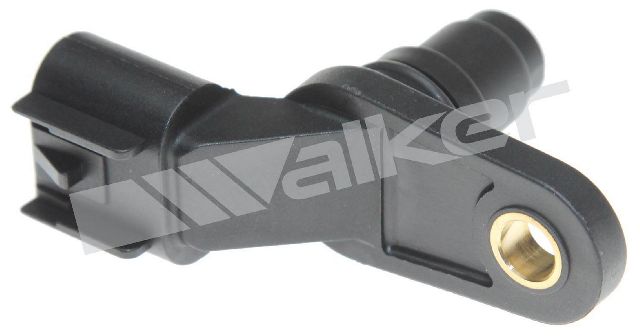
- Failed Camshaft Position Sensor: While often suspected, a faulty sensor is a rare cause for this specific code on this engine. The system is very good at detecting a bad sensor and will typically set a different code for a sensor circuit failure (e.g., P0340-P0344 range). Replacing the sensor alone is a common misdiagnosis.
Diagnosis Steps
- Verify the engine oil level and condition. Top off or change if necessary, using a full synthetic Dexos-spec oil.
- Scan for all DTCs. Note if other codes like P0008, P0016, P0017, or P0018 are present, as this makes a timing chain issue highly probable.
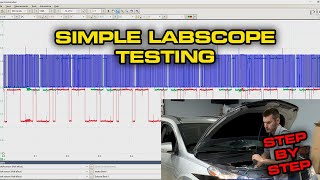
- Using a professional scan tool, monitor the live data for camshaft angle deviation on all four camshafts. 🎬 See how to test timing chain issues with a labscope On this engine, any significant deviation (typically more than 4-5 degrees) at idle points towards a stretched chain.
- Command the Bank 2 exhaust VVT solenoid with the scan tool to check for response. If it's unresponsive, inspect the solenoid and its wiring. It can be swapped with another solenoid to see if the problem follows the part.
- If scan tool data is inconclusive, inspect the wiring and connectors for the Bank 2 exhaust camshaft position sensor and actuator solenoid.
- If all other steps fail to find a fault, perform a physical inspection. This involves removing the valve cover and/or engine front cover to visually inspect the timing chains for slack and verify the timing marks align.
- The most definitive diagnosis is a physical inspection of the timing chains, as recommended by GM's TSBs. [⭐ MANUFACTURER TSB — highest authority] Bulletin #PIP3423P.
Parts You'll Likely Need
- Timing Chain Kit
(OEM #12651450 (This is a common ACDelco kit number, verify for specific 2007-2009 vs 2010+ applications, other numbers like 12700435 may apply))— This is the primary failure point. A complete kit should include all three chains, all three tensioners, and all guides/rails. Using an updated kit with improved chain design is critical for a lasting repair.
Trusted brands: ACDelco (GM OE), Cloyes
OEM price range: $350-$500
Aftermarket price range: $200-$350 - Camshaft Position Actuator Solenoid
(OEM #12655421)— Sometimes replaced as a preventative measure or if it's clogged with debris from a failing chain. It's an inexpensive part to replace while performing the larger timing job.
Trusted brands: ACDelco, Delphi
OEM price range: $40-$80
Aftermarket price range: $25-$50
Related Codes That Often Appear With This One
- P0008 — Indicates a general engine position system performance error for Bank 1. It's often the first code to appear and is a strong indicator of a timing chain issue.
- P0016 — Indicates a timing correlation error on Bank 1, Intake Cam. Seeing multiple codes across both banks strongly suggests a base timing issue (stretched primary chain).
- P0017 — Indicates a timing correlation error on Bank 1, Exhaust Cam. This is the Bank 1 equivalent of P0019.
- P0018 — Indicates a timing correlation error on Bank 2, Intake Cam. This code plus P0019 means both cams on Bank 2 are out of sync, pointing directly to a stretched secondary chain on Bank 2.
Technical Service Bulletins (TSBs) & Recalls
- PIP3423P: Advises inspection of timing chains and tensioners for codes P0016, P0017, P0018, P0019, P0008 or P0009.
- 12-06-01-009F: Discusses repairing stretched timing chains that cause DTCs P0008, P0009, P0016, P0017, P0018 and/or P0019 and lists official service kit part numbers.
- 11340B: Special Coverage campaign extending warranty and reprogramming the ECM Oil Life Monitor for shorter oil change intervals due to premature timing chain wear.
Platform-Specific Known Issues
- GM issued TSB #PIP3423P for multiple vehicles with the 3.6L engine, including the Malibu, for codes P0008, P0009, and P0016-P0019, advising technicians to inspect for loose timing chains or tensioners.
- TSB #12-06-01-009F specifically mentions repairing stretched timing chains that set DTCs P0008, P0009, P0016, P0017, P0018 and/or P0019 and lists the official GM timing chain service kits.
- GM Special Coverage Adjustment #11340B extended the warranty on the timing chains to 10 years or 120,000 miles for many affected vehicles and included a mandatory ECM reprogram to shorten oil change intervals.
- Owner experiences frequently cite the importance of ignoring the Oil Life Monitor and adhering to a strict 3,000-5,000 mile oil change interval with full synthetic oil to prolong the life of the replacement chains.
Mechanic-Grade Diagnostic Values
- Camshaft Position Actuator Solenoid (VVT Solenoid) resistance — expected: Between 5 and 20 ohms is a general range, with 8-12 ohms being a common acceptable window. A known good part measured 12.8 ohms.. Failure: A reading of infinite resistance (OL) indicates an open coil, while a very low reading (under 2 ohms) indicates a short. Either requires replacement of the solenoid.
Scan Tool Commands That Help
- GDS2 / Tech2 (or equivalent professional scanner): Camshaft Position Actuator Solenoid Control — Use this bidirectional command to manually turn the Bank 2 exhaust solenoid on and off while monitoring engine RPM or camshaft angle data. A lack of change indicates a faulty solenoid, clogged oil passage, or wiring issue.
- GDS2 (or equivalent): Camshaft Position Correlation Test — This is an automated test function within the GM diagnostic software that can help verify if a correlation issue exists after initial checks or repairs.
Wiring & Ground Locations
- G110 — Located at the right rear of the engine, mounted to the back of the cylinder head, sometimes on a bracket above the power steering pressure hose.. This is a shared ground point for the ECM and TCM on some GM 3.6L platforms. A poor connection here can cause erratic behavior and communication DTCs that can accompany engine performance codes.
- G109 — Frame ground point, often used by relays in the underhood fuse block.. The ECM controls the powertrain and other relays which rely on solid ground connections. A fault at G109 can cause intermittent power issues to the ECM, potentially leading to spurious codes.
- Engine Block Grounds — The 3.6L engine has multiple small ground wires bolted directly to the block and cylinder heads, often near the water pump and at the rear of each head.. The camshaft and crankshaft sensors require a stable ground reference to send accurate signals to the ECM. Missing or corroded grounds after engine work is a common cause of bizarre electrical issues and codes.
- ECM Connector X1 Pins 19 & 20 — At the Engine Control Module (ECM), located in the left front of the engine bay.. These pins supply ignition voltage to the ECM. Verifying B+ voltage here is a critical step to ensure the ECM itself is powered correctly before condemning it.
Real Owner Repair Stories
- Chevrolet Forum user (2009 Chevrolet Equinox 3.6L (LY7)) — Timing chain correlation codes on Bank 2 returned immediately after a full timing job (new chains, phasers, tensioners, guides).
❌ Tried (didn't work) Replacing VVT solenoids., Replacing timing tensioners with new GM parts., Replacing aftermarket chains and phasers with new GM chains and phasers.
✅ What actually fixed it The final advice from an experienced user, after all common parts were replaced, was to inspect for a shifted crankshaft reluctor (tone) wheel, as described in GM TSB PIP3423P. This was the most likely remaining cause when new timing components did not resolve the correlation codes.
OEM Part Supersession History
Various (Pre-2012 designs)→Kits released after April 2012 (e.g., ACDelco 12651450)— The original timing chains were prone to premature stretching and wear. GM released updated kits with more robust chains to increase longevity and prevent the common P0008/P0016-P0019 codes.
Heads up: Using older design parts or mixing old and new components is not recommended. TSB #12-06-01-009F advises using the complete, updated kits for all warranty repairs to ensure longevity.
Model Year Variations Within This Range
- 2008-2012: The most significant change during this period was not in the base engine hardware, but in the service parts and software. Around 2012, GM introduced updated timing chain kits with a more durable design. Additionally, GM issued service campaigns to reprogram the Engine Control Module (ECM) to shorten the oil change intervals calculated by the Oil Life Monitor (OLM), which was a primary contributor to the original problem.
Helpful Videos
We Have This Part in Stock



The information in this article is provided for general reference and educational purposes only. Vehicle specifications, procedures, and part compatibility can vary by production date, trim level, and region. Always consult your vehicle's factory service manual and verify part numbers before purchasing or performing repairs. Safety-critical components such as airbags, seat belts, and braking systems should be installed by a qualified professional.
- Chevrolet MALIBU:
- 🎬 Helpful Videos
- 🛍️ Shop This Part
- What's Unique About the 2008-2012 Chevrolet MALIBU
- Diagnostic Flowchart
- Symptoms You May Notice
- Most Likely Causes
- Rare But Worth Checking
- Diagnosis Steps
- Parts You'll Likely Need
- Related Codes That Often Appear With This One
- Technical Service Bulletins (TSBs) & Recalls
- Platform-Specific Known Issues
- Mechanic-Grade Diagnostic Values
- Scan Tool Commands That Help
- Wiring & Ground Locations
- Real Owner Repair Stories
- OEM Part Supersession History
- Model Year Variations Within This Range
- 🎟️ Get 5% Off