

P0019 on 2011-2015 Chevrolet Camaro V6: Stretched Timing Chain Causes and Fixes
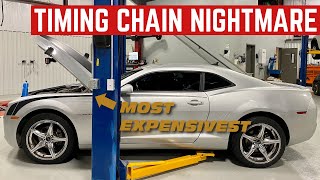
On a 2011-2015 Camaro with the 3.6L V6 engine, P0019 almost always indicates a stretched timing chain. This is a serious and well-documented issue requiring a major repair. Expect costs to range from $1,500 to over $2,800 at a professional shop. The root cause is often linked to premature chain wear exacerbated by long oil change intervals.
- P0019 on a 2011-2015 V6 Camaro is a strong indicator of a stretched timing chain, not just a bad sensor.
- Do not ignore this code. Continued driving can lead to catastrophic engine failure.
- The repair is expensive and complex, typically costing between $1,500 and $2,800. It is not a beginner DIY job.
- Always use a complete timing chain kit (chains, guides, tensioners) for the repair. Using updated OEM (ACDelco) parts is highly recommended.
- Maintaining clean oil and adhering to regular oil change intervals is the best way to prolong the life of the timing chains.
What's Unique About the 2011-2015 Chevrolet CAMARO
The GM 3.6L V6 engines (both the LLT used in 2010-2011 and the LFX from 2012-2015) have a well-documented history of premature timing chain stretching. This issue was so prevalent that GM issued multiple Technical Service Bulletins (TSBs) and even a Special Coverage Adjustment (#11340C) for this exact problem across many vehicle models, including the Camaro. The root cause is often attributed to a combination of early chain designs and an aggressive Oil Life Monitor (OLM) setting that allowed for overly long oil change intervals. This led to oil degradation, reduced lubrication, and accelerated wear on the chains and tensioners. While other causes are possible, a P0019 code on this specific platform should be treated as a strong indicator of a timing chain problem until proven otherwise.
Diagnostic Flowchart
Tap your situation to follow the diagnostic path that matches what you're seeing on this vehicle.
Symptoms You May Notice
- Check Engine Light is on
- Engine rattling, buzzing, or slapping noise, especially on a cold start. 🎬 Watch: Hear the clattering noise caused by VVT issues.
- Rough or fluctuating idle
- Hesitation or loss of power during acceleration
- Reduced fuel economy
- Engine may be hard to start or fail to start in severe cases
- Service Stabilitrak message may appear on the dash during cranking or driving.
- Replacing only the camshaft position sensor without checking for timing chain slack.
- Replacing only the VVT solenoid without verifying the mechanical timing is correct.
- Ignoring the code after an oil change, assuming the fresh oil fixed the problem. While good for maintenance, it won't reverse mechanical chain stretch.
- Clearing the code and continuing to drive. The code will almost certainly return, and the underlying mechanical issue will worsen.
Most Likely Causes
- Stretched Timing Chains 🔴 High Probability The 3.6L V6 engine family used in these Camaros is known for premature timing chain wear, as documented in GM TSBs #PIP3423P and #12-06-01-009F. The chains are long and complex, and inadequate lubrication from extended oil change intervals accelerates wear.
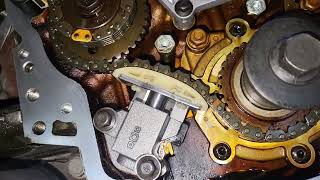
How to confirm: A technician can use a scan tool to read camshaft deviation data; significant and persistent deviation points to a stretched chain. The definitive test is physical inspection for slack by removing the valve cover and/or timing cover, where the looseness will be visible.
Typical fix: Replace all three timing chains (primary and two secondary), along with the tensioners, guides, and sprockets as a complete kit. It is also highly recommended to replace the water pump and perform an oil change during this service.
Est. part cost: $250-$600 - Failed Timing Chain Tensioner(s) 🔴 High Probability The tensioners are hydraulically operated and rely on clean oil and sufficient pressure. They can fail due to wear or sludge, contributing to chain slack. They are considered a wear item and are always replaced with the chains.
How to confirm: Diagnosed during physical inspection for timing chain replacement. A failed or collapsed tensioner will allow for excessive chain slack that can be seen or felt.
Typical fix: Replace as part of a complete timing chain kit. It is not recommended to replace only the tensioners.
Est. part cost: $50-$150 - Low or Degraded Engine Oil 🟡 Medium Probability The timing chain tensioners and camshaft phasers are hydraulically operated. Low or dirty oil starves these components, accelerating wear on the entire timing system. GM's original Oil Life Monitor calibration was often too optimistic, contributing to oil degradation.
How to confirm: Check the oil level and condition on the dipstick. Review vehicle service history for oil change intervals. An oil change is a good first step, but it will not fix a mechanically stretched chain.
Typical fix: Perform an oil and filter change with the correct viscosity oil (5W-30 full synthetic is recommended). This is a critical first step but is unlikely to fix a P0019 code if the chain is already stretched.
Est. part cost: $50-$100 - Faulty Camshaft Position Actuator Solenoid (VVT Solenoid) ⚪ Low Probability Sludge from old oil can cause these solenoids to stick or respond slowly, affecting camshaft timing. While possible, it's less common than chain stretch for this specific code. They are relatively easy to access and test.
How to confirm: A technician can command the solenoid with a scan tool to check for response. They can also be removed, cleaned, and tested for resistance (ohms) and operation by applying 12V.
Typical fix: Replace the Bank 2 exhaust camshaft position actuator solenoid. The OEM part number is 12636175.
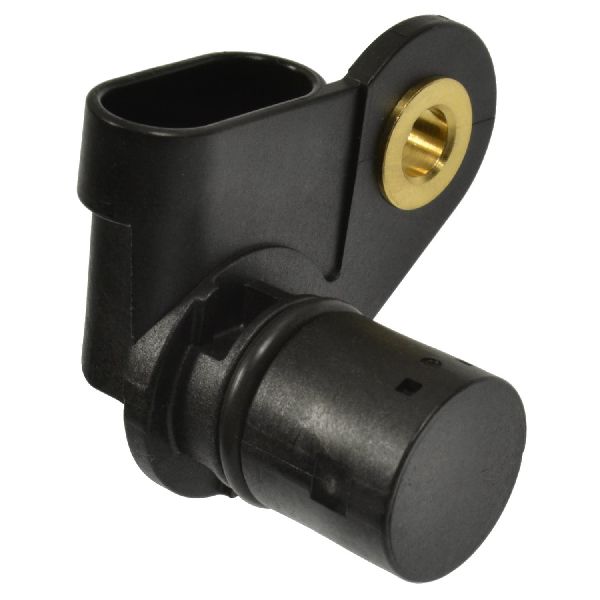
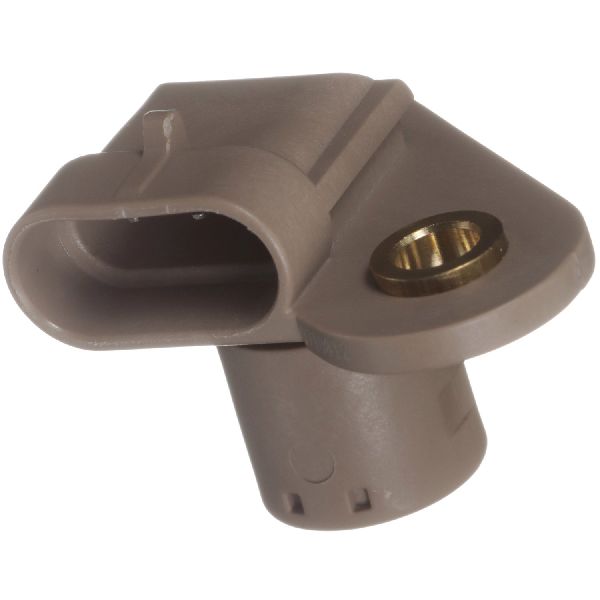
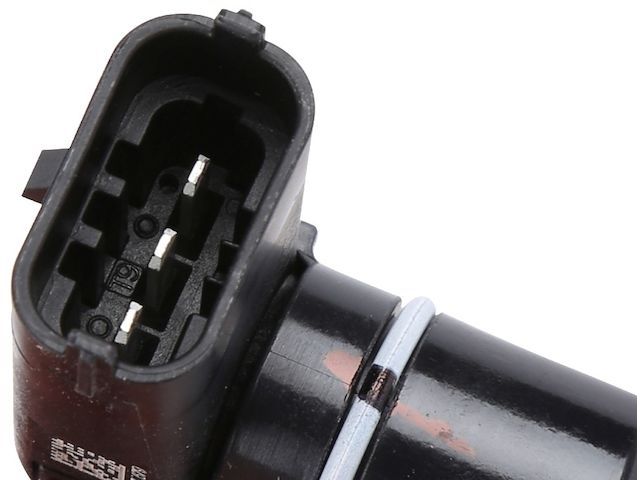
Est. part cost: $25-$75 - Faulty Camshaft Position Sensor ⚪ Low Probability It is rare for the sensor itself to fail in a way that causes this specific correlation code without setting a sensor-specific circuit code (e.g., P0348, P0349).
How to confirm: Monitor the sensor's output on a scan tool or with an oscilloscope. Swapping the sensor with the intake sensor on the same bank is a common diagnostic trick to see if the code changes (e.g., to P0018).
Typical fix: Replace the Bank 2 exhaust camshaft position sensor. The OEM part number is 12670401.
Est. part cost: $20-$60
Rare But Worth Checking
- Slipped Crankshaft Reluctor Wheel: The reluctor wheel on the crankshaft, which the crank sensor reads, can sometimes move from its original position. TSB #PIP3423 mentions inspecting this as part of the diagnostic process, though it requires significant disassembly to verify.
- Damaged Wiring or Connectors: Damage to the wiring for the Bank 2 exhaust camshaft sensor or VVT solenoid could cause signal issues, though this is less common than mechanical failure.
- Faulty Powertrain Control Module (PCM): This is extremely rare and should only be considered after all other possibilities have been exhaustively ruled out.
Diagnosis Steps
- Verify the code with a reliable OBD-II scanner.
- Check engine oil level and condition. If low or dirty, perform an oil and filter change with 5W-30 full synthetic oil. Clear codes and see if P0019 returns.
- Using a scan tool with live data, monitor the camshaft position desired vs. actual angles for Bank 2 Exhaust. Deviations greater than 4-5 degrees at idle that do not correct are a strong sign of a mechanical timing issue.
- Inspect the wiring and connectors for the Bank 2 exhaust camshaft sensor and VVT solenoid for any visible damage, oil contamination, or corrosion.
- Test the Bank 2 exhaust VVT solenoid. Command it with a scan tool and listen for a click. It can also be removed and tested by applying 12V to check for mechanical actuation.
- Swap the Bank 2 exhaust and intake VVT solenoids to see if the code changes to P0018. If it does, the solenoid is faulty.
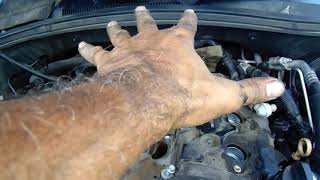
- If solenoids and sensors appear to be working, the next step is to confirm mechanical timing. This involves removing the Bank 2 (driver's side) valve cover to visually inspect the secondary timing chain for excessive slack. This step confirms the diagnosis.
- If timing chain slack is confirmed, the engine front cover must be removed to replace the timing chains, tensioners, and guides as a complete kit.
Parts You'll Likely Need
- Engine Timing Chain Kit
(OEM #12650230 (LLT), 12673394 (LFX))— This is the primary failure point. A complete kit ensures all worn components (chains, guides, tensioners) are replaced at once. TSB 12-06-01-009F advises against replacing sprockets unless they are visibly damaged.
Trusted brands: ACDelco (OEM), Cloyes
OEM price range: $300-$450
Aftermarket price range: $200-$350 - Camshaft Position Actuator Solenoid (VVT Solenoid)
(OEM #12636175)— Often replaced as a preventative measure or if sludge is suspected. It's a relatively inexpensive part to replace while diagnosing the issue or during the timing chain job.
Trusted brands: ACDelco (OEM), Dorman
OEM price range: $40-$60
Aftermarket price range: $25-$45
Related Codes That Often Appear With This One
- P0008 — Indicates a general engine timing correlation error between the crank and both banks, often the first code to appear as chains begin to stretch.
- P0009 — Indicates a timing correlation error on Bank 2, often appearing alongside P0018 and P0019 as a more general Bank 2 fault.
- P0018 — This is the corresponding code for the intake camshaft on Bank 2. It's very common to see P0018 and P0019 together, as a stretched secondary chain affects both camshafts on that bank.
- P0016 — Correlation error on Bank 1, Intake Cam. If the primary chain is significantly stretched, codes for both banks may appear.
- P0017 — Correlation error on Bank 1, Exhaust Cam. If the primary chain is significantly stretched, codes for both banks may appear.
Technical Service Bulletins (TSBs) & Recalls
- PIP3423P: Provides diagnostic guidance for timing correlation codes (P0016, P0017, P0018, P0019, P0008, P0009), pointing towards inspection of timing chains and tensioners.
- 12-06-01-009F: Details the use of V6 timing chain kits for repairing stretched chains that cause codes like P0019.
Platform-Specific Known Issues
- GM Special Coverage Adjustment #11340C: GM acknowledged the premature timing chain wear issue and issued Special Coverage Adjustment #11340C. This extended the warranty on the timing chains to 10 years or 120,000 miles from the vehicle's in-service date. For a 2011-2015 Camaro, this coverage has likely expired due to age. The program involved either replacing the timing chains or, in some cases, reprogramming the Engine Control Module (ECM) to adjust the oil life monitor for more frequent changes.
Mechanic-Grade Diagnostic Values
- Camshaft Oil Control Valve (VVT Solenoid) Resistance — expected: 6.9 to 12 Ohms at 68°F (20°C).. Failure: A reading outside this range, or an open/short circuit (megohms), indicates a faulty solenoid.
- Camshaft Position Sensor Signal Voltage (Hall Effect type) — expected: Switches between approximately 0V and 5V (or 4.8V) as a metal object passes it.. Failure: Voltage that does not change, or is stuck at 0V or 5V, indicates a failed sensor.
- Camshaft Position Sensor Reference Voltage (at connector, key on) — expected: Approximately 5V on the reference wire and 5V on the signal wire before starting.. Failure: Incorrect or missing voltage points to a wiring or ECM issue, not a sensor failure.
Scan Tool Commands That Help
- GDS2 (GM Techline): Camshaft Position Actuator Solenoid Test — This bidirectional command allows a technician to manually activate the Bank 2 exhaust VVT solenoid to see if it responds and affects engine operation, helping to isolate a faulty solenoid from a mechanical timing issue.
- GDS2 (GM Techline): Camshaft Position Variance (Live Data) — Monitor this PID to see the real-time difference between the desired and actual camshaft angle. A persistent, large variance on the Bank 2 exhaust cam that doesn't correct itself strongly suggests a stretched chain or failing actuator.
- GDS2 / Tech 2: Crankshaft Position Variation Learn — This procedure should be performed after major engine work like a timing chain replacement to allow the ECM to learn the new crankshaft position sensor's signal variations. Failure to do so can sometimes cause correlation codes to persist.
Wiring & Ground Locations
- G108 / G109 — On the left side of the engine (for the 3.6L V6).. These are primary engine grounds. A poor or corroded ground at these locations can cause erratic voltage and signal issues for various engine sensors, including the camshaft and crankshaft position sensors, leading to false correlation codes.
- Grounds at rear of cylinder heads — There is one harness ground on the back of each cylinder head.. The Bank 2 (driver's side) head ground is critical for the sensors on that side of the engine. A loose or corroded connection here could directly impact the Bank 2 cam sensor circuit.
- ECM Connector X1 and X2 — The Engine Control Module (ECM) itself, with specific pins for the cam sensor signal and control.. Verifying signal continuity from the sensor connector directly to the ECM pin can rule out a wiring harness break. For the LFX engine, the ECM connectors are typically designated X1 (blue), X2 (black), and X3 (gray).
Real Owner Repair Stories
- 2CarPros Forum User (2009 Audi Q5 3.2L V6 (Note: Different vehicle but identical GM-style VVT system and codes)) — P0018 and P0019 codes appeared after a timing chain replacement.
❌ Tried (didn't work) Verified timing was correct with a leak-down test., Checked wiring to ECM for resistance/shorts (all good)., Verified 4.9V reference and good ground at the sensor.
✅ What actually fixed it The user swapped cam sensors from bank to bank, and the code changed to P0017 (Bank 1). This indicated the sensor itself was faulty, even though it was new. The issue was a bad replacement sensor, not incorrect timing. - YouTube video by 'FIXIK GARAGE' (GMC Acadia 3.6L V6) — P0019 code appeared immediately after a timing chain replacement.
❌ Tried (didn't work) The initial timing chain job itself.
✅ What actually fixed it Upon removing the valve cover, the mechanic found the Bank 2 exhaust camshaft was not correctly aligned. The timing had jumped or was installed one tooth off on the secondary chain for that bank during the repair. The fix was to re-time the camshafts correctly.
Model Year Variations Within This Range
- 2010-2011 vs 2012-2015: The 2010-2011 Camaro V6 used the 3.6L LLT engine. For the 2012 model year, it was updated to the LFX engine. While both suffer from the timing chain issue, they have different OEM timing chain kit part numbers (LLT: 12650230, LFX: 12673394). The LFX featured improvements like integrated exhaust manifolds and a different intake manifold, but the core timing architecture and its associated problems remained similar.
Helpful Videos
Used OEM Parts in Stock

New Aftermarket Parts Available


The information in this article is provided for general reference and educational purposes only. Vehicle specifications, procedures, and part compatibility can vary by production date, trim level, and region. Always consult your vehicle's factory service manual and verify part numbers before purchasing or performing repairs. Safety-critical components such as airbags, seat belts, and braking systems should be installed by a qualified professional.
- Chevrolet CAMARO:
- 🎬 Helpful Videos
- 🛍️ Shop This Part
- What's Unique About the 2011-2015 Chevrolet CAMARO
- Diagnostic Flowchart
- Symptoms You May Notice
- Most Likely Causes
- Rare But Worth Checking
- Diagnosis Steps
- Parts You'll Likely Need
- Related Codes That Often Appear With This One
- Technical Service Bulletins (TSBs) & Recalls
- Platform-Specific Known Issues
- Mechanic-Grade Diagnostic Values
- Scan Tool Commands That Help
- Wiring & Ground Locations
- Real Owner Repair Stories
- Model Year Variations Within This Range
- 🎟️ Get 5% Off