

P0019 on 2013-2016 Buick LaCrosse: Crank/Cam Correlation Causes and Fixes
Code P0019 on a 2013-2016 Buick LaCrosse with the 3.6L V6 engine almost always points to stretched timing chains, a very common and serious issue for this engine family. Before condemning the engine, check the engine oil level and condition, and test the Bank 2 exhaust camshaft actuator solenoid. A timing chain replacement is a complex and costly repair, often exceeding $2,000, and should include chains, guides, and tensioners.
- P0019 on a 2013-2016 LaCrosse 3.6L strongly suggests a stretched timing chain.
- Before assuming the worst, always check the engine oil level and condition first.
- A simple and inexpensive diagnostic step is to swap the Bank 2 intake and exhaust camshaft actuator solenoids to see if the code changes.
- Ignoring this code can lead to severe engine damage. It should be addressed promptly.
- If the timing chains need replacement, it is critical to use a complete kit that includes chains, tensioners, and guides.
What's Unique About the 2013-2016 Buick LACROSSE
The 3.6L V6 engine (RPO code LFX) used in this generation of LaCrosse is well-documented for having issues with premature timing chain stretching. This isn't a random failure; it's a known pattern for this engine family (which also includes the earlier LY7 and LLT versions). While other causes are possible, the high probability of a stretched timing chain is the most significant factor when diagnosing this code on this specific vehicle. GM issued multiple technical service bulletins, such as #PIP3423P, related to this family of codes, pointing directly at timing chain problems.
Diagnostic Flowchart
Tap your situation to follow the diagnostic path that matches what you're seeing on this vehicle.
Symptoms You May Notice
- Check Engine Light is on
- Rough or fluctuating idle
- Engine hesitation or stumbling on acceleration
- Reduced engine power
- Decreased fuel economy
- Rattling noise from the engine, especially on cold starts, that may sound like marbles in a can. 🎬 Watch: Hear the clattering noise caused by timing chain issues.
- Engine stalling
- Replacing only the camshaft or crankshaft position sensors without verifying the mechanical timing. The sensors are often reporting a real mechanical problem, not failing themselves.
- Replacing only one timing chain or tensioner. The entire system wears together, and a partial job will likely lead to a repeat failure.
Most Likely Causes
- Stretched Timing Chains 🔴 High Probability The GM 3.6L V6 engine family has a widely recognized issue with premature timing chain wear and stretching. This was often attributed to extended oil change intervals recommended by the oil life monitoring system and the original chain design. The LFX engine saw improvements, but the issue can still occur.
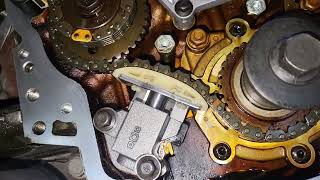
How to confirm: A technician can use a scan tool to view camshaft deviation angles. A significant deviation (more than a few degrees) points to a slack chain. The ultimate confirmation is a physical inspection by removing the engine's front timing cover, where slack will be visibly apparent.
Typical fix: Replace all three timing chains, all tensioners, and all guides as a complete kit. It is critical to replace these components as a set to prevent premature failure of the new parts.
Est. part cost: $250-$500 for a full kit - Worn Timing Chain Tensioners or Guides 🔴 High Probability The hydraulic tensioners and plastic guides wear out along with the chains. A failed tensioner can lose its hydraulic pressure, causing chain slack even if the chain itself isn't severely stretched. Broken guide pieces can fall into the oil pan.
How to confirm: Confirmed during physical inspection for a stretched timing chain. A rattling noise is a strong indicator of a bad tensioner or broken guide.
Typical fix: Always replaced as part of a complete timing chain kit service. GM TSB #12-06-01-009 notes that for a simple stretched chain, only the chains and tensioners may be needed, but replacing guides is best practice.
Est. part cost: Included in timing chain kit cost. - Faulty Camshaft Actuator Solenoid (Bank 2 Exhaust) 🟡 Medium Probability These solenoids control oil flow to the cam phasers. They can get clogged with sludge from infrequent oil changes or fail electrically, causing them to stick.
How to confirm: A simple diagnostic step is to swap the Bank 2 exhaust solenoid with the Bank 2 intake solenoid. Clear the codes and drive the vehicle. If the code changes to P0018 (Bank 2 Intake Correlation), the solenoid is confirmed to be faulty. The resistance should be between 5-15 Ohms.
Typical fix: Replace the faulty solenoid. This is a relatively easy and inexpensive repair located on the front of the Bank 2 valve cover.
Est. part cost: $30-$80 - Low or Dirty Engine Oil 🟡 Medium Probability The Variable Valve Timing (VVT) system is entirely dependent on clean oil at the proper pressure to function. Neglecting oil changes can lead to sludge that clogs the tiny passages and screens in the camshaft actuator solenoids and phasers, leading to timing correlation codes.
How to confirm: Check the oil level on the dipstick and inspect the oil's condition. If it's low or appears dark and sludgy, this is a likely contributor.
Typical fix: Perform an engine oil and filter change using the correct grade of oil (SAE 5W-30 full synthetic is recommended). Clear codes and re-evaluate.
Est. part cost: $40-$90
Rare But Worth Checking
- Slipped Crankshaft Reluctor Wheel: A GM Technical Service Bulletin (PIP3423P) notes that the reluctor wheel, which the crankshaft position sensor reads, can move on the crankshaft. This will cause timing codes even if the chains are tight. A technician can sometimes inspect this with a borescope through the crank sensor hole. If it has slipped, the crankshaft must be replaced.
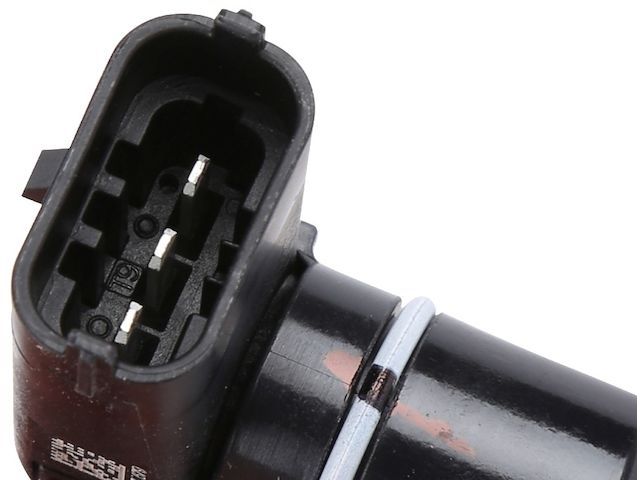
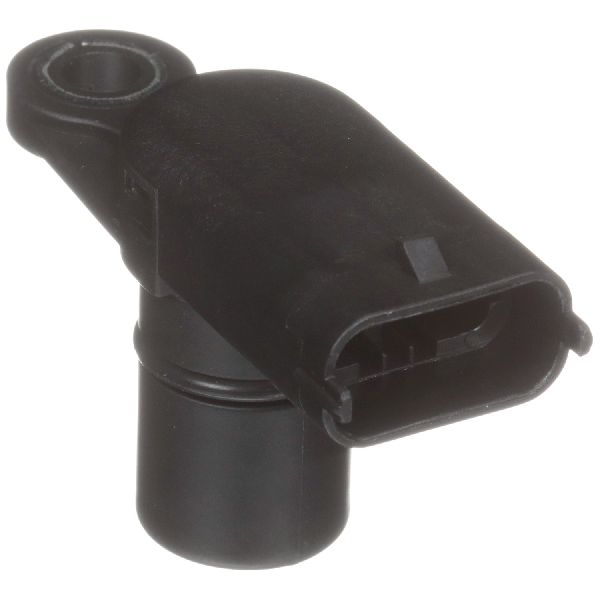
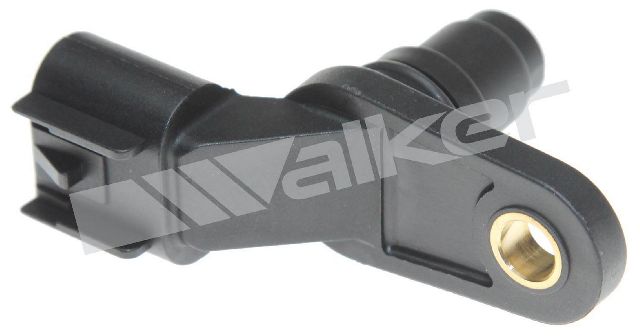
- Faulty Camshaft Position Sensor (Bank 2 Exhaust): While possible, it's less common for the sensor itself to fail than the mechanical components it monitors. Usually, a bad sensor would trigger other specific sensor circuit codes (e.g., P0345, P0365). Swapping the sensor with an adjacent one is a valid diagnostic step if a solenoid swap doesn't isolate the problem.
- Failed Camshaft Phaser: The mechanical gear (phaser/actuator) on the end of the camshaft can fail or get stuck, but this is less common than solenoid or chain failure. This is a more involved repair and is typically diagnosed after all other possibilities are exhausted.
Diagnosis Steps
- Check Engine Oil: Verify the oil level is full and the oil is clean. If low or dirty, perform an oil change with 5W-30 full synthetic oil, clear the code, and see if it returns.
- Scan for Other Codes: Check for any other codes, especially P0008, P0009, or P0018, which reinforce a timing chain diagnosis.
- Test Camshaft Actuator Solenoids: Locate the Bank 2 (front bank) camshaft actuator solenoids. Swap the exhaust solenoid (lower one) with the intake solenoid (upper one).
- Re-test: Clear the codes and drive the vehicle. If the code returns as P0018, the solenoid you moved is bad and needs to be replaced. This is a strong positive confirmation.
- Check Camshaft Deviation with a Scan Tool: If the code is still P0019, a professional technician should use a scan tool to monitor the desired vs. actual camshaft position angles for Bank 2 Exhaust. A deviation of more than a few degrees at idle or 2000 RPM indicates a mechanical timing issue (stretched chain).
- Physical Inspection: If scan data suggests a timing issue, the next step is to remove the valve cover and/or front timing cover to physically inspect the timing chains for slack. This step is best left to a professional. While there, inspect for a slipped crank reluctor wheel if possible, per TSB PIP3423P.
Parts You'll Likely Need
- Timing Chain Kit — This is the most common cause of P0019 on the 3.6L V6. A complete kit should include all three chains, tensioners, guides, and necessary gaskets.
Trusted brands: ACDelco (OEM), Cloyes (e.g., kit 9-0753S)
OEM price range: $350-$500
Aftermarket price range: $250-$400 - Camshaft Position Actuator Solenoid
(OEM #12655421 (Exhaust), may be superseded by 12679100)— A common and much cheaper potential fix. It can get clogged with oil sludge or fail electrically, causing timing correlation issues.
Trusted brands: ACDelco, Delphi
OEM price range: $50-$80
Aftermarket price range: $30-$60 - RTV Sealant — Required for re-sealing the engine front timing cover after a chain replacement, as specified in TSB 12-06-01-003C.
Trusted brands: Permatex Ultra Black, ACDelco RTV Engine Sealant
OEM price range: $15-$25
Aftermarket price range: $10-$20
Related Codes That Often Appear With This One
- P0008 — Indicates a general engine timing correlation problem between the crankshaft and both camshaft banks. It often appears with other codes when timing chains are severely stretched.
- P0009 — Indicates a timing correlation problem specific to Bank 2 (front bank). Seeing P0019 and P0009 together strongly suggests a Bank 2 timing chain issue.
- P0018 — This is the companion code for the Bank 2 *intake* camshaft. If both P0018 and P0019 are present, it's an almost certain indicator of a stretched secondary timing chain on Bank 2.
- P0017 — This code points to a Bank 1 (rear bank) exhaust camshaft correlation issue. It would not typically appear with P0019 unless there is a primary chain issue affecting both banks.
Technical Service Bulletins (TSBs) & Recalls
- PIP3423P / PIP3423M: Mentions that codes P0016, P0017, P0018, P0019, P0008, or P0009 can be caused by loose timing chains, worn tensioners, or a slipped crankshaft reluctor wheel.
- 12-06-01-009F: Details the timing chain issue, provides updated service kits, and lists the associated DTCs. Confirms the widespread nature of the problem across the HFV6 engine family.
- 12-06-01-003C: Provides specific instructions for cleaning and applying RTV sealant when reinstalling the engine front cover during a timing chain service.
Platform-Specific Known Issues
- The 3.6L V6 engines (LY7, LLT, LFX) used across many GM vehicles, including the LaCrosse, have a well-known history of premature timing chain stretching. This was often attributed to extended oil change intervals recommended by the oil life monitoring system and the design of the chains themselves. GM issued a Special Coverage Adjustment (SCA 11340C) for some earlier models, extending the warranty to 10 years/120,000 miles due to the high failure rate, though most 2013-2016 models are now outside this window.
Mechanic-Grade Diagnostic Values
- Camshaft Actuator Solenoid (OCV) resistance — expected: 5 to 15 Ohms. One source specifies 6.9-7.9 Ohms at 68°F, another shows a good part at 12.8 Ohms.. Failure: A reading of mega-ohms (millions of ohms) or an open circuit indicates a failed solenoid.
- Camshaft Position Sensor reference voltage — expected: ~5.0V (e.g., 4.9V).. Failure: Significant deviation from 5V could indicate a wiring or ECM issue.
- Camshaft Position Sensor signal line voltage — expected: Varies, but one documented case showed 4.6V on a running engine.. Failure: An absent or erratic signal when the engine is running.
- Camshaft variance or deviation angle (Scan Tool PID) — expected: Close to 0 degrees at idle when not commanded.. Failure: A consistent deviation of more than a few degrees (e.g., > 4 degrees) indicates a mechanical timing problem (chain stretch).
Scan Tool Commands That Help
- GDS2 / Professional Scan Tool: Camshaft Position Actuator Solenoid Test (or OCV Actuation Test) — Use this to command the solenoid on and off while the engine is running. A functional solenoid will cause the engine to hesitate, run rough, or stall, confirming it is mechanically working.
- J-Scan (or similar advanced tool): VVT System Cleaning Function — Some tools offer a function that rapidly actuates the solenoids to dislodge small debris or unstick internal valves without disassembly. This can be a useful first step if a sticky solenoid is suspected.
Wiring & Ground Locations
- Bank 2 Camshaft Sensors/Solenoids — On the front of the engine (radiator side), on the valve cover for that cylinder bank.. Correctly identifying Bank 2 is the first step. On transverse mounted 3.6L engines like in the LaCrosse, Bank 2 is the cylinder bank closer to the front of the vehicle.
- ECM Power and Ground Pins — At the Engine Control Module (ECM) connectors. Power wires are often pink.. A poor power or ground connection to the ECM can cause a wide range of erroneous sensor codes, including P0019. Verifying stable power and clean grounds at the ECM is a critical step before replacing the module.
Real Owner Repair Stories
- Jeep Wrangler Forum user (Jeep with 3.6L Pentastar (uses similar VVT technology)) — P0017, P0019, misfiring, rough idle, stalling.
❌ Tried (didn't work) Replacing O2 sensors, MAP sensors, air filters.
✅ What actually fixed it The user removed the cam phaser solenoid and inspected the large bolt holding the phaser to the camshaft. Inside this bolt is a small oil-control ball valve that was stuck with gritty debris. The user manually actuated the ball valve to free it, cleaned the components, and reassembled. This resolved all codes and symptoms. - FIXIK GARAGE on YouTube (GMC Acadia with 3.6L V6) — P0019 code immediately after a timing chain replacement job.
❌ Tried (didn't work) Assuming the new parts were good.
✅ What actually fixed it The technician had to disassemble the top end of the engine again to install the special camshaft/timing alignment tools. It was discovered that the timing was not set correctly during the initial repair. Re-timing the engine correctly solved the P0019 code. - 2CarPros forum (Audi 3.2L V6 (similar DOHC V6 complexity)) — P0018 and P0019 codes returned after a full timing chain replacement.
❌ Tried (didn't work) The timing job was verified as correct. The codes remained.
✅ What actually fixed it The technician swapped cam sensors from bank to bank, and the code changed to P0017, following the sensor. However, replacing the sensor that was presumed bad did not fix the P0017 code. The final diagnosis pointed towards a faulty ECM, as wiring and sensor function were verified. This story highlights that even when a fault follows a component swap, there can be a deeper electrical issue.
When the Usual Fixes Don't Work
- In some diagnostic cases, a code for one camshaft sensor (e.g., P0019 for Bank 2 Exhaust) can actually be caused by a failure of a different sensor on the same engine (e.g., Bank 2 Intake). The ECM's logic compares sensor signals, and a faulty signal from one can make another appear out of sync. An oscilloscope is the best tool to verify which sensor is truly providing a bad signal before replacing parts.
- A fault code that moves from one position to another when components are swapped (like a cam sensor or solenoid) almost always condemns the part that was moved. However, there are rare instances where replacing the suspected bad part does not fix the new code that appeared. This can point to a more complex issue, such as a failing driver circuit in the Engine Control Module (ECM) that was damaged by the initial component failure.
OEM Part Supersession History
12655421→12679100— Part revision and update by the manufacturer.
Heads up: The new part number is the correct service replacement.Original Timing Chain Set (various PNs prior to ~2012)→Updated Timing Chain Kits (e.g., ACDelco, Cloyes 9-0753S)— Original chains were prone to premature stretching. Newer kits feature revised chains and more durable guides to improve longevity.
Model Year Variations Within This Range
- 2013-2016 (LFX Engine): The LFX engine in this LaCrosse generation received updated timing chains compared to the earlier LY7 and LLT versions of the 3.6L V6, which had more severe and frequent timing chain failures. However, the issue was not completely eliminated.
Helpful Videos
We Have This Part in Stock


The information in this article is provided for general reference and educational purposes only. Vehicle specifications, procedures, and part compatibility can vary by production date, trim level, and region. Always consult your vehicle's factory service manual and verify part numbers before purchasing or performing repairs. Safety-critical components such as airbags, seat belts, and braking systems should be installed by a qualified professional.
- Buick LACROSSE:
- 🎬 Helpful Videos
- 🛍️ Shop This Part
- What's Unique About the 2013-2016 Buick LACROSSE
- Diagnostic Flowchart
- Symptoms You May Notice
- Most Likely Causes
- Rare But Worth Checking
- Diagnosis Steps
- Parts You'll Likely Need
- Related Codes That Often Appear With This One
- Technical Service Bulletins (TSBs) & Recalls
- Platform-Specific Known Issues
- Mechanic-Grade Diagnostic Values
- Scan Tool Commands That Help
- Wiring & Ground Locations
- Real Owner Repair Stories
- When the Usual Fixes Don't Work
- OEM Part Supersession History
- Model Year Variations Within This Range
- 🎟️ Get 5% Off