

P0019 on 2008-2015 Buick Enclave: Causes and Fixes for Timing Correlation Errors
On a 2008-2015 Buick Enclave, code P0019 almost always indicates stretched timing chains. This is a well-documented issue with the 3.6L V6 engine, often caused by overly long oil change intervals from the original factory Oil Life Monitor (OLM) settings. It is a serious, expensive repair often costing between $2,500 and $4,000. GM issued a Special Coverage Adjustment (11340C) for some 2009 models, extending the warranty to 10 years/120,000 miles, but this has since expired for all vehicles.
- P0019 on a 2008-2015 Enclave is a strong indicator of stretched timing chains, a known issue with the 3.6L V6 engine.
- Do not waste money replacing sensors first. The problem is almost certainly mechanical.
- This is a severe issue. Continued driving risks the timing chain skipping, which can destroy the engine.
- The repair is expensive and involves replacing the timing chains, guides, and tensioners as a complete kit.
- Using high-quality full synthetic oil and adhering to regular oil change intervals can help prolong the life of the replacement chains.
What's Unique About the 2008-2015 Buick ENCLAVE

The first-generation Buick Enclave and its platform mates (Chevrolet Traverse, GMC Acadia, Saturn Outlook) use a 3.6L V6 engine (LY7 and LLT) that is notorious for premature timing chain stretching. The primary cause was a combination of an overly optimistic Oil Life Monitor (OLM) algorithm in early models, leading to degraded oil, and the use of long, complex timing chains. GM acknowledged this by issuing Special Coverage Adjustment #11340C, which extended the warranty for this specific failure on certain 2009 models, and TSB #12-06-01-009F, which details the repair kits.
Diagnostic Flowchart
Tap your situation to follow the diagnostic path that matches what you're seeing on this vehicle.
Symptoms You May Notice
- Check Engine Light is on
- Engine running rough or idling poorly
- Hesitation or significant loss of power during acceleration
- A distinct rattling or 'chain slap' noise from the engine, especially on a cold start for a few seconds
- Reduced fuel economy
- In severe cases, the engine may be hard to start or may not start at all
- Finding fine metal shavings in the engine oil during an oil change, which are particles from the wearing chain and guides
- Replacing only the camshaft position sensor. This is the cheapest and easiest part to replace, but it almost never fixes the problem on this engine.
- Replacing only the VVT solenoid. While this can be the cause, it's often a guess that ignores the high probability of chain stretch. Proper diagnosis by swapping solenoids should be done first. 🎬 Watch: Try this simple diagnostic before starting a major repair.
- Using a cheap, incomplete timing kit. Using a kit that doesn't include updated parts or omits components like guides or tensioners can lead to a repeat failure in a short time.
- Not replacing the cam phasers during a timing chain job. A loose chain can cause damage to the phaser sprockets, leading to immediate repeat codes even with new chains.
Most Likely Causes

- Stretched Timing Chains 🔴 High Probability The 3.6L V6 engines in this era had timing chains that were susceptible to premature wear. This was exacerbated by an early version of the Oil Life Monitor (OLM) that allowed for excessively long oil change intervals, leading to oil breakdown and accelerated chain wear. GM issued Special Coverage Adjustment 11340C and TSB #12-06-01-009F to address this known issue on some model years.
How to confirm: A mechanic will use a scan tool to monitor camshaft deviation angles; a persistent deviation beyond a few degrees at idle points to a stretched chain. A deviation of more than 10 degrees will trigger the code. Physical confirmation requires removing the engine's front timing cover to inspect the chains and tensioners for slack, a labor-intensive process.
Typical fix: Replace all three timing chains, all tensioners, and all guides using an updated kit. It is also highly recommended to replace the water pump, camshaft actuator sprockets (phasers), and VVT solenoids at the same time.
Est. part cost: $400-$800 for a complete, high-quality kit - Worn Timing Chain Tensioners or Guides 🔴 High Probability The hydraulic tensioners and plastic guides are integral parts of the timing system. They fail alongside the chains due to the same oiling issues and mechanical stress.
How to confirm: Confirmed during physical inspection when checking the timing chains. Broken pieces of the plastic guides may be found in the oil pan.
Typical fix: Always replaced as part of a complete timing chain kit service. Never replace just a tensioner without the chains.
Est. part cost: $0 (Included in kit) - Low or Dirty Engine Oil 🟡 Medium Probability The camshaft phasers (VVT system) are operated by oil pressure. Low or sludgy oil can cause them to respond slowly or stick, triggering a correlation code. These engines are also known to consume oil, so running low is a common issue that accelerates chain wear. Following the original, un-revised OLM often led to dirty oil.
How to confirm: Check the oil level on the dipstick and inspect its condition. If it's low or very dirty, this is a primary contributing factor, if not the direct cause.
Typical fix: Perform an oil and filter change with a full synthetic 5W-30 oil meeting Dexos1 Gen2 specifications. If the code clears and stays away, consider it a warning. If it returns, mechanical wear has already occurred.
Est. part cost: $50-$90 - Faulty Camshaft Position Actuator Solenoid (VVT Solenoid) ⚪ Low Probability These solenoids control oil flow to the phasers. They can become clogged with sludge from infrequent oil changes or fail electrically. While a possible cause, it's far less common than chain stretch for this specific code.
How to confirm: A mechanic can command the solenoid with a scan tool. A common DIY diagnostic is to swap the Bank 2 exhaust solenoid with the Bank 2 intake solenoid. If the code changes from P0019 to P0018, the solenoid is faulty. Bank 2 is the front bank (near the radiator), and its solenoids are accessible after removing an engine mount strut.
Typical fix: Replace the Bank 2 exhaust camshaft position actuator solenoid. The OEM part number is 12655421 or an updated equivalent like 12636175.
Est. part cost: $30-$70 - Faulty Camshaft Position Sensor ⚪ Low Probability
How to confirm: This is an uncommon failure point for this code on this engine. The sensor simply reads the camshaft's position. It's more likely the timing is actually off than the sensor being bad. Test with a multimeter or by swapping with a known good sensor.
Typical fix: Replace the Bank 2 exhaust camshaft position sensor. Its location is on the front (Bank 2) cylinder head.
Est. part cost: $25-$60
Rare But Worth Checking
- Damaged Camshaft Phaser/Actuator: The gear on the end of the camshaft that adjusts timing can fail mechanically or get clogged with debris. In one documented case on a similar vehicle, the timing chain was so loose it wore grooves into the teeth of the phaser, requiring replacement. It is best practice to replace them during a timing chain job.
- Damaged Reluctor Wheel on Crankshaft: The tone ring that the crank sensor reads is press-fit onto the crankshaft and can slip. This is a very rare but difficult-to-diagnose cause of P0016-P0019 codes. GM has noted this failure and it requires crankshaft replacement. A mechanic may be able to inspect it with a borescope through the crank sensor port.
- Internal ECM/PCM Fault: This is extremely rare and should only be considered after all other possibilities, including wiring harness issues, have been exhaustively ruled out.
Diagnosis Steps

- Verify engine oil level and condition. An engine low on oil or with very dirty oil is a major red flag. Correct as needed, clear codes, and see if they return.
- Use a professional scan tool to read all stored DTCs. The presence of P0008 and/or multiple correlation codes (P0016-P0019) makes a stretched chain highly probable.
- Monitor the desired vs. actual camshaft position angles in the scan tool's live data. A consistent deviation on Bank 2 exhaust that doesn't correct itself, especially if over 10 degrees, points to a mechanical timing issue.
- To rule out a VVT solenoid, locate the Bank 2 (front) solenoids. Swap the intake and exhaust solenoids. Clear the codes and run the engine. If the code changes to P0018 (Bank 2 Intake), the solenoid you moved is bad. If P0019 returns, the problem is mechanical.
- If sensors and solenoids are ruled out, physical inspection is required. This is a multi-hour job that involves supporting the engine, removing the passenger side wheel, and removing the front engine (timing) cover.
- Visually inspect the timing chains for obvious slack. Check for broken or cracked plastic timing chain guides. This confirms the need for a complete timing chain kit replacement.
- After replacement, a Camshaft/Crankshaft Position Variation Learn procedure must be performed with a compatible scan tool to prevent codes from returning.
Parts You'll Likely Need

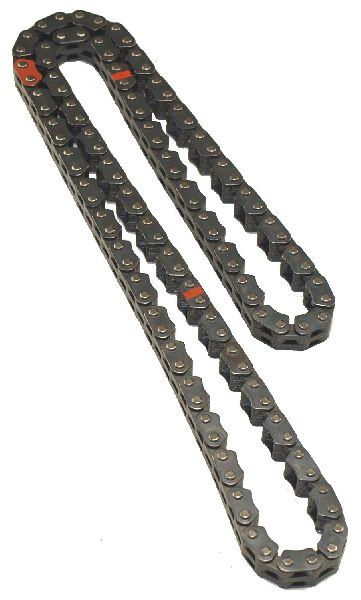
- Engine Timing Chain Kit
(OEM #12651450 (For LLT Engine, often included in later kits))— This is the primary failure point. A complete, high-quality kit with chains, guides, and tensioners is required. - Camshaft Position Actuator Solenoid
(OEM #12636175)— Often replaced as a preventative measure during a timing job, or if diagnosis confirms it is faulty. - Camshaft Phaser / Actuator Sprocket — Recommended to be replaced during a timing chain job, and required if the old chain has worn grooves into the sprocket teeth.
- RTV Sealant — Required for re-sealing the front timing cover after replacement.
Related Codes That Often Appear With This One
- P0008 — Indicates a general 'Engine Position System Performance Bank 1' error. This is often the first, more generic code to appear when the primary timing chain begins to stretch, before the ECM isolates the problem to a specific camshaft.
- P0016 — Correlation error on Bank 1 Intake Camshaft. Seeing multiple correlation codes (P0016, P0017, P0018, P0019) strongly points to a base timing issue with the primary chain affecting all camshafts.
- P0017 — Correlation error on Bank 1 Exhaust Camshaft.
- P0018 — Correlation error on Bank 2 Intake Camshaft.
Technical Service Bulletins (TSBs) & Recalls
- PIP3423P: Instructs technicians to inspect for loose timing chains or tensioners when codes P0016, P0017, P0018, P0019, P0008 or P0009 are set.
- 12-06-01-009F: Announces the availability of updated, comprehensive timing chain service kits for the High Feature V6 and states they should be used for repairs when DTCs P0008, P0009, P0016, P0017, P0018 and/or P0019 are present.
- 11340C (Special Coverage): Extends warranty coverage for premature timing chain wear to 10 years or 120,000 miles for specific models, including the 2009 Enclave, citing the original oil change intervals as a cause.
Platform-Specific Known Issues
- The 3.6L V6 engines (LY7 and LLT) are widely known for premature timing chain stretching. GM issued Special Coverage Adjustment #11340C for 2009 models, extending the warranty to 10 years/120,000 miles due to this issue, acknowledging that original oil change intervals could cause premature wear.
- TSB 12-06-01-009F provides detailed information for technicians on the correct, updated timing chain service kits to use for repairs related to codes P0008, P0017, P0018, and P0019.
- Owner complaints filed with the NHTSA explicitly cite "WORN OUT TIMING CHAIN AND GEARS CAUSING ENGINE CODES P0017, P0018, AND P0019" for these vehicles. [Owner complaints]
- The root cause is often traced back to the original Oil Life Monitor (OLM) programming, which allowed for oil change intervals that were too long, leading to oil degradation and increased friction and wear on the chains.
Mechanic-Grade Diagnostic Values
- Camshaft Position Actuator (VVT) Solenoid Resistance — expected: 6.9 to 7.9 Ohms at 68°F (20°C). Failure: An open circuit (no reading) or resistance outside the specified range indicates a faulty solenoid coil.
- Camshaft Position Sensor (CMP) Signal Voltage — expected: 0.5V to 4.5V with the engine running. Failure: Voltage that is stuck high, low, or not changing with engine speed can indicate a failed sensor or wiring issue.
- Crankshaft-to-Camshaft Correlation Angle — expected: Less than 10 degrees of deviation at idle. Failure: The ECM will set code P0019 when the detected difference between the crankshaft and Bank 2 exhaust camshaft position exceeds 10.0 degrees.
- Crankshaft Reluctor Wheel Position — expected: 25 to 26 mm from the machined surface of the crankshaft throw to the edge of the open space on the reluctor wheel. Failure: A measurement outside this range indicates the reluctor wheel has slipped on the crankshaft, requiring crankshaft replacement.
Scan Tool Commands That Help

- GDS2 / Tech2 or equivalent professional scan tool: Camshaft Position Actuator Solenoid Control — Used to command the VVT solenoid ON and OFF to verify it is functioning and to observe if the camshaft angle changes accordingly in live data. This helps isolate a faulty solenoid from a mechanical phaser or oil pressure issue.
- GDS2 / Tech2 or equivalent professional scan tool: Crankshaft Position Variation Learn — This procedure is mandatory after replacing a timing chain, camshaft, crankshaft, or any related sensors. It allows the ECM to learn the new minor variations in the sensor signals to prevent false misfire detection or timing codes.
Wiring & Ground Locations
- ECM (Engine Control Module) — In the engine compartment, located on the front of the motor.. The ECM is the central computer that receives signals from the crank/cam sensors and controls the VVT solenoids. Its power and ground connections are critical for accurate diagnosis.
- G101 / G106 (Engine Block/Frame Grounds) — Typically located on the lower front of the engine block and/or the front frame cross rail.. These are the primary ground points for the ECM. A poor ground here can cause erratic sensor readings and unpredictable behavior, mimicking component failure.
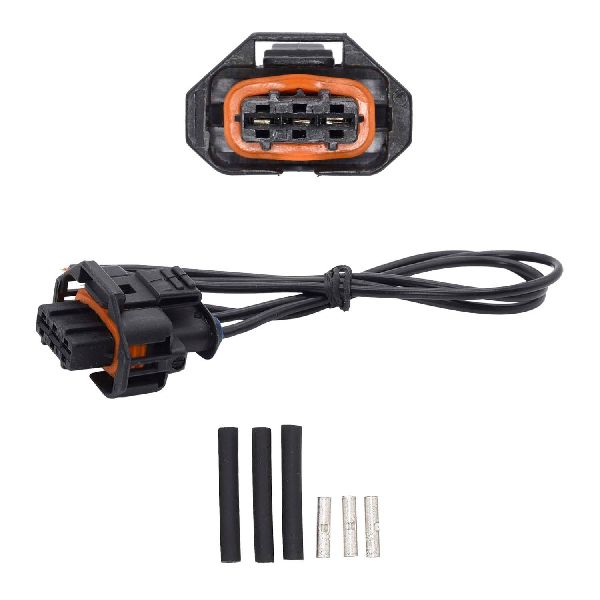
- Bank 2 Camshaft Position Sensor/Solenoid Connectors — On the front of the engine (radiator side), on the cylinder head cover. The exhaust ('B') sensor and solenoid are typically the lower of the two pairs.. These connectors and their wiring are the most direct place to test for signal voltage, resistance, and shorts/opens when diagnosing a sensor or solenoid circuit.
Real Owner Repair Stories
- YouTube channel 'Fix it Angel' (2012 GMC Acadia (platform mate with same 3.6L LLT engine)) — Check engine light with codes P0018 and P0019, rough running, and rattling noise.
❌ Tried (didn't work) Initial diagnosis pointed directly to timing.
✅ What actually fixed it A complete timing job was performed. The video shows the Bank 2 timing chain was extremely loose upon removing the valve cover. The mechanic also noted that the loose chain had worn significant grooves into the teeth of the camshaft phaser sprockets, requiring them to be replaced as well. The final fix was a new timing chain kit and new camshaft phasers. - Ford Truck Enthusiasts Forums user (2012 Ford F-150 3.5L (different vehicle, but illustrates a common pitfall)) — P0019 code appeared immediately after a DIY timing chain replacement.
❌ Tried (didn't work) Replacing the Camshaft Position Sensor (CPS)., Replacing the VVT solenoid., Performing the entire timing job a second time, correcting a suspected misplaced phaser gear.
✅ What actually fixed it The user was left stumped as the code returned even after re-doing the timing job correctly. This story highlights the extreme precision required for this repair and how errors in reassembly (even when corrected) can lead to persistent, difficult-to-diagnose codes, potentially due to damaged components or other overlooked issues.
OEM Part Supersession History
Various older VVT Solenoid part numbers→12636175 (GM Genuine Part)— Part consolidation and potential design improvements for reliability.
Heads up: While other aftermarket parts exist, using the latest GM OE-spec part is recommended for VVT system components to ensure correct calibration and performance.Early Timing Chain Kits (e.g., 12650230 for 2007 models)→Later kits for specific engine codes (e.g., LLT)— Updates to chain, tensioner, and guide designs to improve longevity.
Heads up: TSB #12-06-01-009F explicitly states that for a stretched chain condition, the camshaft actuators (phasers) and idler gears should NOT be replaced unless they are found to be worn or damaged upon inspection.
Model Year Variations Within This Range
- 2008 vs. 2009-2015: The 2008 Enclave used the 3.6L LY7 V6 with port fuel injection. Starting in 2009, the Enclave was upgraded to the 3.6L LLT V6, which introduced Spark-Ignition Direct-Injection (SIDI). The LLT engine has a higher compression ratio (11.3:1 vs 10.2:1), different pistons with bowls for the fuel spray, and piston oil squirters for improved cooling. While both engines suffer from the same fundamental timing chain wear issue, the LLT is a more complex engine.
Helpful Videos

Used OEM Parts in Stock
New Aftermarket Parts Available


The information in this article is provided for general reference and educational purposes only. Vehicle specifications, procedures, and part compatibility can vary by production date, trim level, and region. Always consult your vehicle's factory service manual and verify part numbers before purchasing or performing repairs. Safety-critical components such as airbags, seat belts, and braking systems should be installed by a qualified professional.
- Buick ENCLAVE:
- 🎬 Helpful Videos
- 🛍️ Shop This Part
- What's Unique About the 2008-2015 Buick ENCLAVE
- Diagnostic Flowchart
- Symptoms You May Notice
- Most Likely Causes
- Rare But Worth Checking
- Diagnosis Steps
- Parts You'll Likely Need
- Related Codes That Often Appear With This One
- Technical Service Bulletins (TSBs) & Recalls
- Platform-Specific Known Issues
- Mechanic-Grade Diagnostic Values
- Scan Tool Commands That Help
- Wiring & Ground Locations
- Real Owner Repair Stories
- OEM Part Supersession History
- Model Year Variations Within This Range
- 🎟️ Get 5% Off