

P0018 on 2007-2010 Pontiac G6: Crankshaft Position Correlation Causes and Fixes
On a 2007-2010 Pontiac G6 with the 3.6L V6 engine, code P0018 almost always indicates a stretched timing chain. This is a serious, well-documented, and labor-intensive repair. The primary cause is premature chain wear, often accelerated by extended oil change intervals. Expect repair costs to range from $1,500 to over $2,800. Ignoring this can lead to catastrophic engine failure.
- P0018 on a G6 with the 3.6L V6 is a strong indicator of a stretched timing chain, a known issue with this engine.
- Do not waste money replacing sensors first. The problem is almost certainly mechanical.
- This is a serious issue. Driving with a loose timing chain risks catastrophic, engine-destroying failure.
- The repair is expensive and complex, requiring the replacement of all timing chains, tensioners, and guides with updated parts.
- Regular oil changes with high-quality, correct-spec oil are critical for the longevity of the timing system on this engine.
What's Unique About the 2007-2010 Pontiac G6
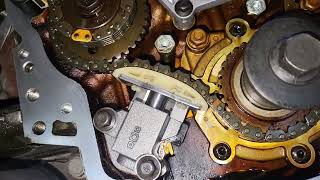
The 2007-2010 Pontiac G6 equipped with the 3.6L V6 (RPO code LY7) is part of a large family of GM vehicles notorious for premature timing chain wear. The issue was so prevalent that GM issued multiple Technical Service Bulletins (TSBs) and a Special Coverage Adjustment. Two key factors contributed to this problem: early timing chain designs that were susceptible to stretching and an overly optimistic Oil Life Monitor (OLM) system. The original OLM algorithm allowed for excessively long oil change intervals, leading to oil degradation and sludge, which accelerated the wear on the chains and tensioners. GM later issued a software update to shorten the oil change interval 🎬 Watch: Why these GM 3.6L timing chains fail so often. to combat this very problem.
Diagnostic Flowchart
Tap your situation to follow the diagnostic path that matches what you're seeing on this vehicle.
Symptoms You May Notice
- Check Engine Light is on
- Engine rattling noise, especially on cold starts, that sounds like a clacking or ticking.
- Rough or uneven idle
- Reduced engine power and sluggish acceleration
- Poor fuel economy
- Engine stalling, especially when coming to a stop
- Engine surging
- Replacing only the camshaft position sensor without checking mechanical timing.
- Replacing only the crankshaft position sensor without checking mechanical timing.
- Replacing the VVT solenoids (camshaft actuators) when the timing chains are the actual problem.
- Performing an oil change and assuming it fixed the problem when the light goes out temporarily. The slack in the chain can be momentarily taken up by fresh, high-pressure oil, but the code will return as the chain remains stretched.
Most Likely Causes
- Stretched Timing Chains 🔴 High Probability The GM 3.6L LY7 engine has a well-documented history of premature timing chain wear due to a combination of chain design and oil maintenance issues. GM released TSB #12-06-01-009F specifically addressing this issue, which leads to codes like P0018, P0008, and others.
How to confirm: A technician can use a scan tool to monitor camshaft deviation angles in real-time. A deviation on the Bank 2 intake cam greater than 6-9 degrees is a strong indicator. Physical inspection for chain slack by removing the engine's front timing cover is the definitive confirmation but is labor-intensive.
Typical fix: Replace all three timing chains, all tensioners, and all guides using an updated parts kit. It is critical to use the revised parts to prevent a recurrence.
Est. part cost: $250-$500 - Failed Timing Chain Tensioners or Guides 🔴 High Probability The hydraulic tensioners and plastic guides are part of the same system and wear out concurrently with the chains. A failing tensioner loses its ability to keep the chain taut, and broken guide pieces can fall into the oil pan, potentially clogging the oil pickup tube.
How to confirm: Diagnosed during the physical inspection for a stretched timing chain. Broken pieces of plastic guides may be found in the oil pan upon removal.
Typical fix: Always replaced as part of a complete timing chain service kit. It is considered malpractice to replace only the chains without the tensioners and guides.
Est. part cost: $0 (Included in kit) - Low or Dirty Engine Oil 🟡 Medium Probability The camshaft phasers and timing chain tensioners are hydraulically operated by engine oil pressure. Infrequent oil changes, as encouraged by the original Oil Life Monitor (OLM) calibration, lead to oil breakdown and sludge. This starves the timing components of proper lubrication, dramatically accelerating wear. GM's Special Coverage #11340C acknowledged this by including an ECM reprogram to shorten oil change intervals.
How to confirm: Check the oil level and condition. A low oil level or sludgy, dark oil is a major red flag. Review service records for oil change frequency. Verify oil pressure is above the minimum specification of 10 psi at idle.
Typical fix: Perform an oil and filter change with a high-quality 5W-30 full synthetic oil and a quality filter. If this doesn't resolve the code, the mechanical damage to the timing components is already done and they must be replaced.
Est. part cost: $50-$100 - Shifted Crankshaft Reluctor Wheel ⚪ Low Probability While less common than chain stretch, GM TSB #PIP3423P notes that the reluctor wheel pressed onto the crankshaft can move, causing a mismatch between the crank sensor signal and cam sensor signals even with perfect mechanical timing. The problem is significant enough that engine remanufacturers like Jasper install a set screw on the reluctor wheel to prevent it from spinning.
How to confirm: This is difficult to diagnose. TSB #PIP3423P suggests it may be possible to inspect the wheel's position through the crankshaft position sensor bore with a borescope. A key measurement for a good reluctor wheel is 25-26 mm from the machined surface of the crank throw to the edge of the open space in the wheel. Otherwise, it requires crankshaft replacement.
Typical fix: The crankshaft must be replaced, as the reluctor wheel was not originally serviced separately.
Est. part cost: $300-$700
Rare But Worth Checking
- Faulty Camshaft Position Sensor: While possible, it's much less likely than a mechanical timing issue on this engine. Owners and technicians often replace sensors first as a cheap guess, only to find the code returns because the underlying problem is a stretched chain.
- Faulty Crankshaft Position Sensor: Similar to the camshaft sensor, this is an inexpensive part to replace, but it is rarely the root cause of P0018 on the 3.6L G6. The issue is almost always mechanical correlation, not a sensor failure.
- Faulty Camshaft Phaser/Actuator or Solenoid: A phaser stuck in one position or a clogged solenoid screen can cause a correlation code. However, these failures are secondary to the primary timing chain stretch issue on this platform. The solenoids can be swapped between banks for diagnosis.
Diagnosis Steps
- Scan the vehicle for all DTCs. Note P0018 and any other related codes like P0008, P0016, P0017, or P0019. The presence of multiple codes strengthens the timing chain diagnosis.
- Check the engine oil level and condition. If the oil is low, dirty, or of the wrong viscosity, correct this first, clear the codes, and re-test. This is a critical first step due to the hydraulic nature of the tensioners.
- Listen for a distinct rattling or chain-slap sound from the front (passenger side) of the engine, especially during a cold start for the first 2-3 seconds. This is a classic sign of a loose timing chain.
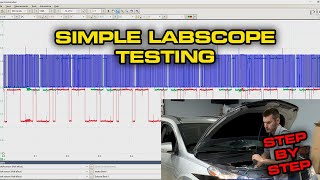
- Using an advanced scan tool, monitor the camshaft position deviation data pids for Bank 2. A significant deviation that changes with RPM points towards a mechanical timing issue rather than a sensor fault. A deviation greater than 6-9 degrees is a strong failure indicator. 🎬 See how to test timing chain stretch with a labscope.
- If chain stretch is suspected, the next step is to remove the timing cover for a physical inspection of the chains, guides, and tensioners. This is a labor-intensive step but provides 100% confirmation of the diagnosis.
- While sensors are unlikely to be the cause, their wiring and connectors can be inspected for damage or oil contamination.
Parts You'll Likely Need
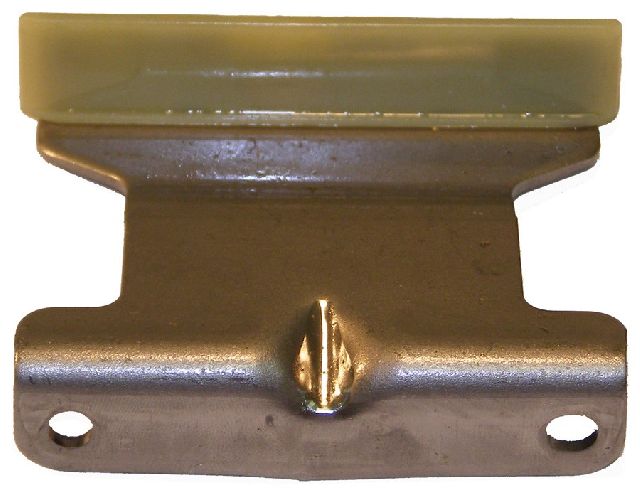
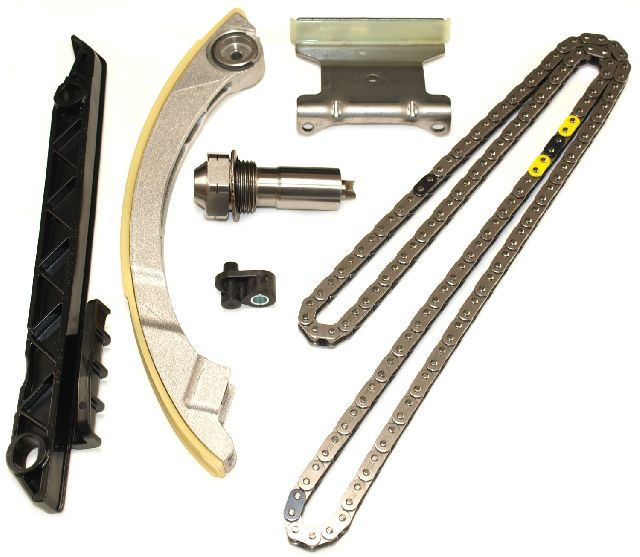
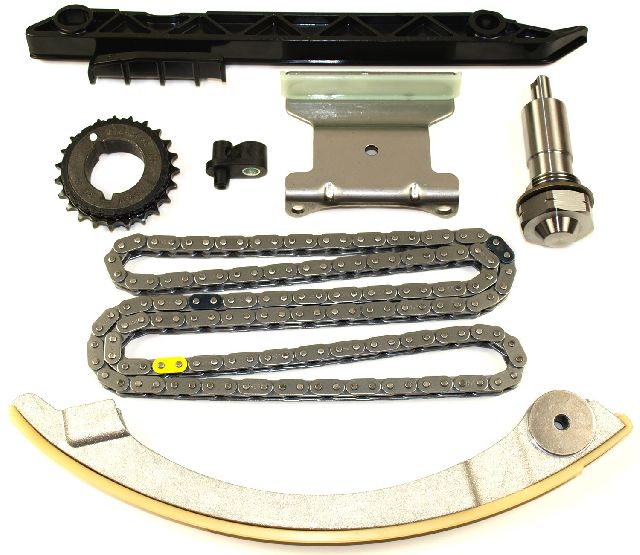
- Timing Chain Kit
(OEM #ACDelco 12651450 (For 2008-2009 LY7))— This is the primary failure point. The kit should include all three chains, three tensioners, guides, and sometimes sprockets. Using the complete, updated kit is essential for a lasting repair.
Trusted brands: ACDelco (GM OE), Cloyes
OEM price range: $350-$500
Aftermarket price range: $200-$350
Related Codes That Often Appear With This One
- P0008 — Indicates a general engine position system performance error. This is often the first code to appear and is a classic companion to the more specific bank codes when the timing chain stretches.
- P0016 — Indicates a crank/cam correlation error on Bank 1 (the bank near the firewall). It's very common to see codes for both banks (P0016/P0017/P0018/P0019) when the primary timing chain is stretched, as it affects both cylinder heads.
- P0017 — Indicates a crank/cam correlation error for the exhaust camshaft on Bank 1, pointing to the same root cause.
- P0019 — Indicates a crank/cam correlation error for the exhaust camshaft on Bank 2. Seeing P0018 and P0019 together strongly suggests a Bank 2-specific issue or a significant primary chain problem.
Technical Service Bulletins (TSBs) & Recalls
- 12-06-01-009F: Information on High Feature V6 Timing Chain Kits and Chain Guide Replacements, for repairing stretched timing chains setting DTCs P0008, P0009, P0016, P0017, P0018 and/or P0019.
- PIP3423P: Provides information that DTCs P0016, P0017, P0018, P0019, P0008 or P0009 may be set and instructs technicians to inspect for loose timing chains or a shifted crankshaft reluctor wheel.
- 11340C: Special Coverage Adjustment for premature timing chain wear, extending the warranty to 10 years/120,000 miles and including an ECM reprogram for the oil life monitor.
Platform-Specific Known Issues
- GM issued TSB #12-06-01-009F, which acknowledges that DTCs P0008, P0009, P0016, P0017, P0018, and/or P0019 can be set by stretched timing chains on the 3.6L V6 engine. It provides information on updated timing chain service kits.
- GM also issued TSB #PIP3423P, which instructs technicians to inspect for loose timing chains or a shifted crankshaft reluctor wheel when these codes are present.
- A special coverage adjustment (#11340C) was issued for some GM vehicles with this engine, extending the warranty for timing chain replacement to 10 years or 120,000 miles.
Mechanic-Grade Diagnostic Values
- Camshaft Position Actuator Solenoid Resistance — expected: 7-12 Ohms. Failure: A reading outside this range, or an open/short circuit, indicates a failed solenoid.
- Engine Oil Pressure (3.6L LY7) — expected: Minimum 10 psi (69 kPa) at idle; Minimum 20 psi (138 kPa) at 2,000 RPM. Failure: Pressure below these minimums can starve the VVT system and set timing codes.
- Cam/Crank Correlation Angle (Scan Tool Data) — expected: Near 0 degrees at idle.. Failure: The ECM will set P0018 if the Bank 2 intake cam is detected as being greater than 6° retarded or 9° advanced relative to the crankshaft.
- Camshaft Position Sensor Supply Voltage — expected: 4.5 to 5.0 Volts. Failure: Voltage outside this range indicates a wiring or ECM problem.
Scan Tool Commands That Help
- Tech2 / GDS2 or equivalent professional scan tool: Camshaft Position Actuator Solenoid Control — This bidirectional command allows a technician to manually command the Bank 2 intake solenoid ON and OFF to verify the solenoid clicks and that the control circuit from the ECM is functioning correctly.
Wiring & Ground Locations
- G106 — On the right front of the engine for 3.6L models.. This is a primary engine ground. A poor connection here can cause erratic behavior from various engine sensors and the ECM, potentially leading to incorrect diagnostic codes.
- G105 — On a transmission stud, located underneath the throttle body.. This ground is shared by the Engine Control Module (ECM) and Transmission Control Module (TCM). A poor connection at G105 has been documented to cause no-start conditions and various communication errors, and could contribute to spurious sensor-related fault codes.
Real Owner Repair Stories
- Chevrolet Forum user (2009 Chevrolet Equinox 3.6L (LY7 engine family)) — Persistent timing chain correlation codes for Bank 2.
❌ Tried (didn't work) Replacing VVT solenoids., Replacing timing chain tensioners with new GM parts.
✅ What actually fixed it The user discovered excessive play in a recently replaced (non-OEM) camshaft phaser. The final, successful repair involved replacing all timing chains, tensioners, and camshaft phasers with genuine GM parts, which resolved the correlation codes. - Reddit user @kappakingtut2 (Unknown year/model with P0018) — Check Engine Light with P0018, no other symptoms.
❌ Tried (didn't work) Performing an oil change. The light went out for a few days but returned.
✅ What actually fixed it The final diagnosis confirmed the root cause was a timing chain issue, requiring mechanical replacement. This highlights how an oil change can temporarily mask the symptom by improving hydraulic pressure to the tensioners, but does not fix the underlying stretched chain.
"I Checked Everything" — The Actual Cause
- In the context of P0018, this pattern appears as 'all electrical tests pass, but the code remains.' A common scenario is when a technician tests or replaces the camshaft sensors and VVT solenoids, finds they are functioning correctly, yet the code persists. The actual cause, as seen in real repair stories, is almost always the mechanical failure of the timing chains, guides, or phasers which electrical tests cannot identify.
OEM Part Supersession History
Various early designs→Updated Timing Chain Kits (e.g., ACDelco 12651450)— The original timing chains were prone to premature stretching. Updated kits feature more durable chains and redesigned guides to improve longevity.
Heads up: It is critical to use the latest available OEM or equivalent aftermarket kit specified for the LY7 engine. Installing older design parts will lead to a repeat failure.
Model Year Variations Within This Range
- 2007: For the 2007 model year, the 3.6L LY7 V6 engine was introduced as the standard engine for the GTP trim level of the G6 sedan and coupe, paired with a 6T70 6-speed automatic transmission.
Helpful Videos
We Have This Part in Stock


The information in this article is provided for general reference and educational purposes only. Vehicle specifications, procedures, and part compatibility can vary by production date, trim level, and region. Always consult your vehicle's factory service manual and verify part numbers before purchasing or performing repairs. Safety-critical components such as airbags, seat belts, and braking systems should be installed by a qualified professional.
- Pontiac G6:
- 🎬 Helpful Videos
- 🛍️ Shop This Part
- What's Unique About the 2007-2010 Pontiac G6
- Diagnostic Flowchart
- Symptoms You May Notice
- Most Likely Causes
- Rare But Worth Checking
- Diagnosis Steps
- Parts You'll Likely Need
- Related Codes That Often Appear With This One
- Technical Service Bulletins (TSBs) & Recalls
- Platform-Specific Known Issues
- Mechanic-Grade Diagnostic Values
- Scan Tool Commands That Help
- Wiring & Ground Locations
- Real Owner Repair Stories
- "I Checked Everything" — The Actual Cause
- OEM Part Supersession History
- Model Year Variations Within This Range
- 🎟️ Get 5% Off