

P0018 on 2010-2017 GMC Terrain V6: Crankshaft/Camshaft Correlation Causes and Fixes
On a 2010-2017 GMC Terrain with a V6 engine, code P0018 almost always indicates stretched timing chains. This is a well-documented issue due to factors including oil quality and the design of the chains and tensioners. GM acknowledged this with special coverage programs and updated parts. It is a labor-intensive repair, often costing between $1,500 and $2,800+ at a shop.
- P0018 on a V6 GMC Terrain is a serious code that most often points to stretched timing chains.
- Do not ignore this code. Driving with a bad timing chain can lead to catastrophic engine failure.
- The first and easiest diagnostic step is to check your engine oil level and condition. Low or dirty oil can cause similar symptoms.
- Replacing just the sensors is unlikely to fix the problem. The issue is almost always mechanical.
- This is not a DIY-friendly repair. Timing chain replacement requires extensive labor and special tools, and should be left to a professional.
What's Unique About the 2010-2017 Gmc TERRAIN
The GM 3.0L (LF1) and 3.6L (LFX) "High Feature" V6 engines used in this generation of the Terrain are notorious for premature timing chain stretching. This is not a random part failure but a widely recognized pattern. Key contributing factors include an overly optimistic Oil Life Monitor (OLM) system encouraging extended oil change intervals, which degrades oil quality, and the design of the timing chains themselves. The issue was so prevalent that GM issued multiple Technical Service Bulletins (TSBs) and a special warranty extension (Special Coverage Adjustment #11340C) covering the repair for 10 years or 120,000 miles. While other causes are possible, the high probability of timing chain failure on this specific platform means P0018 should be taken very seriously and investigated with a focus on mechanical timing.
Diagnostic Flowchart
Tap your situation to follow the diagnostic path that matches what you're seeing on this vehicle.
Symptoms You May Notice
- Check Engine Light is on
- Rough or fluctuating idle
- Reduced engine power and poor acceleration
- Engine may hesitate or stall
- Rattling or slapping noise from the front of the engine, especially on cold startup, that may quiet down as the engine warms up
- Decreased fuel economy
- Finding metal shavings in the engine oil during an oil change
- Replacing only the camshaft position sensor without verifying mechanical timing.
- Replacing only the crankshaft position sensor.
- Replacing the camshaft actuator solenoids without first checking oil pressure and condition, or testing the solenoids' function.
- Replacing only one timing chain or one tensioner instead of the complete kit.
Most Likely Causes
- Stretched Timing Chains 🔴 High Probability This is a well-documented issue on GM's 3.0L and 3.6L V6 engines, acknowledged by TSBs #PIP3423P and #12-06-01-009F. The primary cause is a combination of extended oil change intervals (recommended by the factory oil life monitor) leading to oil breakdown, and the original chain design. Poor lubrication causes the chain pins to wear, effectively 'stretching' the chain.
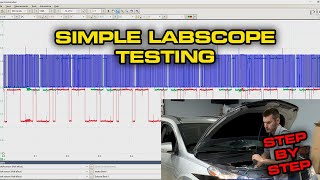
How to confirm: A technician can use a scan tool to view camshaft position deviation data (camshaft retard offset). 🎬 Watch: How to use a labscope to diagnose timing chain stretch. Significant and persistent deviation (more than +/- 4 degrees) points to a stretched chain. The ultimate confirmation is a physical inspection, which requires removing the front engine cover to check for slack in the chains by pressing on the guides.
Typical fix: Replace all three timing chains, all tensioners, and all guides. This is done as a complete kit. It is also highly recommended to replace the water pump and oil pump at the same time since they are accessible during this repair.
Est. part cost: $300-$600 - Failed Timing Chain Tensioners or Guides 🔴 High Probability The tensioners are hydraulic and rely on clean oil and sufficient oil pressure to function. Sludge from infrequent oil changes can clog them, causing them to fail. The plastic guides can become brittle and break, allowing the chain to slap against the front cover, sometimes even knocking a hole in it. These parts wear concurrently with the chains.
How to confirm: These are inspected during a timing chain service. A rattling noise is a strong indicator of a failed tensioner or a broken guide. The extension of the tensioner pistons can be visually measured once the cover is off; excessive plunger extension indicates a stretched chain.
Typical fix: Replace as part of a complete timing chain kit. It is not recommended to replace only a single failed tensioner or guide.
Est. part cost: $300-$600 (part of kit) - Low or Dirty Engine Oil 🟡 Medium Probability The camshaft phasers (actuators) that adjust timing are operated by oil pressure. If the oil is low, or if sludge from extended oil change intervals clogs the small passages, the phasers cannot operate correctly, which can trigger a correlation code. This is a primary contributor to the larger timing chain problem.
How to confirm: Check the oil level on the dipstick and inspect its condition. If it's very low or looks like sludge, this is a likely contributor. A mechanic might find heavy sediment buildup under the valve cover.
Typical fix: Perform an oil and filter change using a high-quality, full-synthetic oil meeting the GM DEXOS specification. If the problem was sludge, multiple short-interval oil changes or an engine flush may be needed to clean passages, but this often won't fix a chain that has already stretched.
Est. part cost: $50-$100 - Faulty Camshaft Position Actuator Solenoid ⚪ Low Probability These solenoids can become clogged with oil sludge or fail electrically. While less common than chain stretch, it's a known failure point and a much easier repair to attempt first.
How to confirm: A technician can command the solenoid on and off with a scan tool while observing camshaft timing data. The solenoids for Bank 1 and Bank 2 can also be swapped to see if the trouble code follows the solenoid (e.g., changes to P0016). Resistance can also be checked with a multimeter; a good solenoid should read between 8 and 12 ohms, while a failed one may read in the kilo-ohms or mega-ohms (open circuit).
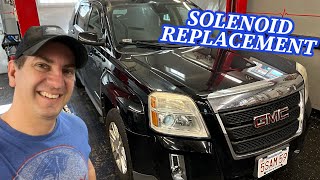
Typical fix: Replace the faulty solenoid for the Bank 2 intake camshaft. 🎬 See this walkthrough on how to replace the camshaft actuator solenoid. It's often recommended to replace both intake and exhaust solenoids on the affected bank at the same time.
Est. part cost: $30-$80
Rare But Worth Checking
- Faulty Camshaft or Crankshaft Position Sensor: While possible, it's far less common for the sensor to fail than for the mechanical timing components to wear out on this engine. People often replace these first, but it rarely fixes the P0018 code on this platform.
- Slipped Crankshaft Reluctor Wheel: The reluctor wheel is what the crankshaft sensor reads. In some cases, it can shift its position on the crankshaft, causing a timing correlation code even if the chains are perfectly fine. This is mentioned in GM Preliminary Information Bulletin #PIP3423K and requires inspection with a borescope through the crank sensor hole or oil pan removal to confirm.
- Failed Camshaft Phaser/Actuator: The phaser itself, which is the gear on the end of the camshaft, can fail. The internal locking pin can break, causing a rattle on startup and preventing it from maintaining base timing. This is usually diagnosed during the timing chain job when a technician finds the camshaft can be turned independently of the sprocket.
- Faulty Engine Control Module (ECM): This is extremely rare. The ECM should only be considered after all other mechanical and electrical possibilities have been exhaustively ruled out.
Diagnosis Steps
- Verify engine oil level and condition. Correct if low or dirty. Use of a DEXOS-approved synthetic oil is critical for these engines.
- Use a professional scan tool (like a GM GDS2 or equivalent) to read freeze frame data and check for any other stored trouble codes.
- Observe live data for desired vs. actual camshaft position angles for Bank 2 Intake. Also monitor the 'Camshaft Position Variance' PID. A consistent variance greater than 4-5 degrees at idle or 1000 RPM strongly suggests a mechanical timing issue.
- Command the Bank 2 intake camshaft actuator solenoid on and off with the scan tool to verify its response.
- Swap the Bank 2 intake solenoid with the Bank 1 intake solenoid. Clear codes and drive the vehicle. If the fault moves to Bank 1 (triggering P0016), the solenoid is bad. If P0018 returns, the problem is not the solenoid.
- Inspect wiring and connectors for the camshaft and crankshaft sensors for any damage, oil contamination, or loose connections.
- If a stretched chain is suspected, proceed with mechanical inspection. This involves significant disassembly to remove the engine front cover to physically inspect the timing chains for slack, check guide integrity, and verify timing marks.
- While the engine is open, inspect the crankshaft reluctor wheel for any signs of movement or damage as per TSB #PIP3423K.
- Check camshaft phasers to ensure they are locked at base timing and do not rotate independently of the camshaft.
Parts You'll Likely Need
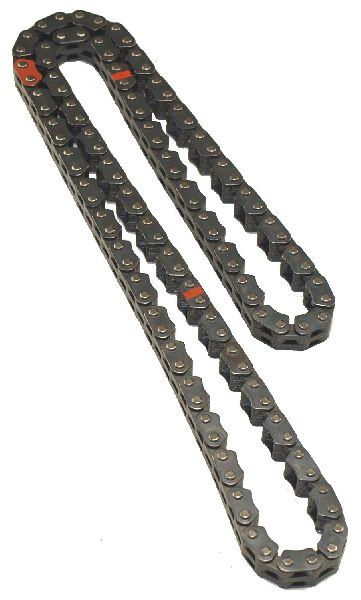
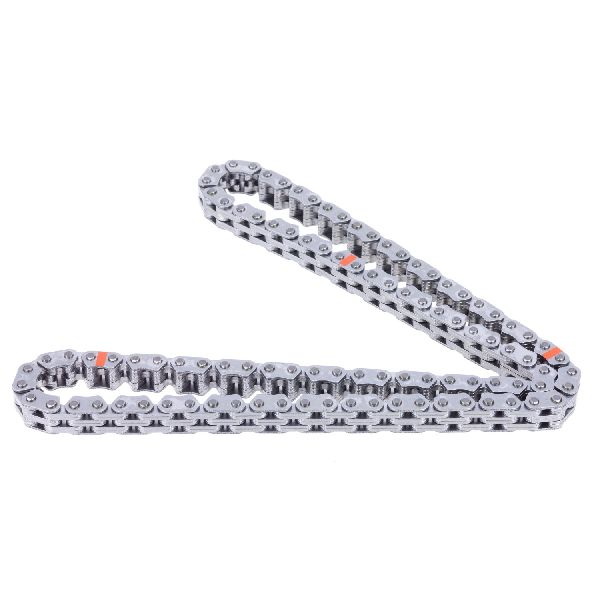
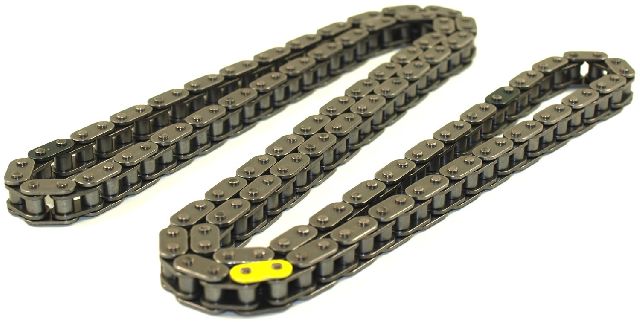
- Engine Timing Chain Kit
(OEM #12650230 (For earlier models), check dealer with VIN. An updated kit may be available.)— This is the most common failure. A complete kit ensures all worn components are replaced.
Related Codes That Often Appear With This One
- P0008 — A general engine timing system performance code for Bank 1. Often appears with P0018.
- P0009 — A general engine timing system performance code for Bank 2. Often appears with P0018.
- P0016 — Crank/Cam correlation error for Bank 1, Intake Cam ('Sensor A'). Indicates the timing issue may affect both banks.
- P0017 — Crank/Cam correlation error for Bank 1, Exhaust Cam ('Sensor B').
- P0019 — Crank/Cam correlation error for Bank 2, Exhaust Cam ('Sensor B'). Often set along with P0018.
Technical Service Bulletins (TSBs) & Recalls
- PIP3423P: Advises technicians to inspect for loose timing chains or tensioners when DTCs P0016, P0017, P0018, P0019, P0008 or P0009 are set. Also mentions checking for a slipped crankshaft reluctor wheel.
- 12-06-01-009F: Discusses the availability of updated timing chain kits for repairing stretched timing chains and explicitly lists P0018 as a related code. It advises against replacing sprockets or guides unnecessarily for a simple stretch condition.
- 11340C: This was the Special Coverage Adjustment that extended the warranty on the timing chains to 10 years/120,000 miles due to premature wear.
Platform-Specific Known Issues
- Stretched Timing Chains: As noted in TSB #12-06-01-009F, GM acknowledged issues with the durability of timing chain kits on these V6 engines, leading to codes like P0018.
- Loose Timing Chains or Tensioners: TSB #PIP3423P specifically instructs technicians to inspect for loose timing chains or tensioners when P0018 (and related codes) are present.
- Special Coverage Adjustment 11340C: GM issued a special warranty extension for this exact problem, covering repairs for 10 years or 120,000 miles from the vehicle's in-service date. While this program has likely expired for most vehicles, it serves as official acknowledgment of the defect.
Mechanic-Grade Diagnostic Values
- Camshaft Position Actuator Solenoid Resistance — expected: 8 to 12 Ohms. Failure: A reading in the kilo-ohms (KΩ) or mega-ohms (MΩ) indicates an open circuit and a failed solenoid.
- Camshaft Position Sensor (3-wire Hall-effect) Signal Voltage — expected: The signal wire should read approximately 5 volts with the key on, engine off. When a metal object (like a socket) is passed in front of the sensor tip, the voltage should drop to 0 volts.. Failure: Voltage does not switch between ~5V and 0V, or is always 0V, indicating a faulty sensor.
Scan Tool Commands That Help
- GM GDS2 / Tech 2 or equivalent: Camshaft Position Actuator Solenoid Control — Used to command the solenoid on and off to verify it is mechanically functioning and to observe the corresponding change in camshaft angle on the scan tool's live data. This helps differentiate a mechanical problem (stuck phaser) from an electrical one (bad solenoid).
Wiring & Ground Locations
- G109 — On the 3.6L V6, this ground is located on the right front of the engine.. A poor engine ground can cause erratic behavior from various engine sensors, including the camshaft and crankshaft position sensors, leading to correlation faults.
- G112 — On the 3.6L V6, this ground is located on the left rear of the engine.. This is another critical engine ground point. Ensuring it is clean and tight is a fundamental step in diagnosing any electronic engine control issue.
- Underhood Fuse Block — Located in the engine compartment, on the driver's side, next to the brake fluid reservoir.. This fuse block contains fuses and relays that power the Engine Control Module (ECM) and the camshaft position sensors. Specifically, fuses F21, F37, F38, F41, F42, F46, F52, F53 and relay K66 may be related to the circuit's operation.
Real Owner Repair Stories
- YouTube channel 'L1 Automotive Training' (GM 3.6L V6 (similar to Terrain's LFX)) — Check Engine Light with camshaft position sensor performance codes (P0346, P0366).
❌ Tried (didn't work) Replacing the camshaft position sensor with a new aftermarket part., Replacing the sensor again with a new AC Delco (OEM) part, which also failed to fix the issue., Swapping the faulty new sensor to the other bank confirmed the problem moved with the sensor, proving the engine, wiring, and PCM were good.
✅ What actually fixed it A third brand new AC Delco sensor finally worked. The technician used an oscilloscope to prove the output signal from the 'new' faulty sensors was incorrect, while the final good sensor produced the correct waveform. The key takeaway was that new parts can be defective out of the box.
OEM Part Supersession History
Various early timing chain kits→Updated timing chain kits (e.g., GM #12650230 was an early kit, later versions exist)— The original timing chains were prone to premature stretching due to link pin wear. Updated kits feature a more robust chain design to improve longevity.
Heads up: Always provide the vehicle's VIN to a GM parts dealer to ensure you receive the latest, correct timing chain kit for the specific engine (LF1 or LFX) and production date.
Model Year Variations Within This Range
- 2010-2012 vs 2013-2017: The primary V6 engine changed from the 3.0L LF1 (2010-2012) to the 3.6L LFX (2013-2017). While different displacements, both are part of the GM High Feature V6 family and unfortunately share the same design susceptibility to timing chain stretch that causes code P0018. Diagnostic procedures are nearly identical for this specific code.
Helpful Videos
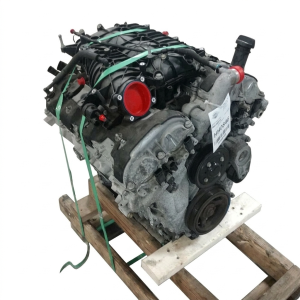
Used OEM Parts in Stock
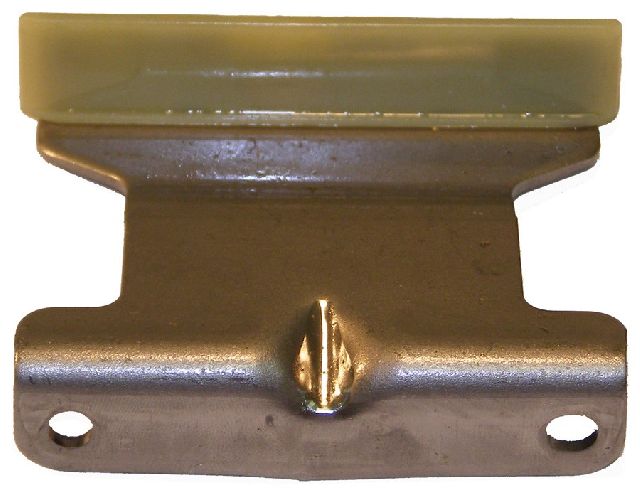
New Aftermarket Parts Available



The information in this article is provided for general reference and educational purposes only. Vehicle specifications, procedures, and part compatibility can vary by production date, trim level, and region. Always consult your vehicle's factory service manual and verify part numbers before purchasing or performing repairs. Safety-critical components such as airbags, seat belts, and braking systems should be installed by a qualified professional.
- Gmc TERRAIN:
- 🎬 Helpful Videos
- 🛍️ Shop This Part
- What's Unique About the 2010-2017 Gmc TERRAIN
- Diagnostic Flowchart
- Symptoms You May Notice
- Most Likely Causes
- Rare But Worth Checking
- Diagnosis Steps
- Parts You'll Likely Need
- Related Codes That Often Appear With This One
- Technical Service Bulletins (TSBs) & Recalls
- Platform-Specific Known Issues
- Mechanic-Grade Diagnostic Values
- Scan Tool Commands That Help
- Wiring & Ground Locations
- Real Owner Repair Stories
- OEM Part Supersession History
- Model Year Variations Within This Range
- 🎟️ Get 5% Off