

P0018 on 2015-2019 Ford Transit V6: Cam/Crank Correlation Causes and Fixes
On a 2015-2019 Ford Transit with a V6 engine, code P0018 is most often caused by a faulty Bank 2 (driver's side) intake VCT solenoid, often due to internal debris or wear. An oil change and replacing the affected solenoid is the most common fix and a crucial first step before suspecting a more serious timing chain issue. Ford TSBs specifically note that debris can cause the VCT solenoid to stick, and recommend cycling the solenoid with a scan tool before replacement.
- P0018 on a Ford Transit V6 indicates a timing mismatch on the driver's side intake camshaft.
- Always check your oil level and condition first; an oil change is an inexpensive and easy first diagnostic step.
- The most likely culprit is a faulty VCT solenoid, which is relatively cheap and easy to replace.
- Do not immediately assume a catastrophic timing chain failure, as this is less common and much more expensive to fix.
- Ignoring the code can be risky; if the cause is a timing chain, it can lead to severe engine damage.
What's Unique About the 2015-2019 Ford TRANSIT
The Ford 3.7L and 3.5L EcoBoost V6 engines in the Transit are known for being sensitive to oil quality and maintenance schedules. The Variable Camshaft Timing (VCT) system, which adjusts cam timing for performance and efficiency, relies entirely on clean oil and stable pressure. Ford has issued multiple Technical Service Bulletins (TSBs) stating that P0018 and related codes can be caused by small debris causing the VCT solenoids to stick. TSB SSM 48423 specifically advises technicians to use a scan tool to cycle the affected solenoid 10 times to attempt to clear debris before replacing any parts. While this code can be a precursor to the more infamous timing chain stretch or cam phaser rattle issues these engines can develop, the problem very frequently starts and ends with the inexpensive and accessible VCT solenoids.
Diagnostic Flowchart
Tap your situation to follow the diagnostic path that matches what you're seeing on this vehicle.
Symptoms You May Notice
- Check Engine Light is on
- Rough or erratic idle
- Reduced engine power and sluggish acceleration
- Engine may hesitate or stall, especially when coming to a stop
- Decreased fuel efficiency
- Rattling noise from the engine, particularly on a cold start, which can be caused by either a bad VCT solenoid or a failing cam phaser
- Replacing the camshaft position sensor without testing it first.
- Assuming the timing chain has failed before properly diagnosing the much more common VCT solenoid issue.
- Replacing cam phasers for a cold start rattle when a faulty VCT solenoid was the actual cause of the noise.
Most Likely Causes
- Faulty Bank 2 Intake VCT Solenoid 🔴 High Probability Multiple Ford TSBs identify sticking VCT solenoids due to debris as a primary cause for this code group. These solenoids have fine internal screens that can become clogged by oil sludge or debris, restricting oil flow to the cam phaser. A broken internal component within the solenoid can also cause it to jam.
How to confirm: Use a bidirectional scan tool to command the solenoid on and off while monitoring engine RPM; a lack of change suggests a failure. TSB SSM 48423 recommends cycling the solenoid 10 times to try and clear it. You can also remove the solenoid and test it with a 12v source or check its internal resistance with a multimeter 🎬 Watch: How to test a VVT solenoid with a multimeter. (typically 5-15 ohms).
Typical fix: Replace the Bank 2 (driver's side) intake VCT solenoid. Many mechanics and owners recommend replacing all four (intake and exhaust on both banks) at the same time due to significant labor overlap and the low cost of the parts.
Est. part cost: $25-$70 per solenoid - Low, Dirty, or Incorrect Viscosity Engine Oil 🟡 Medium Probability The VCT system is entirely dependent on oil pressure to function. These engines are sensitive to oil quality. Extending oil change intervals beyond the recommended 5,000 miles, especially under heavy use, can lead to sludge that clogs the small passages in the VCT solenoids and phasers.
How to confirm: Check the oil level on the dipstick and review vehicle maintenance records. If the oil is low, dark, or the incorrect weight (e.g., 5W-30 instead of the specified 5W-20), this is a likely contributor. Some owners have reported the code cleared after switching to a full synthetic oil.
Typical fix: Perform an oil and filter change using the correct OEM-specified synthetic blend or full synthetic oil and a high-quality filter like Motorcraft. Clear codes and re-evaluate.
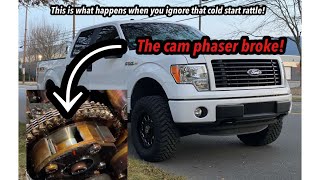
Est. part cost: $40-$90 - Stretched Timing Chain or Failed Cam Phaser ⚪ Low Probability Timing chain stretch is a known, albeit less common, issue on higher-mileage 3.5L/3.7L engines. A stretched chain directly causes a correlation error between the cams and crank. The cam phasers can also fail internally, where a locking pin wears out, causing a distinct rattle on cold starts as oil pressure has yet to build up.
How to confirm: This is a complex diagnosis. A classic symptom is a 2-3 second rattle on cold starts. Definitive diagnosis requires removing the valve cover to inspect for chain slack or using an oscilloscope to compare cam and crank sensor waveforms against a known-good pattern. A scan tool may show a large variance between desired and actual cam angle.
Typical fix: Replace the timing chain, guides, tensioners, and all four cam phasers. This is a labor-intensive job often costing thousands of dollars.
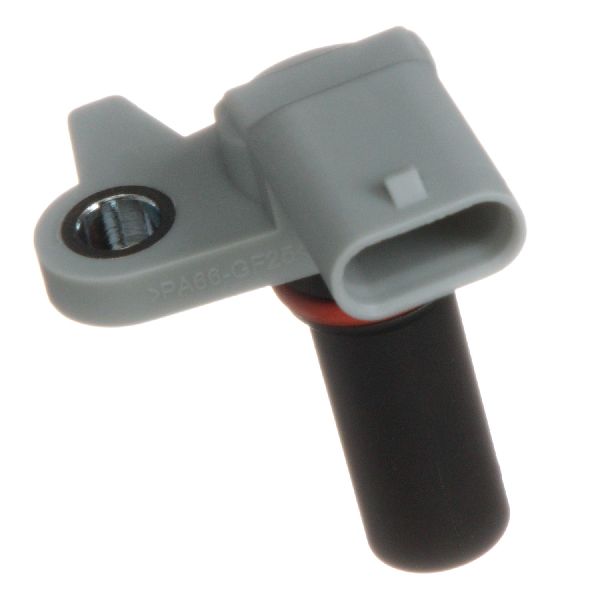
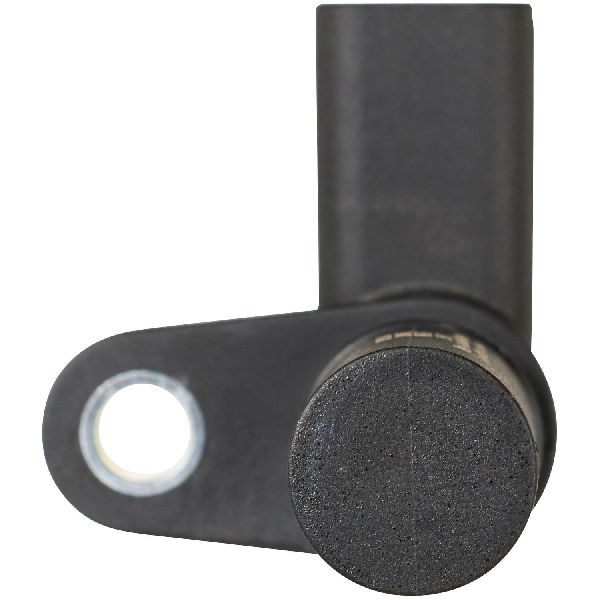
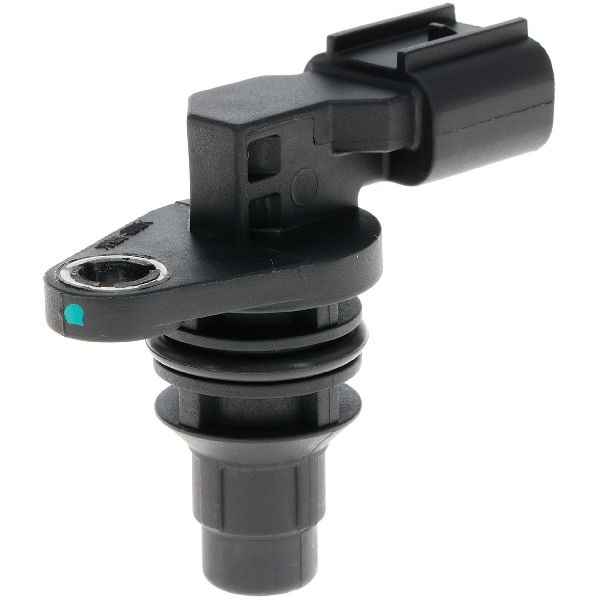
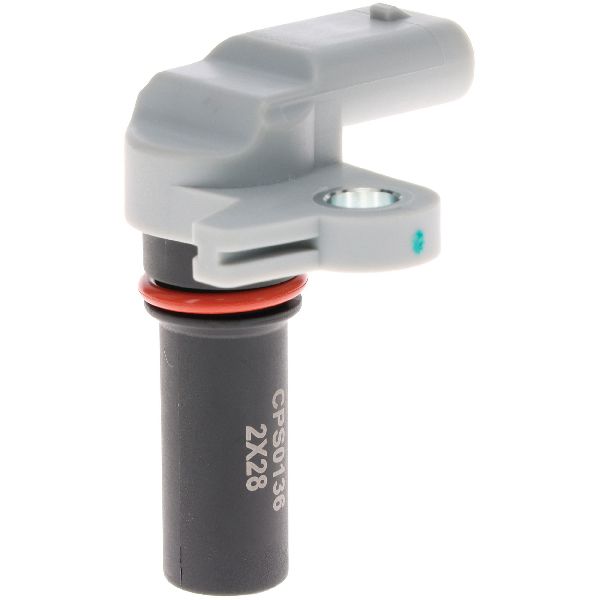
Est. part cost: $400-$900 for a full kit - Faulty Camshaft Position Sensor (CMP) ⚪ Low Probability While the sensor itself can fail, it is less common than the mechanical or hydraulic components it monitors. The PCM often flags the sensor when it's receiving a correct signal about an incorrect timing event.
How to confirm: Swap the Bank 2 intake sensor with the Bank 2 exhaust sensor (if they are the same part number). If the code changes to P0019 (Camshaft Position Correlation Bank 2, Sensor B), the sensor is bad. A multimeter can also be used to test the sensor's resistance against the manufacturer's specification.
Typical fix: Replace the Bank 2 intake camshaft position sensor.
Est. part cost: $20-$50
Rare But Worth Checking
- Damaged or shifted crankshaft reluctor wheel.
- Clogged oil passages in the cylinder head or VCT valve body.
- Failing oil pump or low system oil pressure.
Diagnosis Steps
- Check Engine Oil: Verify the oil level is full and the oil's condition is clean. If it's low, overdue for a change, or the wrong viscosity, perform an oil and filter change with the manufacturer-specified grade (typically 5W-20 for these engines) and a quality filter. Clear the code and see if it returns.
- Inspect Wiring: Visually inspect the wiring harness and connector for the Bank 2 (driver's side) intake camshaft position sensor and the VCT solenoid for any damage, corrosion, or loose connections.
- Scan Tool Actuator Test: Use a bidirectional scan tool to command the Bank 2 intake VCT solenoid. Listen for an audible click from the solenoid and watch for a change in engine RPM or a stall. Per TSB SSM 48423, cycle the solenoid 10 times to attempt to dislodge any debris. Monitor the VCT_INT_DIF1 (Bank 1) and VCT_INT_DIF2 (Bank 2) PIDs; the bank with the issue will show a much larger degree variance.
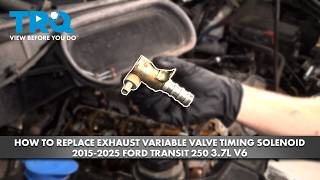
- Test the VCT Solenoid: If the scan tool test fails or is unavailable, remove the VCT solenoid. It is located on the top of the valve cover. 🎬 See this walkthrough on how to replace the solenoid. You can test its resistance with a multimeter (typically 5-15 ohms) or by applying a 12V power source to see if the internal plunger actuates with a click. Inspect the solenoid's screens for sludge or debris.
- Test the Camshaft Position Sensor (CMP): If the VCT solenoid appears to be working, test the CMP sensor. The easiest way is to swap it with another identical sensor on the engine (like the exhaust CMP on the same bank) and see if the trouble code follows the sensor's original position.
- Mechanical Timing Check (Advanced): If all electrical and hydraulic tests pass, the issue is likely mechanical. This requires using an oscilloscope to compare the crankshaft and camshaft sensor waveforms to a known-good pattern to confirm a timing misalignment without a teardown. Alternatively, removing the valve cover is necessary to physically inspect the timing chain for excessive slack. 🎬 Watch: A guide to timing chain replacement and timing marks. This step is best left to experienced technicians.
Parts You'll Likely Need
- Variable Camshaft Timing (VCT) Solenoid
(OEM #8L3Z-6M280-B)— This is the most frequent failure point for P0018 on this platform, as documented by Ford's own service bulletins. Note: This part number is for the 3V V8 engines but is often cited; the correct part for the 3.5/3.7L Cyclone engine may differ. Always verify with VIN. A common part for the 3.5/3.7L is BL3Z-6M280-B or 7T4Z-6M280-C.
Trusted brands: Motorcraft, Dorman
OEM price range: $40-$70
Aftermarket price range: $25-$50 - Camshaft Position Sensor
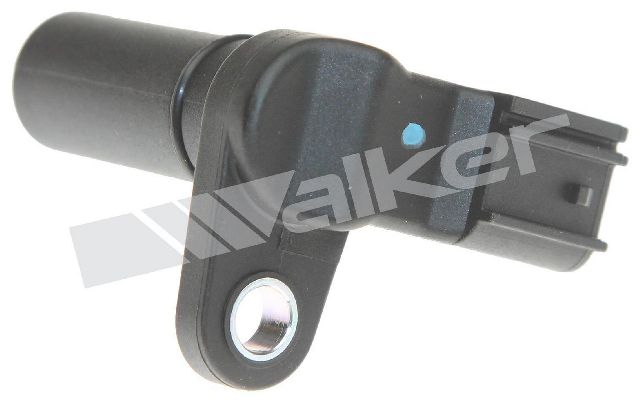
(OEM #Motorcraft DU-87 (example, verify by VIN))— Replaced if the sensor itself is tested and found to be faulty. It's a less common cause than the VCT solenoid or timing components.
Trusted brands: Motorcraft, Bosch, NTK
OEM price range: $25-$50
Aftermarket price range: $15-$35
Related Codes That Often Appear With This One
- P0016 — This is the same correlation fault but for Bank 1. If both appear, it may point more strongly to a systemic issue like low oil pressure or a stretched timing chain affecting the whole engine.
- P0021 — This code is 'Intake Camshaft Position Timing - Over-Advanced (Bank 2)'. It often appears with P0018 as it indicates a problem with the VCT system's ability to control the intake cam on that bank, which can be caused by the same faulty solenoid or phaser.
- P0019 — This is the same correlation fault but for the exhaust camshaft on Bank 2 (Sensor B). If seen with P0018, it points to a problem affecting the entire bank, such as an oil pressure issue to that cylinder head or incorrect timing set during a previous repair.
Technical Service Bulletins (TSBs) & Recalls
- SSM 48423: States that P0018 and other VCT codes may be due to small debris causing the VCT solenoid to stick. Crucially, it advises technicians to use the scan tool's pinpoint test HK11 to cycle the affected solenoid 10 times to attempt to clear the debris *before* replacing it.
- SSM 50067: Reiteration of SSM 48423, indicating the VCT solenoid sticking due to debris is a persistent issue across many 2015-2021 Ford/Lincoln vehicles.
- TSB-16-0038: Specifically calls out 2016 Transit vehicles with the 3.5L GTDI engine exhibiting P0018 and other VCT codes at very low mileage (under 2000 miles), pointing to potential early-life component failure or assembly issues.
- SSM 54366: A general bulletin for 2015-2021 vehicles that lists P0018 as one of many VCT-related codes and directs technicians to specific diagnostic pinpoint tests in the service manual.
Platform-Specific Known Issues
- Owner Experience: P0018 and P0021 on F-150 with 75k Miles: An owner of a 2018 F-150 3.5L EcoBoost experienced P0018 and P0021 at 72,000 miles, noting a significant loss of power, especially when towing. The cam phasers had already been replaced at 50k miles for a rattle. The issue persisted after changing spark plugs and returning the vehicle to the stock engine tune, pointing towards a deeper mechanical or VCT system problem.
- Owner Experience: P0018 After DIY Cam Phaser Replacement: An F-150 owner replaced all four cam phasers to fix a cold start rattle but immediately got a P0018 code and a rough idle afterward. This suggests a possible issue with the new phaser itself or, more likely, a slight error in setting the mechanical timing during the complex installation process.
Mechanic-Grade Diagnostic Values
- VCT Solenoid Internal Resistance — expected: 5-20 Ohms. Failure: A reading of infinite resistance (OL) indicates an open coil, while a very low reading (under 2 ohms) indicates an internal short.
- Camshaft Position Sensor (3-wire Hall-effect) Signal Voltage — expected: Switches between ~0V and ~5V (or battery reference voltage) when metal passes by the sensor tip.. Failure: Voltage does not change, or is stuck at 0V or 5V, indicating a failed sensor.
- Camshaft Position Sensor (3-wire Hall-effect) Power Supply Voltage — expected: ~5V (reference voltage from PCM) with key on, engine off.. Failure: Significantly lower or no voltage indicates a wiring or PCM issue, not a sensor failure.
- Scan Tool PID: VCT_ERROR (for each cam) — expected: Should hover around 0 degrees at idle in closed loop. A deviation of more than +/- 5 degrees for an extended time indicates a problem.. Failure: A consistent, large degree error on VCT_ERROR for Bank 2 Intake points to a problem with that phaser or solenoid.
- Scan Tool PID: VCT_INT_DIF2 (Bank 2 Intake Cam Timing Difference) — expected: Should react quickly and accurately to changes in the desired cam angle (VCT_INT_REQ2).. Failure: Slow reaction, overcorrection, or large, unstable curves indicate a sticking VCT solenoid or failing phaser.
Hidden / Shadow Codes Worth Checking
- Mode 6, Test ID $82: This refers to Ford's on-board diagnostic test for Variable Camshaft Timing (VCT) position. It stores statistical data on cam timing performance which can show errors before a full DTC is set. (see via A scan tool capable of reading Mode 6 data, such as the Ford IDS or high-end consumer scanners like FORScan.)
Scan Tool Commands That Help
- Ford IDS (Integrated Diagnostic System) or FORScan: VCT Solenoid On/Off State Control (Bidirectional Test) — This command is used to manually cycle the VCT solenoid to check for mechanical response (an audible click and change in engine RPM). It is the primary method recommended by Ford TSBs to attempt to clear debris from a sticking solenoid before replacement.
- Ford IDS (Integrated Diagnostic System): Datalogger with Histogram Mode for VCT Error PIDs — Used to graphically monitor VCT error over a drive cycle. The histogram can reveal intermittent anomalies in cam timing that might not be obvious from live data alone, helping to distinguish between a consistently bad part and an intermittent issue.
Wiring & Ground Locations
- Bank 2 Location — The driver's side of the engine for North American Ford Transits with V6 engines.. P0018 specifically refers to an issue on Bank 2. Identifying the correct side of the engine is the first step in locating the correct VCT solenoid and camshaft position sensor for testing and replacement.
- Engine/Gearbox to Chassis Ground Strap — On Ford Transits (Mk7 used as an example), there is a primary ground strap from the gearbox to the inner wing, often located below the underhood fuse box.. A poor engine ground can cause erratic behavior and incorrect readings from engine sensors, including the camshaft and crankshaft position sensors. While not a direct cause, ensuring this ground is clean and tight is a crucial step in diagnosing any electronic engine fault.
- CMP Sensor Connector Pins — The connector on the camshaft position sensor itself.. For a 3-wire Hall-effect sensor, these pins are typically for Power (5V reference), Ground, and Signal. Testing for correct voltage at these pins is essential to determine if a fault lies with the sensor or the wiring/PCM.
Real Owner Repair Stories
- Ford F150 Forum user 'SWO' (Ford F-150 with 3.5L EcoBoost (engine shared with Transit)) — Engine misfire/shudder/harsh shifting feeling after 2+ hours of highway driving. Threw code P0022 (Over-retarded, a related code). At a stop, would idle rough and sometimes stall.
❌ Tried (didn't work) Initial diagnosis was unclear between a bad cam phaser or VCT solenoid.
✅ What actually fixed it The user's scan tool data (specifically the VCT_INT_DIF2 PID showing slow reaction and overcorrection) was consistent with a bad VCT solenoid, which was the final diagnosis.
OEM Part Supersession History
8L3Z-6M280-A→8L3Z-6M280-B— Revision of the VCT solenoid for Ford's 3-Valve V8 engines (4.6L/5.4L).
Heads up: This part (8L3Z-6M280-B) is frequently and incorrectly cited for the 3.5L/3.7L V6. While it may look similar, it is intended for the V8 engines and should not be used.N/A→AT4Z-6M280-B / AT4Z-6M280-C— These are specific VCT solenoids for the 3.5L/3.7L V6. TSB 16-0038 indicates that for a P0018 code, the Bank 2 intake VCT solenoid should be replaced. The solenoids can be specific to intake/exhaust and bank.
Heads up: The intake and exhaust solenoids may have different part numbers and are not always interchangeable. For P0018 and P0021, TSB 16-0038 points to replacing the Bank 2 intake VCT solenoid.
Helpful Videos


We Have This Part in Stock


The information in this article is provided for general reference and educational purposes only. Vehicle specifications, procedures, and part compatibility can vary by production date, trim level, and region. Always consult your vehicle's factory service manual and verify part numbers before purchasing or performing repairs. Safety-critical components such as airbags, seat belts, and braking systems should be installed by a qualified professional.
- Ford TRANSIT:
- 🎬 Helpful Videos
- 🛍️ Shop This Part
- What's Unique About the 2015-2019 Ford TRANSIT
- Diagnostic Flowchart
- Symptoms You May Notice
- Most Likely Causes
- Rare But Worth Checking
- Diagnosis Steps
- Parts You'll Likely Need
- Related Codes That Often Appear With This One
- Technical Service Bulletins (TSBs) & Recalls
- Platform-Specific Known Issues
- Mechanic-Grade Diagnostic Values
- Hidden / Shadow Codes Worth Checking
- Scan Tool Commands That Help
- Wiring & Ground Locations
- Real Owner Repair Stories
- OEM Part Supersession History
- 🎟️ Get 5% Off