

P0018 on 2010-2016 Cadillac SRX: Crank-Cam Correlation and Timing Chain Guide
On a 2010-2016 Cadillac SRX with a V6 engine, the P0018 code almost always indicates a stretched timing chain. This is a serious, well-documented, and expensive repair. Do not waste money replacing sensors first; this is a common and costly misdiagnosis. The root cause is a known design flaw with the timing chains in this engine family.
- P0018 on a 2010-2016 SRX strongly suggests a stretched timing chain, a known issue with these V6 engines.
- This is a serious problem; continued driving can lead to severe engine damage.
- Do not start by replacing the camshaft or crankshaft sensors, as this is a frequent misdiagnosis.
- The repair is expensive, typically costing between $2,300 and $3,000, due to the high labor involved.
- Always check engine oil level and condition first, as low or dirty oil can contribute to this problem.
What's Unique About the 2010-2016 Cadillac SRX

The second-generation Cadillac SRX uses the 3.0L LF1 and 3.6L LFX High Feature V6 engines. These engines are infamous for premature timing chain stretching. The issue is so prevalent that General Motors issued multiple Technical Service Bulletins (TSBs) and even a Special Coverage Adjustment extending the warranty for this specific failure on some earlier models. The problem is often attributed to a combination of factors: the original chain design being inadequate, and the GM Oil Life Monitoring (OLM) system allowing for excessively long oil change intervals, which leads to oil degradation and accelerated chain wear. Therefore, a P0018 code on an SRX is a very strong, almost certain, indicator of this mechanical failure, not a simple sensor issue.
Diagnostic Flowchart
Tap your situation to follow the diagnostic path that matches what you're seeing on this vehicle.
Symptoms You May Notice
- Check Engine Light is on
- Rough or unstable idle
- Engine rattling noise, especially a brief rattle on cold startup that may quiet down as oil pressure builds
- Reduced engine power and poor acceleration
- Difficulty starting the engine, requiring longer cranking times
- Stalling, especially at low RPM
- Decreased fuel economy
- Noticeable engine vibration
- Replacing the camshaft position sensor
- Replacing the crankshaft position sensor
- Replacing only the VVT solenoid without addressing underlying oil quality or chain stretch issues
Most Likely Causes

- Stretched Timing Chains 🔴 High Probability The GM High Feature V6 engines in this SRX generation have a widely documented design weakness leading to premature timing chain wear and stretching. This is exacerbated by extended oil change intervals, as oil breakdown reduces lubrication and accelerates wear on the chain links and pins. GM acknowledged this with TSBs and warranty extensions.
How to confirm: A technician can use a scan tool to view camshaft deviation angles; significant variance confirms the timing issue. Definitive confirmation is a physical inspection for chain slack, which requires removing the engine's front cover. An automotive lab scope can also be used to compare cam and crank sensor waveforms to a known-good pattern without major disassembly. 🎬 See how to use a lab scope to verify timing issues.
Typical fix: Replace all three timing chains (one primary, two secondary), all tensioners, and all guides. This is always done as a complete kit. It is also highly recommended to replace the water pump at the same time, as it is driven by the timing chain and requires the same labor to access.
Est. part cost: $300-$800 - Worn Timing Chain Tensioners or Guides 🔴 High Probability The tensioners, which are hydraulically operated by oil pressure, and the plastic guides wear out along with the chains. A failing tensioner can lose its ability to keep the chain taut, causing slack and noise, while broken guide pieces can fall into the oil pan, potentially clogging the oil pump pickup tube.
How to confirm: This is diagnosed during the physical inspection when checking the timing chains. Broken guide material may be visible in the oil when drained.
Typical fix: Always replaced as part of a complete timing chain kit replacement. Never replace just a tensioner or guide without replacing the chains.
Est. part cost: Included in the timing chain kit. - Low or Dirty Engine Oil 🟡 Medium Probability The camshaft phasers and chain tensioners are operated by engine oil pressure. Low or dirty/sludgy oil can starve these components, preventing them from functioning correctly and leading to correlation codes. While an oil change might temporarily resolve a code caused by a sticky solenoid, it will not fix a mechanically stretched chain.
How to confirm: Check the oil level and condition. If the oil is very low, black, or sludgy, this is a likely contributing factor. An engine flush may be attempted as a low-cost first step.
Typical fix: Perform an oil and filter change using a high-quality full synthetic oil that meets GM's dexos1 specification. If the code returns, mechanical wear is present and a timing chain replacement is required.
Est. part cost: $50-$120 - Faulty Camshaft Actuator Solenoid (VVT Solenoid) ⚪ Low Probability While far less common than chain failure for this specific code, a solenoid can become clogged with sludge or fail electronically, preventing it from properly adjusting the camshaft's timing. However, it is rare for a solenoid failure to be the sole cause of P0018 without other contributing factors.
How to confirm: A scan tool can command the solenoid to actuate while monitoring the camshaft angle. The solenoid can also be removed, cleaned, and tested for resistance (typically 6-12 ohms).
Typical fix: Replace the Bank 2 intake camshaft actuator solenoid. Given the low probability, this should only be done if diagnostic testing specifically points to the solenoid.
Est. part cost: $40-$120
Rare But Worth Checking
- Failed Camshaft Phaser/Actuator: The gear assembly at the end of the camshaft can fail mechanically (e.g., a stuck locking pin), but this is much less common than chain/tensioner failure. It is typically replaced during the timing chain job.
- Crankshaft Reluctor Wheel Has Moved: In very rare cases, the tone ring that the crankshaft sensor reads can shift on the crankshaft, causing a false correlation error. TSB #PIP3423N mentions this as a possibility to investigate after confirming the chains are good.
Diagnosis Steps
- Verify the engine oil level and condition. If low or dirty, perform an oil and filter change with GM dexos1-spec synthetic oil, clear the code, and re-test.
- Use a professional scan tool to check for all DTCs. The presence of multiple correlation codes (P0008, P0016, P0017, P0019) strongly indicates a stretched timing chain.
- Monitor live data for Bank 2 intake camshaft position. Compare the 'Desired Cam Phase Angle' to the 'Actual Cam Phase Angle'. A consistent deviation of several degrees at idle confirms a timing error.
- Use the scan tool's bidirectional controls to command the Bank 2 intake VVT solenoid ON and OFF. Observe if the actual cam angle changes in response. No change could indicate a bad solenoid, clogged oil passage, or a stuck phaser.
- If scan tool data is inconclusive, use a dual-channel lab scope to compare the crankshaft position sensor (CKP) signal with the Bank 2 intake camshaft position sensor (CMP) signal. Compare the resulting waveform to a known-good pattern to definitively verify mechanical timing without engine disassembly.
- If all signs point to a mechanical fault, perform a physical inspection of the timing chains, guides, and tensioners for slack, wear, or damage. This is a labor-intensive step that confirms the need for replacement.
Parts You'll Likely Need

- Engine Timing Chain Kit
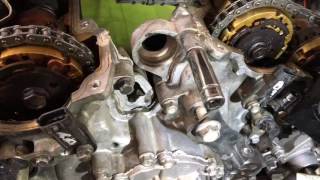
(OEM #ACDelco 12700436 (for 3.0L LF1 & 3.6L LFX))— This is the definitive fix for P0018 on this platform. A complete kit ensures all worn components (3 chains, 3 tensioners, all guides) are replaced simultaneously. 🎬 Watch a technician inspect and replace these timing chain components.
Trusted brands: ACDelco (GM Original Equipment), Cloyes, Melling
OEM price range: $600-$900
Aftermarket price range: $300-$700 - Camshaft Position Actuator Solenoid (Bank 2 Intake)
(OEM #ACDelco 12681018 or GM 12636175 (verify by VIN))— A potential, though much less likely, cause. It controls oil flow to the phaser. Only replace if specific diagnostic tests prove it is faulty.
Trusted brands: ACDelco, Delphi, Dorman
OEM price range: $70-$120
Aftermarket price range: $40-$80
Related Codes That Often Appear With This One
- P0008 — Indicates a general engine timing correlation issue with Bank 1. Often the first code to appear as the primary chain stretches.
- P0017 — Correlation error on Bank 1, Exhaust Cam. Often appears with P0018 when multiple chains are stretched, indicating a widespread timing problem.
- P0016 — Correlation error on Bank 1, Intake Cam. Often appears with P0018 when multiple chains are stretched.
- P0019 — Correlation error on Bank 2, Exhaust Cam. This points to a timing issue on the same bank as P0018 and almost certainly confirms a stretched secondary chain on Bank 2.
Technical Service Bulletins (TSBs) & Recalls
- PIP3423P/N: Advises technicians to inspect for loose timing chains or tensioners for DTCs including P0018, and mentions the rare possibility of a shifted crankshaft reluctor wheel.
- 12-06-01-009F: Announces the availability of official timing chain kits for repairing stretched chains that cause DTCs including P0018, and advises which parts should and should not be replaced.
- 11340B: A Special Coverage Adjustment (similar to a limited recall) that extended the warranty for timing chain wear on certain GM V6 models, acknowledging the premature failure issue.
Platform-Specific Known Issues
- The 3.0L and 3.6L V6 engines used in the 2010-2016 SRX are widely documented to have issues with premature timing chain stretching.
- GM issued TSB #12-06-01-009F, which details the comprehensive timing chain kits required to properly repair this issue and advises against replacing individual components.
- GM also issued Special Coverage Adjustment #11340B for some earlier models (including 2007-2009 SRX with LY7 engine) which extended the warranty on the timing chains to 10 years or 120,000 miles due to this known defect. While not covering all SRX models in this guide, it shows official manufacturer acknowledgment of the problem.
- TSB #PIP3423P (and later revisions like PIP3423N) directly instructs technicians to inspect for loose timing chains or tensioners when codes like P0018 are set.
Mechanic-Grade Diagnostic Values
- Camshaft Position (CMP) Actuator Solenoid Resistance — expected: 6.9 to 7.9 Ohms at 68°F (20°C). Failure: No reading or a reading outside of this range indicates a faulty solenoid.
- Scan Tool Camshaft/Crankshaft Correlation Angle — expected: The ECM will set a P0018 code when the Bank 2 intake camshaft is greater than 11 degrees retarded or 13 degrees advanced in relationship to the crankshaft.. Failure: Exceeding these thresholds on a scan tool's live data confirms a correlation fault.
- Engine Oil Pressure (at normal operating temperature) — expected: Refer to GM Service Information (SI) for specific pressures, but generally should be above 20-25 PSI at hot idle.. Failure: Pressure below specification can starve VVT components and set correlation codes. GM TSB 20-NA-161 suggests if pressure is low, replace the oil filter and re-test before suspecting the oil pump.
Scan Tool Commands That Help

- GDS2 / Tech2: Camshaft Position Actuator Control — After clearing the code, this bidirectional control allows a technician to command the VVT solenoid to a specific degree (e.g., up to 50 crank degrees) and watch the 'Actual' vs 'Desired' cam angle on live data. This tests the solenoid, oil passages, and phaser's range of motion.
- GDS2 / Tech2: Engine Oil Life Reset — While not a diagnostic command, it's critical to use after an oil change. The Oil Life Monitor (OLM) algorithm influences oil degradation assumptions; failing to reset it can contribute to the very oil quality issues that cause timing problems.
Wiring & Ground Locations
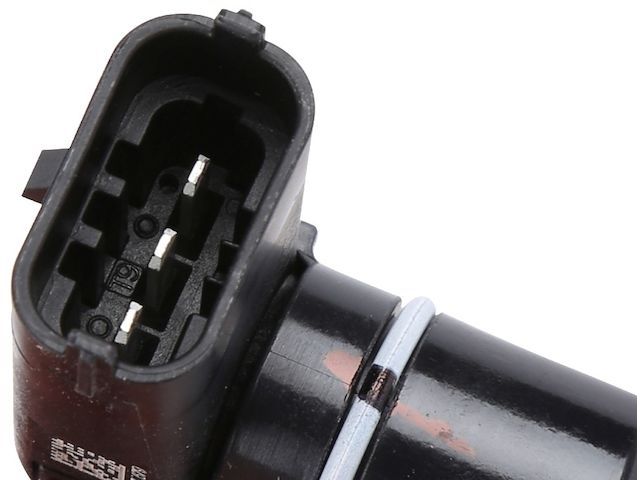
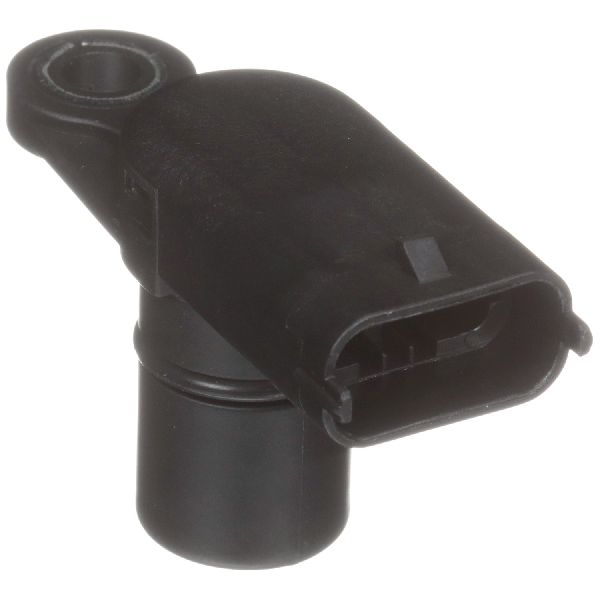
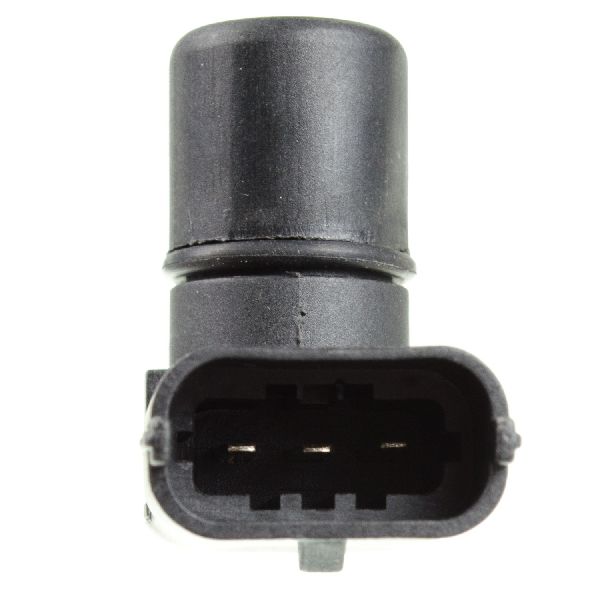
- Bank 2 Camshaft Position Sensors — On the 3.6L LFX, Bank 2 is the cylinder head closer to the radiator. The two camshaft position sensors are located on the side of the head. The intake sensor is on the inside (towards the intake manifold), and the exhaust is on the outside.. A poor connection or damaged wiring at the Bank 2 intake CMP sensor can cause a P0018 code. Inspecting the connector and harness is a crucial first step before condemning mechanical parts.
- G104 (Engine Ground) — On some GM V-engines, G104 is located on the rear of the passenger's side (right side) cylinder head.. This ground point serves multiple components, including the Vehicle Control Module and various sensors. A loose or corroded G104 can cause erratic sensor readings and phantom codes, including correlation faults.
- G102 (Engine Ground) — Located on the left rear of the engine, grounding the ignition coils.. While not directly for the CMP sensor, a poor ignition system ground can introduce electrical noise that may interfere with sensitive sensor signals like the cam and crank sensors.
- ECM Connector C3, Pin 73 — This is a ground pin on one of the main Engine Control Module connectors.. This is a primary ground for the ECM itself. Verifying ground integrity at the ECM is essential if multiple sensor-related codes are present or if sensor readings are erratic.
Real Owner Repair Stories
- YouTube channel 'ScannerDanner' (Vehicle with a GM V6 engine (specific model not SRX but same engine family and issue)) — P0018 code returned intermittently about six months after a complete timing chain and phaser replacement.
❌ Tried (didn't work) Replaced VVT solenoids with new ACDelco parts, which did not fix the issue.
✅ What actually fixed it The diagnosis was ongoing, but the technician suspected a 'lazy' or intermittently sticking VVT solenoid that only malfunctioned when cold, or a problem with the replacement phaser itself. The key takeaway was that even after a full timing job, the code can return due to faulty new parts or related components like solenoids. The next diagnostic step was to use a lab scope on a cold start to compare cam/crank waveforms.
OEM Part Supersession History
12586482, 88958608→12646386, which was then superseded by 12646387— Revisions to improve durability and address premature wear and stretching issues in timing chains.
Heads up: While many kits are listed for the whole High Feature V6 family, it is critical to use a VIN-specific kit. Early timing chain designs were prone to stretching, and using an older design part on a newer engine (or vice-versa) can lead to premature failure.
Model Year Variations Within This Range
- 2010-2011: These SRX models used the 3.0L LF1 V6 engine. This engine, along with the earlier 3.6L LLT, was particularly known for the timing chain stretching issue.
- 2012-2016: These SRX models used the updated 3.6L LFX V6. While still part of the same engine family and not entirely immune, the timing chain components in the LFX were revised and are considered more durable than those in the earlier LF1/LLT engines. However, they can still fail, especially with poor oil maintenance.
Helpful Videos

Used OEM Parts in Stock
New Aftermarket Parts Available


The information in this article is provided for general reference and educational purposes only. Vehicle specifications, procedures, and part compatibility can vary by production date, trim level, and region. Always consult your vehicle's factory service manual and verify part numbers before purchasing or performing repairs. Safety-critical components such as airbags, seat belts, and braking systems should be installed by a qualified professional.
- Cadillac SRX:
- 🎬 Helpful Videos
- 🛍️ Shop This Part
- What's Unique About the 2010-2016 Cadillac SRX
- Diagnostic Flowchart
- Symptoms You May Notice
- Most Likely Causes
- Rare But Worth Checking
- Diagnosis Steps
- Parts You'll Likely Need
- Related Codes That Often Appear With This One
- Technical Service Bulletins (TSBs) & Recalls
- Platform-Specific Known Issues
- Mechanic-Grade Diagnostic Values
- Scan Tool Commands That Help
- Wiring & Ground Locations
- Real Owner Repair Stories
- OEM Part Supersession History
- Model Year Variations Within This Range
- 🎟️ Get 5% Off