

P0018 on 2012-2019 Cadillac CTS: Crank-Cam Correlation Causes and Fixes
On a 2012-2019 Cadillac CTS with a V6 engine, P0018 almost always points to a stretched timing chain. This is a well-documented issue across the GM High Feature V6 engine family. The definitive fix involves replacing the timing chains, tensioners, and guides, which is a significant and costly repair. Ignoring this code can lead to catastrophic engine failure.
- P0018 on a 2012-2019 Cadillac CTS almost always means the timing chains are stretched and need to be replaced.
- Do not continue to drive the vehicle, as a chain failure can cause catastrophic engine damage.
- This is not a DIY-friendly repair. It requires extensive labor and special tools, with shop costs often exceeding $1,500.
- Always check for other timing codes (P0008, P0009, P0016, P0017, P0019) as their presence makes a timing chain issue even more certain.
- While cheaper parts like sensors or solenoids can be checked first, do not be surprised if the ultimate diagnosis is the timing chains.
What's Unique About the 2012-2019 Cadillac CTS
The V6 engines used in this era of Cadillac CTS, particularly the 3.6L (LFX, LLT, LY7), are notorious for premature timing chain stretching. This isn't a random part failure; it's a pattern failure recognized by technicians and addressed in multiple GM Technical Service Bulletins. The issue is so common that a P0018 code, especially when accompanied by related codes like P0008 or P0009, has a very high probability of being a timing chain problem. Some sources suggest the problem was more acute in earlier engine versions (pre-2012 LLT) but can still occur on later models like the LFX, often linked to extended oil change intervals and oil consumption.
Diagnostic Flowchart
Tap your situation to follow the diagnostic path that matches what you're seeing on this vehicle.
Generation note: The 2012-2019 range covers the end of the second generation (2012-2014) and the entire third generation (2014-2019). Both generations used versions of the GM High Feature V6 engine (like the 3.0L LF1 and 3.6L LFX), and the timing chain issue is prevalent across these model years and engine variants. The V-Sport and CTS-V models use different engines (twin-turbo V6 and supercharged V8, respectively) which have different failure patterns.
Symptoms You May Notice
- Check Engine Light is on.
- Rough or unstable idle.
- Rattling or clacking noise from the front of the engine, especially on a cold start, that may last for a few seconds.
- Reduced engine power and poor acceleration.
- Engine may hesitate or stall.
- Decreased fuel economy.
- A no-start condition where the engine turns over but won't fire, if the timing has jumped significantly.
- Replacing only the camshaft or crankshaft position sensors without verifying mechanical timing. The sensors are often just accurately reporting a mechanical problem.
- Replacing just one VVT solenoid when the root cause is a stretched timing chain.
- Replacing only one of the three timing chains, or not replacing the guides and tensioners at the same time. This often leads to a quick return of the problem.
Most Likely Causes
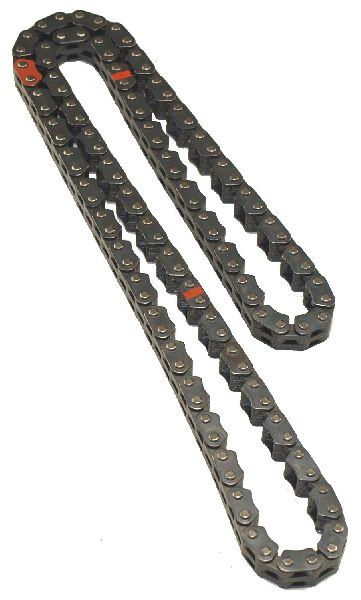
- Stretched Timing Chains 🔴 High Probability The GM 3.6L V6 engine family has a well-documented history of premature timing chain wear. This is often attributed to the original chain design, long oil change intervals recommended by the Oil Life Monitor (OLM), and oil consumption leading to low oil levels.
How to confirm: A technician will use a scan tool to check camshaft deviation angles. Physical inspection is the ultimate confirmation, which involves removing the engine front cover to measure chain slack and inspect for worn plastic guides.
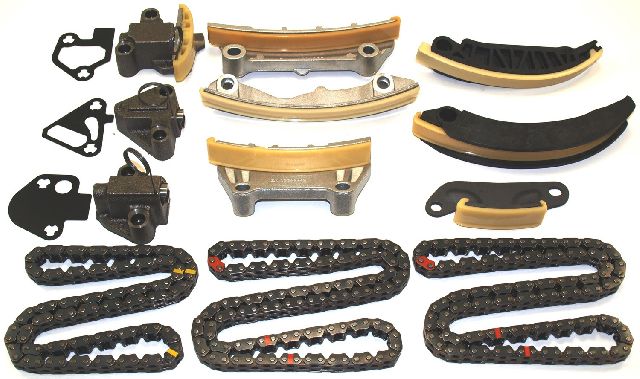
Typical fix: Replace all three timing chains, along with the tensioners, guides, and sprockets. It is critical to use a complete, updated kit.
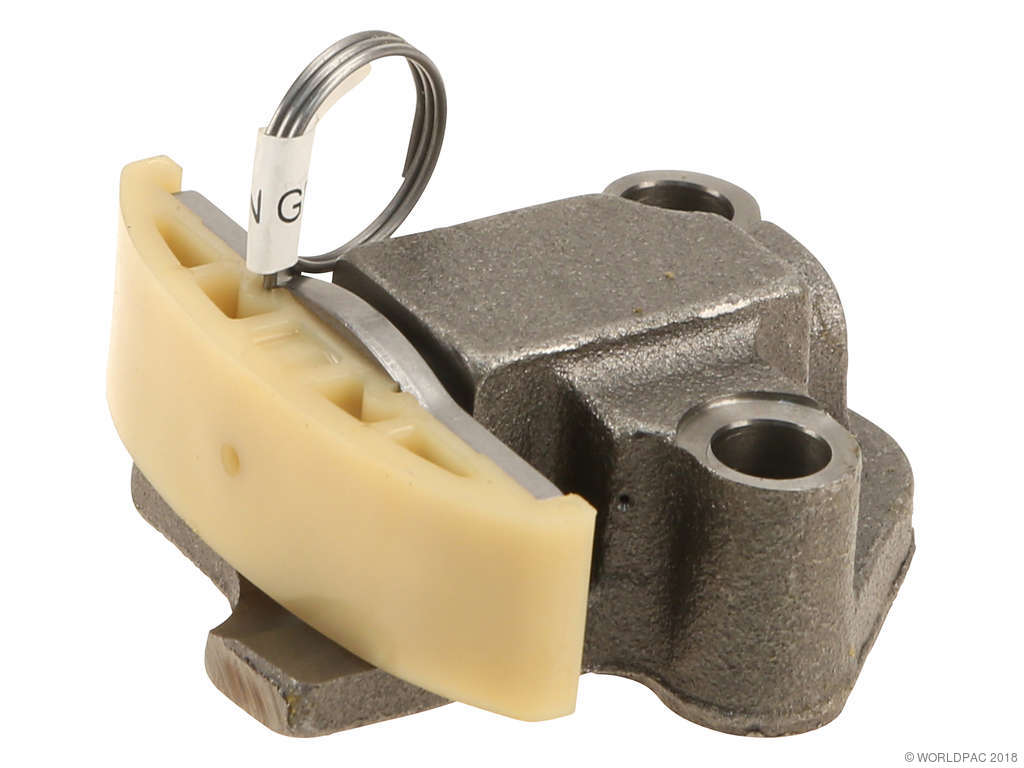
Est. part cost: $300-$600 for a complete kit - Failed Timing Chain Tensioner(s) 🟡 Medium Probability The tensioners, which use oil pressure to keep the chains tight, can fail, bleed down, or weaken, allowing the chains to go slack. This is almost always replaced as part of a complete timing chain service and is rarely the sole point of failure.
How to confirm: Usually diagnosed during a physical inspection when checking the timing chains. A rattling noise on startup that quickly disappears is a classic symptom of a failing tensioner.
Typical fix: Replace the faulty tensioner(s). It is highly recommended to replace all timing components (chains, guides, sprockets) at the same time.
Est. part cost: $50-$150 - Low or Dirty Engine Oil ⚪ Low Probability The camshaft phasers and timing chain tensioners are hydraulically operated. The LFX engine can consume oil, and if the level drops too low or the oil becomes sludgy from extended change intervals, it can starve the hydraulic components, accelerating wear on the entire timing system.
How to confirm: Check the oil level and condition on the dipstick. If the oil is very low or appears like sludge, this is a likely contributor to the mechanical failure.
Typical fix: Perform an oil and filter change with the manufacturer-specified oil (typically DEXOS-approved 5W-30). If the code returns, the damage to mechanical parts is likely already done and a timing chain replacement is necessary.
Est. part cost: $50-$100 - Faulty Camshaft Position Actuator Solenoid (VVT Solenoid) ⚪ Low Probability These solenoids control oil flow to the cam phasers. They can get clogged with debris from dirty oil or fail electrically. While a possible cause, it's much less common than timing chain stretch on these engines.
How to confirm: A technician can command the solenoid with a scan tool and monitor the camshaft angle response. The solenoid can also be removed, cleaned, and tested for resistance. Some sources cite a target resistance of 6.9-7.9 ohms.
Typical fix: Replace the Bank 2 intake camshaft position actuator solenoid. Given the low cost, some owners attempt this first before committing to the timing chain job. 🎬 See how to easily replace the VVT solenoids yourself
Est. part cost: $30-$80
Rare But Worth Checking
- Slipped Crankshaft Reluctor Wheel: GM TSB PIP3423P (and its successors) notes that the reluctor wheel, which the crankshaft position sensor reads, can physically move on the crankshaft. This will cause timing codes without any actual timing chain issue. Confirmation requires inspecting the crankshaft, which is very labor-intensive, though sometimes possible with a borescope through the crank sensor hole. The fix is to replace the entire crankshaft.
- Faulty Camshaft or Crankshaft Position Sensor: While possible, it's far less common for the sensor itself to fail than for the mechanical timing to be off. The sensors are usually just accurately reporting a mechanical problem. Replacing sensors without verifying mechanical timing is a common misdiagnosis. A sensor failure would typically be diagnosed by testing its signal with an oscilloscope. 🎬 Watch: How to test timing chain issues with a labscope
Diagnosis Steps
- Check engine oil level and condition. Ensure it is full, clean, and of the correct viscosity (DEXOS-approved 5W-30). Low or dirty oil can cause these codes.
- Scan the ECM for all stored trouble codes. Note if other codes like P0008, P0009, P0016, P0017, or P0019 are present, as this strongly indicates a base timing issue.
- Using a professional scan tool, monitor the live data for the desired vs. actual camshaft position angles for Bank 2. A significant, persistent deviation (camshaft variance) that does not correct itself points to a mechanical problem. For the 3.0L engine, the ECM may set the code if the Bank 2 intake camshaft is greater than 11 degrees retarded or 13 degrees advanced.
- Inspect the wiring and connectors for the Bank 2 camshaft position sensor and the oil control solenoid for any damage or corrosion.
- Command the Bank 2 intake VVT solenoid on and off with a scan tool to verify its operation. If it's unresponsive, it may be faulty. Consider swapping the intake and exhaust solenoids on Bank 2 to see if the code changes to P0019, which would confirm a bad solenoid.
- If the above steps do not identify the issue, proceed to a mechanical timing inspection. This involves accessing the timing chains by removing the engine front cover to check for slack, worn guides, and correct timing marks alignment. This is a labor-intensive step. 🎬 Watch this step-by-step walkthrough of a timing chain replacement
- While inspecting the timing components, also inspect the camshaft phasers (actuators) for any signs of damage or sticking.
- If timing components appear correct, refer to TSB PIP3423P to inspect for a slipped crankshaft reluctor wheel, possibly using a borescope through the crank sensor port.
Parts You'll Likely Need
- Timing Chain Kit
(OEM #12651450 (superseded by 12700436 or kit 12693218))— This is the most common failure point for the P0018 code on these engines. A complete kit ensures all wearable components are replaced at once.
Trusted brands: ACDelco (OEM), Cloyes
OEM price range: $400-$600
Aftermarket price range: $250-$450
Related Codes That Often Appear With This One
- P0008 — Indicates a general engine position system performance error for Bank 1. Often sets with P0018 when timing chains are stretched, affecting the entire engine.
- P0009 — Indicates a general engine position system performance error for Bank 2. This is the Bank 2 equivalent of P0008 and is very commonly seen with P0018, strongly pointing to a base timing issue.
- P0016 — Crank/Cam correlation error for Bank 1 Intake. If the primary timing chain is stretched, it can affect both banks, causing multiple codes to appear.
- P0017 — Crank/Cam correlation error for Bank 1 Exhaust. Seeing P0016, P0017, and P0018 together is a very strong indicator of a stretched primary timing chain.
- P0019 — Crank/Cam correlation error for Bank 2 Exhaust. This points to a timing issue on the same bank as P0018, strengthening the diagnosis of a stretched chain or phaser issue on Bank 2.
Technical Service Bulletins (TSBs) & Recalls
- PIP3423P / K / L: Addresses DTCs P0008, P0009, P0016-P0019. Instructs technicians to first check for loose timing chains, but also introduces the possibility of a slipped crankshaft reluctor wheel as a root cause, requiring crankshaft replacement.
- 23-NA-091: Provides information for diagnosing MIL illumination with codes P0016/P0018 after engine repairs, suggesting potential issues with the repair process itself.
- PIP5730B: Communicates additional diagnostic information for DTCs P0016 and P0018, indicating ongoing investigation and refinement of diagnostic procedures by GM.
- 12-06-01-009F: A TSB specifically acknowledging the timing chain issue on V6 engines in other models like the Camaro, which shares the same engine family.
- 19-NA-256: Provides guidance on when to repair versus replace the entire engine due to metal debris in oil from component failure (like bearings or timing components), or severe sludging.
Platform-Specific Known Issues
- The GM 3.6L V6 engines (LY7, LLT, LFX) used across the CTS line are widely known for premature timing chain stretching, which is the primary cause of P0018 and related codes.
- The GM Oil Life Monitor (OLM) can allow for extended oil change intervals (8,000-12,000 miles). Combined with the engine's tendency to consume oil, this can lead to low and/or degraded oil, which accelerates wear on the hydraulically-actuated timing components.
- While the timing chain design was reportedly improved for the 2013 model year LFX engines, the issue did not disappear entirely, and vehicles from 2013-2019 can still suffer from this failure.
Mechanic-Grade Diagnostic Values
- Camshaft Position Actuator Solenoid (VVT Solenoid) Resistance — expected: 6.9 to 7.9 ohms at 68°F (20°C). Failure: A reading outside this range, or an open/short circuit, indicates a faulty solenoid.
- Camshaft Position vs. Crankshaft Position Correlation (3.0L LF1 Engine) — expected: Bank 2 intake camshaft should be within 11 degrees retarded or 13 degrees advanced of the crankshaft.. Failure: Exceeding these thresholds will cause the ECM to set DTC P0018.
Scan Tool Commands That Help
- GDS2 / Tech2: Crankshaft Position Variation Learn — This procedure must be performed after replacing the crankshaft position sensor, the ECM, or if the ECM was reprogrammed. It synchronizes the sensor with the physical variations on the crankshaft reluctor wheel. Failure to perform this can result in misfire codes or other running issues.
- GDS2 / Tech2: Camshaft Position Actuator Solenoid Control — During diagnosis, a technician can use a scan tool to command the VVT solenoids on and off to check for a response from the camshaft phaser, which is monitored via live data. This helps isolate a faulty solenoid from a mechanical phaser or timing chain issue.
- GDS2 / Tech2: Camshaft Position Variation Learn — Some newer GM models may require a camshaft position learn procedure after component replacement to calibrate the system. This is often done via a specific drive cycle or a dedicated service function in the scan tool.
Wiring & Ground Locations
- G106 — On the right rear of the engine compartment, near the right hood hinge.. This is a major engine and chassis ground point. A loose or corroded G106 can cause erratic behavior and incorrect readings from various engine sensors, including the camshaft and crankshaft position sensors, potentially leading to correlation codes.
- ECM Connector X1 (LFX Engine) — On the Engine Control Module (ECM), typically located in the engine compartment. For the LFX V6, the X1 connector is often distinguished by a Blue terminal position assurance clip.. This connector contains the pins for the camshaft position sensor signals and the VVT solenoid control circuits. For example, on some 3.6L models, the Bank 2 Intake Cam Actuator Solenoid is controlled by a wire at pin 12 of the C1/X1 connector. Technicians need to probe specific pins at this connector to test for continuity, shorts, or correct voltage signals from the ECM.
- Swapped Connectors (Post-Repair) — On the right front side (Bank 1) of some 3.6L LGX engines, the connector for the intake camshaft actuator solenoid and the connector for the intake actuator park lock solenoid are identical.. TSB #23-NA-091 warns that these two identical connectors can be accidentally swapped during engine repairs. This will cause a hard-set P0016 and/or P0018 code and a rough idle immediately after the repair. The only way to differentiate them is by checking the wire colors against the service manual schematic.
OEM Part Supersession History
12651450→12693218 (Kit), which was then superseded by 12700436 (Kit)— The timing chain design was revised multiple times to improve durability and reduce premature stretching that caused codes like P0018. Later kits contain updated chain designs.
Heads up: While physically interchangeable, using an older design chain in a newer engine is not recommended. It is critical to use a complete kit that includes all three chains, guides, and tensioners to ensure all components are of the updated design.
Model Year Variations Within This Range
- 2019-2020: A specific batch of 3.6L LFX/LFY engines manufactured between January 2019 and March 2020 may be missing an insert on the left primary timing chain guide, leading to rapid chain wear and P0018/P0019 codes. This is documented in TSB 20-NA-085.
- 2016-2019 (LGX Engine): Later model CTS with the LGX 3.6L engine have an 'Intake Camshaft Position Actuator Park Lock Solenoid' which can stick or fail, causing P0016 and P0018 codes, often with no other symptoms. This was identified in TSB PIP5730B as a diagnostic step to check before assuming a major timing chain failure.
Helpful Videos
We Have This Part in Stock



The information in this article is provided for general reference and educational purposes only. Vehicle specifications, procedures, and part compatibility can vary by production date, trim level, and region. Always consult your vehicle's factory service manual and verify part numbers before purchasing or performing repairs. Safety-critical components such as airbags, seat belts, and braking systems should be installed by a qualified professional.
- Cadillac CTS:
- 🎬 Helpful Videos
- 🛍️ Shop This Part
- What's Unique About the 2012-2019 Cadillac CTS
- Diagnostic Flowchart
- Symptoms You May Notice
- Most Likely Causes
- Rare But Worth Checking
- Diagnosis Steps
- Parts You'll Likely Need
- Related Codes That Often Appear With This One
- Technical Service Bulletins (TSBs) & Recalls
- Platform-Specific Known Issues
- Mechanic-Grade Diagnostic Values
- Scan Tool Commands That Help
- Wiring & Ground Locations
- OEM Part Supersession History
- Model Year Variations Within This Range
- 🎟️ Get 5% Off