

P0017 on 2007-2010 Saturn VUE: Crank/Cam Correlation Causes and Fixes
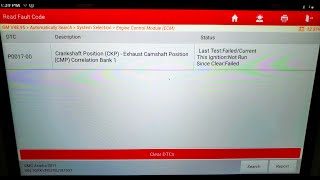
On a 2008-2010 Saturn VUE with the 3.6L V6 engine, code P0017 almost always indicates stretched timing chains. This is a serious, well-documented issue requiring a complex repair. Expect a shop cost of $1,500-$2,500 for a full timing chain kit replacement. Attempting cheaper fixes like sensors or solenoids first is common but rarely solves the problem on this specific engine.
- For a 2008-2010 Saturn VUE with the 3.6L V6, P0017 is a strong indicator of stretched timing chains, not just a bad sensor.
- This is a serious issue. Do not continue to drive the vehicle, as it could lead to catastrophic engine failure.
- The first and easiest diagnostic step is to check the engine oil level and condition. Low or dirty oil can cause this code.
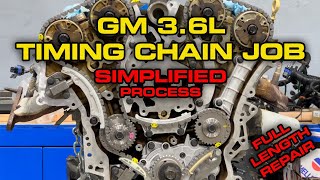
- The correct repair is to replace the timing chains, tensioners, and guides with an updated kit. This is an expensive, labor-intensive job that should be left to a professional.
- Misdiagnosing this as a simple sensor issue will lead to wasted money and the code will return.
What's Unique About the 2007-2010 Saturn VUE
The 2008-2010 Saturn VUE uses the GM High Feature 3.6L V6 (engine code LY7), which is widely known for premature timing chain stretch. This issue was so prevalent that GM issued multiple Technical Service Bulletins (TSBs) and a special warranty extension (#11340C) for affected vehicles. The root cause is often attributed to a combination of factors: an early timing chain design with smaller links intended to reduce noise, longer-than-ideal oil change intervals recommended by the oil life monitor, and the hydraulic tensioners being sensitive to oil quality. While P0017 can point to a simple sensor failure on other vehicles, on this specific platform, it is most often the first warning sign of this much more significant mechanical engine problem.
Diagnostic Flowchart
Tap your situation to follow the diagnostic path that matches what you're seeing on this vehicle.
Generation note: The 2007-2010 range covers two different VUE generations. The 2007 model (first generation) could have a 2.2L I4 or a 3.5L V6 (a Honda engine with a timing belt). The 2008-2010 models (second generation) used a 2.4L I4 or the 3.6L V6 (GM LY7 engine). This guide primarily focuses on the 3.6L V6 in the 2008-2010 models, as it is the engine most commonly associated with P0017 due to its specific timing chain issues.
Symptoms You May Notice
- Check Engine Light is on
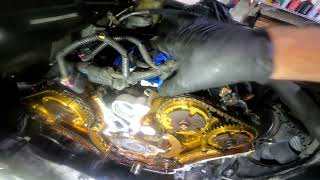
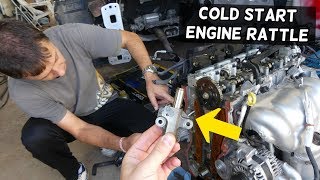
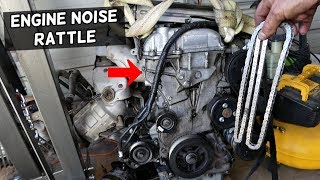
- Rattling noise from the front of the engine, especially on a cold start. 🎬 Watch: What a typical cold start engine rattle sounds like.
- Rough or unstable idle, sometimes only after the engine has warmed up.
- Loss of engine power and sluggish acceleration.
- Difficulty starting the engine, or the engine cranks but won't start.
- Reduced fuel economy.
- A slight engine stumble or hesitation on light throttle application.
- Replacing only the camshaft or crankshaft position sensors. While these sensors can fail, it's a low-probability cause for P0017 on this engine. Owners often replace sensors only to have the code return, because the root cause is the mechanical timing chain stretch.
- Replacing only the VVT solenoids. This is another common 'first step' that is easy and inexpensive, but usually fails to fix the underlying timing chain slack.
Most Likely Causes
- Stretched Timing Chains 🔴 High Probability The early GM 3.6L LY7 V6 engines had timing chains that were prone to premature stretching, sometimes in as few as 40,000 miles. This is a widely documented issue across many GM vehicles using this engine. TSBs #PIP3423P and #12-06-01-009F directly link P0017 to this cause. GM even issued a special coverage adjustment (#11340C) extending the warranty on these parts to 10 years/120,000 miles for some owners.
How to confirm: A mechanic can use a scan tool to observe cam/crank correlation data. Physical confirmation requires removing the engine's front cover to measure chain slack, which is labor-intensive.
Typical fix: Replace all three timing chains, the tensioners, and the guides with an updated kit. It is critical to use the newer, more robust parts specified in GM's bulletins.
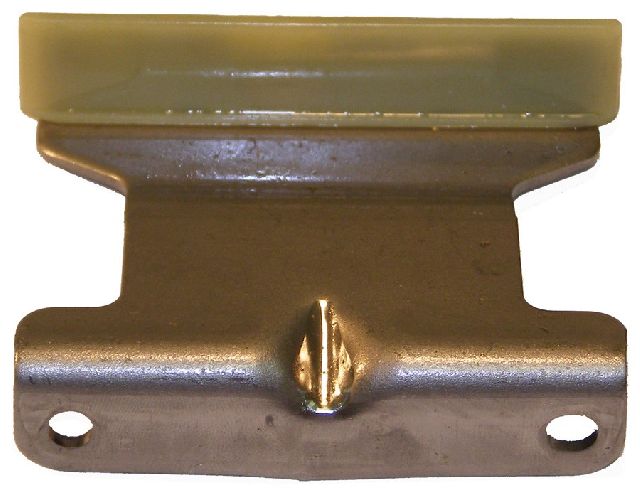
Est. part cost: $250-$600 - Failed Timing Chain Tensioners or Guides 🔴 High Probability The hydraulic tensioners and plastic guides fail along with the chains. A failed tensioner can no longer keep the chain taut, leading to slack that causes the correlation error. These are always considered part of the timing chain system.
How to confirm: This is diagnosed during a physical inspection when checking for timing chain stretch. A failed tensioner may be fully extended or broken.
Typical fix: Always replaced as part of a complete timing chain service. Aftermarket kits from brands like Cloyes include these components.
Est. part cost: Included in timing chain kits. - Low or Dirty Engine Oil 🟡 Medium Probability The camshaft phasers (VVT system) and timing chain tensioners are hydraulically operated by engine oil pressure. Low or dirty oil can impede their function, causing timing correlation codes. GM's own oil life monitor system on early models may have allowed for overly long oil change intervals, contributing to oil breakdown and sludge that clogs passages.
How to confirm: Check the oil level on the dipstick and inspect its condition. This should always be the first step. An oil change may temporarily resolve the code if sludge is the issue.
Typical fix: Perform an oil and filter change using a full synthetic oil of the correct viscosity (5W-30).
Est. part cost: $40-$80 - Faulty Camshaft Actuator Solenoid (VVT Solenoid) ⚪ Low Probability
How to confirm: Use a scan tool to command the solenoid on and off while monitoring engine performance. The solenoid can also be removed, cleaned with brake cleaner, and tested for resistance (typically 8-12 ohms, but can vary).
Typical fix: Replace the Bank 1 exhaust camshaft actuator solenoid. It is a common, but often incorrect, first attempt at a fix.
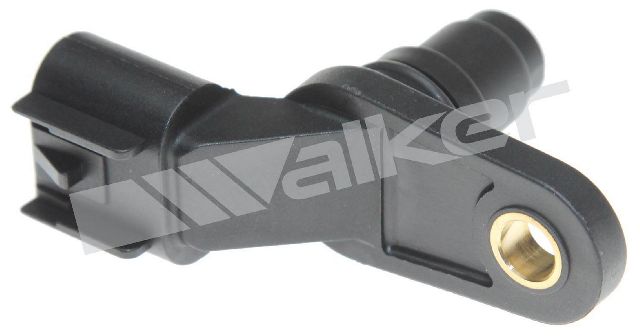
Est. part cost: $30-$70 - Faulty Camshaft or Crankshaft Position Sensor ⚪ Low Probability
How to confirm: Sensors can be tested with a multimeter or by swapping with a known good sensor (e.g., from the other bank). However, sensor failure is much less common than the mechanical timing chain issue on this engine.
Typical fix: Replace the faulty sensor. Some vehicles may require a crankshaft position sensor relearn procedure after replacement.
Est. part cost: $25-$80
Rare But Worth Checking
- Slipped Crankshaft Reluctor Wheel: TSB #PIP3423P and #PIP4548F mention that if timing chains are found to be tight, the reluctor wheel pressed onto the crankshaft may have moved. This is a rare but severe issue that requires crankshaft replacement. An owner on SaturnForum reported a shop suggesting this after a timing chain job did not clear the code. A technician can sometimes diagnose this by removing the crank sensor and physically trying to move the reluctor ring.
- Excessive Crankshaft End Play: A forum post on GMTNation suggests that if P0017 recurs, excessive crankshaft end play (movement forward and back) could be the cause. The acceptable range is 0.0044" to 0.0153". This would require significant engine work to correct.
Diagnosis Steps
- Verify engine oil level and condition. If low or dirty, perform an oil and filter change with full synthetic 5W-30 oil, clear the codes, and re-test.
- Use a professional scan tool to check for any other related DTCs. The presence of P0008, P0016, P0018, or P0019 strongly suggests a timing chain problem.
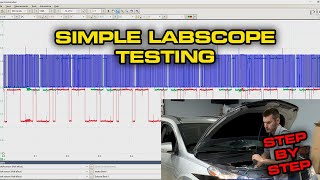
- Monitor live data on the scan tool, comparing desired vs. actual camshaft position angles for Bank 1 Exhaust. A significant and persistent deviation points to a mechanical timing issue. 🎬 Learn how to test for timing chain stretch using a labscope. The ECM will set the code if the deviation is more than 9 crankshaft degrees.
- If scan tool data is inconclusive, you can attempt to swap the Bank 1 exhaust VVT solenoid with the intake solenoid on the same bank to see if the code changes to P0016. If it does, the solenoid is faulty.
- If all sensors and solenoids test good, proceed with a physical inspection of the timing chains. This involves significant labor to remove the front engine cover and check for chain slack. This is considered the definitive diagnostic step.
Parts You'll Likely Need
- Engine Timing Chain Kit
(OEM #12651450)— This is the primary fix for the common cause of P0017 on the 3.6L V6. A complete kit includes all three chains, tensioners, and guides needed for the repair. TSB 12-06-01-009F outlines the use of these kits.
Trusted brands: ACDelco (OEM), Cloyes, SKP
OEM price range: $350-$500
Aftermarket price range: $200-$400 - Camshaft Position Actuator Solenoid
(OEM #12636175 (Supersedes 12615613, 12588943))— If the cause is a faulty VVT solenoid, this part will need to be replaced. It's a much cheaper and easier fix to attempt before committing to a timing chain job. Note that intake and exhaust solenoids may have different part numbers on some related engines, but are often interchangeable on the LY7.
Trusted brands: ACDelco (OEM), Dorman, APDTY
OEM price range: $40-$70
Aftermarket price range: $25-$50
Related Codes That Often Appear With This One
- P0008 — This is a general Engine Position System Performance code for Bank 1. It often appears with more specific codes like P0017 as the timing issue worsens and is explicitly mentioned in TSBs related to stretched chains.
- P0016 — This is the correlation code for the intake camshaft on the same bank (Bank 1). It's common to see both intake and exhaust codes together when the timing chains are stretched.
- P0018 — This is the correlation code for the intake camshaft on the opposite bank (Bank 2). Seeing codes for both banks strongly indicates a primary timing chain issue affecting all camshafts.
- P0019 — This is the correlation code for the exhaust camshaft on the opposite bank (Bank 2). Multiple correlation codes are a hallmark of stretched timing chains on the 3.6L V6.
Technical Service Bulletins (TSBs) & Recalls
- PIP3423P: Links P0017 and related codes to loose timing chains or tensioners.
- 12-06-01-009F: Announces availability of updated, comprehensive timing chain kits for repairing stretched chains causing codes like P0017.
- PIP4548F: Advises inspection of the reluctor wheel if P0017 sets on a properly timed engine.
- PIP4716F: Connects P0017 with a startup rattle noise.
- 11340C: A special coverage adjustment from GM that extended the timing chain warranty for some owners due to the high failure rate.
Platform-Specific Known Issues
- The 3.6L LY7 V6 engine used in the 2008-2010 VUE has a well-documented history of premature timing chain failure. This is not an isolated issue but a characteristic problem for this engine family, leading to class-action lawsuits and special warranty extensions from GM. The issue is primarily linked to the original timing chains stretching over time, a problem exacerbated by the oil life monitoring system which could lead to excessively long oil change intervals, causing oil degradation and sludge.
Mechanic-Grade Diagnostic Values
- Camshaft Position (CMP) Sensor 5V Reference — expected: 4.8-5.2 Volts between the 5-volt reference circuit and ground with ignition ON.. Failure: Voltage outside this range indicates a wiring issue or a fault in the ECM.
- Camshaft Position Actuator Solenoid Resistance — expected: Typically 8-12 Ohms. A new part may read around 11 Ohms, while a functional used part might be higher, around 20 Ohms.. Failure: A reading in the kilo-ohms (K-ohms) or mega-ohms (M-ohms) range, or an open circuit (OL), indicates a failed solenoid.
- Camshaft Position (CMP) Sensor Signal Voltage (Hall Effect Sensor) — expected: With the sensor connected and ignition ON, the signal wire should show around 5V. When a metal object is passed in front of the sensor tip, the voltage should drop to near 0V.. Failure: If the voltage does not change when metal is passed in front of it, the sensor is likely faulty.
Scan Tool Commands That Help
- GM Tech2 or GDS2: Camshaft Position Actuator Control — This bidirectional control allows a technician to command the VVT solenoid to a specific degree of advance (e.g., 20 degrees) while the engine is running. The technician can then monitor the 'CMP Angle' and 'Desired CMP' parameters to see if the actuator physically responds to the command. A lack of response points to a hydraulic (oil pressure/sludge) or mechanical (stuck phaser) issue rather than an electrical one.
- GM GDS2: Active Fuel Injector Test (AFIT) — While not a direct test for P0017, this function is used to test the health of the direct injection system on later model 3.6L engines. It can help rule out fuel system issues that might cause rough running symptoms sometimes confused with timing problems.
Wiring & Ground Locations
- G103 / G105 / G106 — G103 is at the left side of the engine compartment. G105 is at the left rear of the engine. G106 is on the engine at the left front top corner for the 3.6L engine.. The Engine Control Module (ECM) and its sensors rely on clean, solid ground connections to function. A corroded or loose ground at these primary engine and chassis points can cause erratic sensor readings, leading to false correlation codes. It's a common recommendation to check and clean these grounds before extensive electrical diagnosis.
- Underhood Fuse Block — Located on the driver's side of the engine compartment, near the wheel well.. This fuse block is a known source of electrical problems on the Saturn Vue. Corrosion can build up on the internal connection points between its layers, causing intermittent power and signal issues for various engine components, including the ECM and its sensors.
Real Owner Repair Stories
- YouTube user comment on a P0008/P0017 diagnostic video (Chevy Trailblazer (likely with a similar GM V6)) — Check Engine Light on
❌ Tried (didn't work) Replacing the camshaft position sensor with a Duralast (aftermarket) part.
✅ What actually fixed it Replacing the sensor again, but this time with an ACDelco (OEM) part from RockAuto, which resolved the issue. - YouTube video 'GM 3.6L P0008 / P0017 CAMSHAFT POSITION SENSOR' (2007 Cadillac CTS 3.6L) — P0008 and P0017 codes present.
❌ Tried (didn't work) Replacing the Bank 1 exhaust camshaft position sensor., Cleaning and inspecting the VVT solenoid.
✅ What actually fixed it The video creator notes that these simple fixes did NOT ultimately clear the codes, and the next step would be the full timing chain replacement, reinforcing that sensors are often not the root cause.
OEM Part Supersession History
12588943, 12615613, 12626012→12636175— GM regularly updates service parts to integrate new materials, technologies, or manufacturing processes to improve reliability and performance.
Heads up: The newest part number, 12636175, is the correct service replacement for the earlier numbers on the LY7 engine.
Model Year Variations Within This Range
- 2007: The 2007 Saturn VUE was a first-generation model. While a V6 was available, it was a 3.5L Honda J35 engine that uses a timing belt, not a timing chain. The P0017 code is not a common issue on this engine in the same way it is for the 2008-2010 models with the GM 3.6L LY7 engine.
Helpful Videos
We Have This Part in Stock


The information in this article is provided for general reference and educational purposes only. Vehicle specifications, procedures, and part compatibility can vary by production date, trim level, and region. Always consult your vehicle's factory service manual and verify part numbers before purchasing or performing repairs. Safety-critical components such as airbags, seat belts, and braking systems should be installed by a qualified professional.
- Saturn VUE:
- 🎬 Helpful Videos
- 🛍️ Shop This Part
- What's Unique About the 2007-2010 Saturn VUE
- Diagnostic Flowchart
- Symptoms You May Notice
- Most Likely Causes
- Rare But Worth Checking
- Diagnosis Steps
- Parts You'll Likely Need
- Related Codes That Often Appear With This One
- Technical Service Bulletins (TSBs) & Recalls
- Platform-Specific Known Issues
- Mechanic-Grade Diagnostic Values
- Scan Tool Commands That Help
- Wiring & Ground Locations
- Real Owner Repair Stories
- OEM Part Supersession History
- Model Year Variations Within This Range
- 🎟️ Get 5% Off