

P0017 on 2006-2007 Saturn ION: Crank-Cam Correlation Causes and Fixes
P0017 on a Saturn ION most often means the timing chain has stretched or the exhaust camshaft actuator solenoid (VVT solenoid) has failed. Start by checking engine oil level and condition, then inspect the VVT solenoid before assuming the more expensive timing chain job is needed. A rattling noise on startup is a strong indicator of a timing chain problem.
- P0017 indicates a serious timing issue between the crankshaft and exhaust camshaft; driving is not recommended.
- Always check the engine oil level and condition first, as low or dirty oil is a common underlying cause.
- The easiest and cheapest potential fix is the exhaust VVT solenoid. Test it by swapping it with the intake solenoid before suspecting a larger mechanical issue.
- The most likely major repair is a full timing chain kit replacement, a known issue on these Ecotec engines.
- If the timing chain is confirmed to be good, the cause could be a rare but documented spun camshaft reluctor ring, requiring camshaft replacement.
What's Unique About the 2006-2007 Saturn ION
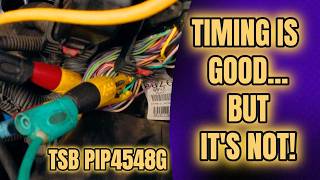
The Ecotec engines in the 2006-2007 Saturn ION are known for timing chain issues, where the chain can stretch over time, causing correlation codes like P0017. A less common but well-documented issue for this specific platform is the camshaft reluctor ring spinning on the camshaft itself, which can happen after an engine overheat. This means that even if the timing chain and sprockets are perfectly aligned, the sensor can still get an incorrect reading, leading to a P0017 code. This issue is detailed in GM TSB #PIP4548F.
Diagnostic Flowchart
Tap your situation to follow the diagnostic path that matches what you're seeing on this vehicle.
Symptoms You May Notice
- Check Engine Light is on
- Engine is difficult to start or requires extended cranking
- Rough or unstable idle
- Rattling or buzzing noise from the passenger side of the engine (timing chain area), especially on cold startups.
- Noticeable loss of engine power and poor acceleration, sometimes specifically above 3000 RPM.
- Engine may stall unexpectedly at low speeds
- In some cases, the engine may crank but fail to start at all.
- Replacing only the camshaft or crankshaft position sensor without checking the VVT solenoids or the mechanical timing first. The code indicates a correlation *problem*, not necessarily a sensor failure.
- Performing a complete timing chain replacement but failing to diagnose a spun camshaft reluctor ring, which causes the code to return immediately. A user on saturnfans.com reported their shop suspected this after a $1700 timing job did not resolve the code.
Most Likely Causes
- Stretched Timing Chain or Failed Tensioner/Guides 🔴 High Probability The Ecotec engines of this era are widely known to have issues with premature timing chain stretch and failure of the plastic guides and hydraulic tensioner.
How to confirm: Listen for a distinct rattling sound on cold starts. Remove the valve cover and check for excessive slack in the timing chain between the camshaft sprockets. A visual inspection of the tensioner's extension may also indicate wear. A broken plastic guide was the cause for one owner on the Cobalt SS Network.
Typical fix: Replace the timing chain, sprockets, guides, and tensioner as a complete kit. Many owners recommend using an OEM (ACDelco) or reputable aftermarket (e.g., Cloyes) kit. 🎬 See this step-by-step guide for replacing the timing chain.
Est. part cost: $100-$250 - Faulty Exhaust Camshaft Position Actuator Solenoid (VVT Solenoid) 🟡 Medium Probability These solenoids are sensitive to oil pressure and contamination. Sludge from infrequent oil changes can clog the internal passages and screens, causing them to stick or fail.
How to confirm: Swap the exhaust solenoid with the identical intake solenoid. Clear the codes and run the engine. If the code changes to P0016 (Intake Cam Correlation), the solenoid is bad. You can also test its resistance with a multimeter; it should be between 8 and 13 ohms.
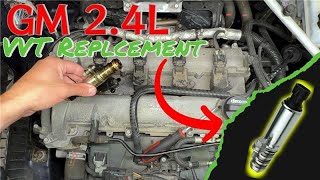
Typical fix: Replace the exhaust camshaft position actuator solenoid. It is often recommended to replace both intake and exhaust solenoids at the same time. 🎬 Watch: A quick walkthrough on replacing your VVT solenoids.
Est. part cost: $25-$60 - Low or Dirty Engine Oil 🟡 Medium Probability The VVT system and timing chain tensioner both rely on clean oil at the correct pressure to function. Low or sludgy oil is a common root cause of timing-related codes and can accelerate timing chain wear.
How to confirm: Check the oil level on the dipstick and inspect its color and consistency. If it's low, black, or thick, it needs to be changed. This should always be the first check.
Typical fix: Perform an oil and filter change using the manufacturer-specified oil weight (SAE 5W-30).
Est. part cost: $30-$70 - Faulty Crankshaft or Camshaft Position Sensor ⚪ Low Probability
How to confirm: Test the sensor's signal with an oscilloscope or multimeter. A failed sensor will typically have no reading or an erratic one. Often, a sensor failure will set a different code specific to the sensor circuit (e.g., P0335, P0340), making this a less likely cause for P0017 alone.
Typical fix: Replace the faulty sensor.
Est. part cost: $20-$50
Rare But Worth Checking
- Spun Exhaust Camshaft Reluctor Ring: As noted in GM Technical Service Bulletin #PIP4548F, the reluctor ring that the camshaft sensor reads can spin out of position on the camshaft. The ring is press-fit and not keyed to the shaft. An engine overheat can cause the camshaft to expand enough for the ring to lose its grip and move. This will set a P0017 code even if the timing chain is perfectly aligned. The only fix is to replace the entire exhaust camshaft.
Diagnosis Steps
- Check Engine Oil: Verify the oil level is full and the oil is clean. Low or dirty oil is a primary cause of VVT and timing chain issues and the easiest first step.
- Scan for Codes: Use an OBD-II scanner to confirm P0017 and check for any other related codes. The presence of P0016 is a strong clue pointing towards a base timing issue.
- Inspect VVT Solenoids: Locate the intake and exhaust VVT solenoids on top of the engine. Unplug and remove the exhaust solenoid (for P0017). Inspect its screen for metallic debris or sludge.
- Test the Solenoid: For a definitive test, swap the exhaust solenoid with the intake solenoid. Clear the codes and drive the vehicle. If the code returns as P0016 (intake correlation), the solenoid you moved is faulty and must be replaced. Alternatively, test resistance with a multimeter; it should be 8-13 ohms.
- Inspect Sensor Wiring: Check the wiring and connectors for the camshaft and crankshaft position sensors for any damage, corrosion, or loose connections.
- Check Mechanical Timing: This is an advanced step. Listen for a chain rattle on a cold start. Remove the valve cover to visually inspect the timing chain for obvious slack or broken plastic guides. If the chain is loose, the chain, guides, and tensioner need to be replaced.
- Inspect Reluctor Ring (Advanced): If the timing chain is confirmed to be properly aligned but the code persists, follow the procedure in TSB #PIP4548F to inspect the exhaust camshaft reluctor ring for movement. This requires camshaft removal and is best left to a professional. 🎬 Watch: How to identify a spun camshaft reluctor ring.
Parts You'll Likely Need
- Exhaust Camshaft Position Actuator Solenoid (VVT Solenoid)
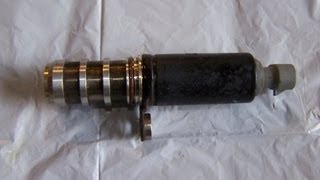
(OEM #12655421 (alternates: 12628348, 12646784, 12679100))— This solenoid controls oil flow to the cam phaser. It's a common failure point due to oil contamination and is a relatively simple and inexpensive part to replace first.
Trusted brands: ACDelco (OEM), Delphi, Dorman (P/N: 917-216)
OEM price range: $40-$60
Aftermarket price range: $25-$45 - Timing Chain Kit
(OEM #12680750 (ACDelco kit))— Timing chain stretch is the most probable mechanical cause for this code on the Ecotec engine. A kit includes the chain, tensioner, guides, and sprockets for a complete repair.
Trusted brands: ACDelco (OEM), Cloyes (e.g., 9-4201SAVVT2)
OEM price range: $200-$300
Aftermarket price range: $100-$200 - Crankshaft Position Sensor
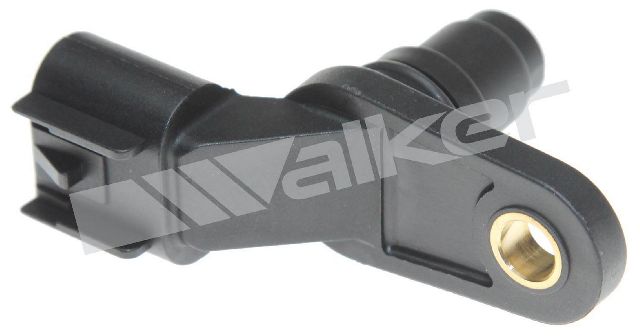
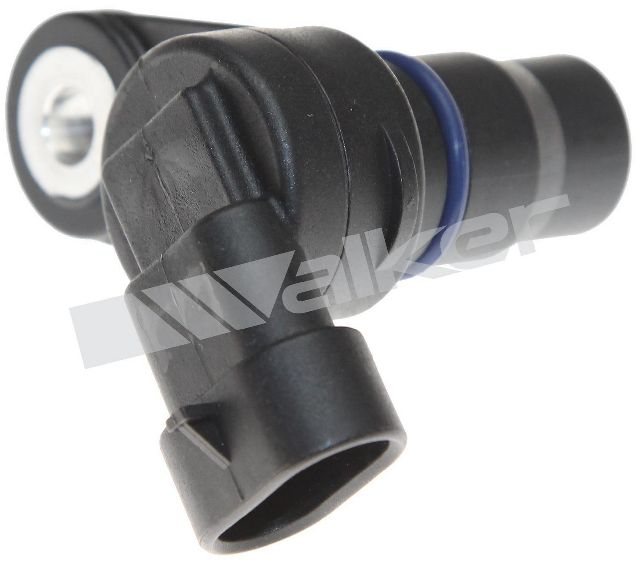
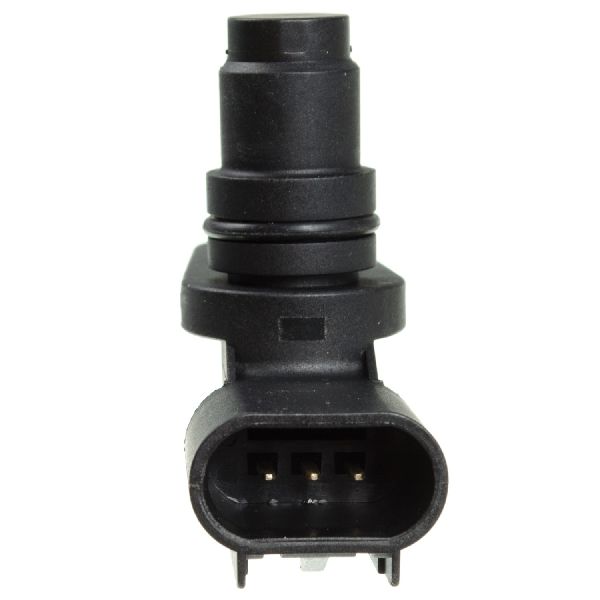
(OEM #213-1557 (ACDelco))— Though less common for this code, the sensor itself can fail, providing an incorrect signal to the ECM. This is usually diagnosed after other causes are ruled out.
Trusted brands: ACDelco, Bosch, NTK
OEM price range: $35-$55
Aftermarket price range: $20-$40
Related Codes That Often Appear With This One
- P0016 — Crankshaft/Intake Camshaft Correlation. If the timing chain has stretched significantly, it often affects the timing of both camshafts. Seeing P0016 and P0017 together makes a base timing problem (stretched chain) highly likely, as opposed to a single failed component.
- P0300 — Random/Multiple Misfire Detected. An incorrect cam timing can lead to poor combustion, unstable idle, and misfires across the cylinders.
Technical Service Bulletins (TSBs) & Recalls
- PIP4548F: MIL On With DTC P0016 And/Or P0017 Setting On A Properly Timed Engine. This bulletin explicitly lists the 2006-2007 Saturn ION with 2.2L L61 and 2.4L LE5 engines. It advises technicians to inspect the camshaft reluctor ring for rotation on the camshaft if timing is confirmed to be correct, noting that an overheat can cause this. The fix is camshaft replacement.
Platform-Specific Known Issues
- Per GM TSB #PIP4548F, this code can be set on a perfectly timed engine if the exhaust camshaft reluctor ring has spun out of its correct position. The bulletin notes this can occur after an engine overheat event and because the ring is press-fit without a key or index pin, the only recommended repair is to replace the entire camshaft.
Mechanic-Grade Diagnostic Values
- Camshaft Oil Control Valve (VVT Solenoid) Resistance — expected: 6.9 to 7.9 ohms at 68°F (20°C).. Failure: A reading outside this range, or no reading (open circuit), indicates a faulty solenoid.
- Camshaft/Crankshaft Position Sensor Voltage (Signal Wire) — expected: A digital square wave, toggling between 0V and a reference voltage (typically 5V).. Failure: Using a multimeter will show an average voltage (e.g., ~2.5V), which is not a reliable test. An oscilloscope is required to see the actual waveform. A missing or erratic waveform indicates a failed sensor.
- Camshaft Position Sensor Connector Voltages (Key On, Engine Off) — expected: One pin should have ~12V (power feed), one pin should be ground, and the signal pin should read ~5V.. Failure: Missing voltage or ground indicates a wiring problem upstream of the sensor.
Scan Tool Commands That Help
- Tech2 / GDS2 or equivalent professional scan tool: Crankshaft Position Variation Learn (Cam/Crank Relearn) — This procedure is mandatory after replacing the timing chain, camshaft, crankshaft, crankshaft sensor, or the ECM. It synchronizes the ECM to the exact positions of the sensor reluctor wheels. Failure to perform this can cause the P0017 code to persist even after a correct repair.
- Tech2 / GDS2 or equivalent professional scan tool: VVT Solenoid Actuator Test — This bidirectional command allows the technician to manually activate and deactivate the exhaust VVT solenoid. This can help determine if the solenoid is physically sticking or has an electrical fault without having to remove it from the engine.
Wiring & Ground Locations
- G101 — Behind the left front headlamp assembly in the engine compartment.. This is a primary chassis ground. A poor connection here can cause erratic behavior in various engine sensors and modules.
- G109 — At the left rear side of the engine compartment.. Serves as a ground point for engine components. Corrosion or a loose connection can introduce electrical noise and sensor signal problems.
- Engine Harness Chafe Points — Inspect the engine wiring harness where it may contact the ECM/TCM bracket, the driver's side upper control arm, and the shock tower bolt.. Vibration can cause the harness to rub through on these sharp metal edges, potentially shorting the cam or crank sensor wires and causing a P0017 code.
- Camshaft Position Sensor Connector (C05) — On the top of the valve cover, plugging into the camshaft position sensor.. Knowing the connector ID helps locate the correct pinout on a wiring diagram for testing power, ground, and signal wires directly at the sensor.
Real Owner Repair Stories
- YouTube channel 'Pine Hollow Auto Diagnostics' (2015 Chevy Equinox 2.4L Ecotec (same engine family)) — Check engine light with codes P0016 and P0017 immediately after a timing chain replacement.
❌ Tried (didn't work) The initial timing chain replacement was done correctly according to the marked links on the new chain.
✅ What actually fixed it The mechanic discovered that despite following the link-to-mark alignment, the timing was retarded by one tooth on both cams relative to the crank. The fix was to remove the tensioner, which provided enough slack to jump the chain back one tooth on both cam sprockets without removing the engine front cover. This corrected the correlation and cleared the codes.
"I Checked Everything" — The Actual Cause
- A common dead-end in P0017 diagnosis occurs when a technician verifies the timing chain marks are perfectly aligned, swaps VVT solenoids, and confirms the sensors are working, yet the code immediately returns. As detailed in GM TSB #PIP4548F, the root cause in this scenario is often a spun exhaust camshaft reluctor ring, which provides a false position signal to the sensor even though the mechanical timing is correct.
OEM Part Supersession History
12635447, 12673669, 12675579→12680750— Standard part evolution, likely for improved durability of guides or tensioner design.
Heads up: The latest part number, 12680750, is the correct and recommended OEM replacement kit for a full timing service on this engine.
Model Year Variations Within This Range
- 2007: For the 2007 model year, the 2.2L L61 engine's power increased from 140 to 145 hp, and the 2.4L LE5's power increased from 170/175 hp to a standard 175 hp. This was accompanied by an updated ECU. While the fundamental causes of P0017 are the same, the diagnostic thresholds within the newer software may be slightly different.
- 2006-2007: The 2.4L LE5 engine with Variable Valve Timing (VVT) was introduced for the 2006 model year. This is significant because P0017 is often related to the VVT system components (solenoids, phasers) which are not present on the base 2.2L L61 engine.
Helpful Videos

We Have This Part in Stock



The information in this article is provided for general reference and educational purposes only. Vehicle specifications, procedures, and part compatibility can vary by production date, trim level, and region. Always consult your vehicle's factory service manual and verify part numbers before purchasing or performing repairs. Safety-critical components such as airbags, seat belts, and braking systems should be installed by a qualified professional.
- Saturn ION:
- 🎬 Helpful Videos
- 🛍️ Shop This Part
- What's Unique About the 2006-2007 Saturn ION
- Diagnostic Flowchart
- Symptoms You May Notice
- Most Likely Causes
- Rare But Worth Checking
- Diagnosis Steps
- Parts You'll Likely Need
- Related Codes That Often Appear With This One
- Technical Service Bulletins (TSBs) & Recalls
- Platform-Specific Known Issues
- Mechanic-Grade Diagnostic Values
- Scan Tool Commands That Help
- Wiring & Ground Locations
- Real Owner Repair Stories
- "I Checked Everything" — The Actual Cause
- OEM Part Supersession History
- Model Year Variations Within This Range
- 🎟️ Get 5% Off