

P0017 on 2010-2017 Kia Soul: Crankshaft Camshaft Correlation Causes and Fixes
On a 2010-2017 Kia Soul, code P0017 is most often caused by a faulty exhaust Oil Control Valve (OCV) due to dirty or low oil. An oil change is the first step. If new oil and an OCV don't fix it, the problem is likely a more serious stretched timing chain or a failed CVVT phaser, a known issue on the 2.0L Nu engine.
- Always check your engine oil level and condition first; low or dirty oil is the #1 cause of P0017 on this vehicle.
- The most likely part to fail is the exhaust Oil Control Valve (OCV), which is relatively inexpensive and easy to replace.
- Do not immediately replace the camshaft or crankshaft sensors, as they are rarely the root cause of this specific correlation code.
- If a new OCV and fresh oil do not resolve the code, the problem is almost certainly a more serious mechanical issue like a stretched timing chain or failed CVVT phaser, which requires significant labor to repair.
What's Unique About the 2010-2017 Kia SOUL

Kia Soul engines from this era, particularly the GDI (Gasoline Direct Injection) versions, are sensitive to oil quality and level. The Continuously Variable Valve Timing (CVVT) system, which adjusts cam timing, relies on oil pressure to function. Sludge from infrequent oil changes can easily clog the small passages and the Oil Control Valves (OCVs). Furthermore, these engines have a known tendency for more severe issues like stretched timing chains or failure of the CVVT phaser gear. Specifically, the 2.0L Nu engine has a design flaw where the dowel pin aligning the exhaust CVVT phaser can shear or recess into the camshaft, causing an immediate and significant timing correlation fault.
Diagnostic Flowchart

Tap your situation to follow the diagnostic path that matches what you're seeing on this vehicle.
Generation note: This range covers the first generation Soul (AM, 2010-2013) and the second generation (PS, 2014-2017). The common engines (1.6L Gamma, 2.0L Nu) and their CVVT systems are similar, making the causes and fixes for P0017 consistent across these years. A Technical Service Bulletin (PS731) specifically addresses this code for both generations, noting it can appear after an engine replacement if the camshaft reluctor wheel is installed incorrectly.
Symptoms You May Notice
- Check Engine Light is on
- Rough or unstable idle
- Poor acceleration and reduced engine power
- Engine is difficult to start or has long crank times
- Rattling noise from the engine, especially on startup
- Stalling at low speeds or when coming to a stop
- Noticeable shaking or vibration at idle
- Replacing the camshaft position sensor. The P0017 code indicates a timing *correlation* problem (a mechanical relationship), not usually a faulty sensor. While the sensor can be the cause, it's far more likely to be an oil-related or timing component issue.
Most Likely Causes

- Low or Dirty Engine Oil 🔴 High Probability The CVVT system is hydraulic and highly sensitive to oil pressure and cleanliness. Low oil levels or sludge can prevent the system from adjusting timing correctly. Many of these GDI engines also consume oil, making low oil levels a common trigger for this code.
How to confirm: Check the oil dipstick for level and clarity. This should always be the first step. If the oil is low or very dark, this is the most likely starting point.
Typical fix: Perform an oil and filter change using the manufacturer-specified oil viscosity. It is highly recommended to use a genuine Kia/Hyundai oil filter, as aftermarket filters can have incorrect pressure relief characteristics that affect the CVVT system. Clear the code and see if it returns.
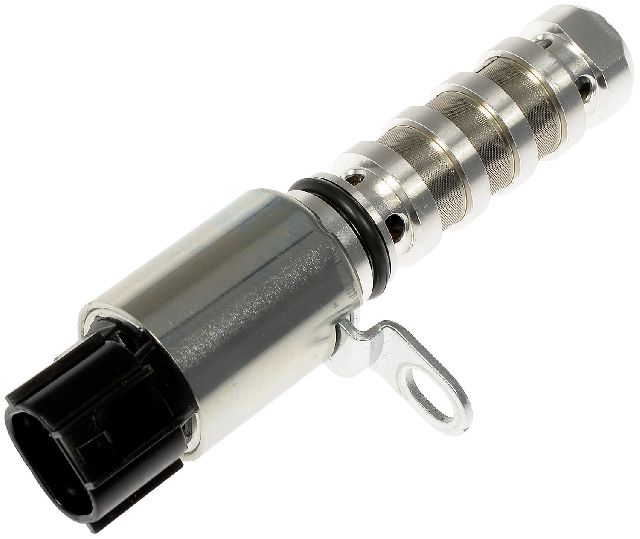
Est. part cost: $30-$70 - Faulty Exhaust Oil Control Valve (OCV) 🔴 High Probability The OCV is a solenoid that directs oil flow to the cam phaser. It's a common failure point, often getting clogged with sludge or failing electrically, leading to incorrect cam timing.
How to confirm: Test the solenoid's resistance with a multimeter (typically 8-12 ohms). A common diagnostic trick is to swap the exhaust OCV with the identical intake OCV. Clear codes and run the engine. If the code changes to P0016 (intake correlation), the OCV is confirmed bad. Note: On some models, the intake and exhaust OCVs are not interchangeable due to different connector angles.
Typical fix: Replace the exhaust Oil Control Valve. Ensure the screen is clean before installing the new part.
Est. part cost: $50-$150 - Stretched Timing Chain 🟡 Medium Probability Timing chains on these Kia engines are known to stretch over time, especially with higher mileage or poor maintenance history, which directly causes a correlation fault by altering the base timing.
How to confirm: This is an involved diagnosis. An advanced scan tool can show the deviation between commanded and actual cam angle. A physical inspection by removing the valve cover to check for chain slack against the guides is the definitive confirmation. A mechanic can also use an oscilloscope to compare cam and crank sensor waveforms to definitively prove a timing discrepancy. 🎬 Watch: How to use an oscilloscope for precise diagnosis.
Typical fix: Replace the timing chain, tensioner, and all guides. This is a labor-intensive job.
Est. part cost: $150-$400 - Failed CVVT Cam Phaser (Actuator) / Sheared Dowel Pin 🟡 Medium Probability This is a well-documented failure on the 2.0L Nu engine. The dowel pin that locks the phaser to the camshaft can shear or recess into the camshaft, allowing the phaser to rotate slightly and lose its base timing position. This causes an immediate P0017 code.
How to confirm: After confirming the OCV and timing chain are good, the phaser is the next suspect. With the valve cover removed, try to wiggle the CVVT phaser; any rotational play independent of the camshaft confirms this failure. A Reddit user's repair invoice explicitly states this failure mode.
Typical fix: Replace the exhaust CVVT phaser assembly. If the dowel pin has damaged the camshaft, the camshaft itself must also be replaced. This is a significant repair.
Est. part cost: $100-$250
Rare But Worth Checking
- Incorrect Camshaft Reluctor Wheel Configuration: This is primarily an issue after an engine or camshaft replacement where the reluctor wheel (pulse wheel) was installed incorrectly, as noted in TSB PS731. It's unlikely to occur on its own. The TSB provides diagrams for correct alignment.
- Faulty Camshaft or Crankshaft Position Sensor: While possible, it's uncommon for a sensor to fail in a way that causes a correlation code without setting a sensor-specific circuit code (e.g., P0340). Owners often replace these first, but it rarely fixes P0017.
- Damaged Wiring or Connectors: The wiring harnesses for the cam/crank sensors and OCVs are exposed to significant engine heat and vibration. Over time, wires can become brittle and break, or connectors can corrode, causing intermittent or false signals.
Diagnosis Steps

- Check Engine Oil: Verify the oil level is correct and the oil is clean. If low or dirty, perform an oil and filter change using a high-quality filter (OEM is recommended), clear the code, and drive the vehicle.
- Scan Tool Analysis: Use a scan tool to observe live data. Compare the 'Commanded Camshaft Position' vs. 'Actual Camshaft Position' for Bank 1 Exhaust. A significant, persistent deviation points to a mechanical issue.
- Inspect OCV: Inspect the wiring and connector for the exhaust OCV for damage or corrosion. If they look good, remove the OCV and check its screen for metallic debris or sludge.
- Test/Swap OCV: Test the OCV's resistance with a multimeter (should be around 8-12 Ohms). If possible, swap the exhaust and intake OCVs (verify they are identical first). Clear the codes and run the engine. If the code changes to P0016, the OCV you moved is faulty and needs replacement.
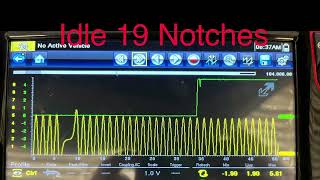
- Advanced Waveform Analysis: For a definitive diagnosis without major disassembly, use a dual-channel oscilloscope to graph the signals from the crankshaft position sensor and the exhaust camshaft position sensor. Compare the resulting waveform to a known-good pattern. A deviation (e.g., 19 notches between peaks instead of a specified 15) proves the mechanical timing is off.
- Inspect Timing Chain: If other tests are inconclusive, remove the valve cover and inspect the timing chain for visible slack. Press on the guide between the cam sprockets; excessive give indicates a worn tensioner or stretched chain.
- Inspect CVVT Phaser: While the valve cover is off, attempt to manually rotate the exhaust CVVT phaser sprocket. If there is any play or movement independent of the camshaft, the dowel pin has failed, and the phaser (and likely the camshaft) needs replacement. 🎬 See this walkthrough for replacing the VVT sprocket and chain.
Parts You'll Likely Need
- Engine Oil Control Valve (Exhaust)
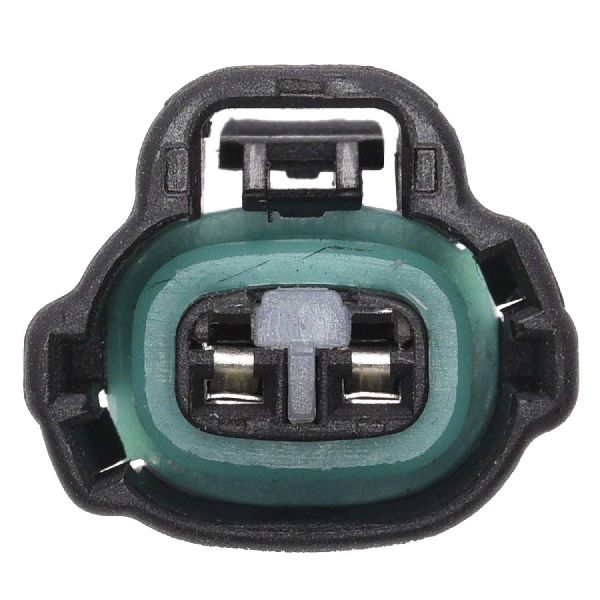
(OEM #24375-2E000 (For 2.0L Nu), 24375-2G500 (Used on some 2.0L/2.4L))— This solenoid is a very common failure point, getting stuck or clogged by dirty oil, preventing proper cam phasing.
Trusted brands: Kia Genuine, Hyundai Genuine, Delphi, Dorman
OEM price range: $80-$150
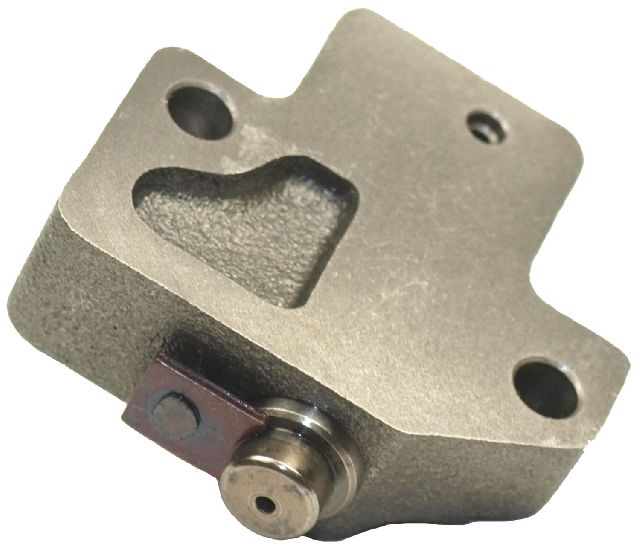
Aftermarket price range: $40-$90 - Timing Chain Kit — Timing chain stretch is a known issue on higher-mileage Kia engines that causes this correlation code. A kit includes the chain, tensioner, and guides.
Trusted brands: Kia Genuine, Melling, Cloyes
OEM price range: $250-$400
Aftermarket price range: $150-$250 - CVVT Cam Phaser (Exhaust)
(OEM #24370-2E010)— The exhaust cam phaser is a known failure point, especially on the 2.0L Nu engine where the alignment dowel pin can fail, causing it to lose time relative to the camshaft.
Trusted brands: Kia Genuine, Hyundai Genuine
OEM price range: $250-$360
Aftermarket price range: $150-$220
Related Codes That Often Appear With This One
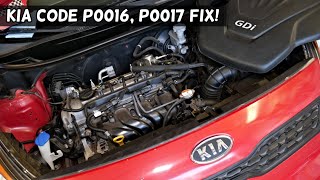
- P0016 — Crank/Cam correlation for the intake camshaft. Seeing both P0016 and P0017 strongly suggests a base timing issue (e.g., stretched chain that has jumped a tooth) or a severe oil pressure/quality problem affecting the entire CVVT system.
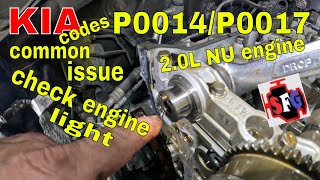
- P0014 — Exhaust Camshaft Position Timing Over-Advanced. This code is more specific to the CVVT system's inability to control the exhaust cam, pointing directly at a stuck OCV or a failing cam phaser. It is very commonly seen with P0017 on these engines.
Technical Service Bulletins (TSBs) & Recalls
- PS731: Addresses the potential for P0017 (and related codes P0011, P0014, P0016) to appear *after* an engine or camshaft replacement. The cause is an incorrectly clocked camshaft reluctor wheel. The TSB provides visual guides to ensure correct alignment during reassembly.
- SC209 / NHTSA 21V259: This is a safety recall for piston oil ring issues on some 2020-2021 Souls, but owners with earlier models experiencing P0017 and stalling have attempted to link their issues to this broader pattern of engine defects.
- PI2002B / SC200: This bulletin involves a software update to install the Knock Sensor Detection System (KSDS), which listens for vibrations indicative of rod bearing failure. While not directly for P0017, it is relevant as the underlying oiling issues that cause P0017 can also lead to the bearing failure this TSB aims to detect.
Platform-Specific Known Issues
- A widely documented issue on the 2.0L Nu GDI engine involves the dowel pin on the camshaft, which aligns the CVVT phaser, shearing or recessing into the camshaft. This allows the phaser to spin independently, immediately causing a timing correlation code. A repair invoice from an owner confirmed this exact failure required replacement of the camshaft and CVVT.
- Excessive oil consumption on some GDI engines can lead to low oil levels, which triggers this code as a first symptom before more severe engine damage occurs. Many owners report this code appearing when they are overdue for an oil change.
- These engines are part of a wider series of Hyundai/Kia engines with known manufacturing defects and are subject to class-action lawsuits and recalls related to engine failure, though P0017 itself is not always a direct trigger for warranty replacement without other symptoms like the P1326 knock sensor code.
Mechanic-Grade Diagnostic Values
- Oscilloscope Cam/Crank Correlation (2.0L Engine) — expected: With OCVs disconnected, the rising edge of the exhaust cam sensor pulse should be 15 crankshaft notches after the start of the crank sensor's sync pulse at idle.. Failure: A reading different from 15 notches (e.g., a reading of 19 notches) confirms a mechanical timing correlation error.
- Scan Tool Live Data: Exhaust Cam Angle Deviation — expected: Actual camshaft position should closely track the desired (commanded) position, typically within 1-2 degrees.. Failure: A persistent deviation, such as the 'exhaust cam = 4 degrees of of desired position', indicates a mechanical fault that the CVVT system cannot correct.
- OCV / VVT Solenoid Securing Bolt Torque — expected: 5 to 7 ft-lbs.. Failure: Over-torquing can damage the plastic housing of the solenoid.
Scan Tool Commands That Help
- Advanced Scan Tool (e.g., Kia GDS): Crankshaft Position Sensor Relearn Procedure — After replacing a crankshaft position sensor or performing major timing component work (chain, phasers). The ECM may need to learn the specific electronic variations of the new sensor to calculate timing correctly. Failure to perform this may cause a code to persist even after a successful mechanical repair.
Wiring & Ground Locations
- Exhaust Camshaft Position Sensor Connector (2.0L) — On the top of the engine, connected to the exhaust camshaft position sensor.. For oscilloscope diagnosis, the signal wire must be correctly identified. On the 2012-2013 2.0L, the white wire is the signal wire to back-probe for the waveform.
- Intake Camshaft Position Sensor Connector (2.0L) — On the top of the engine, connected to the intake camshaft position sensor.. If swapping OCVs causes the code to change to P0016, testing the intake cam sensor may be necessary. On the 2012-2013 2.0L, the middle wire is the signal wire.
- Crankshaft Position Sensor Connector — On the 2.0L engine, located on the front of the engine block, below the intake manifold area, near the transmission bell housing.. This is the primary reference sensor for engine timing. The signal from this sensor's connector is required for oscilloscope analysis against the camshaft sensor signal.
Real Owner Repair Stories
- YouTube user 'Maradiaga's Auto Sales' (2018 Kia Forte 2.0L (Same Nu engine family)) — Immediate P0017 code that returns instantly after clearing.
❌ Tried (didn't work) Replacing both camshaft position sensors, Cleaning both VVT solenoids (OCVs), Replacing the crankshaft position sensor
✅ What actually fixed it Upon removing the valve cover and exhaust CVVT phaser, the mechanic discovered the alignment dowel pin had broken/recessed into the camshaft, allowing the phaser to spin freely. The final repair was to replace the exhaust camshaft to provide a solid mounting point for a new phaser. - Reddit user 'Isotoners' on r/KiaSoulClub (2023 Kia Soul) — Check Engine Light with code P0017, failed emissions test.
❌ Tried (didn't work) N/A, taken directly to dealer.
✅ What actually fixed it The dealership service invoice stated they found the 'exhaust cam = 4 degrees of of desired position'. The fix was to replace the exhaust camshaft. The repair was covered under warranty. - Reddit user on r/MechanicAdvice (Kia with oil consumption problem (model not specified, but symptoms match Nu engine issue)) — P0017 code, car running badly after oil went very low.
❌ Tried (didn't work) Replacing crankshaft position sensor, Cleaning and testing oil control valves
✅ What actually fixed it The user found the timing had jumped two teeth. The final repair involved replacing the timing chain, tensioners, both CVVT sprockets, and the exhaust camshaft due to the 'infamous dowel pin breaking off'. The code still remained after the fix, suggesting a possible need for an ECU relearn procedure. - YouTube user 'Jesus Mendoza' (2013 Kia Soul 2.0L) — P0017 code, car was 10,000 miles overdue for an oil change.
❌ Tried (didn't work) Replacing both oil control valves (OCVs).
✅ What actually fixed it The issue was not fixed, but definitively diagnosed using an oscilloscope. The waveform showed 19 crankshaft notches of deviation at idle instead of the specified 15. This proved a mechanical timing fault (likely stretched chain or failed phaser), justifying engine disassembly to the customer.
When the Usual Fixes Don't Work
- In multiple documented cases, replacing the more common and less expensive parts first did not solve the P0017 code. One owner had a shop replace both OCVs for $600, which did not fix the issue; the dealer then quoted an engine replacement, likely due to the known camshaft/phaser dowel pin issue. Another owner replaced the camshaft sensor and exhaust OCV solenoid themselves before a shop also replaced both solenoids, costing over $800, without resolving the code, which was later determined to be a timing chain issue. These stories highlight that while starting with oil and OCVs is logical, a persistent P0017 on the 2.0L Nu engine frequently points to the more severe mechanical failure of the CVVT phaser and/or camshaft.
Model Year Variations Within This Range
- 2012-2017: Models from these years are commonly equipped with the 2.0L Nu GDI engine. This specific engine is widely documented as having the CVVT phaser alignment dowel pin failure, where the pin shears or recesses into the camshaft. This is a primary cause of P0017 on these models.
- 2010-2011: Earlier models were equipped with the 2.0L Beta II MPI engine. While still susceptible to general timing issues like a stretched chain or faulty OCV, they are not known for the specific CVVT dowel pin failure seen in the later Nu engine.
Helpful Videos

We Have This Part in Stock


The information in this article is provided for general reference and educational purposes only. Vehicle specifications, procedures, and part compatibility can vary by production date, trim level, and region. Always consult your vehicle's factory service manual and verify part numbers before purchasing or performing repairs. Safety-critical components such as airbags, seat belts, and braking systems should be installed by a qualified professional.
- Kia SOUL:
- 🎬 Helpful Videos
- 🛍️ Shop This Part
- What's Unique About the 2010-2017 Kia SOUL
- Diagnostic Flowchart
- Symptoms You May Notice
- Most Likely Causes
- Rare But Worth Checking
- Diagnosis Steps
- Parts You'll Likely Need
- Related Codes That Often Appear With This One
- Technical Service Bulletins (TSBs) & Recalls
- Platform-Specific Known Issues
- Mechanic-Grade Diagnostic Values
- Scan Tool Commands That Help
- Wiring & Ground Locations
- Real Owner Repair Stories
- When the Usual Fixes Don't Work
- Model Year Variations Within This Range
- 🎟️ Get 5% Off