

P0017 on 2006-2010 Hummer H3: Crankshaft Camshaft Correlation Causes and Fixes
P0017 on a Hummer H3 usually points to a problem with the variable valve timing (VVT) system, often caused by a faulty camshaft actuator solenoid or low/dirty engine oil. It can also indicate a more serious stretched timing chain. Replacing the solenoid is a common, affordable DIY fix.
- P0017 on the Hummer H3 is most often caused by a faulty VVT solenoid or low/dirty engine oil.
- GM has issued multiple TSBs for this code, indicating known issues beyond simple sensor failure, such as a loose crankshaft balancer bolt.
- Symptoms commonly include a rough idle, engine rattle, and loss of power.
- A stretched timing chain is a possible and serious cause, especially on higher-mileage I5 engines.
- Diagnosis should start with the easiest and cheapest fixes: checking oil and inspecting/replacing the VVT solenoid.
What's Unique About the 2006-2010 Hummer H3

The Hummer H3, particularly with the 3.5L and 3.7L Atlas inline-five engines, has several known issues that directly lead to a P0017 code. These engines are susceptible to timing chain stretch and issues with the VVT system, which relies heavily on oil pressure. GM has issued multiple Technical Service Bulletins (TSBs) that point to specific, non-obvious causes like a loose crankshaft balancer bolt (PIP4581B) and the need to verify oil pressure when diagnostics are inconclusive (PIP4913A), highlighting that this code often goes beyond a simple bad sensor. The problem is so common that it also affects the H3's platform mates, the Chevy Colorado and GMC Canyon.
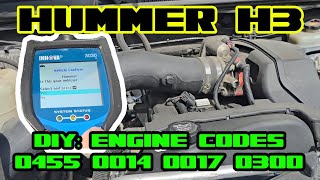
🎬 Watch: A diagnostic overview of common H3 engine codes.Diagnostic Flowchart

Tap your situation to follow the diagnostic path that matches what you're seeing on this vehicle.
Symptoms You May Notice

- Check Engine Light is on
- Rough or unstable idle, sometimes described as a significant vibration only at idle.
- Loss of engine power and sluggish acceleration
- Engine stalling, especially when coming to a stop after the engine has warmed up.
- Rattling, clanking, or banging noises from the engine, particularly at idle, which may quiet down under throttle.
- Decreased fuel economy.
- In some cases, the engine may crank but not start, with the starter sounding faster than normal, indicating a loss of compression from a jumped or broken timing chain.
- Replacing the camshaft and crankshaft position sensors when the actual fault is with the VVT solenoid, oil quality, or the timing chain itself.
- Replacing the VVT solenoid without performing an oil change, which can lead to the new solenoid failing quickly from the same contaminated oil.
Most Likely Causes

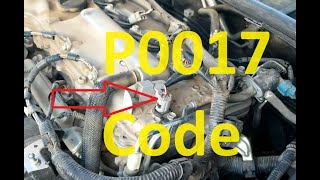
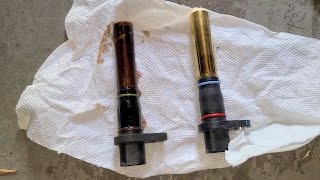
- Faulty Camshaft Actuator Solenoid (VVT Solenoid) 🔴 High Probability The solenoid gets clogged with oil sludge or debris, preventing it from properly regulating oil flow to the cam phaser. TSB PIP3694F specifically mentions inspecting the three screens at the bottom of the solenoid for tears or missing pieces. This is the most common failure point for P0017.
How to confirm: Unplug the solenoid and check for changes in engine idle. You can also remove it (one 10mm bolt) and inspect its screens for debris or test it with a 12v source to see if the plunger actuates. A YouTube video demonstrates the simple 5-minute replacement process.
Typical fix: Replace the camshaft actuator solenoid and perform an engine oil and filter change to remove contaminants. Using a genuine ACDelco part is highly recommended by forum users.
Est. part cost: $25-$60 - Low or Dirty Engine Oil 🔴 High Probability The VVT system is entirely dependent on clean oil at the correct pressure to adjust cam timing. Neglected oil changes lead to sludge that clogs the actuator solenoid and oil passages. One owner on HummerForums.com reported the P0017 code appeared immediately after the engine was run very low on oil.
How to confirm: Check the oil level on the dipstick and inspect its color and consistency. If it's low, black, or sludgy, this is a likely contributor.
Typical fix: Perform an engine oil and filter change using a quality 5W-30 full synthetic oil and a new filter. In many cases, this alone can resolve the code if it was caused by temporary low pressure or dirty oil.
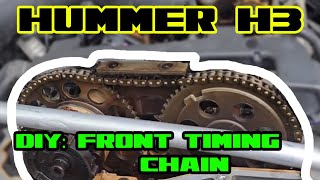
Est. part cost: $40-$80 - Stretched Timing Chain 🟡 Medium Probability The Atlas-family I5 engines are known to have timing chain issues, typically after 80,000-120,000 miles. Over time, the chain can stretch, causing the cam and crank correlation to fall out of spec and trigger P0017.
How to confirm: A tell-tale sign reported by owners is a rattling or 'banging' noise at idle that goes away with throttle. A mechanic can check cam/crank deviation with a scan tool. A physical inspection, which is labor-intensive (a 20-hour job by dealer estimate), is the ultimate confirmation.
Typical fix: Replace the timing chain, tensioners, and guides. This is a significant repair, often costing over $1,500. It is critical to replace all components of the system, not just the chain.
Est. part cost: $250-$500 for a kit - Faulty Camshaft or Crankshaft Position Sensor ⚪ Low Probability While sensors can fail, they are less common culprits for P0017 on this vehicle than VVT or timing chain issues. Owners often replace these first without fixing the problem, as documented in numerous forum threads.
How to confirm: Test the sensor's resistance and voltage output against specifications. Swapping the exhaust and intake cam sensors (if identical) can see if the code changes to P0016. A crankshaft position sensor (CKP) relearn procedure using a Tech 2 or equivalent scan tool is often required after replacement.
Typical fix: Replace the faulty sensor. A crankshaft position sensor relearn procedure may be required with a capable scan tool.
Est. part cost: $20-$70 per sensor - Loose Crankshaft Balancer Bolt ⚪ Low Probability TSB PIP4581B specifically calls this out as a potential cause when other diagnostics fail, often accompanied by a rattle. A loose bolt allows the crankshaft balancer (and the reluctor ring behind it) to wobble, confusing the crankshaft position sensor.
How to confirm: Visually inspect the crankshaft balancer for wobble while the engine is running (use extreme caution). Check the torque on the main bolt. The specification is a multi-step process: first pass to 55 Nm (41 lb ft), then an additional 150 degrees.
Typical fix: Re-torque the crankshaft balancer bolt to the manufacturer's specification. A new bolt is often recommended.
Est. part cost: $0 (if only re-torquing), $10-$20 for a new bolt
Rare But Worth Checking
- Excessive Crankshaft End Play: TSB PIP3694F mentions this as a severe but possible cause. If the crankshaft can be physically moved back and forth with a pry bar by more than specification (typically > .050 inch), it can trigger correlation codes. This usually indicates a major internal engine problem (worn thrust bearings) requiring a rebuild or replacement.
- Worn or Sticking Camshaft Phaser (Actuator Sprocket): The phaser itself, which is the gear on the end of the camshaft, can get stuck or fail internally due to oil contamination or wear. This prevents it from adjusting the cam timing correctly even if the solenoid is working perfectly. TSB PIP4913 mentions this possibility.
- Low Oil Pressure from Failing Oil Pump or Clogged Pickup Tube: While less common than a clogged solenoid, general low oil pressure throughout the engine will starve the VVT system and trigger P0017. This can be caused by a failing oil pump or a pickup tube screen clogged with debris, sometimes from failed timing chain guides.
Diagnosis Steps
- Check engine oil level and condition. If low or dirty, change the oil and filter with a quality 5W-30 synthetic oil, clear the code, and see if it returns.
- Scan for other DTCs. Codes like P0014 can help pinpoint the issue to the exhaust cam VVT system.
- Inspect the Camshaft Actuator Solenoid. Remove the solenoid (held by one 10mm bolt), check for debris on the screens, and clean it. Per TSB PIP3694F, if any of the three screens are missing or torn, the solenoid must be replaced.
- Swap the intake and exhaust VVT solenoids (if they are the same part number). If the code changes to P0016 (Intake Cam Correlation), the solenoid is bad.
- Test the Camshaft Position (CMP) and Crankshaft Position (CKP) sensors and their wiring harnesses for damage or corrosion. Check for damaged wiring near hot exhaust components.
- With a capable scan tool, monitor the desired vs. actual camshaft position angles to see if the phaser is responding to commands. The scan tool's control may be inhibited once P0017 is set.
- Following TSB PIP4913A, check engine oil pressure with a mechanical gauge to rule out low pressure. A common spec is a minimum of 12 psi at 1200 RPM.
- Following TSB PIP4581B, inspect and verify the torque of the crankshaft balancer bolt.
- If all other steps fail, perform a physical inspection of the timing chain, guides, and tensioner for wear, stretch, or broken plastic pieces. This is a labor-intensive step.
Parts You'll Likely Need
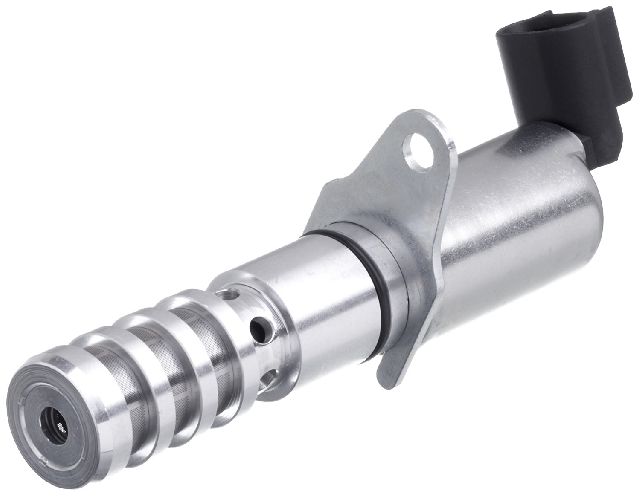
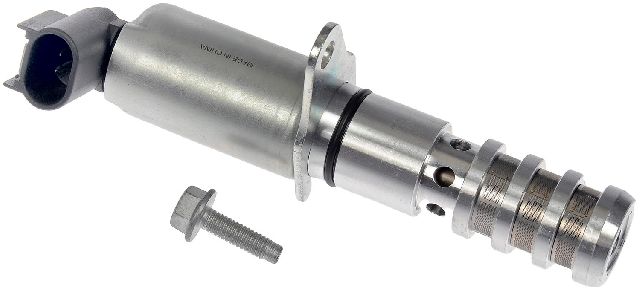
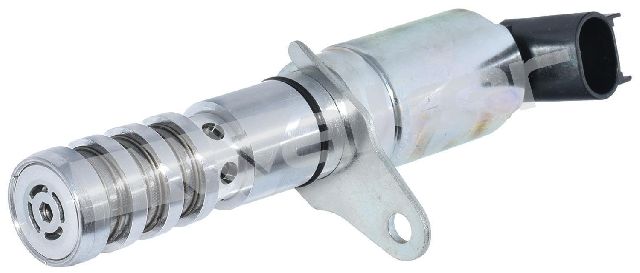
- Engine Variable Valve Timing (VVT) Solenoid
(OEM #12615873)— This is the most frequent point of failure. It gets clogged with debris from engine oil, causing it to stick. It is a simple, 5-minute replacement.
Trusted brands: ACDelco (GM Genuine), Dorman, NTK
OEM price range: $40-$70
Aftermarket price range: $25-$50 - Camshaft Position Sensor
(OEM #213-1690)— Though less common than the solenoid, a failing sensor can send incorrect data to the ECM, triggering the code. Often replaced unnecessarily.
Trusted brands: ACDelco, Delphi
OEM price range: $30-$50
Aftermarket price range: $20-$40 - Timing Chain Kit — If the chain has stretched or a guide has failed, a full kit is needed to restore proper mechanical timing. This is a major repair and should include the chain, guides, tensioner, and sprockets.
Trusted brands: Cloyes, ACDelco
OEM price range: $400-$600
Aftermarket price range: $250-$500
Related Codes That Often Appear With This One
- P0014 — This code is for 'Exhaust Camshaft Position System Performance'. It often appears with P0017 because both relate to the control of the exhaust camshaft, pointing strongly to a VVT solenoid or phaser issue.
- P0106 — This code for 'Manifold Absolute Pressure (MAP) Sensor Performance' can be triggered by the erratic engine running and poor vacuum caused by incorrect cam timing, as noted in TSB PIP3694F.
- P0300 — A 'Random/Multiple Cylinder Misfire' code is a common side effect of incorrect timing, as the engine's combustion cycle is disrupted.
Technical Service Bulletins (TSBs) & Recalls

- PIP4945B
- PIP4913A
- PIP4581B
- PIP3694F
- 06-06-01-017G
Platform-Specific Known Issues
- Owner Story: Low Oil Leads to Immediate P0017: A user on HummerForums.com reported that their daughter was driving the truck when it began to sound 'rattly and sick.' They discovered it was very low on oil and had thrown a P0017 code. Even after topping off the oil, the code kept returning, illustrating how an oil starvation event can cause persistent VVT system issues.
- Owner Story: P0017 and Rattling Precedes Catastrophic Failure: Another forum member complained of a P0017 code and a rough idle. They later experienced a rattling sound, and then the engine failed to start, sounding like the starter was spinning with no resistance. This is a classic story of a stretched timing chain (causing P0017) eventually breaking completely.
- The 'Parts Cannon' Misdiagnosis: Multiple forum threads show owners replacing the crankshaft sensor, both camshaft sensors, and even the VVT solenoid, only for the P0017 code to remain. This highlights that the issue is often more fundamental, such as oil pressure, a sticking phaser, or the timing chain itself, and simply replacing sensors is not the solution.
Mechanic-Grade Diagnostic Values
- Camshaft Actuator Solenoid (VVT Solenoid) Resistance — expected: 8 to 12 Ohms. Failure: A reading outside this range indicates a faulty solenoid coil.
- Engine Oil Pressure — expected: Minimum 21 psi (145 kPa) at 2,000 RPM with engine at operating temperature.. Failure: Pressure below this specification indicates an oil delivery problem (e.g., worn pump, clogged pickup tube) that will starve the VVT system.
- Camshaft Position (CMP) Sensor Signal — expected: With key on, engine off, the signal wire (Pin C) should show 0V or 5V depending on cam position. While cranking, it should produce a square wave signal, visible on an oscilloscope, or a fluctuating voltage on a multimeter.. Failure: A constant 0V or 5V while cranking, or no voltage, indicates a failed sensor or wiring issue.
Scan Tool Commands That Help
- Tech2 / GDS2 or equivalent professional scanner: Camshaft Position (CMP) Actuator Control — This bidirectional command allows a technician to manually command the VVT solenoid from 0% to 100% duty cycle while monitoring the desired vs. actual cam angle PIDs. If the actual angle does not change when commanded, it confirms a fault in the solenoid, oil pressure delivery, or the phaser itself.
- Tech2 / GDS2 or equivalent professional scanner: Crankshaft Position (CKP) System Variation Learn — This procedure is required after replacing the crankshaft position sensor, the ECM, or the crankshaft balancer. It compensates for minor mechanical variations in the crankshaft reluctor wheel to ensure accurate misfire detection and timing. Failure to perform this can sometimes lead to correlation codes.
Wiring & Ground Locations
- G103 / G104 — On the engine block, typically near the starter motor or on the side of the block.. These are the primary engine block grounds for the ECM and various sensors. A loose or corroded connection at these points can cause erratic voltage and signal readings for the cam and crank sensors, leading to false correlation codes.
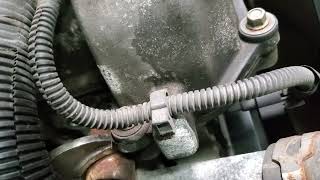
- Exhaust CMP Sensor Connector — On the top of the engine, near the back of the valve cover on the exhaust side.. Pin A is Low Reference (ground from ECM), Pin B is 5V Reference (from ECM), and Pin C is the Signal. Testing for correct voltages at this connector is a key step in diagnosing a faulty sensor versus a wiring problem.
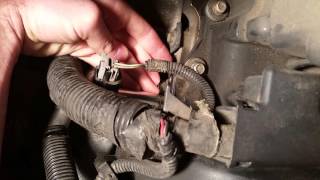
- VVT Solenoid Connector — On the top-front of the engine, inserted into the valve cover.. The Pink wire should have ignition voltage (12V) with the key on. The Brown/White wire is the control wire that the ECM pulses to ground to operate the solenoid. Checking for power on the pink wire confirms the circuit is live.
Real Owner Repair Stories
- HummerForums.com user report (2007 Hummer H3, 3.7L I5, ~115,000 miles) — P0017 and P0014 codes, rough idle.
❌ Tried (didn't work) Replacing the VVT (camshaft actuator) solenoid
✅ What actually fixed it The final repair was a complete timing chain job, including a new chain, guides, and tensioner. The original chain had stretched enough to cause the correlation error. - ColoradoFans.com user report (2007 Chevrolet Colorado, 3.7L I5) — P0017, rough idle, stalling at stops.
❌ Tried (didn't work) Replacing the VVT solenoid, Replacing both intake and exhaust camshaft position sensors
✅ What actually fixed it The exhaust camshaft phaser (the actuator sprocket itself) was mechanically seized. Replacing the phaser resolved the code. - 355Nation.net (GM 355 platform forum) user report (2006 Chevrolet Colorado, 3.5L I5) — P0017 and a rattling noise.
❌ Tried (didn't work) Replacing VVT solenoid, Replacing camshaft position sensor
✅ What actually fixed it After removing the valve cover, the owner discovered the exhaust camshaft had a broken tooth on its gear, which was machined as part of the camshaft itself on this specific engine. The entire exhaust camshaft had to be replaced.
OEM Part Supersession History
12615873 (Camshaft Actuator Solenoid)→12679099 (via 12628347)— Improved design to better resist clogging from oil debris and prevent internal screen failure, which was a common issue with the original part.
Heads up: The newest part number is a direct replacement and is highly recommended over old stock or the original part number to prevent repeat failures.
Model Year Variations Within This Range
- 2006 vs 2007-2010: The 2006 model used the 3.5L L52 I5 engine, while 2007-2010 models used the updated 3.7L LLR I5. While the fundamental VVT system design and P0017 causes are the same, some internal engine components and the ECM calibration differ. The 3.7L engine received an updated cylinder head design mid-2007 to address a separate valve seat issue, but the P0017 problem persists across all I5 model years.
Helpful Videos

We Have This Part in Stock


The information in this article is provided for general reference and educational purposes only. Vehicle specifications, procedures, and part compatibility can vary by production date, trim level, and region. Always consult your vehicle's factory service manual and verify part numbers before purchasing or performing repairs. Safety-critical components such as airbags, seat belts, and braking systems should be installed by a qualified professional.
- Hummer H3:
- 🎬 Helpful Videos
- 🛍️ Shop This Part
- What's Unique About the 2006-2010 Hummer H3
- Diagnostic Flowchart
- Symptoms You May Notice
- Most Likely Causes
- Rare But Worth Checking
- Diagnosis Steps
- Parts You'll Likely Need
- Related Codes That Often Appear With This One
- Technical Service Bulletins (TSBs) & Recalls
- Platform-Specific Known Issues
- Mechanic-Grade Diagnostic Values
- Scan Tool Commands That Help
- Wiring & Ground Locations
- Real Owner Repair Stories
- OEM Part Supersession History
- Model Year Variations Within This Range
- 🎟️ Get 5% Off