

P0017 on 2010-2017 GMC Terrain: Crank/Cam Correlation Causes and Fixes
On the 2010-2017 GMC Terrain, especially with the 2.4L engine, P0017 almost always points to a stretched timing chain, worn guides, or a bad tensioner, often caused by low engine oil. This oil loss is a known defect covered by GM's Special Coverage Adjustment #14159D. While VVT solenoids can be a cause, a timing chain issue is the most likely and serious repair, costing between $1,200 and $2,500.
- P0017 on a 2010-2017 GMC Terrain, especially the 2.4L model, is a serious code that strongly points to a mechanical timing problem.
- Always check the engine oil level first; low oil is a major contributor to this issue.
- While a faulty VVT solenoid is a possible cause, be prepared for the high probability of needing a timing chain replacement.
- Do not ignore a rattling engine noise. This is a critical warning sign of a loose timing chain that could lead to catastrophic engine failure.
- This repair is not recommended for DIY beginners. It is complex and requires precision to avoid engine damage.
What's Unique About the 2010-2017 Gmc TERRAIN

The first-generation GMC Terrain with the 2.4L Ecotec engine is infamous for excessive oil consumption due to a flawed piston ring design. This issue was so widespread that GM issued Special Coverage Adjustment #14159D (and others) to cover piston and ring replacement. This chronic oil loss starves the timing system of necessary lubrication and hydraulic pressure, leading to premature failure of the timing chain tensioner, destruction of the plastic guides, and rapid stretching of the chain itself. While P0017 can indicate a simple sensor or solenoid failure on other vehicles, on this platform, it is very frequently the first sign of this severe underlying mechanical issue that requires significant repairs.
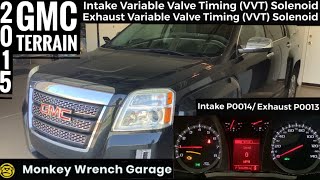
🎬 Watch: A professional diagnosis of the P0017 code and engine stalling.Diagnostic Flowchart

Tap your situation to follow the diagnostic path that matches what you're seeing on this vehicle.
Symptoms You May Notice

- Check Engine Light is on
- Engine running rough or idling poorly
- Rattling or scraping noise from the passenger side of the engine, especially on cold starts that may last for a few seconds
- Reduced engine power and acceleration, sometimes triggering a 'Reduced Engine Power' message
- Engine stalling or being hard to start
- Increased fuel consumption
- A 'clunking' sound at idle as pieces of the timing chain guides break off.
- Replacing only the camshaft and crankshaft position sensors without checking the mechanical timing. The code indicates a correlation *problem*, not necessarily a sensor failure. Often, the sensors are correctly reporting a real mechanical issue.
- Replacing only the VVT solenoid when the timing chain is stretched. While a solenoid is a possible and cheaper fix, ignoring the signs of a loose chain (like startup rattle) will lead to the problem returning and eventual catastrophic failure.
- Replacing the timing chain without cleaning the oil pan and oil pickup tube. Debris from the old, failed plastic guides can clog the pickup tube, starving the new components of oil and causing a repeat failure.
Most Likely Causes

- Stretched Timing Chain and/or Failed Tensioner/Guides 🔴 High Probability The 2.4L Ecotec engine has a known issue with high oil consumption, which leads to oil starvation for the timing components, causing the tensioner to fail and the chain to stretch prematurely. The plastic timing chain guides become brittle from heat and lack of oil, then break apart, sending plastic fragments into the oil pan and potentially clogging the oil pickup tube. The provided NHTSA TSB #PIP3423P directly links P0017 to inspecting for loose timing chains or tensioners.
How to confirm: A physical inspection is the definitive way. A mechanic will remove the valve cover or timing cover to check for chain slack. A rattling noise from the passenger side of the engine is a strong indicator. A professional can also use an oscilloscope to compare the crank and cam sensor signals against a known-good pattern.
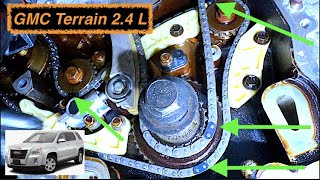
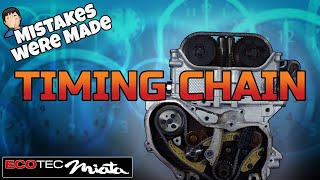
Typical fix: Replace the complete timing chain kit, including the chain, tensioners, and all guides. It is critical to use the updated parts designed to address the original flaws. 🎬 Watch: A complete walkthrough of the timing and balance chain replacement. It's also vital to address the root oil consumption issue, which may require new pistons and rings.
Est. part cost: $150-$400 for a full kit - Low or Dirty Engine Oil 🔴 High Probability This is the primary contributing factor to the timing chain failure on the 2.4L engine due to the piston ring defect (Special Coverage #14159D). The VVT system and timing chain tensioner are hydraulically operated and highly sensitive to oil level and quality. Running the engine just 1-2 quarts low can cause damage.
How to confirm: Check the oil level on the dipstick and inspect its condition. If the level is low or the oil is dark and sludgy, this is a likely contributor. Many owners report no visible leaks, as the oil is burned in the combustion chamber.
Typical fix: Perform an engine oil and filter change with the correct specification oil (5W-30 Dexos1). An engine flush may help clean sludge from VVT components. This is a critical first step but will not solve the problem if mechanical wear (stretched chain) has already occurred.
Est. part cost: $40-$80 - Faulty Camshaft Position Actuator Solenoid (VVT Solenoid) 🟡 Medium Probability These solenoids can get clogged with sludge from dirty oil or plastic debris from failing timing chain guides. They can also fail electronically. TSB #17-NA-098 also points to solenoid failure as a cause for similar codes on these engines.
How to confirm: A mechanic can command the solenoid with a scan tool to check its response. A common DIY method is to swap the intake and exhaust solenoids (they are identical) to see if the trouble code changes to P0016 (intake correlation). If the code moves, the solenoid is bad.
Typical fix: Replace the exhaust camshaft position actuator solenoid. It is often recommended to replace both intake and exhaust solenoids 🎬 See this step-by-step guide on replacing your VVT solenoids. at the same time.
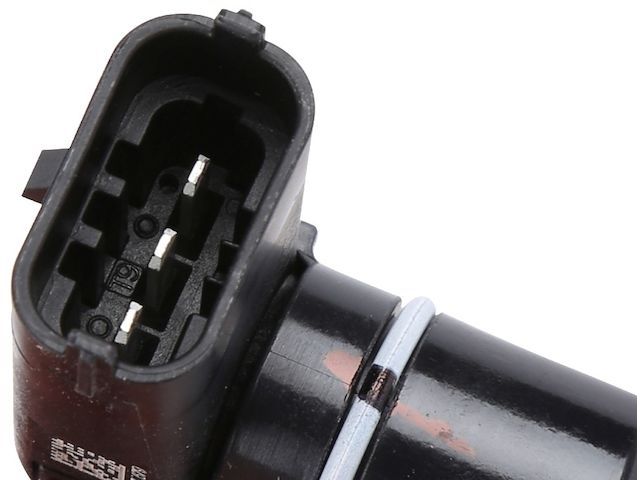
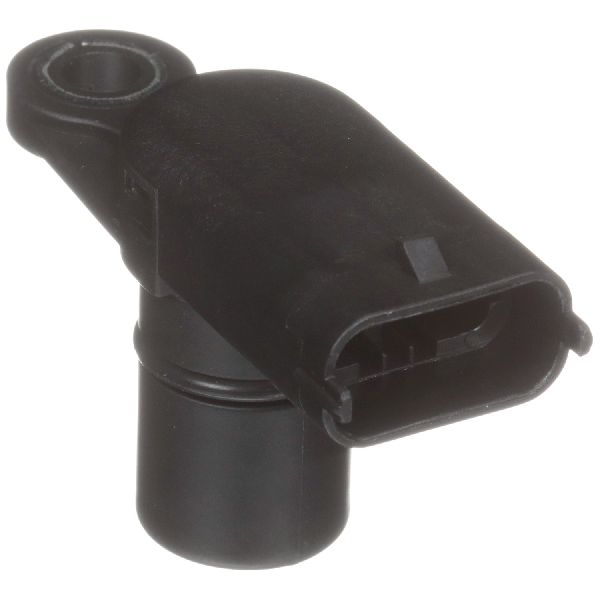
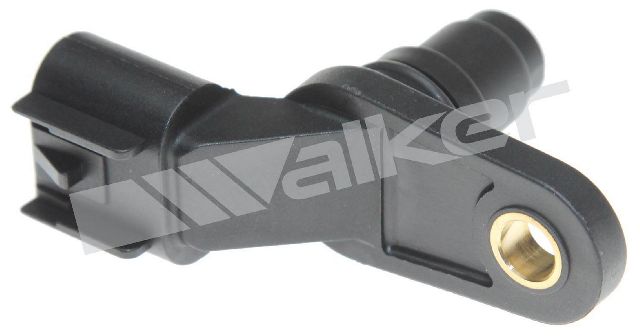
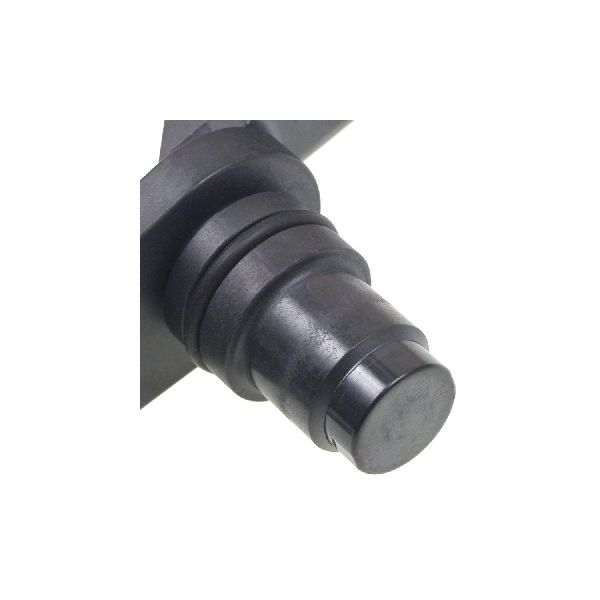
Est. part cost: $25-$70 - Faulty Camshaft or Crankshaft Position Sensor ⚪ Low Probability
How to confirm: Sensors can be tested with a multimeter for proper resistance or by observing their signal on an oscilloscope. However, sensor failure is far less common than the mechanical or solenoid issues. Often, the sensors are correctly reporting a real mechanical issue.
Typical fix: Replace the specific sensor that has failed (exhaust camshaft position sensor for P0017).
Est. part cost: $20-$60
Rare But Worth Checking
- Slipped Camshaft Reluctor Wheel: TSB #PIP4548F mentions that the reluctor ring on the camshaft, which the sensor reads, can move out of position. It is press-fit and not keyed to the camshaft. An engine overheat condition can contribute to the ring spinning on the cam. This will cause a correlation code even if the timing chain is perfectly aligned, leading to a very difficult misdiagnosis. The fix is to replace the entire camshaft.
Diagnosis Steps
- Check the engine oil level and condition. Top off or change the oil if it is low or dirty. This is the easiest and most critical first step, given the engine's known oil consumption issues.
- Use an OBD-II scanner to check for any other related trouble codes. Codes like P0016, P0014, or fuel pressure codes (P0089) strongly suggest a base timing issue.
- Listen for a rattling or scraping noise from the passenger side of the engine, especially during a cold start for 2-4 seconds. This is a classic sign of a loose timing chain and failing tensioner.
- Test the Camshaft Position Actuator (VVT) Solenoids. Remove the solenoids and inspect their screens for metallic or plastic debris. Swap the exhaust and intake solenoids and see if the code changes to P0016. If it does, the solenoid you moved to the intake position is bad.
- If solenoids are good and oil level is correct, the next step is to suspect a mechanical timing issue. This requires a more in-depth diagnosis.
- A professional technician will likely remove the valve cover to visually inspect the timing chain for slack between the camshaft sprockets.
- If slack is confirmed, the timing chain, guides, and tensioners must be replaced. The oil pan should also be removed to clean out debris from the failed guides.
- If timing components are replaced and the code persists, investigate the rare possibility of a slipped reluctor ring on the camshaft per TSB #PIP4548F.
Parts You'll Likely Need
- Timing Chain Kit — This is the most common root cause of P0017 on the 2.4L engine due to chain stretch and guide failure. A complete kit with updated components is required for a lasting repair.
Trusted brands: ACDelco (OEM), Cloyes (9-4201S is a popular, high-quality kit)
OEM price range: $250-$400
Aftermarket price range: $150-$250 - Camshaft Position Actuator Solenoid (Exhaust)
(OEM #12655421)— A common failure item that gets clogged with debris or fails electrically. It's a frequent cause of VVT-related codes and is often replaced as a first step or along with the timing chain.
Trusted brands: ACDelco (OEM), Dorman
OEM price range: $40-$60
Aftermarket price range: $25-$45 - Engine Oil and Filter — Low or dirty oil is the primary catalyst for timing system failure on this engine. An oil change is a mandatory first step in diagnosis and a critical part of the final repair.
Trusted brands: ACDelco PF457G (Filter), Mobil 1, Castrol (5W-30 Dexos1 Full Synthetic)
OEM price range: $50-$90
Aftermarket price range: $40-$80
Related Codes That Often Appear With This One
- P0016 — Crankshaft/Intake Camshaft Correlation. This often appears with P0017 when the timing chain has stretched enough to affect both camshafts. The NHTSA complaints and TSBs confirm this pairing.
- P0014 — Exhaust Camshaft Position Timing - Over-Advanced. This code is specific to the exhaust cam's position and can be caused by a faulty VVT solenoid, a stuck phaser, or a stretched chain.
- P0008 — Engine Positions System Performance Bank 1. This is a more general timing code indicating a problem between the crank and both cams on Bank 1, often set by a significantly stretched timing chain.
- P0089 / P228D — Fuel Pressure Regulator Performance. On the 2.4L direct-injection engine, the high-pressure fuel pump is driven by a lobe on the camshaft. If the cam timing is incorrect due to a stretched chain, it can affect fuel pump operation and set these codes.
Technical Service Bulletins (TSBs) & Recalls
- Bulletin #PIP3423P: Notes that DTC P0017 (and others) may be set and advises technicians to inspect for loose timing chains or tensioners.
- Bulletin #PIP4548F: Advises inspection of camshaft reluctors if P0017 is set on a properly timed engine, pointing to a less common but possible cause.
Platform-Specific Known Issues
- The 2.4L Ecotec engine in 2010-2013 models is particularly known for high oil consumption due to piston ring design. GM acknowledged this with Special Coverage Adjustment #14159D, which extended the warranty for piston replacement to fix the oil burning. This oil consumption is the direct cause for most P0017 codes on these vehicles, as it leads to oil starvation of the timing components.
Mechanic-Grade Diagnostic Values
- VVT Camshaft Position Actuator Solenoid Resistance — expected: 8 to 13 Ohms. Failure: A reading outside this range, or a reading that fluctuates wildly when wiggling the connector, indicates a faulty solenoid.
- VVT Solenoid Live Test — expected: An audible click and visible movement of the internal plunger when 12V is applied directly.. Failure: No click or movement indicates a seized solenoid.
Scan Tool Commands That Help
- GDS2 (GM Tech Tool) or equivalent professional scanner: Viewing Desired vs. Actual Camshaft Position Angle — This is critical for diagnosis. However, if a base timing fault like P0017 is currently active, the ECM will disable VVT operation, and the 'Desired' angle will read zero. This tells the technician that the ECM has already detected a fundamental timing problem and is not attempting to adjust it, pointing towards a mechanical fault rather than a command issue.
- OBD-II Scanner: View Freeze Frame Data — Use this to see the exact engine conditions (RPM, load, temperature, etc.) at the moment the P0017 code was triggered. This can provide clues as to whether the issue occurs on cold start, under load, or at idle.
Wiring & Ground Locations
- B23E Camshaft Position Sensor - Exhaust (LAF) — On the 2.4L LAF engine, the exhaust camshaft position sensor is located on the top-rear of the cylinder head, closer to the firewall.. This is the specific sensor ('Sensor B') that the P0017 code refers to. Verifying its connection and wiring integrity is a key diagnostic step.
- B23F Camshaft Position Sensor - Intake (LAF) — On the 2.4L LAF engine, the intake camshaft position sensor is located on the top-front of the cylinder head, closer to the radiator.. While not the direct cause of P0017, its wiring runs in the same harness. A problem in the shared harness could potentially affect both sensors. Also useful for comparison during diagnosis.
- General Engine Grounds — Various points on the engine block and chassis. Specific ground distribution diagrams for the 2012 Terrain are available.. A poor ground connection to the ECM or sensors can cause erratic signals and false codes. While not a common cause for this specific code, verifying main engine grounds is good practice during complex electrical diagnosis.
Real Owner Repair Stories
- ScannerDanner Forum (2013 GMC Terrain 2.4L) — Vehicle came from another shop with a P0017 code immediately after the timing components were replaced.
❌ Tried (didn't work) The technician first tested the VVT solenoids, which were functioning correctly.
✅ What actually fixed it The final fix was not posted, but the expert diagnosis in the thread is highly valuable. The consensus was that an immediate P0017 code after a timing job indicates a base timing issue. The two most likely causes were identified as: 1) The new timing chain was installed incorrectly and is off by a tooth, or 2) The reluctor wheel on the new camshaft has slipped. The discussion highlighted that the ECM will not command the VVT system (desired angle will be 0) when a base timing fault is present, confirming the problem is mechanical, not a control-side issue.
When the Usual Fixes Don't Work
- A common and frustrating scenario for this code is its appearance immediately after a timing chain replacement. Technicians and DIYers often report being 100% certain the timing marks were aligned during installation, yet the P0017 code appears on the first startup. In nearly all such cases, the cause is the timing being off by one tooth on the crank or cam sprocket. The tight fit of the chain and the slight movement of the cams when tension is released can easily cause a tooth to be jumped during reassembly, leading to a frustrating teardown to re-do the job.
Model Year Variations Within This Range
- 2010-2012: The optional V6 engine was the 3.0L LF1 V6.
- 2013-2017: The optional V6 engine was upgraded to the more powerful 3.6L LFX V6.
- 2012-2017: The 2.4L I4 engine gained E85 Flex-Fuel capability. This does not materially change the diagnosis for the P0017 code.
- 2016-2017: A mid-cycle refresh occurred, involving cosmetic changes to the front and rear fascia, new wheel designs, and interior updates. The core powertrain options and their related P0017 causes remained the same.
Helpful Videos

Used OEM Parts in Stock
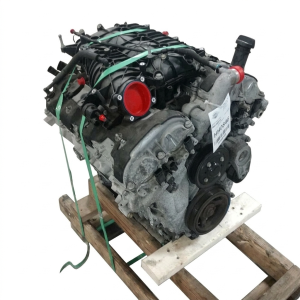
New Aftermarket Parts Available


The information in this article is provided for general reference and educational purposes only. Vehicle specifications, procedures, and part compatibility can vary by production date, trim level, and region. Always consult your vehicle's factory service manual and verify part numbers before purchasing or performing repairs. Safety-critical components such as airbags, seat belts, and braking systems should be installed by a qualified professional.
- Gmc TERRAIN:
- 🎬 Helpful Videos
- 🛍️ Shop This Part
- What's Unique About the 2010-2017 Gmc TERRAIN
- Diagnostic Flowchart
- Symptoms You May Notice
- Most Likely Causes
- Rare But Worth Checking
- Diagnosis Steps
- Parts You'll Likely Need
- Related Codes That Often Appear With This One
- Technical Service Bulletins (TSBs) & Recalls
- Platform-Specific Known Issues
- Mechanic-Grade Diagnostic Values
- Scan Tool Commands That Help
- Wiring & Ground Locations
- Real Owner Repair Stories
- When the Usual Fixes Don't Work
- Model Year Variations Within This Range
- 🎟️ Get 5% Off