

P0017 on 2007-2014 GMC Acadia: Stretched Timing Chain Causes and Fixes
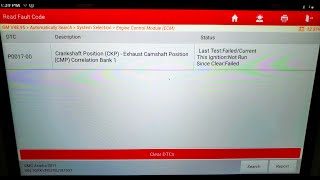
P0017 on a 2007-2014 GMC Acadia almost always means the timing chains have stretched. This is a very common and well-documented issue with the 3.6L V6 engine, often caused by a combination of an early chain design and long oil change intervals. The repair is expensive, involving replacing the chains, tensioners, and guides, often costing between $2,700 and $3,700.
- P0017 on a 2007-2014 Acadia is a strong indicator of stretched timing chains, a known issue with the 3.6L V6 engine.
- Before committing to the expensive timing chain repair, check your engine oil level and condition. A simple oil change or engine flush might resolve the issue if it's caused by sludge or low oil pressure.
- This is not a DIY-friendly repair. Replacing timing chains is a major job that requires specialized tools and expertise. A mistake can destroy the engine.
- The repair is costly, often running over $2,700, due to the high labor involved.
- Do not ignore this code. Continued driving risks the chain skipping time, which can lead to catastrophic engine failure.
What's Unique About the 2007-2014 Gmc ACADIA

The first-generation GMC Acadia, along with its GM Lambda siblings (Buick Enclave, Chevrolet Traverse, Saturn Outlook), uses a 3.6L V6 engine that is notorious for premature timing chain wear. The original chains were susceptible to stretching, exacerbated by GM's own Oil Life Monitor (OLM) system which could allow for excessively long oil change intervals, leading to oil breakdown and sludging. This issue is so prevalent that GM issued multiple Technical Service Bulletins (TSBs) and a Special Coverage Adjustment (11340C) that extended the warranty for this specific repair to 10 years or 120,000 miles for certain model years. As a result, P0017 on this specific vehicle is far more likely to be a major mechanical issue (the timing chains) than a simple sensor failure.
Diagnostic Flowchart

Tap your situation to follow the diagnostic path that matches what you're seeing on this vehicle.
Generation note: This guide covers the first generation of the GMC Acadia (2007-2016). The 2007-2008 models used the 3.6L LY7 V6, while the 2009-2014 models used the direct-injected 3.6L LLT V6. Both engine versions are known to suffer from the same timing chain issues that trigger the P0017 code, and both were included in GM's service bulletins and special coverage adjustments.
Symptoms You May Notice

- Check Engine Light is on
- Reduced engine power or sluggish acceleration
- Rough or unstable idle
- Rattling or whining noise from the engine, especially on a cold start or from the passenger side of the engine bay.
- Engine may be hard to start or may crank but not start
- The code may appear intermittently at first, especially after refueling or on the next startup, then become permanent.
- Replacing only the camshaft or crankshaft position sensors without verifying the mechanical timing. On this vehicle, the P0017 code is most often a mechanical problem (stretched chain), not an electrical one.
- Replacing only the VVT solenoids. While a clogged solenoid can cause timing issues, it is rarely the root cause of P0017 when the chains have high mileage.
Most Likely Causes

- Stretched Timing Chains 🔴 High Probability The 3.6L V6 engines in this generation of Acadia are widely known for premature timing chain stretching. This is confirmed by multiple TSBs from GM (e.g., #12-06-01-009F) and a special warranty extension (11340C). The root causes are believed to be a combination of an early chain design and oil degradation from extended oil change intervals recommended by the factory oil life monitor.
How to confirm: A mechanic can use a scan tool to monitor camshaft deviation angles; a variance of more than a few degrees is a strong indicator. For the LLT engine, the ECM will set P0017 when the Bank 1 exhaust cam is greater than 10° retarded or 13° advanced. Physical inspection and measuring chain deflection is the definitive method, but it is labor-intensive as it requires removing the timing cover.
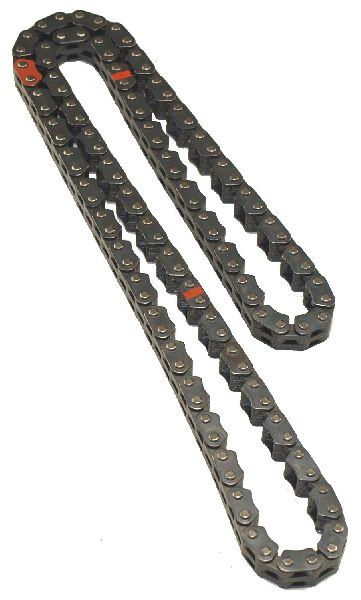
Typical fix: Replace all three timing chains, all tensioners, and all guide rails using the updated GM parts. It is also highly recommended to replace the water pump, oil pump, and VVT actuators (phasers) at the same time.
Est. part cost: $400-$900 for a complete kit - Low or Dirty Engine Oil 🟡 Medium Probability The timing chain tensioners and VVT phasers are hydraulically operated by engine oil pressure. Long oil change intervals, as were often encouraged by the vehicle's Oil Life Monitor, can lead to oil breakdown and sludge buildup. This restricts oil flow and causes timing components to malfunction, accelerating chain wear.
How to confirm: Check the oil level on the dipstick and inspect its condition. If it's low, black, or sludgy, this is a major contributing factor. Some owners report the code appears when oil is low and may temporarily disappear after an oil change.
Typical fix: Perform an engine oil flush and change the oil and filter using the correct specification oil (GM dexos1). This is a good first step and may 🎬 Watch: Try this simple oil flush before replacing timing chains. temporarily resolve the code if the issue is sludge-related, but it will not fix a physically stretched chain.
Est. part cost: $50-$100 - Faulty VVT Solenoid (Oil Control Valve) ⚪ Low Probability The solenoids control oil flow to the cam phasers. They have fine mesh screens that can become clogged with debris or sludge from dirty oil, causing them to stick. While they can fail, it's much less common than the chains themselves.
How to confirm: Swap the Bank 1 exhaust solenoid with another one (e.g., the intake solenoid on the same bank) and see if the code changes (e.g., to P0016). You can also test the solenoid's resistance with a multimeter; the expected range is typically between 6 and 10 ohms.
Typical fix: Replace the faulty VVT solenoid. This is often attempted as a first, cheaper repair, but frequently does not solve the P0017 code on this platform.
Est. part cost: $25-$70 - Faulty Camshaft Position Sensor ⚪ Low Probability
How to confirm: While less common than timing chain failure, the sensor itself can fail. 🎬 See how to diagnose P0017 on the 3.6L engine. A diagnostic scan tool can monitor the sensor's live data. Swapping the sensor with another one on the engine can also help diagnose the issue. However, on this vehicle, the sensor is almost never the root cause.
Typical fix: Replace the Bank 1 exhaust camshaft position sensor. Many owners replace this part only to have the code return, indicating the problem is mechanical.
Est. part cost: $20-$60
Rare But Worth Checking
- Slipped Crankshaft Reluctor Wheel: In some cases, the toothed wheel on the crankshaft that the position sensor reads can become loose or shift, sending incorrect timing information to the ECM. This is a known, though rare, issue documented in GM TSB #PIP3423P. It can cause the same codes as a stretched chain but requires crankshaft replacement to fix. A tell-tale sign can be an erratic crankshaft sensor signal on a scope.
- Faulty Camshaft Phaser (Actuator): The phaser itself, located on the end of the camshaft, can become stuck or fail mechanically, often due to oil contamination or internal failure. This part is almost always replaced during a timing chain job as a preventative measure.
Diagnosis Steps
- Check Engine Oil: Verify the oil level is correct and the oil is clean. If low or dirty, perform an oil change with a quality filter and GM dexos1 certified oil. Consider an engine flush if sludge is suspected, as some owners report this temporarily clears the code.
- Scan for Other Codes: Use an OBD-II scanner to check for other related codes (like P0008, P0016, etc.) which can help confirm the diagnosis.
- Inspect VVT Solenoid: Locate the exhaust VVT solenoid on Bank 1 (firewall side). Inspect its wiring and connector. Consider swapping it with the intake solenoid to see if the code follows (e.g., changes to P0016). This is a quick diagnostic step but rarely the final fix.
- Analyze Cam/Crank Data: Using an advanced scan tool, monitor the camshaft and crankshaft position data. A mechanic can interpret this data to see if the timing is physically off. The ECM will set P0017 when the Bank 1 exhaust cam is greater than 10° retarded or 13° advanced.
- Mechanical Inspection: If scan data confirms a timing deviation, the final step is to perform the timing chain replacement. This involves removing the engine timing cover to physically inspect the timing chains, guides, and tensioners for slack or damage.
Parts You'll Likely Need
- Engine Timing Chain Kit
(OEM #12651450 (For LLT engine), 12650230 (For 2007 LY7))— This is the most common cause of P0017. A complete kit should include all three chains, all tensioners, and all guide rails. Use the latest revised GM parts or a reputable aftermarket kit.
Trusted brands: ACDelco (GM Original), Cloyes, Melling
OEM price range: $500-$800
Aftermarket price range: $300-$550 - Exhaust Camshaft Position Actuator (Phaser)
(OEM #12627116)— Often recommended to be replaced during a timing chain job, as they can get clogged with debris or fail mechanically. It is considered 'while you're in there' insurance.
Trusted brands: ACDelco, Dorman
OEM price range: $80-$150
Related Codes That Often Appear With This One
- P0008 — This code indicates a general engine position system performance error. It is very commonly seen with P0017 on these vehicles and is another strong indicator of a stretched timing chain.
- P0016 — Crank/Cam correlation error for Bank 1 Intake Camshaft. If both P0016 and P0017 are present, it points strongly to a timing chain issue affecting all of Bank 1.
- P0018 / P0019 — These are the equivalent correlation codes for Bank 2 (front/radiator side). If all four codes (P0016, P0017, P0018, P0019) are present, it indicates a major timing problem, likely with the primary timing chain or a slipped crankshaft reluctor wheel.
Technical Service Bulletins (TSBs) & Recalls
- PIP3423P: Advises technicians to inspect for loose timing chains or tensioners when DTCs P0016, P0017, P0018, P0019, P0008 or P0009 are set.
- 12-06-01-009F: Discusses the availability of timing chain kits for repairing stretched timing chains that cause codes like P0017.
Platform-Specific Known Issues
- The 3.6L V6 engine family (LY7 and LLT) used in the 2007-2014 Acadia is widely documented to have issues with premature timing chain stretching. This was the subject of GM TSBs #PIP3423P and #12-06-01-009F.
- GM issued Special Coverage Adjustment 11340C which extended the warranty on timing chains to 10 years/120,000 miles for many affected vehicles, including 2007-2009 Acadias. Unfortunately, this program has expired for most vehicles due to age.
- The factory Oil Life Monitor (OLM) programming on early models was criticized for allowing oil change intervals that were too long, contributing to oil breakdown and sludge, which in turn accelerated timing chain wear.
Mechanic-Grade Diagnostic Values
- VVT Solenoid (Oil Control Valve) Resistance — expected: 6 to 10 Ohms. Failure: A reading of 0 Ohms (short circuit) or infinite/OL (open circuit) indicates a faulty solenoid.
- Camshaft Position Sensor (3-wire Hall effect) Signal Voltage — expected: Fluctuates between 0V and 5V as the engine runs.. Failure: No voltage fluctuation or a steady voltage indicates a non-responsive sensor.
- Camshaft Position Sensor (3-wire Hall effect) Reference Voltage — expected: Approximately 5V with key on, engine off (KOEO).. Failure: Significantly lower or no voltage indicates a problem with the ECM or wiring, not necessarily the sensor.
- Scan Tool Cam/Crank Correlation (LLT Engine) — expected: Within specified degrees of crankshaft rotation.. Failure: The ECM sets DTC P0017 if the Bank 1 exhaust camshaft is greater than 10° retarded or 13° advanced in relation to the crankshaft.
Scan Tool Commands That Help
- GDS2 / Tech2: Camshaft Position Actuator Control — This bidirectional command allows a technician to manually command the VVT solenoids to advance or retard timing while monitoring the cam/crank sensors. If the timing doesn't change as commanded, it helps isolate whether the problem is the solenoid, the phaser, or an oil pressure issue, before tearing down the engine.
- OBD-II Scanner with Live Data: Monitor Camshaft Variance/Angle PIDs — This is the primary data-driven step for diagnosing a stretched chain. By observing the desired vs. actual camshaft angles for Bank 1 Exhaust, a technician can see the deviation in real-time. A consistent deviation that exceeds the threshold (e.g., >10 degrees) confirms a mechanical timing issue.
Wiring & Ground Locations
- G103 — On the left side of the engine compartment, on the inner fender panel. On some models, it's described as being on the cowl, above the brake booster.. This is a major ground distribution point for the Body Control Module (BCM) and Instrument Panel Cluster (IPC), which communicate with the ECM. A poor ground here can cause a wide range of bizarre electrical issues and communication faults between modules.
- G112 / G113 — G112 is at the rear of the engine, mounted to the rear of the cylinder head. G113 is on the left side of the engine, at an engine-to-transmission stud.. These are primary engine block grounds. The ECM and its sensors, including the crank and cam sensors, rely on a solid engine ground. A loose or corroded connection here can introduce electrical noise or voltage offsets, potentially causing incorrect sensor readings and correlation codes.
- ECM Connector X1 (2009+ LLT) — The ECM is located on the left side of the engine.. For the Bank 1 Exhaust Camshaft Position Sensor: Pin 51 is the Low Reference (ground), Pin 52 is the 5-Volt Reference, and Pin 70 is the Signal wire. Probing these wires at the ECM can confirm if the signal is reaching the module and if the reference voltages are correct, ruling out a wiring issue between the sensor and the ECM.
- Camshaft Position Sensor (Bank 1, Exhaust) — Bank 1 is the cylinder head closer to the firewall. The exhaust camshaft sensor is one of the two sensors on that head.. This is the specific sensor ('Sensor B') referenced by the P0017 code. Its connector and wiring are the first electrical points to inspect for damage or corrosion.
Real Owner Repair Stories
- YouTube user 'GMC Acadia code P0017. Try this BEFORE replacing your timing chains.' (GMC Acadia, year not specified but within the affected range.) — Check Engine Light with code P0017.
❌ Tried (didn't work) The video advises against immediately proceeding with a costly timing chain replacement.
✅ What actually fixed it Performing an engine oil flush using a product like STP Engine Flush, followed by an oil and filter change. The theory is that sludge can cause the hydraulic VVT components (solenoids and phasers) to stick, triggering the code. The flush cleaned the components, restoring proper function and resolving the code.
OEM Part Supersession History
12651450→12693218, then 12700436— Revisions to the timing chain kit to improve durability and address premature stretching issues.
Heads up: When ordering, it's critical to use the latest available part number for the specific VIN. While older kits may fit, they will have the original, failure-prone chain design. The newest kits are considered the fix.
Model Year Variations Within This Range
- 2007-2008: These models use the LY7 engine. While also prone to timing chain issues, the pistons and fuel system are different from the later LLT. The timing chain kits may have different early part numbers, but the final revised kits often cover both.
- 2009-2014: These models use the direct-injected LLT engine. This engine has a higher compression ratio (11.3:1 vs 10.2:1) and pistons with a different design to accommodate the direct injection. GM reportedly made improvements to the timing chain components around the 2012 model year, making later models in this range slightly less prone to failure, though the risk is not eliminated.
- All: GM issued a software update for the Engine Control Module (ECM) to change the Oil Life Monitor (OLM) algorithm. The original algorithm allowed for excessively long oil change intervals, contributing to oil breakdown and sludge. The update shortens the recommended interval to help preserve oil quality and protect the timing components. Ensuring this update has been performed is a critical preventative measure.
Helpful Videos

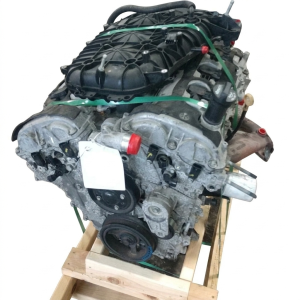
Used OEM Parts in Stock
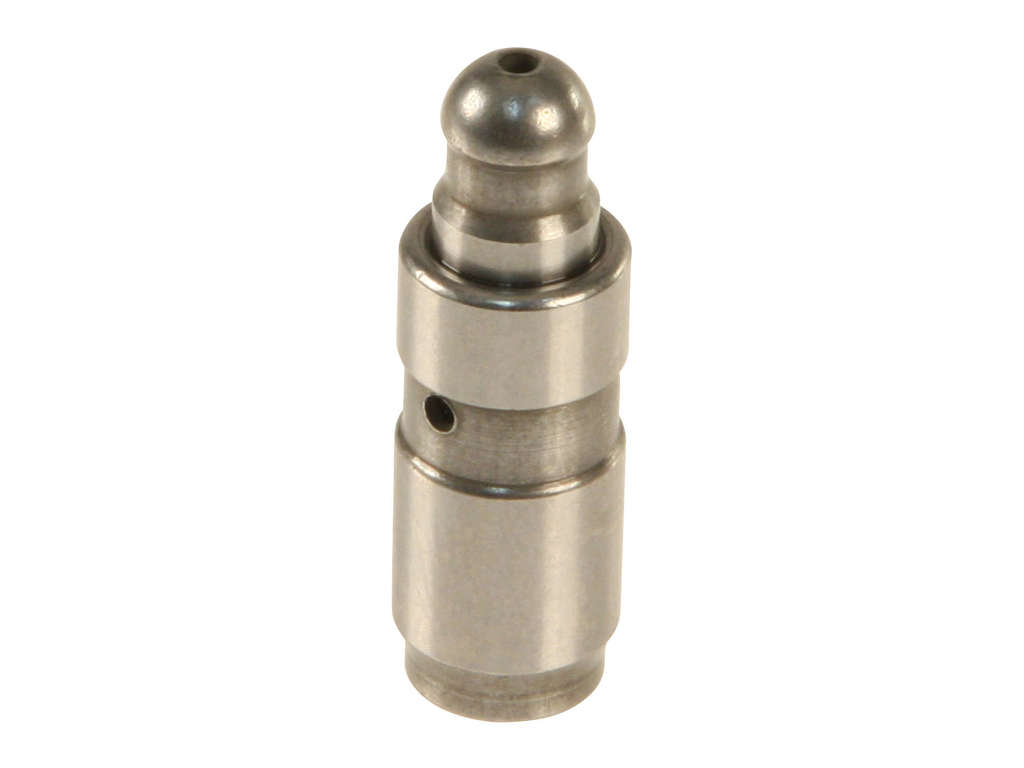
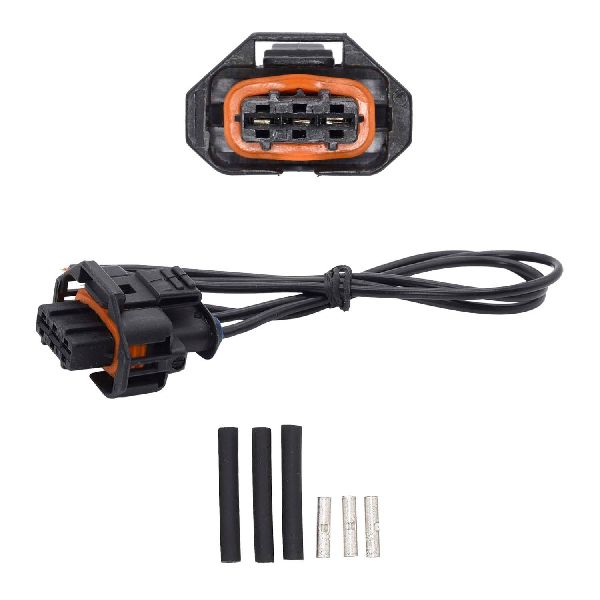
New Aftermarket Parts Available


The information in this article is provided for general reference and educational purposes only. Vehicle specifications, procedures, and part compatibility can vary by production date, trim level, and region. Always consult your vehicle's factory service manual and verify part numbers before purchasing or performing repairs. Safety-critical components such as airbags, seat belts, and braking systems should be installed by a qualified professional.
- Gmc ACADIA:
- 🎬 Helpful Videos
- 🛍️ Shop This Part
- What's Unique About the 2007-2014 Gmc ACADIA
- Diagnostic Flowchart
- Symptoms You May Notice
- Most Likely Causes
- Rare But Worth Checking
- Diagnosis Steps
- Parts You'll Likely Need
- Related Codes That Often Appear With This One
- Technical Service Bulletins (TSBs) & Recalls
- Platform-Specific Known Issues
- Mechanic-Grade Diagnostic Values
- Scan Tool Commands That Help
- Wiring & Ground Locations
- Real Owner Repair Stories
- OEM Part Supersession History
- Model Year Variations Within This Range
- 🎟️ Get 5% Off