

P0017 on 2020-2021 Ford Transit: Crank/Cam Correlation Causes and Fixes
On a 2020-2021 Ford Transit, code P0017 is often caused by a powertrain control module (PCM) software issue that requires an update from a dealer, as noted in TSB 21-2224. Other common causes include low/dirty oil or a failing Variable Camshaft Timing (VCT) solenoid. Unlike other platforms with this engine, the software fix should be the first suspect.
- For a 2020-2021 Transit, the first step should be to check if TSB 21-2224 (PCM update) applies to your vehicle.
- Always check your engine oil level and condition first. Low or dirty oil is a frequent cause of VCT system faults.
- If a software update and oil change don't resolve the code, the next most likely culprit is a faulty Bank 1 exhaust VCT solenoid.
- Ignoring this code can lead to reduced performance, poor fuel economy, and potentially severe engine damage.
What's Unique About the 2020-2021 Ford TRANSIT
For this specific year range, a key issue is a software glitch in the Powertrain Control Module (PCM). Ford issued Technical Service Bulletin (TSB) 21-2224 for 2020-2021 Transits built before July 1, 2021, stating that this code could be triggered by a software error and that a PCM update is the required fix. This makes checking for software updates a critical first step before replacing any hardware. While other Ford vehicles with the 3.5L engine, like the F-150, frequently get this code from a stretched timing chain, for the 2020-2021 Transit the PCM issue is a more probable initial cause.
Diagnostic Flowchart
Tap your situation to follow the diagnostic path that matches what you're seeing on this vehicle.
Symptoms You May Notice
- Check Engine Light is on
- Rough or uneven idle
- Reduced engine power and acceleration
- Engine may be hard to start or cranks but won't start
- Decreased fuel economy
- Rattling noise from the engine, especially on startup (classic sign of a timing chain issue)
- Replacing the camshaft or crankshaft position sensors immediately without first checking oil level/condition or investigating the TSB for a PCM update.
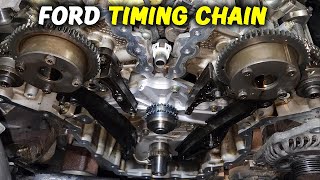
- Assuming the code is from a faulty component when it appears for the first time immediately after a timing chain replacement. This often indicates the engine was timed incorrectly by one tooth during reassembly, a mistake documented by owners in forums. 🎬 See this critical tip to avoid timing errors after replacement
Most Likely Causes
- Powertrain Control Module (PCM) Software Error 🔴 High Probability Ford identified a software issue affecting vehicles built before July 1, 2021, and released TSB 21-2224 to address it. This is the most unique and likely cause for this specific vehicle and year range.
How to confirm: A Ford dealer or a qualified shop with access to Ford's diagnostic software (FDRS) can check if the TSB 21-2224 update has been applied to your vehicle's PCM.
Typical fix: Reprogramming the PCM with the latest software calibration.
Est. part cost: $0 - Low or Dirty Engine Oil 🟡 Medium Probability The Variable Camshaft Timing (VCT) system is hydraulically operated by engine oil. If the oil is low, dirty, or the wrong viscosity, it can cause the VCT solenoids and phasers to respond slowly or stick, triggering a correlation code. This is a common issue across all Ford vehicles with the VCT system.
How to confirm: Check the oil level on the dipstick and inspect its condition. If it's low or appears dark and sludgy, it needs to be changed.
Typical fix: Perform an engine oil and filter change using the Ford-specified oil (typically 5W-30 full synthetic for the 3.5L engines). Clear the code and test drive to see if it returns.
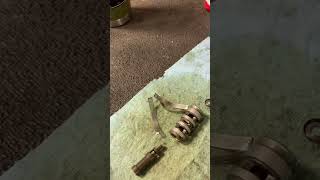
Est. part cost: $50-$100 - Sticking or Failed VCT Solenoid 🟡 Medium Probability Ford TSBs (like SSM 54366) point to VCT solenoids sticking due to small debris in the oil. The solenoid is the component that directs oil flow to the cam phaser to adjust timing. In some cases, the internal components of the solenoid can break apart, causing a blockage. 🎬 Watch: See what a failed VCT solenoid looks like inside
How to confirm: A technician can use a scan tool to command the Bank 1 exhaust VCT solenoid on and off to check its response. It can also be removed, cleaned, and inspected for debris or tested for resistance. Swapping the exhaust solenoid with the intake solenoid on the same bank can help diagnose if the code follows the solenoid.
Typical fix: Replace the Bank 1 exhaust VCT solenoid. It's often recommended to replace both solenoids on that bank at the same time.
Est. part cost: $40-$120 - Stretched Timing Chain ⚪ Low Probability While more common on earlier 3.5L EcoBoost engines, a stretched timing chain can still occur. Over time, the chain can stretch, which directly causes a mismatch between the crank and cam signals. A characteristic startup rattle is a strong indicator of this issue.
How to confirm: This is a mechanical issue that requires significant labor to confirm. A technician would need to remove the engine's front cover to physically inspect the chain for slack against the guides and check the timing marks.
Typical fix: Replace the timing chain, tensioners, guides, and often the cam phasers and water pump as a complete kit.
Est. part cost: $400-$800
Rare But Worth Checking
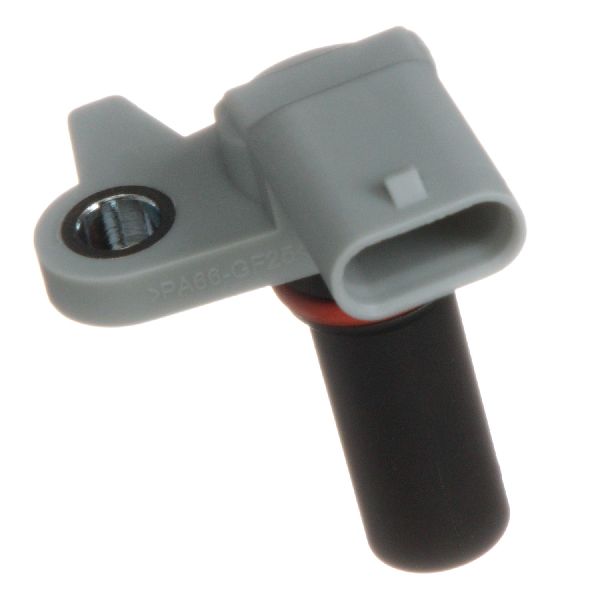
- Faulty Camshaft Position Sensor: While possible, the sensor itself is less likely to fail than the components it monitors. It can send incorrect signals to the PCM, causing a false correlation error. Swapping the sensor with an adjacent one is a common diagnostic step. 🎬 Watch: How to test the solenoid and camshaft position sensor
- Faulty Crankshaft Position Sensor: Similar to the camshaft sensor, a failing crankshaft sensor can provide inaccurate data, leading the PCM to believe there is a correlation problem when the mechanical timing is actually correct.
- Damaged Cam Phaser: The cam phaser is the gear on the end of the camshaft that actually adjusts the timing. If it becomes clogged with sludge or mechanically fails, it won't be able to adjust timing correctly, leading to this code. Phaser failure is often associated with the startup rattle.
Diagnosis Steps
- Check the engine oil level and condition. If low or dirty, perform an oil and filter change, clear the code, and see if it returns.
- Use a professional scan tool to check if TSB 21-2224 is applicable and has been performed. If not, have the PCM reprogrammed by a dealer.
- Inspect the wiring and connector for the Bank 1 exhaust camshaft position sensor and VCT solenoid for any damage or corrosion.
- Using a scan tool, monitor the desired vs. actual cam angle for the Bank 1 exhaust camshaft to see if it is responding to commands.
- Command the Bank 1 exhaust VCT solenoid with a scan tool to check for a response. If it's unresponsive or slow, it's likely faulty. Consider removing it for cleaning and bench testing.
- If the solenoid and wiring are good, test the camshaft position sensor and crankshaft position sensor signals with an oscilloscope to ensure they are providing clean signals.
- If all electronic and hydraulic components check out, the final step is to perform a mechanical timing inspection, which involves removing the front engine cover to check for a stretched timing chain or damaged guides/phasers.
Parts You'll Likely Need
- Variable Camshaft Timing (VCT) Solenoid (Bank 1 Exhaust)
(OEM #AT4Z-6M280-C)— Often sticks due to oil debris, preventing proper timing adjustments. This is a common failure point noted in Ford TSBs.
Trusted brands: Motorcraft, Dorman
OEM price range: $60-$100
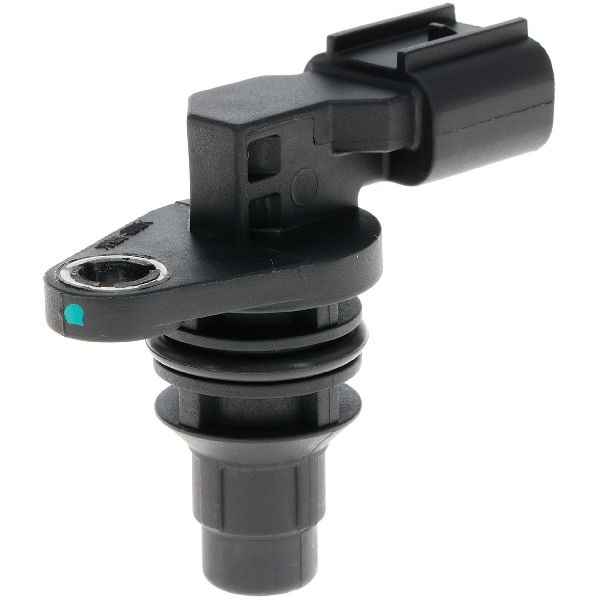
Aftermarket price range: $30-$70 - Camshaft Position Sensor — Though less common, a sensor failure can send incorrect data to the PCM, triggering a false code. It's a potential fix if VCT components and timing are confirmed to be good.
Trusted brands: Motorcraft, Bosch, NGK/NTK
OEM price range: $40-$70
Aftermarket price range: $20-$50 - Timing Chain Kit — If mechanical timing is off due to stretch or wear, a full kit is needed. This is a major repair but is the definitive fix for a mechanical timing fault.
Trusted brands: Motorcraft, Cloyes
OEM price range: $400-$800
Aftermarket price range: $250-$500
Related Codes That Often Appear With This One
- P0016 — This is the correlation code for the intake camshaft on the same bank (Bank 1). If both appear together, it strongly suggests a base timing issue like a stretched chain rather than a single sensor or solenoid failure.
- P0018 / P0019 — These are the equivalent correlation codes for Bank 2 (driver's side). Seeing codes for both banks at once points to a systemic problem like low oil pressure, severe oil contamination, or a problem with the primary timing chain.
Technical Service Bulletins (TSBs) & Recalls
- TSB 21-2224: Notes that DTCs including P0017 may be due to PCM software and require a module update.
- SSM 54366: Acknowledges P0017 on 2015-2021 Ford vehicles and points towards a specific diagnostic test (Pinpoint Test HK).
Platform-Specific Known Issues
- TSB 21-2224: Some vehicles built before 01-Jul-2021 may exhibit this code due to a software error in the powertrain control module (PCM). The fix is a PCM software update.
- SSM 54366: This bulletin covers a wide range of 2015-2021 Ford vehicles and lists P0017 among many other timing codes. It directs technicians to a specific pinpoint test, suggesting a common diagnostic path for VCT system faults.
Mechanic-Grade Diagnostic Values
- VCT Solenoid Internal Resistance — expected: 5 - 14 Ohms. Some sources cite a more specific range of 6.9 - 7.9 Ohms.. Failure: A reading outside this range, or an open/short circuit (infinite or zero resistance), indicates a failed solenoid.
- Camshaft Position (CMP) Sensor Resistance (2-wire VR type) — expected: 586 - 2,033 Ohms. Another source testing a similar sensor found a reading of 453 Ohms to be within tolerance.. Failure: Resistance significantly outside the expected range indicates a faulty sensor.
- Scan Tool PID: VCT_EXH_ERR1 (Bank 1 Exhaust Camshaft Timing Error) — expected: Close to 0 degrees at warm idle.. Failure: A consistent, non-zero value indicates a deviation between the PCM's commanded cam position and the actual position, pointing to a mechanical or hydraulic fault.
- Engine Oil Pressure at Hot Idle — expected: At least 25 PSI.. Failure: Pressure below this threshold can starve the VCT system of the hydraulic pressure needed to operate, causing correlation codes.
Hidden / Shadow Codes Worth Checking
- Mode 6, Test ID $81, Component ID $11: This Mode 6 test monitors the bank 1 camshaft phase angle. A failure of this monitor can be an early indicator of a timing correlation issue before a full DTC like P0017 is set. (see via A professional scan tool capable of reading Mode 6 diagnostic data.)
Scan Tool Commands That Help
- Ford IDS (Integrated Diagnostic System) / FORScan: VCT Solenoid Duty Cycle Command / Output State Control — This bidirectional control allows a technician to manually command the VCT solenoid on and off while the engine is running. A corresponding change in engine RPM or smoothness (or lack thereof) helps confirm if the solenoid is physically working or stuck. This can also help clear minor debris as suggested in some TSBs.
- Ford IDS (Integrated Diagnostic System) / FORScan: Monitor PIDs: VCT_ADV, VCT_ERR, RCAM — These live data PIDs show the desired cam angle (commanded by the PCM), the actual cam angle, and the error between them. Watching these values in real-time is crucial for diagnosing if the problem is a slow response, a complete lack of movement, or an over-advanced/retarded condition.
- Oscilloscope: Crank (CKP) vs. Cam (CMP) Waveform Analysis — This is the definitive way to diagnose a mechanical timing issue. By comparing the waveform from the crankshaft position sensor to the waveform from the Bank 1 exhaust camshaft sensor, a technician can visually confirm if the cam timing is lagging or leading the crank signal, indicating a stretched chain or incorrect timing setup.
Wiring & Ground Locations
- Bank 1 Camshaft Position Sensor Connector — On the 3.5L V6, Bank 1 is the cylinder bank closer to the firewall (rear of the engine). The exhaust camshaft sensor ('B' sensor) is located on the passenger side of that cylinder head.. This is the direct electrical connection for the sensor providing the signal that the PCM is flagging as uncorrelated. Damage to the connector or wiring harness here from heat or abrasion will cause a loss of signal or incorrect readings, directly triggering P0017.
- Bank 1 VCT Solenoid Connector — Located on the top of the valve cover for Bank 1 (rear bank, passenger side). The solenoid itself is under the valve cover.. This connector provides power and the control signal from the PCM to the solenoid. Oil leaking into this connector or corrosion on the pins can prevent the solenoid from actuating correctly, leading to a timing correlation fault.
- Main Engine Harness Ground — A key ground point for the engine harness is often located on a stud on the back of one of the cylinder heads.. A loose or corroded main ground can introduce electrical noise or voltage drops across the entire sensor network, including both the crank and cam sensors. This can cause the PCM to receive erratic signals and falsely report a correlation error when no mechanical fault exists.
Real Owner Repair Stories
- Ford F150 Forum (2011 Ford F-150 3.5L EcoBoost) — P0017 code appeared immediately after a complete timing chain replacement job.
❌ Tried (didn't work) Clearing the code (it returned almost instantly).
✅ What actually fixed it The user concluded the timing was off by one tooth on the timing chain, despite believing it was set correctly during installation. The fix required disassembling the front of the engine again to re-time the engine correctly. The user noted that cheap aftermarket cam holding tools had excessive slop, making correct alignment difficult.
OEM Part Supersession History
AT4Z-6M280-B (Intake)→AT4Z-6M280-D— Updated design to improve durability and resistance to sticking.AT4Z-6M280-C (Exhaust)→No official supersession found for this specific part number, it appears to be the current revision for this application.
Heads up: The part AT4Z-6M280-C is specified for the Bank 1 (passenger side) exhaust camshaft. It has a blue connector. Using the incorrect solenoid (e.g., from the intake side) may result in improper operation.
Model Year Variations Within This Range
- 2020 - Early 2021: Vehicles built before July 1, 2021, may trigger P0017 due to a PCM software issue. TSB 21-2224 was released to correct this with a software update. For these vehicles, PCM reprogramming should be a primary diagnostic step before hardware replacement.
Helpful Videos

We Have This Part in Stock


The information in this article is provided for general reference and educational purposes only. Vehicle specifications, procedures, and part compatibility can vary by production date, trim level, and region. Always consult your vehicle's factory service manual and verify part numbers before purchasing or performing repairs. Safety-critical components such as airbags, seat belts, and braking systems should be installed by a qualified professional.
- Ford TRANSIT:
- 🎬 Helpful Videos
- 🛍️ Shop This Part
- What's Unique About the 2020-2021 Ford TRANSIT
- Diagnostic Flowchart
- Symptoms You May Notice
- Most Likely Causes
- Rare But Worth Checking
- Diagnosis Steps
- Parts You'll Likely Need
- Related Codes That Often Appear With This One
- Technical Service Bulletins (TSBs) & Recalls
- Platform-Specific Known Issues
- Mechanic-Grade Diagnostic Values
- Hidden / Shadow Codes Worth Checking
- Scan Tool Commands That Help
- Wiring & Ground Locations
- Real Owner Repair Stories
- OEM Part Supersession History
- Model Year Variations Within This Range
- 🎟️ Get 5% Off