

P0017 on 2019-2021 Ford Ranger: Crank-Cam Correlation Causes and Fixes
P0017 on a 2019-2021 Ford Ranger most often points to a failing exhaust camshaft position sensor or low/dirty engine oil. If oil is clean and full, replacing the exhaust camshaft position sensor is the next logical step and a common fix. A sticking exhaust VCT solenoid is also a very common culprit. If codes P0016 and P0017 appear together, a stretched timing chain is more likely.
- Always check your engine oil level and condition first; it's the easiest and cheapest potential fix.
- P0017 on the 2.3L EcoBoost specifically points to the exhaust camshaft timing.
- A faulty exhaust camshaft position sensor is a very common cause for this code if the oil is fine.
- If you hear a rattling noise from the engine on a cold start, suspect a more serious timing chain issue and seek professional diagnosis promptly.
- If both P0016 and P0017 codes are present, the likelihood of a mechanical timing problem (stretched chain) increases significantly.
What's Unique About the 2019-2021 Ford RANGER
The 2.3L EcoBoost engine in the Ranger, like other modern direct-injection engines, relies heavily on precise timing and clean oil for its Variable Camshaft Timing (VCT) system to function correctly. While sensor failures are common across many vehicles, EcoBoost engines have a known sensitivity to oil condition, as the VCT solenoids that control cam phasing are actuated by oil pressure. Timing chain stretch has also been documented as a potential issue on this engine family, which can trigger correlation codes like P0017. The provided TSB #SSM 54366 covers a wide range of VCT-related codes, including P0017, indicating that Ford has established a specific diagnostic path for these potential timing correlation faults on various models including the Ranger. A critical detail for the 2.3L EcoBoost is that the crankshaft pulley (harmonic balancer) is not keyed to the crankshaft; it is a friction-fit design. If the main crank bolt is improperly torqued during service, the pulley can slip, causing a P0017 code even if the internal timing chain alignment is perfect.
Diagnostic Flowchart
Tap your situation to follow the diagnostic path that matches what you're seeing on this vehicle.
Symptoms You May Notice
- Check Engine Light is on
- Rough or unstable idle
- Reduced engine power and sluggish acceleration
- Engine may be hard to start or crank longer than usual
- Stalling at low speeds
- Decreased fuel economy
- Rattling noise from the engine, especially on cold starts, which can indicate a timing chain issue 🎬 See this video for common symptoms of a bad timing chain.
- Replacing the crankshaft sensor when the fault lies with the camshaft sensor or VCT system.
- Replacing the PCM when the issue is a simple wiring or sensor fault.
- Performing a costly timing chain replacement when the actual cause was a much simpler and cheaper sticking VCT solenoid.
Most Likely Causes
- Low or Dirty Engine Oil 🔴 High Probability The VCT system uses oil pressure to adjust cam timing. Dirty, sludgy, or low oil can impede the function of the VCT solenoids and phasers, causing a correlation error. There is also a known issue of fuel dilution of the oil on some 2.3L EcoBoost engines, which degrades oil quality and can contribute to this problem.
How to confirm: Check the engine oil level on the dipstick and inspect its condition. If the oil is low, appears very dark, gritty, or smells of gasoline, this is the likely starting point.
Typical fix: Perform an engine oil and filter change using the correct viscosity oil specified by Ford (typically SAE 5W-30 Synthetic Blend). Clearing the code and driving will confirm if this was the sole issue.
Est. part cost: $40-$80 - Faulty Exhaust Camshaft Position Sensor (Bank 1, Sensor B) 🔴 High Probability Sensors are exposed to high heat and vibration in the engine bay and can fail over time, sending incorrect data to the PCM.
How to confirm: If the engine is running smoothly despite the code, the sensor is a prime suspect. A mechanic can use a scan tool to monitor the sensor's live data or test its electrical resistance. A DIY method is to swap it with the intake sensor (if they are identical parts) to see if the code changes to P0016.
Typical fix: Replace the exhaust camshaft position sensor. The Motorcraft part number is DU-90.
Est. part cost: $30-$60 - Failing Variable Camshaft Timing (VCT) Solenoid 🟡 Medium Probability The VCT solenoid (also called an oil control valve) can get clogged with debris from dirty oil or fail electrically, preventing it from properly controlling oil flow to the cam phaser. This is a very common failure point on EcoBoost engines.
How to confirm: A mechanic can command the solenoid on and off with a scan tool to check its response. It can also be removed and tested for operation and to check for clogged screens. A common DIY diagnostic is to swap the intake and exhaust VCT solenoids 🎬 Watch: How to test and fix the Bank 1 Sensor B correlation. to see if the trouble code follows the solenoid and changes to P0016.
Typical fix: Replace the exhaust VCT solenoid. The OEM part number for the 2.3L EcoBoost is often cited as FR3Z-6C535-A or a related part.
Est. part cost: $40-$90 - Stretched Timing Chain or Worn Timing Components ⚪ Low Probability While less common on newer vehicles, timing chains can stretch over time, especially with extended oil change intervals. This creates slack and alters the mechanical timing between the crank and cams. This is a known, though not frequent, issue on the 2.3L EcoBoost platform.
How to confirm: This is a more involved diagnosis. A mechanic may listen for a characteristic rattling noise on cold starts. Confirmation requires partial engine disassembly to physically inspect the chain, tensioners, and guides. The presence of both P0016 and P0017 codes simultaneously strongly suggests a base mechanical timing issue.
Typical fix: Replace the timing chain, tensioners, and guides. This is a labor-intensive job. A full OEM kit may include part numbers like PB5Z-6268-A (chain) and GB5Z-6K254-A (tensioner).
Est. part cost: $300-$600
Rare But Worth Checking
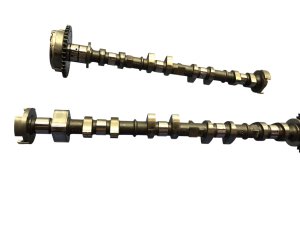
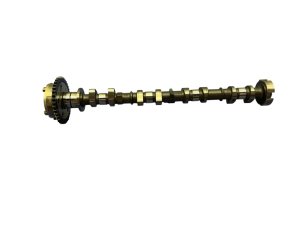
- Damaged Camshaft Phaser/Actuator: The mechanical actuator on the end of the camshaft can fail or get stuck, but this is less common than a solenoid or sensor failure. It is often replaced during a full timing chain service.
- Faulty Crankshaft Position Sensor: While the code points to the camshaft sensor, a faulty crankshaft sensor can provide an incorrect reference signal, leading to a correlation fault. This usually presents with other symptoms like no-start conditions or stalling.
- Wiring or Connector Issue: Damaged wiring or a loose/corroded connector for either the camshaft or crankshaft sensor can cause an intermittent signal and trigger the code. A visual inspection of the harness is a key diagnostic step.
- Incorrect Timing After a Repair: If the code appears immediately after work has been done on the engine, such as a timing chain replacement, it's highly possible the mechanical timing was set incorrectly by one or more teeth.
Diagnosis Steps
- Check Engine Oil: Verify the engine oil is full and clean. If low, dirty, or smells of fuel, perform an oil and filter change, clear the code, and see if it returns.
- Scan for Other Codes: Use an OBD-II scanner to check for any other related codes that could provide more clues (e.g., P0016, P0344). The presence of P0016 is a strong indicator of a mechanical timing problem.
- Inspect Sensor Wiring: Visually inspect the wiring harness and connector for the exhaust camshaft position sensor (Bank 1, Sensor B) for any signs of damage, corrosion, or looseness.
- Swap VCT Solenoids: A common and effective DIY step is to swap the exhaust VCT solenoid with the intake VCT solenoid. Clear the codes and drive the vehicle. If the code changes to P0016 (intake correlation error), the solenoid is confirmed to be faulty.
- Test the Camshaft Position Sensor: If the solenoid swap does not change the code, you can perform a similar swap with the camshaft position sensors (if they are identical parts) to see if the code changes to P0016. Alternatively, use a multimeter to test the sensor's resistance against specifications.
- Monitor Live Data: Use an advanced scan tool to observe the live data streams from both the crankshaft and camshaft position sensors to see if one is providing an erratic or missing signal. You can also command the VCT solenoid to check for a response.
- Mechanical Timing Check: If all sensors and solenoids test good, the final step is to perform a mechanical inspection of the timing chain, guides, and tensioner for wear or stretch. This is an advanced procedure best left to a professional.
Parts You'll Likely Need
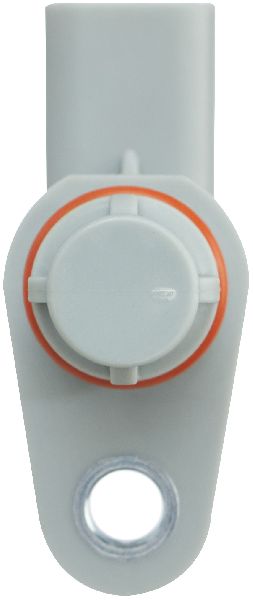
- Exhaust Camshaft Position Sensor
(OEM #DU-90)— This sensor is a common failure point and directly relates to the 'Sensor B' part of the P0017 code definition. It is confirmed as Motorcraft part DU-90.
Trusted brands: Motorcraft, Bosch, NTK
OEM price range: $40-$60
Aftermarket price range: $25-$45 - Variable Camshaft Timing (VCT) Solenoid
(OEM #FR3Z-6C535-A)— This solenoid controls oil flow to the cam phaser and can become clogged or fail, leading to timing correlation errors. It is a very common point of failure for this code on EcoBoost engines.
Trusted brands: Motorcraft, Dorman
OEM price range: $40-$90
Aftermarket price range: $30-$70
Related Codes That Often Appear With This One
- P0016 — This code is for the intake camshaft (Sensor A) correlation error. Seeing both P0016 and P0017 together strongly suggests a base timing issue, like a stretched or jumped timing chain, rather than two independent sensor or solenoid failures.
- P0344 or P0349 — These codes indicate an intermittent circuit for the camshaft position sensor, which could be the root cause of the P0017 correlation error.
- P0014 or P0024 — These codes indicate an over-advanced timing condition for the exhaust camshaft, which can be caused by a faulty VCT solenoid, pointing to it as the likely culprit for the P0017 code as well.
Technical Service Bulletins (TSBs) & Recalls
- SSM 54366: Addresses diagnostic trouble codes P0011, P0012, P0014, P0015, P0016, P0017, P0018, P0019, P0021, P0022, P0024 and/or P0025 on various 2015-2021 Ford vehicles. It points technicians to a specific diagnostic procedure in the service manual for these VCT-related faults.
- NHTSA Item Number 10210941: A manufacturer communication regarding increased engine oil level and fuel smell in the oil for 2019-2021 Rangers with the 2.3L EcoBoost, a condition that can cause this code.
Platform-Specific Known Issues
- The official Ford Technical Service Bulletin #SSM 54366 applies to 2019-2021 Rangers and directs technicians to a specific pinpoint test (HK) for a group of VCT-related DTCs, including P0017, indicating a known diagnostic path for this family of codes.
- A separate service communication for 2019-2021 Rangers with the 2.3L EcoBoost notes a customer concern of increased engine oil level and/or a fuel smell in the oil, which can degrade oil quality and lead to VCT-related codes like P0017.
Mechanic-Grade Diagnostic Values
- VCT Solenoid Internal Resistance — expected: 5 to 14 Ohms. Failure: A reading of OL (infinite resistance) indicates an open coil, while a reading significantly outside the expected range indicates a fault.
- VCT Solenoid Connector Voltage (Key On, Engine Off) — expected: Battery Voltage (approx. 12V). Failure: No voltage or voltage below 10.5V points to a problem in the power supply circuit, fuse, or wiring.
- Scan Tool PID: VCTADVERR (Camshaft Timing Error) — expected: Close to 0 degrees at idle.. Failure: A persistent non-zero value indicates a discrepancy between the PCM's commanded camshaft angle and the actual measured angle. A difference of more than +/- 5 degrees for an extended time is a fault indicator.
Scan Tool Commands That Help
- Ford IDS (Integrated Diagnostic System) or equivalent high-level scanner: VCT Solenoid Duty Cycle Command / On-Off Test — This bidirectional control is used to manually activate the VCT solenoid while the engine is running to confirm its mechanical operation. A change in idle quality or an audible click from the solenoid indicates it is responding.
- Ford IDS (Integrated Diagnostic System): Monitor VCT PIDs (VCT_ADV_ERR, VCT_INT_DIF1) — Used to monitor the live error between desired and actual cam timing in degrees. This is the most precise way to see if the timing is actually out of sync and by how much, helping to distinguish between a sensor glitch and a real mechanical issue.
Wiring & Ground Locations
- Camshaft Position Sensor (CMP) Connector — On top of the engine's valve cover, near the front. There are two sensors; Sensor 'B' is for the exhaust camshaft.. This is the primary sensor connector to inspect for corrosion, damage, or a loose connection that could cause the P0017 code.
- VCT Solenoid Connector — Located on the front of the valve cover, near the corresponding camshaft position sensor.. A poor connection here will prevent the PCM from controlling the VCT solenoid, leading to a timing correlation fault.
- Main Engine Ground — While a specific ground point number is not available, primary engine grounds are typically thick cables running from the engine block to the chassis frame rail or firewall. Inspect these for tightness and corrosion.. A poor engine ground can cause erratic behavior in multiple sensors, including the cam and crank sensors, leading to false correlation codes.
Real Owner Repair Stories
- Mustang6G.com forum user (2017 Ford Mustang GT (Uses similar VCT technology and principles)) — P0017 code appeared after installing new oil pump gears (OPG) and timing gear.
❌ Tried (didn't work) Clearing the code (it would return after a couple of restarts).
✅ What actually fixed it The user suspected the mechanical timing was off. Another user who had a similar P0016 code confirmed they had to reopen the timing cover and re-time the engine, triple-checking the cam phaser and timing chain marks against the Ford manual. The issue was incorrect timing set during the initial repair.
Model Year Variations Within This Range
- 2019-2021: No significant variations in the 2.3L EcoBoost engine's VCT system or related components are documented for this year range that would affect the diagnosis or repair of a P0017 code.
Helpful Videos
![How to Fix P0017 Engine Code in 6 Minutes [4 DIY Methods / Only $6.81]](https://img.youtube.com/vi/Vcj-f_J2hyo/mqdefault.jpg)

Used OEM Parts in Stock
New Aftermarket Parts Available


The information in this article is provided for general reference and educational purposes only. Vehicle specifications, procedures, and part compatibility can vary by production date, trim level, and region. Always consult your vehicle's factory service manual and verify part numbers before purchasing or performing repairs. Safety-critical components such as airbags, seat belts, and braking systems should be installed by a qualified professional.
- Ford RANGER:
- 🎬 Helpful Videos
- 🛍️ Shop This Part
- What's Unique About the 2019-2021 Ford RANGER
- Diagnostic Flowchart
- Symptoms You May Notice
- Most Likely Causes
- Rare But Worth Checking
- Diagnosis Steps
- Parts You'll Likely Need
- Related Codes That Often Appear With This One
- Technical Service Bulletins (TSBs) & Recalls
- Platform-Specific Known Issues
- Mechanic-Grade Diagnostic Values
- Scan Tool Commands That Help
- Wiring & Ground Locations
- Real Owner Repair Stories
- Model Year Variations Within This Range
- 🎟️ Get 5% Off