

P0017 on 2015-2021 Ford Mustang: Crank/Cam Correlation Causes and Fixes
P0017 on a 2015-2021 Mustang indicates a timing mismatch between the crankshaft and the Bank 1 exhaust camshaft. The most common causes are low/dirty engine oil or a failing Variable Camshaft Timing (VCT) solenoid. An oil change and VCT solenoid replacement are the most likely fixes, costing between $50 and $200 for DIY.
- P0017 means the exhaust camshaft on the passenger side (Bank 1) is out of sync with the crankshaft.
- Before attempting any expensive repairs, check your engine oil level and quality. An oil and filter change is the easiest and often most effective first step.
- The most likely part to fail is the Bank 1 exhaust VCT solenoid, as noted in multiple Ford TSBs. This is a relatively cheap and easy part to replace.
- If the code appears immediately after major engine work (like a timing chain or oil pump gear replacement), it is highly likely the mechanical timing is incorrect and needs to be re-checked.
- Driving with this code is not recommended as it can lead to poor performance, stalling, and potential engine damage.
What's Unique About the 2015-2021 Ford MUSTANG

For the S550 generation Mustang, the Variable Camshaft Timing (VCT) system is particularly sensitive to oil condition. Ford has issued multiple Technical Service Bulletins (TSBs) for this exact year range and code, pointing to small debris in the engine oil causing the VCT solenoids to stick. [SSM 54366, SSM 48423, SSM 47170] This makes low/dirty oil and faulty VCT solenoids a much higher probability cause on these engines compared to major mechanical timing failure. TSB SSM 48423 specifically advises technicians to cycle the affected VCT solenoid 10 times using a diagnostic tool to attempt to clear debris before replacing any components.
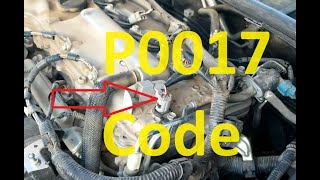
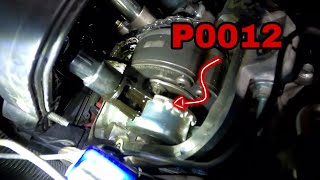
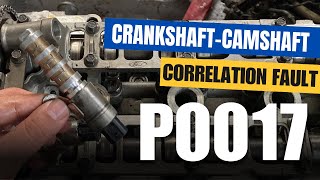
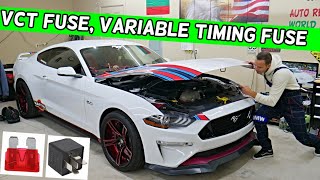
🎬 Watch: How to fix or replace VCT solenoids on your Mustang.Diagnostic Flowchart

Tap your situation to follow the diagnostic path that matches what you're seeing on this vehicle.
Symptoms You May Notice
- Check Engine Light is on
- Rough or unstable idle
- Engine stalling, especially at low speeds
- Loss of engine power and poor acceleration
- Reduced fuel economy
- Rattling noise from the engine bay, particularly on startup
- Car runs fine on a cold start (open loop) but begins to run poorly once warmed up (closed loop).
- Replacing the crankshaft position sensor when the issue is with the camshaft circuit.
- Immediately assuming a stretched timing chain without first checking oil level/condition and the VCT solenoid, which are far more common and cheaper fixes.
- Replacing cam phasers when the root cause is a faulty VCT solenoid or low oil pressure.
Most Likely Causes

- Low, Dirty, or Incorrect Viscosity Engine Oil 🔴 High Probability The VCT system uses oil pressure to adjust cam timing. The TSBs for this platform specifically mention debris in oil causing issues. [SSM 48423] Low or contaminated oil is a primary cause of VCT malfunctions and is often the first suggestion in owner forums for resolving this code.
How to confirm: Check the oil level on the dipstick and inspect its color and consistency. If the oil is dark, gritty, or below the 'add' line, it needs to be changed. One owner on a forum noted their P0017 code appeared after a shop underfilled the oil by 2 quarts.
Typical fix: Perform an oil and filter change using the correct OEM-specified viscosity oil (e.g., Motorcraft 5W-20 for the 5.0L V8). Some owners recommend performing an engine flush before the oil change to help clear out sludge or debris.
Est. part cost: $40-$80 - Failing Variable Camshaft Timing (VCT) Solenoid 🔴 High Probability Ford TSBs SSM 54366, SSM 48423, and SSM 47170 directly state that P0017 can be caused by small debris making the VCT solenoid stick. This is the most common component failure for this code.
How to confirm: After an oil change, if the code persists, the solenoid is the next logical part. You can test the solenoid's resistance with a multimeter (should be between 5 and 15 ohms) or apply 12V power to see if it clicks. A common diagnostic step is to swap the Bank 1 exhaust solenoid with the intake solenoid on the same bank to see if the code changes to P0016.
Typical fix: Replace the Bank 1 exhaust VCT solenoid. It is located on the front of the passenger-side valve cover.
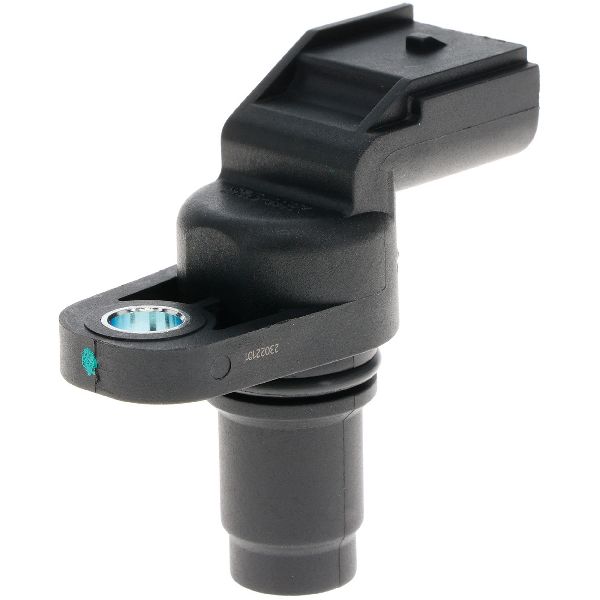
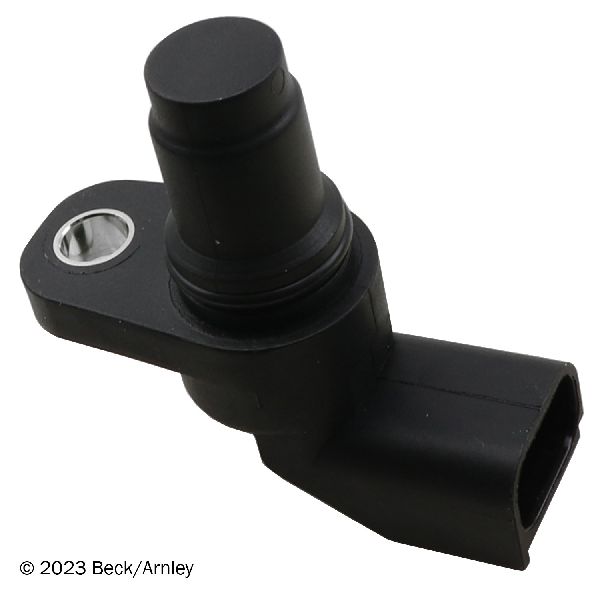
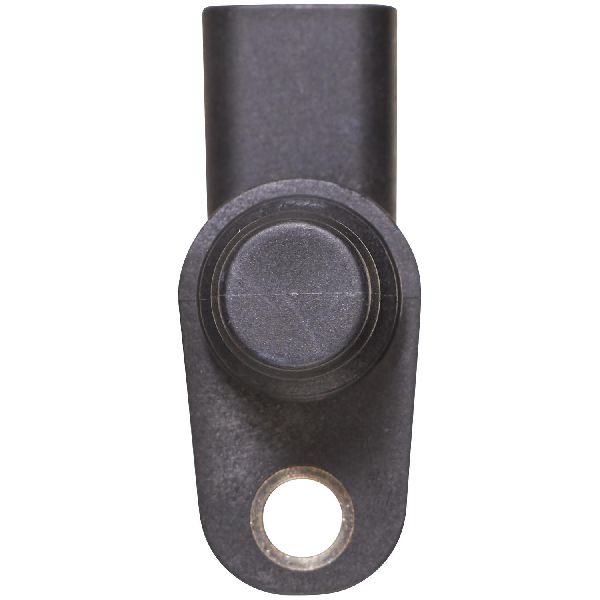
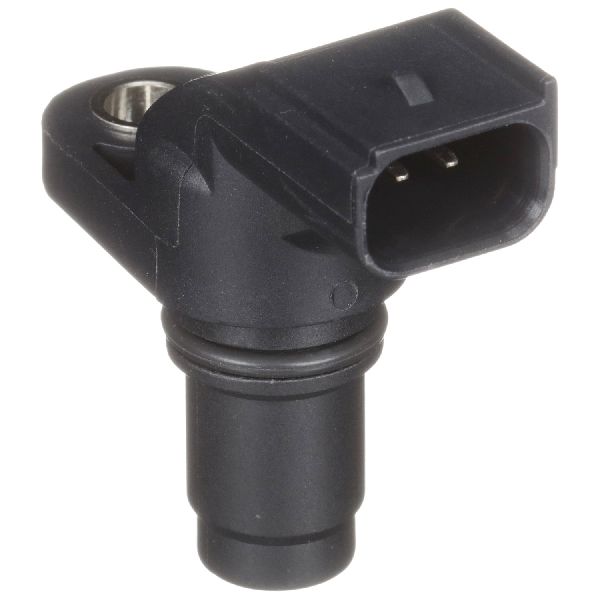
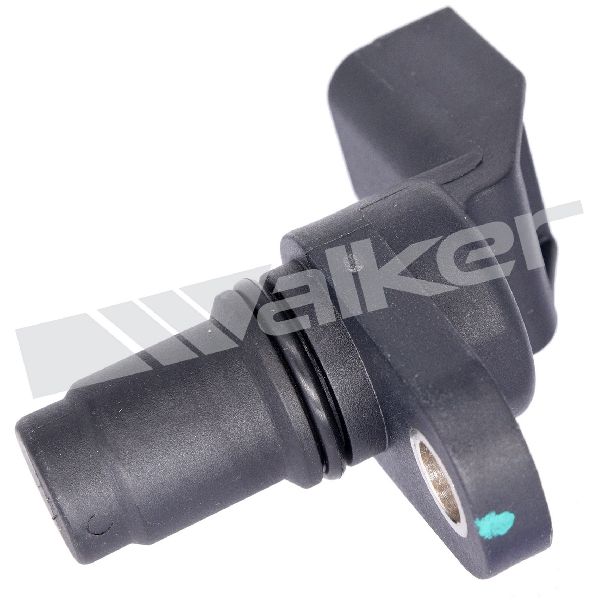
Est. part cost: $30-$100 - Failed Camshaft Position Sensor (CMP) 🟡 Medium Probability Sensors can fail over time due to heat and vibration. If the engine runs smoothly but the code is present, a faulty sensor is a possible, though less common, culprit.
How to confirm: The sensor's signal can be checked with an oscilloscope. A simpler method, recommended by many owners, is to swap the Bank 1 exhaust sensor with the Bank 2 exhaust sensor and see if the code changes to P0019. If the code does not move, the sensor is likely not the issue.
Typical fix: Replace the Bank 1 exhaust camshaft position sensor.
Est. part cost: $25-$70 - Stretched Timing Chain or Worn Timing Components ⚪ Low Probability While less common than oil-related issues, timing chains can stretch over high mileage, or tensioners can fail, causing a persistent correlation error that solenoids or sensors can't fix. This is a known issue that can occur on the 5.0L Coyote engine, sometimes even at low mileage. One owner on SVTPerformance.com found their issue was a failed secondary tensioner on the passenger side.
How to confirm: This is a mechanical issue requiring removal of the timing cover to physically inspect the chain, guides, and tensioners for slack or damage. This is an advanced diagnostic step. One forum user noted that after an oil pump gear install, the code appeared, and the fix was to re-time the engine.
Typical fix: Replace the timing chain, tensioners, and guides. This is a labor-intensive job.
Est. part cost: $300-$800
Rare But Worth Checking
- Damaged Camshaft Phaser/Actuator: The phaser is the gear on the end of the camshaft that the VCT solenoid controls. It can get stuck or fail mechanically, but this is less common than a solenoid failure. This is often suspected if solenoids and sensors are ruled out.
- Damaged Crankshaft Reluctor Wheel: The tone ring that the crankshaft position sensor reads can be damaged or slip, causing incorrect readings. This is rare and usually happens during major engine work. Some aftermarket crank sprockets have been reported to have incorrect timing marks, leading to this code after installation.
- Wiring or Connector Issue: A damaged wire or corroded/unseated connector for either the camshaft sensor or VCT solenoid can cause an intermittent signal and trigger the code. It's always worth checking that all electrical plugs are fully seated after any engine work.
Diagnosis Steps

- Read the code with an OBD-II scanner to confirm P0017 is present.
- Check the engine oil level and condition. If low, dirty, or overdue for a change, perform an oil and filter change with the manufacturer-specified oil. Consider using an engine flush product. Clear the code and test drive.
- If the code returns, inspect the wiring and connector for the Bank 1 exhaust camshaft position sensor and the Bank 1 exhaust VCT solenoid for any visible damage or corrosion. Ensure they are fully seated.
- As per Ford TSB SSM 48423, use a capable scan tool to command the Bank 1 exhaust VCT solenoid on and off (cycle it 10 times) to try and dislodge any debris. If this resolves the issue, no parts are needed.
- If the code persists, swap the Bank 1 exhaust VCT solenoid with the Bank 1 intake VCT solenoid. Clear codes and drive. If the code changes to P0016, the solenoid is faulty and should be replaced.
- If the code remains P0017, swap the Bank 1 exhaust camshaft position sensor with the Bank 2 exhaust sensor. If the code changes to P0019, the sensor is faulty.
- If all the above steps fail, the issue may be mechanical. This involves a more in-depth diagnosis of the timing chain, tensioners, and cam phasers, which may require professional help.
Parts You'll Likely Need
- Variable Camshaft Timing (VCT) Solenoid (Bank 1 Exhaust)
(OEM #5.0L V8: BR3Z-6M280-D (superseded by BR3Z-6M280-F); 3.7L V6: 7T4Z-6M280-C; 2.3L EcoBoost: FR3Z-6C535-A)— This is the most common cause cited in Ford's own Technical Service Bulletins for the P0017 code on this vehicle. [SSM 54366, SSM 48423, SSM 47170]
Trusted brands: Motorcraft, Dorman, Standard Motor Products
OEM price range: $35-$90
Aftermarket price range: $30-$60 - Camshaft Position Sensor (Bank 1 Exhaust) — A faulty sensor can send incorrect data to the PCM, causing a correlation code even if the mechanical timing is correct. Swapping sensors is a key diagnostic step.
Trusted brands: Motorcraft, Bosch, NGK
OEM price range: $40-$70
Aftermarket price range: $25-$50 - Timing Chain Kit — In cases of high mileage or if simpler fixes don't work, a stretched timing chain or failed tensioner may be the cause, requiring a full replacement kit.
Related Codes That Often Appear With This One
- P0016 — Crank/Cam Correlation for Bank 1 Intake Cam. If both P0016 and P0017 appear together, it more strongly suggests a base timing issue (like a slipped chain) affecting the entire bank, rather than a single sensor or solenoid.
- P034x series (e.g., P0345, P0349) — These codes indicate a circuit malfunction for the camshaft position sensor itself, which could be the root cause of the P0017 correlation error.
- P0015 — Camshaft Position B - Timing Over-Retarded (Bank 1). This code often appears with P0017, pointing more specifically to the exhaust cam timing being retarded. A Reddit user with a 2019 GT reported both codes when a tensioner was suspected to have failed.
Technical Service Bulletins (TSBs) & Recalls
- SSM 54366: Notes that various 2015-2021 Ford and Lincoln vehicles may exhibit an illuminated MIL with DTCs including P0017 and advises running Pinpoint test HK in the PC/ED manual.
- SSM 48423: Specifically states that for 2015-2020 vehicles, P0017 and other VCT codes may be due to small debris causing the VCT solenoid to stick. It recommends cycling the solenoid with a scan tool to clear debris before replacement.
- SSM 47170: An earlier version of SSM 48423 covering 2018 and prior models with the same advice regarding debris in the VCT solenoids.
Platform-Specific Known Issues
- Multiple Ford TSBs (SSM 54366, SSM 48423, SSM 47170) have been issued for 2015-2021 Ford vehicles, including the Mustang, for a range of VCT-related codes including P0017. The bulletins suggest that small debris in the oil can cause the VCT solenoids to stick, and advise against component replacement before performing specific pinpoint tests outlined in the service manual.
- On the 5.0L Coyote, this code can sometimes appear after installing aftermarket oil pump gears (OPG), often indicating the timing was set incorrectly during reassembly.
Mechanic-Grade Diagnostic Values
- VCT Solenoid Electrical Resistance — expected: 5.0 - 15.0 Ohms. Failure: A reading of 0 Ohms (short circuit) or infinite/OL (open circuit).
- VCT Solenoid Power Supply Voltage — expected: Battery Voltage (~12V). Failure: Significantly less than battery voltage or 0V, indicating a wiring or fuse issue.
- Scan Tool Live Data: VCT Advance Error PID (e.g., VCT_EXH_ERR1) — expected: -5 to +5 degrees at warm idle. Failure: A value that is consistently outside the +/- 5 degree window indicates the PCM is unable to achieve or maintain the commanded cam angle.
- Crankshaft Thrust Bearing End Play — expected: Less than 0.0110 inches (0.2794 mm). Failure: End play exceeding the maximum specification can cause erratic crankshaft position sensor readings.
Hidden / Shadow Codes Worth Checking
- Mode $06, Test ID (TID) for VCT: Mode $06 is a diagnostic function that displays the results of the PCM's self-tests for non-continuous monitors. Before a full-blown DTC like P0017 is set, the VCT monitor test may show values approaching the failure threshold. This can provide an early warning of a developing problem. (see via Use a scan tool that supports Global OBD-II Mode $06. In Ford's IDS, this data is available and can be used to research VCT statistical data.)
Scan Tool Commands That Help
- Ford IDS (or equivalent high-level scanner): VCT Solenoid On/Off State Control — As recommended by TSB SSM 48423, this bidirectional command cycles the solenoid to attempt to dislodge small debris causing it to stick. This can fix the issue without replacing parts.
- Ford IDS (or equivalent high-level scanner): Misfire Monitor Neutral Profile Correction / Crankshaft Position Sensor Profile Correction — This is the 'crank relearn' procedure. It should be performed after any major engine work, such as replacing a timing chain, oil pump gears, or crankshaft sensor, to allow the PCM to learn the profile of the new/reinstalled components. Failure to do so can trigger correlation codes like P0017.
- Ford IDS (or equivalent high-level scanner): Power Balance Test — This test disables one cylinder at a time to measure the RPM drop, identifying weak or non-contributing cylinders. If P0017 is present, this test can help confirm if the performance issue is isolated to Bank 1.
Wiring & Ground Locations
- Camshaft Position Sensor Connector (WPT-986) — Located on the valve covers, near the front for intake sensors and rear for exhaust sensors on the 5.0L V8.. The connector itself can break, or wires can pull out. For the exhaust cam sensor, the wire orientation is critical. Pin 1 should be Grey/Orange, and Pin 2 should be Green/Violet. Incorrect wiring will cause sensor signal failure.
Real Owner Repair Stories
- Mustang6G.com forum user (2017 Mustang GT) — P0017 code appeared immediately after installing aftermarket oil pump gears (OPG) and a new crank sprocket.
❌ Tried (didn't work) Clearing the code (it would return after a few starts)., Performing a crank relearn procedure multiple times.
✅ What actually fixed it The user had to re-open the front timing cover and completely re-time the engine according to the Ford service manual. The issue was confirmed to be a mechanical timing error during the initial installation. A contributing factor mentioned was that a shop had previously underfilled the engine oil by 2 quarts. - SVTPerformance.com forum user (2011-2014 Mustang GT (S197)) — P0017 code appeared after installing new camshafts.
❌ Tried (didn't work) Initial troubleshooting and asking for advice on testing VCT solenoids.
✅ What actually fixed it A Ford Master Technician on the forum advised that the cause was likely the VCT solenoid, cam phaser, oil pressure, or that the engine was out of time. The conversation strongly implied the root cause was an error in setting the mechanical timing during the camshaft installation, as the user began asking specific questions about chain link orientation.
OEM Part Supersession History
BR3Z-6M280-D→BR3Z-6M280-E, then BR3Z-6M280-F— Progressive design improvements to the VCT solenoid for the 5.0L Coyote V8 to increase robustness and prevent sticking.
Heads up: The newest part number (BR3Z-6M280-F) is the correct service replacement for all earlier versions.OEM VCT Solenoids→Ford Performance M-6297-M50A— This is an optional upgrade kit that includes 4 solenoids with stronger mounting provisions, designed for high-performance and racing applications to better withstand high RPM and vibration.
Heads up: This is a direct-fit performance upgrade for 2011-2017 5.0L engines.
Model Year Variations Within This Range
- 2018-2021: The 5.0L Coyote V8 was updated to 'Gen 3' in 2018, which included a new dual-fuel (port and direct injection) system and a revised, faster-acting VCT system. While the root causes of P0017 (oil pressure, debris, mechanical timing) are the same, the camshaft phasers are a different design and part number. Diagnosis remains focused on the same principles, but component part numbers for the phasers will differ from 2015-2017 models.
Helpful Videos

We Have This Part in Stock


The information in this article is provided for general reference and educational purposes only. Vehicle specifications, procedures, and part compatibility can vary by production date, trim level, and region. Always consult your vehicle's factory service manual and verify part numbers before purchasing or performing repairs. Safety-critical components such as airbags, seat belts, and braking systems should be installed by a qualified professional.
- Ford MUSTANG:
- 🎬 Helpful Videos
- 🛍️ Shop This Part
- What's Unique About the 2015-2021 Ford MUSTANG
- Diagnostic Flowchart
- Symptoms You May Notice
- Most Likely Causes
- Rare But Worth Checking
- Diagnosis Steps
- Parts You'll Likely Need
- Related Codes That Often Appear With This One
- Technical Service Bulletins (TSBs) & Recalls
- Platform-Specific Known Issues
- Mechanic-Grade Diagnostic Values
- Hidden / Shadow Codes Worth Checking
- Scan Tool Commands That Help
- Wiring & Ground Locations
- Real Owner Repair Stories
- OEM Part Supersession History
- Model Year Variations Within This Range
- 🎟️ Get 5% Off