

P0017 on 2015-2020 Ford Explorer: Crank/Cam Correlation Causes and Fixes
P0017 on a 2015-2020 Ford Explorer most often points to a sticking Variable Camshaft Timing (VCT) solenoid due to oil contamination or a stretched timing chain, particularly on the 3.5L V6. Start by checking engine oil level and condition; the next step is often replacing the Bank 1 exhaust VCT solenoid. If a rattling noise is present, suspect a stretched timing chain, which is a major repair.
- P0017 means the exhaust camshaft on Bank 1 (passenger side) is out of sync with the crankshaft.
- Always check your engine oil level and condition first. Low or dirty oil is a common cause.
- The most frequent fix is replacing the Bank 1 exhaust VCT solenoid, which can get stuck from oil debris, as noted in Ford TSBs.
- If you hear a rattling noise on startup, especially on a 3.5L V6, a stretched timing chain is a strong possibility, which is a much more involved and expensive repair.
- If both P0016 and P0017 codes are present, a mechanical timing issue (stretched chain) is almost certain.
What's Unique About the 2015-2020 Ford EXPLORER

The 2015-2020 Ford Explorer, particularly models with the 3.5L V6 engine, is highly susceptible to P0017 due to two well-documented issues. First, Ford's own Technical Service Bulletins (TSBs) acknowledge that debris in the oil can cause the VCT solenoids to stick (SSM 47170, SSM 48423). Second, and more critically, the 3.5L 'Cyclone' V6 family is known for timing chain stretch and failure of the internal, chain-driven water pump. A water pump failure can leak coolant directly into the engine oil, leading to catastrophic damage, making any timing-related code on this engine a serious concern.
Diagnostic Flowchart

Tap your situation to follow the diagnostic path that matches what you're seeing on this vehicle.
Generation note: The 2015-2020 range covers two Explorer generations. The 2015-2019 models are the fifth generation, offering 3.5L V6, 2.3L EcoBoost I-4, and 3.5L EcoBoost V6 engines. The 2020 model is the first year of the sixth generation, with 2.3L EcoBoost I-4, 3.0L EcoBoost V6, and 3.3L V6 Hybrid engines. While the causes are similar, the 3.5L naturally aspirated V6 is most known for the severe timing chain issues related to this code. Part numbers and specific procedures may vary.
Symptoms You May Notice
- Check Engine Light is on
- Rough or unstable idle
- Reduced engine power and acceleration
- Engine may be hard to start or have extended crank times
- Rattling or tapping noise from the engine, especially on cold starts, that lasts for 2-5 seconds
- Decreased fuel economy
- Engine stalling at low speeds
- Replacing the camshaft position sensor when the actual problem is a sticking VCT solenoid or a stretched timing chain.
- Replacing the timing chain without also replacing the worn cam phasers and idler sprockets, which can lead to the code returning.
- Replacing only the VCT solenoid when the root cause is a stretched timing chain. The fix may work temporarily but the code will return as the chain continues to wear.
Most Likely Causes

- Sticking or Failed VCT Solenoid 🔴 High Probability Ford TSBs #SSM 47170 and #SSM 48423 directly state that small debris in the oil can cause the VCT solenoid to stick, triggering this code. This is often the first and easiest part to replace.
How to confirm: A technician can use a scan tool to command the solenoid on and off to check its response (Pinpoint Test HK11). The TSBs suggest cycling the solenoid 10 times to try and clear debris before replacement. You can also test resistance or apply 12V directly to listen for a click.
Typical fix: Replace the Bank 1 exhaust VCT solenoid and perform an oil and filter change 🎬 Watch: How to replace the VVT solenoid on a 3.5L engine with the correct spec oil. The solenoid is located on the passenger-side valve cover.
Est. part cost: $30-$90 - Low or Dirty Engine Oil 🔴 High Probability The VCT system is entirely dependent on oil pressure and cleanliness. Using the wrong viscosity oil or extending oil change intervals can lead to sludge and debris that clog the tiny passages in the solenoids and phasers.
How to confirm: Check the oil level on the dipstick and inspect the oil's condition. If it is low, excessively dark, or smells of coolant (a sign of water pump failure on the 3.5L), it is a major red flag.
Typical fix: Perform an engine oil and filter change using the correct OEM-specified viscosity oil (e.g., Motorcraft 5W-20 or 5W-30 depending on the engine).
Est. part cost: $50-$100 - Stretched Timing Chain or Worn Timing Components 🟡 Medium Probability The 3.5L V6 and EcoBoost engines are widely known for timing chain stretch. As the chain stretches, the cam/crank correlation deviates, triggering P0016 and P0017. Worn plastic chain guides and failing tensioners exacerbate the problem.
How to confirm: This is a complex diagnosis. A persistent rattling noise on startup is a strong indicator. Confirmation requires removing the timing cover to physically inspect the chain for slack, check tensioner extension, and look for broken guide pieces in the oil pan.
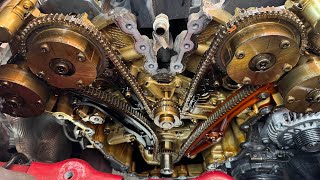
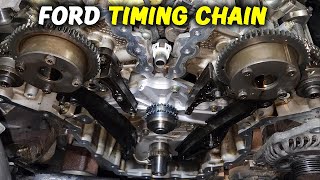
Typical fix: Replace the timing chain, all guides, both tensioners, and the cam phasers. On the 3.5L, the internal water pump MUST be replaced 🎬 Watch: Full DIY guide for timing chain and water pump replacement at the same time. This is a very labor-intensive job, often costing thousands.
Est. part cost: $400-$900 for a full kit - Failed Camshaft Position Sensor ⚪ Low Probability
How to confirm: Test the sensor's output signal with a multimeter or oscilloscope. 🎬 See this guide on testing the sensor and correlation codes A common diagnostic trick is to swap the exhaust sensor with the intake sensor on the same bank (if they are identical) and see if the code changes to P0016 (Bank 1, Sensor A).
Typical fix: Replace the Bank 1 exhaust camshaft position sensor.
Est. part cost: $25-$60
Rare But Worth Checking
- Failed Crankshaft Position Sensor: While less common than a camshaft sensor failure for this specific code, a faulty crankshaft sensor can provide an incorrect reference signal to the PCM, leading to a correlation fault.
- Damaged Cam Phaser (VCT Actuator): The cam phaser itself can fail mechanically, get clogged with debris, or the locking pin can break, preventing it from changing the camshaft's timing as commanded by the solenoid. They are typically replaced during a timing chain job.
- Damaged Reluctor Wheel/Tone Ring: The toothed wheel that the cam or crank sensor reads can be damaged, bent, or have debris in the teeth, causing incorrect position readings. This is rare and usually only happens during other major engine repairs.
Diagnosis Steps
- Check Engine Oil: Verify the oil level is correct and the oil is clean and has the correct viscosity. If low, dirty, or smells of fuel/coolant, address this first. An oil change can sometimes fix a sticking solenoid.
- Scan for Other Codes: Check for any other related DTCs. P0016 appearing with P0017 is a major clue pointing towards a mechanical timing issue.
- Inspect Sensor & Solenoid Wiring: Visually inspect the wiring and connectors for the Bank 1 exhaust camshaft sensor and VCT solenoid for any damage, corrosion, or oil contamination.
- Test the VCT Solenoid: Use a capable scan tool to perform the 'VCT Solenoid Cycle Test' (per TSB SSM 47170). Listen for an audible click from the solenoid. If it doesn't respond or the code returns quickly, it's likely faulty.
- Test the Camshaft Sensor: Test the sensor's voltage and signal. An easy field test is to swap it with the intake cam sensor (if the part numbers are the same) and see if the code changes to P0016.
- Inspect Mechanical Timing: This is the final and most involved step. The front engine cover must be removed to inspect the timing chain, guides, tensioners, and cam phasers. Look for excessive slack in the chain, broken plastic guide material in the oil pan, and a fully extended tensioner. This is an advanced, labor-intensive job.
Parts You'll Likely Need
- Variable Camshaft Timing (VCT) Solenoid
(OEM #8L3Z-6M280-B (Motorcraft))— This is the most likely cause according to multiple Ford TSBs, which state debris can cause it to stick. It's the cheapest and easiest part to replace first.
Trusted brands: Motorcraft, Dorman
OEM price range: $60-$90
Aftermarket price range: $30-$60 - Timing Chain Kit
(OEM #BL3Z-6D256-C (Motorcraft kit for 3.5L EcoBoost, similar kits exist for NA))— A stretched timing chain is a very common cause for this code on Ford's V6 engines, requiring a full replacement of the chain, guides, and tensioners.
Trusted brands: Motorcraft, Cloyes
OEM price range: $350-$550
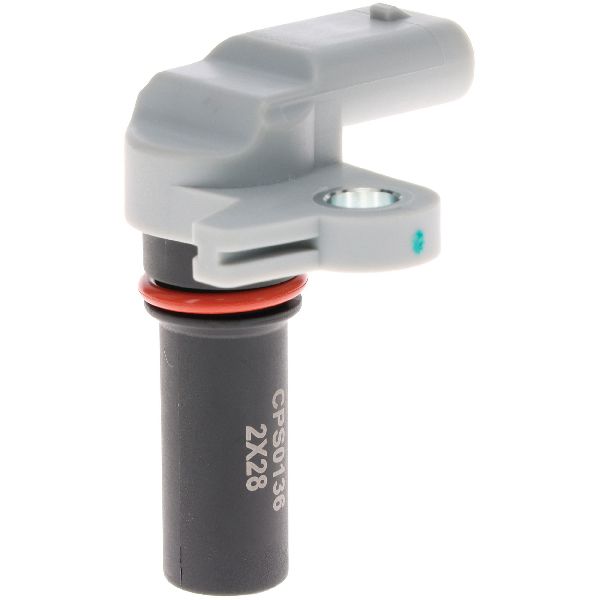
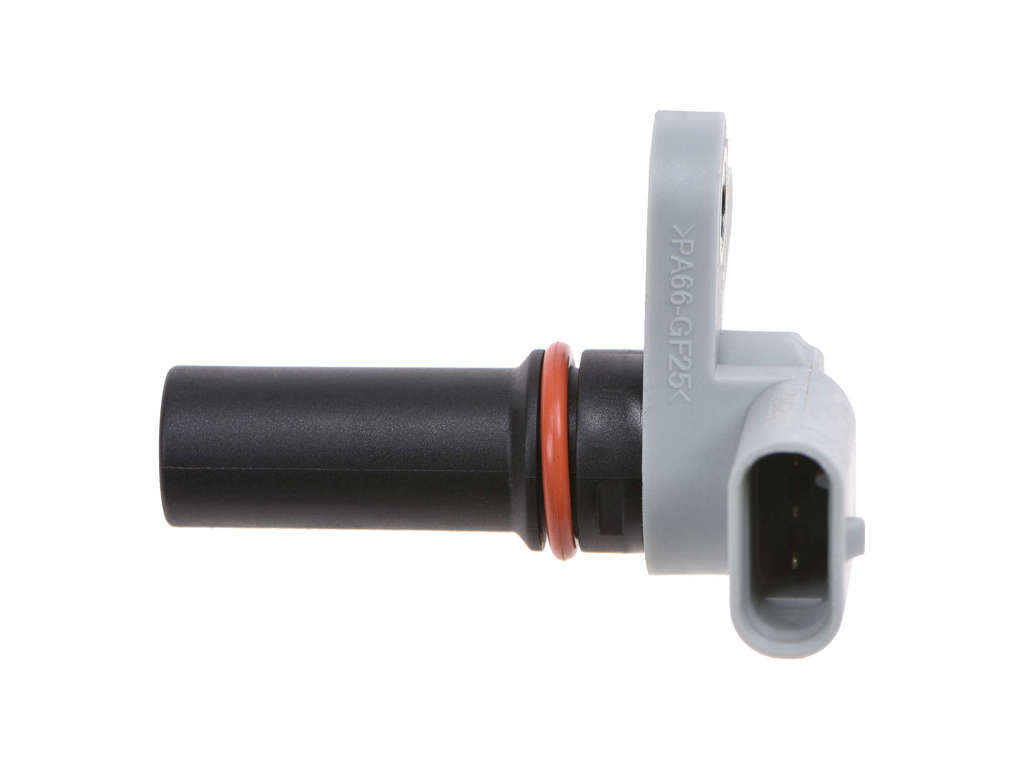
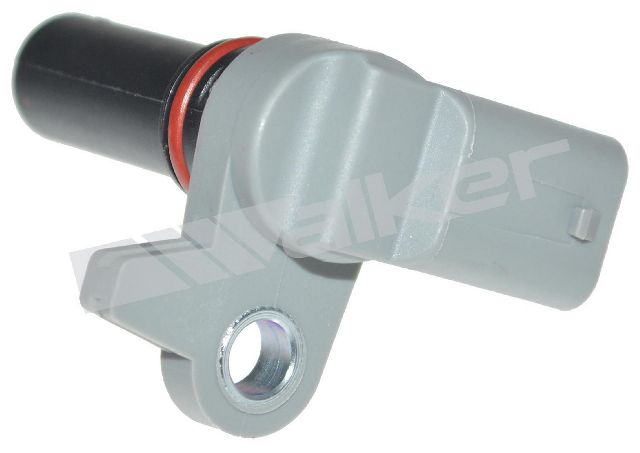
Aftermarket price range: $250-$450 - Camshaft Position Sensor — Though less common than a solenoid or chain issue, the sensor that reads the camshaft's position can fail and send incorrect data to the PCM.
Trusted brands: Motorcraft, Bosch, NGK/NTK
OEM price range: $40-$70
Aftermarket price range: $25-$50
Related Codes That Often Appear With This One
- P0016 — Crankshaft/Camshaft Correlation for Bank 1, Sensor 'A' (Intake). If P0016 and P0017 appear together, it strongly points towards a base timing issue like a jumped or stretched timing chain affecting the entire bank, rather than a single sensor or solenoid failure.
- P0018 / P0019 — These are the equivalent correlation codes for Bank 2 (driver's side). Seeing them with P0017 is rare but would indicate a severe, widespread timing problem affecting both banks, almost certainly a stretched chain.
- P0345 / P0349 — These codes indicate a circuit malfunction for the Bank 2 camshaft position sensor. While for the other bank, they can appear if there are systemic wiring or PCM issues.
Technical Service Bulletins (TSBs) & Recalls

- SSM 54366
- SSM 47170
- SSM 48423
- TSB-16-0093
- 21B10
Platform-Specific Known Issues
- This engine is notorious for the timing chain stretching and the internal, chain-driven water pump failing. A water pump failure will leak coolant into the crankcase, contaminating the oil and destroying the engine. It is industry standard to replace the timing chain, guides, tensioners, and water pump simultaneously, as the labor to access them is identical.
- Also suffers from timing chain stretch, but adds complexity with twin turbochargers. Cam phaser rattle on cold starts is a very common symptom preceding codes like P0017. Ford has a Customer Satisfaction Program (21B10) for this phaser rattle on some vehicles.
- While less prone to the severe timing chain stretch seen in the V6s, it can still experience P0017 due to failed VCT solenoids, dirty oil, or sensor issues. The diagnosis is generally more straightforward and less likely to be a catastrophic chain failure.
Mechanic-Grade Diagnostic Values
- VCT Solenoid (OCV) internal resistance — expected: 6.9 to 7.9 Ohms at 68°F (20°C). General range is often cited as 5-25 Ohms.. Failure: A reading of infinity (Open Loop) indicates a broken internal coil. A very low reading (under 2 Ohms) indicates an internal short.
- 3-Wire Camshaft Position Sensor (Hall Effect) signal voltage — expected: With key-on, engine-off, the signal wire should read approximately 5 volts (reference voltage). When a metallic object (like a socket) is passed in front of the sensor, the voltage should drop to 0V.. Failure: Voltage does not change when a metal object is passed in front of the sensor, or the voltage is constantly 0V.
- Ford IDS Live Data PID: VCT_ADV_ERR (Camshaft Advance Error) — expected: While in closed-loop operation, the value for each bank should hover around 0 degrees.. Failure: A consistent reading of more than +/- 5 degrees for an excessive amount of time indicates a correlation error that the PCM cannot correct.
Scan Tool Commands That Help
- Ford IDS (Integrated Diagnostic System): Monitor VCT PIDs: VCT_ADV_ERR, VCT_ADV_REQ, RCAM, VCT_DUTY — Use during idle and a test drive to see if the PCM is commanding a timing change and if the camshaft is responding. The VCT_ADV_ERR PID is critical; it shows the difference between the desired and actual cam angle.
- Ford IDS (Integrated Diagnostic System): VCT Solenoid On/Off Command / Solenoid Cycle Test — This is a bidirectional control that manually actuates the VCT solenoid. It's used to confirm if the solenoid is mechanically capable of moving. A technician can listen for an audible click from the solenoid during this test. This can also help dislodge small debris as suggested in TSBs.
- Ford IDS (Integrated Diagnostic System): Data Logger with Histogram Mode — Used to record VCT PID data during a test drive to capture intermittent faults. The histogram can help visualize anomalies in VCT operation that may not be obvious from watching live data numbers alone.
Wiring & Ground Locations
- Bank 1 & 2 VCT Solenoids — On the 3.5L V6, the solenoids are located on the front of the valve covers. The intake solenoid is typically on top (often with a white or grey connector) and the exhaust solenoid is below it (often with a black connector).. P0017 specifically points to the Bank 1 (passenger side) exhaust solenoid ('Sensor B'). Correctly identifying this component is the first step in testing or replacement.
- Bank 1 & 2 Camshaft Position Sensors — On the 3.5L V6, there are four sensors. Two are on the front (radiator side) cylinder head (Bank 2) and two are on the rear (firewall side) cylinder head (Bank 1). Accessing the Bank 1 sensors requires removing the upper air intake components.. P0017 involves the Bank 1 exhaust sensor ('Sensor B'). It is critical to identify the correct sensor on the rear cylinder head for testing.
- Engine Grounds (G104, G105) — On some Ford Explorer models, major engine compartment grounds are located on the fender aprons in the left and right rear corners of the engine bay.. While this information is for an older model, poor ground connections are a common cause of erratic sensor readings. Verifying that the main engine and PCM grounds are clean and tight is a crucial diagnostic step for any electronic fault code. A bad ground can cause voltage drops and incorrect signals from the cam and crank sensors.
When the Usual Fixes Don't Work
- A common frustrating scenario reported by owners is the appearance of P0017 immediately after a major timing chain replacement job. One owner of a 2015 model with a 3.5L engine reported performing a full timing chain and phaser replacement, clearing all previous codes, only to have a new P0017 code appear. Despite verifying VCT solenoid and camshaft sensor voltage, the issue's cause was not immediately apparent. This indicates that even with correct-looking timing marks, a subtle issue like a damaged reluctor wheel on the new phaser, a pinched wire during reassembly, or an incorrect phaser/solenoid for that specific bank could be the new root cause, making post-repair diagnosis extremely difficult.
OEM Part Supersession History
3L3Z-6M280-EA, 8L3Z-6M280-A→8L3Z-6M280-B— Part revision and update by the manufacturer. Newer revisions often address failure points of the original design.
Heads up: The 8L3Z-6M280-B part number is commonly associated with the 3-valve V8 engines but is often listed as a replacement. However, for the 3.5L V6, TSB-16-0093 specifically calls out AT4Z-6M280 series solenoids. Always verify the correct part number by VIN.
Model Year Variations Within This Range
- 2016: TSB 16-0093 was issued for 2016 Explorer models (among others) with the 3.5L engine and less than 2,000 miles, specifically for DTCs including P0017. The fix is to replace the affected VCT solenoid. This suggests a potential batch of faulty solenoids in low-mileage 2016 models.
- 2015-2019 vs 2020: The 2020 model year marked a new generation with a different engine lineup (2.3L I-4, 3.0L V6, 3.3L V6 Hybrid), discontinuing the 3.5L naturally aspirated V6 that is most notorious for the timing chain issues associated with P0017. While the code can occur on the newer engines, the prevalence and primary cause (timing chain stretch) are most associated with the 5th generation's 3.5L engine.
Helpful Videos

Used OEM Parts in Stock
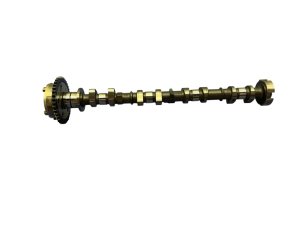
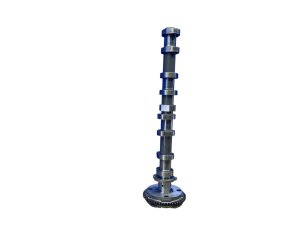
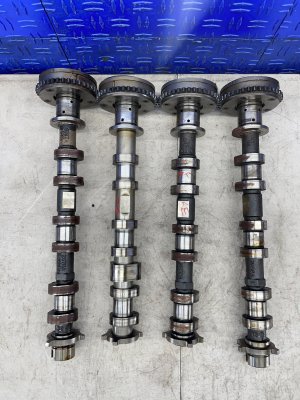
New Aftermarket Parts Available

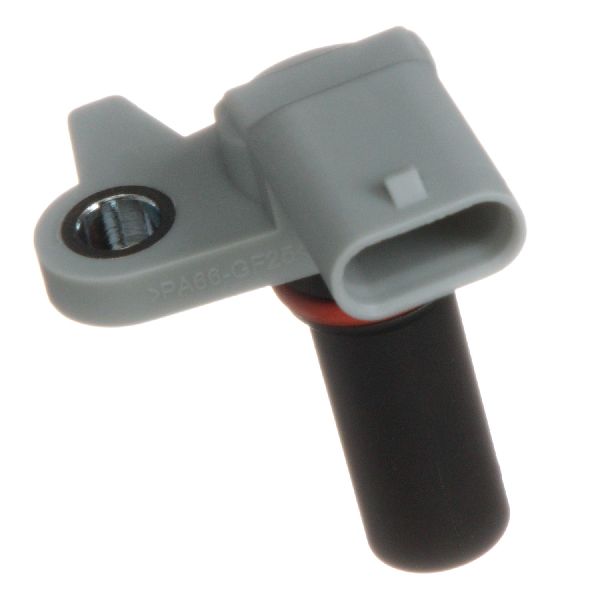

The information in this article is provided for general reference and educational purposes only. Vehicle specifications, procedures, and part compatibility can vary by production date, trim level, and region. Always consult your vehicle's factory service manual and verify part numbers before purchasing or performing repairs. Safety-critical components such as airbags, seat belts, and braking systems should be installed by a qualified professional.
- Ford EXPLORER:
- 🎬 Helpful Videos
- 🛍️ Shop This Part
- What's Unique About the 2015-2020 Ford EXPLORER
- Diagnostic Flowchart
- Symptoms You May Notice
- Most Likely Causes
- Rare But Worth Checking
- Diagnosis Steps
- Parts You'll Likely Need
- Related Codes That Often Appear With This One
- Technical Service Bulletins (TSBs) & Recalls
- Platform-Specific Known Issues
- Mechanic-Grade Diagnostic Values
- Scan Tool Commands That Help
- Wiring & Ground Locations
- When the Usual Fixes Don't Work
- OEM Part Supersession History
- Model Year Variations Within This Range
- 🎟️ Get 5% Off