

P0017 on 2015-2021 Ford Expedition: Crank/Cam Correlation Causes and Fixes
On a 2015-2021 Ford Expedition with the 3.5L EcoBoost, code P0017 almost always points to a stretched timing chain and/or failing cam phasers, often signaled by a 2-5 second rattle on cold starts. This is a common, labor-intensive repair costing between $1,800 and $3,500. Less common causes include a faulty VCT solenoid or low/dirty oil, which should be checked first.
- P0017 on a 3.5L EcoBoost Expedition is a serious code that points to a mechanical timing problem more often than a sensor failure.
- The most likely cause is a stretched timing chain, a known issue with this engine.
- Do not ignore this code. Driving with a timing issue can lead to severe and catastrophic engine damage.
- Due to the complexity of the repair, professional diagnosis and service are strongly recommended. A full timing service (chain, guides, tensioners, phasers, solenoids) is the most reliable fix.
What's Unique About the 2015-2021 Ford EXPEDITION

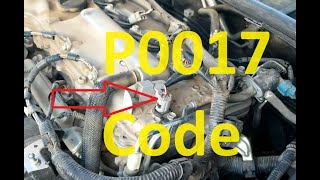
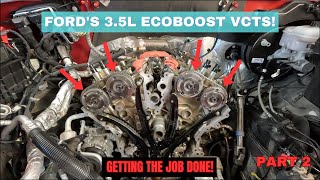
The 3.5L EcoBoost engine, particularly the first generation used from 2015-2017, is notorious for timing chain issues. The primary timing chain can stretch prematurely, causing slack that disrupts the precise mechanical timing between the crankshaft and camshafts, directly leading to correlation codes like P0017. 🎬 See how to test and fix P0017 correlation codes. The second-generation engine (2018-2021) also suffers from this, though often related to faulty cam phasers which were subject to multiple TSBs. While sensor or solenoid failures can occur, a mechanical timing problem (chain or phasers) is the most frequent and significant underlying issue for this specific code on this platform.
Diagnostic Flowchart
Tap your situation to follow the diagnostic path that matches what you're seeing on this vehicle.
Generation note: This range covers the end of the third generation Expedition (2015-2017, with the 1st Gen 3.5L EcoBoost) and the fourth generation (2018-2021, with the 2nd Gen 3.5L EcoBoost). Both generations are known to experience timing component failures causing P0017. The 1st gen is more known for chain stretch, while the 2nd gen is known for a cold start rattle caused by failing cam phasers, addressed in TSB 22-2200.
Symptoms You May Notice
- Check Engine Light is on
- Rough or erratic idle
- Rattling noise from the engine, especially on a cold start, lasting 2-5 seconds.
- Reduced engine power and poor acceleration
- Difficulty starting the engine, or engine cranks but won't start
- Decreased fuel economy
- Engine may stall, especially during auto start-stop events
- Replacing only the camshaft position sensor without checking the mechanical timing.
- Replacing only the crankshaft position sensor without checking the mechanical timing.
- Replacing a single VCT solenoid when the root cause is a stretched timing chain or failing phasers.
Most Likely Causes

- Stretched Timing Chain 🔴 High Probability The 3.5L EcoBoost engine has a widely documented issue with premature timing chain stretching, often attributed to long oil change intervals or the stress of the twin-turbo system. This is a very common cause for this code, especially on 2015-2017 models.
How to confirm: A mechanic will need to remove the valve cover and/or timing cover to physically inspect the chain for slack and verify the timing marks. This is a labor-intensive diagnostic step. A rattling noise on cold start is a strong indicator.
Typical fix: Replace the timing chain, tensioners, guides, and almost always the cam phasers and VCT solenoids at the same time. This is considered a full timing job.
Est. part cost: $400-$800 for a complete timing kit. - Failing Camshaft Phaser 🔴 High Probability The cam phasers (actuators) can fail, getting stuck in one position or not responding correctly to commands from the PCM. This is the primary cause of the 'cold start rattle' and was addressed by Ford in TSB 22-2200 for 2018-2020 models. Updated parts are available.
How to confirm: Diagnosis requires a capable scan tool to monitor desired vs. actual cam position angles. The presence of a 2-5 second rattle on cold start is a classic symptom. They are often diagnosed and replaced during a timing chain job.
Typical fix: Replace all four cam phasers (2 intake, 2 exhaust) with the latest revised parts. This is almost always done along with the timing chain, guides, and tensioners.
Est. part cost: $150-$300 per phaser - Faulty Variable Camshaft Timing (VCT) Solenoid 🟡 Medium Probability Ford has issued multiple Technical Service Bulletins (TSBs), including SSM 48423, noting that small debris in the oil can cause VCT solenoids to stick, leading to timing codes. This is a common first diagnostic step before committing to a full timing job.
How to confirm: A mechanic can command the solenoid on and off with a scan tool to check its response. TSB SSM 48423 suggests cycling the solenoid 10 times with a scan tool to try and clear debris before replacement. They can also be removed and tested for resistance.
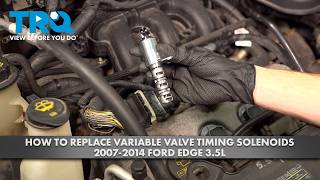
Typical fix: Replace the faulty VCT solenoid for Bank 1 Exhaust. Many owners replace all four as a preventative measure.
Est. part cost: $30-$70 - Low or Dirty Engine Oil 🟡 Medium Probability The VCT system, which controls cam timing, is hydraulically operated by engine oil. Incorrect oil viscosity or oil that is low or contaminated with sludge can impede the function of the cam phasers and VCT solenoids. Many owners on forums recommend 5,000-mile full synthetic oil changes to prevent this.
How to confirm: Check the oil level on the dipstick and inspect its condition. If it's low or appears very dark and sludgy, this could be the cause.
Typical fix: Perform an oil and filter change using the correct viscosity oil specified by Ford (typically 5W-30 full synthetic) and a quality filter like the Motorcraft FL-500S.
Est. part cost: $50-$100
Rare But Worth Checking
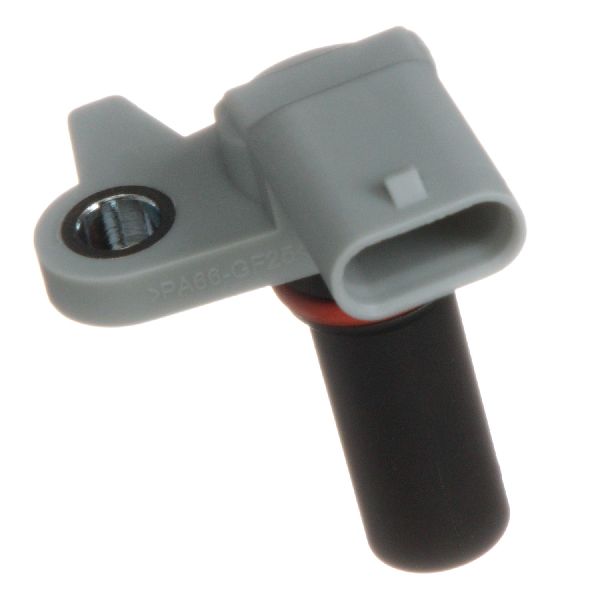
- Faulty Camshaft or Crankshaft Position Sensor: While possible, it's much more common for the mechanical timing components to be the root cause. People often replace these sensors first, only to find the code returns because the underlying timing issue wasn't addressed.
- Damaged Wiring or Connectors: A damaged wire or loose connection to the camshaft sensor, crankshaft sensor, or VCT solenoid can cause an intermittent signal and trigger the code. Visual inspection of the harness is a key diagnostic step.
- Powertrain Control Module (PCM) Fault: This is extremely rare. The PCM should only be considered after all other mechanical and electrical possibilities have been exhaustively ruled out.
Diagnosis Steps
- Check Engine Oil: Verify the engine oil is full, clean, and of the correct viscosity (Ford recommends 5W-30 Full Synthetic). If it's low or dirty, perform an oil change, clear the codes, and see if the code returns.
- Scan for Other Codes: Use an OBD-II scanner to check for any other pending or active trouble codes. Codes related to other sensors or banks can provide valuable diagnostic clues.
- Test VCT Solenoid: Per Ford TSB SSM 48423, use a bidirectional scan tool to command the Bank 1 exhaust VCT solenoid on and off 10 times to attempt to clear debris. A change in idle quality indicates the solenoid is likely working. If there's no change, the solenoid or its oil passages may be clogged or faulty.
- Inspect Sensor Wiring: Visually inspect the wiring and connectors for the Bank 1 exhaust camshaft position sensor, crankshaft position sensor, and the Bank 1 VCT solenoid for any signs of damage, corrosion, or loose connections.
- Analyze Sensor Data: Use an advanced scan tool to graph the live data from the crankshaft and camshaft position sensors. A trained technician can analyze these waveforms to determine if they are out of sync, confirming a timing issue.
- Mechanical Timing Inspection: If all else fails, the final step is to perform a physical inspection. This involves removing the valve and timing covers to check the timing chain for slack and verify that all timing marks on the chain, phasers, and sprockets are correctly aligned. This is a significant labor commitment.
Parts You'll Likely Need

- Timing Chain Kit
(OEM #BL3Z-6D256-C (for 2015-2017 models), HL2Z-6C590-A (for 2018-2020 models, per TSB 22-2200))— This is the most common failure point. A complete kit should include the primary timing chain, tensioners, guides, and all necessary gaskets and seals.
Trusted brands: Motorcraft, Cloyes
OEM price range: $400-$600
Aftermarket price range: $250-$400 - Camshaft Phaser (VCT Unit)
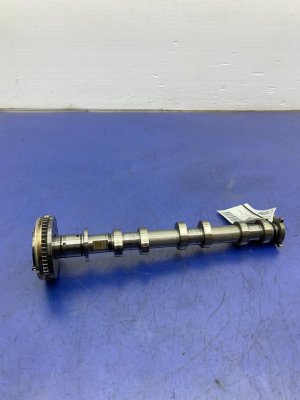
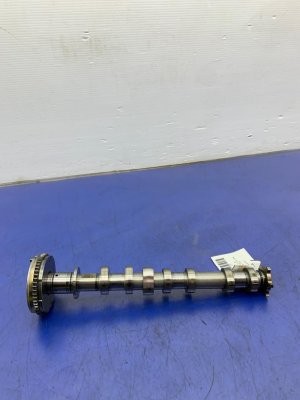
(OEM #Intake: AT4Z-6256-B, Exhaust: AT4Z-6C525-D (for 2015-17). Updated phasers for 2018+ are ML3Z-6256-A (Intake) and ML3Z-6C525-A (Exhaust).)— The phasers control cam timing and are a primary failure point, causing rattles and codes. It is highly recommended to replace all four during a timing job.
Trusted brands: Motorcraft
OEM price range: $150-$300
Aftermarket price range: $100-$200 - VCT Solenoid
(OEM #AT4Z-6M280-C (Bank 1/Right Side Exhaust))— Often replaced as a first step or during a full timing job. Debris can cause it to stick. TSB 16-0038 specifically recommends replacing the Bank 1 exhaust VCT solenoid for a P0017 code.
Trusted brands: Motorcraft, Dorman
OEM price range: $40-$70
Aftermarket price range: $25-$50
Related Codes That Often Appear With This One
- P0016 — This code is for Crank/Cam Correlation on Bank 1, Sensor A (Intake). Seeing P0016 and P0017 together strongly points to a base timing issue like a stretched chain affecting the entire bank.
- P0018 / P0019 — These are the equivalent correlation codes for Bank 2 (driver's side). If codes for both banks are present, it's an almost certain indicator of a primary timing chain problem affecting the entire engine.
- P0015 — This code is for 'B' Camshaft Position - Timing Over-Retarded (Bank 1). It often appears with P0017 as it also points to a problem with the exhaust camshaft timing control on the passenger side.
- P0345 / P0349 — These codes indicate a circuit malfunction for the camshaft position sensor on Bank 2, which can sometimes appear alongside correlation codes if there are wiring issues or severe timing problems.
Technical Service Bulletins (TSBs) & Recalls
- SSM 54366
- SSM 48423
- TSB-16-0093
- TSB160038
- SSM 47170
- 16-0038
- TSB 22-2200
Platform-Specific Known Issues
- First Gen (2015-17) vs. Second Gen (2018-21) EcoBoost: While both suffer from timing issues, the 2015-2017 models with the first-generation 3.5L are more commonly associated with primary timing chain stretch. The 2018-2021 models with the second-generation engine are more known for the cam phaser 'cold start rattle' issue, which was widespread enough to generate specific TSBs (like 22-2200) and updated phaser designs.
- Importance of Oil Change Interval: Across owner forums for the 3.5L EcoBoost, there is a strong consensus that adhering to a strict 5,000-mile (or less) oil change interval with full synthetic 5W-30 oil is critical to prolonging the life of the timing components. The VCT system is highly sensitive to oil pressure and cleanliness.
Mechanic-Grade Diagnostic Values
- VCT Solenoid Internal Resistance — expected: 6.9 to 7.9 Ohms at 68°F (20°C). Failure: A reading outside this range, or an open/infinite reading, indicates a faulty solenoid.
- VCT Solenoid Power Supply Voltage — expected: Battery Voltage (approx. 12.0-12.6V) with key on, engine off. Failure: No voltage indicates a problem with the power supply circuit, fuse, or PCM power relay.
Hidden / Shadow Codes Worth Checking
- P164C: Internal Control Module Start-Stop Performance. This code can be present alongside the cold start rattle, indicating an issue with the VCT unit affecting the auto start-stop system's ability to restart the engine. (see via This is a standard DTC but is often seen with the phaser issue described in TSB 23-2143.)
Scan Tool Commands That Help
- Ford IDS (Integrated Diagnostic Software): VCT Solenoid Active Command / Output State Control — To manually cycle a specific VCT solenoid on and off while the engine is idling. A noticeable change in engine idle quality or stalling indicates the solenoid is mechanically responding to the command. This helps isolate a sticky solenoid from a wiring or mechanical timing issue.
- Ford IDS (Integrated Diagnostic Software): Crankshaft Position Profile Correction Reset / Misfire Monitor Neutral Profile Correction — After replacing a crankshaft position sensor, flywheel, or performing major engine work like a timing job. This procedure allows the PCM to relearn the profile of the crankshaft reluctor wheel. Failure to perform this relearn can sometimes cause persistent correlation codes even after a successful mechanical repair.
Wiring & Ground Locations

- C175E — This is one of the main connectors at the Powertrain Control Module (PCM). The PCM is typically located in the engine bay, often on the passenger side firewall.. This connector contains the pins for the crankshaft and camshaft position sensors, as well as the VCT solenoids. For P0017, a technician would test for continuity and voltage at specific pins to diagnose wiring faults without having to access the sensors directly.
- Pin 67 at C175E (VCT11) — At the PCM connector C175E.. This is the control circuit for the Bank 1 Intake VCT solenoid. While P0017 is for the exhaust cam, issues on the intake side (P0016) often appear concurrently, and checking related circuits is part of a thorough diagnosis.
- Pin 68 at C175E (VCT21) — At the PCM connector C175E.. This is the control circuit for the Bank 2 Intake VCT solenoid. A technician would reference this when diagnosing codes affecting the driver's side bank (e.g., P0018, P0019) that may appear with P0017.
- Pins 62, 63, 64 at C175E (CKP+, CKP-, SHDRTN) — At the PCM connector C175E.. These are the positive, negative, and shield return pins for the Crankshaft Position (CKP) sensor. Testing the signal waveform across these pins with an oscilloscope is a definitive way to check the CKP sensor's output.
Real Owner Repair Stories
- Ford F150 Forum (2013 Ford F-150 3.5L EcoBoost) — Started as a no-crank condition, then progressed to rough running, engine knock/rattle, and a desire to stall. Eventually set code P0015 (Cam Timing Over-Retarded).
❌ Tried (didn't work) Initial diagnosis focused on battery, cables, and starter due to the no-crank symptom.
✅ What actually fixed it The user was advised that the symptoms were classic for a major timing system failure. The recommended fix was a complete timing job, including the timing chain, phasers, tensioners, and guides using the Ford service kit (BL3Z-6D256-C for that model year).
OEM Part Supersession History
Various older phaser designs prior to 2021→Intake: ML3Z-6256-A, Exhaust: ML3Z-6C525-A— The original cam phasers were prone to failure of the locking pin mechanism, causing a loud 2-5 second rattle on cold starts. The updated parts have an enclosed spring design to improve durability and prevent this failure.
Heads up: While they physically fit, using old stock phasers will likely lead to a repeat failure of the cold start rattle. It is critical to use the latest 'ML3Z' revision parts for the 2017-2020 Gen 2 EcoBoost engines.
Model Year Variations Within This Range
- 2015-2017 (Gen 1 3.5L EcoBoost): These engines use a single, long primary timing chain. This design is more susceptible to stretch, which is the most common cause of P0017 on these earlier models. The timing job part kit is different from later years (e.g., BL3Z-6D256-C).
- 2018-2021 (Gen 2 3.5L EcoBoost): Ford redesigned the timing system to use two shorter primary chains (one for each bank), which is less prone to stretch. However, the cam phasers on these engines (pre-2020 build dates) are the primary failure point, causing the well-known 'cold start rattle' addressed by TSB 22-2200 and 23-2143. These engines also feature a dual injection system (port and direct).
Helpful Videos

Used OEM Parts in Stock
New Aftermarket Parts Available


The information in this article is provided for general reference and educational purposes only. Vehicle specifications, procedures, and part compatibility can vary by production date, trim level, and region. Always consult your vehicle's factory service manual and verify part numbers before purchasing or performing repairs. Safety-critical components such as airbags, seat belts, and braking systems should be installed by a qualified professional.
- Ford EXPEDITION:
- 🎬 Helpful Videos
- 🛍️ Shop This Part
- What's Unique About the 2015-2021 Ford EXPEDITION
- Diagnostic Flowchart
- Symptoms You May Notice
- Most Likely Causes
- Rare But Worth Checking
- Diagnosis Steps
- Parts You'll Likely Need
- Related Codes That Often Appear With This One
- Technical Service Bulletins (TSBs) & Recalls
- Platform-Specific Known Issues
- Mechanic-Grade Diagnostic Values
- Hidden / Shadow Codes Worth Checking
- Scan Tool Commands That Help
- Wiring & Ground Locations
- Real Owner Repair Stories
- OEM Part Supersession History
- Model Year Variations Within This Range
- 🎟️ Get 5% Off