

P0017 on 2017-2018 Chevrolet Traverse: Stretched Timing Chain Causes and Fixes
On a 2017-2018 Traverse with the 3.6L V6, P0017 almost always indicates a stretched timing chain, a well-known issue for this engine family. While you should check the oil level and condition first, expect a complex and expensive repair costing between $2,000 and $3,500. This is not a DIY job and should be addressed promptly to avoid catastrophic engine failure.
- P0017 on a 2017-2018 Traverse almost certainly means you have a stretched timing chain.
- This is a serious issue; do not ignore it. Continued driving risks severe engine damage.
- Do not replace the camshaft or crankshaft sensors as a first step; this is a common and costly misdiagnosis. [ODI #10899234]
- The first and easiest check is your engine oil. Ensure it is full and clean.
- This repair is not suitable for DIY. Budget for a professional repair costing upwards of $2,000.
What's Unique About the 2017-2018 Chevrolet TRAVERSE
The 2017-2018 Traverse model years span two different vehicle generations and two versions of the 3.6L V6 engine (LLT and LGX), but both are known for the same critical flaw: premature timing chain stretching. This issue is so common across the entire GM High Feature V6 family that it's the immediate suspect for code P0017. Owner complaints and technical service bulletins confirm that this code, often appearing with P0008 or P0016, is rarely a simple sensor failure and usually precedes a costly timing chain replacement. [TSB #PIP3423P, ODI #11184580]
Diagnostic Flowchart
Tap your situation to follow the diagnostic path that matches what you're seeing on this vehicle.
Generation note: The 2017 model is the last year of the first-generation Traverse (Lambda platform) and uses the 3.6L LLT V6. The 2018 model is the first year of the second generation (C1 platform) and primarily uses the updated 3.6L LGX V6. Despite the generational change and engine updates (the LGX has a different chain design), both V6 engines are known to suffer from premature timing chain wear that can trigger a P0017 code.
Symptoms You May Notice
- Check Engine Light is on
- Rough or unstable idle
- Lack of engine power and poor acceleration. [ODI #11184580]
- Engine rattling noise, especially on cold startup.
- Associated warning lights like "Service Stabilitrak" or "Traction Control Off". [ODI #11399127]
- Engine may crank for a long time before starting.
- Stalling, especially at low speeds.
- Replacing the camshaft position sensor. The sensor is almost always functioning correctly and reporting the actual mechanical misalignment. [ODI #10899234, ODI #11399127, 11]
- Replacing the crankshaft position sensor. Similar to the cam sensor, this part is rarely the root cause of P0017 on this engine.
Most Likely Causes
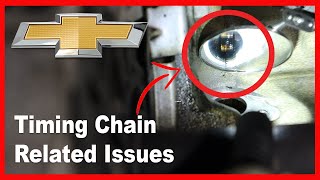
- Stretched Timing Chains 🔴 High Probability The GM 3.6L V6 engine family has a well-documented history of premature timing chain wear. This "stretch" is actually elongation from wear in the chain's pins and links. It is often attributed to extended oil change intervals, where oil breakdown contributes to wear. TSBs #PIP3423P and #12-06-01-009F directly address this issue.
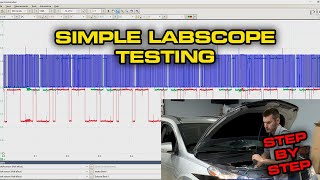
How to confirm: A technician will use a scan tool to observe the desired vs. actual camshaft position angles 🎬 Watch: How to use a labscope to test timing chain alignment. (or Camshaft Position Variance). A consistent deviation greater than 4-5 degrees, and especially one that exceeds 9-10 degrees, points to a mechanical timing issue. Physical inspection for chain slack by removing the timing cover is the definitive confirmation but requires significant labor.
Typical fix: Replace all three timing chains, the tensioners, and the guides with an updated kit. It is critical to use the latest revised parts from GM or a quality aftermarket supplier like Cloyes. Many shops also recommend replacing the water pump and oil pump at the same time.
Est. part cost: $400-$800 - Failed Timing Chain Tensioner(s) 🔴 High Probability The tensioners, which are hydraulically operated by oil pressure, can fail, stick, or lose their ability to keep the chains tight due to wear or sludge. This allows the chain to become slack, causing timing correlation codes. They are considered an integral part of the timing chain system and are always replaced during the job.
How to confirm: Diagnosed during a physical inspection of the timing system. A fully extended or collapsed tensioner will be visible, allowing for obvious slack in the chain.
Typical fix: Replaced as part of a complete timing chain kit replacement. [TSB #PIP3423P, 5]
Est. part cost: $50-$150 - Low or Dirty Engine Oil 🟡 Medium Probability The camshaft phasers and chain tensioners are operated by engine oil pressure. If the oil is low, or if sludge from extended oil change intervals clogs the small passages in the VVT solenoids or phasers, it can prevent proper timing adjustments and trigger a correlation code. This is often considered a primary contributing factor to the eventual chain stretch.
How to confirm: Check the oil level on the dipstick and inspect its condition. If it's low or appears like dark sludge, this is a likely contributor. Some owners report the code clearing after an engine flush and oil change, but this is often temporary if the chains are already worn.
Typical fix: Perform an engine oil and filter change using a full synthetic oil that meets the GM dexos1 specification. Some mechanics recommend an engine flush to attempt to clean sludge from hydraulic passages.
Est. part cost: $50-$100 - Faulty VVT Solenoid (Camshaft Position Actuator) ⚪ Low Probability These solenoids control oil flow to the phasers. They can become clogged with sludge or fail electrically. While less common than a stretched chain on this platform, it's a possible and much simpler fix to investigate first.
How to confirm: A technician can command the solenoid with a scan tool and watch for a change in cam angle. A common DIY test is to swap the Bank 1 exhaust solenoid with another (e.g., the Bank 1 intake). If the code changes from P0017 to P0016, the solenoid is confirmed to be faulty.
Typical fix: Replace the Bank 1 exhaust VVT solenoid and perform an oil change.
Est. part cost: $30-$80
Rare But Worth Checking
- Slipped Crankshaft Reluctor Wheel: The reluctor wheel on the crankshaft, which the crank sensor reads, can physically move or spin on the shaft. This sends incorrect timing data to the ECM, perfectly mimicking a stretched chain. TSB #PIP3423P mentions this possibility. It can be inspected with a borescope through the crank sensor port before tearing the engine down.
Diagnosis Steps
- Verify the engine oil level and condition. Ensure it is full and relatively clean. If low or dirty, perform an oil and filter change with the correct dexos1-spec synthetic oil, clear the codes, and see if the problem returns.
- Use a professional scan tool to check for any other DTCs and to view live data. Note if P0008, P0016, P0018, or P0019 are also present.
- Monitor the 'Camshaft Position Variance' or desired vs. actual camshaft position angles for the Bank 1 exhaust camshaft. A consistent deviation over 4-5 degrees at idle or under load indicates a mechanical timing problem.
- Test the Bank 1 exhaust VVT solenoid. Command it on and off with the scan tool to check for response. Consider swapping it with the intake solenoid (a known good part) to see if the code changes to P0016. If it does, the solenoid is bad.
- If the above steps do not resolve the issue, a mechanical timing problem is highly likely. The next step is partial engine disassembly to physically inspect the timing chains for slack and check the tensioners.
- As a final check before a full teardown, consider inspecting the crankshaft reluctor wheel for movement via the crankshaft position sensor port, as this can mimic a timing chain failure.
Parts You'll Likely Need
- Timing Chain Kit
(OEM #ACDelco 9-0753S (For LLT) or similar for LGX)— This is the most common cause of P0017 on the 3.6L V6. A complete kit includes all chains, tensioners, and guides needed for a proper repair. Using an updated kit is critical.
Trusted brands: ACDelco (GM OE), Cloyes
OEM price range: $400-$600
Aftermarket price range: $250-$450 - Camshaft Position Actuator Solenoid (VVT Solenoid)
(OEM #12655421)— A potential, though less common, cause of the code due to clogging or electrical failure. It's a much cheaper and easier repair to attempt before the timing chains.
Trusted brands: ACDelco, Delphi, Dorman
OEM price range: $40-$70
Aftermarket price range: $25-$50
Related Codes That Often Appear With This One
- P0008 — This is a more general engine position system performance code for Bank 1. When seen with P0017, it strongly reinforces that the issue is a primary timing chain problem affecting the entire bank. [TSB #PIP3423P, ODI #10957359, 6]
- P0016 — This is the correlation code for the intake camshaft on the same bank (Bank 1). Seeing P0016 and P0017 together often means the secondary timing chain for Bank 1 has an issue or the primary chain has stretched enough to affect both cams.
- P0018 / P0019 — These are the equivalent correlation codes for Bank 2 (front of the engine). Seeing all four codes (P0016, P0017, P0018, P0019) points to a problem with the primary timing chain that affects both banks, or a slipped crankshaft reluctor wheel. [TSB #PIP3423P, 9]
Technical Service Bulletins (TSBs) & Recalls
- PIP3423P: Mentions inspecting for loose timing chains when codes P0016, P0017, P0018, P0019, P0008 or P0009 are set.
- 12-06-01-009F: Provides information on updated timing chain service kits for the High Feature V6 engine to address these DTCs, superseding previous versions.
- PIP5163G: A related TSB that discusses crank/no-start or extended crank issues which can also be tied to timing problems on this engine family.
- 11340C: A Special Coverage Adjustment (expired for these years) that extended the warranty on timing chains for 10 years/120,000 miles on earlier 3.6L V6s, acknowledging the high failure rate.
Platform-Specific Known Issues
- Premature timing chain stretching is a widely documented problem on the GM 3.6L V6 engine family used in these Traverse models.
- GM issued Technical Service Bulletin #12-06-01-009F, which superseded earlier versions, acknowledging the timing chain stretch issue and providing part numbers for updated, more durable replacement kits.
- Owner complaints frequently cite being told they need a timing chain replacement for this code, with repair costs often exceeding $3,000. [ODI #11184580, 38]
- The problem was so widespread on earlier models that GM initiated Special Coverage Adjustment #11340C, extending the warranty for this specific failure, though it has likely expired for these model years.
Mechanic-Grade Diagnostic Values
- VVT Solenoid (Camshaft Position Actuator) Internal Resistance — expected: 6 to 12 Ohms. Some sources cite 6.9-7.9 Ohms at 68°F (20°C).. Failure: A reading of 0 Ohms (short), infinite/OL (open), or significantly outside the expected range.
- Camshaft Position Sensor Power Supply Voltage — expected: ~5 Volts at the sensor connector with key on, engine off.. Failure: No voltage or significantly low voltage points to a wiring or ECM issue, not the sensor.
- Scan Tool 'Camshaft Position Variance' PID — expected: Less than 2-4 degrees at steady speed.. Failure: Consistent variance exceeding 4 degrees can cause driveability issues like a shudder or surge. A variance greater than 10 degrees will typically set the P0017 fault code.
- Scan Tool 'Exhaust Camshaft Position Active Counter' — expected: Should not increment with the ignition on and engine off.. Failure: If this counter increments with the engine off, it indicates an intermittent/faulty exhaust camshaft position sensor that is sending a signal when it shouldn't be.
Scan Tool Commands That Help
- GDS2 (GM Dealer Scan Tool): Camshaft Position Actuator Solenoid Test / Control — This is a crucial bidirectional command to manually activate and deactivate the VVT solenoid. A technician can command it ON/OFF while observing engine RPM or cam variance data. A response (audible click, change in RPM) confirms the solenoid is mechanically and electrically functional, helping to rule it out as the cause.
- GDS2 (GM Dealer Scan Tool): Camshaft Position Variance Data Parameter — Used to monitor the difference between the desired and actual camshaft position in real-time. This is the primary non-invasive method to confirm a mechanical timing issue. A consistent deviation greater than 4 degrees indicates a problem.
Wiring & Ground Locations
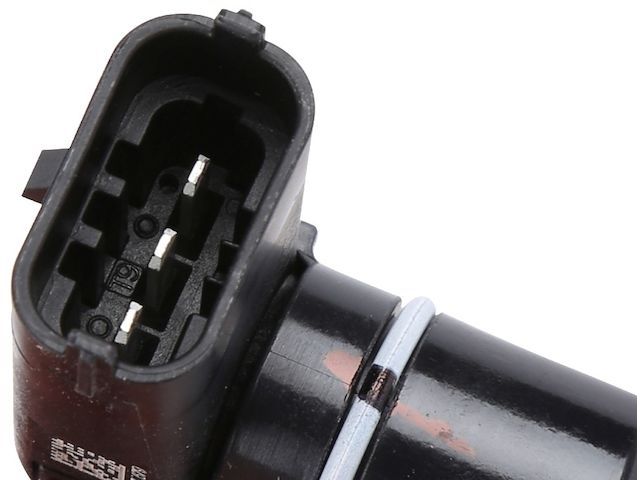
- Bank 1 Camshaft Position Sensors — Bank 1 is the cylinder head closer to the firewall. The intake and exhaust camshaft position sensors are located on this bank. On the 2018+ LGX engine, they are more accessible once the intake manifold is removed.. P0017 specifically relates to the exhaust camshaft position sensor ('B' sensor) on Bank 1. A fault in the sensor's wiring, connector, or the sensor itself can theoretically cause the code, though it's rare.
- Bank 1 VVT Solenoids (Camshaft Position Actuators) — Located on the front of the cylinder head for Bank 1 (firewall side). They are cylindrical solenoids held in by a single bolt.. These solenoids control the oil flow that adjusts cam timing. A clogged or failed exhaust solenoid on Bank 1 can cause the camshaft to be out of position, triggering P0017. Checking the wiring and connector to this solenoid is a key diagnostic step.
Real Owner Repair Stories
- YouTube user 'Nostatic' (2012 Chevrolet Traverse) — Check Engine Light with codes P0016 and P0017.
❌ Tried (didn't work) The owner performed an engine flush (Motor Medic) and an oil change with conventional oil. They also removed and inspected the VVT solenoid, finding it clean. After 30 miles of driving, the codes had not returned, but the outcome was not definitive long-term. The engine was noted to be 'tickier' after the service.
✅ What actually fixed it This story serves as a real-world example of a common first attempt to fix the code: an engine flush. While the codes did not immediately return, the user acknowledged that a stretched timing chain could still be the underlying issue. This is not a confirmed 'fix' but a documented diagnostic attempt.
OEM Part Supersession History
12628348, 12646784→12655421, which is now replaced by 12679100— Likely for improved reliability or internal design changes to prevent sticking or failure, which are common issues for VVT solenoids.
Heads up: The latest part number (12679100) should be used for replacement to ensure the most updated design is installed.
Model Year Variations Within This Range
- 2017 (First Gen): Uses the 3.6L LLT V6 engine. This engine version is widely known to have significant issues with premature timing chain stretch, making P0017 a very strong indicator of this specific failure.
- 2018 (Second Gen): Uses the updated 3.6L LGX V6 engine. The LGX features a redesigned, more durable timing chain system. While P0017 can still occur, it is less likely to be from a stretched chain compared to the LLT. On an LGX, other causes like a faulty VVT solenoid or cam phaser should be given higher consideration, though chain failure is not impossible.
Helpful Videos

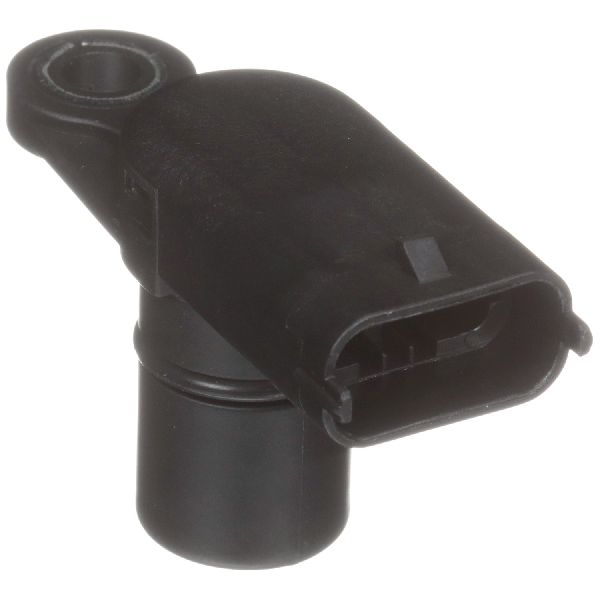
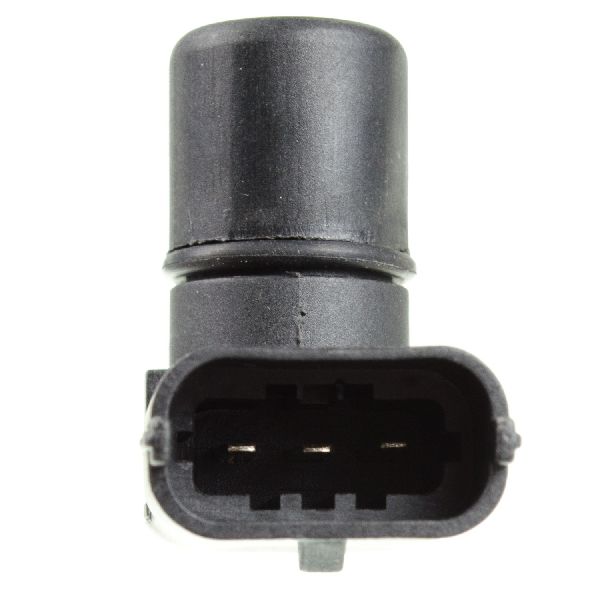
We Have This Part in Stock


The information in this article is provided for general reference and educational purposes only. Vehicle specifications, procedures, and part compatibility can vary by production date, trim level, and region. Always consult your vehicle's factory service manual and verify part numbers before purchasing or performing repairs. Safety-critical components such as airbags, seat belts, and braking systems should be installed by a qualified professional.
- Chevrolet TRAVERSE:
- 🎬 Helpful Videos
- 🛍️ Shop This Part
- What's Unique About the 2017-2018 Chevrolet TRAVERSE
- Diagnostic Flowchart
- Symptoms You May Notice
- Most Likely Causes
- Rare But Worth Checking
- Diagnosis Steps
- Parts You'll Likely Need
- Related Codes That Often Appear With This One
- Technical Service Bulletins (TSBs) & Recalls
- Platform-Specific Known Issues
- Mechanic-Grade Diagnostic Values
- Scan Tool Commands That Help
- Wiring & Ground Locations
- Real Owner Repair Stories
- OEM Part Supersession History
- Model Year Variations Within This Range
- 🎟️ Get 5% Off