

P0017 on 2007-2014 Chevrolet Malibu: Crank/Cam Correlation Causes & Fixes
P0017 on a 2007-2014 Malibu almost always indicates a serious mechanical timing issue, most commonly a stretched timing chain on both the 2.4L and 3.6L engines. This is a critical repair that should not be delayed. Other causes include sludged oil clogging VVT components or, more rarely on the V6, a slipped crankshaft reluctor ring. Expect shop costs to range from $1,200 to over $2,500 for a full timing chain replacement.
- P0017 on a 2007-2014 Malibu is a critical warning, most often pointing to a stretched timing chain.
- Do not drive the vehicle. A broken timing chain can destroy the engine, turning a costly repair into a total loss.
- Both the 2.4L I4 and 3.6L V6 engines are known for this specific problem.
- While you should check the engine oil and VVT solenoids first, be prepared for the high likelihood of needing a full timing chain service.
- This repair is not suitable for most DIY mechanics and should be handled by a professional service center.
What's Unique About the 2007-2014 Chevrolet MALIBU

Both primary engines in this Malibu range, the 2.4L Ecotec I4 and the 3.6L High Feature V6, are notoriously prone to premature timing chain failure. This isn't a random part failure; it's a well-documented pattern due to issues with timing chain stretch, tensioner failure, and guide wear. The 2.4L Ecotec engine is also subject to class-action lawsuits for excessive oil consumption due to piston ring issues, which leads to low/dirty oil that accelerates timing component wear. General Motors has released multiple Technical Service Bulletins (TSBs) acknowledging timing-related problems that trigger this code, making it a much more common and serious issue on these specific vehicles compared to others.
Diagnostic Flowchart

Tap your situation to follow the diagnostic path that matches what you're seeing on this vehicle.
Generation note: This range covers the end of the 6th gen (2007), the full 7th gen (2008-2012), and the start of the 8th gen (2013-2014). The primary causes for P0017, related to timing chain issues on the 2.4L and 3.6L engines, are consistent across these generations. The 3.6L V6 was primarily in the 2008-2012 models.
Symptoms You May Notice

- Check Engine Light is on
- Engine rattling noise, especially on a cold start
- Rough or unstable idle, with RPMs fluctuating
- Difficulty starting the engine, or extended cranking
- Reduced engine power and poor acceleration
- Engine stalling, especially at low speeds
- Decreased fuel economy
- Sluggish or hesitant vehicle response
- Replacing only the camshaft or crankshaft position sensors without verifying the mechanical timing. This is a very common mistake that does not fix the underlying issue of a stretched chain or slipped reluctor ring.
- Replacing only one VVT solenoid when the issue is widespread oil sludge, a failing oil pump, or a larger mechanical failure.
- Assuming a timing chain is the cause on a 3.6L V6 when it is actually a slipped crankshaft reluctor ring, leading to an expensive and ineffective repair.
Most Likely Causes

- Stretched Timing Chain and/or Failed Tensioners/Guides 🔴 High Probability This is a widely documented issue on both the 2.4L Ecotec and 3.6L V6 engines. TSB #12-06-01-009F specifically addresses the availability of updated timing chain kits for the V6 to repair stretched chains causing P0017. On the 2.4L, owners report broken plastic guides are a common failure point leading to chain slack. The root cause is often linked to chain stretch from normal wear, weak tensioners that lose pressure, and plastic guide material that wears out prematurely.
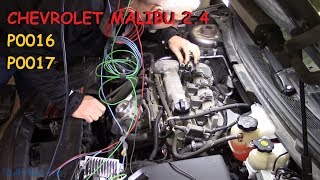
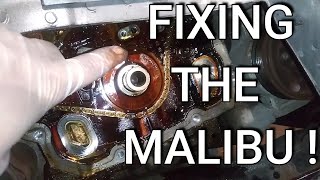
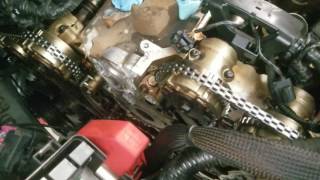
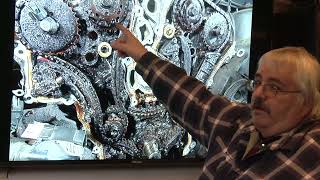
How to confirm: A physical inspection is required. After removing the valve cover or timing cover, a technician will check for excessive slack in the chain. A broken guide may be visible on the 2.4L after removing the valve cover. A scan tool can also show the deviation between desired and actual cam angles; a deviation 🎬 Watch: A professional diagnosis of P0016 and P0017 codes. of more than a few degrees that doesn't change with RPM strongly suggests a base timing issue.
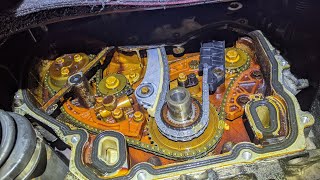
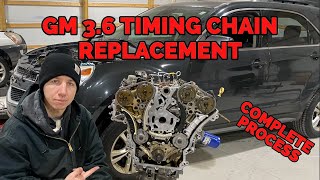
Typical fix: Replacement of the entire timing chain kit, which includes the primary and secondary chains (for V6), all tensioners, and all guides. 🎬 Watch: Full timing chain replacement walkthrough for the 3.6L V6. Water pump replacement is often recommended at the same time as it is driven by the timing system.
Est. part cost: $150-$500 - Low or Dirty Engine Oil 🟡 Medium Probability The variable valve timing (VVT) system, which includes the camshaft phasers and solenoids, is hydraulically operated by engine oil pressure. The 2.4L engine in particular is known for excessive oil consumption due to faulty piston rings, which was the subject of multiple class-action lawsuits. This consumption can lead to low oil levels that starve the timing components of lubrication and pressure. Furthermore, extended oil change intervals can lead to oil sludge, which clogs the fine mesh screens on the VVT solenoids and passages in the cam phasers.
How to confirm: Check the engine oil dipstick for a low level or very dark, sludgy oil. An engine flush followed by an oil and filter change is a valid first diagnostic step before attempting major mechanical repairs.
Typical fix: Perform an engine flush, followed by an oil and filter change using the manufacturer-specified oil (e.g., ACDelco dexos). Top off oil if low and monitor consumption closely. If consumption is high (e.g., a quart every 1,000 miles), the piston rings may be faulty, requiring engine repair.
Est. part cost: $50-$100 - Faulty Camshaft Position Actuator Solenoid (VVT Solenoid) 🟡 Medium Probability These solenoids have fine mesh screens that can become clogged with debris from dirty or sludged oil, restricting oil flow to the cam phaser. They can also fail electrically, which is a known issue on these engines.
How to confirm: A common diagnostic step is to swap the exhaust solenoid (Sensor B) with the intake solenoid (Sensor A). Clear the codes and run the engine. If the code changes to P0016 (Intake Cam Correlation), the solenoid is confirmed to be faulty. They can also be removed and inspected for clogged screens or tested for resistance.
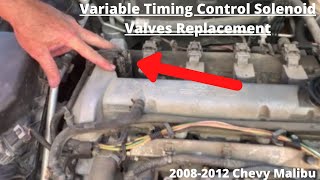
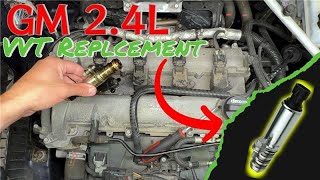
Typical fix: Replace the faulty solenoid. They are typically accessible on the top of the valve cover. It 🎬 See how to replace the VVT solenoids yourself. is often recommended to replace both intake and exhaust solenoids at the same time.
Est. part cost: $25-$70 per solenoid - Faulty Camshaft or Crankshaft Position Sensor ⚪ Low Probability While sensors can fail, they are far less likely to be the root cause of a P0017 correlation code on this platform than the mechanical timing components or oil-related issues. Replacing sensors without addressing the underlying mechanical or hydraulic problem is a common misdiagnosis.
How to confirm: Sensors can be tested with a multimeter or oscilloscope. However, this should only be done after confirming the mechanical timing, oil condition, and VVT solenoids are functioning correctly. TSB #PIP4548F suggests inspecting sensors if codes appear on a known properly-timed engine.
Typical fix: Replace the specific sensor that has failed.
Est. part cost: $20-$60
Rare But Worth Checking
- Slipped or Damaged Crankshaft Reluctor Wheel: On the 3.6L V6 engine, the reluctor wheel (tone ring) that the crankshaft sensor reads can physically move on the crankshaft. TSB #PIP3423P and its subsequent revisions directly address this possibility, providing measurement specifications to check for movement. This will set timing codes even if the chains are perfectly in time. The fix requires crankshaft replacement, as the reluctor wheel was not originally serviced separately, though some specialists may attempt to reposition and tack weld it.
- Failed Camshaft Phaser/Actuator: The gear at the end of the camshaft, known as the phaser or actuator, can become stuck due to internal debris or mechanical failure. This prevents it from adjusting the cam timing as commanded by the ECM, even with a good solenoid and clean oil.
Diagnosis Steps
- Check the engine oil level and condition. If low or dirty, consider an engine flush and perform an oil and filter change with the correct viscosity oil. Clear the code to see if it returns.
- Scan for any other related trouble codes. Codes like P0016, P0008, or P0009 strongly point to a base timing issue.
- Inspect the wiring and connectors for the camshaft and crankshaft position sensors for any visible damage.
- Swap the Bank 1 exhaust VVT solenoid with the intake VVT solenoid. Clear codes and see if the fault changes to P0016. If it does, the solenoid is bad. Inspect the solenoid screens for sludge.
- Using a capable scan tool, monitor desired vs. actual camshaft position angles and the cam phaser rate error. A significant, lagging deviation that is consistent across RPMs indicates a mechanical problem.
- For the 3.6L V6, if possible, use a borescope through the crankshaft position sensor hole to inspect the reluctor ring for movement, as detailed in TSB #PIP3423P.
Parts You'll Likely Need
- Engine Timing Chain Kit
(OEM #12650230 (For 2007 3.6L LY7 V6), other kits for other years/engines exist.)— This is the most common fix for P0017 on these engines due to the high rate of chain stretch and component failure. A complete kit ensures all worn parts are replaced.
Trusted brands: ACDelco, Cloyes, Melling
OEM price range: $250-$500
Aftermarket price range: $150-$350 - Camshaft Position Actuator Solenoid (Exhaust)
(OEM #12655421 (Exhaust), 12655420 (Intake) - Check specific application)— These can get clogged or fail electrically, causing correlation codes. It's a common and relatively easy part to replace as a diagnostic step or fix.
Trusted brands: ACDelco, Dorman, Standard Motor Products
OEM price range: $40-$70
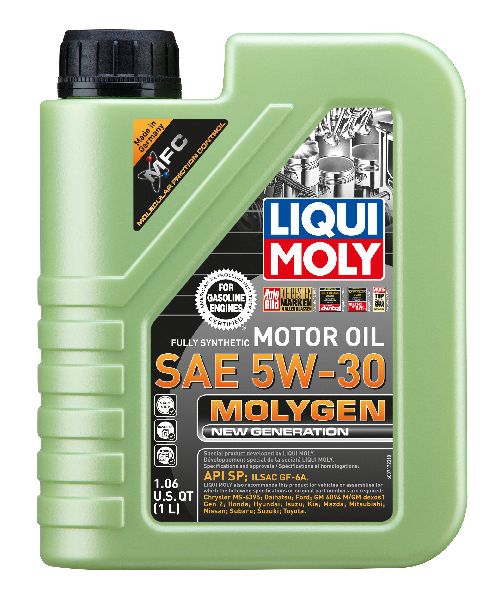
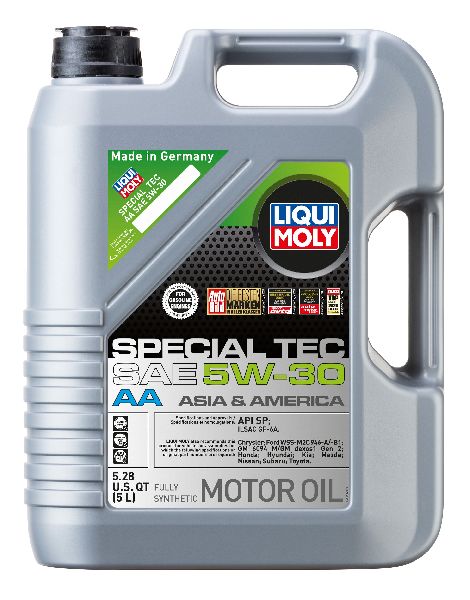
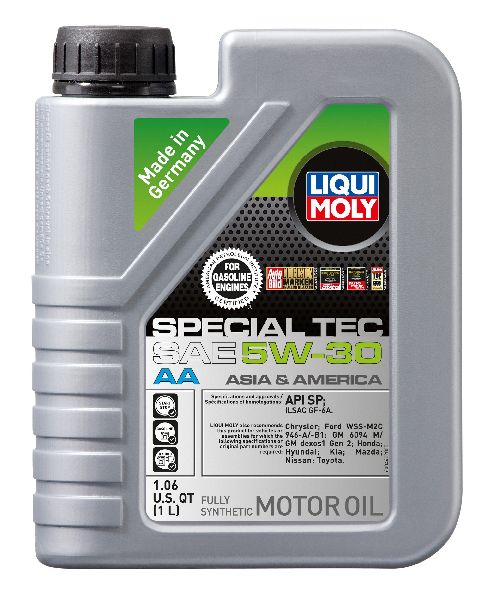
Aftermarket price range: $20-$50 - Engine Oil and Filter — Crucial for addressing issues caused by low or dirty oil, which is a known problem area for these engines, especially the 2.4L Ecotec.
Trusted brands: ACDelco dexos1, Mobil 1, Pennzoil Platinum
OEM price range: $40-$80
Aftermarket price range: $30-$60
Related Codes That Often Appear With This One
- P0016 — Crankshaft/Camshaft Correlation for Bank 1 Intake 'A' sensor. Seeing P0016 and P0017 together strongly suggests a base timing issue, like a stretched chain, affecting the entire bank.
- P0008 — Engine Positions System Performance Bank 1. This is a more general timing code for the 3.6L V6 that often accompanies P0016/P0017 and points towards a stretched primary timing chain affecting the correlation between both cams on Bank 1 and the crank.
- P0009 — Engine Positions System Performance Bank 2. Seen on the 3.6L V6, this indicates a timing issue on the opposite bank (front of the engine). If seen with P0008 and other codes, it confirms a major timing system failure involving the primary chain.
- P0018 / P0019 — Camshaft Correlation codes for Bank 2. Seeing these along with Bank 1 codes (P0016/P0017) on a 3.6L V6 is a strong indicator of a slipped primary timing chain or a moved crankshaft reluctor wheel.
Technical Service Bulletins (TSBs) & Recalls
- TSB #12-06-01-009F: Announces availability of updated timing chain kits for the 3.6L V6 to fix codes P0008, P0017, etc., caused by stretched chains.
- TSB #PIP3423P (and revisions): Details diagnosis for timing codes on the 3.6L V6, pointing first to loose chains/tensioners, and secondarily to a moved crankshaft reluctor ring, requiring crankshaft replacement.
- TSB #PIP4548F: Provides diagnostic advice for when P0016/P0017 codes are set on an engine that is confirmed to be properly timed, pointing towards sensor or reluctor issues.
Platform-Specific Known Issues
- The 2.4L Ecotec engine is known for timing chain tensioner and guide failure, as highlighted in NHTSA owner complaint #11190432 where a broken guide caused P0017 at 67,000 miles.
- The 3.6L V6 engine is susceptible to stretched timing chains, a problem GM addressed with updated timing chain kits mentioned in TSB #12-06-01-009F.
- On 3.6L V6 engines, a slipped crankshaft reluctor wheel can mimic the symptoms of a stretched timing chain, as documented in TSB #PIP3423P and owner complaint #10630584.
Mechanic-Grade Diagnostic Values
- VVT Actuator Solenoid Resistance (2.4L & 3.6L) — expected: 8 to 13 Ohms (good solenoid). Some sources state 6.9 to 7.9 Ohms.. Failure: A reading in the kilo-ohm (kΩ) range or an open circuit (OL) indicates a failed solenoid.
- VVT Actuator Solenoid Control Circuit Voltage (Bidirectional Test) — expected: 12V when commanded ON, 0V when commanded OFF.. Failure: No voltage change when commanded indicates a wiring or ECM driver issue.
- Camshaft Position Sensor Connector Voltages (Key On, Engine Off) — expected: 5V on the reference wire, 5V on the signal wire, and battery voltage (~12.6V) on the ground wire (when testing its path to the battery positive terminal).. Failure: Incorrect voltages point to a wiring or ECM issue, not necessarily a bad sensor.
- Crankshaft Position Sensor Resistance (example) — expected: Approximately 290 Ohms (0.29 kOhms) on one tested sensor. Note: This value can vary significantly by manufacturer; always consult service data.. Failure: Open circuit (OL) or resistance far outside the specified range.
Scan Tool Commands That Help
- GDS2 / Tech2 (or equivalent professional scanner): Camshaft Position Actuator Solenoid Test / Output Control — Use this to manually command the VVT solenoids on and off. This helps determine if the solenoid is mechanically clicking and if the ECM driver and wiring are capable of delivering the command signal.
Wiring & Ground Locations
- G106 — On the 2.4L engine, located on the left rear of the engine. On the 3.6L engine, located on the right front of the engine.. This is a primary engine ground. A loose or corroded connection at G106 can cause erratic signals from the cam and crank sensors, leading to false correlation codes.
- G107 — On the 2.4L engine, located on the lower left side of the engine. On the 3.6L engine, located on the center rear of the engine.. Another critical engine ground point for the ECM and its sensors. A fault here can disrupt sensor readings and trigger timing codes.
- G103 — Located on the left rear of the engine compartment.. This ground serves the underhood fuse block and various engine components. A poor connection can affect power and signal stability for the entire engine management system.
Real Owner Repair Stories
- Reddit user in r/howto (Chevy with 2.4L Ecotec engine) — P0016 and P0017 codes present. Notably, there was no engine noise.
❌ Tried (didn't work) Initial diagnosis was difficult due to the lack of typical rattling sounds.
✅ What actually fixed it A full timing chain replacement. Upon disassembly, three broken plastic guides and a seized tensioner were discovered. - Camaro5 forum user (Chevrolet Camaro with 3.6L V6 engine (same family as Malibu V6)) — P0008, P0009, P0016, P0017 codes.
❌ Tried (didn't work) Initial diagnosis pointed towards timing chain replacement.
✅ What actually fixed it The crankshaft reluctor wheel had slipped. The final repair involved removing the oil pan, carefully forcing the wheel back to its original position (described as 3.5 teeth from the crank's edge), and applying a small tack weld to prevent future movement. - Reddit user in r/MechanicAdvice (2009 Chevy Malibu 2.4L with 121k miles) — P0016 and P0017 codes.
❌ Tried (didn't work) Replacing both camshaft position sensors. This cleared the P0016 code, but P0017 remained.
✅ What actually fixed it The unresolved issue was diagnosed by a mechanic as a failed timing chain, with a repair quote of $1,800-$2,000. This story illustrates the common misdiagnosis of replacing sensors first when the root cause is mechanical.
"I Checked Everything" — The Actual Cause
- On the 3.6L V6, a common scenario is replacing the timing chains and guides—the most frequent cause of P0017—only for the code to return immediately. This occurs when the actual, less common cause is a slipped crankshaft reluctor wheel. Standard diagnostic procedures focusing on cam/crank deviation won't differentiate between a stretched chain and a moved reluctor wheel, leading to the misdiagnosis. The fix requires physical inspection of the wheel, as outlined in TSB #PIP3423P.
OEM Part Supersession History
12675579→12680750 (previous supersession: 12635447)— Multiple revisions to the 2.4L Ecotec timing chain kit to improve durability and address premature wear and stretching.12651450→12700436 (previous supersessions: 12679117, 12693218)— Multiple revisions to the 3.6L V6 timing chain kits to address premature stretching that causes P0008, P0017, and related codes.
Model Year Variations Within This Range
- 2007-2012: The 2.4L Ecotec engine evolved from the port-injected LE5 to the direct-injected LAF and LEA versions around 2010. While the blocks are similar, the heads, pistons, and fuel systems are different. Critically, the timing components (like VVT phasers) may not be interchangeable. Using a timing set for an LE5 on an LEA head can result in incorrect timing and piston-to-valve contact.
- 2013-2014: The 8th generation Malibu was introduced in 2013. While most models received a new 2.5L engine, the 'ECO' trim continued to use a 2.4L engine (LUK) paired with the eAssist mild-hybrid system. The 3.6L V6 was phased out of the Malibu lineup after 2012.
Helpful Videos
We Have This Part in Stock


The information in this article is provided for general reference and educational purposes only. Vehicle specifications, procedures, and part compatibility can vary by production date, trim level, and region. Always consult your vehicle's factory service manual and verify part numbers before purchasing or performing repairs. Safety-critical components such as airbags, seat belts, and braking systems should be installed by a qualified professional.
- Chevrolet MALIBU:
- 🎬 Helpful Videos
- 🛍️ Shop This Part
- What's Unique About the 2007-2014 Chevrolet MALIBU
- Diagnostic Flowchart
- Symptoms You May Notice
- Most Likely Causes
- Rare But Worth Checking
- Diagnosis Steps
- Parts You'll Likely Need
- Related Codes That Often Appear With This One
- Technical Service Bulletins (TSBs) & Recalls
- Platform-Specific Known Issues
- Mechanic-Grade Diagnostic Values
- Scan Tool Commands That Help
- Wiring & Ground Locations
- Real Owner Repair Stories
- "I Checked Everything" — The Actual Cause
- OEM Part Supersession History
- Model Year Variations Within This Range
- 🎟️ Get 5% Off