

P0017 on 2008-2015 Chevrolet Equinox: Timing Chain, Sensor, and Solenoid Fixes
P0017 on a Chevy Equinox most often indicates a stretched timing chain, especially on the 3.0L and 3.6L V6 models, a problem GM acknowledged with special coverage programs. On the 2.4L I4, the code is frequently caused by excessive oil consumption leading to low/dirty oil, which affects the VVT system. Less common issues include a faulty camshaft actuator (VVT) solenoid or a bad sensor. A timing chain replacement is a major repair costing $1,500-$3,000+, while a solenoid or sensor is much cheape
- For any engine, your first step should always be to check the engine oil level and quality. This simple step can sometimes fix the issue, especially on the 2.4L engine.
- On 3.0L and 3.6L V6 engines, P0017 is a strong indicator of a stretched timing chain, which is a known issue with these powerplants.
- Replacing sensors should not be the first step. They are more often correctly reporting a mechanical fault than failing themselves.
- If you have P0017 accompanied by P0016, P0008, or codes for the other bank (P0018/P0019), the likelihood of a base timing chain problem increases significantly.
- Do not ignore this code. Driving with a severe timing issue can lead to catastrophic engine failure.
What's Unique About the 2008-2015 Chevrolet EQUINOX

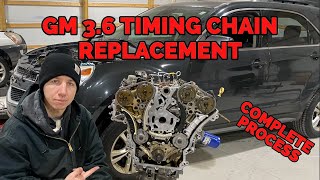
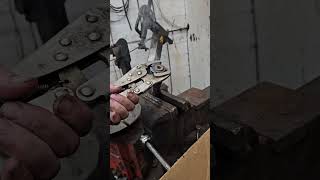
The 2008-2015 Equinox is prone to P0017 for two distinct, engine-specific reasons. The 3.0L and 3.6L V6 engines are widely known for premature timing chain stretching, a problem so prevalent that GM issued special coverage (e.g., #11340) extending the warranty for this specific failure to 10 years/120,000 miles. 🎬 Watch: A simple fix to try before replacing V6 timing chains. Conversely, the 2.4L four-cylinder Ecotec engine is notorious for excessive oil consumption due to piston ring design, which was the subject of a class-action lawsuit. This oil loss starves the Variable Valve Timing (VVT) system of the hydraulic pressure it needs to operate, triggering correlation codes like P0017 long before the timing chain itself has failed.
Diagnostic Flowchart

Tap your situation to follow the diagnostic path that matches what you're seeing on this vehicle.
Generation note: This range covers two Equinox generations. The first generation (2008-2009) used a 3.4L V6 or 3.6L V6 (LY7). The second generation (2010-2015) used a 2.4L I4 (LAF/LEA), a 3.0L V6 (LF1, 2010-2012), or a 3.6L V6 (LFX, 2013-2015). The timing chain issues are most prevalent on the 3.0L and 3.6L V6 engines across both generations, while oil-related VVT issues are specific to the 2.4L I4 in the second generation.
Symptoms You May Notice

- Check Engine Light is on
- Rough idle or engine vibration
- Rattling or buzzing noise from the engine, especially on startup
- Difficulty starting the engine or extended cranking
- Loss of engine power and poor acceleration
- Reduced fuel economy
- Engine stalling at low speeds
- "Engine Power is Reduced" message on the driver information center
- Replacing only the camshaft or crankshaft position sensor without diagnosing the underlying mechanical issue. The sensor is often just the messenger reporting the fault.
- Replacing the VVT solenoid when the root cause is actually low oil pressure or a stretched timing chain.
- Assuming a timing chain is needed on a 2.4L without first addressing the rampant oil consumption issue, which is the more likely root cause.
Most Likely Causes

- Stretched Timing Chain / Failed Tensioner 🔴 High Probability The 3.0L and 3.6L V6 engines are known for premature timing chain wear. GM acknowledged this in special coverage program #11340 and multiple TSBs. The 2.4L I4 can also suffer from this at higher mileage, often accelerated by oiling issues. TSB #PIP3423P directly points to inspecting for loose timing chains or tensioners.
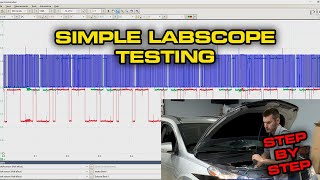
How to confirm: A mechanic can measure chain deflection by removing the valve cover or an inspection port. A scan tool can also show if the cam/crank deviation angles are consistently off. A definitive diagnosis often requires an oscilloscope to compare the crank and cam sensor signals against a known-good waveform.
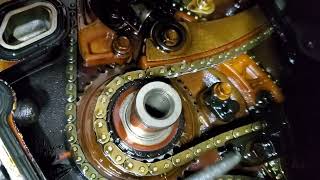
Typical fix: Replace the primary and secondary timing chains, tensioners, guides, and sprockets. This is a major, labor-intensive repair, often requiring engine removal or dropping the subframe on V6 models.
Est. part cost: $250-$700 for a full kit - Low or Dirty Engine Oil 🔴 High Probability This is a very common cause on the 2.4L engine due to its tendency to consume oil, a defect acknowledged in a class-action lawsuit. The VVT system uses oil pressure to adjust cam timing; insufficient pressure or sludge-filled oil will cause the camshaft phasers to respond slowly or not at all, triggering a correlation code.
How to confirm: Check the oil level on the dipstick. Inspect the oil's color and consistency. If it's low or looks like dark sludge, this is the likely starting point. Many owners report having to add a quart of oil every 1,000-2,000 miles.
Typical fix: Perform an engine oil and filter change with the correct specification oil (ACDelco dexos1). An engine flush may be recommended in cases of heavy sludge. The long-term fix for oil consumption on the 2.4L involves replacing pistons and rings, a very expensive repair.
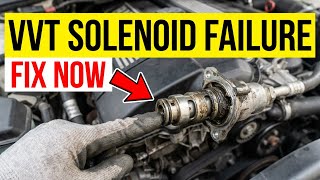
Est. part cost: $40-$80 for oil and filter - Faulty Exhaust Camshaft Position Actuator Solenoid (VVT Solenoid) 🟡 Medium Probability These solenoids can become clogged with debris from dirty oil or fail electrically. They are a common failure point on many modern engines that use VVT. Owners often report the screens on the solenoids are clogged with sludge or plastic from broken timing chain guides.
How to confirm: A mechanic can command the solenoid on and off with a bi-directional scan tool to check its response. It can also be removed and tested by applying 12V power. A common DIY diagnostic is swapping the exhaust solenoid with the intake solenoid (they are often identical) and seeing if the code changes to P0016 (Intake Cam Correlation). If it does, the solenoid is bad.
Typical fix: Replace the Bank 1 exhaust VVT solenoid. They are typically sold in pairs (intake and exhaust) and it's recommended to replace both. Use OEM parts (ACDelco) as many forums report issues with aftermarket solenoids.
Est. part cost: $50-$120 for a pair of genuine ACDelco solenoids - Faulty Camshaft or Crankshaft Position Sensor ⚪ Low Probability While less common than other causes, the sensors themselves can fail. However, it's more likely that the sensors are correctly reporting a mechanical problem. Owners on forums strongly recommend using only ACDelco/GM Genuine sensors, as aftermarket sensors have been reported to cause persistent issues.
How to confirm: A mechanic can use an oscilloscope to view the signal patterns from the cam and crank sensors to check for dropouts or incorrect waveforms. Replacing a sensor is often done as a guess, which can be a misdiagnosis.
Typical fix: Replace the corresponding sensor (Bank 1 exhaust camshaft position sensor or the crankshaft position sensor).
Est. part cost: $25-$70 per sensor
Rare But Worth Checking
- Slipped Camshaft or Crankshaft Reluctor Wheel: TSB #PIP4548F (for 2.4L) and #PIP3423P (for V6) mention that the reluctor ring (which the sensor reads) can spin on the camshaft or crankshaft. This causes a timing mismatch even if the chain is perfectly fine. Diagnosis requires physical inspection and measurement, and the fix often involves replacing the entire camshaft or crankshaft as the ring is press-fit and not separately serviced.
Diagnosis Steps
- Check Engine Oil Level and Condition: This is the first and most crucial step, especially for the 2.4L engine. Top off or change the oil if it is low or dirty. Use the manufacturer-specified oil (ACDelco dexos1).
- Scan for Other Codes: Check for other related timing codes (P0016, P0008, etc.) to help narrow down the problem.
- Inspect VVT Solenoids: Locate the Bank 1 VVT solenoids on top of the valve cover. Check wiring and connectors. Swap the exhaust and intake solenoids to see if the code changes to P0016. If it does, the solenoid is faulty.
- Test VVT Solenoid Function: Using a scan tool, command the solenoid on and off to check for a response. Listen for a click. If no response, remove and test it with a 12V source. Check the solenoid screens for metal or plastic debris.
- Analyze Cam/Crank Data: Use a scan tool with live data to view the desired vs. actual camshaft position angles. A consistent deviation that doesn't return to zero points to a mechanical timing issue (stretched chain).
- Inspect Timing Components: If the above steps don't resolve the issue, a physical inspection of the timing chain is necessary. This involves removing the valve cover to check for chain slack. This step is best left to a professional.
- Check Reluctor Rings: In rare cases where the timing chain is confirmed to be good, inspect the camshaft and crankshaft reluctor rings for any signs of movement, as per TSBs PIP4548F and PIP3423P.
Parts You'll Likely Need
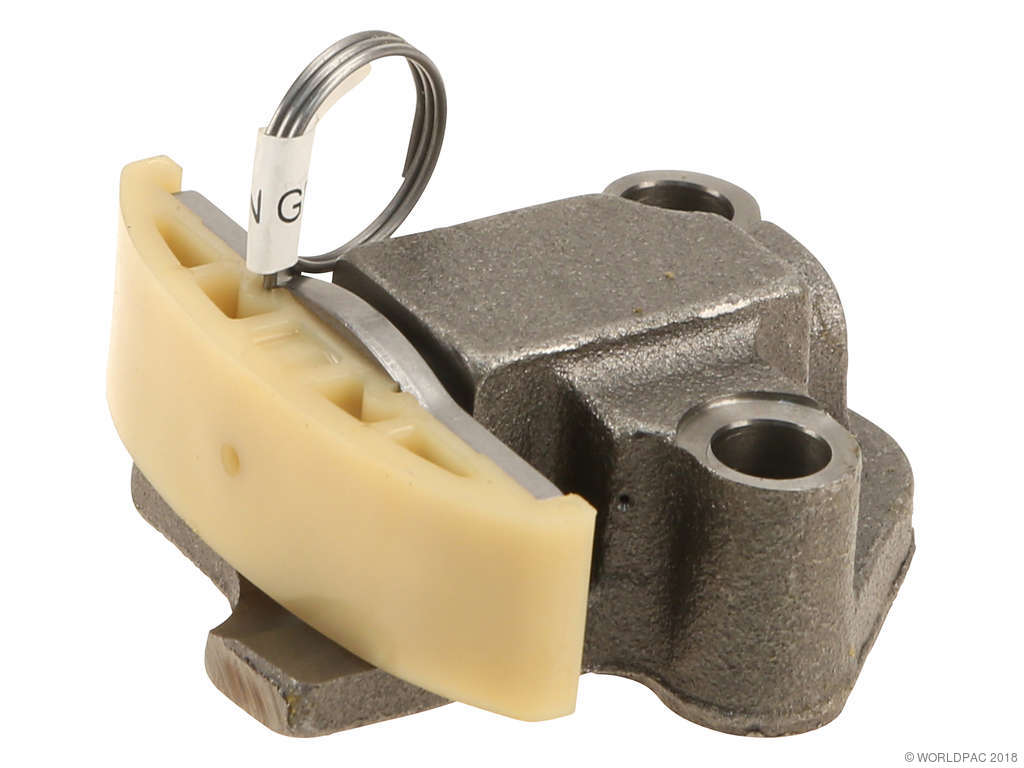
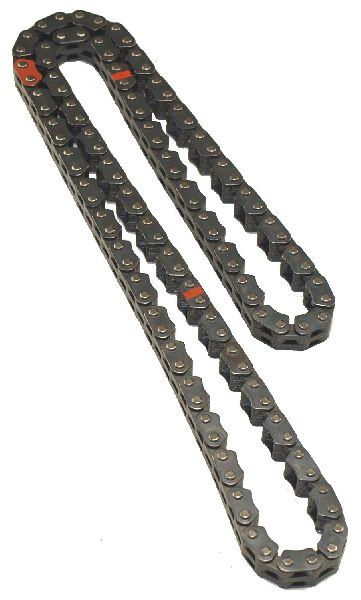
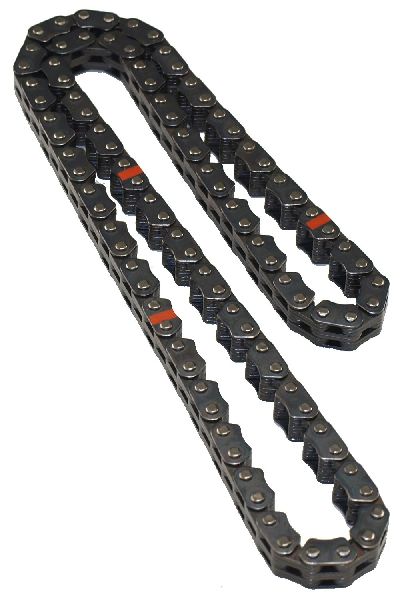
- Timing Chain Kit — This is the most common definitive fix for the V6 engines and high-mileage 2.4L engines experiencing P0017. A co
Related Codes That Often Appear With This One
- P0016 — Crank/Cam Correlation for Bank 1 Intake. Seeing P0016 and P0017 together strongly suggests a base timing issue, like a stretched chain, affecting both camshafts on Bank 1.
- P0008 — Engine Positions System Performance Bank 1. This is a more general timing code for Bank 1. It is frequently cited alongside P0017 in cases of significant timing chain stretch on the V6 engines.
- P0018 / P0019 — Crank/Cam Correlation codes for Bank 2. If codes for both banks appear, it's an almost certain indicator of a problem with the primary timing chain or crankshaft reluctor wheel affecting the entire engine.
Technical Service Bulletins (TSBs) & Recalls
- PIP3423P / PIP3423M: Covers DTCs P0008, P0009, P0016-P0019 on V6 engines, pointing to stretched timing chains or a slipped crankshaft reluctor wheel.
- PIP4548F: Covers DTCs P0016/P0017 on 2.4L engines, specifically mentioning a slipped camshaft reluctor wheel as a possible cause, especially after an overheat.
- 11340: Special Coverage Adjustment for premature timing chain wear on 2007-2009 V6 models, extending the warranty to 10 years/120,000 miles.
- 12-06-01-009D: Provides information on V6 timing chain kits, noting that guides and sprockets often do not need replacement for a simple chain stretch issue.
Platform-Specific Known Issues
- Premature Timing Chain Wear (3.0L & 3.6L V6): These engines are known for stretched timing chains, which GM addressed with special coverage programs and multiple TSBs. Owner complaints frequently cite P0017 as a primary code for this issue. [ODI #11081536, ODI #11327300]
- Excessive Oil Consumption (2.4L I4): The 2.4L Ecotec engine can consume significant amounts of oil between changes, leading to low oil levels that disrupt the VVT system and trigger timing codes.
- Slipped Reluctor Rings: GM issued TSBs (PIP4548F, PIP3423P) for both the I4 and V6 engines, warning that the press-fit reluctor rings on the cams or crank can move, causing timing codes even with a good chain.
Mechanic-Grade Diagnostic Values
- VVT Solenoid (Camshaft Position Actuator) internal resistance — expected: Between 8 and 12 ohms. Failure: A reading outside of this range, or an open/short circuit, indicates a faulty solenoid.
- Camshaft vs. Crankshaft Correlation Angle (Live Data) — expected: 0 degrees at idle when desired and actual positions are matched.. Failure: The ECM will set P0016 or P0017 when it detects a camshaft that is greater than 10 degrees advanced or 10 degrees retarded in relationship to the crankshaft.
- Crankshaft Position Sensor (CKP) AC Voltage — expected: An oscillating AC voltage signal while cranking the engine.. Failure: A reading of 0V AC indicates a potential failure in the sensor or its circuit.
Scan Tool Commands That Help
- GDS2 (GM Global Diagnostic System 2): Camshaft Position Actuator Solenoid Test — This bidirectional control allows a technician to command the intake and exhaust VVT solenoids on and off to verify electrical function and listen for a mechanical click from the solenoid, helping to isolate a failed solenoid without removing it initially. It can also be used to monitor the desired vs. actual cam position angles while the engine is running.
Wiring & Ground Locations
- Exhaust Camshaft Position Sensor (2.4L Engine) — Located on the back of the cylinder head (towards the firewall), near the coolant hoses on the driver's side.. This is the specific sensor ('B') that provides the camshaft position data to the ECM for the P0017 code. A faulty sensor, damaged connector, or chafed wiring at this location can be a direct cause of the code.
- Crankshaft Position Sensor (2.4L Engine) — Located on the front of the engine block, below the intake manifold, reading the crankshaft reluctor wheel.. The P0017 code is a comparison between the camshaft and crankshaft signals. A fault in the crankshaft position sensor's wiring or connector can lead to a correlation code even if the cam sensor and timing are correct.
Real Owner Repair Stories
- YouTube user 'Ask DIY Dad' (Chevrolet Equinox with 3.0L V6) — Check Engine Light with code P0017.
❌ Tried (didn't work) A repair shop diagnosed a timing issue and quoted $7,000 for a rebuild., The shop replaced the VVT solenoid associated with the code for $500, but the code returned.
✅ What actually fixed it The owner, suspecting the original sensors were never changed, replaced the camshaft position sensors himself. This resolved the P0017 code, saving thousands compared to the quoted timing job. The key takeaway was that sensors should be considered along with solenoids. - YouTube user 'IRV' (GM vehicle with 2.4L Ecotec engine, 160,000 miles) — P0017 code (Crankshaft to exhaust cam not plausible) after a full timing chain and balance chain replacement.
❌ Tried (didn't work) Re-doing the timing job three separate times to verify marks were correct., Replacing the exhaust camshaft position sensor., Verifying all wiring with AllData.
✅ What actually fixed it The mechanic discovered the reluctor ring (tone wheel) on the end of the exhaust camshaft had spun from its press-fit position. There is no keyway holding it. This caused the sensor to get an incorrect reading even though the mechanical timing was perfect. The final fix was to tack weld the reluctor ring back into its correct position on the camshaft. - Equinox Forum user (2015 Equinox 2.4L with 140k miles) — P0016 and P0017 after running low on oil, leading to timing guide failure.
❌ Tried (didn't work) Complete timing job including chains, guides, tensioners, phasers, and solenoids (all ACDelco parts)., Re-doing the timing job a second time to be certain., Performing a cam/crank relearn with a professional scan tool.
✅ What actually fixed it The user suspected a spun reluctor ring on the exhaust cam, as mentioned in TSB PIP4548F. By comparing a photo of his camshaft to a new one, he confirmed the ring had rotated. The final resolution was to replace the exhaust camshaft.
OEM Part Supersession History
12655421→12679100— Part revision/update by GM.
Heads up: These are the Exhaust VVT solenoids for the 2.4L engine. The new part number is a direct replacement for the old one. Many aftermarket equivalents exist, but owner forums often report better long-term success with genuine ACDelco parts.12655420→12679099— Part revision/update by GM.
Heads up: These are the Intake VVT solenoids for the 2.4L engine. The new part number is a direct replacement. It is common practice to replace both intake and exhaust solenoids at the same time.
Model Year Variations Within This Range
- 2010-2011 vs 2012-2015 (2.4L I4): The 2010-2011 Equinox used the 2.4L LAF engine. From 2012-2015, it used the LEA engine. The LEA is essentially the E85/FlexFuel compatible version of the LAF. While mechanically very similar, including the high oil consumption issues, it's important to use the correct engine code when ordering specific parts like the ECM or fuel system components. However, for the purposes of P0017, major timing components, sensors, and solenoids are generally interchangeable.
- 2010-2012 vs 2013-2015 (V6): The 2010-2012 models used the 3.0L LF1 V6, while the 2013-2015 models used the 3.6L LFX V6. Both are known for timing chain issues that can cause P0017, but they are different engine families and their timing components are not interchangeable.
Helpful Videos

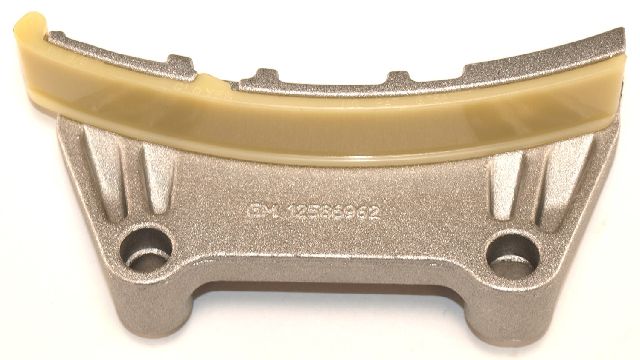
We Have This Part in Stock


The information in this article is provided for general reference and educational purposes only. Vehicle specifications, procedures, and part compatibility can vary by production date, trim level, and region. Always consult your vehicle's factory service manual and verify part numbers before purchasing or performing repairs. Safety-critical components such as airbags, seat belts, and braking systems should be installed by a qualified professional.
- Chevrolet EQUINOX:
- 🎬 Helpful Videos
- 🛍️ Shop This Part
- What's Unique About the 2008-2015 Chevrolet EQUINOX
- Diagnostic Flowchart
- Symptoms You May Notice
- Most Likely Causes
- Rare But Worth Checking
- Diagnosis Steps
- Parts You'll Likely Need
- Related Codes That Often Appear With This One
- Technical Service Bulletins (TSBs) & Recalls
- Platform-Specific Known Issues
- Mechanic-Grade Diagnostic Values
- Scan Tool Commands That Help
- Wiring & Ground Locations
- Real Owner Repair Stories
- OEM Part Supersession History
- Model Year Variations Within This Range
- 🎟️ Get 5% Off