

P0017 on 2004-2011 Chevrolet Colorado: Exhaust Cam Timing Causes and Fixes
P0017 on a 2004-2011 Colorado usually points to a faulty exhaust camshaft actuator solenoid, often due to low or dirty oil. Replacing the solenoid (OEM Part #12615873) is a common fix, costing around $30-$120 for the part and is a simple DIY job. However, the code can also indicate more serious issues like a stretched timing chain or a loose crankshaft balancer bolt, which are known problems on these Atlas engines.
- P0017 on the 2004-2011 Colorado means the exhaust cam timing is out of sync with the crankshaft.
- Always check your engine oil level and condition first; low or dirty oil is a primary cause.
- The most common part to fail is the exhaust camshaft actuator solenoid, which is relatively inexpensive and easy to replace.
- If a new solenoid and fresh oil don't solve the problem, investigate a loose crankshaft balancer bolt as noted in TSBs before assuming a more costly timing chain failure.
- This code indicates a serious condition that can lead to engine damage, so it should be addressed promptly.
What's Unique About the 2004-2011 Chevrolet COLORADO

The first-generation Colorado primarily used the Atlas family of inline-four (2.8L/2.9L) and inline-five (3.5L/3.7L) engines. These engines are known for being sensitive to oil quality and level, which directly impacts the hydraulically-operated Variable Valve Timing (VVT) system. Furthermore, several GM Technical Service Bulletins (TSBs) point to specific, non-obvious mechanical issues on this platform that can cause a P0017, such as a loose crankshaft balancer bolt (TSB #PIP4581B) or excessive crankshaft end play (TSB #PIP3694F), making diagnosis more complex than just a bad sensor.
Diagnostic Flowchart

Tap your situation to follow the diagnostic path that matches what you're seeing on this vehicle.
Symptoms You May Notice
- Check Engine Light (Service Engine Soon Lamp) is on
- Rough idle, sometimes dropping to the point of near-stalling
- Engine rattling noises
- Difficulty starting the engine
- Loss of power and poor acceleration
- Engine stalling at low speeds or when coming to a stop
- Poor fuel economy
- Replacing the camshaft or crankshaft position sensors immediately without checking oil, the VVT solenoid, or mechanical timing.
- Assuming the timing chain is bad without first checking the VVT solenoid and the crankshaft balancer bolt torque, which are much easier and cheaper to fix.
Most Likely Causes

- Low or Dirty Engine Oil 🔴 High Probability The VVT system is hydraulically operated by engine oil. Low pressure or sludge from dirty oil can cause the camshaft actuator (phaser) to respond slowly or get stuck, causing a correlation error. TSB #PIP4913A specifically advises monitoring oil pressure. Several owners on forums report the code appearing when oil is low or an oil change is overdue.
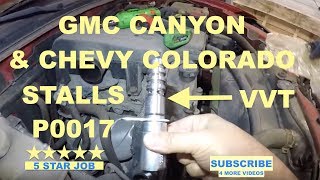
How to confirm: Check the engine oil level on the dipstick and inspect its condition. If it's low, black, or sludgy, this is a likely contributor. 🎬 Watch: How low, dirty oil causes stalling and P0017 codes.
Typical fix: Perform an engine oil and filter change. Consider using an engine flush product if significant sludge is suspected, then clear the codes.
Est. part cost: $30-$80 - Faulty Exhaust Camshaft Actuator Solenoid 🔴 High Probability This solenoid controls oil flow to the cam phaser. Debris from the oil can clog its internal screens, or the solenoid can fail electrically. A Reddit user noted that the original screens can tear and break off, and that the updated OEM part has a spring to better protect them. TSB #PIP3694F directs technicians to inspect these screens and replace the solenoid if they are missing.
How to confirm: Remove the solenoid (one 10mm bolt) and inspect its screens for tears or clogging. It can also be tested for resistance (should be around 8-12 ohms) or activated with a scan tool.
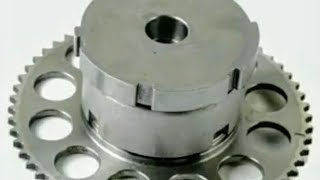
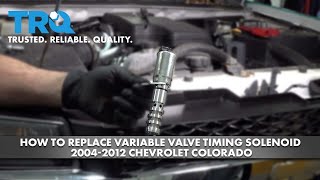
Typical fix: Replace the exhaust camshaft actuator solenoid. It is a simple, accessible part on the front of the engine. 🎬 See this walkthrough on replacing the exhaust camshaft actuator solenoid.
Est. part cost: $30-$120 - Stretched Timing Chain or Failed Tensioner 🟡 Medium Probability The Atlas engines are notorious for timing chain stretch over time, which directly creates a correlation error between the crank and cam sensors. Multiple forum discussions confirm this is a common failure point requiring extensive repair.
How to confirm: This is an advanced diagnosis. It requires removing the valve cover to check for slack in the chain or using a lab scope to analyze the cam and crank sensor patterns. A persistent code after replacing the solenoid and confirming good oil pressure often points to the timing chain.
Typical fix: Replace the timing chain, tensioner, and guides. This is a labor-intensive job, estimated at around 23 hours by one mechanic.
Est. part cost: $200-$400 - Loose Crankshaft Balancer Bolt ⚪ Low Probability TSB #PIP4581B specifically identifies that a loose crankshaft balancer bolt can cause a rattle and a P0017 code. The wobble of the balancer, where the crankshaft position sensor reluctor ring is located, can affect the sensor's reading and create a false correlation error.
How to confirm: Visually inspect the crankshaft balancer for wobble while the engine is running (use extreme caution). Check the torque on the crankshaft balancer bolt. The proper procedure involves tightening with an old bolt to 240 lb-ft to seat the balancer, then installing a NEW bolt, tightening to 37 lb-ft, and then turning an additional 140 degrees.
Typical fix: Re-torque the crankshaft balancer bolt to the manufacturer's specification, always using a new bolt as it is torque-to-yield.
Est. part cost: $5-$20 (for a new bolt)
Rare But Worth Checking
- Excessive Crankshaft End Play: TSB #PIP3694F mentions this as a potential cause, often related to worn thrust bearings. The TSB advises that if end play is the cause, it will be obviously out of spec, as much as .050 inches or more when prying the crankshaft. If this is the case, engine replacement is often recommended.
- Faulty Camshaft or Crankshaft Position Sensor: While possible, it's less common for a sensor to fail in a way that causes a correlation code without setting a specific sensor circuit code. Often misdiagnosed as the primary issue.
- Oil Contamination on Crankshaft Position Sensor Connector: A user on a Reddit forum reported solving a persistent P0017 code by cleaning the electrical connector for the crankshaft position sensor. It is located below the oil filler cap, and spilled oil had contaminated the connection over time. Cleaning the connector with electrical cleaner and using a funnel for future oil changes resolved the issue.
Diagnosis Steps
- Check engine oil level and condition. Top off or perform an oil change and filter replacement if necessary.
- Scan for other DTCs to see if P0017 is paired with codes like P0014 or P0016. 🎬 Watch: A mechanic explains common causes and simple solutions for P0017.
- Remove and inspect the exhaust camshaft actuator solenoid (one 10mm bolt). Check for clogged or torn screens. Clean or replace as needed. A user on Reddit specifically notes that the OEM replacement part was modified with a spring to better protect the screens.
- If the solenoid appears fine, test its operation using a capable scan tool or check its resistance with a multimeter (typically 8-12 ohms).
- Check oil pressure with a mechanical gauge to rule out low pressure, as suggested by TSB #PIP4913A.
- Inspect the crankshaft balancer for wobble and verify the torque of the balancer bolt, as per TSB #PIP4581B. Always use a new bolt for final installation.
- Inspect and clean the crankshaft position sensor electrical connector, which is located below the oil filler cap and can get contaminated with spilled oil.
- If all previous steps fail to resolve the issue, the next step is to inspect the timing chain for stretch and the health of the tensioner and guides. This is an advanced procedure.
- As a final, rare check, measure crankshaft end play to rule out thrust bearing failure as noted in TSB #PIP3694F.
Parts You'll Likely Need
- Exhaust Camshaft Position Actuator Solenoid
(OEM #12615873)— This is the most common and easiest part to replace for a P0017 code. It gets clogged with debris or fails electrically, preventing proper cam phasing. It has been superseded by several part numbers, but 12615873 is the most commonly referenced genuine replacement.
Trusted brands: ACDelco (OEM), Delphi, Dorman (917-010)
OEM price range: $70-$120
Aftermarket price range: $30-$60 - Timing Chain Kit — If the solenoid replacement and oil change do not fix the code, a stretched timing chain is the next most likely cause on the Atlas engines. A full kit is required for the repair.
Trusted brands: Cloyes (e.g., 9-0195SA or 9-4205SB depending on engine), Melling
OEM price range: $300-$500
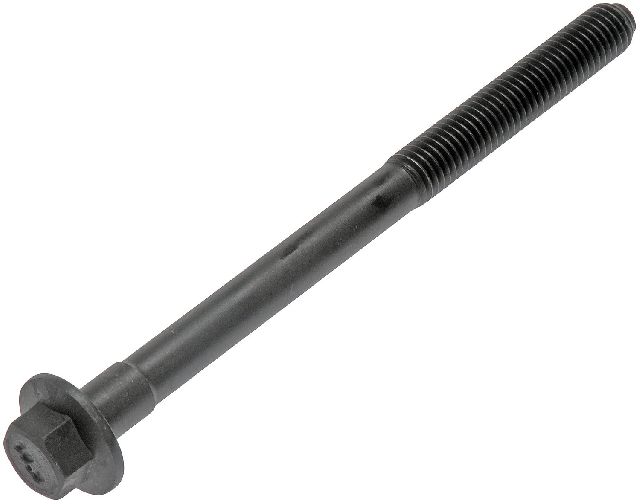
Aftermarket price range: $150-$300 - Crankshaft Balancer Bolt — This is a torque-to-yield bolt and must be replaced if it is ever loosened or removed, such as during inspection for TSB #PIP4581B or during a timing chain replacement.
Trusted brands: ACDelco (OEM)
OEM price range: $5-$20
Aftermarket price range: $5-$15
Related Codes That Often Appear With This One
- P0014 — This code is for 'Exhaust Camshaft Position System Performance,' which is closely related. TSB #PIP3694F mentions them appearing together, indicating a problem with the exhaust cam's VVT system.
- P0106 — This code for 'Manifold Absolute Pressure (MAP) Sensor Performance' can appear with P0017 if the incorrect cam timing causes a rough idle and affects engine vacuum. TSB #PIP3694F also notes this possibility.
- P0016 — This is the equivalent correlation code for the intake camshaft. Seeing both P0016 and P0017 strongly suggests a base timing issue, like a stretched timing chain or loose crankshaft balancer, affecting both cams.
Technical Service Bulletins (TSBs) & Recalls

- PIP3694F - Covers rough idle, P0014/P0017, and diagnostics for camshaft actuator solenoid screens and crankshaft end play.
- PIP4913A - Advises checking oil pressure when diagnostics for P0017 are inconclusive.
- PIP4581B - Points to a loose crankshaft balancer bolt as a potential cause for P0016/P0017 and an engine rattle.
- PIP4945B - A cumulative document summarizing the varied causes and diagnostic paths for P0017 on Atlas engines.
Platform-Specific Known Issues
- A loose crankshaft balancer bolt can cause a P0017 code, a unique issue highlighted in TSB #PIP4581B.
- Excessive crankshaft end play due to worn thrust bearings is another specific cause outlined in TSB #PIP3694F, which can lead to repeat P0017 codes even after other repairs.
- The screens on the original camshaft actuator solenoids are prone to tearing or breaking, leading to failure. Updated OEM parts have improved screen protection.
- The location of the crankshaft position sensor below the oil filler cap makes its electrical connector vulnerable to contamination from spilled oil, which can cause a P0017 code.
Mechanic-Grade Diagnostic Values
- Exhaust VVT Solenoid Internal Resistance — expected: 6.9 to 12.8 ohms. Failure: A reading of infinity (open circuit) or very high resistance (e.g., megaohms) indicates a failed solenoid coil.
- Crankshaft Position Sensor Internal Resistance — expected: ~0.29 kΩ (290 Ohms). Failure: A significantly different reading or an open/short circuit indicates a faulty sensor.
- VVT Solenoid Connector Power Supply — expected: Battery Voltage (approx. 12V). Failure: No voltage indicates a wiring issue, blown fuse, or problem with the engine control relay.
Hidden / Shadow Codes Worth Checking
- DTC Set Condition: The PCM will set code P0017 when it detects that for 25 out of the last 35 camshaft revolutions, 2 cam sensor pulses have occurred outside of the expected crankshaft position window. (see via This is not a visible code but the internal logic described in the factory service manual that triggers the P0017 fault.)
Scan Tool Commands That Help
- GM Tech 2 / GDS2 or equivalent: CMP Actuator Solenoid Control — This bidirectional command is used to manually activate the VVT solenoid to check for mechanical response (e.g., a change in engine idle). However, this function is typically inhibited and will not work if a P0017 code is currently active. The code must be cleared first, and the test performed before the fault re-sets.
Wiring & Ground Locations
- G103 — Located on the cowl in the left rear of the engine compartment, typically above the brake booster.. This ground serves the Engine Control Module (ECM), Body Control Module (BCM), and Data Link Connector (DLC). A poor connection here can cause a wide range of erratic electronic issues, including false sensor readings.
- G105 / G106 — G105 is at the left front of the engine compartment; G106 is on the front center of the frame cross rail under the crank pulley.. These are primary engine and chassis grounds. A service bulletin mentions ensuring G104, G105, and G106 are secure for proper electrical system operation.
- Crankshaft Position Sensor Connector — On the front of the engine, located directly below the oil filler cap.. Its location makes it highly susceptible to contamination from spilled oil during oil changes. Oil saturation of the connector can disrupt the sensor's signal, causing a P0017 code even when all mechanical parts are sound.
Real Owner Repair Stories
- Reddit user 'michaelfkenedy' in r/chevycolorado (GMC Canyon (sister vehicle), multiple instances) — Persistent P0017 code, engine going into limp mode.
❌ Tried (didn't work) Replacing the camshaft position sensor, Checking the timing chain, Inspecting the VVT solenoid screens
✅ What actually fixed it The crankshaft position sensor connector, located directly below the oil filler cap, was contaminated with spilled oil. Cleaning the connector thoroughly with electrical cleaner and using a funnel for subsequent oil changes permanently resolved the code for over 100,000 km.
"I Checked Everything" — The Actual Cause
- A confirmed repair for a persistent P0017 involved finding the crankshaft position sensor's electrical connector saturated with engine oil from messy oil changes. Standard mechanical checks like timing chain inspection and VVT solenoid replacement failed to find an issue. The root cause was purely an electrical connection problem caused by oil contamination, which was resolved by cleaning the connector.
OEM Part Supersession History
12568078, 12576768, 12597025, 12602516→12615873— Standard part evolution and consolidation by the manufacturer.
Heads up: The updated OEM part (12615873) is reported by users to have a redesigned spring to better protect the solenoid screens from damage, a feature that may be missing from aftermarket alternatives.
Model Year Variations Within This Range
- 2004-2006 vs 2007-2011: The engines were updated for the 2007 model year (2.8L/3.5L became 2.9L/3.7L). This change resulted in different timing chain kits for the two ranges. A kit for a 2004-2006 model (e.g., TK10435) is different from a kit for a 2007-2011 model (e.g., TK10437). Ensure the correct kit is sourced for the specific model year.
Helpful Videos
We Have This Part in Stock


The information in this article is provided for general reference and educational purposes only. Vehicle specifications, procedures, and part compatibility can vary by production date, trim level, and region. Always consult your vehicle's factory service manual and verify part numbers before purchasing or performing repairs. Safety-critical components such as airbags, seat belts, and braking systems should be installed by a qualified professional.
- Chevrolet COLORADO:
- 🎬 Helpful Videos
- 🛍️ Shop This Part
- What's Unique About the 2004-2011 Chevrolet COLORADO
- Diagnostic Flowchart
- Symptoms You May Notice
- Most Likely Causes
- Rare But Worth Checking
- Diagnosis Steps
- Parts You'll Likely Need
- Related Codes That Often Appear With This One
- Technical Service Bulletins (TSBs) & Recalls
- Platform-Specific Known Issues
- Mechanic-Grade Diagnostic Values
- Hidden / Shadow Codes Worth Checking
- Scan Tool Commands That Help
- Wiring & Ground Locations
- Real Owner Repair Stories
- "I Checked Everything" — The Actual Cause
- OEM Part Supersession History
- Model Year Variations Within This Range
- 🎟️ Get 5% Off