

P0017 on 2013-2019 Cadillac XTS: Timing Chain, Sensor, and Solenoid Issues
On the 2013-2019 Cadillac XTS with the 3.6L V6, P0017 almost always points to a stretched timing chain. This is a serious, labor-intensive repair often costing $2,500-$3,500+. Before committing to this repair, checking oil level/condition and attempting an engine flush is a prudent first step. Less common causes include a faulty VVT solenoid or camshaft position sensor.
- P0017 on a 2013-2019 Cadillac XTS is a serious code that most often indicates a stretched timing chain.
- Do not immediately replace the sensors; the problem is likely a deeper mechanical issue.
- Check your engine oil level and condition first, as low or dirty oil can cause VVT system problems.
- Due to the high probability of a timing chain issue, this is a difficult and expensive repair that is not recommended for DIYers.
- Ignoring this code can lead to severe and potentially catastrophic engine damage.
What's Unique About the 2013-2019 Cadillac XTS
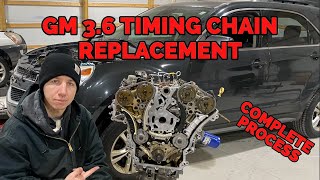
The 3.6L V6 engine (RPO code LFX) used in the Cadillac XTS has a well-documented history of premature timing chain wear across numerous GM platforms. This issue was so prevalent in earlier versions of this engine family (the LLT) that GM issued special coverage adjustments. While the LFX engine in the XTS is an updated design with an improved timing chain from 2013 onwards, the tendency for timing chain stretch, especially with extended oil change intervals or low oil levels, remains the primary cause for P0017. 🎬 Watch: Why these GM 3.6L timing chains fail so often. This makes the code a strong indicator of a severe mechanical issue rather than a simple sensor failure.
Diagnostic Flowchart
Tap your situation to follow the diagnostic path that matches what you're seeing on this vehicle.
Symptoms You May Notice
- Check Engine Light is on
- Engine rattling noise, especially on a cold start
- Rough or unstable idle
- Reduced engine power and poor acceleration
- Difficulty starting the engine or long crank times
- Increased fuel consumption
- Engine stalling unexpectedly
- Replacing the camshaft or crankshaft position sensors without proper diagnosis. While sensors can fail, the P0017 code on this engine is more often a symptom of a deeper mechanical timing or oil pressure issue. Forum users often report replacing sensors with no success before accepting the timing chain diagnosis.
Most Likely Causes
- Stretched Timing Chain 🔴 High Probability The GM 3.6L V6 engine family has a history of premature timing chain wear. While improved over older versions, the chains can still stretch, often accelerated by going too long between oil changes or running the engine with low oil levels.
How to confirm: A technician will use a professional scan tool to monitor live data for camshaft deviation angles. A consistent deviation of over 4-5 degrees at idle or 2000 RPM strongly suggests a stretched chain. Physical inspection for chain slack is the ultimate confirmation, which requires removing the engine's front timing cover. TSB #PIP3423P directly points to this inspection.
Typical fix: Replace all three timing chains, the tensioners, guides, and sprockets as a complete kit. It is also highly recommended to replace the water pump and oil pump during this extensive service.
Est. part cost: $300-$700 - Low or Dirty Engine Oil 🟡 Medium Probability The variable valve timing (VVT) system and timing chain tensioners are hydraulically operated by engine oil. If the oil level is low or the oil is dirty/sludgy, it cannot operate the cam phasers correctly or properly tension the chains, leading to a correlation code.
How to confirm: Check the oil level and condition on the dipstick. An oil change is a simple first diagnostic step. Some mechanics recommend performing an engine flush (using a product like STP or Amsoil Engine Flush) before the oil change to clear potential sludge from VVT passages.
Typical fix: Perform an oil and filter change using the correct viscosity oil (5W-30 full synthetic is recommended). If using an engine flush, follow the product's directions carefully. Clear codes and re-test.
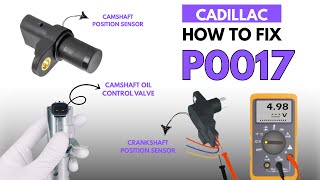
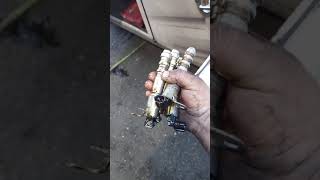
Est. part cost: $50-$120 - Faulty Camshaft Actuator Solenoid (VVT Solenoid) 🟡 Medium Probability These solenoids control oil flow to the cam phasers. They can get clogged with sludge from dirty oil or fail electrically, causing the camshaft to be stuck in one position or respond slowly.
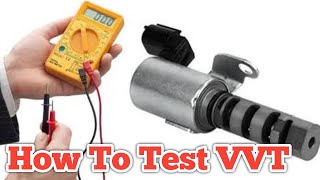
How to confirm: A technician can command the solenoid with a scan tool to see if the cam timing changes. They can also be removed, cleaned, and tested for resistance (typically 6.9-7.9 ohms). Swapping the exhaust solenoid with the intake solenoid on the same bank is a common diagnostic trick.
Typical fix: Replace the Bank 1 exhaust camshaft actuator solenoid. Given the low cost, some owners replace them as a preventative measure or early diagnostic step.
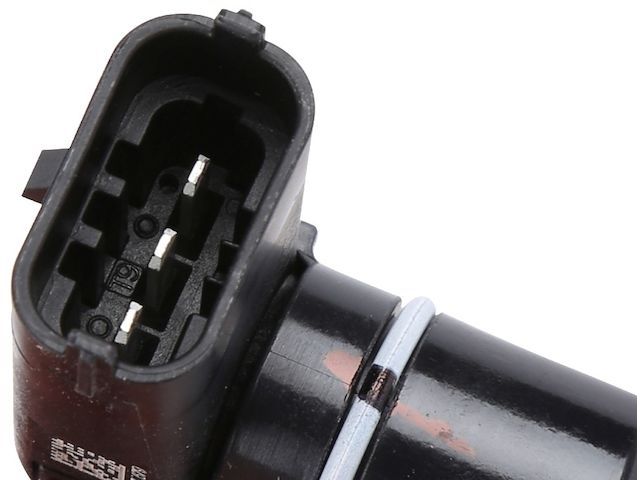
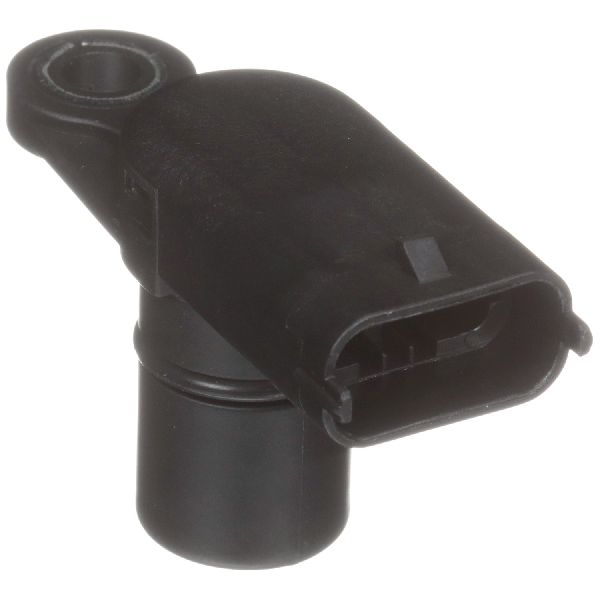
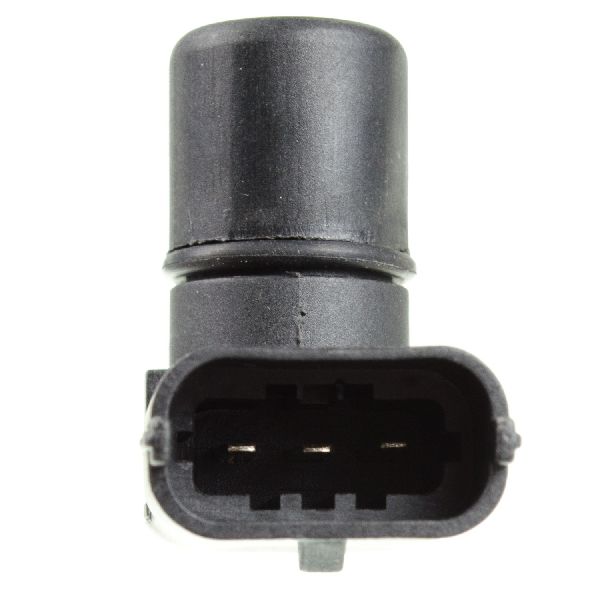
Est. part cost: $40-$100 - Faulty Camshaft Position (CMP) Sensor ⚪ Low Probability
How to confirm: The sensor's signal can be monitored with an oscilloscope. Swapping the suspect sensor with a known good one (e.g., from the other bank) is a common diagnostic trick. If the code moves to the other bank (e.g., P0019), the sensor is bad. However, this is rarely the root cause for P0017 on this engine.
Typical fix: Replace the Bank 1 exhaust camshaft position sensor.
Est. part cost: $30-$80
Rare But Worth Checking
- Faulty Crankshaft Position (CKP) Sensor: This is less common because a failing CKP sensor usually causes more severe running issues or a no-start condition, often with other codes.
- Damaged Camshaft Reluctor Wheel: The reluctor wheel (tone ring) on the camshaft that the sensor reads can be damaged or slip, but this is rare and usually only happens during other major engine work or due to a manufacturing defect.
- Faulty Powertrain Control Module (PCM): This is extremely rare and should only be considered after all other possibilities, including wiring harness issues, have been exhaustively ruled out.
Diagnosis Steps
- Check engine oil level and condition. If low, dirty, or past its service interval, this is your primary suspect. Top off or perform an oil and filter change. Consider using an engine flush product per manufacturer instructions as a low-cost attempt to clean VVT passages.
- Use a professional scan tool to read the live data for camshaft and crankshaft position. Crucially, check the 'Camshaft Position Variance' or 'Cam/Crank Correlation' PIDs. A deviation that consistently exceeds 4-5 degrees at idle or steady RPM is a strong sign of a stretched chain.
- Inspect the wiring and connectors for the Bank 1 exhaust camshaft position sensor and the VVT solenoid for any damage, corrosion, or looseness.
- Test the Bank 1 exhaust VVT solenoid. Command it with the scan tool and observe if the camshaft angle changes. You can also swap the exhaust and intake solenoids (on the same bank) and see if the code changes to P0016. If it does, the solenoid is faulty.
- Test the Bank 1 exhaust camshaft position sensor. This can be done by swapping it with the intake sensor or a sensor from Bank 2 to see if the code follows the sensor.
- If all sensors and solenoids test good and the oil service did not resolve the issue, the evidence strongly points to a mechanical timing issue.
- The definitive, but most labor-intensive, step is to remove the front timing cover to physically inspect the timing chains for slack and verify the timing marks on the sprockets, chains, and engine block.
- If chain stretch is confirmed, replace the timing components as a complete kit.
Parts You'll Likely Need
- Timing Chain Kit
(OEM #ACDelco 12651450 (This is a common kit, but verify with VIN))— This is the most probable cause of P0017 on the 3.6L V6. A complete kit ensures all wear items (3 chains, guides, tensioners) are replaced with updated parts.
Trusted brands: ACDelco (GM Original Equipment), Cloyes
OEM price range: $400-$600
Aftermarket price range: $250-$450 - Camshaft Actuator Solenoid (VVT Solenoid)
(OEM #12655421 (Exhaust))— A common failure point that is much easier and cheaper to replace than the timing chain. It's often replaced as a diagnostic step or when clogged by dirty oil.
Trusted brands: ACDelco, Delphi, Dorman, A-Premium
OEM price range: $60-$90
Aftermarket price range: $30-$60
Related Codes That Often Appear With This One
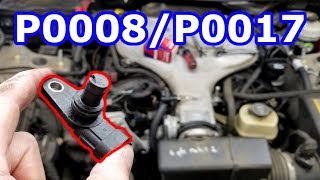
- P0008 — Engine Positions System Performance Bank 1. This is a more general code that often precedes or accompanies P0016/P0017, indicating a timing problem on Bank 1. It is a classic indicator of a stretched primary timing chain.
- P0016 — Crank/Cam correlation error on Bank 1 Intake cam. Often set together with P0017 when the timing chain has stretched, affecting both cams on Bank 1 and strongly pointing to a base timing issue.
- P0014 — Exhaust Camshaft Position Timing - Over-Advanced (Bank 1). This code points specifically to the exhaust cam timing being off, often due to a faulty VVT solenoid or phaser, which can lead to the P0017 correlation code.
- P0018 / P0019 — These are the equivalent correlation codes for Bank 2 (the bank closer to the radiator). Seeing codes for both banks simultaneously (e.g., P0017 and P0019) points strongly to a stretched primary timing chain affecting the entire engine.
Technical Service Bulletins (TSBs) & Recalls
- PIP3423P: Mentions that DTCs P0016, P0017, P0018, P0019, P0008 or P0009 may be set and advises inspection of timing chains and tensioners. This is the most relevant TSB.
- PIP5163D: A related bulletin that discusses engine oil consumption, misfires, and cylinder leakage, which can be contributing factors or results of the oiling issues that accelerate timing chain wear.
Platform-Specific Known Issues
- The 3.6L LFX engine is known for timing chain stretch, which is the most common cause for P0017. This is a major repair job that requires extensive engine disassembly.
- GM Technical Service Bulletin #PIP3423P directly addresses codes P0016, P0017, P0018, P0019, P0008, or P0009 and instructs technicians to inspect for loose timing chains or tensioners.
- While the LFX engine (2012+) featured an updated timing chain design compared to the earlier, more problematic LLT engine, it is still prone to stretching, particularly if the oil change interval recommended by the oil life monitor (which can be 8,000-12,000 miles) is followed without checking and topping off the oil level.
Mechanic-Grade Diagnostic Values
- Camshaft Actuator Solenoid (VVT Solenoid) Resistance — expected: 6.9 to 7.9 ohms at 68°F (20°C).. Failure: A reading outside this range, or an open/short circuit (infinite or zero ohms), indicates a failed solenoid coil.
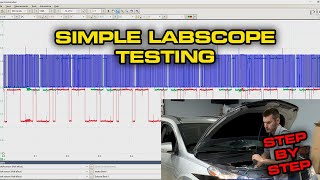
- Cam/Crank Waveform Correlation (using Lab Scope) — expected: On Bank 1 (firewall side), the intake cam signal should cross during the crankshaft sensor's missing tooth gap. The exhaust cam signal should go high approximately three crank teeth after the gap.. Failure: A stretched chain will cause these signals to shift to the right on the waveform (retarded timing).
Scan Tool Commands That Help
- GDS2 (or equivalent professional scan tool): VVT Exhaust Solenoid Actuator Test — This bidirectional command allows a technician to manually turn the solenoid on and off to verify its mechanical operation and its effect on camshaft angle, helping to isolate a faulty solenoid from a wiring or mechanical phasing issue.
Wiring & Ground Locations
- G120 — Right front bottom side of the engine block.. This is a primary ground point for multiple engine sensors. A corroded or loose G120 ground can cause erratic sensor readings and intermittent codes, including correlation faults, that mimic component failure.
- Bank 1 Camshaft Position Sensor Connector — Bank 1 (firewall side), under the ECU mounting bracket. The exhaust sensor ('B') is one of two sensors located there.. This is the direct connector for the sensor in question. The pins can be back-probed here to test for the 5V reference, ground, and signal wire integrity using a multimeter or oscilloscope.
Real Owner Repair Stories
- Reddit user /u/Rinzler-exe (Vehicle not specified, but has a GM V6 with P0017 and CVVT sprockets, consistent with the LFX family.) — Car started running badly after oil was found to be very low.
❌ Tried (didn't work) Replacing a new crankshaft position sensor did not clear the code., Cleaning and testing the VVT solenoids (oil control valves) did not resolve the issue initially.
✅ What actually fixed it The timing had jumped by two teeth. The final repair involved replacing the timing chain, tensioners, both CVVT sprockets, and the exhaust camshaft because its dowel pin had broken. An oil change was also performed. The code was gone after the mechanical timing was corrected.
OEM Part Supersession History
12626012, 12615613, 12588943→12636175— Part consolidation and potential internal improvements for the Camshaft Position Actuator Solenoid (VVT Solenoid).
Heads up: The intake and exhaust solenoids are physically the same for the LFX engine and can be used interchangeably for diagnostic swapping. The part number 12636175 is often sold as a universal fit for both positions on this engine.
Model Year Variations Within This Range
- 2012-2013: GM introduced updated timing chain kits around 2012 to address premature stretching issues found in earlier High Feature V6 engines (LLT, LY7). While the LFX in the 2013+ XTS has these improved chains from the factory, older service parts or chains from early-production 2013 models could still be of the less durable design.
Helpful Videos
We Have This Part in Stock


The information in this article is provided for general reference and educational purposes only. Vehicle specifications, procedures, and part compatibility can vary by production date, trim level, and region. Always consult your vehicle's factory service manual and verify part numbers before purchasing or performing repairs. Safety-critical components such as airbags, seat belts, and braking systems should be installed by a qualified professional.
- Cadillac XTS:
- 🎬 Helpful Videos
- 🛍️ Shop This Part
- What's Unique About the 2013-2019 Cadillac XTS
- Diagnostic Flowchart
- Symptoms You May Notice
- Most Likely Causes
- Rare But Worth Checking
- Diagnosis Steps
- Parts You'll Likely Need
- Related Codes That Often Appear With This One
- Technical Service Bulletins (TSBs) & Recalls
- Platform-Specific Known Issues
- Mechanic-Grade Diagnostic Values
- Scan Tool Commands That Help
- Wiring & Ground Locations
- Real Owner Repair Stories
- OEM Part Supersession History
- Model Year Variations Within This Range
- 🎟️ Get 5% Off