

P0017 on 2004-2011 Cadillac CTS: Stretched Timing Chain Causes and Fixes
Code P0017 on a 2004-2011 Cadillac CTS almost always indicates a stretched timing chain, a well-documented issue on the V6 engines. This is a serious and expensive repair, often costing over $2,000, that should not be ignored. Replacing sensors or solenoids rarely fixes this code on these specific engines.
- P0017 on a V6 Cadillac CTS is a strong indicator of a stretched timing chain, not just a bad sensor.
- This is a serious issue. Do not ignore it, as it can lead to complete engine failure.
- The repair is expensive, typically costing between $1,800 and $3,000.
- Using high-quality full synthetic oil and adhering to strict oil change intervals (e.g., every 5,000 miles) is the best preventative measure for a new or repaired engine.
- Always replace the timing chains, tensioners, and guides as a complete kit.
What's Unique About the 2004-2011 Cadillac CTS

The GM High Feature V6 engines (3.6L LY7, 3.0L LF1, and 2.8L LP1) used in this generation of Cadillac CTS are notorious for premature timing chain stretch. This isn't a random part failure; it's a widely recognized pattern. The primary cause is linked to extended oil change intervals recommended by the factory Oil Life Monitor (OLM), which could lead to oil degradation. Degraded oil fails to provide adequate pressure to the hydraulic timing chain tensioners, accelerating chain wear. 🎬 Watch: Why these GM V6 timing chains fail so often. GM issued multiple Technical Service Bulletins (TSBs) and a special coverage program (11340C) to address this widespread issue, which also included an ECM reprogram to shorten OLM intervals.
Diagnostic Flowchart

Tap your situation to follow the diagnostic path that matches what you're seeing on this vehicle.
Generation note: This issue affects both the first generation (2004-2007) and second generation (2008-2011) Cadillac CTS models equipped with the High Feature V6 engines. The problem is particularly well-documented in the 3.6L V6 (LY7 and LLT) found in these vehicles, with the earlier LY7 engines being most susceptible.
Symptoms You May Notice
- Check Engine Light is on
- Rattling noise from the engine, especially on a cold start for a few seconds
- Reduced engine power and poor acceleration
- Rough idle
- Engine cranks but is hard to start, or has an extended crank time
- A general 'sluggish' feeling during operation
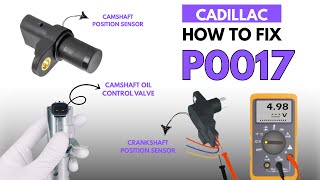
- Replacing only the camshaft or crankshaft position sensors. While these sensors can fail, they are rarely the root cause of P0017 on this specific vehicle. The underlying mechanical timing is almost always the problem.
- Replacing only the VVT solenoids (camshaft actuators). While easier to access, this is another 'hopeful' repair that seldom resolves a P0017 code caused by a physically stretched chain.
Most Likely Causes

- Stretched Timing Chains 🔴 High Probability The early GM High Feature V6 engines had timing chains that were prone to premature wear and stretching. This was exacerbated by long oil change intervals, as the hydraulic tensioners need clean oil at proper pressure to keep the chains taut.
How to confirm: A mechanic can use a scan tool to view camshaft/crankshaft correlation data. Deviations greater than +/- 4 degrees at idle are a strong indication of a stretched chain. An oscilloscope provides definitive electronic proof by comparing cam and crank sensor waveforms. Physical inspection is the ultimate confirmation but requires significant engine disassembly.
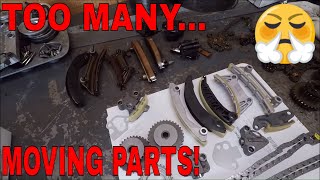
Typical fix: Replace all three timing chains, the tensioners, guides, and often the water pump (which is driven by the timing system). This is done as a complete kit. It is also recommended to replace the camshaft cover gaskets and front crankshaft seal at the same time.
Est. part cost: $250-$600 for a quality aftermarket or OEM kit - Failed Timing Chain Tensioner(s) 🔴 High Probability The tensioners are hydraulic and can fail or become weak due to low or dirty oil, allowing the chain to become slack. They are considered a primary failure point and are always replaced during a timing chain service.
How to confirm: Diagnosed along with the timing chains. A rattling noise on startup that goes away after a few seconds is a key symptom of a tensioner bleeding down.
Typical fix: Replace tensioners as part of a complete timing chain kit replacement.
Est. part cost: $50-$150 (included in most complete kits) - Low or Dirty Engine Oil 🟡 Medium Probability The oil life monitor on these vehicles could allow for excessively long oil change intervals (sometimes over 10,000 miles), leading to oil breakdown and sludge. Degraded oil cannot properly lubricate the chains or provide adequate pressure for the hydraulic tensioners. GM later revised the OLM software to recommend more frequent changes.
How to confirm: Check the oil level and condition on the dipstick. If it's low or very dark and gritty, this is a likely contributor. An oil change alone will not fix a chain that is already permanently stretched.
Typical fix: Perform an oil and filter change with a full synthetic 5W-30 oil meeting GM's Dexos1 specification. This is critical for prevention but will not solve an existing P0017 from a stretched chain.
Est. part cost: $50-$100 - Faulty Camshaft Position Sensor (Bank 1 Exhaust) ⚪ Low Probability
How to confirm: This is a common misdiagnosis. Before replacing, confirm mechanical timing is perfect. The sensor's operation can be checked by swapping it with the intake sensor on the same bank (if they share a part number) to see if the code changes to P0016. A definitive test requires an oscilloscope.
Typical fix: Replace the sensor. The Bank 1 sensors are located on the passenger side of the engine, behind the ECM.
Est. part cost: $25-$70
Rare But Worth Checking
- Faulty Camshaft Actuator Solenoid (VVT Solenoid): A clogged or failed solenoid can cause timing correlation issues by not advancing or retarding the cam phaser as commanded. It's easier and cheaper to replace than the timing chains, so some owners try this first, but it is rarely the sole cause for P0017 on this engine. Often, a solenoid issue will set a dedicated solenoid performance code like P0010 or P0013.
- Damaged Reluctor Wheel on Camshaft or Crankshaft: The sensor reads a toothed wheel (reluctor) to determine position. The crankshaft reluctor wheel on these engines is known to be a press-fit part that can spin on the crankshaft, causing an immediate loss of correlation and a no-start or stall condition. This is a very rare and catastrophic failure that requires engine disassembly to diagnose and repair.
- Worn Camshaft Phaser (Actuator): The VVT phaser itself can fail, getting stuck in one position or having internal issues. This is less common than chain stretch but is a possible cause. They are typically replaced during a full timing chain job.
Diagnosis Steps
- Verify the engine oil level and condition. If low or dirty, perform an oil change with high-quality full synthetic 5W-30 oil and a new filter. Clear the codes and see if they return. This is a good first step but will not fix a stretched chain.
- Use a professional scan tool to monitor the live data for camshaft and crankshaft position. Look at the 'Camshaft Angle Variance' PIDs. Deviations consistently beyond +/- 4-5 degrees at idle or 2000 RPM strongly suggest a stretched chain. The ECM may set the code when the deviation exceeds 10 degrees.
- As a preliminary check, you can swap the Bank 1 exhaust VVT solenoid with the intake solenoid to see if the code changes. If P0017 remains, the solenoid is likely not the issue.
- If scan data is inconclusive, an oscilloscope is the definitive non-invasive tool. Compare the waveform patterns of the camshaft and crankshaft sensors to a known-good waveform. A phase shift will be clearly visible if the chain is stretched.
- If a timing chain issue is confirmed, the next step is engine disassembly to physically inspect the chains, guides, and tensioners. The amount of travel on the tensioner piston is a direct indicator of chain stretch.
Parts You'll Likely Need
- Timing Chain Kit
(OEM #12651450 (superseded by 12700436))— This is the definitive fix. A complete kit ensures all wear components (chains, tensioners, guides, sprockets) are replaced at once with updated parts designed to be more durable.
Trusted brands: ACDelco (OEM), Cloyes (e.g., 9-0753S)
OEM price range: $400-$600
Aftermarket price range: $250-$450 - Camshaft Position Sensor
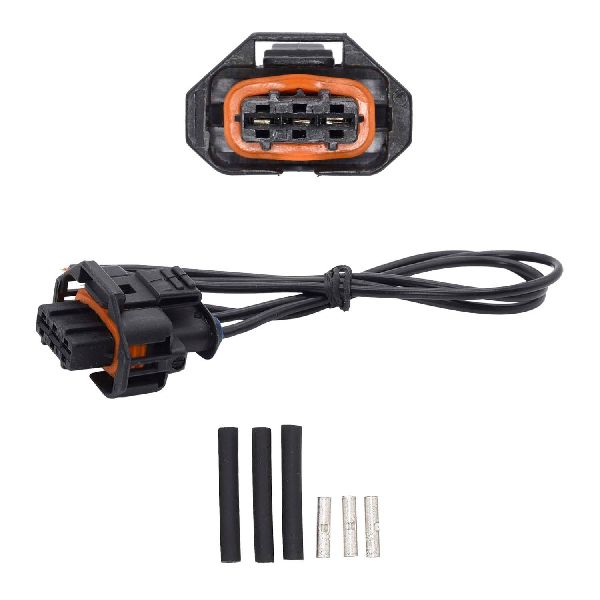
(OEM #12590907 or 12615371 (check by VIN))— Replaced only if it is proven to be faulty after confirming the mechanical timing is correct. It is a common misdiagnosis.
Trusted brands: ACDelco, Delphi, Bosch
OEM price range: $50-$90
Aftermarket price range: $25-$70 - Water Pump
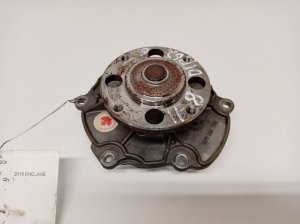
(OEM #12641261)— The water pump is driven by the timing chain and is located behind the timing cover. It is highly recommended to replace it during the timing chain service to avoid a future failure that would require repeating the same labor-intensive disassembly.
Trusted brands: ACDelco, Gates
OEM price range: $150-$250
Aftermarket price range: $100-$180
Related Codes That Often Appear With This One
- P0008 — Indicates a general engine position system performance error for Bank 1. This is often the first code to appear when timing chains begin to stretch and frequently accompanies P0017.
- P0016 — Indicates a correlation issue on the Bank 1 *intake* camshaft. Often appears with P0017, pointing to a definite issue with the Bank 1 secondary timing chain or the primary chain.
- P0018 — Indicates a correlation issue on the Bank 2 *intake* camshaft. If seen with P0017, it suggests stretch in multiple chains, likely the primary chain that drives both banks.
- P0019 — Indicates a correlation issue on the Bank 2 *exhaust* camshaft. If seen with P0017, it strongly suggests a problem with the primary timing chain affecting both banks.
Technical Service Bulletins (TSBs) & Recalls
- TSB #12-06-01-009F: Mentions repairing stretched timing chains that set DTCs including P0017.
- TSB #PIP3423P: Provides information for technicians about inspecting for loose timing chains when P0017 and related codes are set.
- Special Coverage Bulletin #11340C: An extended warranty program from GM to cover premature timing chain wear on specific models, including the 2007-2009 CTS. It covered replacement for 10 years/120,000 miles and included an ECM reprogram to shorten oil change intervals.
Platform-Specific Known Issues
- Premature timing chain failure is the single most significant issue related to this code on the 2004-2011 CTS V6.
- GM issued TSB #12-06-01-009F regarding the availability of timing chain kits to repair stretched chains causing codes like P0017.
- Owner complaints frequently cite this code leading to expensive timing chain replacements, with costs exceeding $2,200. [ODI #11132729] Another owner reported a dealer quote of $3,600.
- GM's "Special Coverage Adjustment" program (bulletin 11340C) extended the warranty for this specific issue to 10 years or 120,000 miles on certain model years, including the 2007-2009 CTS. This program has expired for most vehicles but acknowledges the widespread nature of the problem.
- The root cause was often attributed to the original oil life monitoring system allowing for excessively long oil change intervals, which GM later addressed with an ECM reflash to shorten the intervals.
Mechanic-Grade Diagnostic Values
- Camshaft Position (CMP) Actuator Solenoid resistance — expected: 6.9 to 7.9 Ohms at 68°F (20°C). Failure: A reading outside this range, or an open/short circuit, indicates a faulty solenoid.
- Camshaft vs. Crankshaft Correlation (Oscilloscope) — expected: For Bank 1 on a known-good engine, the intake cam signal crosses the crank signal at the missing tooth gap, and the exhaust cam signal crosses about three crank sensor pulses after the gap.. Failure: A visible phase shift in the cam sensor waveforms relative to the crankshaft sensor's missing tooth indicates a stretched chain.
- Camshaft Position Variance (Scan Tool PID) — expected: Less than +/- 4 degrees at idle.. Failure: The ECM may set the P0017 code when it detects a deviation greater than 10 degrees between the camshaft and crankshaft.
Scan Tool Commands That Help
- GDS2 / Tech2: Camshaft Position Actuator Solenoid Valve Test — This bidirectional control allows a technician to command the VVT solenoids on and off to check for response. It helps determine if a solenoid is stuck or if the circuit is functioning correctly, which can help rule out the solenoid before condemning the timing chains.
- GDS2 / Tech2: Oil Life Monitor Reset/Recalibration — After a timing chain replacement, and as part of GM TSBs, the ECM must be reprogrammed with an updated calibration that shortens the oil change interval calculated by the OLM. This is a critical preventative step to ensure the new chains last.
Wiring & Ground Locations
- G130 — Rear of the right (Bank 1) cylinder head.. This is a primary engine ground. A poor connection here could potentially affect the reference signal for sensors on Bank 1, including the camshaft position sensor.
- G131 — Left rear of the engine.. This is another critical engine-to-chassis ground point. While on the opposite bank, intermittent ground issues can cause unpredictable electrical behavior across the entire engine management system.
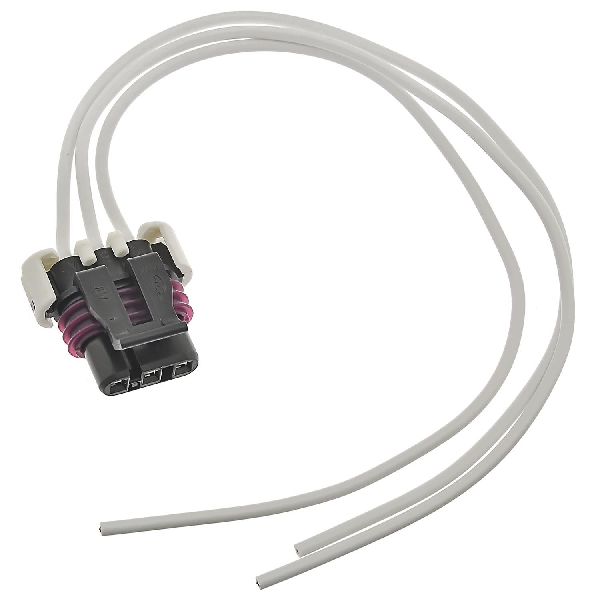
- ECM Connector (Bank 1 CMP) — The Bank 1 (passenger side) camshaft position sensors are located on the front of the engine, behind the ECM and its mounting bracket.. The wiring harness in this area can become brittle from heat. A poor connection at the sensor connector or a short in the harness can mimic sensor failure. GM issued a preliminary bulletin (PI0090D) regarding poor connections at the cam sensor connectors causing hesitation.
Real Owner Repair Stories
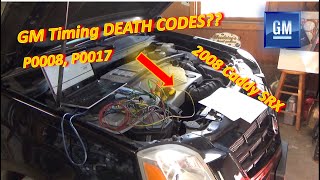
- YouTube user 'Kevin Nadeau' (2007 Cadillac CTS 3.6L) — Check Engine Light with codes P0008 and P0017.
❌ Tried (didn't work) Replaced the Bank 1 Exhaust Camshaft Position Sensor., Cleaned and inspected the VVT solenoids.
✅ What actually fixed it The video documents the attempt to fix the codes with sensors, which ultimately did not work. The creator concludes that the next step, which he did not perform on camera, would be the full timing chain replacement as is the common cause. This serves as a real-world example of the common misdiagnosis path.
OEM Part Supersession History
12651450→12679117, 12693218, and finally 12700436— GM has updated the timing chain kits for the High Feature V6 engines multiple times to improve the durability of the chains and guides to combat premature stretching.
Heads up: While all kits are for the same engine family, it is critical to use the latest available OEM part number (or a quality aftermarket equivalent) to get the most durable, updated components.
Model Year Variations Within This Range
- 2004-2012: GM issued multiple field actions and TSBs (e.g., #11-06-01-009F, 10287C) to have dealers reprogram the Engine Control Module (ECM) with an updated calibration for the Oil Life Monitor (OLM). This software change shortens the recommended oil change intervals to prevent the oil degradation that accelerates timing chain wear. Vehicles that did not receive this update are more susceptible to premature failure.
- 2008-2011 (LLT) vs 2004-2009 (LY7): The LLT engine, introduced in 2008, is a direct-injection version of the 3.6L V6. Direct injection engines are known to cause more fuel dilution and soot in the engine oil, which can further stress the oil and contribute to timing chain wear if intervals are too long.
Helpful Videos
Used OEM Parts in Stock

New Aftermarket Parts Available



The information in this article is provided for general reference and educational purposes only. Vehicle specifications, procedures, and part compatibility can vary by production date, trim level, and region. Always consult your vehicle's factory service manual and verify part numbers before purchasing or performing repairs. Safety-critical components such as airbags, seat belts, and braking systems should be installed by a qualified professional.
- Cadillac CTS:
- 🎬 Helpful Videos
- 🛍️ Shop This Part
- What's Unique About the 2004-2011 Cadillac CTS
- Diagnostic Flowchart
- Symptoms You May Notice
- Most Likely Causes
- Rare But Worth Checking
- Diagnosis Steps
- Parts You'll Likely Need
- Related Codes That Often Appear With This One
- Technical Service Bulletins (TSBs) & Recalls
- Platform-Specific Known Issues
- Mechanic-Grade Diagnostic Values
- Scan Tool Commands That Help
- Wiring & Ground Locations
- Real Owner Repair Stories
- OEM Part Supersession History
- Model Year Variations Within This Range
- 🎟️ Get 5% Off