

P0017 on 2005-2012 Buick LaCrosse: Crank/Cam Correlation Causes and Fixes
On a 2005-2012 Buick LaCrosse, especially with the 3.0L or 3.6L V6 engine, the P0017 code is most often caused by a stretched timing chain. This is a well-documented, widespread issue often linked to extended oil change intervals. The repair is serious and expensive. Less common causes include a faulty VVT solenoid, low/dirty engine oil, or a spun reluctor ring on the camshaft (especially on 2.4L engines) or crankshaft.
- P0017 on a V6 LaCrosse is a strong indicator of a stretched timing chain, a known and serious issue with these engines.
- Do not immediately replace the camshaft sensor; it is often not the root cause.
- Check engine oil level and condition first, as low or dirty oil can cause VVT system problems.
- If other codes like P0016 or P0008 are present, the likelihood of a timing chain problem increases significantly.
- This repair is expensive and complex; professional diagnosis is highly recommended before purchasing parts.
What's Unique About the 2005-2012 Buick LACROSSE

The GM High Feature V6 engines (3.0L LF1 and 3.6L LY7/LLT) used in this era of LaCrosse are widely known for premature timing chain stretching. The primary cause is often attributed to inadequate lubrication from low/dirty oil and an overly optimistic original Oil Life Monitor (OLM) calibration that recommended excessive mileage between oil changes. The problem was so prevalent that GM issued Special Coverage Adjustment #11340C, which extended the warranty on the timing chains to 10 years or 120,000 miles and included an ECM reprogram to shorten oil change intervals. While sensors can fail, the high probability of a timing chain issue on these V6 engines means a P0017 code should be diagnosed with the chain as the primary suspect.
Diagnostic Flowchart

Tap your situation to follow the diagnostic path that matches what you're seeing on this vehicle.
Generation note: This range covers two LaCrosse generations. The first (2005-2009) used the 3.6L V6 (LY7). The second (2010-2012) used the 2.4L I4 (an Ecotec engine), 3.0L V6 (LF1), and 3.6L V6 (LLT). The timing chain issues are most prevalent in the V6 models (LY7, LF1, LLT) across both generations. The 2.4L Ecotec engine can also suffer from timing chain issues, but is also susceptible to a spun camshaft reluctor ring causing the same code.
Symptoms You May Notice
- Check Engine Light is on
- Rough or unstable idle
- Difficulty starting the engine, or extended cranking time
- Loss of engine power and poor acceleration
- Engine stalling, especially at low speeds
- Rattling or chain-slapping noise from the engine, particularly on cold startup
- Reduced fuel economy
- Engine may enter a reduced power (limp) mode
- Replacing only the camshaft or crankshaft position sensors. While these sensors can fail, they are often not the root cause for P0017 on this platform. The underlying mechanical issue (stretched chain) is more likely, and the sensor is reporting the problem correctly.
Most Likely Causes

- Stretched Timing Chain(s) 🔴 High Probability The 3.0L and 3.6L V6 engines are known for premature timing chain wear due to a combination of chain design and lubrication issues exacerbated by long oil change intervals. GM acknowledged this with TSBs and a special warranty extension (SCA 11340C).
How to confirm: A technician can use a scan tool to view camshaft deviation angles. Physical inspection for chain slack is the definitive confirmation, but this requires significant engine disassembly. A rattling noise on startup is a strong audible clue.
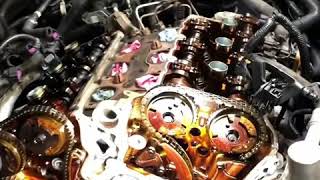
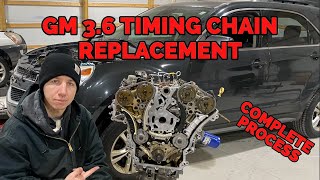
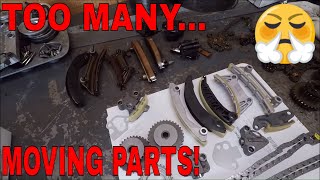
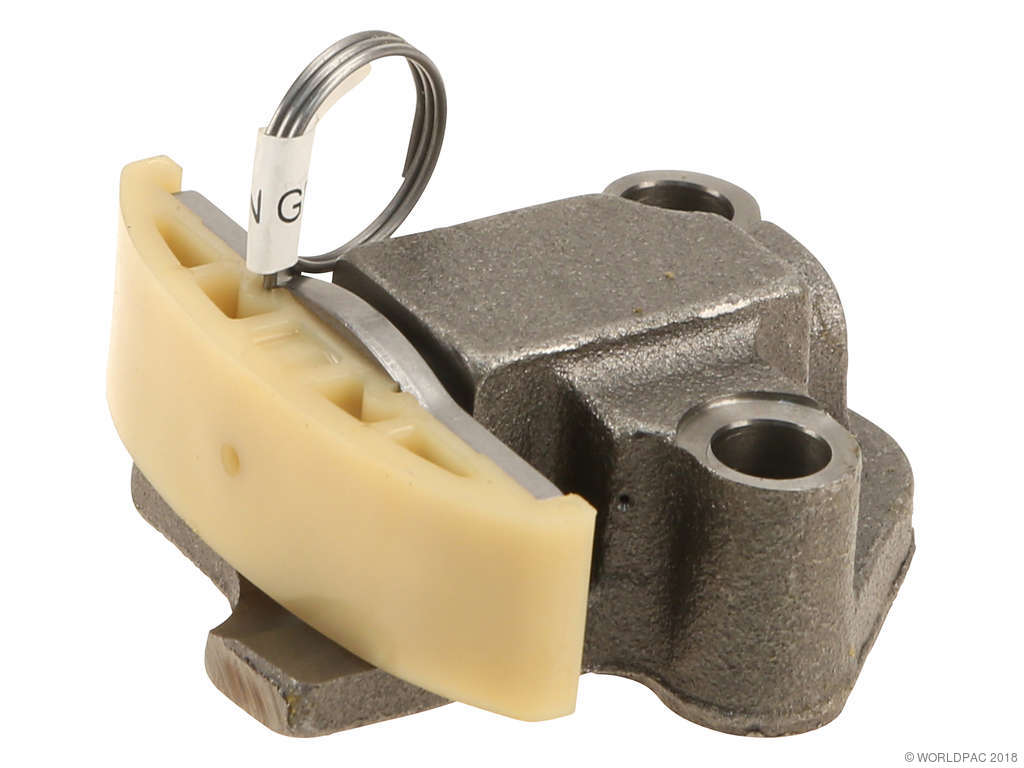
Typical fix: Replace all three timing chains, all tensioners, and all guides with an updated design kit. The water pump, which is driven by the timing chain, is almost always replaced at the same time.
Est. part cost: $300-$800 - Low or Dirty Engine Oil 🟡 Medium Probability The VVT system, which controls cam phasing, is operated by engine oil pressure. Low levels or degraded, sludgy oil cannot operate the phasers or hydraulic tensioners correctly, leading to correlation codes. This is a direct contributor to the timing chain stretch issue.
How to confirm: Check the oil level on the dipstick and inspect its condition. If it's low, black, or sludgy, this is a likely contributor, if not the direct cause.
Typical fix: Perform an engine oil and filter change using the manufacturer-specified grade of oil (e.g., Dexos-approved 5W-30). If sludge is present, an engine flush may be recommended, but this can sometimes dislodge debris that clogs solenoid screens.
Est. part cost: $40-$80 - Faulty Camshaft Position Actuator Solenoid (VVT Solenoid) 🟡 Medium Probability These solenoids control oil flow to the cam phasers. They can get clogged with engine debris (sludge or metal/plastic from timing components) or fail electrically.
How to confirm: Remove the solenoid for Bank 1 Exhaust and inspect its screens for debris. Finding plastic or metal shavings is a very strong indicator of timing chain guide failure. It can be tested with a scan tool or by swapping it with the intake solenoid to see if the code changes to P0016.
Typical fix: Replace the faulty solenoid. It's often recommended to replace them in pairs (intake and exhaust) or as a set of four on the V6. 🎬 Watch: How to replace all four VVT solenoids on a 3.6L.
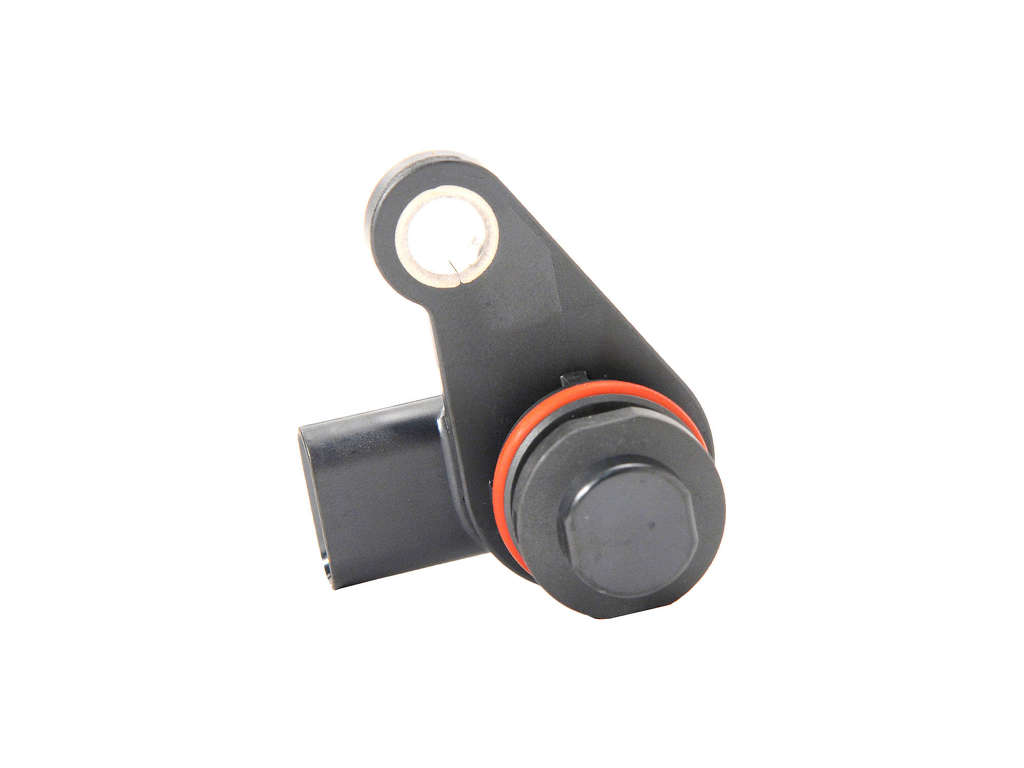
Est. part cost: $30-$60 - Faulty Camshaft Position Sensor ⚪ Low Probability
How to confirm: Can be tested with a multimeter or by swapping it with an adjacent, identical sensor to see if the trouble code follows the sensor.
Typical fix: Replace the Bank 1 exhaust camshaft position sensor. Owners report these engines are sensitive to aftermarket sensors, so using an OEM/ACDelco part is recommended.
Est. part cost: $25-$70
Rare But Worth Checking
- Spun Camshaft Reluctor Ring: On 2.4L Ecotec engines in particular, the reluctor ring that the cam sensor reads can spin on the camshaft, often after an engine overheat. The timing chain itself is fine, but the ECM gets an incorrect position reading. The fix requires replacing the entire camshaft. This is documented in TSB PIP4548F.
- Spun/Damaged Crankshaft Reluctor Wheel: Similar to the cam reluctor, the tone ring on the crankshaft can move from its pressed-on position. This is a known, though rare, issue on the V6 engines. TSB PIP3423P advises that if timing chains are confirmed to be good, this is the next item to inspect. The fix requires crankshaft replacement.
- Failed Camshaft Phaser/Actuator: This is the mechanical gear that the solenoid controls. The internal lock pin can fail, causing a rattle on startup and preventing it from holding base timing, but this is less common than a solenoid or chain issue.
Diagnosis Steps
- Verify engine oil level and condition. An oil change with a quality filter is a cheap and essential first step.
- Use a professional scan tool to read freeze frame data, check for other codes, and view live data for camshaft angle deviation if available.
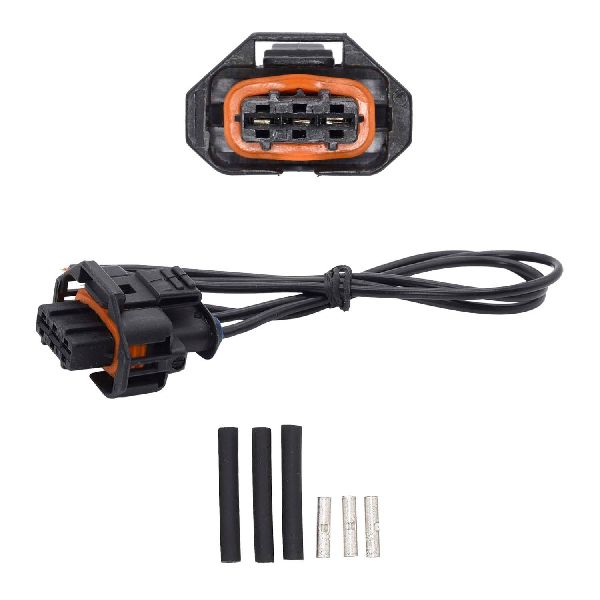
- Inspect the wiring and connectors for the Bank 1 exhaust camshaft position sensor and actuator solenoid for any damage.
- Remove and inspect the Bank 1 exhaust camshaft actuator solenoid. Check the screens for debris. Finding plastic or metal is a tell-tale sign of timing component failure.
- Test the solenoid by swapping it with the intake solenoid (if identical) to see if the code changes to P0016, or by commanding it with a scan tool.
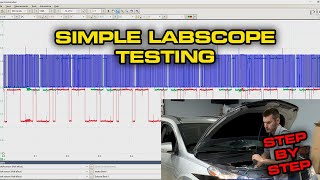
- For advanced diagnosis, use an oscilloscope to compare the signal patterns of the crankshaft sensor and both camshaft sensors against a known-good waveform to definitively identify a timing or reluctor ring issue.
- If all other components check out, a mechanical timing issue is presumed. This requires partial engine disassembly to physically inspect the timing chains for slack and check guide/tensioner condition. This step is best left to a professional.
Parts You'll Likely Need

- Timing Chain Kit
(OEM #12650231 (Example kit for LY7))— This is the most probable cause of P0017 on the 3.0L and 3.6L V6 engines due to a known issue with premature chain stretching. A complete kit with updated components is required.
Trusted brands: ACDelco, Melling
OEM price range: $330-$825
Aftermarket price range: $180-$450 - Camshaft Position Actuator Solenoid (V6 Engines)
(OEM #12636175)— This solenoid can become clogged or fail, preventing proper cam phasing. It's a common failure point and much easier to replace than the timing chain. This is the correct part for the V6 engines.
Trusted brands: ACDelco, Delphi
OEM price range: $40-$65
Aftermarket price range: $25-$50 - Camshaft Position Actuator Solenoid (I4 Engine)
(OEM #12655421 (Exhaust))— On the 2.4L I4 engine, this solenoid can fail. Note that the part is different from the V6 engines.
Trusted brands: ACDelco, Dorman
OEM price range: $35-$60
Aftermarket price range: $20-$45
Related Codes That Often Appear With This One
- P0016 — This code is for the Bank 1 Intake camshaft correlation. Seeing both P0016 and P0017 strongly suggests a base timing issue, like a stretched chain affecting the entire bank.
- P0008 — This is a more general Engine Positions System Performance code for Bank 1. It is frequently triggered along with P0016/P0017 and is a classic indicator of a stretched timing chain on these GM V6 engines.
- P0009 — Similar to P0008, but for Bank 2 (front/radiator side). If the primary chain is severely stretched, it can affect both banks of the engine, triggering codes for Bank 1 and Bank 2.
Technical Service Bulletins (TSBs) & Recalls

- PIP3423P: Advises technicians that codes P0008, P0009, P0016, P0017, P0018, or P0019 may be set. Instructs to first inspect for loose timing chains/tensioners. If the chains are good, the TSB points to a possible slipped crankshaft reluctor wheel, which requires crankshaft replacement.
- PIP4548F: Pertains mostly to the 2.4L I4 engine. Advises that if P0016/P0017 are set on a properly timed engine, the cause may be a camshaft reluctor that has spun on the camshaft (a press-fit part). This requires camshaft replacement.
- 11340C (Special Coverage Adjustment): Not a TSB, but a warranty extension program acknowledging the high failure rate of timing chains on 2007-2009 V6 models. It covered replacement of the timing chains and reprogramming the ECM for more frequent oil change reminders for 10 years/120,000 miles.
Platform-Specific Known Issues
- Premature timing chain stretch on 3.0L and 3.6L V6 engines is the most significant issue. GM's Special Coverage Adjustment (11340C) extended the warranty to 10 years/120,000 miles for this repair, but most vehicles are now outside this window.
- Some owners on forums report the code appearing immediately after an oil change, which can sometimes be caused by dislodged sludge clogging a VVT solenoid screen.
- On the 2.4L I4 engine, TSB PIP4548F highlights the possibility of a spun exhaust camshaft reluctor ring, which can cause P0017 even with a perfectly good timing chain.
Mechanic-Grade Diagnostic Values
- VVT (Camshaft Position Actuator) Solenoid Coil Resistance — expected: 8 to 12 Ohms. Some sources state 5 to 25 Ohms is acceptable.. Failure: A reading outside the specified range (especially an open circuit/infinite resistance) indicates a failed coil.
- Camshaft Position Sensor (3-wire Hall Effect) - Signal Voltage — expected: Switches between approximately 0V and 5V as the engine is cranked.. Failure: Voltage that is stuck high, stuck low, or does not produce a clean square wave on an oscilloscope indicates a failed sensor or wiring issue.
- Camshaft Position Sensor (3-wire Hall Effect) - Reference Voltage — expected: Approximately 5V DC with the key on, engine off.. Failure: Significantly lower or no voltage indicates a wiring or ECM problem.
- Camshaft Position Sensor (3-wire Hall Effect) - Ground Circuit — expected: Should read battery voltage (approx. 12.6V) when testing between the battery positive terminal and the sensor's ground wire.. Failure: A low or zero reading indicates a poor or open ground connection.
Scan Tool Commands That Help
- GDS2 (GM Global Diagnostic System 2) / Tech2: Camshaft Position Actuator Solenoid Control — This bidirectional control allows a technician to command the VVT solenoid on and off while monitoring engine RPM and camshaft position data. It is used to verify if the solenoid is mechanically responding to electrical commands from the ECM, helping to distinguish between a faulty solenoid, a wiring issue, or a mechanical problem with the phaser.
Wiring & Ground Locations
- G101 / G107 — G101 is a primary engine ground, often located on the engine block near the starter motor. It may be connected via a strap to G107 on the chassis/frame.. A poor engine ground can introduce electrical noise and voltage drops, affecting the signals from the crankshaft and camshaft position sensors, potentially causing correlation codes even if the mechanical timing is correct.
- G103 — Splice pack ground typically located in the engine bay, near the windshield washer reservoir or airbox on similar GM platforms.. This ground point serves multiple engine bay components. While not directly tied to the cam/crank sensors in all diagrams, corrosion here can cause unpredictable electrical issues that are difficult to trace.
- ECM Connectors (e.g., X1/X2) — The Engine Control Module (ECM) is typically located in the engine bay. The camshaft and crankshaft position sensor wiring terminates at specific pins on these main connectors.. When diagnosing a sensor circuit fault (no signal, low voltage), tests must be performed at these pins to determine if the fault is in the wiring harness or internal to the ECM itself.
Real Owner Repair Stories
- YouTube video by '4Tread' (2007 Cadillac CTS with 3.6L V6 (LY7) at 88,000 miles) — Check Engine Light with codes P0017 and P0008.
❌ Tried (didn't work) Replaced the Bank 1 exhaust camshaft position sensor (Sensor B)., Inspected and cleaned the VVT solenoids.
✅ What actually fixed it The video creator states that replacing the sensor did NOT fix the issue and the light returned after a short drive. The conclusion was that the timing chains were indeed stretched, as is common, and would require replacement. This serves as a real-world example of misdiagnosis by starting with sensors instead of suspecting the chains.
OEM Part Supersession History
12650230→12650231— Updated timing chain kit for 2007-2009 LY7 engines as part of Special Coverage Adjustment 11340. The new kits contain redesigned chains to combat premature stretching.
Heads up: While parts may physically interchange, using an older design kit will lead to a repeat failure. It is critical to use the latest revision for the specific engine (LY7 vs LLT).12588943, 12615613→12636175— Consolidation and design updates for the VVT actuator solenoids for the 3.6L V6 engines.
Heads up: Using the incorrect solenoid can result in improper VVT operation. Always verify the part number against the vehicle's VIN.
Model Year Variations Within This Range
- 2005-2009 (V6): These models primarily used the 3.6L LY7 engine. This engine is port-injected and has a 10.2:1 compression ratio. It is one of the primary engines affected by the timing chain stretch issue covered under SCA 11340.
- 2010-2012 (V6): These models used the 3.0L LF1 and 3.6L LLT V6 engines. The LLT features direct injection and a higher 11.3:1 compression ratio. While still susceptible to timing chain issues, some design improvements were made over the LY7. The direct injection system adds complexity (high-pressure fuel pump) and can contribute to faster oil degradation.
- 2010-2012 (I4): The 2.4L LAF Ecotec engine has its own separate and distinct issues. While it can suffer from timing chain wear, it also had a specific problem with the engine balance chain covered under Special Coverage 12313C, which could cause engine noise and potential failure.
Helpful Videos
We Have This Part in Stock

The information in this article is provided for general reference and educational purposes only. Vehicle specifications, procedures, and part compatibility can vary by production date, trim level, and region. Always consult your vehicle's factory service manual and verify part numbers before purchasing or performing repairs. Safety-critical components such as airbags, seat belts, and braking systems should be installed by a qualified professional.
- Buick LACROSSE:
- 🎬 Helpful Videos
- 🛍️ Shop This Part
- What's Unique About the 2005-2012 Buick LACROSSE
- Diagnostic Flowchart
- Symptoms You May Notice
- Most Likely Causes
- Rare But Worth Checking
- Diagnosis Steps
- Parts You'll Likely Need
- Related Codes That Often Appear With This One
- Technical Service Bulletins (TSBs) & Recalls
- Platform-Specific Known Issues
- Mechanic-Grade Diagnostic Values
- Scan Tool Commands That Help
- Wiring & Ground Locations
- Real Owner Repair Stories
- OEM Part Supersession History
- Model Year Variations Within This Range
- 🎟️ Get 5% Off